The Oval Office is one of the most photographed rooms in the world, yet it never stays quite the same for long. Each new president arrives with a chance to reshape the space, and Congress is generally understood to provide a redecoration allowance — reported at around $100,000 — for that purpose. Sometimes, though, a new occupant simply keeps what is already there, so a curtain, a rug, or a desk can quietly outlast the president who chose it. Follow the room from 1934 to today, and you can watch American taste change in real time: from restrained early interiors to bold colour, then back to softer neutrals, and finally to a room full of gold.
1. Franklin D. Roosevelt
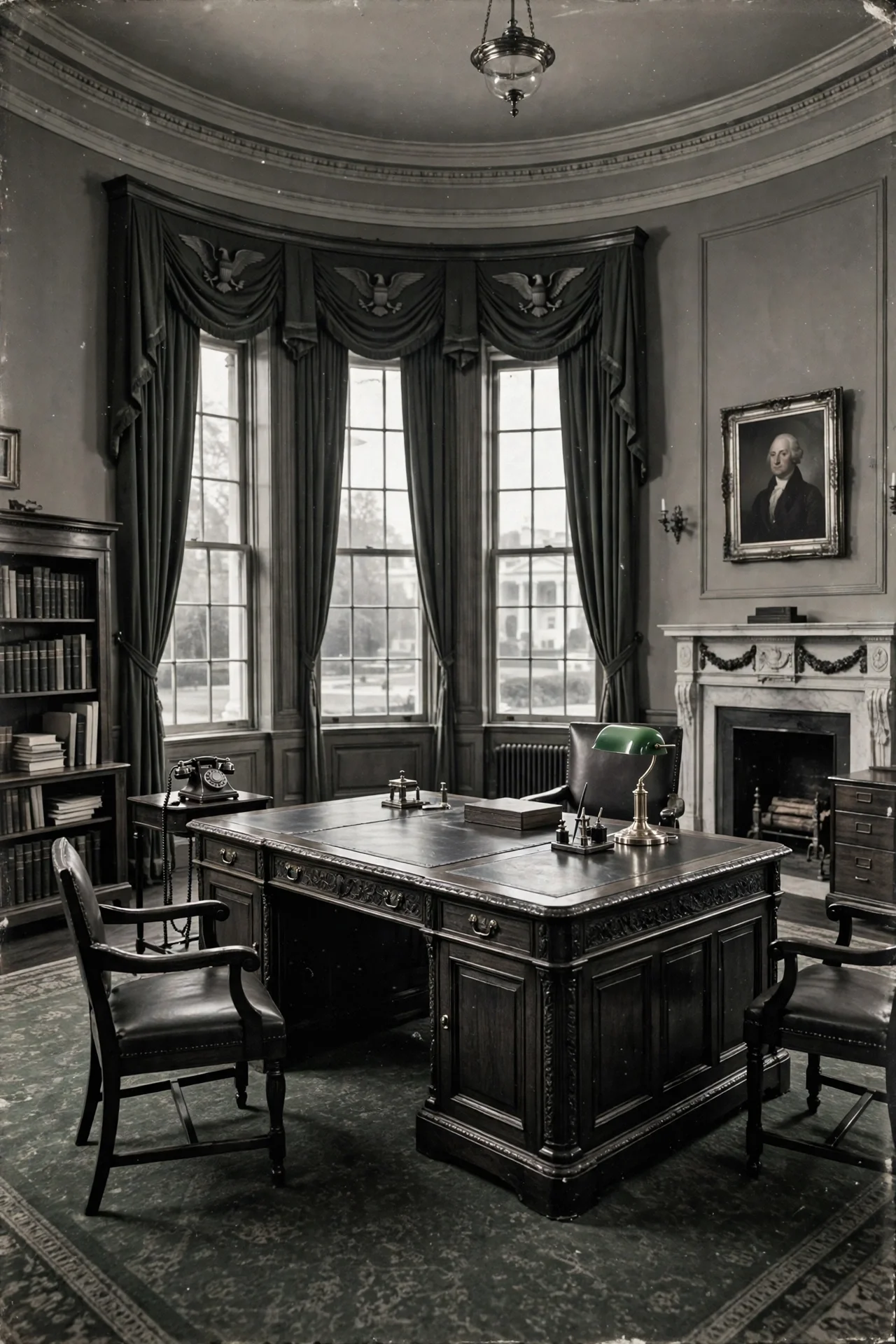
In the earliest chapter of this story, the Oval Office looked far more modest than the grand room we picture today. The space was arranged around a large wooden desk, with plain, businesslike furnishings suited to the hard years of the 1930s. Seen in black-and-white photographs of the period, the room feels serious and work-focused, with little of the colour that later presidents would add. It set the template that every later redecoration would either follow or deliberately break away from.
2. Harry Truman
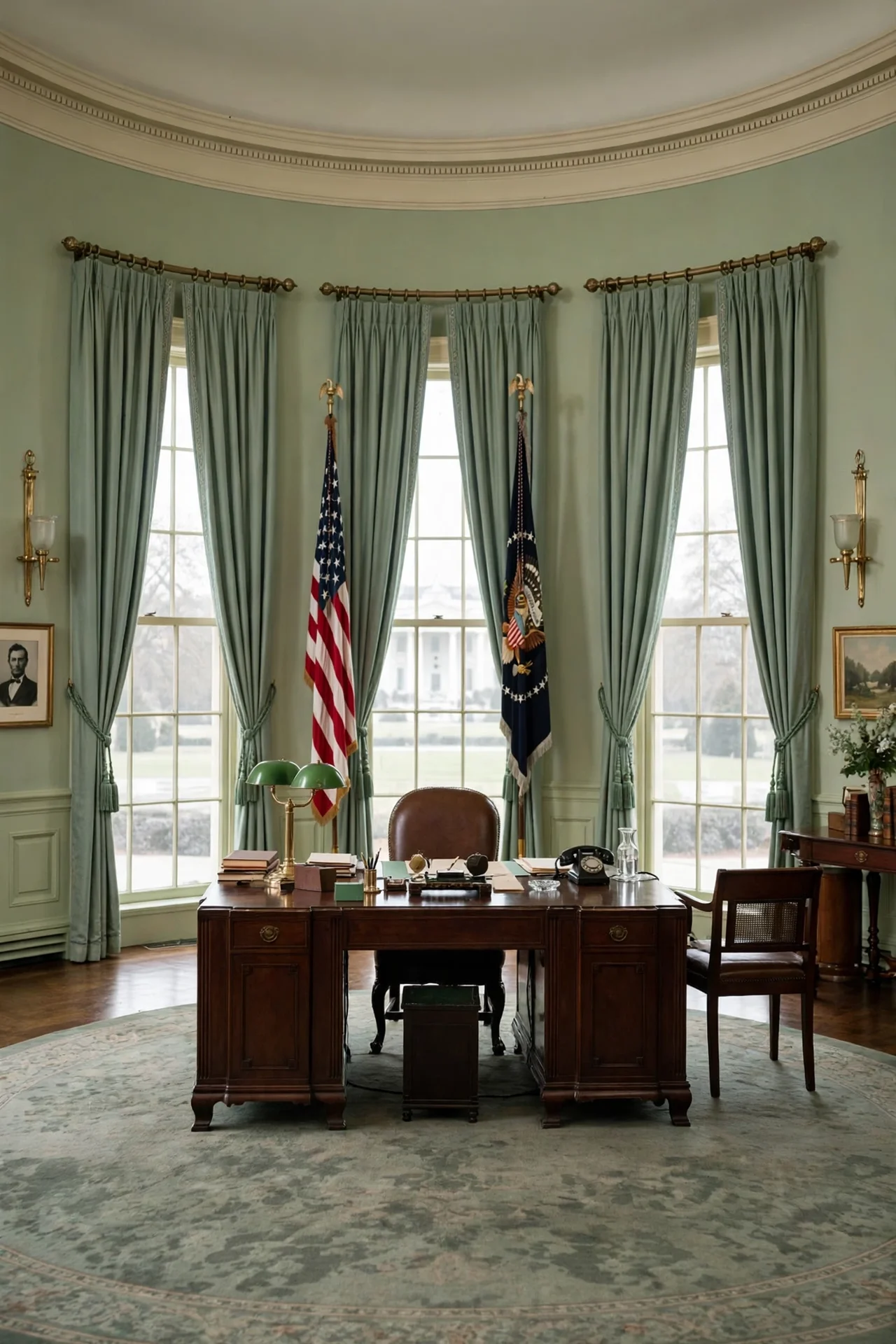
Under Harry Truman, the room took on a noticeably fresher, cooler feel. Sea-green became the defining colour, softening the walls and window treatments and giving the office a calmer, more polished air. He also used the desk associated with Theodore Roosevelt, a sturdy piece that anchored the new scheme. The change showed how quickly a new colour palette alone could transform the character of the room.
3. Dwight D. Eisenhower
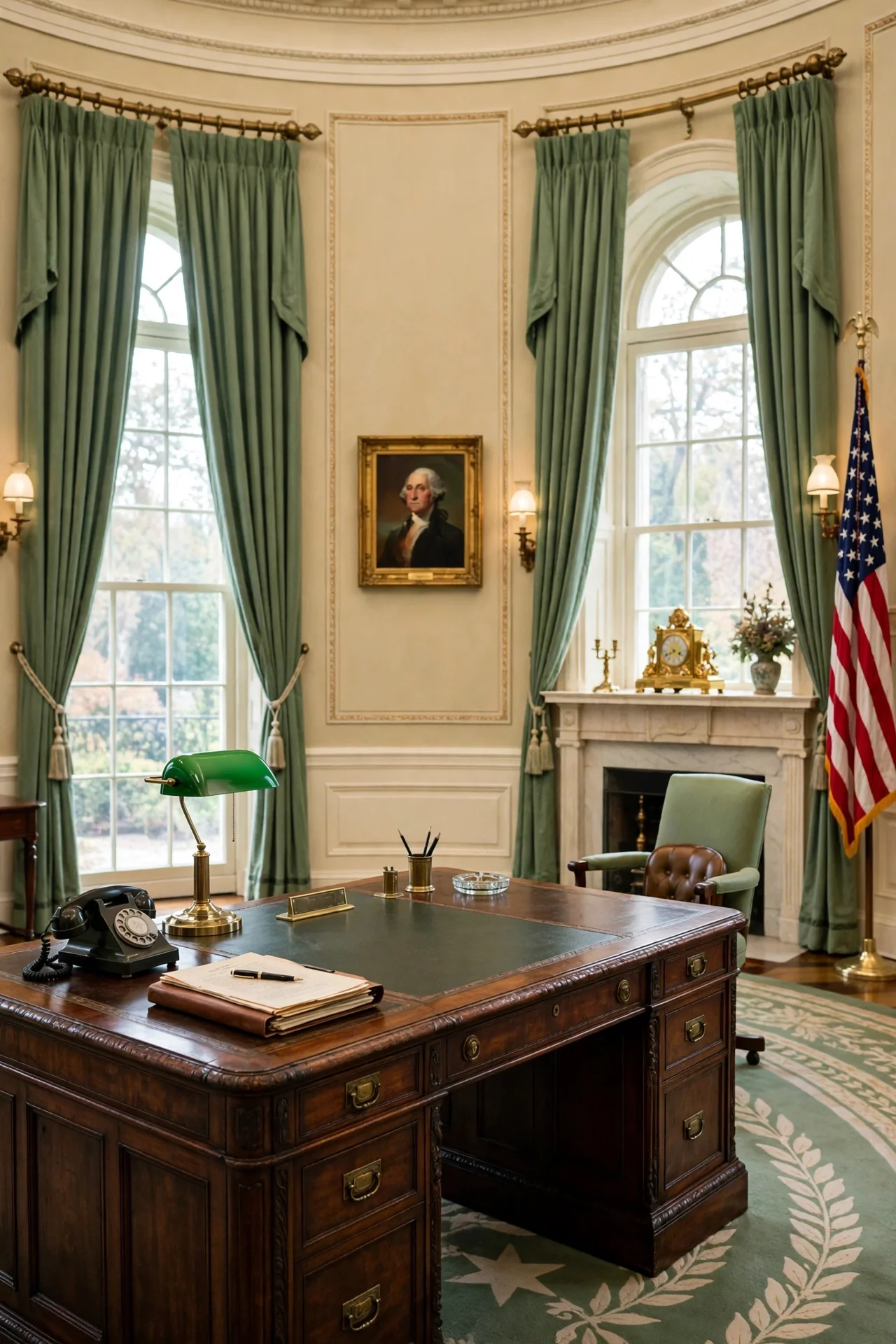
Dwight D. Eisenhower chose continuity over change, keeping much of the look he inherited. The sea-green scheme stayed in place, as did the Theodore Roosevelt desk, giving the room a sense of steady, unshowy order. For a president who valued discipline and routine, the decision made sense: the office already worked, so there was no need to reinvent it. His years in the room therefore look, at a glance, very close to his predecessor’s.
4. John F. Kennedy
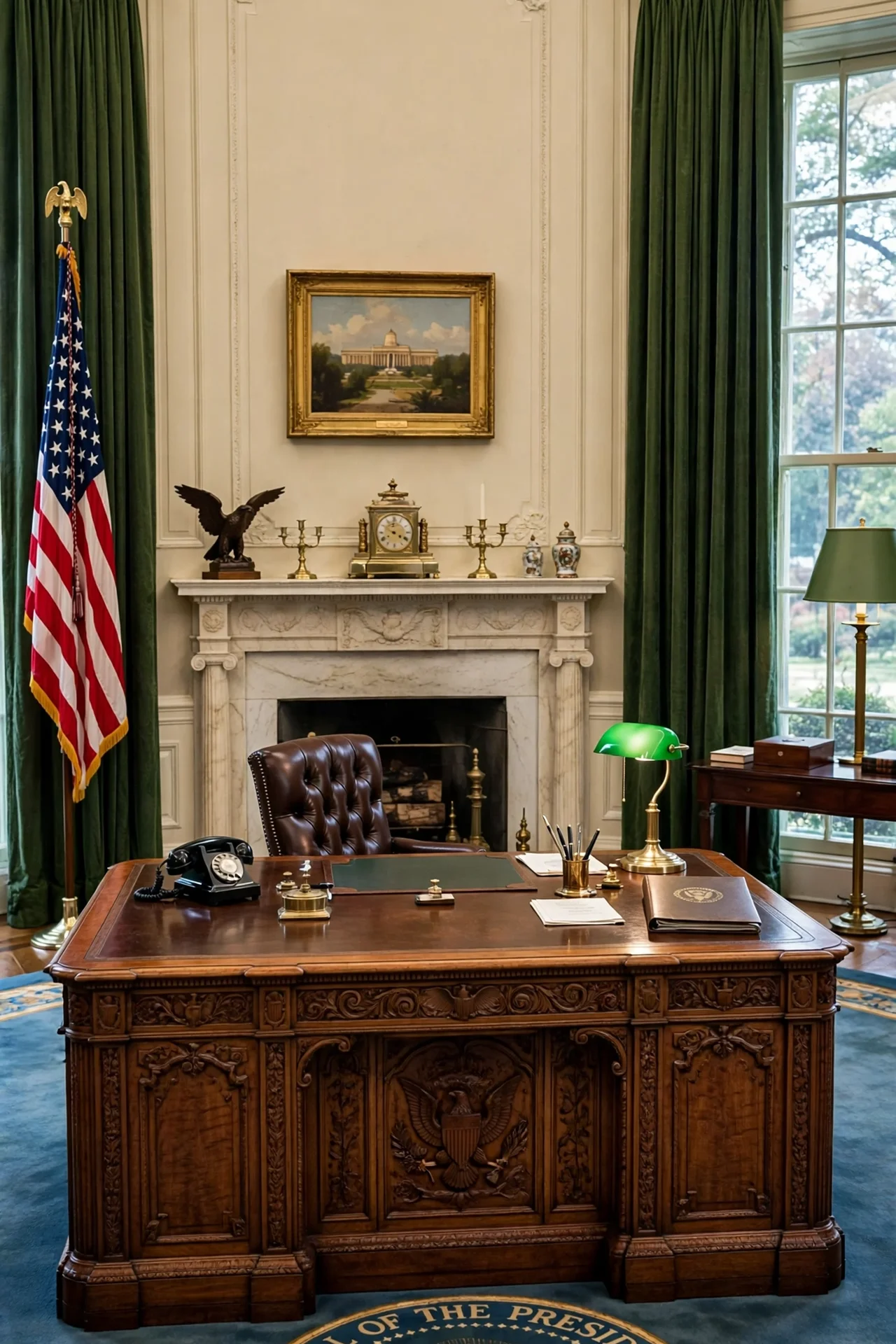
John F. Kennedy brought one of the most famous pieces of furniture in American history into the room: the Resolute Desk, a large carved desk with a storied past. Green curtains framed the space, and a redesign in white and red was planned, signalling a brighter, more modern direction. The desk, in particular, became inseparable from the image of his presidency. Even after his time in office, later presidents would keep returning to it.
5. Lyndon B. Johnson
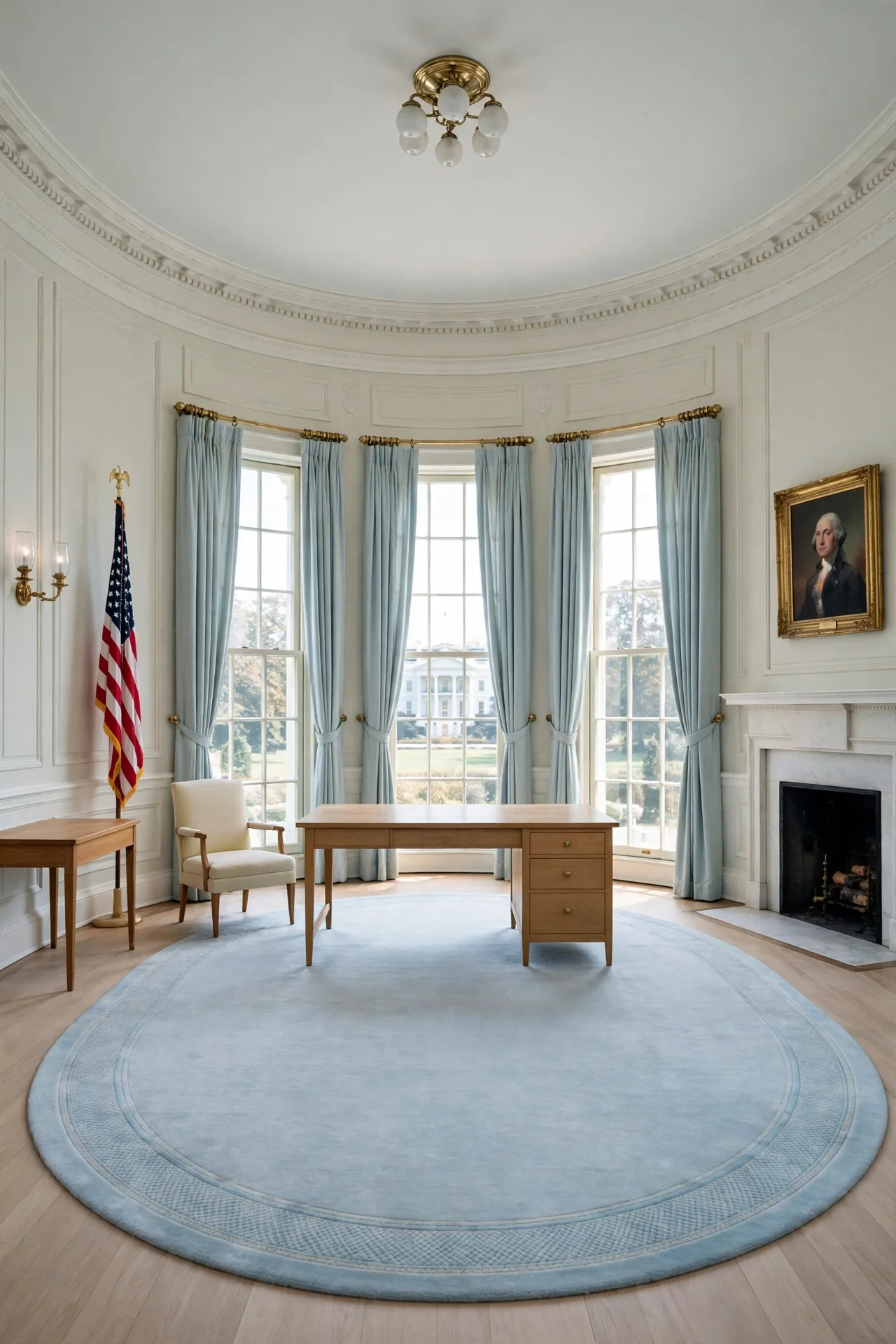
Lyndon B. Johnson largely kept the bright white scheme planned under Kennedy, while making the room his own in quieter ways. A light blue rug softened the floor, and he used a desk of his own rather than the Resolute Desk. The result was a lighter, airier office that still carried the fresh feeling of the early 1960s. It is a good example of how a president can honour a predecessor’s vision while still leaving a personal mark.
6. Richard Nixon
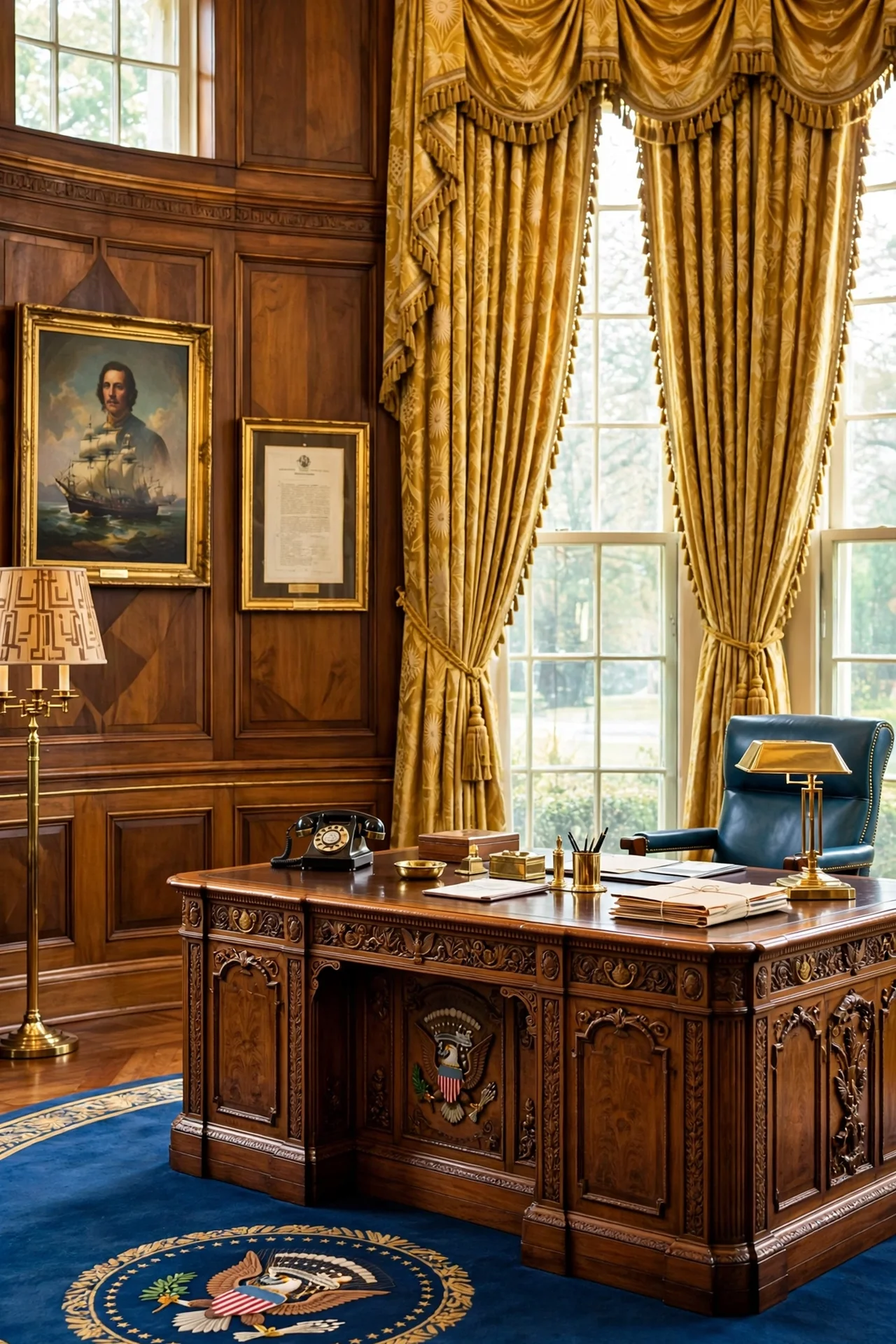
Richard Nixon went bold. Bright gold and deep blue dominated the room, giving it a far more dramatic and formal presence than the pale scheme before it. He used the Wilson desk, a different historic piece, which suited the grander mood of the new decor. The contrast with the previous office could hardly have been sharper: where Johnson’s room felt light, Nixon’s felt rich, dark, and deliberately imposing.
7. Gerald Ford
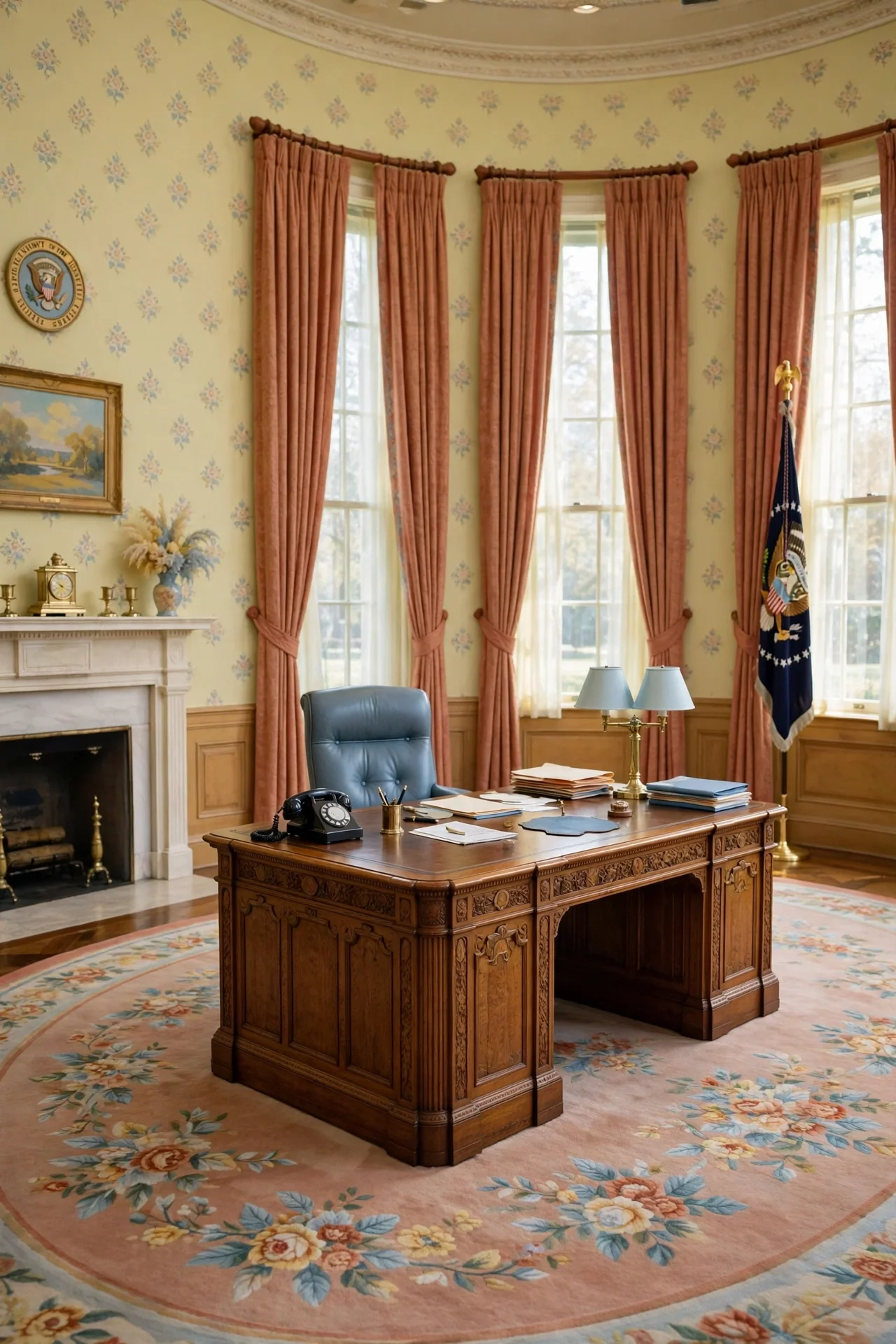
Gerald Ford softened the room again, trading bold gold and blue for gentle pastel yellow and blue. Terracotta curtains warmed the windows, and a floral rug replaced the darker floor covering, making the office feel more relaxed and approachable. The shift matched the mood of a presidency that aimed for calm after a turbulent period. Small changes in colour, once again, changed the whole feeling of the space.
8. Jimmy Carter
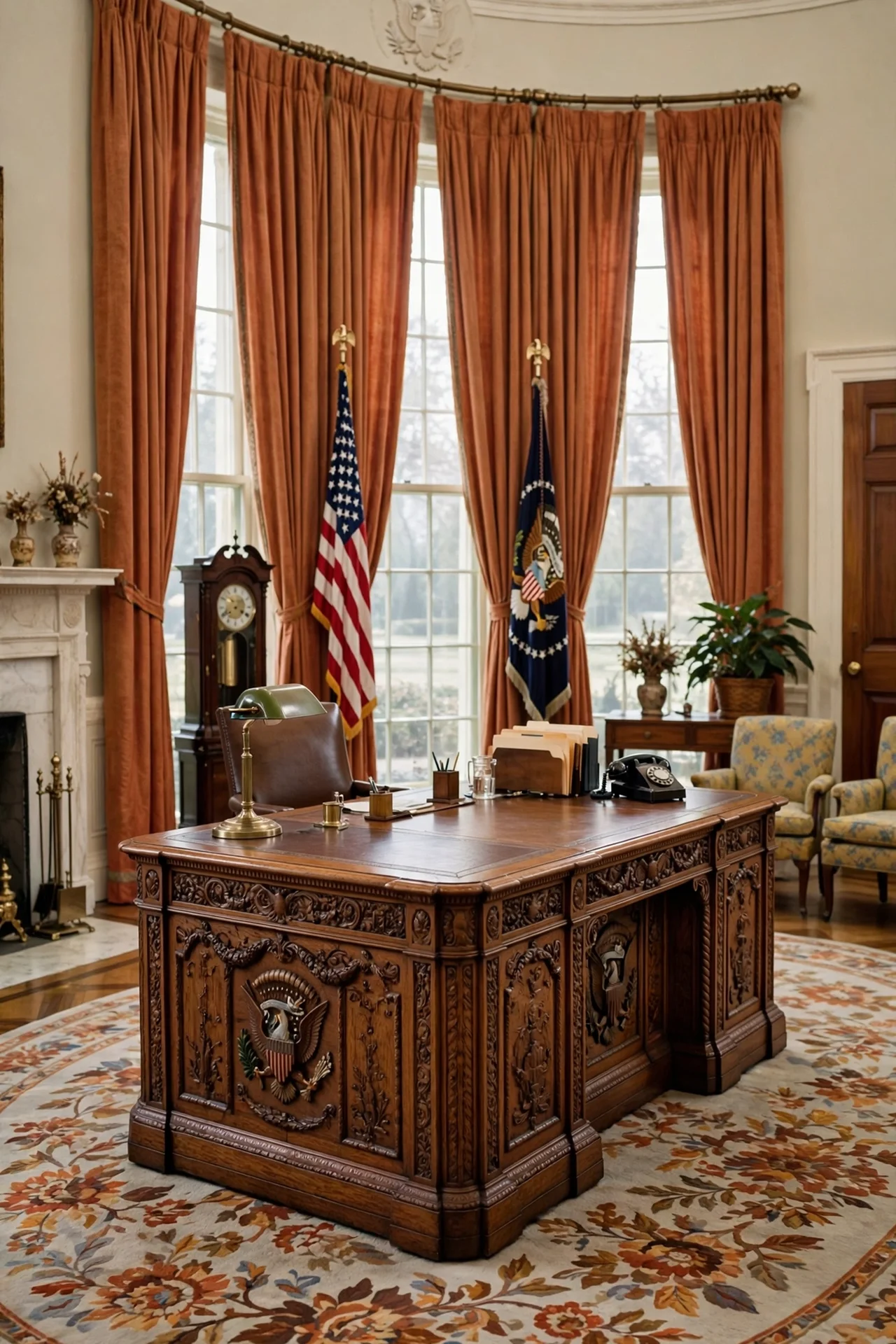
Jimmy Carter kept Ford’s curtains and floral rug in place, showing how often a new president simply inherits a predecessor’s choices. His own signature change was to bring the Resolute Desk back into the room, restoring a piece with deep history to the centre of the office. The combination — familiar soft furnishings plus a famous desk — gave the room a sense of both continuity and tradition. It also began a pattern: the Resolute Desk would come and go, but it never stayed away for long.
9. Ronald Reagan
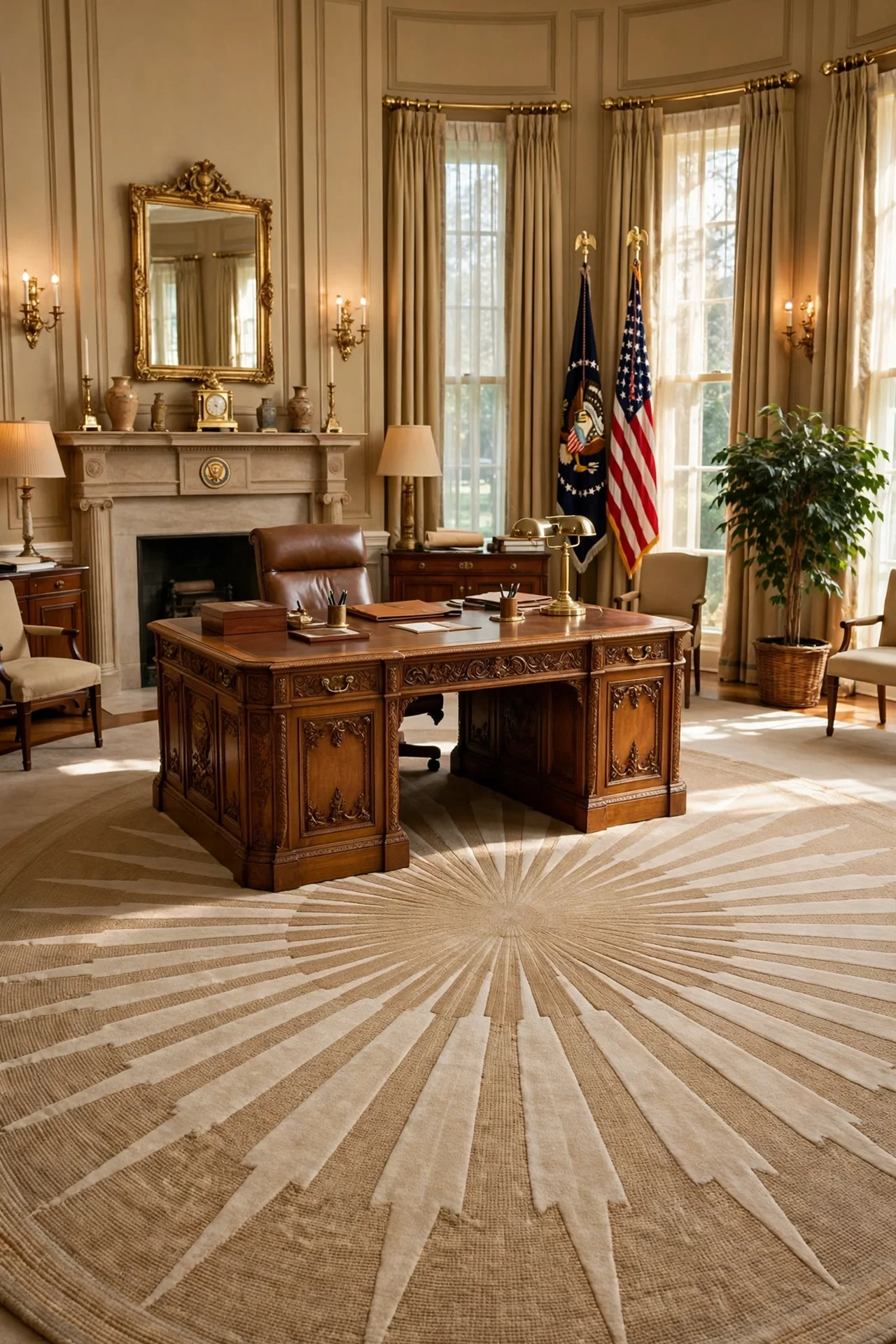
Ronald Reagan’s first term kept much of the look he inherited, with one practical adjustment: his desk was raised by two inches. In his second term, the room took on a warmer, earthier character, centred on a beige rug with a sunbeam pattern radiating across the floor. The sunbeam design became one of the most recognisable Oval Office rugs of the modern era. Like earlier presidents, Reagan showed that a single new rug can redefine the entire room.
10. George H. W. Bush
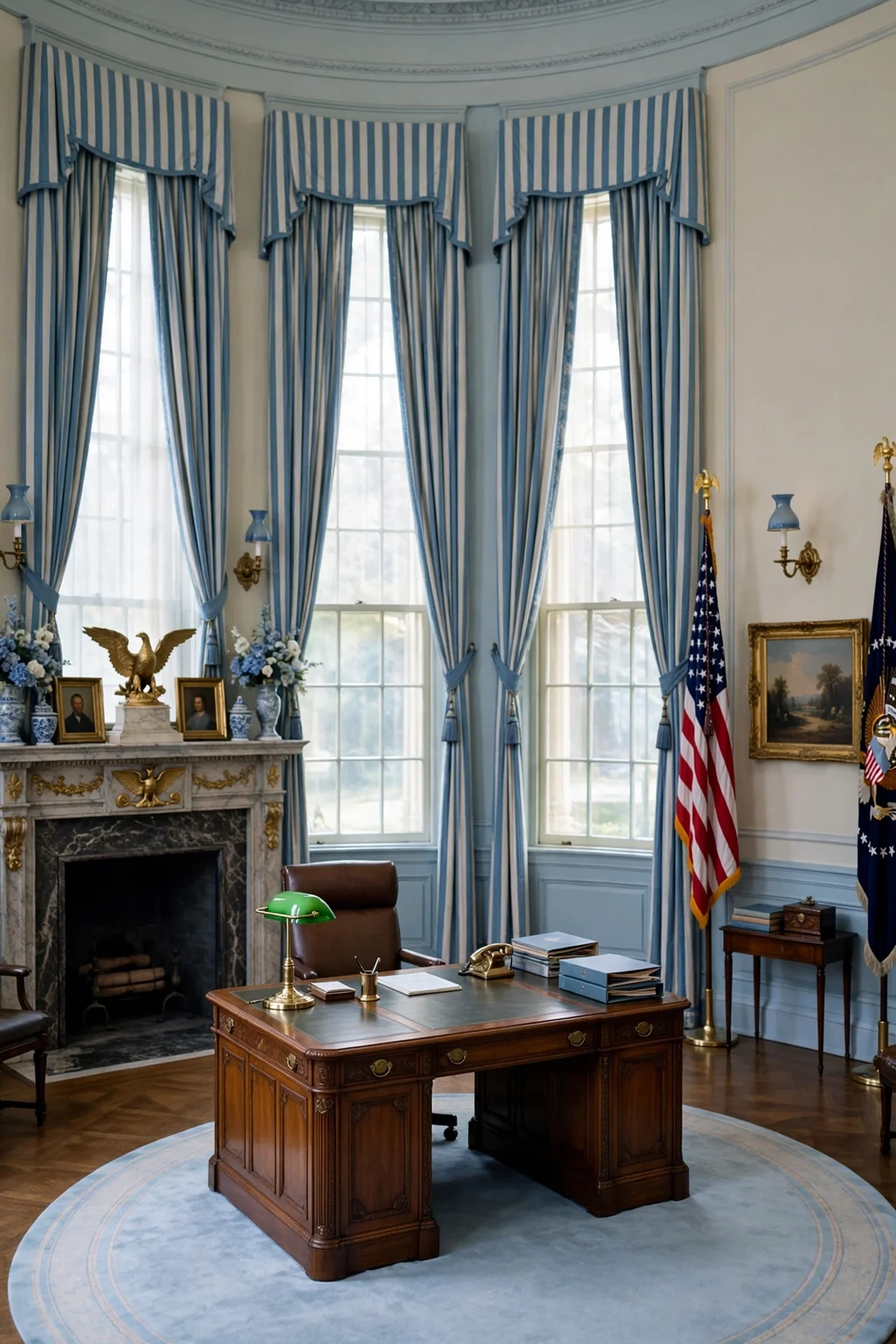
George H. W. Bush chose a calm blue-and-white scheme, with matching curtains and a light blue rug that made the room feel orderly and understated. He used a desk from his time as vice president rather than the Resolute Desk, a personal choice that set his office apart. The overall effect was neat, traditional, and quietly dignified. It was a reminder that not every redecoration needs to make a loud statement.
11. Bill Clinton
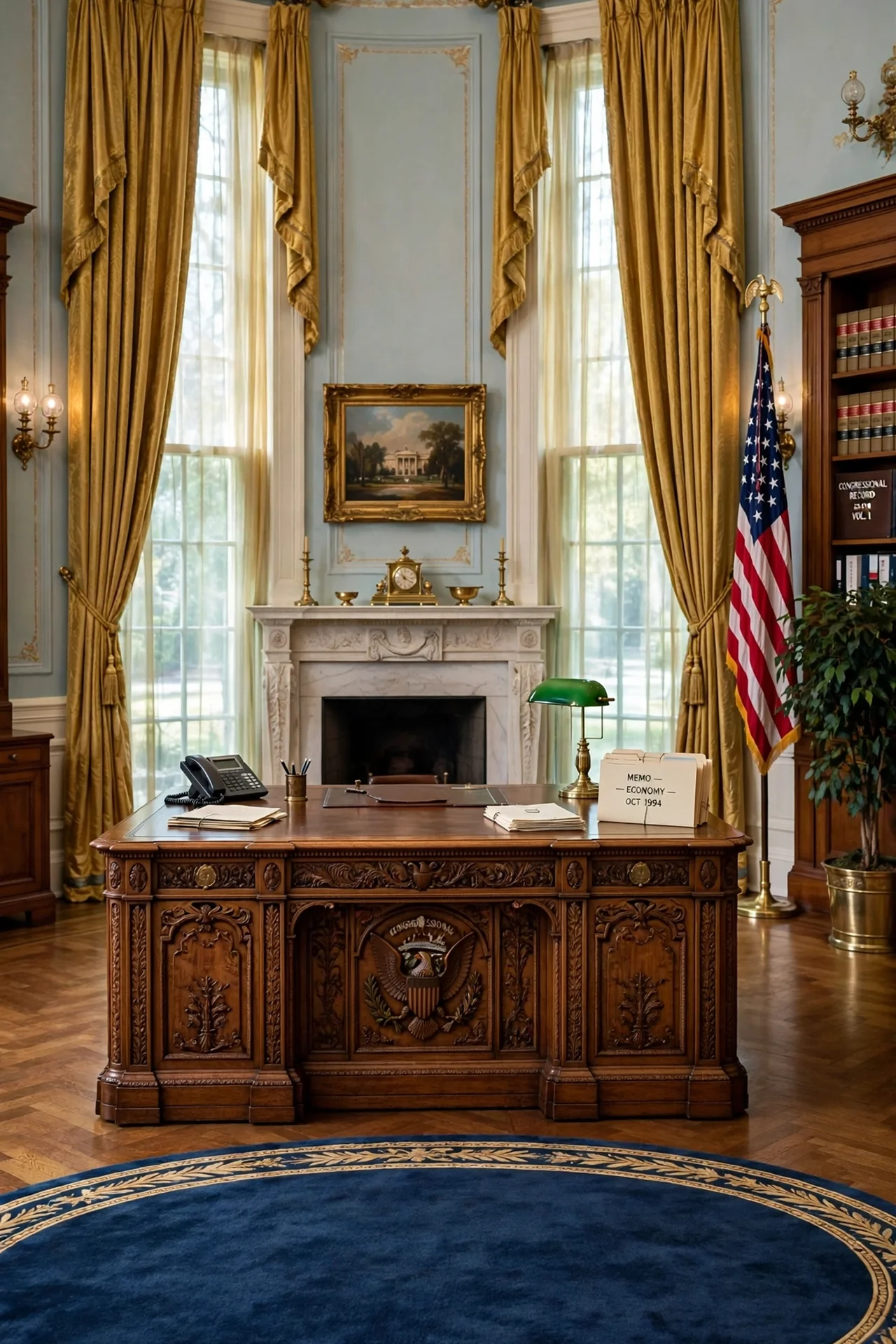
Bill Clinton returned the Resolute Desk to the centre of the room and paired it with rich gold curtains and a dark blue rug. The combination felt both formal and warm, and the gold curtains in particular would prove to have a long life beyond his presidency. His office struck a balance between tradition and polish, drawing on historic pieces while keeping the colours deep and confident. It is one of the most widely pictured Oval Office looks of the 1990s.
12. George W. Bush
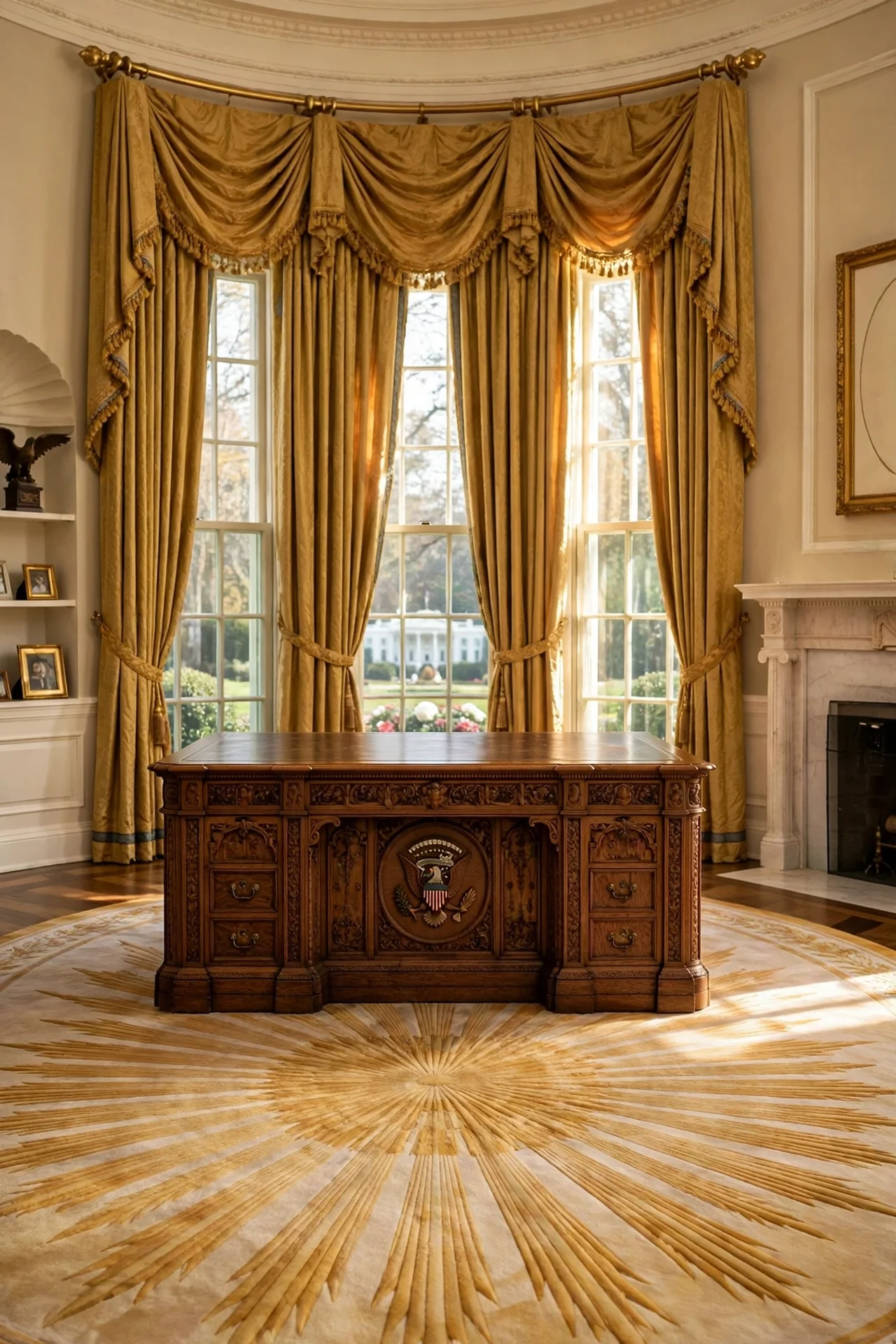
George W. Bush kept the Resolute Desk and chose a rug with a sunbeam pattern, echoing the design made famous in the Reagan years. Antique gold curtains added warmth without overwhelming the room, giving the office a classic, settled feel. The look borrowed from earlier eras while still feeling distinctly of its own time. It showed, once again, how Oval Office decor tends to recycle its own greatest hits.
13. Barack Obama
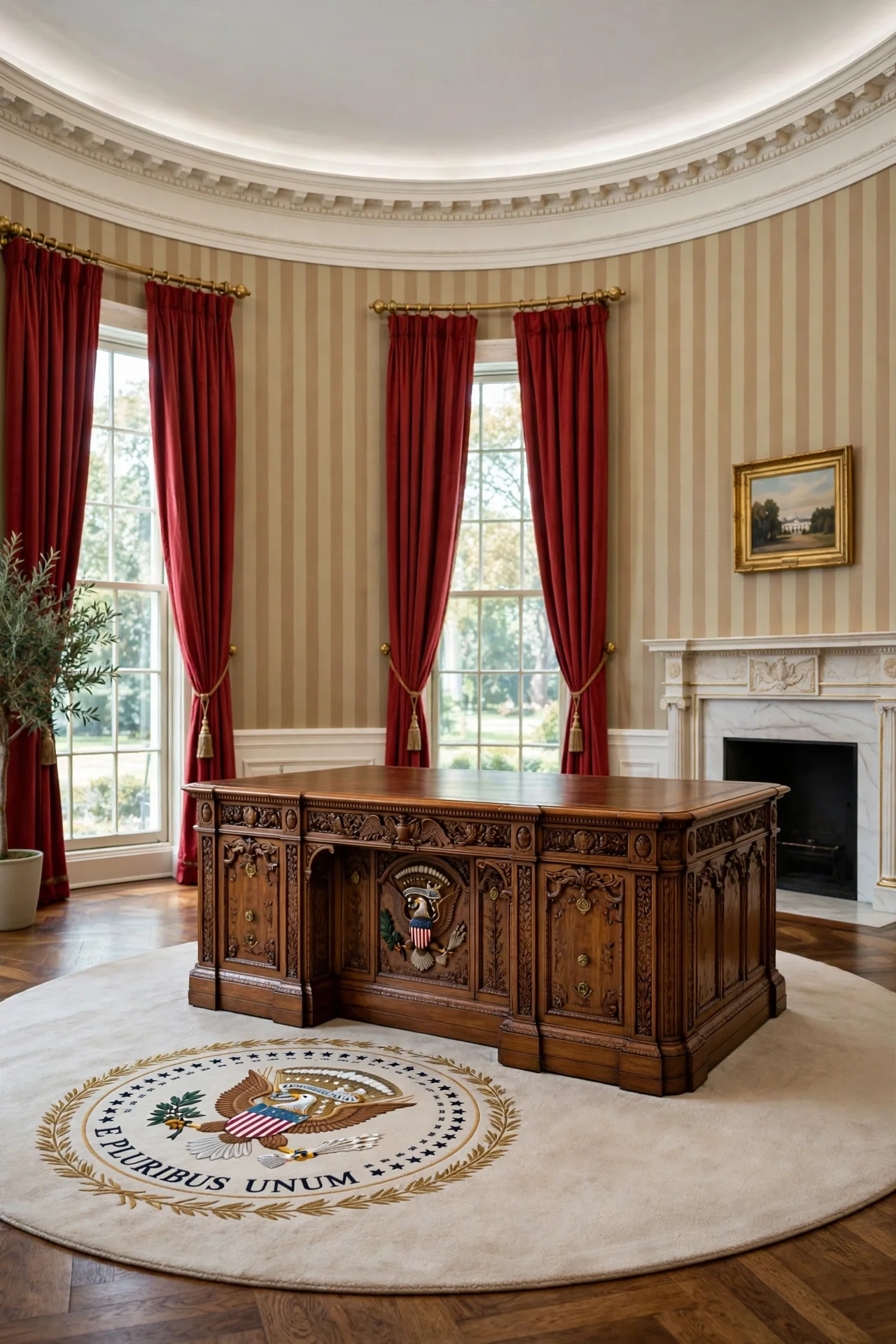
Barack Obama gave the room a more tailored, contemporary finish. Striped wallpaper added subtle texture to the walls, while a beige rug and red curtains created a crisp contrast around the Resolute Desk. The palette felt modern yet restrained, with the red curtains providing the strongest splash of colour. His version of the office looked designed rather than decorated — every element chosen to sit neatly alongside the next.
14. Donald Trump (First Term)
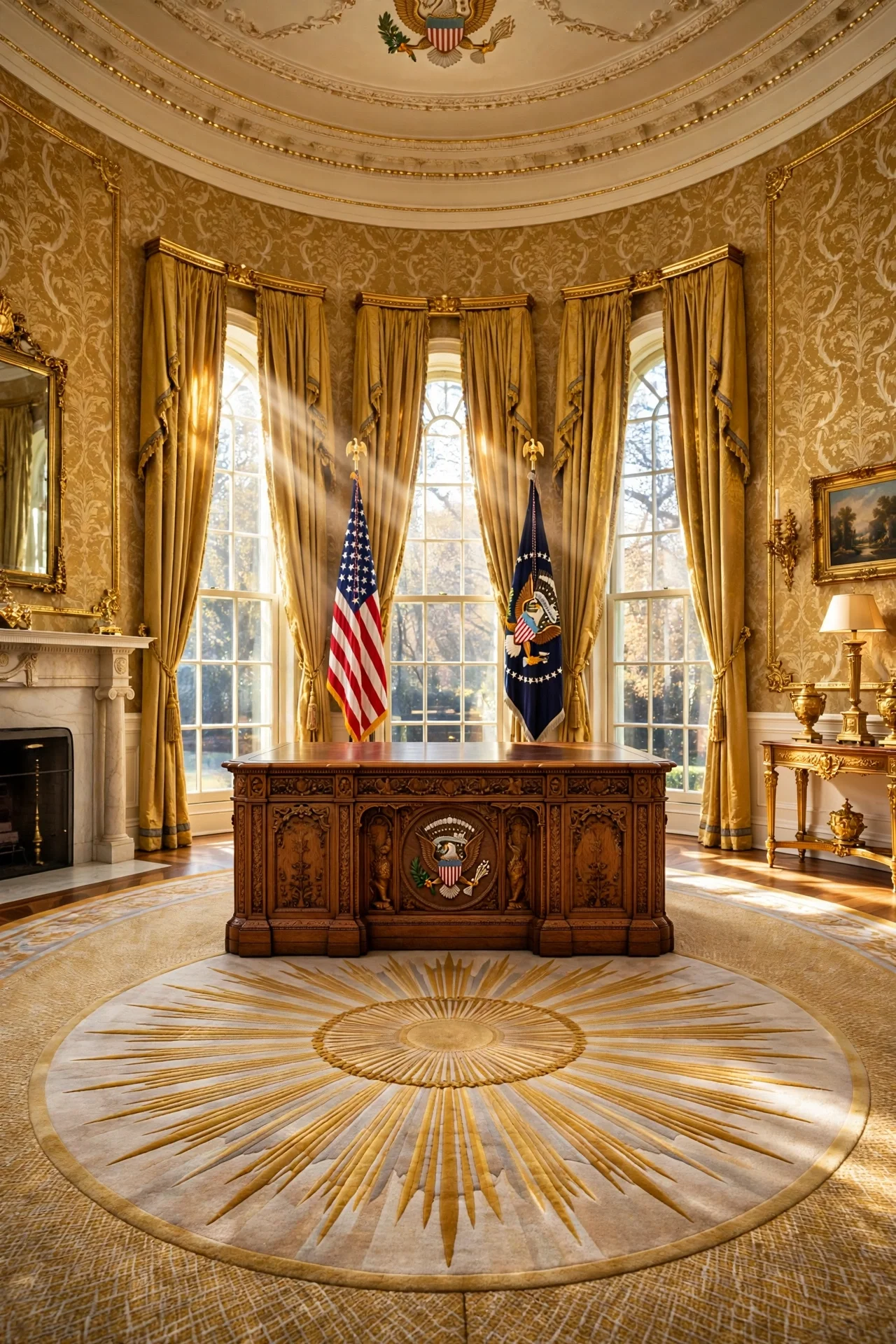
In his first term, Donald Trump combined elements from several earlier offices. The gold drapes recalled the Clinton era, the sunbeam rug echoed Reagan’s, and brocade-pattern wallpaper added a richly textured backdrop. The Resolute Desk remained at the centre of the room, as it had for many of his predecessors. Put together, the choices created a deliberately grand, golden version of the traditional Oval Office.
15. Joe Biden
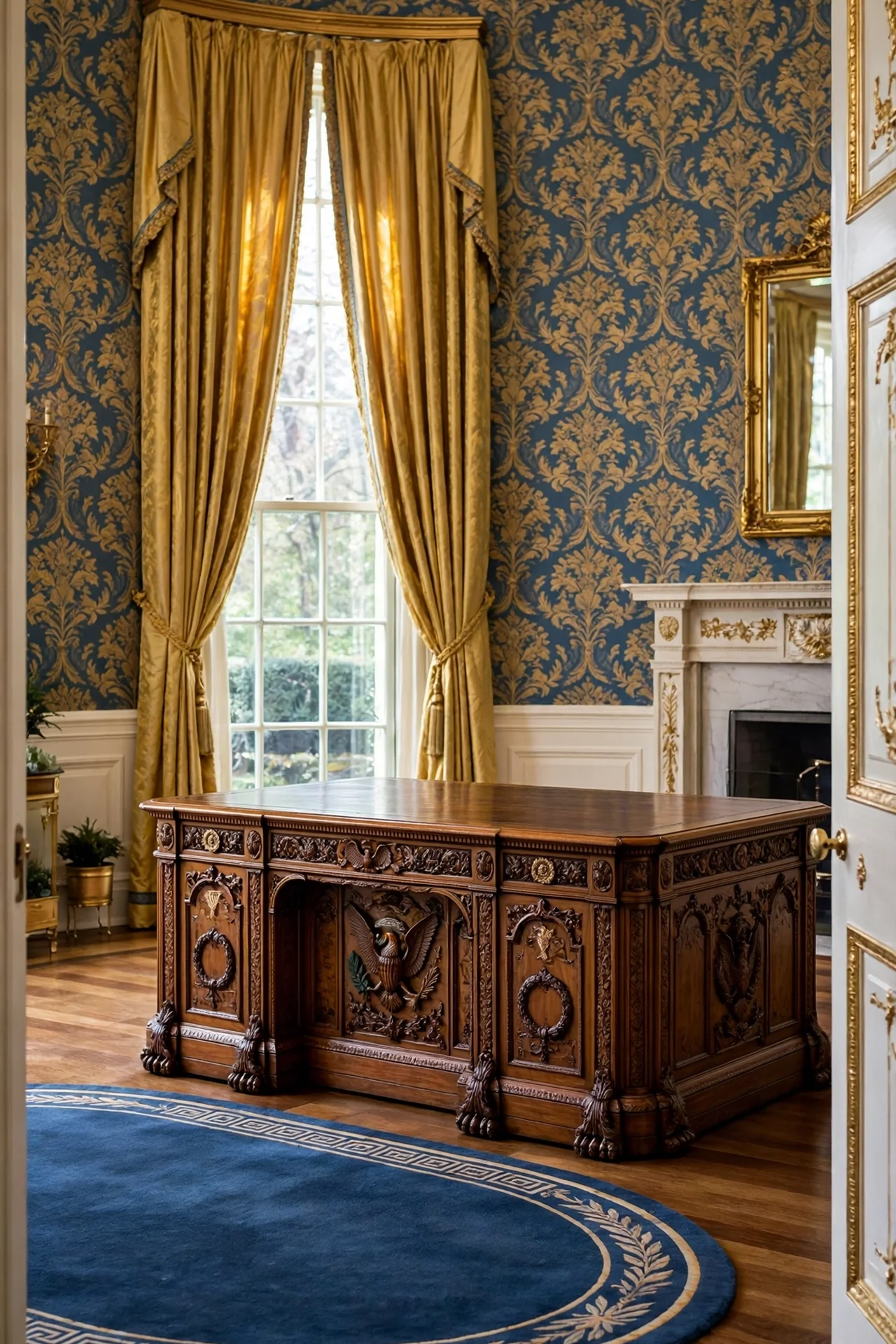
Joe Biden kept several features of the room as he found it, including the gold Clinton-era curtains and the brocade-pattern wallpaper. He paired them with a dark blue rug in the Clinton style, giving the office a deep, calm colour balance. The result illustrated the other side of Oval Office history: sometimes the most telling choice is what a president decides not to change. Familiar pieces, carried from one administration to the next, quietly told the room’s longer story.
16. Donald Trump (Current Term)
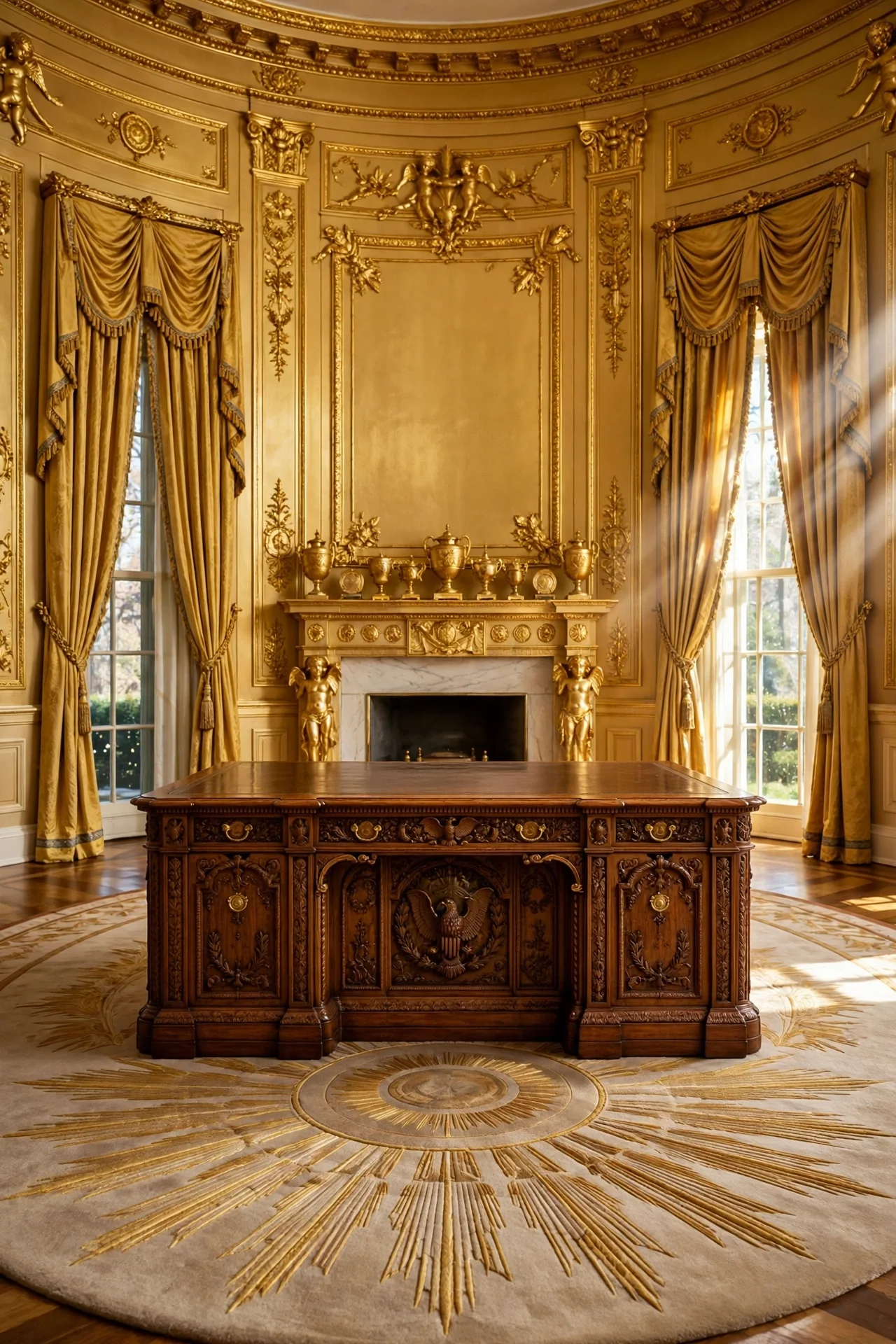
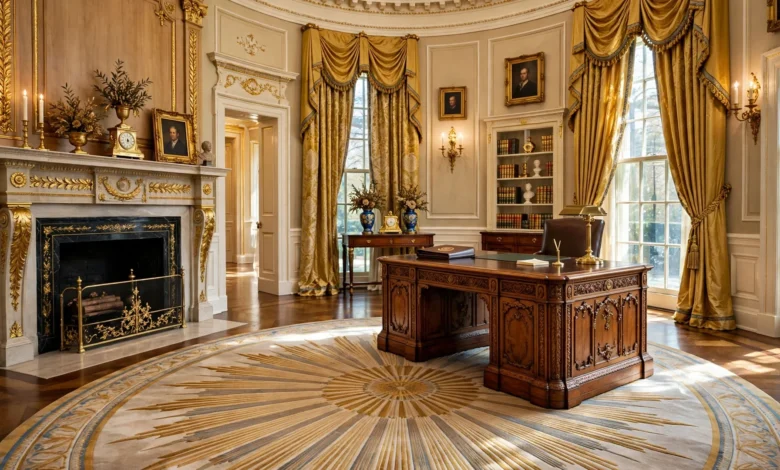
In the current term, the room features many gold accents across its walls, trim, and fireplace, giving it the most gilded appearance in this timeline. The gold curtains remain in place, and the sunbeam-pattern rug has returned to the floor. The Resolute Desk continues to anchor the space, as it has through so many earlier chapters. Whatever else changes in the years ahead, the pattern so far suggests the next occupant will once again decide which pieces to keep — and which to replace.
The Oval Office has never really belonged to just one president. Desks return, curtains outlast their first owners, and rugs come back decades after they first appeared. That is what makes the room so fascinating to follow: it is a living record of changing taste, told through furniture, fabric, and colour. From the restrained black-and-white era of the 1930s to today’s gold-accented interior, each version of the office has added one more layer to the story.