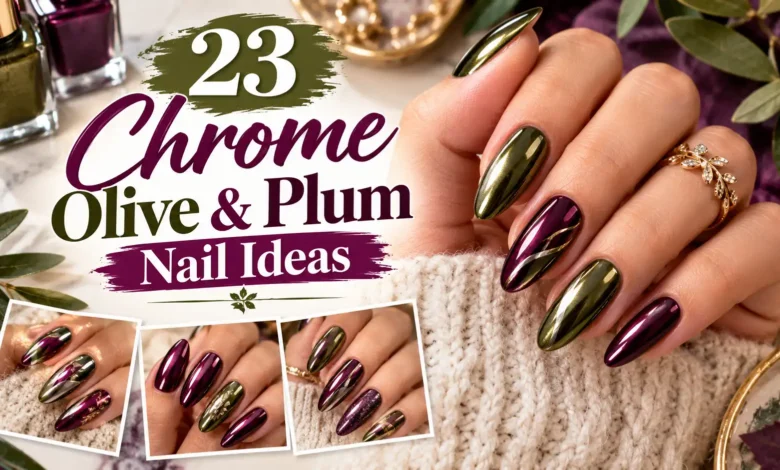
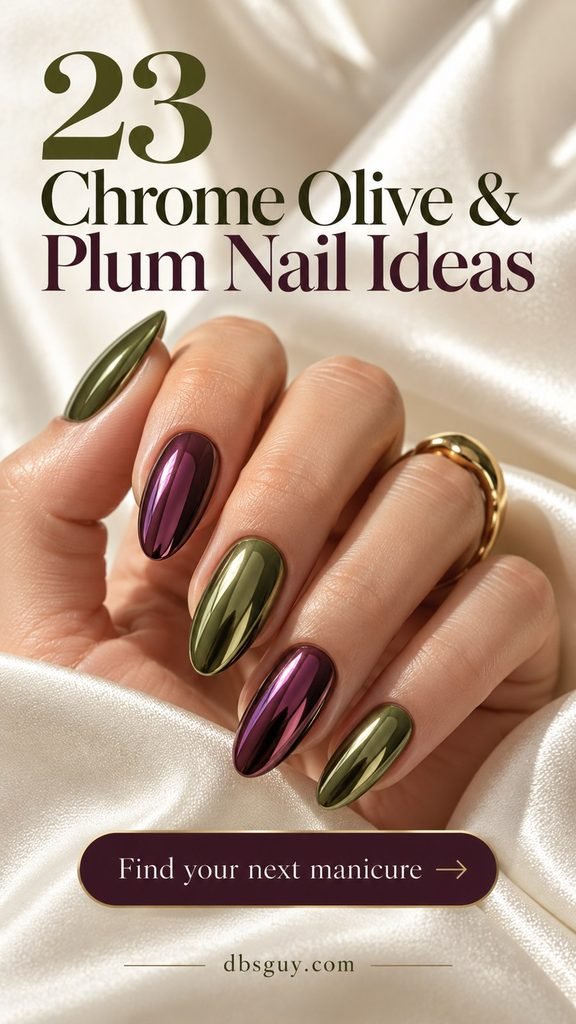
Olive and plum nails can be crisp and graphic, softly glazed, or almost mirror-like. Start with alternating solid colors if you want an easy reference for the salon; choose a French tip or an open nude base if you prefer less dark color.
The 23 ideas below change the placement, pattern, or finish so you can choose more than a color combination. The visuals are AI-generated design concepts, not photographs of completed salon work; exact colors and fine details will vary with products and application.
Choose the color before choosing the shine
Look for an olive that stays visibly green and a plum that still shows purple in ordinary daylight. Burgundy leans redder; substitute it if you prefer burgundy and green nails, but show your artist the actual shade rather than relying on its name.
Chrome powder can change the appearance of the base color. Compare finished swatches, not just bottles. OPI’s guide to chrome powders and glaze toppers explains the distinction between reflective gel-system powders and lacquer toppers. A sheer glaze and an opaque mirror effect will give different results.
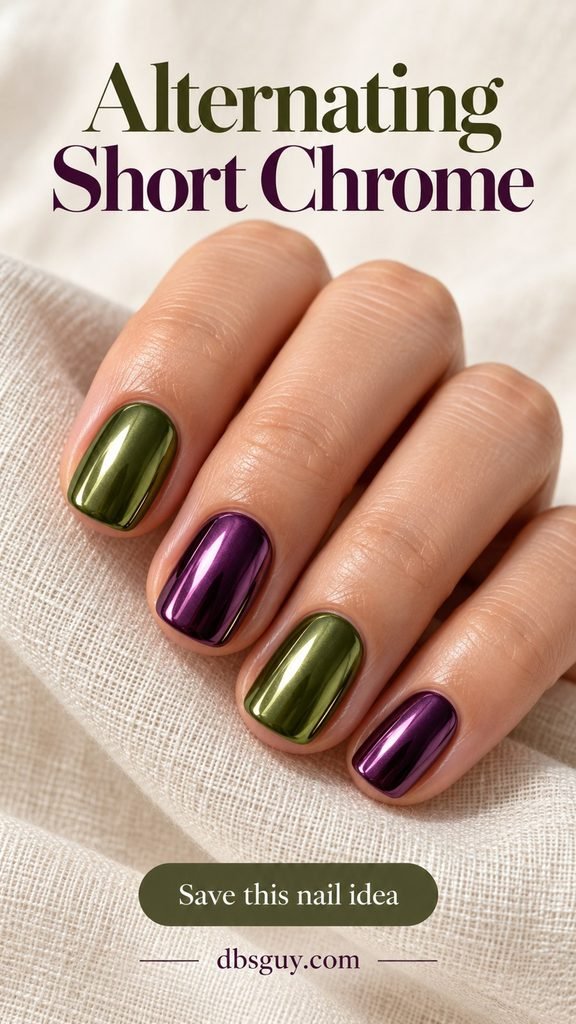
1. Alternating Short Chrome
Alternate olive and plum across short squoval nails. Equal amounts of each color give the palette a clear rhythm without needing any painted detail.
Ask for the same chrome intensity on both colors. If one becomes silver while the other stays purple, request a different powder swatch before committing.
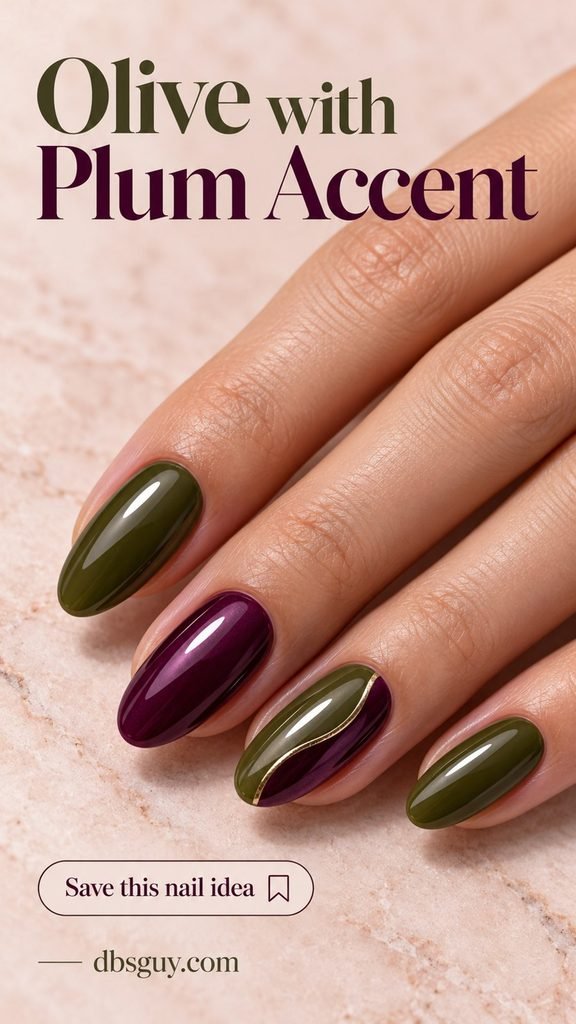
2. Olive with Plum Accent
Let olive lead, then introduce plum on an accent nail. A divided accent can bridge the two colors if a solid purple nail feels too abrupt.
Keep additional metallic outlines fine. The accent should read as one deliberate change rather than a third competing design.
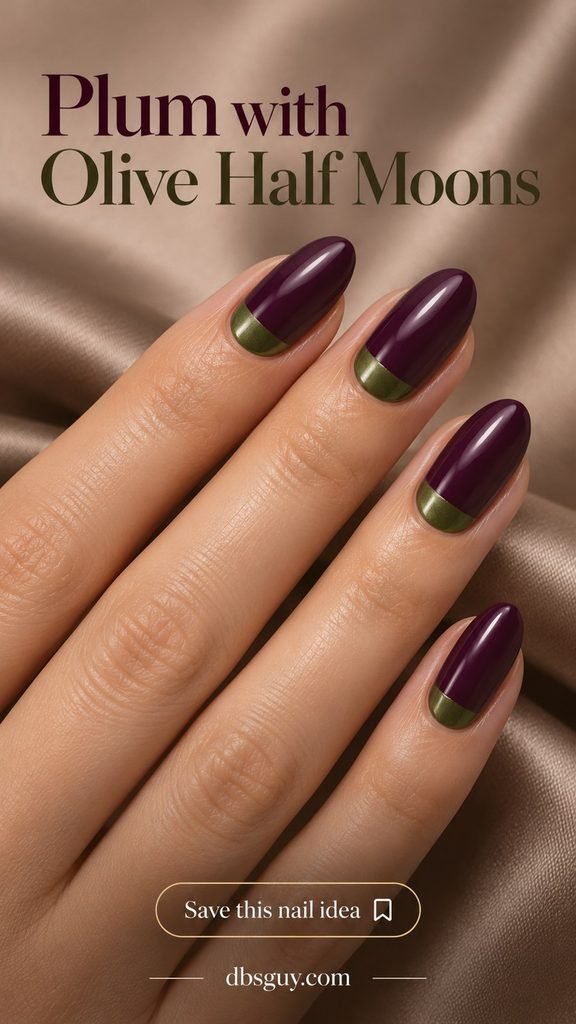
3. Plum with Olive Half Moons
Place an olive half moon at the base of a plum nail. The rounded green area gives this vintage placement a modern metallic edge.
Ask for a generous curved moon that is visible from arm’s length. A hairline cuticle arc will create a different, much subtler effect.
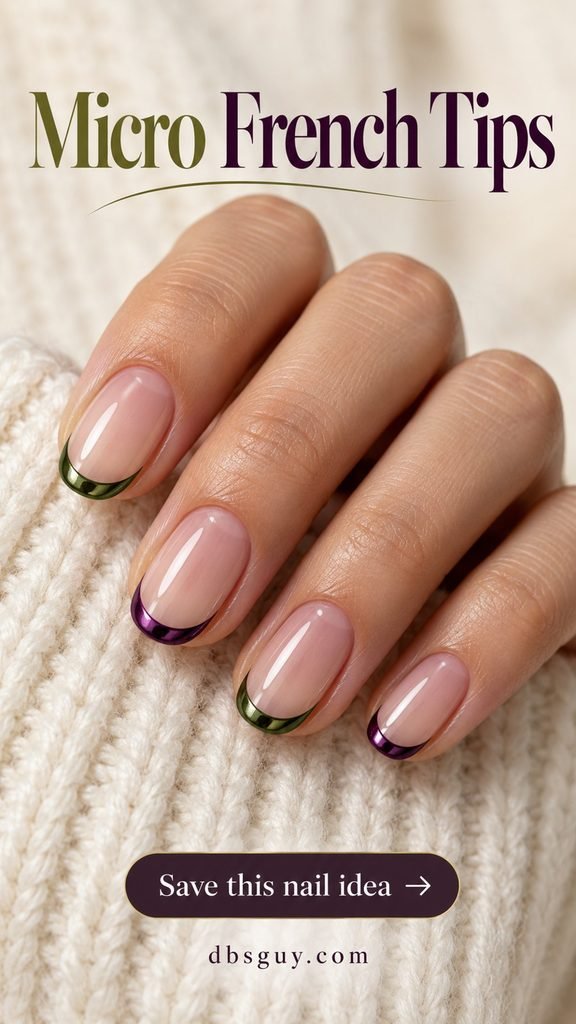
4. Micro French Tips
Use a sheer nude base with a narrow chrome tip, alternating olive and plum. This is a useful starting point when full dark nails feel heavier than you want.
Match the tip width to your available free edge. On very short nails, keep the colored border thin so the nude center remains visible.
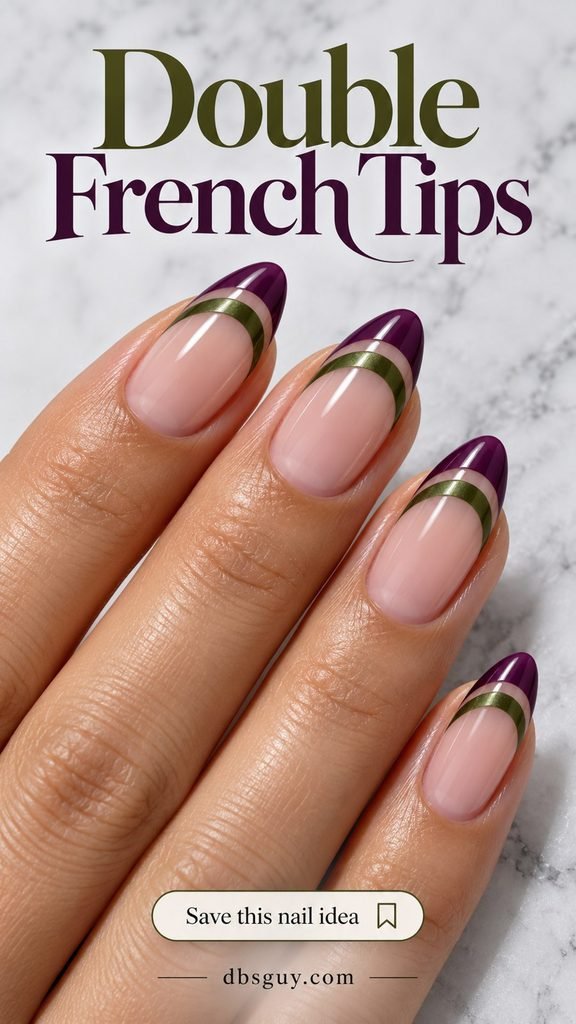
5. Double French Tips
Pair a plum French tip with a second olive curve below it. A small nude gap separates the bands and keeps both colors readable.
Medium almond nails offer room for two clean arcs. On shorter nails, simplify to one double-line accent instead of crowding every fingertip.
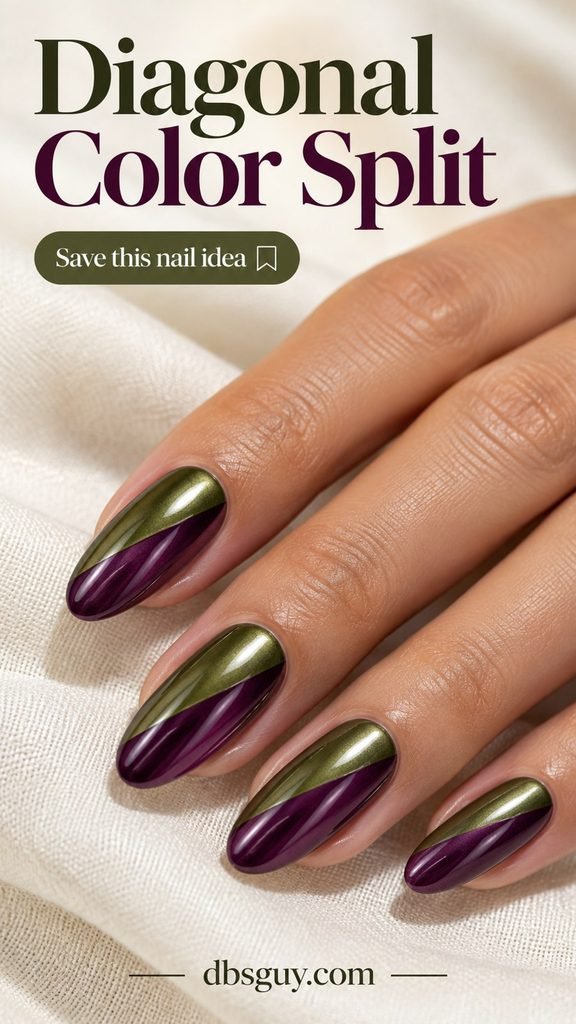
6. Diagonal Color Split
Divide each nail diagonally between olive and plum. The slanted boundary makes the two-color manicure feel graphic without adding a motif.
Choose one direction for the diagonal across the hand. Ask for a crisp division rather than blending the edge into an ombre.
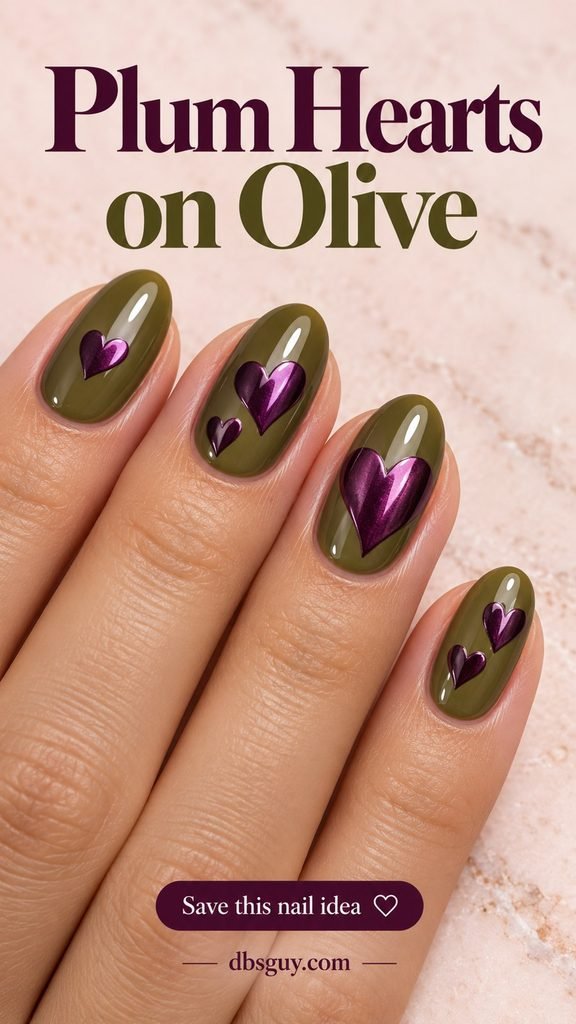
7. Plum Hearts on Olive
Set plum hearts over an olive background. The reflective purple motif adds a playful element while the muted green keeps the palette grounded.
One heart on each nail is enough for a quieter set. Leave space around the shape so the point and rounded lobes remain recognizable.
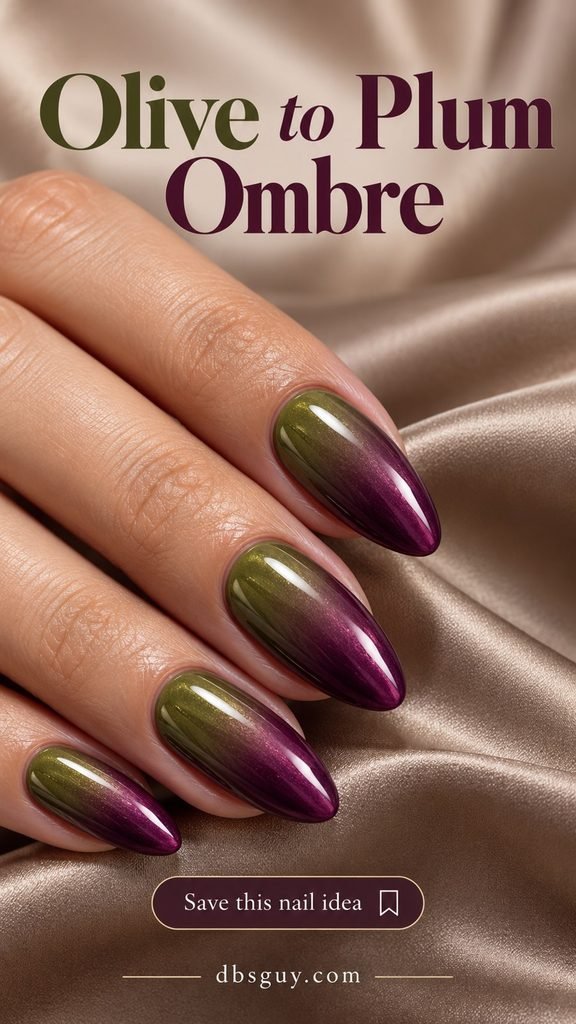
8. Olive to Plum Ombre
Blend olive into plum along the length of the nail, then choose a translucent chrome finish that leaves the transition visible.
Request a sample first: these colors can become muddy where they meet. A shorter blended zone with clear color at each end preserves the contrast.
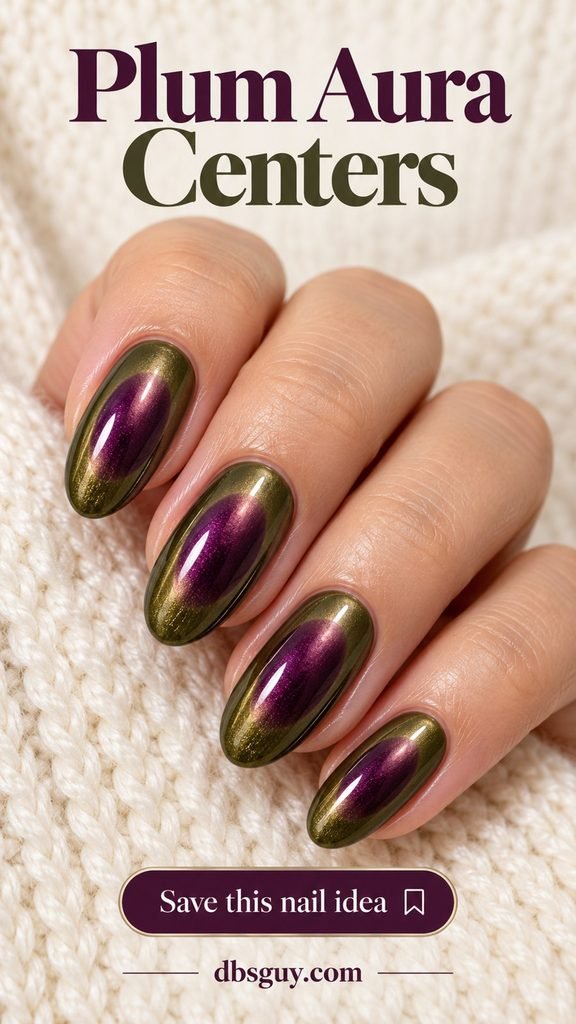
9. Plum Aura Centers
Give an olive nail a soft plum center. Unlike a lengthwise gradient, the color sits inside the nail like a diffused oval.
Keep the plum concentrated toward the middle and olive visible around it. Ask your artist whether their chosen chrome will preserve that soft edge.
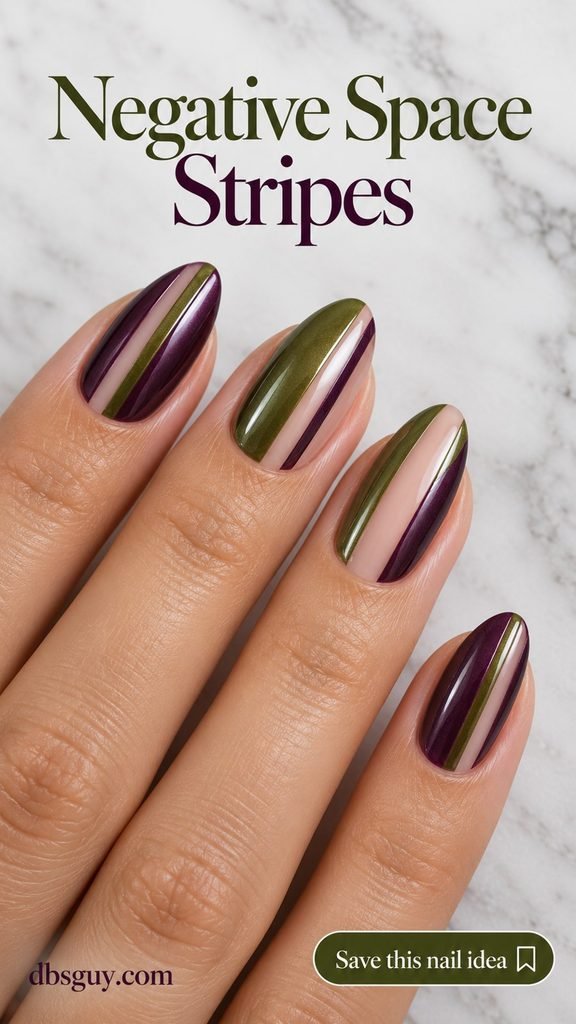
10. Negative Space Stripes
Leave part of a sheer nail uncovered by color and add olive and plum stripes. The open areas make a strong metallic finish feel lighter.
Use fewer, wider lines on short nails. Check the placement with the hand relaxed so the stripes look intentional beyond a close-up photograph.
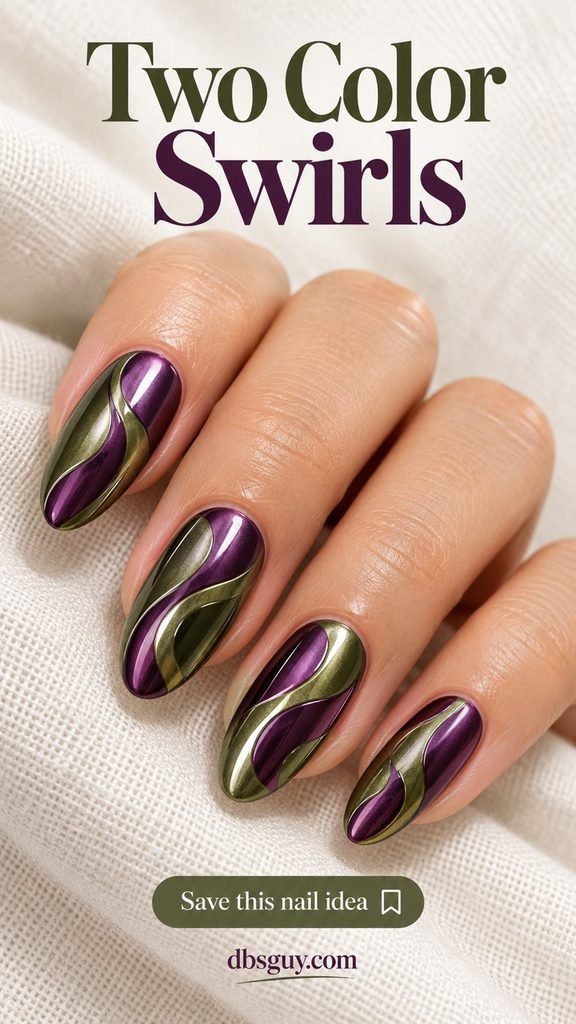
11. Two Color Swirls
Curve olive and plum ribbons across a nude base. Vary the bends slightly while repeating the same two shades to connect the set.
Ask for open space between ribbons. When too many lines cross, the colors can merge visually into a dark patch.
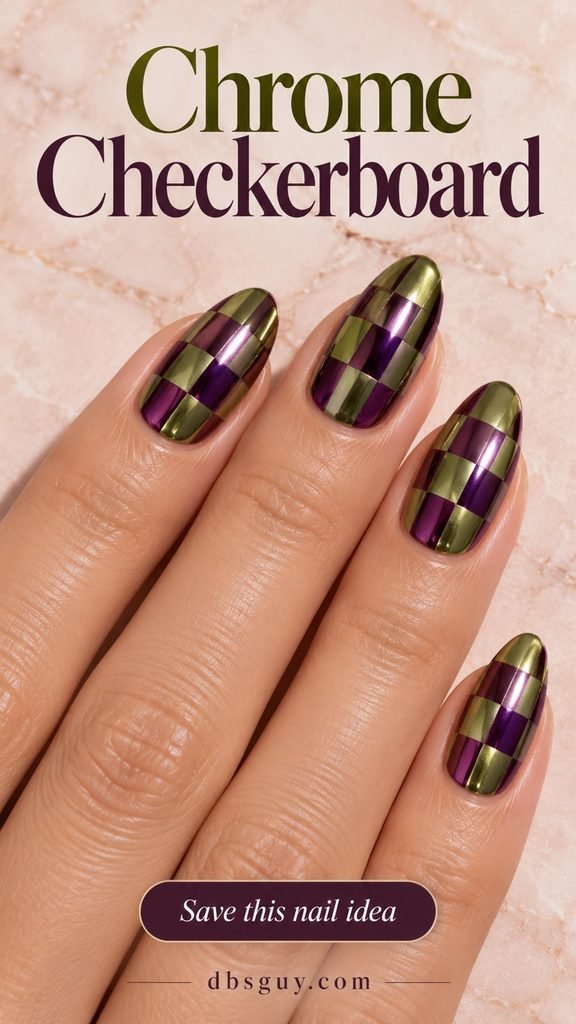
12. Chrome Checkerboard
Use olive and plum checkerboard squares as the main pattern. A straight-sided nail provides a convenient canvas for the grid.
Limit checks to one or two accents if you prefer less detail. Keep the remaining nails solid so the small squares have a clear backdrop.
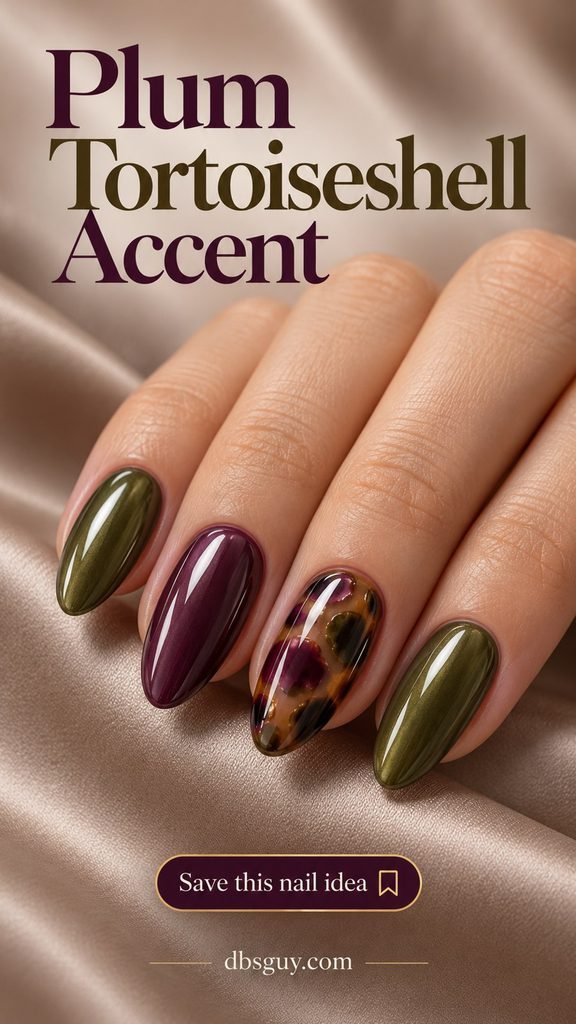
13. Plum Tortoiseshell Accent
Combine olive nails with a plum-toned tortoiseshell accent. Translucent berry patches and deeper irregular marks create the mottled effect.
Specify a purple interpretation of tortoiseshell rather than the usual amber version. Keep the chrome glaze sheer enough to show the pattern underneath.
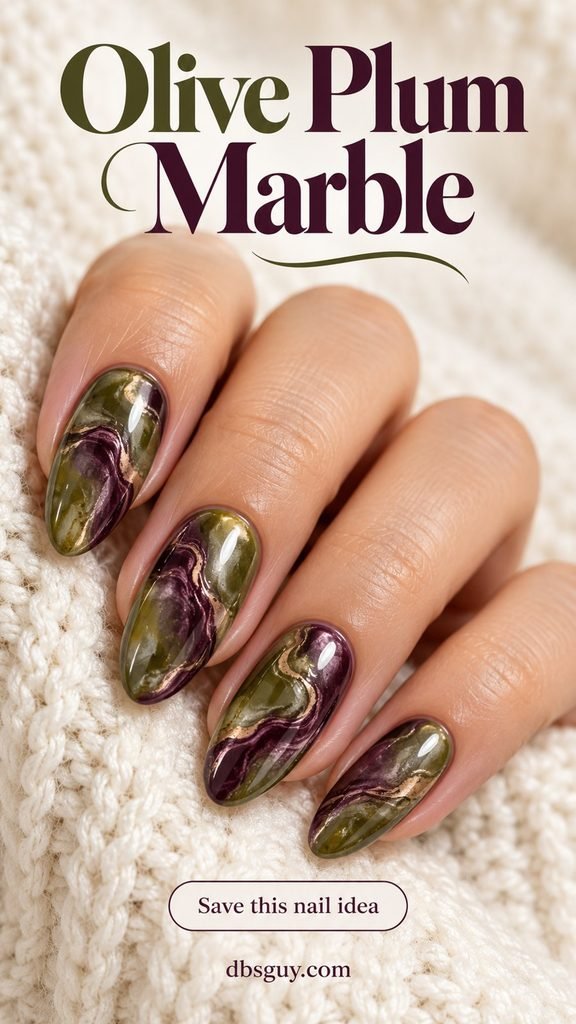
14. Olive Plum Marble
Thread olive and plum through a pale marble base. Fine, irregular veins give both dark colors breathing room and distinguish this from a solid metallic set.
Ask for a few defined veins rather than mixing all the colors together. A soft pearl finish suits the light areas better than an opaque silver layer.
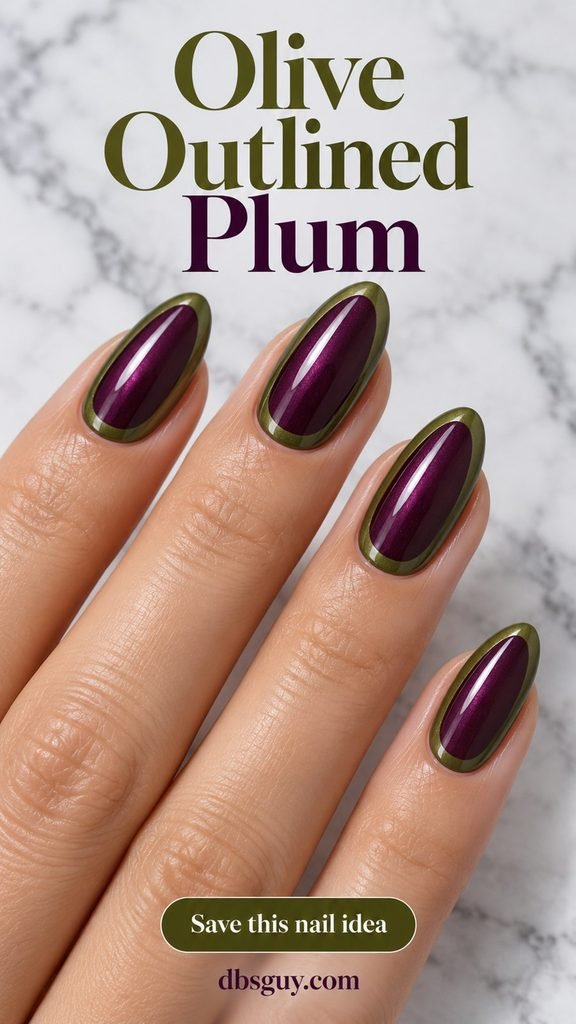
15. Olive Outlined Plum
Outline plum nails with olive green. The perimeter treatment frames the purple center and makes the shape itself part of the design.
Keep the outline consistent along the sidewalls and tip. If the nail is narrow, use this on an accent so the border does not swallow the center.
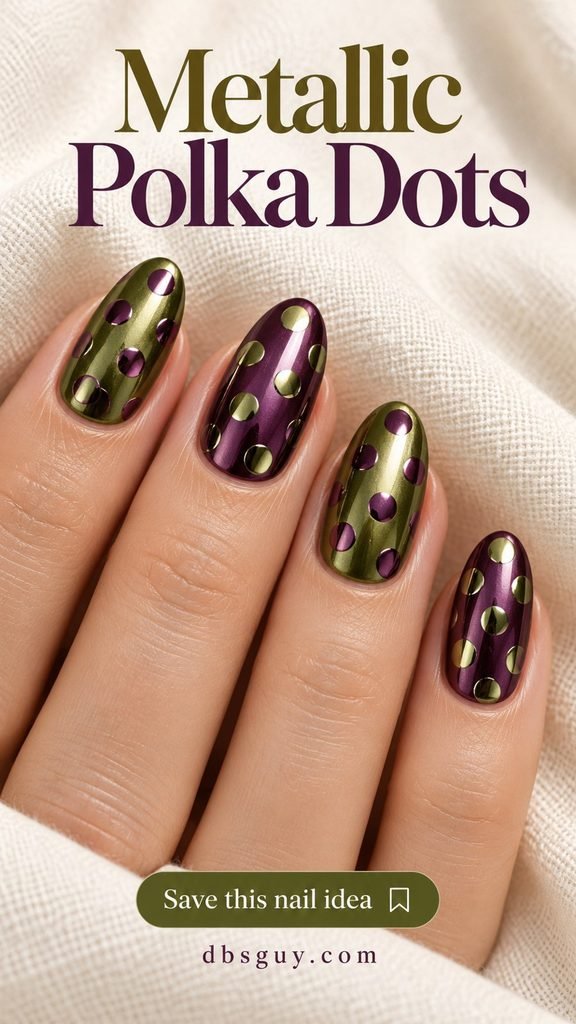
16. Metallic Polka Dots
Scatter plum metallic dots over olive. Round marks create a cheerful, graphic alternative to swirls and gradients.
Use a little variation in spacing but keep dots apart. For a simpler home interpretation, metallic lacquer dots can suggest the look without selective chrome powder work.
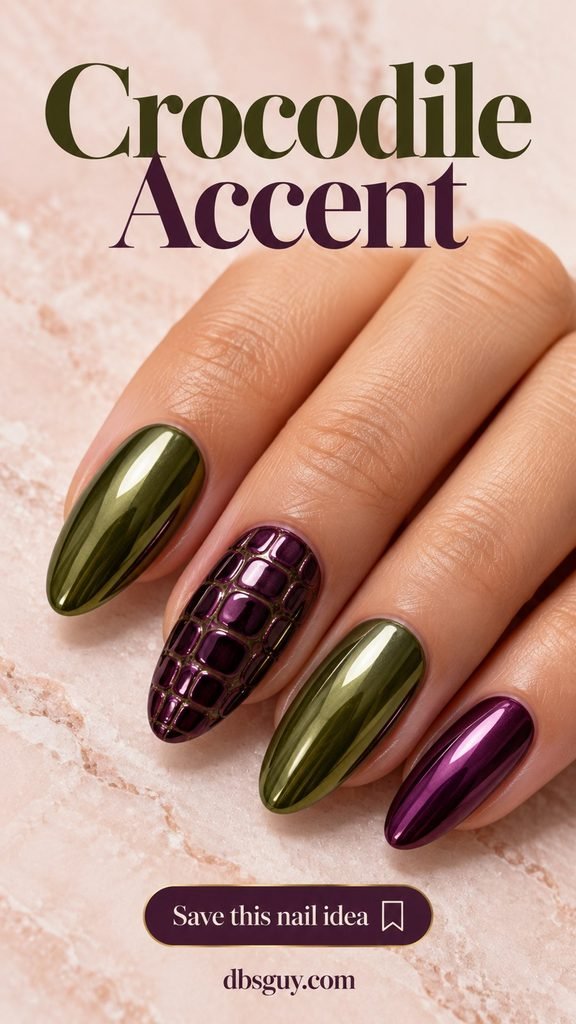
17. Crocodile Accent
Introduce a crocodile-inspired accent alongside the two main colors. An irregular scale grid adds structure without requiring a separate accent shade.
Show the artist whether you want a flat painted pattern or texture. The two have different profiles, and a photograph alone may not explain your preference.
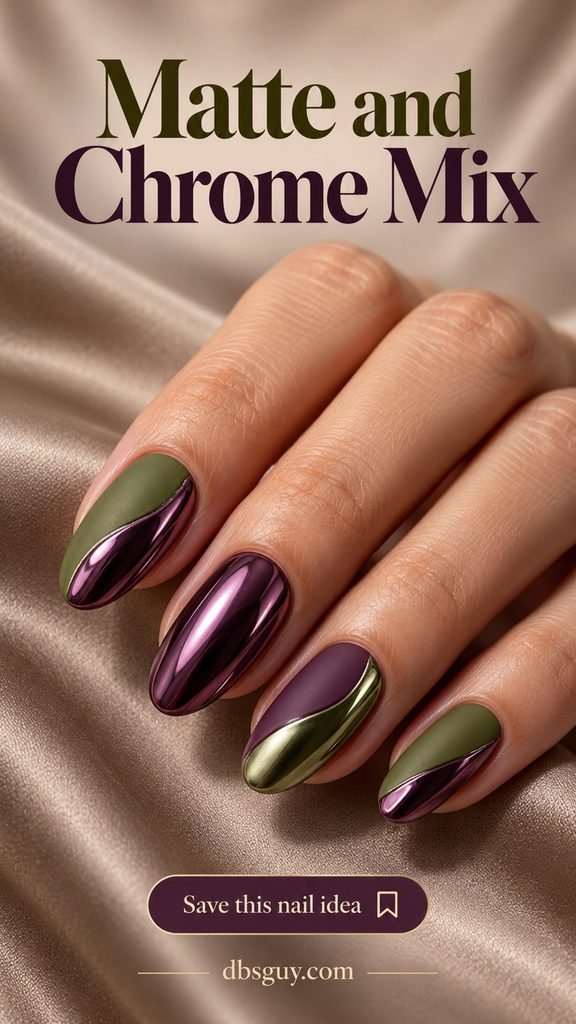
18. Matte and Chrome Mix
Mix matte olive or plum nails with reflective chrome nails in the same palette. The contrast comes from the surface finish rather than extra artwork.
Specify exactly which nails should stay reflective. A matte topcoat over a chrome area changes its shine, so the finish map matters.
19. Tiny Starbursts
Add small starbursts to olive and plum nails. A few pointed flashes echo the metallic reflection without covering the entire manicure in decoration.
Keep the rays narrow and leave clear space between motifs. One star on an accent nail is a practical adaptation for a shorter set.

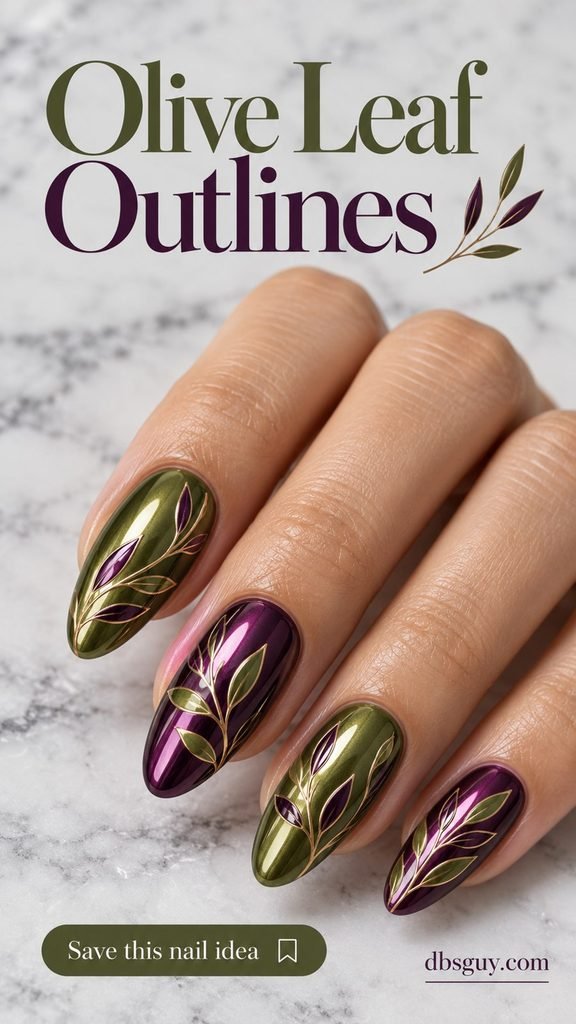
20. Olive Leaf Outlines
Draw delicate olive leaf outlines over plum. The botanical shape brings an autumn reference without orange polish or large seasonal illustrations.
Ask for a slim stem and a few distinct leaves. Too many tiny branches become difficult to read against a dark background.
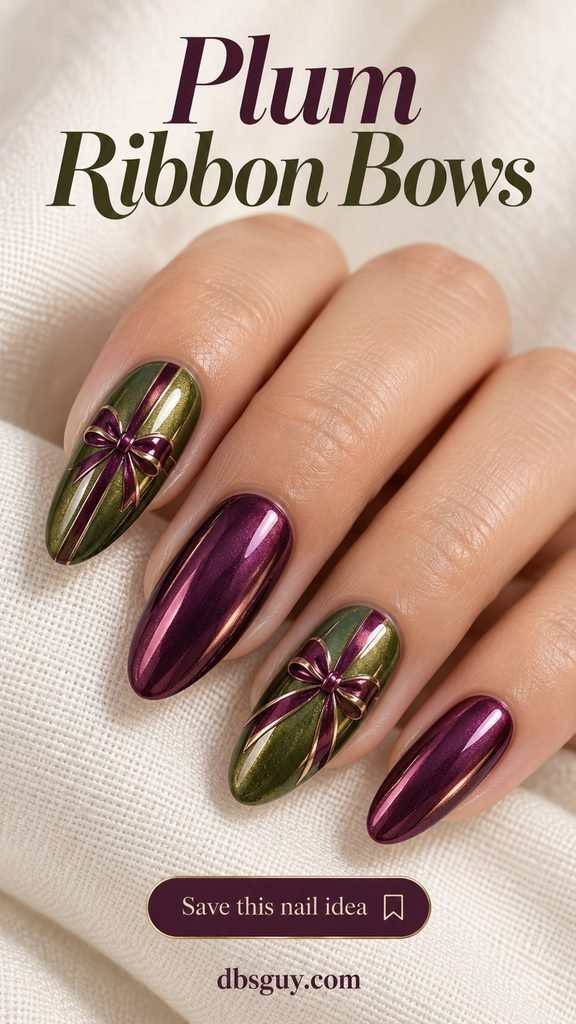
21. Plum Ribbon Bows
Place plum ribbon bows over olive nails. The rounded loops soften the sharper chrome reflection and make a decorative focal point.
A painted bow gives the motif a flatter profile than a charm. Choose one or two bows if you want the color combination to remain the main attraction.
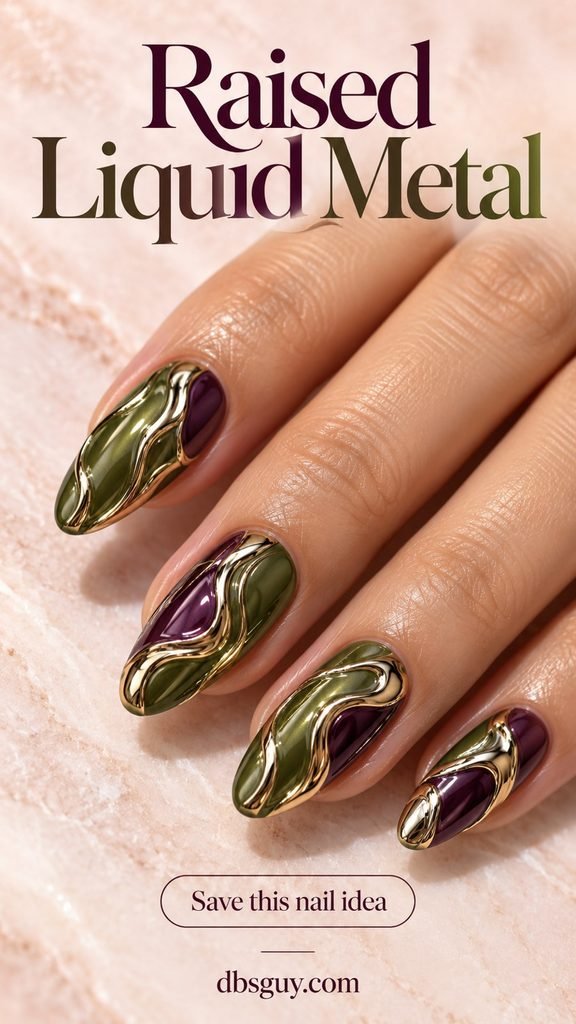
22. Raised Liquid Metal
Use raised metallic ribbons to introduce a sculptural accent. Olive and plum keep the liquid-metal idea connected to the rest of the collection.
Discuss the height before application. A low, smooth detail is a different choice from a prominent ridge, especially if you frequently handle fabric.
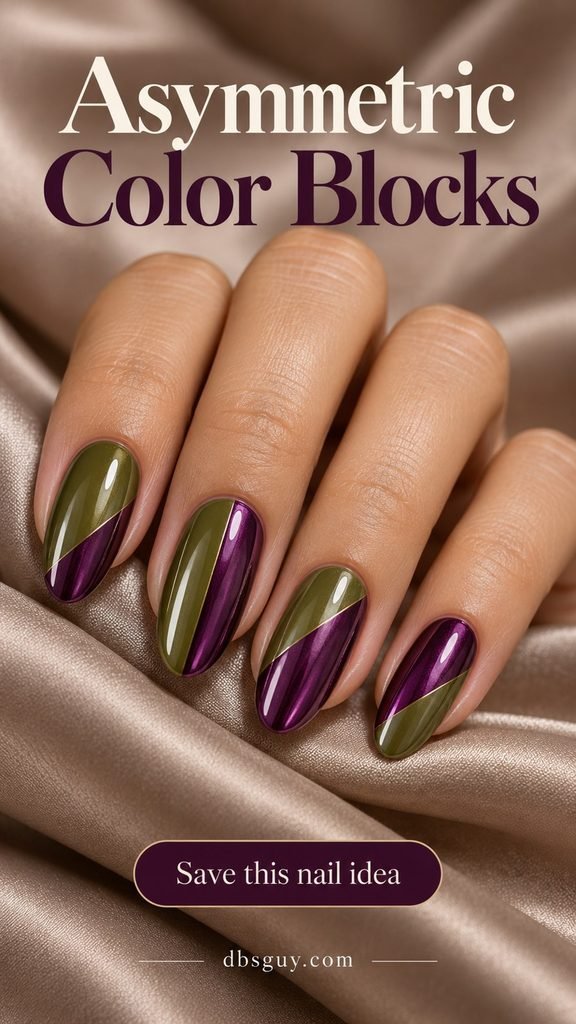
23. Asymmetric Color Blocks
Arrange off-center olive and plum blocks with areas of nude between them. Unequal shapes create an abstract design rather than a repeated diagonal split.
Repeat a small visual rule, such as one green block and one purple block per accent. That gives the artist room to vary the layout without losing coherence.
What to ask for at your appointment
Save one full-hand reference and identify the details you care about: nail length, olive undertone, plum depth, placement, and level of reflection. Ask to see the chosen chrome over both colors on sample tips. A strong silver powder may obscure the earthy shades you came for.
For patterned designs, agree on which nails carry the artwork and which stay solid. Ask how selective chrome and any raised details affect the service quote before the appointment begins. There is no single reliable price or wear time for all these designs.
Questions before you choose
Which ideas suit short nails?
Alternating solids, a single accent, micro French tips, and spaced dots keep the design legible on a smaller surface. You can also move a detailed motif to one nail instead of extending the entire set.
Can I get a similar look with regular polish?
A metallic lacquer or compatible glaze topper can suggest the shine with a simpler routine, though it may not reproduce a powder-chrome mirror. Follow the selected product’s instructions; gel powder methods and curing schedules are system-specific.
How do I keep olive and plum from looking nearly black?
Choose shades with visible green and purple in room light. Ask for a finished swatch under both daylight and indoor lighting before applying the whole set. A sheer nude area can also break up the dark color.
Should every nail have chrome?
No. Keep chrome on the tips, artwork, or a few accents if you want a quieter result. Tell your artist which areas should remain glossy or matte so the final topcoat matches your plan.