
A full-size evergreen is only one way to give Christmas a focal point. A wall tree can leave your walking space open, a decorated ladder can use something you already own, and a simple wooden frame can put your favorite ornaments on display without a mass of branches.
These 15 Christmas tree alternatives cover flat wall designs, freestanding displays, and small tabletop options. Each comes with a realistic setup approach, styling details, and a storage consideration so you can choose a tree that fits your home as well as your holiday mood.

The images in this article are AI-generated styling concepts, intended as visual inspiration rather than photographs of completed projects.
Choose Your Alternative Around the Space You Actually Have
Measure the spot before choosing materials. For a wall display, check both the available width and the surface you will attach it to. For a freestanding tree, measure the entire base, including the back legs of a ladder. A narrow-looking silhouette can still take up considerable floor space.
- No spare floor space: Try a light-strand tree, tape outline, or fabric banner.
- A collection of ornaments to show off: Choose a pegboard display or open wooden frame.
- A cozy, traditional feeling: Use graduated garland rows or a decorated ladder.
- Very little off-season storage: Consider a roll-up textile or slotted wooden tree.
- A small surface rather than a whole wall: Make a compact book tree or decorate a plant you already own.
For ideas beyond the tree itself, our small apartment Christmas decorating ideas can help you carry the same colors through the room.
1. Trace a Christmas Tree with Warm String Lights
If the evening glow is your favorite part of a Christmas tree, let the lights become the entire design. A single strand zigzagging down a wall creates a recognizable silhouette while leaving the space underneath available.

Gather: Indoor-rated LED string lights, suitable light clips or hooks, a tape measure, and a lightweight star. Check that the strand reaches an outlet without crossing a doorway; for a battery-operated strand, plan an accessible place for its battery case.
Lay out the shape before mounting it. Mark the top point and the widest bottom corners, then arrange progressively wider turns between them. A display roughly 4 feet tall and 2½ feet wide is a useful starting size for a small room, but adjust it to the wall. Support each turn without pulling the cord taut.
A dark wall makes warm lights stand out beautifully. Keep extra ornaments off the wire so they do not weigh it down. When packing up, wind the strand loosely around a piece of cardboard and label the layout measurements for next year.
2. Build a Fuller Wall Tree from Garland Rows
This alternative keeps the familiar evergreen texture while flattening the tree against the wall. Separate horizontal garland rows make the silhouette clear and give each bow or ornament room to be seen.
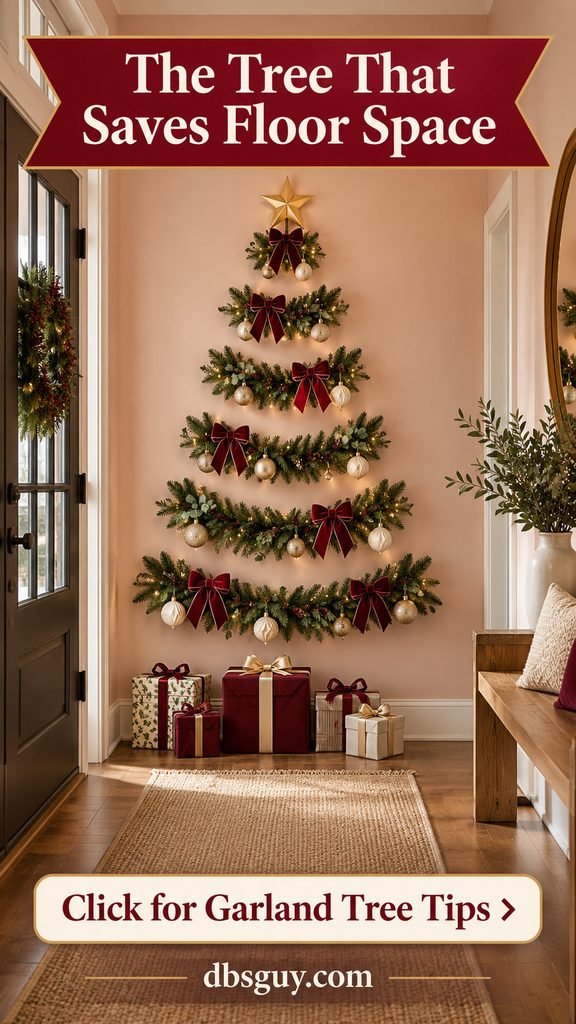
Use faux garland, light bows, shatter-resistant ornaments, and mounting hardware appropriate for the total load. Arrange the rows on the floor first, with the longest at the bottom and the shortest at the top. Leave visible wall space between them instead of packing everything into one dense triangle.
Attach each row at multiple suitable support points, following the hardware instructions rather than assuming extra adhesive hooks automatically increase capacity. Add decorations after the greenery is secure. Burgundy bows and cream baubles give this version a traditional look without requiring many ornaments.
Check the wall’s relationship to nearby doors: the garland and gifts must stay out of the door swing and escape route. For storage, label the rows from top to bottom and place them loosely in a shallow bin so the greenery is not crushed.
3. Hang a Tree Made from Natural Branches
A branch wall tree brings a quieter, more rustic feeling. Its appeal is the uneven bark and open spaces, so it works particularly well with linen, warm gray walls, paper stars, and a small number of copper ornaments.

Select clean, dry branches with no loose bark or sharp ends. Arrange them from short to long on a work surface, then tie their ends to two side cords. Make the knots secure and check that the tiers hang level before adding decorations.
The illustrated concept uses a hanging loop at the top, which concentrates the load at that mounting point. Choose an attachment that can support the complete display; a rated wall fixing may be more suitable than an adhesive hook for a larger version. Put heavier ornaments near supported areas and use light paper pieces elsewhere.
A little warm LED lighting can accent the texture, but the tree still works without it. To store it, remove the ornaments and loosely roll the tiers together in fabric. Avoid forcing curved branches flat.
4. Make a Graphic Tree with Washi Tape
A tape outline is a good choice when you want a visible holiday gesture without lights, branches, or a storage box full of decorations. A stepped outline, short trunk, and star are enough to read as a Christmas tree.
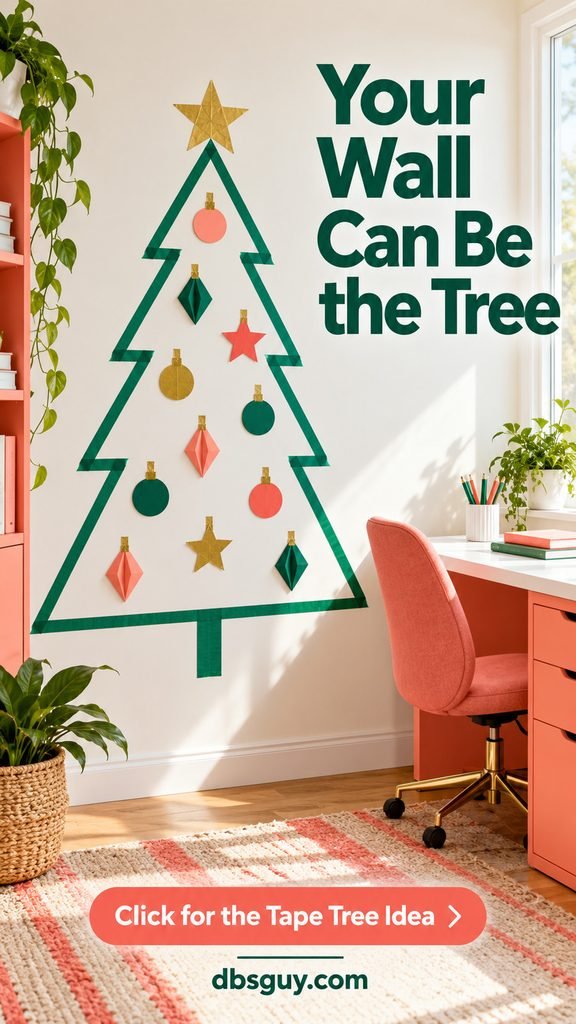
Choose low-tack decorative tape, a ruler, and a few flat paper shapes. Test the tape in an inconspicuous spot first and check the wall finish: delicate paint, wallpaper, and textured surfaces may not tolerate it. “Removable” does not guarantee a mark-free result.
Start with the top point, work down one side, then mirror the outline on the other. Emerald tape on a pale wall gives the shape contrast; coral or gold paper ornaments can add color inside it. Use only a few so the outline remains the main feature.
If tape is unsuitable for your wall, make the same design on a smooth display board. That version can move between rooms and avoids attaching decorations directly to the paint. Remove tape according to its instructions after the season.
5. Use a Felt Tree for a Soft, Interactive Display
A felt tree offers something different from a purely decorative wall tree: the fabric ornaments can be rearranged. It can be a cheerful seasonal activity in a family space, with the design scaled to the person using it.
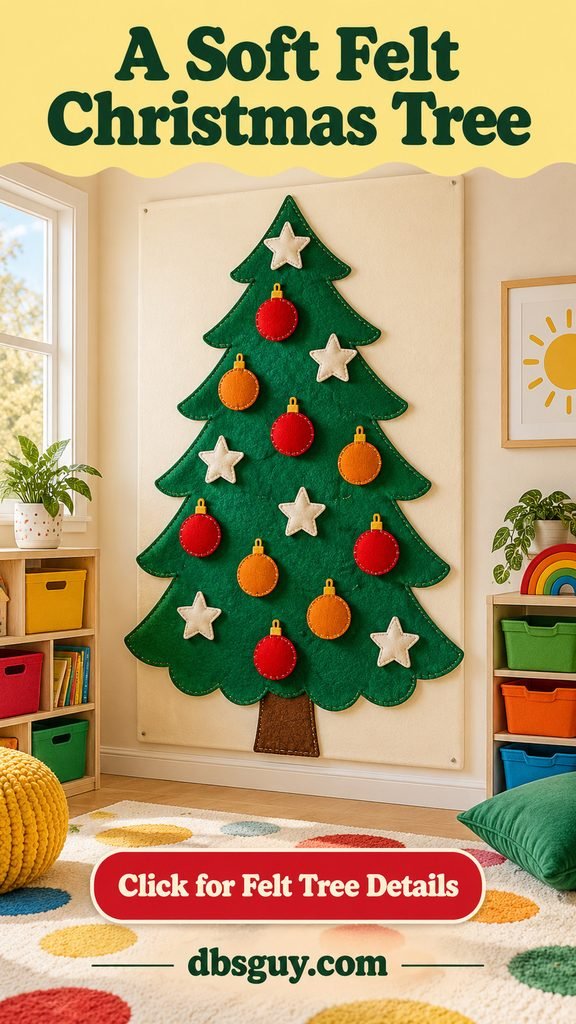
Cut a tree silhouette from sturdy green felt and attach it to a fabric-covered display panel. Make large flat ornaments from contrasting felt. Use securely sewn, age-appropriate fasteners if plain felt pieces do not stay in place; avoid loose buttons, tiny decorations, and long hanging loops.
The concept pairs white stars with red and orange circles, a simple palette that remains easy to read. Keep the outline broad rather than cutting lots of narrow points that can curl or tear. Secure the panel so it cannot tip, and supervise young children.
This is a soft craft display, not a guarantee of child or pet safety. Leave off electrical lights. At the end of the season, store the ornaments in a pouch and roll or lay the tree flat to avoid deep creases.
6. Arrange Holiday Cards in a Tree Shape
Let this year’s greetings become your Christmas tree. A card display has a personal quality that a matching ornament set cannot reproduce, and it can grow as more cards arrive.
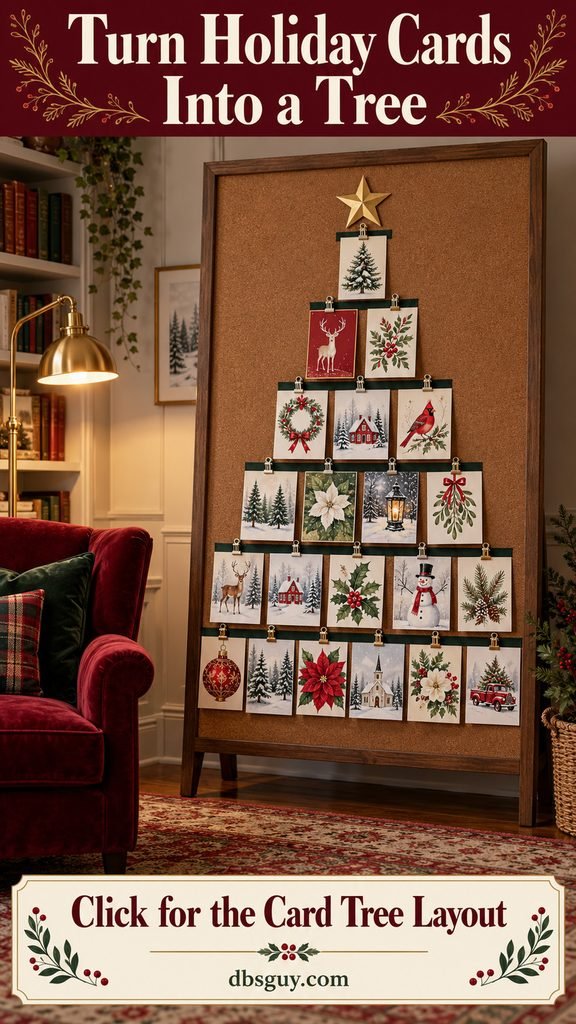
Use a large framed corkboard or fabric board with securely attached ribbon rows and small clips. Begin with one card near the top, then widen the arrangement toward the bottom. You do not need a perfectly filled triangle; a few deliberate gaps keep the display from looking crowded.
Mix cards by color and size instead of putting every large card in one row. A simple gold star gives the arrangement a clear top point. If family photos are the priority, let those take the central positions and place illustrated cards around them.
A board offers more flexibility than taping treasured cards directly to the wall. Stabilize it if it stands on furniture, and keep clips out of reach of small children. After Christmas, save the cards you want to keep and reuse the board.
7. Create an Ornament Tree on a Pegboard
If you love the ornaments more than the greenery, a pegboard gives them a clear stage. Baubles arranged in a triangle supply the tree shape, while the panel makes their colors and finishes easy to appreciate.

Choose a sturdy pegboard, compatible pegs, lightweight ornaments, and a stable display stand or suitable wall mounting. Mark a narrow top row and gradually wider rows beneath it. Hang ornaments individually so you can adjust their spacing without rebuilding the display.
Teal and gold look striking against natural wood. Keep the largest ornaments toward the bottom and use smaller ones near the point. Leave enough space that the baubles do not collide when someone walks past.
The easel in the concept is part of the footprint, so measure its rear leg as well as the board width. Follow its load limits and stabilize the setup. Use inexpensive lightweight ornaments on an exposed display; give fragile or irreplaceable pieces a more protected home.
8. Decorate an Open Ladder as a Christmas Tree
An A-frame ladder already has the widening outline of a tree. Greenery around the rails and a few ornaments between the steps turn that structure into an intentionally rustic holiday display.

Start with a sound ladder on a level floor. Open it fully and engage its locking spreaders according to its instructions. Measure the whole footprint before placing it in a corner, and choose a spot away from doors and busy walking routes.
Wind one garland around the rails, securing it with removable ties that do not interfere with the hinges or locks. Hang lightweight ornaments on short loops and attach a small topper securely. The illustrated red-and-gold palette looks warm against the olive wall.
Keep presents on the floor rather than creating a tower of items on the steps. Do not climb or use the ladder while it is decorated, and keep it away from children who might treat it as play equipment. For softer finishing touches, browse our Christmas tree bow ideas.
9. Choose an Open Wooden A-Frame
A purpose-built wooden frame offers a cleaner silhouette than a ladder. Two diagonal rails, a stable base, and a few hanging ornaments can make a minimalist Christmas tree feel complete.
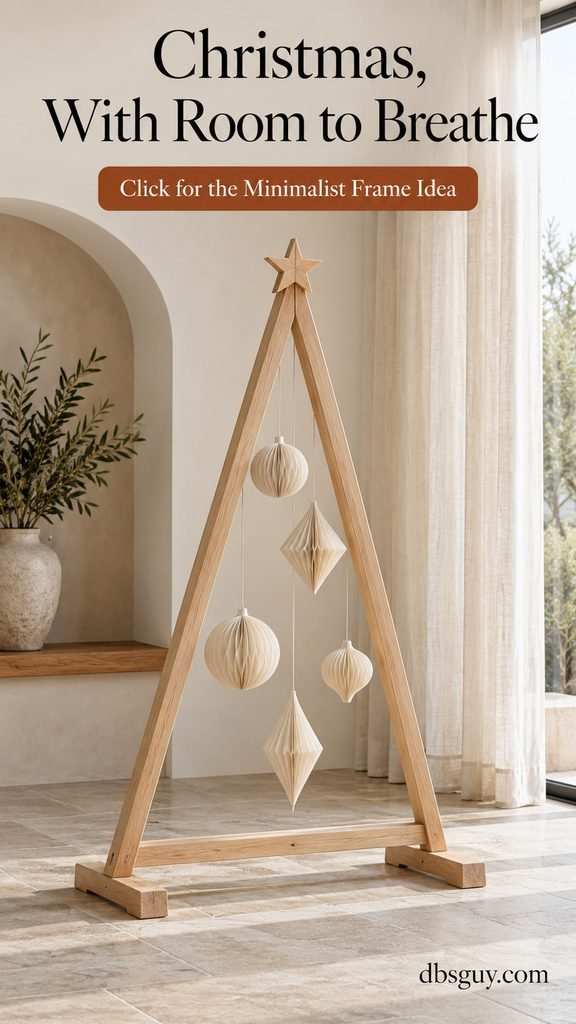
Choose a freestanding frame with a base designed to support it. If you are making one, use a proper woodworking plan for the joints and stability; two loose boards leaning together are not a reliable substitute.
Let most of the triangle stay empty. A small wood star and ivory paper ornaments suit pale oak beautifully, especially in a room with stone, linen, and warm white walls. Hang the ornaments at different heights while keeping their strings short enough to stay contained within the frame.
Before buying, check whether the frame actually folds or comes apart. A simple appearance does not necessarily mean simple storage. Keep removable fittings in a labeled bag and pack paper decorations separately so the wood does not flatten them.
10. Stack a Small Christmas Tree from Books
A tabletop book tree is a lovely fit for a reading corner. Green, cream, and burgundy covers provide their own decoration, while a little light brings out the edges of the stack.

Use closed hardcovers with firm, reasonably even covers. On a sturdy surface, arrange a broad stable bottom layer, then build progressively smaller layers above it. Keep the stack low enough to remain steady and stop if any layer rocks or slides.
Use books you can spare for the season, rather than valuable editions that could be scuffed. Place a lightweight paper star at the top. If you add indoor-rated LEDs, follow their instructions, keep the power supply accessible, and do not pinch the cord between books.
The compact version in the concept works as a console display; it does not need to become a floor-to-ceiling sculpture. Skip candles nearby. Once the holidays finish, unwind the lights carefully and return the books to the shelves.
11. Build a Tree from Wrapped Empty Boxes
A gift-box tree brings pattern and color to the room before the real presents arrive. It is particularly useful when you already have sturdy packaging that can be reused.

Choose rigid empty boxes that become progressively smaller. Arrange a wide base with smaller boxes centered above it, keeping the structure modest in height. Secure the boxes together in a way that prevents shifting; if you cannot make the stack stable, use a low stepped arrangement instead.
Limit the wrapping to two or three coordinated papers. Dark green, cream stripes, and burgundy ribbon give this concept enough variety without making every layer compete. A light topper is plenty.
Keep actual gifts separate, so removing one does not destabilize the display. Avoid putting a stack where pets or children can knock it over. Nest the empty boxes for storage when their shapes allow it, and save usable ribbon for next year.
12. Style Bare Branches in a Heavy Vase
A branch arrangement keeps the tree’s open, sculptural quality without copying a full evergreen silhouette. It can make a bedroom or quiet living-room corner feel festive with only a handful of ornaments.

Select a clean, dry branch arrangement and a heavy, wide-bottomed vase. Keep the branches in proportion to the container, and secure them inside so they do not rotate or tip. Place the vase directly on a stable surface rather than near the edge of a narrow shelf.
Decorate the stronger branches with very light paper stars and a few small ornaments. Leave some ends bare so the natural shape remains visible. Cream and champagne decorations soften the look against tan walls.
Choose branches without exposed sharp points at eye level, and keep the display out of traffic. Remove decorations before moving it. If storage would be awkward, retain the vase for everyday use and choose a new suitable branch arrangement another year.
13. Give an Existing Houseplant a Holiday Touch
An indoor plant can become the room’s Christmas focal point without bringing in a second large object. The key is to decorate gently and let the plant’s natural shape do most of the work.

Choose a healthy plant with sturdy woody branches and a stable pot. Add only very light paper ornaments or small bows, using loose, soft ties. Avoid attaching decorations to leaves, new growth, or thin stems, and remove anything that bends a branch.
The illustrated ficus uses cream decorations and red ribbon against broad green leaves. It does not need a topper or a strand of lights to feel seasonal. Keep the plant in a location suited to its usual care rather than moving it into a dark corner solely for symmetry.
Leave access for watering, and avoid glitter or adhesive on the foliage. If pets share the room, check the particular plant’s suitability for them before choosing this option. Remove the decorations after the holidays and inspect the ties for any marks.
14. Hang a Roll-Up Fabric Tree Banner
A textile tree gives you a substantial holiday image with almost no depth. It suits a guest room, small apartment, or any space where storing a rigid tree would be difficult.

Choose a ready-made banner or make one from sturdy fabric with a sleeve for a wooden dowel. A sewn fabric silhouette or textile design keeps the surface flat; decorations do not need to dangle from it.
The concept combines a green geometric tree, white stitched dots, and a burgundy star on cream linen. Against a terracotta wall, that restrained design feels warm rather than stark. Hang it from suitable hardware, away from a bed or anything that could catch the fabric.
For a handmade version, follow the fabric paint or adhesive instructions if you use them. Our DIY paper Christmas decorations offer companion accents for the room. Remove the dowel before storage if possible, then roll the textile gently around a tube to limit creases.
15. Use a Slotted Wooden Tree That Packs Flat
Two intersecting wooden silhouettes can turn a flat material into a freestanding Christmas tree. This is a good option when you want an object with a clear tree shape but prefer a pared-back finish.

Look for a kit made from two panels that slot together at right angles. Check the assembled base dimensions, panel thickness, and storage size before buying. A DIY version needs a suitable plan: slot width and placement affect both the fit and the tree’s stability.
Keep the wood visible. A few lightweight white ornaments in pre-made hanging holes look intentional against pale birch, while dense garland would hide the construction. If painting it, use a coating appropriate for the material and let it cure as directed before assembly.
After Christmas, remove the ornaments, separate the panels as instructed, and protect them from moisture and warping. Do not force a tight joint apart. Store fittings with the panels so the tree is straightforward to assemble next season.
Make the Setup Work as Well as the Styling
Flat trees still need reliable supports, and freestanding alternatives still need a stable base. For adhesive mounting, follow the specific product’s surface restrictions, weight rating, preparation, wait time, and removal instructions. Do not assume a hook is suitable for wallpaper or that several hooks can support any weight.
For lighting, use a strand rated for its location, replace damaged cords, and follow the manufacturer’s connection limits. Use suitable clips rather than driving nails through a light cord. Keep paper, fabric, dried branches, and greenery away from flames and heat, and turn decorative lights off before leaving home or going to bed. The NFPA’s winter holiday safety tips explain these precautions.
Leave doors, windows, and walking routes clear. In a home with young children or pets, also consider reachable cords, loose ornaments, small fasteners, and climbable structures. A different tree shape does not automatically remove those concerns.
Frequently Asked Questions
What is the easiest Christmas tree alternative for a small apartment?
A tape outline is simple if the wall finish can tolerate it. A fabric banner is another straightforward choice when you already have a suitable hanging point. If you want evening sparkle, a light-strand tree takes more layout work but leaves the floor open.
Can I make a wall Christmas tree without drilling?
Some lightweight designs can use surface-compatible removable mounting products, but suitability depends on the wall and the finished weight. A display board is an alternative when wall attachment is restricted. Check your lease and the mounting instructions; no adhesive method guarantees that every paint finish will remain unmarked.
Does a ladder tree actually save space?
Sometimes, but an open A-frame ladder can have a surprisingly deep footprint. It is most useful when it fits an existing corner or replaces another seasonal display. For a narrow passage, a flat wall tree is usually the more practical choice.
Which alternative can hold traditional ornaments?
A suitable pegboard, sturdy purpose-built frame, or properly supported garland display can showcase ornaments. Match their weight to the supports and leave space around fragile pieces. Small branches, paper designs, and living plants are better suited to very light decorations.
How do I make a minimalist tree feel warm?
Choose one warm material or color and repeat it thoughtfully: pale wood with cream stars, branches with copper ornaments, or green fabric with burgundy ribbon. A few well-placed details and nearby textiles can give the room a holiday feeling while keeping the tree’s shape clear.
The most successful alternative is the one that fits your space and feels enjoyable to put up. Choose a single focal point, keep the supports dependable, and give the materials enough room to show their character.