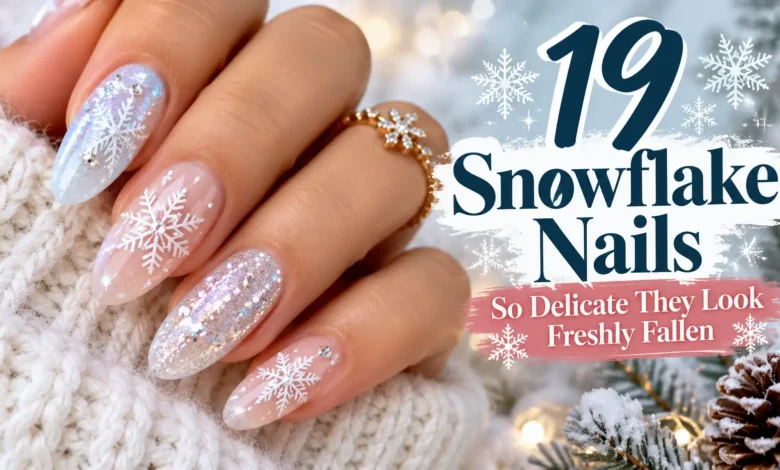
For delicate snowflake nails, start with fine artwork and enough visible base around it. One small flake on sheer pink feels barely there; a cropped white flake on icy blue makes a short nail look intentionally styled. If you want sparkle, let a glitter fade or pearl finish do the extra work instead of filling every finger with art.
These 19 designs cover short natural-looking nails, French tips, soft ombre, and a few more detailed salon options. Each explains the placement and what to change if your nails are shorter than the reference.
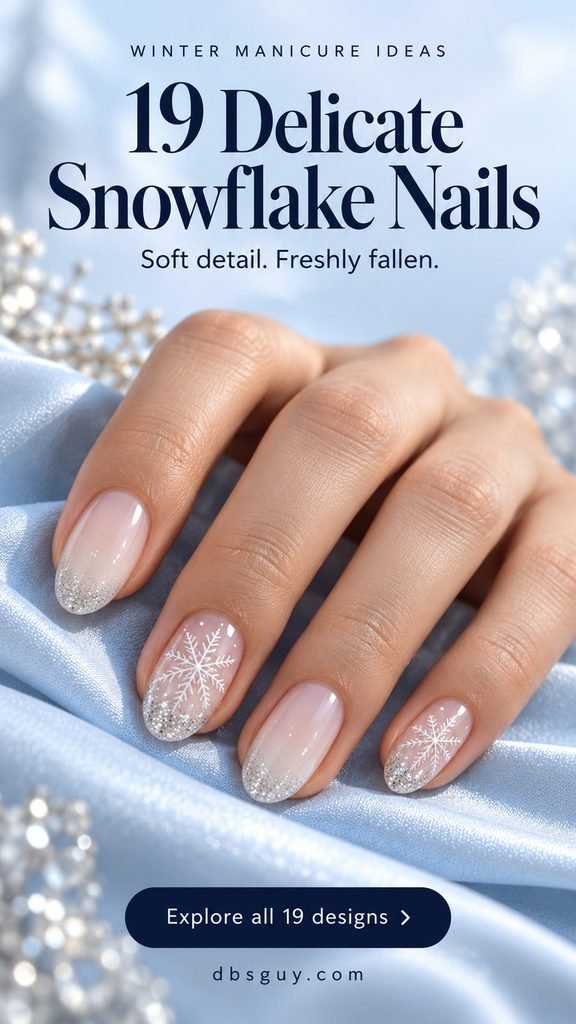
The images are AI-generated manicure concepts, not photographs of completed or tested salon services. Use them to discuss color, placement, and finish with your nail artist; actual results will vary.
Choose a starting point: Try idea 1 for the simplest accent, idea 4 for short nails, idea 6 for silver sparkle, or idea 14 for a dotted design. Idea 19 is the clear-extension option.
1. Sheer Pink With One Barely-There Snowflake
If you normally wear plain pink, start here. A translucent blush base and one white snowflake on the ring finger give short rounded nails a winter detail without changing their quiet character. Leave the other nails undecorated so the small drawing has somewhere to stand out.

Ask for a base that lets a little of your natural nail show through, then a fine-line flake with open space between its branches. A small flat nail-art decal is a useful home alternative to painting the detail. Check its width against your nail first; a motif that almost touches both sides will feel much bolder than this reference.
2. Micro French Tips With Snowflake Accents
A narrow white French tip gives the snowflakes a clean frame. Here, two accent nails carry different-sized flakes over a sheer pink base, while the remaining tips stay simple. The soft almond outline adds length, but the same arrangement can work on a shorter oval.
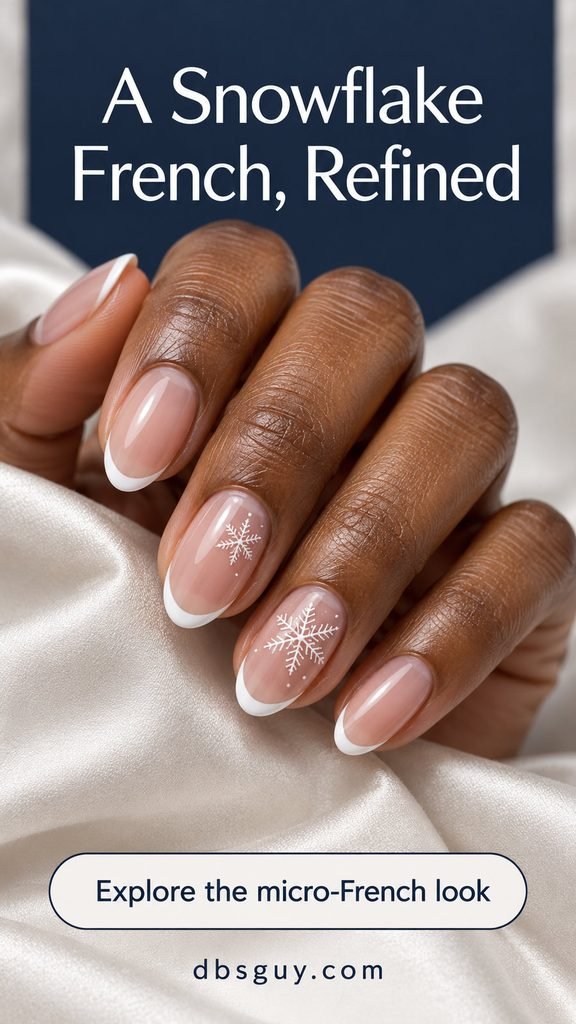
The salon request is specific: slim white tips, two fine white snowflakes, and visible pink space between the artwork and the smile lines. If your nails are short, use just one snowflake per hand. Widening the white tip to make room for more art would change the balance; simplify the art instead.
3. Milky White With Tonal Snowflakes
White-on-white snowflake nails are for the reader who wants the pattern to reveal itself up close. A translucent milky base softens the manicure; slightly brighter white branches give the ring and middle nails just enough definition. There is no glitter competing with the drawing.
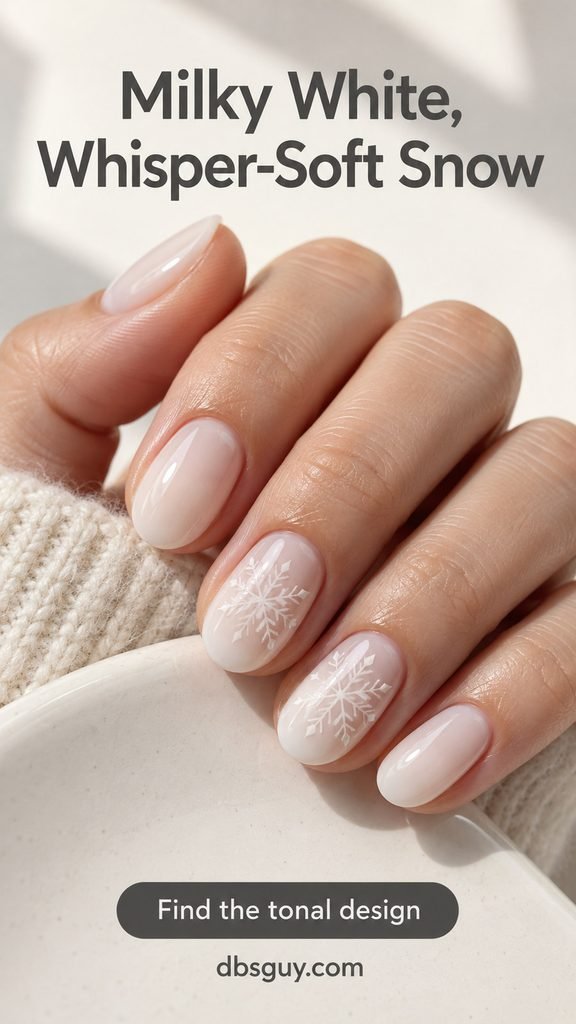
Compare the base and art color together before committing. If both are equally opaque and bright, the flake can disappear. Ask for a milkier background with crisp white linework rather than a thick white layer everywhere. Short ovals suit this soft look, especially when you want winter nails to sit quietly beside a cream sweater or white shirt.
4. Ice Blue With a Snowflake at the Edge
A partial snowflake solves a common layout problem on short nails: a full motif can take over the center. Put the drawing along one side of a pale-blue ring nail and let some of its branches extend out of the visible design. The cropped placement looks intentional rather than squeezed in.

Show your artist which edge should hold the flake. The reference leaves most of the blue uncovered and keeps the other nails plain. On a narrow nail bed, ask for fewer fine branches instead of shrinking an elaborate full snowflake until its lines merge. A short squoval shape gives the blue a neat, softly squared frame.
Also read: 21 Short December Nail Ideas That Make Tiny Details Stand Out for more ways to scale seasonal art to a small nail.
5. Lilac With a Trail of Miniature Flakes
Instead of one large snowflake, this lavender manicure uses a small vertical arrangement on a single accent nail. Different-sized flakes create a little movement down the ring finger. Keeping the surrounding almond nails plain prevents the pastel color from becoming a busy all-over pattern.

This is a placement-led salon request: glossy lilac, one accent nail, and miniature flakes staggered along its length. Three motifs need enough room to remain separate. For a shorter version, reduce the trail to two or one; keeping three at any cost can turn delicate branches into a white stripe.
6. Silver Glitter Tips With a Single White Flake
For a dressier version, let silver sparkle collect at the tips and fade toward a sheer pink base. One white snowflake on the ring nail gives the glitter a winter focus. The clear-looking lower half keeps the manicure lighter than an edge-to-edge silver coating.

Ask to compare glitter particle sizes. Small reflective flecks give visible sparkle; very fine shimmer offers a softer interpretation. Keep the densest silver close to the free edge, particularly on short nails. Place the flake where there is enough plain pink behind it for the branches to read clearly, rather than burying it in the brightest patch.
7. Midnight Navy With One Fine Silver Snowflake
Delicate does not have to mean pale. Glossy navy gives a very small silver snowflake strong contrast, so the drawing can stay fine instead of large. Short rounded nails and one accent finger keep the dark manicure restrained enough for everyday wear.

Request metallic silver linework, not a raised snowflake charm or a fully glittered accent nail. Check a navy swatch in ordinary indoor light if you want it to stay visibly blue. The plain surrounding nails are part of the design: adding silver to every fingertip would pull attention away from that one small winter detail.
8. Sheer Nude With Diagonal Snowfall
Two small flakes and a loose trail of dots give a sheer nude manicure the feeling of snow drifting across a window. The middle and ring nails carry the movement; the remaining nails stay plain. This arrangement relies on the open base as much as the white marks.

Ask for a diagonal trail, leaving generous clear-looking space around it. Vary the distance between dots so they look scattered rather than like a rigid border. If you prefer a shorter nail, use one flake and a few dots on each accent. Avoid filling every empty patch: that space is what keeps the snowfall airy.
9. Blush-to-White Ombre With a Snowflake Above the Fade
A soft pink-to-white fade suggests snowy tips without a hard French line. The fine snowflake sits over the pink part of the ring nail, where its white branches remain visible. It is a gentle option for a winter celebration when you like a blended finish more than a crisp border.

Ask your artist to show you where the white fade will begin before placing the flake. If the nail is short, keep the blend compact and the motif small; a long gradient from a reference cannot simply be compressed without changing the design. Skip extra glitter if the appeal is the smooth, cloudy transition.
10. Pearl Glaze With a Fine White Snowflake
Pearly ivory changes as the light moves across it, while the white snowflake stays a crisp little drawing on top. That difference separates this look from the quieter milky-white option. Keep the finish softly luminous if you want the artwork to remain the focus.
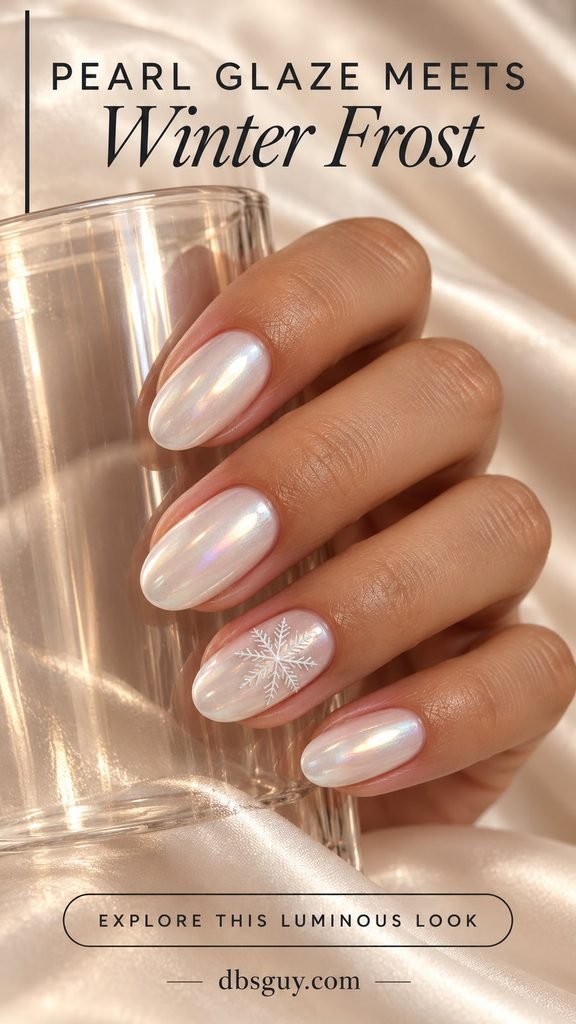
At the salon, ask for a pearl or opalescent effect and one fine white snowflake, then compare the sample with a mirror-chrome finish. They give different amounts of reflection. A pearlescent regular polish can suggest the color mood without duplicating a powder service. Look at the sample from a few angles so you can judge whether the flake is still easy to see.
Also read: 19 Neutral December Nail Ideas That Go With Every Holiday Outfit if you want to compare other quiet base colors.
11. Muted Sage With an Ivory Snowflake
Sage offers a softer green than a deep holiday evergreen. An ivory snowflake gives the muted base a warm winter detail, especially beside oatmeal knits, camel, or cream. On short ovals, one centered motif feels complete without adding a second color to the other nails.

Choose the green and the artwork together. A yellow-leaning ivory will give a warmer result than a stark white, and a gray-green base will feel quieter than mint. Leave a clear border of sage around the snowflake so its branches have room. This is a useful choice when you like earthy colors but still want the winter motif to be obvious.
12. Cocoa With a Cream Snowflake
Milk-chocolate brown makes the snowflake feel cozy rather than icy. The cream-colored branches stand out against the warm base, with tiny rounded ends giving the drawing a softer character. A short rounded-square shape keeps the look compact.

Ask for milk chocolate rather than an espresso shade if you want the brown to remain clearly visible. Keep the flake on one nail and make the cream lines narrow enough to leave brown between them. If you already wear warm neutrals, this palette is an easy way to add seasonal art without switching to blue or silver.
13. Matte Dusty Blue With a Glossy White Snowflake
The detail here comes from the finish as well as the color. A velvety matte blue background makes the slightly raised, glossy white flake stand apart. The surrounding nails stay matte and undecorated, so the accent can be noticed even without glitter.

Specify a matte base and a shinier snowflake when booking; an all-over glossy finish would change the effect. This is a good design to discuss with an artist because the finishing order depends on the products used. If you dislike raised art, request a flat white version and keep the blue-and-white contrast as the main feature.
14. Taupe With a Snowflake Made of Tiny Dots
This graphic version replaces branching brushwork with separate white dots. Six dotted spokes radiate from a center point on a mushroom-taupe ring nail. It is a useful direction if you enjoy a snowflake shape but do not want intricate lace-like lines.
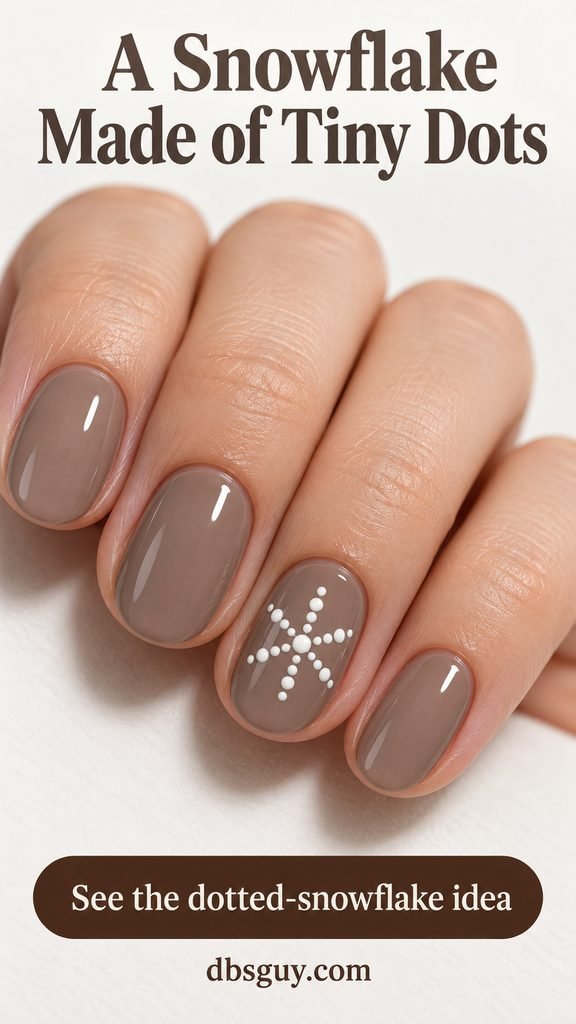
For a home interpretation, a small nail-art dotting tool lets you place the pattern one mark at a time. Start with the center and build the spokes outward on a practice surface first. Keep visible taupe gaps between dots and let the base dry according to its directions. On a small nail, shorten the spokes instead of crowding in extra dots.
15. White French Tips With a Silver Echo Line
A silver curve just below a white French tip gives this manicure a second, finer edge. The strip of sheer pink between them is important: it makes the silver look deliberate. A snowflake on the ring nail sits inside that frame rather than replacing the tip.
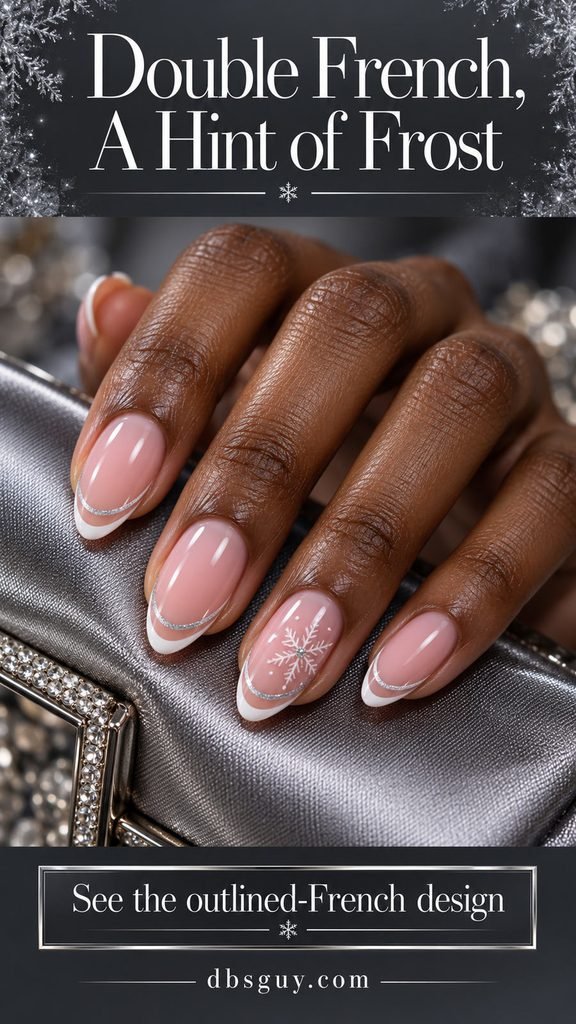
Bring the reference and ask for white tips, a separate fine silver smile line, and one snowflake accent. Keep a visible gap between the two curves. Medium almonds leave room for the full arrangement; on shorter nails, use a narrower white tip or omit the silver line on the accent finger so the flake is not squeezed between details.
16. Cranberry Jelly With One Quiet White Flake
A translucent cranberry finish gives the red depth while one white snowflake supplies the seasonal detail. This is the clearest Christmas-party option in the collection, but the short oval shape and plain surrounding nails keep it from becoming a full themed set.
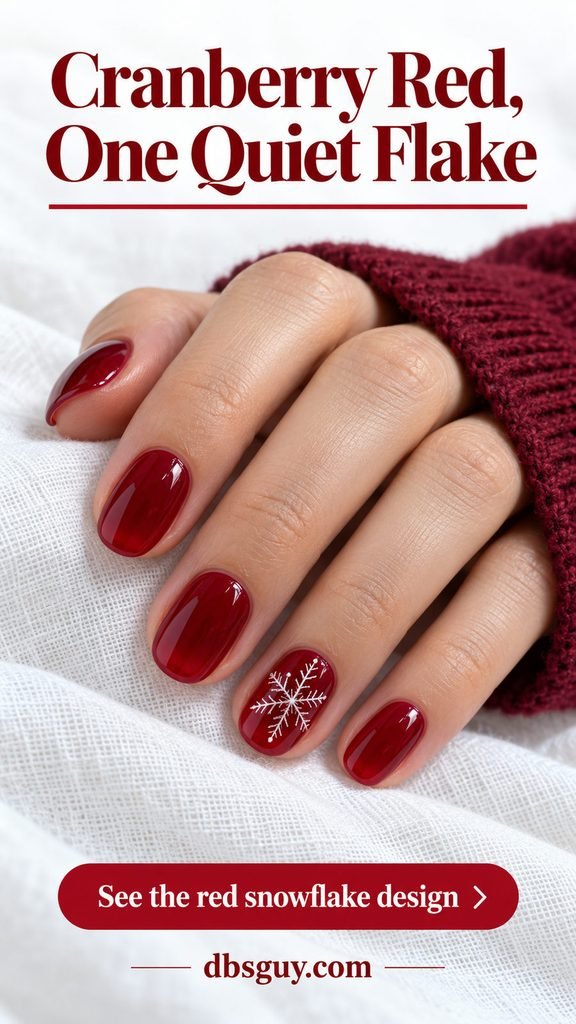
Tell your artist whether you want a jelly-like translucent red or an opaque cranberry cream; the reference leans glassy. The flake needs only a few fine branches to read against the color. If you want the same layout for January, changing the base to a muted plum is a color adjustment you can discuss without adding more art.
17. Pale Gray With Separate Knit and Snowflake Accents
A cable pattern and a snowflake can share a manicure without sharing a nail. Here, the middle finger carries the raised knit detail, while the ring finger holds the white snowflake. The pale gray base ties them together, and the other fingers stay plain.

Keep those two accents separate in your salon request. Stacking knit texture underneath a detailed flake would make a much busier design. If a raised surface would bother you when pulling on gloves, ask for flat painted knit lines instead. A short squoval shape gives both patterns a broad enough surface without requiring long extensions.
Also read: 17 Sweater Nail Designs for December That Bring Cozy Knit Texture to Your Manicure for more flat and raised interpretations.
18. Sheer Nude With a Tiny Crystal-Center Snowflake
One tiny clear crystal adds a point of light to a white snowflake without turning the whole nail into an embellished design. The nude base stays sheer, and the surrounding nails are completely plain. The stone belongs at the center so the fine branches can spread around it.
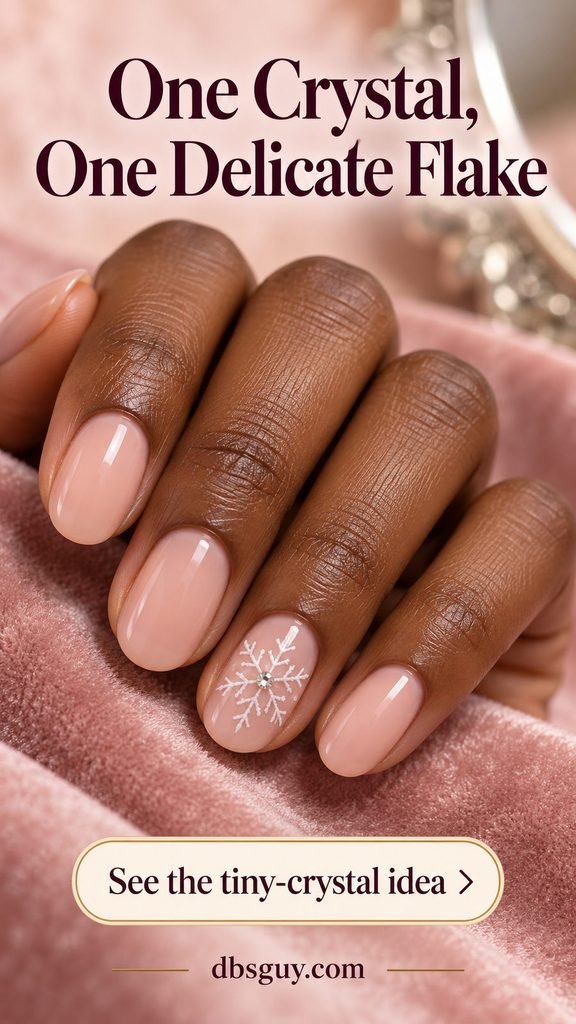
Ask to see the crystal size against your nail before it is attached. A large stone can hide the very drawing you chose. If you often wear knits or prefer a smooth surface, a painted silver center dot is a flatter alternative. Have raised embellishments applied with a nail-appropriate system and follow the technician’s care and removal directions.
19. Clear Tips With Snowflakes That Seem to Float
Transparent tips make the white artwork appear suspended beyond the nail bed. In this reference, snowflakes cross the pink-to-clear transition on two almond nails, while the other clear edges remain bare. The transparency is the defining feature, not a milky or white French tip.
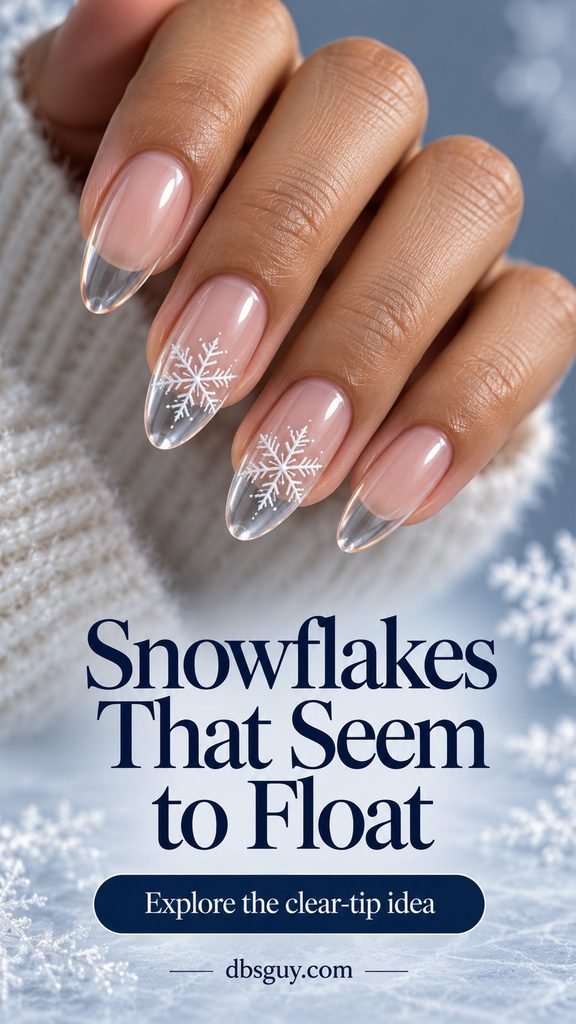
This is the option to discuss if you already want clear extensions or clear press-ons. A natural white free edge will give a different effect. Ask which length and structure suit the service you are choosing, and keep the art from becoming a dense white tip. For a shorter natural-nail alternative, use the sheer-nude snowfall in idea 8 instead of trying to copy the transparent extension.
How to Keep the Snowflakes Delicate on Your Own Nails
Choose the motif size on one nail before repeating it across the hand. You should be able to see the base color between the branches. If the drawing looks crowded, reduce the number of branches or accent nails rather than simply asking for more white.
A useful salon brief includes your everyday length, shape, base coverage, finish, and accent count. For example: “Short oval, sheer blush, glossy, one small flat white snowflake on each ring finger, with the other nails plain.” Show the reference alongside that request and confirm whether detailed art needs extra appointment time or a separate charge.
For a home manicure, a small flat decal over a dry base is a practical alternative to freehand linework. Follow the decal and polish instructions, especially the recommended top coat. Regular lacquer dries in air; gel needs its specified curing system. Do not borrow curing times from an unrelated tutorial.
A Brief Nail-Care Note Before Your Appointment
If you choose UV-cured gel, the American Academy of Dermatology’s gel-manicure guidance recommends broad-spectrum, water-resistant SPF 30 or higher on the hands, or dark opaque gloves with the fingertips removed. It also advises checking tool hygiene, leaving cuticles uncut and unpushed, and avoiding picking gel off. Choose removal directions appropriate to your actual product or service.
Snowflake Nails: Questions Before You Choose
Do snowflake designs work on very short nails?
Yes—adapt the drawing to the space you have. One small accent, a partial flake at an edge, or the dotted design is a clearer starting point than several intricate flakes on every finger. Keep your usual comfortable shape; extra length is not required for those versions.
Can you have snowflake nails without gel or acrylics?
Many of these layouts can be interpreted with regular polish and flat nail-art decals on natural nails. Pearl lacquer and silver glitter offer other regular-polish options. Clear extensions, raised texture, and some specialty finishes involve different products or services, so ask before booking.
Which colors make white snowflakes easiest to see?
Blue, navy, cocoa, sage, and cranberry give white clear contrast. Sheer pink keeps the overall manicure lighter. White-on-white is intentionally subtle: choose a translucent base and brighter artwork if you want the pattern to remain visible.
Are snowflake nails only for Christmas?
No. Snowflakes can carry a winter look through January or a ski trip without relying on Christmas imagery. Choose pale blue, sheer pink, gray, or navy if you want the set to feel seasonal beyond the holiday.
What if I want sparkle without raised decorations?
Choose the silver glitter fade, a pearl finish, or a flat metallic center dot. They give different kinds of reflection without a separate crystal. Ask for a smooth finished surface and check how the sample feels before choosing embellishments.
Save the image that matches both your preferred detail and your everyday nail length. Bring its placement notes to your appointment so the artist can adapt the look to your hands.