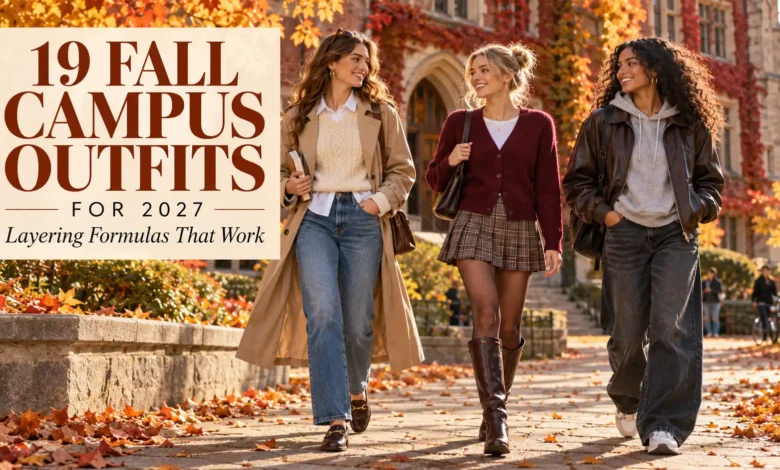
A useful fall campus outfit has to handle more than the walk out of your dorm. You might start in a chilly courtyard, spend two hours in a warm lecture hall, and head back out after sunset. Start with a base you like wearing on its own, add one removable layer, and choose shoes you can actually walk in.
These 19 fall campus outfits give you specific combinations to plan for 2027, using familiar wardrobe pieces rather than predictions about next fall’s trends. You’ll find everyday denim, skirt and dress options, a presentation outfit, and layers for wet or colder days. Match the formula to your forecast and schedule, then shop your closet first.
Choose a starting point: For a mild day, try the cardigan and jeans in Look 1. For a presentation, start with Look 6. Rain in the forecast? Go to Look 8. For a colder morning, use Look 17 as a starting point and add warmth to suit the conditions.

The images are AI-generated styling concepts, not photos documenting outfits we have worn or tested. Use them to compare layers and colors; check the fit, fabric, and weather protection of your own clothes.
1. The Cardigan You Can Take Off Between Classes
The formula: White crewneck tee + open burgundy cardigan + straight-leg jeans + white sneakers.
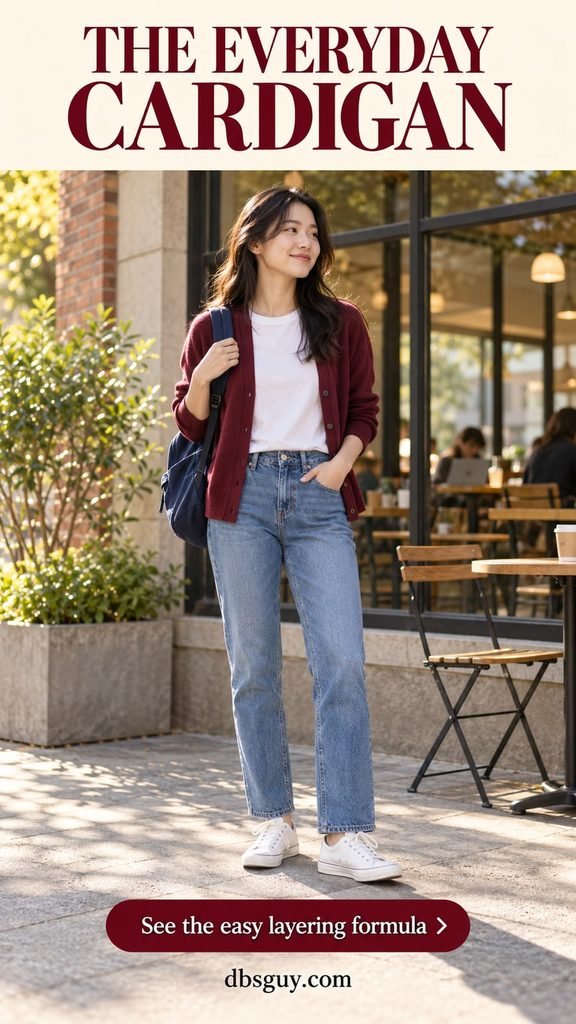
This is a good default for a day with no special dress code. The tee carries the outfit when the cardigan comes off, while burgundy adds color without requiring matching accessories. A navy backpack keeps your hands free for coffee and a campus ID.
Choose a cardigan with enough room through the upper arms to slide over the tee without dragging its sleeves. Before leaving, try it under your backpack straps: a heavy shoulder seam or oversized button can become annoying by your second walk across campus.
2. An Oxford Shirt Under a Sweater Vest
The formula: Pale-blue oxford shirt + charcoal sweater vest + navy pleated trousers + flat loafers.

If you like a little structure without wearing a blazer, layer a fine-knit vest over an oxford shirt. Let the blue collar and sleeves show; they do the visual work, so you can keep the bag and shoes simple.
The fit at the armholes matters more than an oversized label. Raise your arms and reach forward as though you’re typing. If the shirt bunches under the vest, try a roomier armhole or a less bulky shirt. Wear loafers you already know are comfortable, with socks that fit inside them without pinching.
3. A Hoodie Under a Chore Jacket
The formula: White tee + oatmeal zip hoodie + olive chore jacket + ecru jeans + tan sneakers.
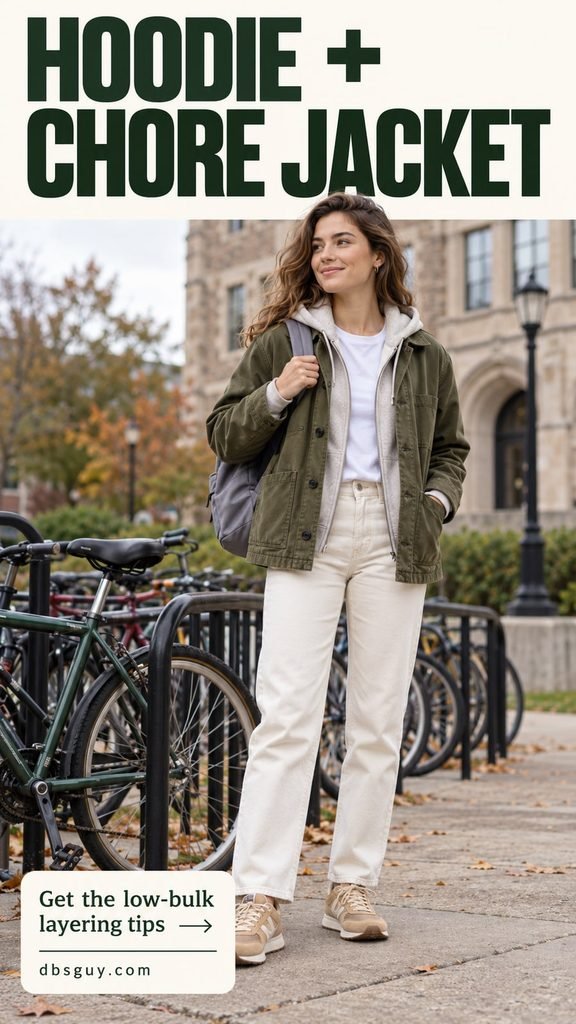
Use a lighter hoodie here, especially if you’ll wear a backpack. The chore jacket needs enough sleeve room for both inner layers; buying a larger size won’t help if the sleeves are cut narrowly. Pull the hood outside the jacket collar so it doesn’t form a lump behind your neck.
This combination gives you three useful indoor settings: tee alone, tee with hoodie, or tee with jacket. Ecru denim keeps the olive and oatmeal palette light, but blue jeans are a sensible substitute if pale pants don’t suit your day.
4. A Quilted Vest Over a Striped Tee
The formula: Navy-and-white striped long-sleeve tee + rust quilted vest + black jeans + cream sneakers.

A vest is useful when you want another layer around your torso without extra fabric through the arms. The stripes keep the outfit interesting after the rust vest goes into your bag. Black jeans also make a practical base for repeating this formula with a different colored vest.
Check the vest while sitting, not just standing. If its hem pushes up toward your chin, try a shorter cut or unzip the bottom if the design allows it. On a windy day when your arms feel cold, switch to a sleeved jacket.
5. A Corduroy Overshirt With Wide-Wale Pants
The formula: Black mock-neck top + burgundy corduroy overshirt + brown corduroy trousers + tan ankle boots.
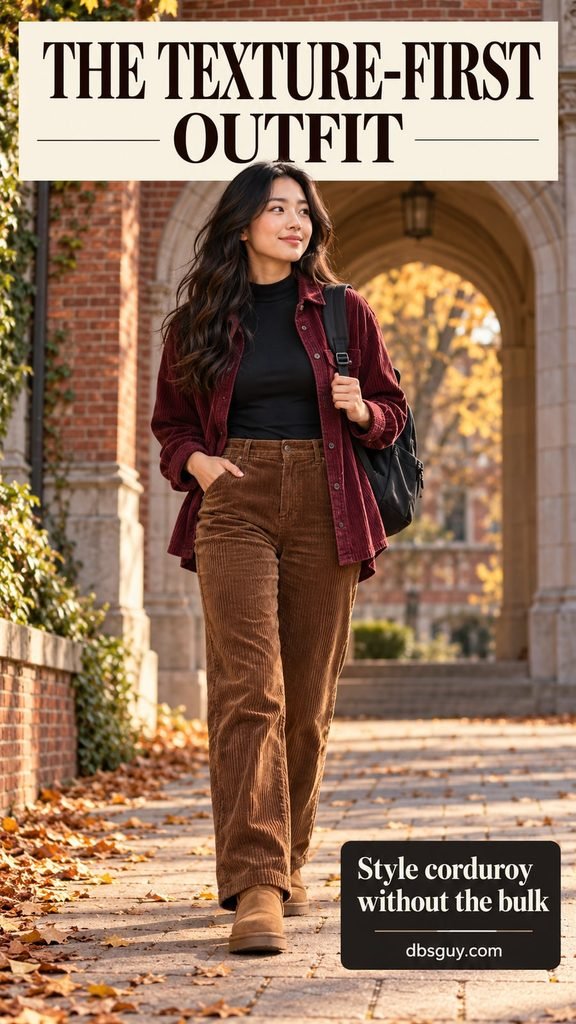
Two corduroy pieces can work together when their textures differ. Try finer ribs on the overshirt and wider ribs on the pants, with a smooth black top between them. Keeping the shirt open makes the layers easier to see and avoids a matching-set effect.
Keep the base thin enough that you can bend your elbows freely. If two corduroy pieces feel too heavy for your campus weather, replace the trousers with plain brown twill. You’ll keep the color combination while making the outfit easier to wear in a warm classroom.
6. A Blazer Over a Fine Sweater
The formula: White tee + navy fine-knit crewneck + camel blazer + charcoal trousers + black derby shoes.

For a class presentation, this combination gives you a polished outer layer and an ordinary sweater outfit underneath. Keep the white tee to a small neckline reveal, and choose a blazer that closes comfortably over the knit even if you plan to wear it open.
Do a quick presentation rehearsal in the full outfit: sit down, reach for your laptop, and raise an arm toward an imaginary slide. Tight shoulders are easier to fix before you leave. For a career fair, interview, or placement, check the stated dress expectations; those occasions may call for different clothes.
7. An Open Flannel Over a Waffle Top
The formula: Ivory waffle henley + green-and-navy flannel + black cargo jeans + black high-tops.

Let the flannel act as a casual overshirt. An ivory henley breaks up the dark plaid and black jeans, while its waffle texture gives the outfit some interest without adding another print. This is an easy option for a regular lecture-and-study day.
Keep a little room between the henley and flannel so the sleeves move separately. Cargo pockets are useful for small items, but a phone, keys, and wallet in one thigh pocket can pull the pants sideways. Put the heavier things in your backpack and keep the trouser hems off the pavement.
8. A Rain Shell Over a Light Knit
The formula: Light-gray fine-knit sweater + sage hooded rain shell + tapered black pants + weather-ready ankle boots.
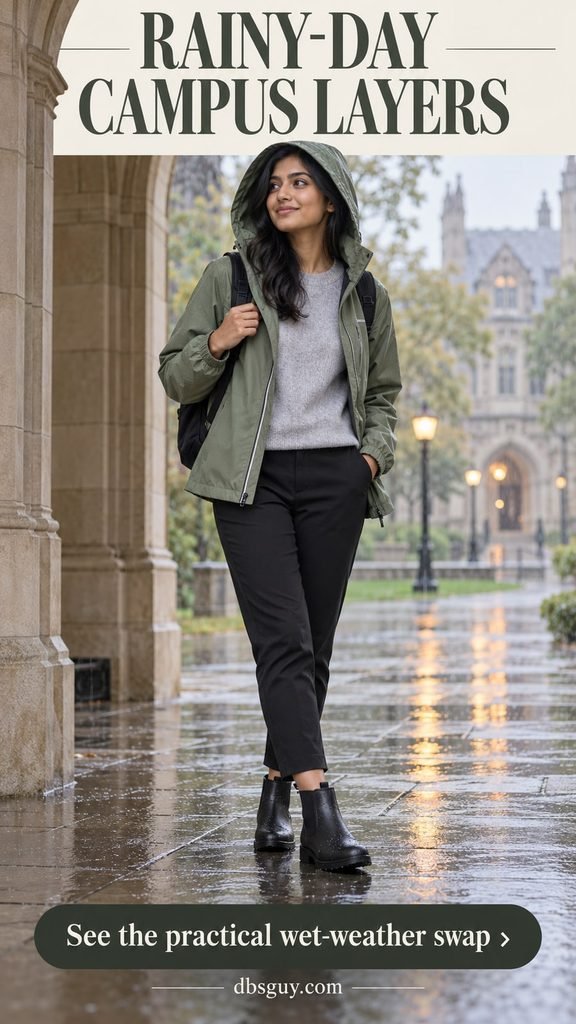
For a wet commute, separate warmth from rain protection. The knit is the removable warm layer; the shell handles the weather. REI’s layering guide explains that an insulating middle layer and a protective outer layer have different jobs, and distinguishes light-rain water resistance from waterproof protection.
Check the actual jacket and boot descriptions rather than judging by appearance. A fashion jacket can look like a rain shell without offering the same protection. Keep pant hems clear of puddles, and choose a shell that closes over the sweater. The image shows the layers open for clarity; close the shell when exposed to rain.
9. A Zip Fleece for a Long Library Day
The formula: Cream tee + navy full-zip fleece + indigo jeans + brown sneakers.

A full zip is convenient when your study spot alternates between chilly and stuffy. You can open the fleece without taking it off over your headphones, then remove it completely when needed. Indigo jeans make the combination feel a little more dressed than a sweatshirt-and-sweatpants pairing.
Choose the fleece for the space you’ll spend time in, not just the walk there. A thick plush jacket may be awkward in a tightly packed lecture seat. For a rainy day, bring a separate suitable shell; fleece is the warm layer in this formula, not the rain layer.
10. A Trench Over a Thin Polo Sweater
The formula: Thin navy knit polo + beige trench + dark straight-leg jeans + black flat ankle boots.

Try this for a dry commuter day when you want a longer outer layer without wearing a heavy coat. A thin polo gives the trench a tidy neckline and still looks intentional when the coat comes off on the bus or in class.
Carry your usual backpack while trying the trench, and walk up a few steps to check the length. If the belt tails catch on things, knot them neatly or use the coat’s belt loops to secure them. A trench is a style of coat, so check its actual weather specifications before treating it as rainwear.
11. A Pinafore Midi Over a Long-Sleeve Tee
The formula: Black long-sleeve tee + oxblood pinafore midi + opaque black tights + flat lace-up boots.
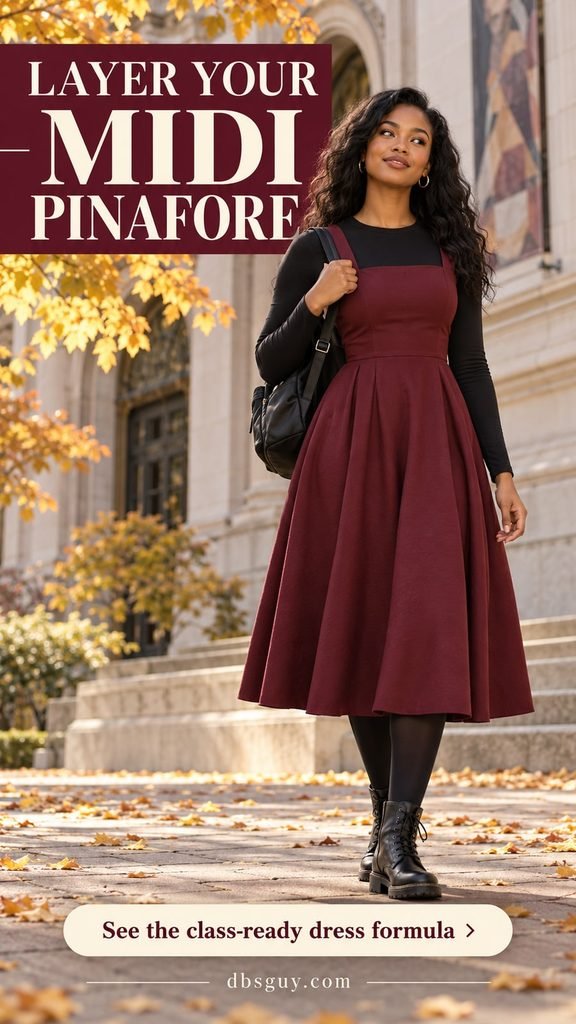
A pinafore gives you a visible layered dress outfit without asking you to manage a sweater over a dress. Wide straps and a square neckline frame the black tee, while the oxblood skirt supplies the color. Use a tee that lies smoothly beneath the bodice.
Try the dress seated and take a few full strides before deciding on the fit. The waist and skirt need room for a lecture chair, stairs, and walking. Add a weather-appropriate coat outdoors when needed; tights and a long-sleeve tee won’t make every fall forecast comfortable on their own.
12. A Crewneck Sweater With a Denim Midi
The formula: White long-sleeve tee + forest-green crewneck + dark denim midi + white sneakers.
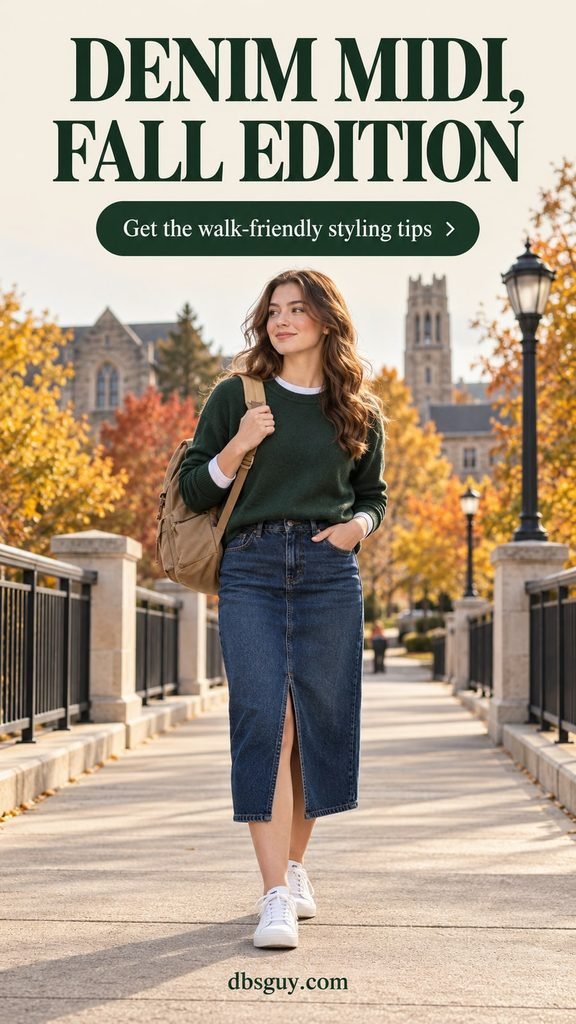
A denim midi changes the silhouette of your usual jeans-and-sweater combination while keeping the same easy colors. Let a narrow strip of white show at the collar or cuffs. The tee should be something you’re happy wearing alone if the sweater comes off.
A walking slit can make a straight skirt easier to move in, but test it on stairs and while sitting. Choose the opening and hem length you’re comfortable with. Keep a chunky sweater untucked if tucking it makes the waistband tight, or try a lighter knit instead.
13. A Long Cardigan With Wide-Leg Trousers
The formula: Cocoa tee + camel long cardigan + black wide-leg trousers + brown loafers.
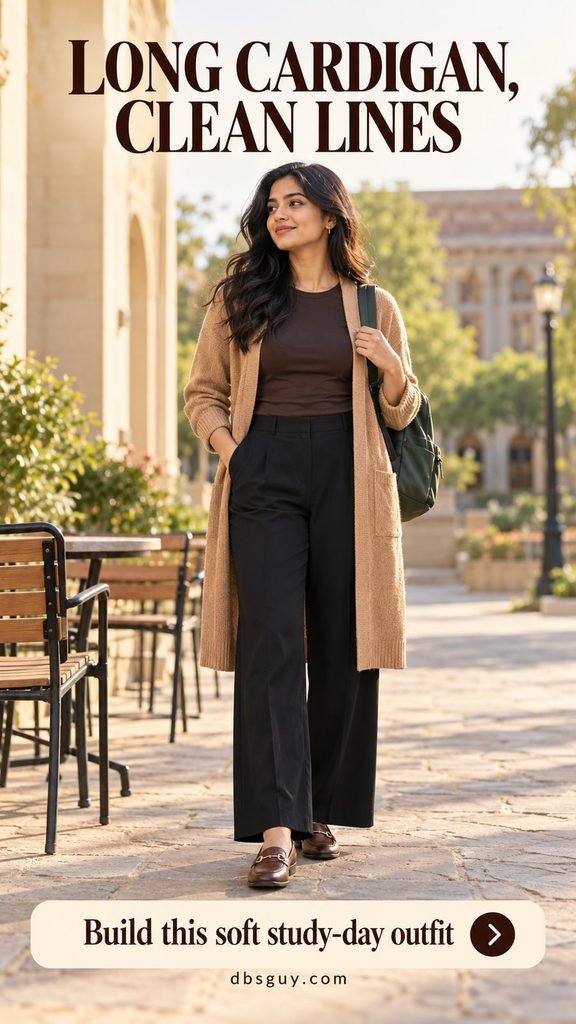
If you prefer more coverage, a below-knee cardigan and fluid trousers create a relaxed alternative to cropped layers. A lighter cocoa tee underneath keeps the upper half from becoming bulky. You don’t have to tuck it in; choose a length that feels comfortable when seated.
Pay attention to both hems. The cardigan should stay clear of stair treads, and the trousers should clear the ground in the shoes you’ll wear. If the long layers feel cumbersome, shorten the cardigan first. A hip-length version keeps the same colors and changes the amount of fabric you carry around.
14. A Long-Sleeve Tee Under a Slip Dress
The formula: Ivory ribbed long-sleeve tee + olive slip midi + open denim jacket + ivory sneakers.
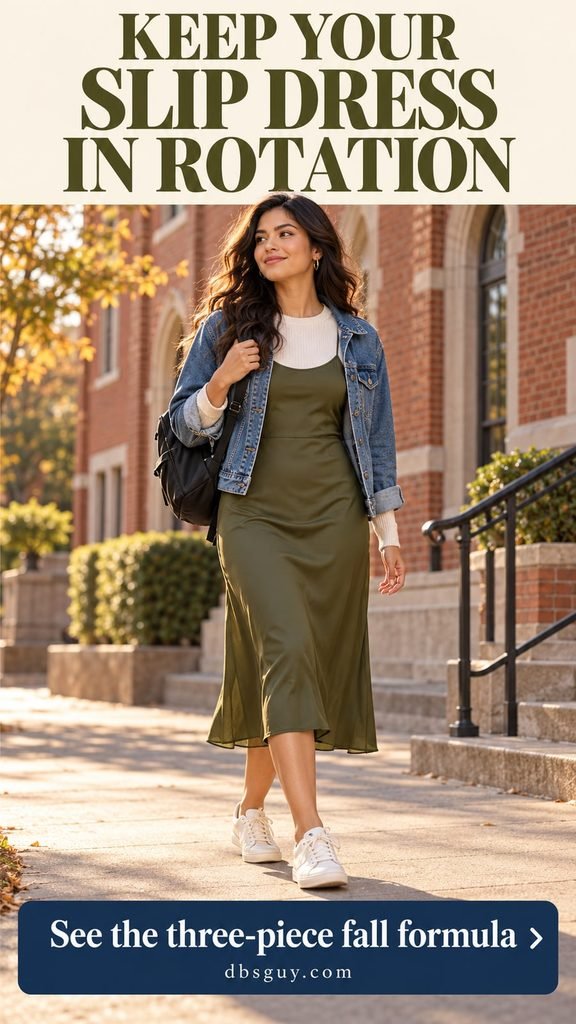
Before packing away a summer slip dress, try it over a fine ribbed tee. The denim jacket is the removable layer, while the tee and dress stay together indoors. An olive dress and blue denim keep the combination casual enough for an ordinary class day.
Some slips fit too closely through the armholes or bust to layer comfortably. Test yours with the tee underneath rather than assuming it will work. If the fabric pulls or the straps dig in, use a roomier dress. Keep the base smooth so its seams don’t show as ridges through thin fabric.
15. A Faux Leather Jacket Over a Turtleneck
The formula: Thin black turtleneck + brown faux leather jacket + charcoal jeans + flat Chelsea boots.
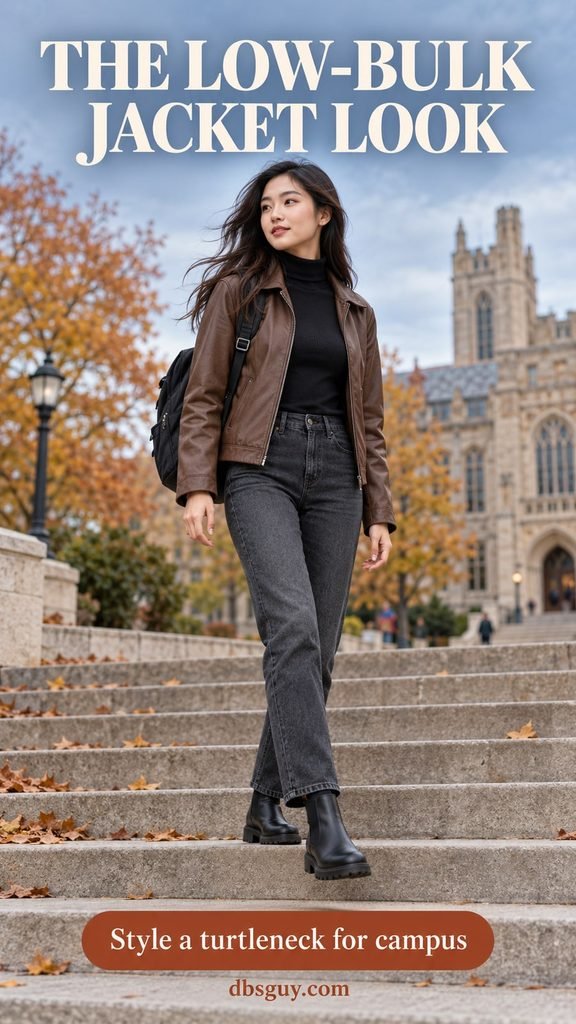
A smooth turtleneck fits beneath a structured jacket without competing with its shape. Brown and charcoal soften an otherwise dark outfit, and flat boots make more sense for a walking day than a pair you can only tolerate across a parking lot.
Try the jacket with the turtleneck before buying either piece for this combination. A stiff sleeve can feel restrictive once you’re carrying a backpack. Choose a thinner base if needed, and check the garment’s care instructions. The jacket’s appearance alone doesn’t tell you how warm or weather-resistant it will be.
16. An Oxford-and-Sweater Pair With a Midi Skirt
The formula: Blue oxford shirt + oatmeal crewneck + charcoal A-line midi + navy tights + burgundy loafers.
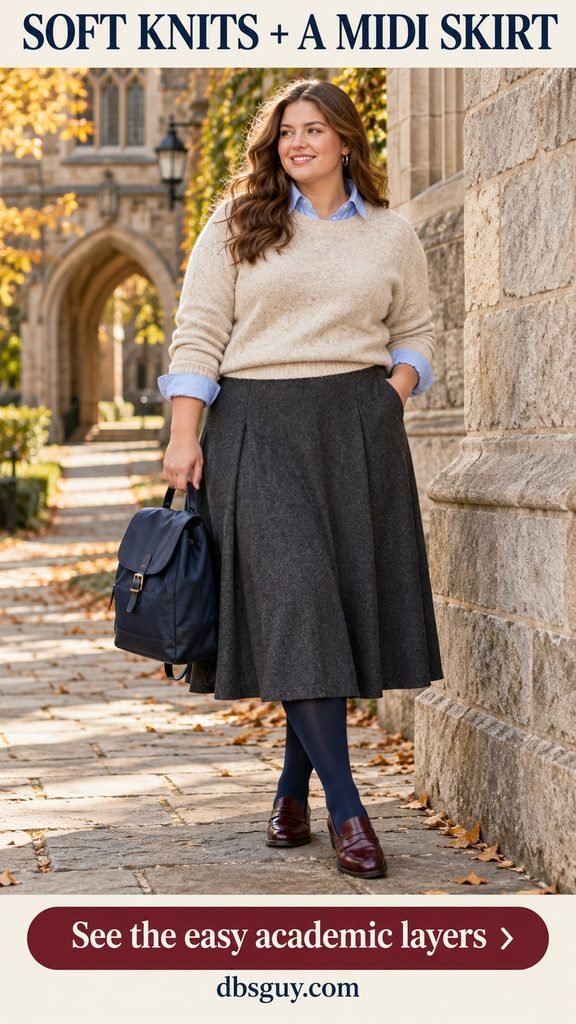
This is the softer skirt version of a shirt-and-knit outfit. The A-line shape leaves room around the legs, and the blue collar brings a little definition to an oatmeal sweater. Burgundy shoes add color without introducing another patterned garment.
Keep the oxford lightweight, especially if you dislike fabric bunching at the waist. Smooth the shirt before putting on the sweater, then check it again after sitting. If you want the sweater to be removable during the day, choose a shirt length you also like wearing untucked or tucked on its own.
17. A Light Sweater Under an Insulated Coat
The formula: Fitted thermal top + taupe sweater + navy insulated coat + black trousers + boots and a scarf.
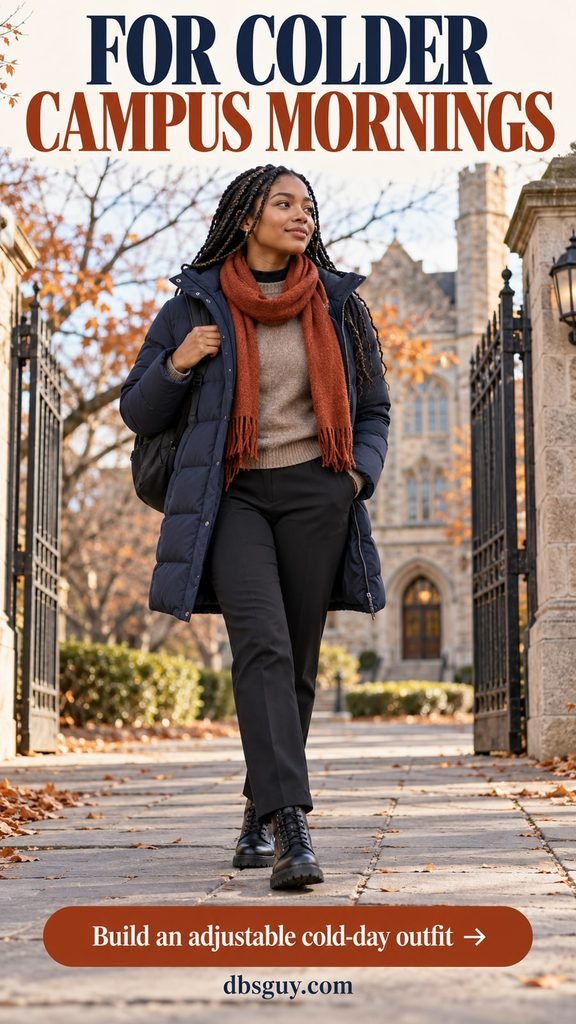
When your usual jacket stops being enough, build warmth in layers you can adjust. Start with a thermal top that feels comfortable against your skin, then add a sweater and an insulated coat with enough room for both. Keep the scarf easy to remove before a brisk walk leaves you feeling too warm.
This is a colder-day starting point, not a promise of comfort at a particular temperature. Wind, precipitation, time outside, and your own preferences change what you need. Add suitable leg layers and accessories as conditions require. For the next seasonal step, see these cozy winter outfit ideas.
18. A Utility Jumpsuit Over a Thin Mock Neck
The formula: Ivory long-sleeve mock neck + olive short-sleeve utility jumpsuit + flat black boots.
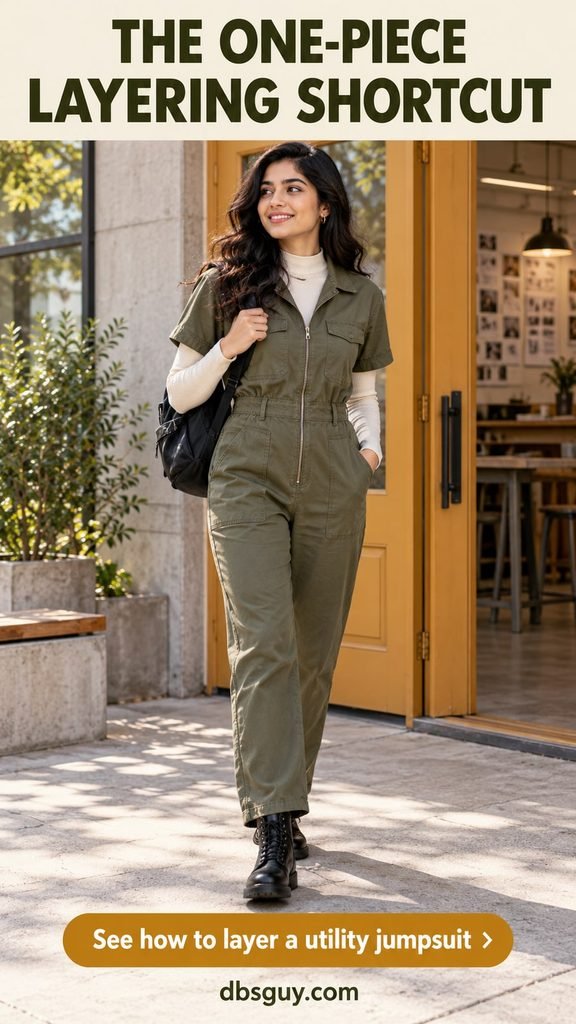
A thin mock neck lets a short-sleeve jumpsuit stay in rotation as the weather cools. The ivory sleeves show the layering clearly, while the one-piece outer garment takes most of the matching out of getting dressed. Add a coat for the walk when your forecast calls for one.
Check the torso length with the base layer underneath: you should be able to sit and reach without the jumpsuit pulling at the shoulders or crotch. Also think through restroom stops. A front opening that’s easy to manage is more useful on a busy campus day than complicated fastenings.
19. A Knit Set With a Long Coat
The formula: White tee + taupe knit sweater and pants + burgundy knee-length coat + white sneakers.
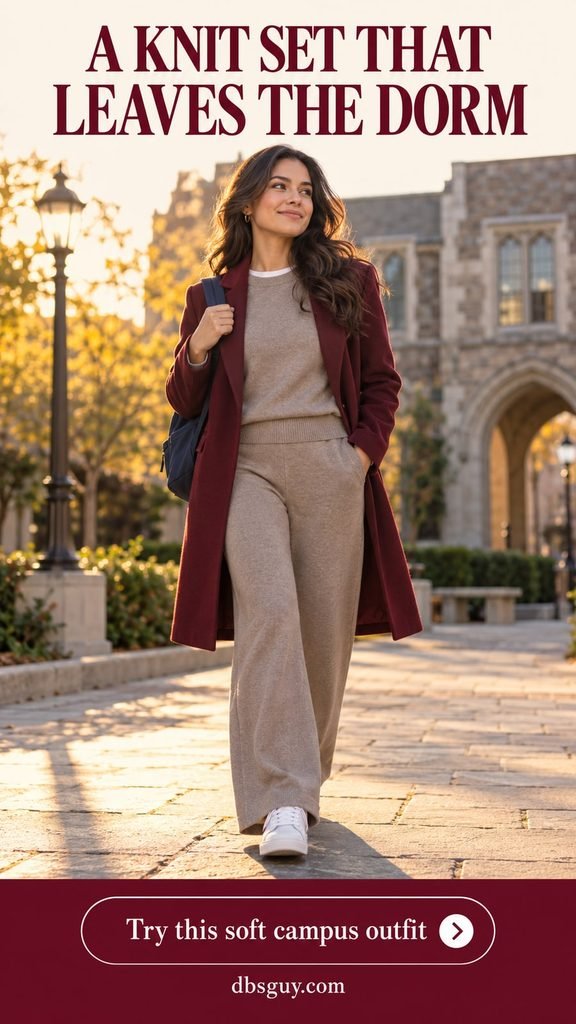
For a long study day, a coordinating knit set can feel relaxed while still giving you a complete outfit. The burgundy coat adds a clear outer shape, and a small white tee neckline links the set to the sneakers. You can reuse the sweater and pants separately on other days.
Check knit pants in daylight and while sitting to make sure you’re happy with the coverage. Keep the hems above the ground, and follow the care label before washing the two pieces differently; uneven care can change how well the colors match. Use another outfit for activities with specific clothing requirements.
Make the layers work for your actual day
Before you leave, remove the outermost layer in front of a mirror. If the remaining outfit feels incomplete, fix the base now. Then sit, reach, and put on your loaded backpack. Those movements reveal tight armholes, bulky waistbands, and awkward hems better than a standing photo does.
Choose the outfit by your longest outdoor stretch, not the season printed on the calendar. A mild Southern afternoon may only need a tee and overshirt; a windy late-fall commute may call for insulation and weather protection. None of these combinations has a universal temperature rating.
For a smaller dorm wardrobe, pick the formulas you can make with pieces you already own. A tee, straight jeans, comfortable shoes, and two different removable layers give you useful variation without buying all 19 outfits. Change one layer at a time so you can tell what actually improves the outfit.
Fall Campus Outfit FAQs
How many layers do I need for fall classes?
For a mild day, start with one base and one removable layer. Add an appropriate outer layer when the weather calls for it. More layers aren’t automatically better if every piece is thick or you have nowhere to put them indoors.
How can I layer clothes without feeling bulky?
Use a thinner base beneath a roomier layer, and test the sleeves and shoulders together. If you’re uncomfortable sitting or reaching, change the fit or thickness rather than assuming the outfit needs to be tighter to look tidy.
Can I wear these outfits on lab or studio days?
Check your course rules first. A general campus outfit isn’t automatically appropriate for a lab, workshop, clinical placement, or studio. Follow the required footwear, coverage, protective equipment, and other instructions for that space.
Do I need new clothes for fall 2027?
Start by rebuilding a few of these formulas from your own wardrobe. Buy only to fill an actual gap, such as a removable layer that fits under your coat. These are styling suggestions for planning ahead, not confirmed predictions about 2027 collections or trends.
Also Read
- Fall Amusement Park Outfits: 17 Cute Looks for Coasters & Cider — more fall outfit ideas for a weekend away from campus.