
The easiest way to make a red marble bathroom feel intentional is to choose its starring surface first. A burgundy vanity top can warm up a cream room; a shower wall can create a dramatic destination; a checkerboard floor can supply all the pattern you need.
These 10 red marble bathroom ideas show different ways to use the material, from a small sculptural basin to an enveloping powder room. Each includes a palette, a placement decision, and a detail to discuss before ordering stone.
The images are AI-generated design concepts, not photographs of completed renovations. Actual stone color, veining, fabrication, and installation will vary.

1. A Floating Vanity With Walnut
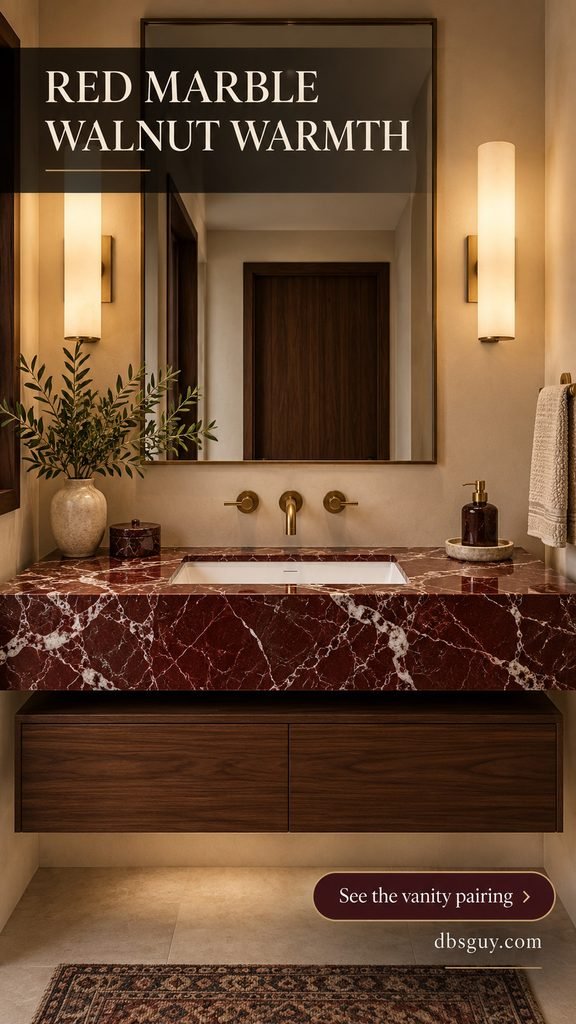
For a bathroom you use every morning, a red marble countertop over walnut cabinetry offers drama without wrapping the whole room in color. Keep the sink white and the wall behind it warm cream so the stone reads as a distinct horizontal band.
Choose simple cabinet fronts, especially when the marble has busy white veins. Brushed brass warms the combination, while an undermount basin leaves the countertop profile easy to see. A floating cabinet also exposes more of the pale floor.
Before ordering: Ask the fabricator to show the sink cutout on a photograph of the actual slab. A striking vein can disappear into that opening. Have the installer confirm wall support, countertop weight, and accessible plumbing rather than copying the floating effect from an image alone.
2. A Bookmatched Vanity Wall

A bookmatched wall uses adjacent slab faces arranged to create a mirrored pattern. It is a good choice when you want the marble to feel like a large artwork rather than a small countertop accent.
Let the wall carry the pattern and make the vanity quieter: cream cabinetry, white basins, and uncomplicated mirrors. Position the strongest visible veins around the mirrors, where you can actually enjoy them. Two ornate mirrors and heavily patterned cabinets would leave little visual breathing room.
Request a full wall layout showing seams, mirror footprints, faucet penetrations, and sconces before cutting. Bookmatching depends on the available slabs and adds planning and fabrication complexity. If you are also rethinking the room’s layout, our cozy ensuite and primary bathroom ideas offer broader planning inspiration.
3. A Red Marble Shower Feature Wall

Put the red marble on the shower wall you see from the doorway. With ivory side walls and a clear glass screen, it becomes a framed view instead of a wall-to-wall pattern competing with the vanity.
A pale mosaic floor adds a smaller scale beneath the broad veining. Choose it for the actual shower application and verified performance; small tiles or a matte appearance alone do not guarantee traction.
Decide whether the back wall needs a niche before approving the stone layout. Storage on a side wall can preserve the main slab’s uninterrupted pattern. Ask the tile contractor for a complete waterproofing and drainage plan: decorative stone is the finish, not the waterproofing system. For quieter companion surfaces, browse our warm, inviting bathroom tile ideas.
4. A Sculptural Powder-Room Basin
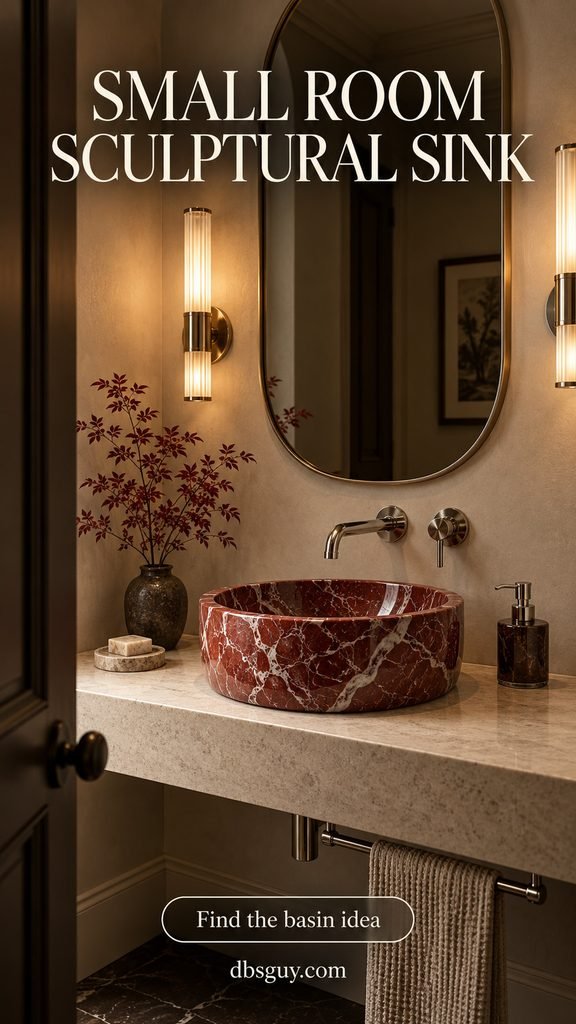
A round vessel basin lets the stone’s color and shape do the decorating. It suits a powder room where a small sink is enough and you do not need a wide counter for a daily grooming routine.
Set it on a pale console, pair it with polished nickel, and use a tall oval mirror to echo the curve without adding more stone. The surrounding greige walls make the basin feel like a deliberate object.
Check the assembled rim height, not just the console height. Have your plumber coordinate faucet reach, bowl depth, drain compatibility, and service access. A beautiful shallow bowl paired with an unsuitable faucet can splash. Our cozy half bathroom ideas can help you balance this statement sink with storage and a workable layout.
5. A Red Marble Tub Apron
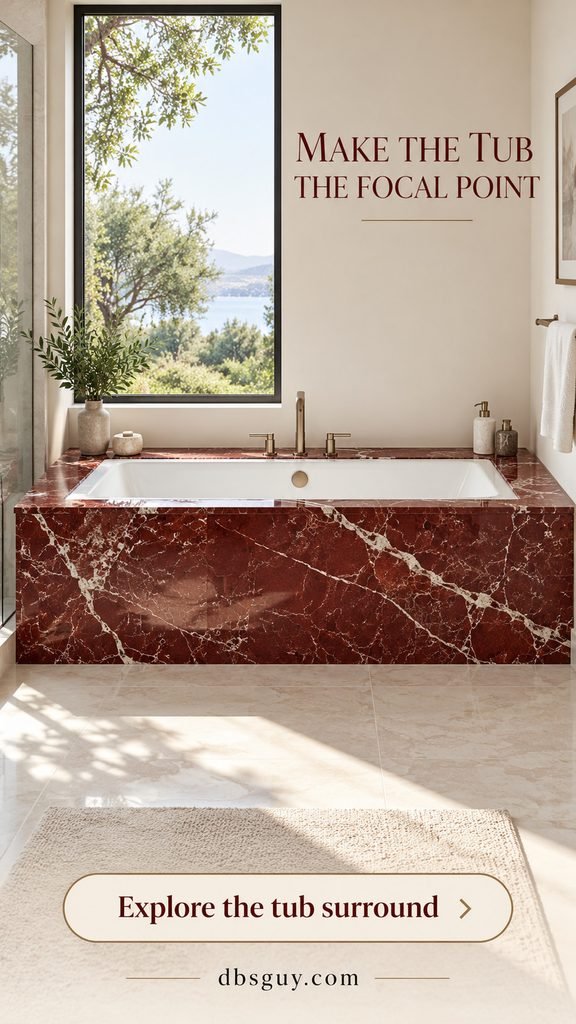
Use red marble on the vertical front of an inset tub, with a narrow matching deck around the rim. The white tub interior stays the brightest element, and the red stone gives the bathing area a substantial base.
This works especially well when the tub is visible from the entrance. Keep nearby walls and the floor pale, and skip a second statement wall. The tub already supplies the room’s focal point.
Discuss access panels, deck joints, edge treatment, and the tub manufacturer’s installation requirements before fabrication. Do not let a seamless-looking apron block future servicing. If you want less stone exposure, keep the red on the vertical apron and use a compatible quieter material on the deck.
6. A Burgundy-and-Ivory Checkerboard Floor
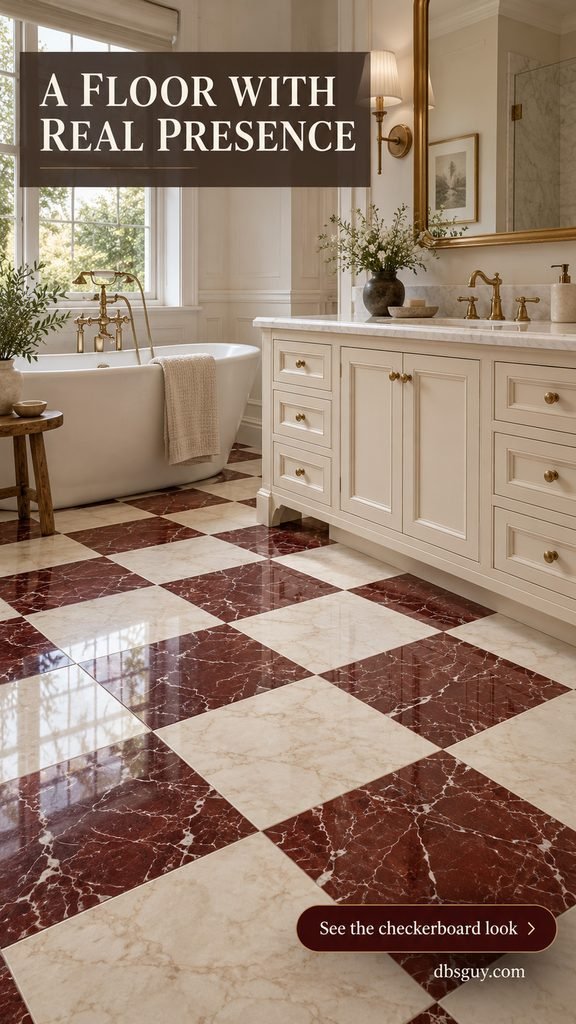
A checkerboard floor puts the drama underfoot and leaves the walls free to stay simple. Burgundy and warm ivory look softer than a stark black-and-white contrast, while equal square tiles keep the pattern legible.
Try this in the dry portion of a traditional or transitional bathroom. Cream cabinetry and restrained brass fixtures support the floor without introducing another strong motif. Choose an ivory stone or tile with limited movement so every square is not competing.
Ask for a scaled layout centered on the room’s main sightline, including the doorway and visible perimeter cuts. The two materials must work together in thickness and installation requirements. Confirm that the exact finish is suitable for a bathroom floor; honed does not automatically mean slip-resistant. Keep any shower-floor specification separate.
7. A Soft Blush and Red Marble Pairing
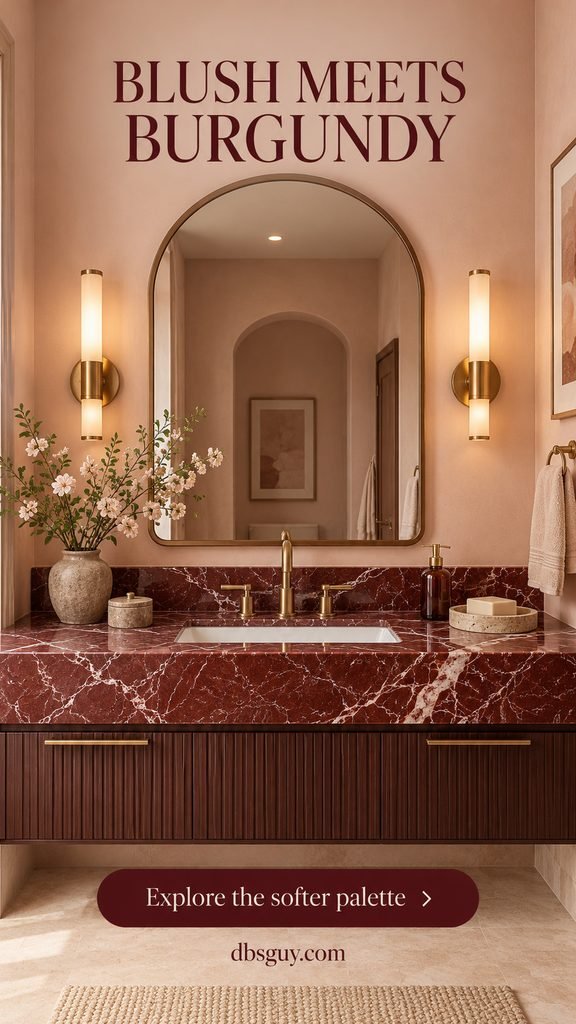
If cream feels too neutral but a dark room feels too heavy, use dusty blush around a wine-red marble vanity. The blush creates a gentle background, while the white sink and ivory floor keep the scheme from becoming uniformly pink.
Pick the paint after seeing your actual stone. A grayish blush may work with plum undertones; a warmer blush may suit brick-red areas. Test generous samples beside the slab sample under both daylight and the planned vanity lighting.
Keep towels ivory and hardware simple. Adding rose-colored accessories everywhere can make the palette feel overly coordinated. In a room without daylight, our windowless bathroom ideas provide more inspiration for lighting and reflective surfaces.
8. An Olive Vanity With Red Marble
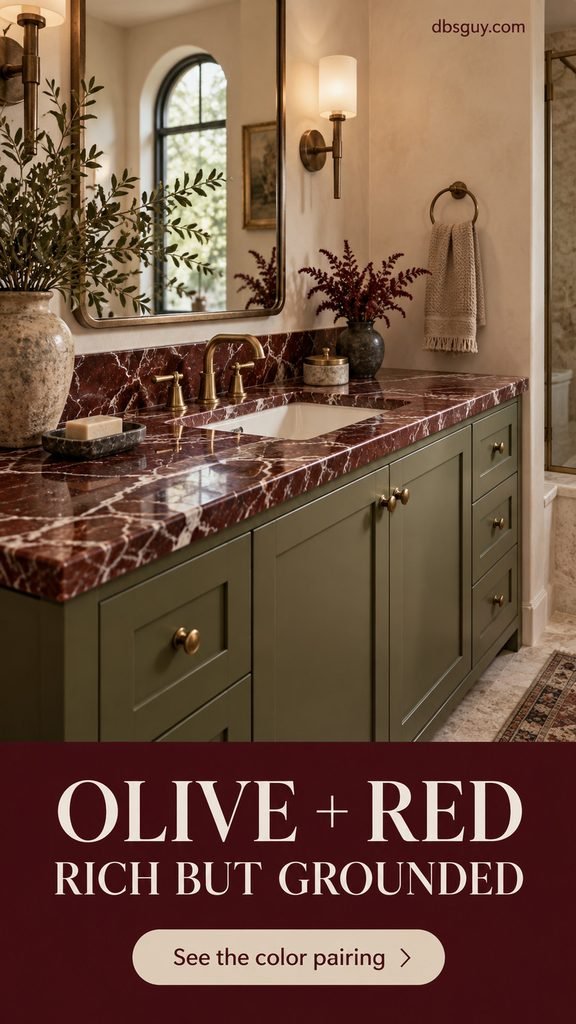
Pair a red marble top with muted olive cabinetry when you want two rich colors in a controlled amount. Leave the walls cream and the floor quiet so the contrast remains concentrated at the vanity.
The olive should look earthy beside the stone, not vivid. Compare a painted cabinet sample directly with the marble: a cooler, almost gray olive creates a different effect from a yellow-leaning green. Aged brass can connect the warm undertones.
Use plain cabinet fronts here. Deep red veining, green doors, decorative fluting, and patterned wallpaper would create several competing ideas in one small zone. The success of this look comes from the color relationship and straightforward shapes.
9. A Red Marble Niche and Bench

You can introduce red marble through the surfaces you touch and use rather than an entire shower wall. A recessed niche and matching bench add concentrated color to an ivory shower while preserving a lighter overall view.
Plan the niche around the bottles you actually use. Make the bench large enough for its intended function, with its position coordinated with the shower spray and entry. A matching slab remnant may suit these smaller pieces, but availability, usable size, cutting, and edge work determine whether it saves money.
Ask the installer to detail waterproofing at all corners and transitions, and to slope horizontal surfaces appropriately toward drainage. A stone bench still needs proper structural support. Choose chrome or nickel if you want the red accents to feel crisp rather than especially warm.
10. An Enveloping Red Marble Powder Room
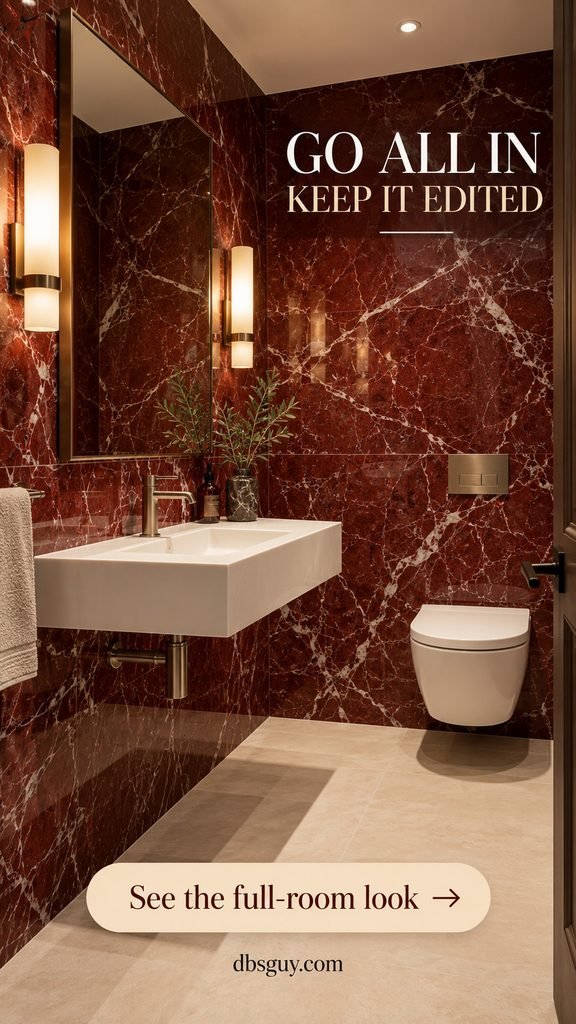
A powder room can support a more immersive use of red marble because it serves a shorter visit rather than a long daily bathing routine. Carry the stone up the walls, then give the room a white basin, a quiet cream floor, and an uncomplicated mirror.
Even in an all-red scheme, restraint matters. Use one stone family, keep accessories minimal, and plan soft ambient light alongside useful light at the mirror. Check the stone sample under the actual fixtures; very warm light may emphasize brown or orange undertones.
Large walls also reveal joints. Approve the panel layout and edge returns before installation, and check what the mirror will reflect from the doorway. A compact room wrapped in stone can feel special, but it will not substitute for adequate lighting or ventilation.
Choose the Stone Before You Commit to the Look
“Red marble” covers a range of wine, brown-red, rust, and plum appearances. Trade names do not guarantee identical color or origin. For example, MSI’s Rosso Levanto listing describes its product as brown marble with white veins and a polished finish. View the actual slab or tile lot, not only a showroom photo.
Start with the surface you most want to emphasize. Choose the vanity for a moderate dose of color, a shower wall for a destination view, or a powder room for the most immersive result. Then bring stone, cabinetry, wall-color, grout, and metal samples together. These pairings are editorial design suggestions, not rules that suit every slab.
What to Ask Your Fabricator and Installer
- Can I approve the actual slab, vein direction, seams, and cutout positions before cutting?
- Is this specific stone and finish appropriate for its intended wall, countertop, basin, or floor application?
- What support, waterproofing, drainage, and service access does this design require?
- Does the quote include templating, edge fabrication, delivery, installation, and any recommended sealing?
Care That Fits a Real Bathroom
According to the Natural Stone Institute’s care guidance, acidic cleaners such as vinegar or lemon can dull or etch acid-sensitive stone, and abrasive cleaning products may scratch it. Use a cleaner appropriate for the specific stone, rinse as directed, and dry with a soft cloth. Keep toiletries on a tray and wipe spills promptly.
The Institute also explains that impregnating sealers improve stain resistance rather than making stone stain-proof. Ask your stone supplier whether sealing is needed and follow the product-specific instructions. Sealing is not a replacement for gentle cleaning or a waterproof installation.
Frequently Asked Questions
Does red marble work in a small bathroom?
Yes, as a design choice. A compact basin or vanity top offers a clear focal point while leaving most surfaces light. For a more enveloping powder room, use consistent stone, simple fixtures, and enough lighting to see its detail. Check the doorway view before deciding how much red to use.
What colors go with red marble?
Warm ivory, walnut, dusty blush, and muted olive are useful starting points. Brass creates a warmer impression; nickel or chrome creates a crisper one. Choose from the undertones in the actual stone, since burgundy and rusty red need different supporting colors.
Can I use real red marble in a shower?
It may be suitable, but approval depends on the specific stone, finish, installation system, and care requirements. Have your supplier and installer confirm the application. Wall suitability does not establish wet-floor suitability, and the stone itself is not the waterproofing layer.
Is honed marble easier to live with than polished marble?
Honed stone has a more diffuse appearance; polished stone reflects more light. Both need care appropriate to the material. Neither finish is a universal answer for stains, etching, or wet-floor traction. Review the actual product’s requirements instead of choosing on appearance alone.
Can marble-look porcelain create the same effect?
It can reproduce the red-and-white visual palette, though it is a different material. Inspect several tiles together for repeating prints, check edge and finish options, and confirm the product is approved for the intended location. Compare installed quotes rather than assuming the material price tells the whole cost story.
Choose the look around the part of the room you want to enjoy most. When the red stone has a clear role and the supporting materials are chosen together, the drama feels considered.