

Five winter days in New York work best when each day has one neighborhood cluster, one warm indoor anchor, and room to change plans. This NYC in winter itinerary pairs Central Park with the Met, village streets with Chelsea, immigration history with Chinatown, Brooklyn waterfront views with brownstone blocks, and Astoria food with a film museum.
It is designed for five full sightseeing days from December through February, with a moderate walking pace and public transit between areas. Arrival and departure time are extra. You can enjoy every day without visiting Times Square—and without relying on Christmas markets, snowfall, or clear skies.

Your five-day route at a glance
- Day 1: Central Park, the Metropolitan Museum of Art, and an Upper East Side dinner.
- Day 2: Greenwich Village, the West Village, the Whitney or a short High Line walk, and Chelsea Market.
- Day 3: The Tenement Museum, Lower East Side streets, and Chinatown food stops.
- Day 4: DUMBO, Brooklyn Bridge Park, Brooklyn Heights, and a relaxed neighborhood dinner.
- Day 5: Astoria cafés, the Museum of the Moving Image, and a Queens dinner.
Do this before booking: Place Astoria on Thursday–Sunday, avoid Wednesday for the Met, and avoid Tuesday if you want the Whitney. These are movable day plans, not a Monday-to-Friday schedule. For a Monday arrival, one workable order is Day 1, Day 3, Day 2, Day 4, then Day 5.
Opening patterns and fares below were checked October 10, 2026. Holiday exceptions, individual exhibitions, service changes, and ticket availability still need a check for your dates. Timings and walking distances are planning estimates, not timed or measured tours.
Day 1: Central Park, the Met, and the Upper East Side
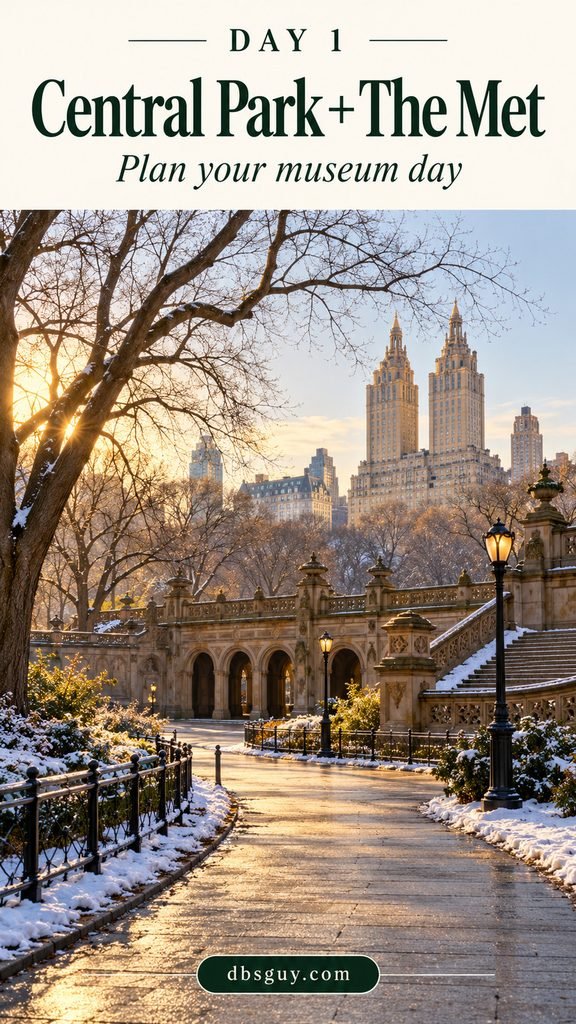
The shape of the day: A compact park walk before lunch, two to three hours of art afterward, then dinner nearby. Expect roughly 2–3 miles outdoors if you follow the full park route, plus walking inside the museum.
Morning: Choose a small piece of Central Park
At about 9:30 a.m., enter near Fifth Avenue and 59th Street. Walk north toward the Mall and Bethesda Terrace, then head toward the park’s east side and the Met at Fifth Avenue and 82nd Street. Allow 90 minutes to two hours with photo stops; you do not need to cross the entire park.
On a dry morning, the bare branches and stone terraces make this a lovely introduction to the city. If paths are icy or the wind makes lingering unpleasant, shorten the walk and go directly to the museum when it opens. Do not build the day around seeing snow: a cold, gray, snow-free park is a perfectly normal possibility.
Lunch and afternoon: Give the Met a manageable focus
Have lunch on the Upper East Side before entering, or check the museum’s dining options if you prefer to stay inside. Aim for a 1 p.m. museum visit and choose two or three collection areas that interest you instead of trying to finish the whole building. Egyptian art, paintings, and the American Wing offer very different experiences; check gallery closures before selecting your route.
The Met’s official visitor page currently lists a 10 a.m. opening, Wednesday closure, and later Friday and Saturday hours. It also lists closures on December 25 and January 1. General adult admission is currently $30; review eligibility rules before assuming you qualify for pay-what-you-wish admission.
Finish with an early dinner on Lexington or Second Avenue. Keeping the evening nearby leaves you energy for tomorrow instead of adding a cross-city restaurant trip.
Cold-weather adjustment: Reverse the priorities: museum first, a 20–30-minute park walk only if conditions improve, then a long café break. Starting near the museum also reduces the outdoor distance.
Day 2: Village Streets, the Whitney, and Chelsea
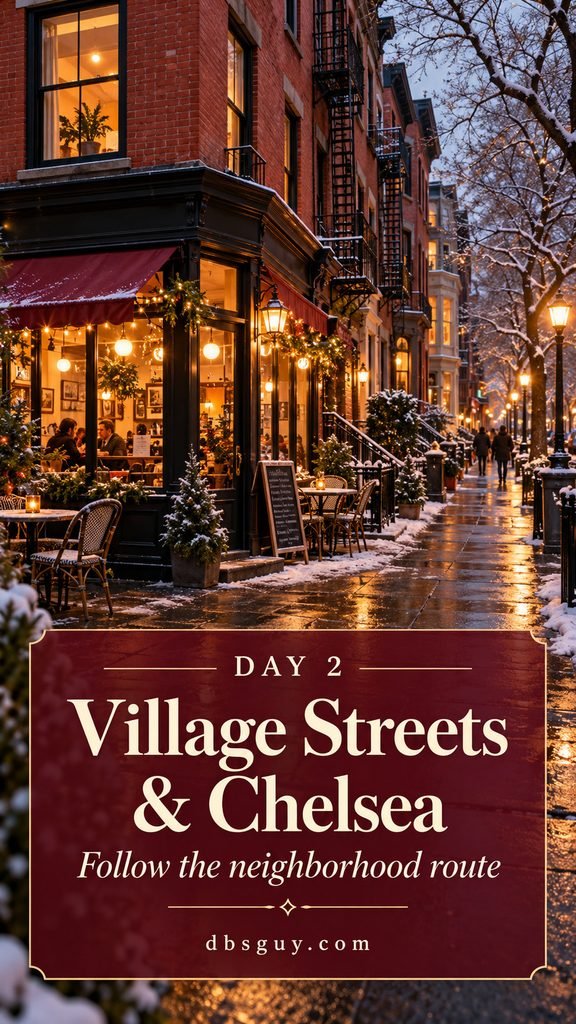
The shape of the day: Start around Washington Square, move west through the Village, then north toward the Meatpacking District and Chelsea. Budget about 2–3 miles outside across the day, with indoor breaks.
Morning: Washington Square to the West Village
Start around 10 a.m. with breakfast near Washington Square Park. Give the arch and surrounding streets a short look, then wander west toward Bleecker and Hudson Streets. Pick a few blocks and a café or bookstore that catches your interest; the pleasure here is seeing the neighborhood at street level, rather than collecting a dozen photo locations.
Keep residential stoops clear and photograph from public sidewalks. A warm sit-down break is more useful than carrying coffee for an hour with cold hands.
Afternoon: Choose art or a short elevated walk
Continue toward Gansevoort Street. For a substantial indoor stop, allow roughly two hours at the Whitney. The Whitney visitor page lists Tuesday closures and recommends advance tickets. Current adult admission is $30, with free admission programs including visitors 25 and under; check reservation requirements even when admission is free.
If the weather is comfortable and you prefer a lower-cost day, take a short High Line walk instead. Enter near Gansevoort Street and leave around West 16th Street for Chelsea Market. You do not need to walk the entire elevated park. Check the High Line’s visitor information for current access, weather closures, and elevator status before setting out.
Eat a late lunch or early dinner at Chelsea Market. Browse the vendor directory beforehand if you have dietary restrictions; concourse hours do not guarantee that every counter is serving. Keep the evening open for an unhurried meal, or return to the Village for a separately booked performance if that is a priority.
Cold-weather adjustment: Make the Whitney and Chelsea Market your main stops and reduce the Village to a short walk. If the Whitney is closed, swap this whole day with the Lower East Side plan rather than depending on an outdoor replacement.
Day 3: Lower East Side History and Chinatown Comfort Food
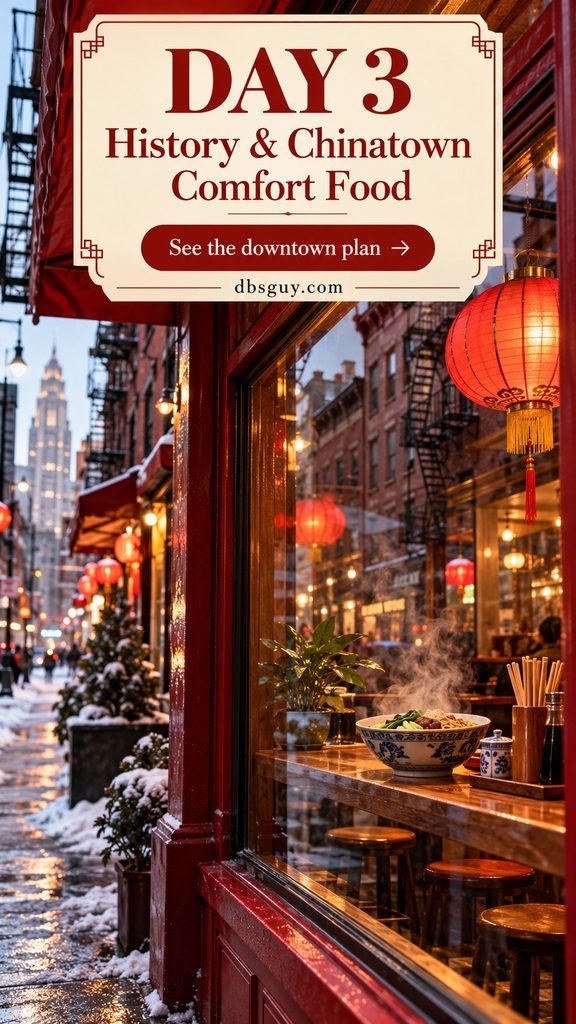
The shape of the day: One reserved history experience, a small Lower East Side loop, and a leisurely meal in Chinatown. Allow roughly 1–2 miles outdoors, with the option to shorten it.
Morning: Book the story before the restaurant
Choose a late-morning apartment tour at the Tenement Museum, then arrange breakfast around that reservation. This gives the day a clear center: learning about immigrant and migrant families through the homes and neighborhood where they lived.
The Tenement Museum is visited through guided tours, not a general walk-in browse through all the apartments. Its visitor center is at 103 Orchard Street; arrive at least ten minutes before your booked start. Apartment tours generally run 60–75 minutes. Check the specific tour’s stairs and accessibility information before paying, especially if anyone in your group has limited mobility.
Afternoon: Orchard Street to Chinatown
After the tour, spend a little time on Orchard and nearby streets, then head southwest toward Chinatown for a late lunch. Allow roughly 20–30 minutes to reach a restaurant around Mott or Doyers Street, depending on your starting point and stops.
Choose one full meal—noodle soup, congee, dumplings, or a vegetarian dish that suits your needs—and one bakery or tea stop afterward. Checking a menu before joining a line is more useful than chasing whichever storefront has the biggest crowd. Carry a little cash and confirm ingredients directly if you have allergies or dietary requirements.
Keep the remaining afternoon flexible. Browse a few shops, have tea, and return to your hotel before dinner if you want a quiet evening. Adding SoHo, the Financial District, and a bridge crossing would turn this compact day into a very different trip.
Cold-weather adjustment: Keep the booked tour and meal, remove the wandering between them, and use a short taxi ride if needed. If your preferred museum tour sells out, try another tour time before committing to the rest of the day.
Day 4: DUMBO, Brooklyn Bridge Park, and Brooklyn Heights
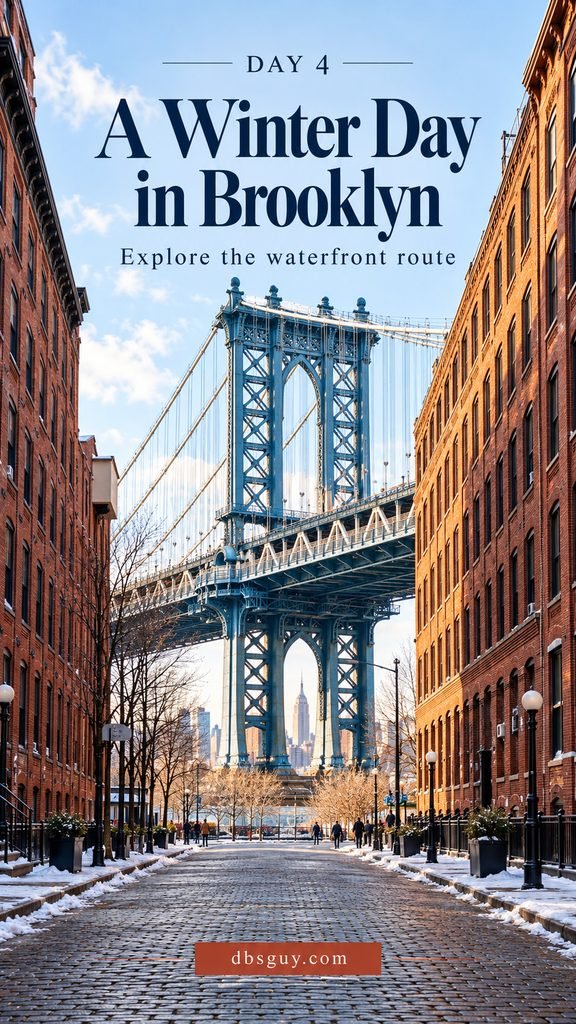
The shape of the day: Take the subway into Brooklyn, enjoy a short waterfront section in daylight, then move into neighborhood streets. Expect about 2–3 miles outdoors on the full route. Choose the calmest, driest forecast for this day.
Morning: Arrive in DUMBO without the bridge walk
Around 10 a.m., arrive via York Street or High Street, depending on your journey and current service. Begin with coffee, then walk toward Washington Street for the warehouse-framed Manhattan Bridge view. Take pictures from a safe position without blocking traffic or doorways.
Head toward the waterfront near Main Street and Fulton Ferry Landing. The views are the reason to come, but a winter visit need not mean standing beside the river for an hour. A short loop and an indoor lunch can be enough.
Afternoon: Waterfront views, then brownstone blocks
After lunch in DUMBO, follow a short section of Brooklyn Bridge Park toward Pier 1 if conditions are comfortable. The park is free to enter; its official site provides maps, alerts, and accessibility information. From there, continue into Brooklyn Heights and toward the Promenade, allowing extra time for the uphill approach and any route adjustments.
Give the Promenade a brief visit, then turn inland to the brownstone streets and Montague Street for a warm drink or dinner. This sequence gives you two different Brooklyn moods: the open waterfront and a neighborhood at a smaller scale.
Optional bridge crossing: If you really want to walk the Brooklyn Bridge, do it instead of the longer waterfront-and-Promenade section. Allow roughly 45–60 minutes including photos and more time to reach the pedestrian entrance. Use daylight and favorable conditions; the crossing is optional, not a test of commitment.
Cold-weather adjustment: Swap this day with a museum day if possible. In steady rain or strong wind, keep only a quick DUMBO look and indoor meal, then head back. Do not plan a long exposed walk simply because it was on the original schedule.
Day 5: Astoria’s Film Museum, Food, and Cafés

The shape of the day: One Queens neighborhood and a substantial indoor attraction, with a relaxed lunch and dinner. Allow roughly 1–2 miles outdoors depending on your restaurant choices. Keep 40–60 minutes as a planning buffer for travel from central Manhattan; check your exact trip before leaving.
Late morning: Arrive for a slow lunch
Make your way to the Broadway or Steinway Street area, choosing the station that suits your accommodation and current service. Have lunch before the museum: Greek food is one option, but let your appetite and menu preferences guide you. A bakery stop for coffee and a pastry also fits this day naturally.
Avoid adding Flushing or a long waterfront detour just because both are in Queens. Staying in Astoria gives you time to enjoy the place rather than spend the afternoon in transit.
Afternoon: Museum of the Moving Image
Plan for about two to three hours at the Museum of the Moving Image, at 36-01 35th Avenue. Its focus on film, television, and moving-image culture makes a useful change from the earlier art and history days.
Current regular hours are Thursday 2–6 p.m., Friday 2–8 p.m., and Saturday–Sunday 11 a.m.–6 p.m. A 2 p.m. visit therefore works across those regular opening days. Screenings have their own schedules and ticket arrangements; check those separately if a film is the reason you are coming.
Finish with dinner nearby and a subway ride back. If this is your departure day, shorten the plan around your actual airport journey and luggage arrangements. The full version assumes you have the evening available.
Cold-weather adjustment: Keep lunch, museum, and dinner close together and use a short car ride where it helps. If your dates put this day on a regular museum closure, reorder the five-day plan before booking.
How to Make This Winter Itinerary Comfortable
Plan for cold, wet streets—not guaranteed snow
Use the National Weather Service’s Central Park climate records for seasonal context and a current forecast for packing decisions. Snowfall varies, and rain or slush can be more relevant to your day than postcard snow. Schedule outdoor photos earlier in the afternoon and check the actual sunset time for your dates.
Pack a warm coat, removable layers, a hat, gloves, warm socks, and comfortable water-resistant shoes with traction. A small umbrella, phone power bank, and a bag that leaves your hands free are useful. Leave room to carry a layer once you enter a heated museum or restaurant.
Use transit to protect your energy
The MTA currently lists a $3 base subway and local bus fare and a $35 cap in a seven-day period when you use the same eligible card or device. Stick with one payment method per traveler; switching between a physical card and its phone-wallet version can separate your ride totals. Airport rail, AirTrain, taxis, and other services need separate budgeting.
Check service changes each morning, especially on weekends. If stairs are a concern, verify accessible stations and elevator status rather than assuming the nearest entrance will work. The walking estimates above exclude museum galleries and your hotel-to-station journey.
Choose a useful base
For this particular route, compare accommodation near convenient subway connections in Chelsea, around Union Square, or in central Manhattan. Long Island City can also work if the specific hotel has a useful connection to your destinations. Compare the complete room price and the actual walk to the station; a nominally cheaper room is less appealing if every outing begins with an awkward transfer.
What to Book and What to Budget
First secure accommodation for your dates, then the Tenement Museum tour and any must-see screening or performance. Fit the Met, Whitney, and Astoria around their opening days. Leave the Brooklyn weather day flexible when you can.
A sample five-day spending allowance is about $650 per adult before accommodation and travel to NYC. This is an editorial planning example, not a package quote: $350 for food and coffee, $35 for eligible subway/local bus rides, $120 for admissions, $70 for food taxes and tips, and $75 contingency. Airport transfers, shopping, alcohol, and ticketed evening entertainment are extra. Your actual museum choices and dining style may move the total substantially.
For a lower-cost version, keep the free park and neighborhood walks, choose fewer paid museums, and favor counter-service meals. Check official museum offers before buying a sightseeing pass; this route includes enough free time that a pass is not automatically the best value.
December vs. January and February
In December: Treat holiday decorations and markets as optional additions after checking that season’s dates. Replace an evening in this plan if you want a holiday outing rather than stacking it onto an already full day. Christmas and New Year’s Day require a separate opening-hours check.
In January and February: Keep the core route exactly as written. Museums, neighborhood meals, and cafés carry the trip without seasonal markets. Compare actual hotel rates for your dates rather than assuming all winter stays are bargains.
Questions Before You Go
Is five days enough for NYC in winter?
Five full days are enough for this focused route across Manhattan, Brooklyn, and Queens. They are not enough to add every major attraction without cutting something. If you have only five calendar days including flights, remove a neighborhood day or turn arrival day into dinner near your hotel.
Can a first-time visitor use this itinerary?
Yes, especially if neighborhoods, food, and museums matter more to you than a full landmark checklist. If the Statue of Liberty or an observation deck is essential, replace a day or half-day and plan that booking separately.
Does this work with children or limited walking stamina?
Use the same neighborhood groupings, but shorten each outdoor loop and choose one main attraction per day. Review tour age guidance, stairs, accessible entrances, and transit elevators before booking. A museum-heavy day can still involve considerable walking.
What if there is a storm?
Follow local weather guidance and check venue and transit alerts. Move an indoor day into the storm window only if travel is operating safely. For a significant disruption, stay close to your accommodation and adjust reservations rather than trying to complete the route.
The most useful thing to save is the order of each neighborhood day, not a rigid timetable. Keep one main booking, a nearby meal, and a weather-dependent walk, and you will have room to enjoy winter New York at your own pace.
Visual note: Images are AI-generated travel concepts inspired by the itinerary, not documentary photographs or exact depictions of venues, views, snow conditions, or current decorations.





One Comment