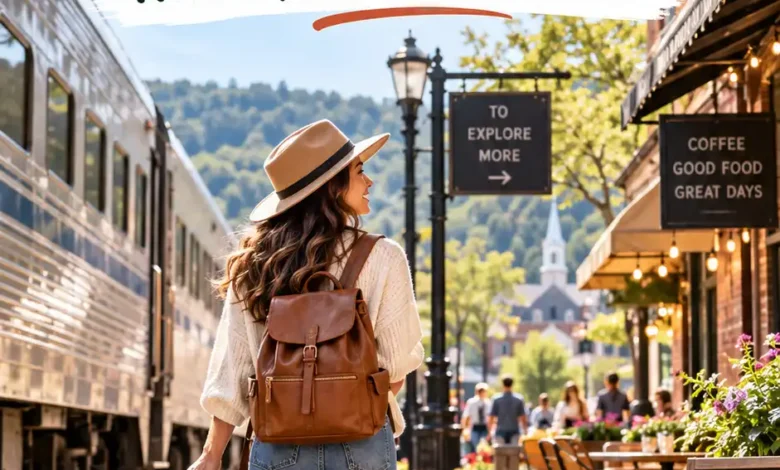
A weekend getaway sounds relaxing until the logistics begin.
You leave work, sit in traffic, pay for parking, circle a downtown garage, and spend half the trip worrying about the car you brought to escape the city.
Sometimes the easiest way to make a weekend feel longer is to leave the keys at home.
The destinations below were chosen for a simple reason: you can realistically reach them from a major U.S. city by train or train-plus-transit, stay somewhere central, and spend most of the weekend walking, using local transit, or taking one optional rideshare instead of renting a car.
This is not a list of places that are technically reachable without driving but become frustrating once you arrive. The goal is a real two- or three-day trip where restaurants, neighborhoods, museums, waterfronts, historic areas, shops, and major sights are clustered closely enough to make the no-car choice feel easier rather than restrictive.
Train schedules, track work, seasonal service, and fares can change, so always verify your exact outbound and return trips before booking a hotel. For a short weekend, the return train matters just as much as the destination.
1. New York City to Hudson, New York
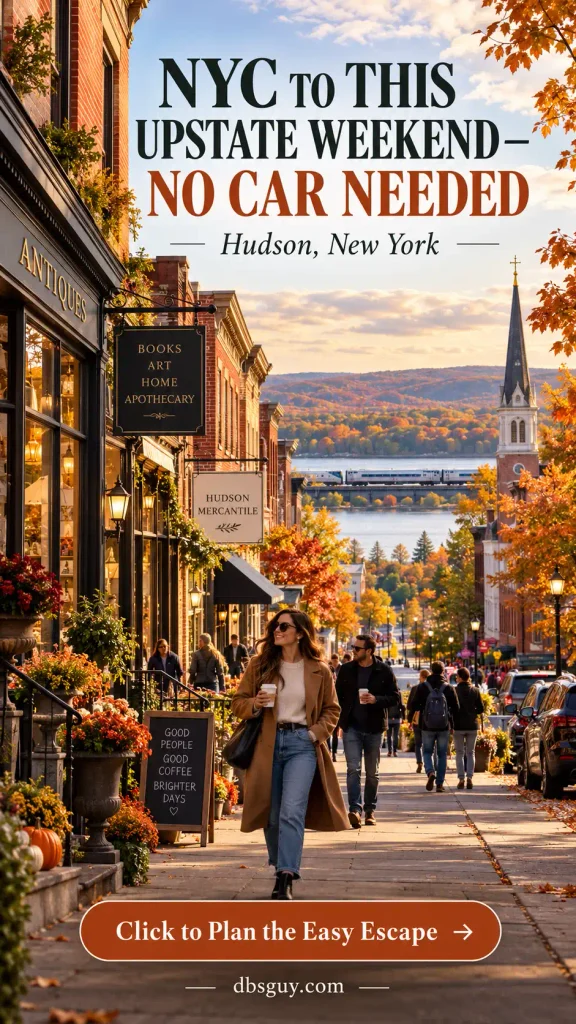
Hudson is one of the strongest answers to the question, “Where can I leave New York for the weekend without renting a car?”
Amtrak’s Empire Service stops in Hudson, and the station sits close enough to the core of town that the trip can quickly become a walking weekend. Warren Street is the main spine, lined with restaurants, cafés, galleries, antiques, design shops, bookstores, bars, and historic buildings.
The beauty of Hudson is that you do not need a large attraction list. The destination works because the basic weekend activities are close together.
How to do it without a car
Take the train from New York, walk or take a short local ride from the station to your lodging, and stay near Warren Street if possible. From there, most of the town-based weekend can happen on foot.
Spend Saturday walking Warren Street slowly instead of trying to “finish” it. Stop for breakfast, browse shops and galleries, take a break, then return to the street later for dinner.
On Sunday, walk toward the waterfront or concentrate on whichever shops, cafés, or cultural stops you skipped the day before.
Why it works: The station, main street, food, shopping, and much of the social life are concentrated in a compact area.
Best for: Couples, design lovers, antiques, food-focused weekends, and New Yorkers who want the feeling of upstate without a rental car.
Watch for: Some famous Hudson Valley estates, hikes, and countryside attractions sit outside town. If those are your priority, you may need a taxi or rideshare. A genuinely car-free trip works best when Hudson itself is the destination.
2. Boston to Portland, Maine
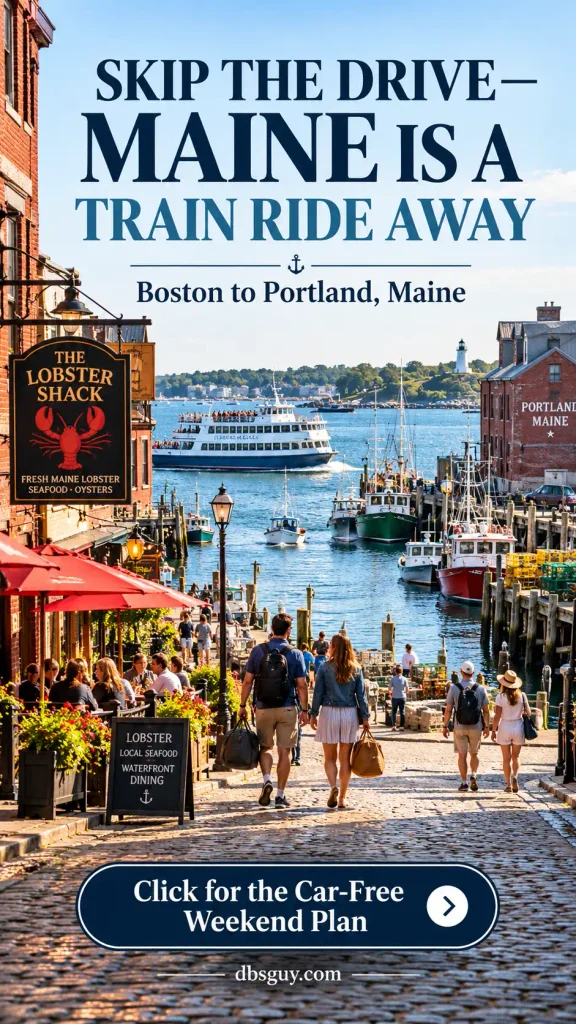
Portland is a particularly satisfying no-car weekend because the reward feels bigger than the effort required to get there.
The Amtrak Downeaster connects Boston with Portland, and once you are in the city, the Old Port, working waterfront, Arts District, restaurants, boutiques, breweries, galleries, and many central hotels are packed into a very walkable core.
Portland’s official tourism guidance describes downtown hotels, the waterfront, Old Port, and Arts District as being within easy walking distance of one another. That is exactly what you want on a weekend when you did not bring a vehicle.
How to make the arrival easy
The Portland Transportation Center is not directly in the Old Port, so plan for the short connection into downtown rather than assuming you will step off the train beside your hotel.
Once you are checked in, however, the car-free part becomes much simpler. Walk the Old Port, eat near the waterfront, spend time in the Arts District, and consider a Casco Bay ferry outing if the seasonal schedule works with your trip.
Why it works: Portland has enough food, culture, waterfront atmosphere, and compact neighborhoods to fill a weekend without needing to leave the city.
Best for: Food lovers, couples, coastal weekends, New England city breaks, and travelers who want a destination that still feels manageable on foot.
Watch for: The Downeaster has a new schedule taking effect October 19, 2026. Always check the current timetable before choosing your return train.
3. Washington, DC to Harpers Ferry, West Virginia
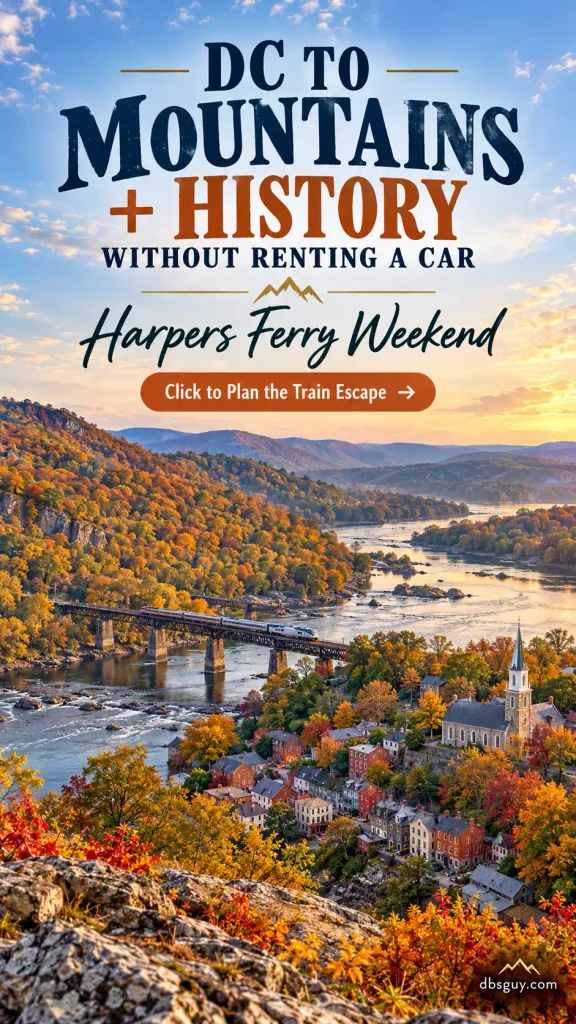
Harpers Ferry is one of the rare getaways where a train can drop you into a place that immediately feels far removed from a major city.
Historic Lower Town sits where the Potomac and Shenandoah rivers meet, beneath wooded ridges crossed by the Appalachian Trail. The National Historical Park includes museums, historic structures, riverfront areas, and trail access, all concentrated around a compact core.
This is not the right trip if your ideal weekend involves hopping between widely scattered attractions. It is excellent if you want to arrive, walk, hike, learn, and stay focused on one dramatic landscape.
How to do it without a car
Choose lodging in or close to the historic town so that you are not dependent on driving back and forth to the park.
From Lower Town, you can reach museums, exhibits, the C&O Canal area, Appalachian Trail connections, and major hiking routes on foot. The National Park Service also operates a shuttle between its visitor center and Lower Town for visitors using the main park facilities.
Why it works: History, trails, river scenery, and the historic core overlap rather than sitting miles apart.
Best for: Hikers, history lovers, DC-area couples, fall weekends, and travelers who want a short trip that feels dramatically different from the city.
Watch for: Rail options can be more limited than on the Northeast Corridor. Check both directions carefully before booking, especially for a weekend, and do not assume commuter-style frequency.
4. Chicago to Milwaukee, Wisconsin
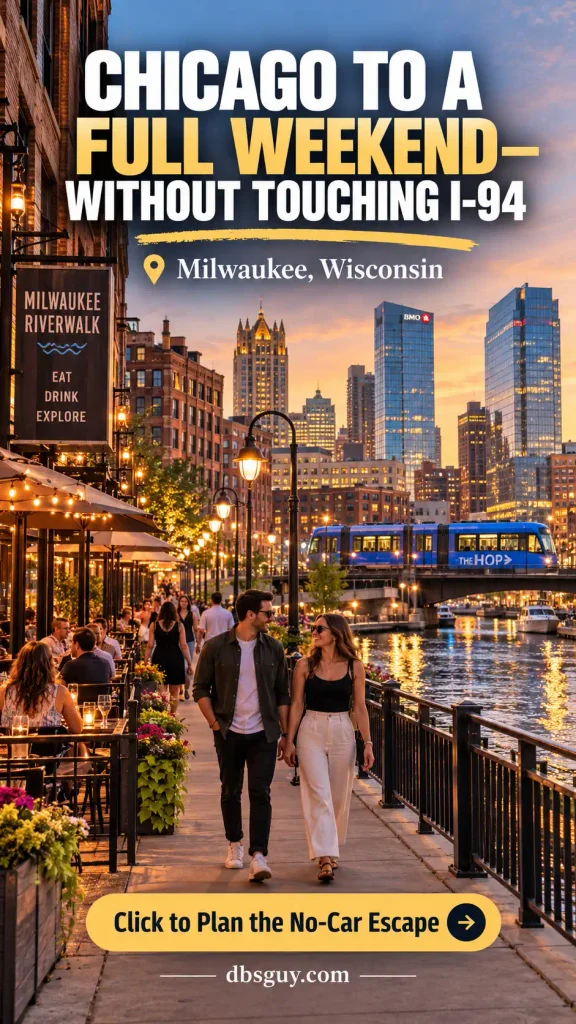
Milwaukee may be one of the easiest places to underestimate from Chicago.
That is part of why it works so well for a weekend.
The train ride is straightforward, the downtown core has restaurants, museums, the RiverWalk, historic neighborhoods, markets, breweries, and lakefront attractions, and the city’s streetcar makes it easier to move between central areas without treating every trip as a rideshare.
Milwaukee’s Hop streetcar is particularly useful for a no-car traveler. The official tourism site notes that it is free to ride and connects downtown destinations, restaurants, hotels, parks, entertainment, and the intermodal station area.
A two-day rhythm that works
Use the first day for downtown, the RiverWalk, Historic Third Ward, and food. On the second, shift toward the lakefront, museums, markets, or another neighborhood connected by walking and transit.
You will see more of the city if you stop thinking about attractions as isolated points and instead explore one district at a time.
Why it works: Train arrival, streetcar access, walkable districts, food, nightlife, and cultural attractions are all strong enough to support a full weekend.
Best for: Friends’ trips, couples, food, beer, museums, architecture, and Chicago residents who want an easy change of scene.
Watch for: Some lakefront or neighborhood destinations may still be faster by bus or rideshare. That does not require a rental car; it simply means planning your day by area.
5. Los Angeles to Santa Barbara, California
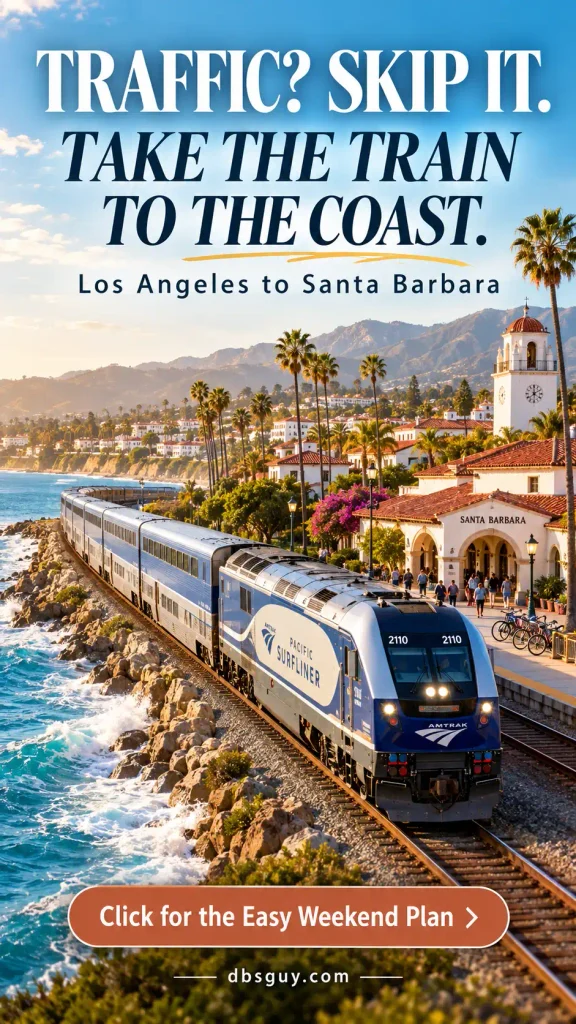
For Los Angeles travelers, the best part of a Santa Barbara train weekend may begin before you arrive.
The Pacific Surfliner follows Southern California’s coast and serves Santa Barbara directly, replacing a freeway drive with a journey where the ocean is part of the experience.
Once in Santa Barbara, the station places you near the waterfront and lower State Street area. Beaches, the Funk Zone, restaurants, tasting rooms, shops, and central architecture can fit comfortably into a walking weekend, with local transit or bikes expanding your range.
Make the station location work for you
Stay in the waterfront, Funk Zone, or downtown corridor if the goal is to avoid a car entirely. That keeps the beach, restaurants, and central attractions connected by walking rather than transport planning.
Use one day for the waterfront and Funk Zone, then spend the next moving up State Street, exploring Spanish-style architecture, food, gardens, or cultural stops.
Why it works: The train arrives close to the exact parts of Santa Barbara most weekend visitors want to experience.
Best for: Couples, beach weekends, food and wine, architecture, and Los Angeles residents who would rather watch the coast than freeway traffic.
Watch for: Pacific Surfliner service can be affected by maintenance and coastal track work. For example, the operator announced a full corridor train closure for October 10–11, 2026. Always check current service alerts immediately before your trip.
6. Seattle to Portland, Oregon
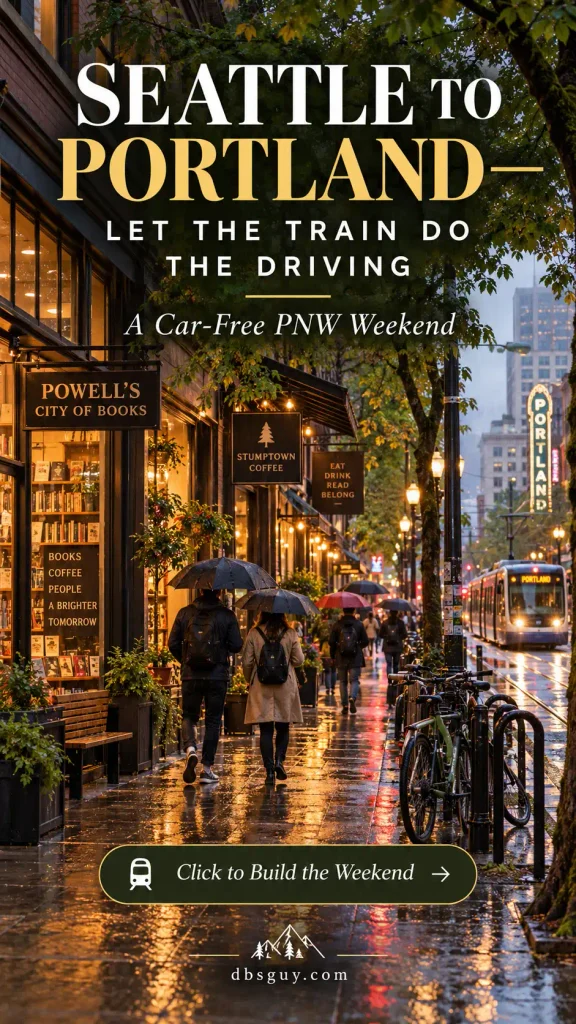
Seattle and Portland are close enough to make a weekend easy but different enough that the trip still feels like a break.
Amtrak Cascades currently provides multiple daily train options between the two cities, giving you more flexibility than a once-daily leisure route. In Portland, Union Station places you close to the central city, while MAX light rail, streetcars, buses, bikes, and walkable neighborhoods make a rental car unnecessary for a typical urban weekend.
Portland works best car-free when you stop trying to cross the entire city every few hours.
Explore by neighborhood
Choose one or two areas per day. Downtown and the Pearl District can fit naturally together. Another part of the weekend can focus on food, shops, parks, bookstores, or neighborhoods across the river using transit.
Because Portland’s appeal is often found in the spaces between major attractions—coffee, small shops, food carts, parks, street life—a slower transit-based weekend can actually suit the city better than constant driving.
Why it works: Frequent rail between Seattle and Portland combines with strong local transit at the destination.
Best for: Friends, couples, coffee and food, bookstores, urban exploring, and Seattle travelers who want a low-stress weekend.
Watch for: Pick a hotel near a transit-rich neighborhood instead of choosing only by room price. Saving a little money on lodging can cost you a lot of weekend time if you stay far from everything you want to do.
7. Philadelphia to Lancaster, Pennsylvania
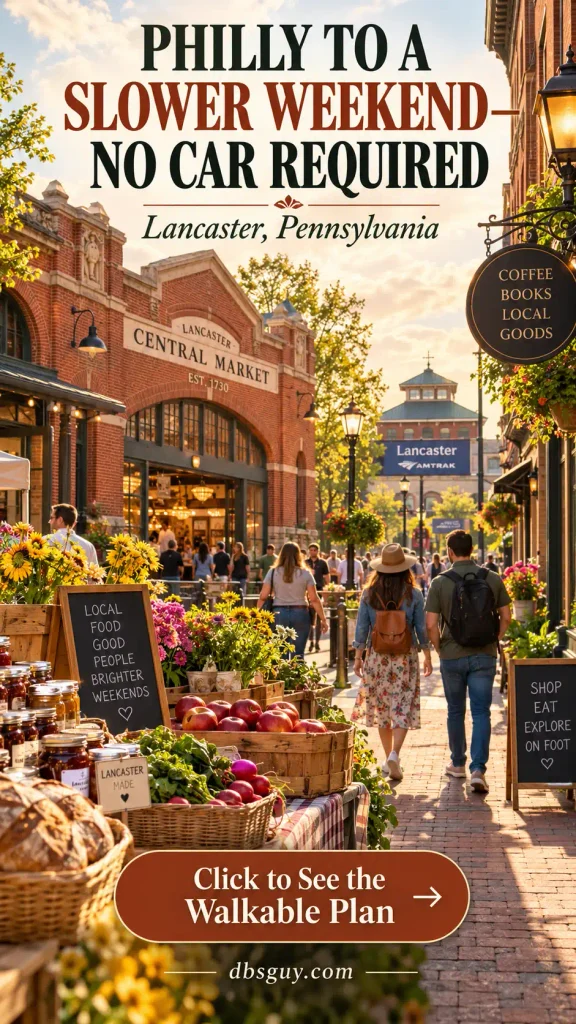
Lancaster is often marketed through Pennsylvania Dutch Country, which can make travelers assume a car is mandatory.
For the countryside, it often is.
For a weekend in Lancaster city, it is not.
Amtrak’s Keystone and Pennsylvanian services stop at Lancaster, and Amtrak specifically notes that the station is near the downtown area, lodging, and Franklin & Marshall College. The city center gives you historic architecture, Central Market, restaurants, coffee shops, breweries, museums, galleries, and enough local character for a relaxed two-day stay.
Know which Lancaster trip you are booking
If your dream weekend is covered bridges, farm roads, and widely scattered rural attractions, plan transportation.
If you want food, history, markets, architecture, and a slower small-city weekend, stay central and walk.
This distinction matters because it keeps the article promise honest: you can have an excellent no-car Lancaster trip, but it should be a Lancaster city trip rather than an attempt to cover the entire county without wheels.
Why it works: Frequent rail access and a compact city core make the urban side of Lancaster much easier than many travelers expect.
Best for: Philadelphia travelers, food markets, history, architecture, couples, and travelers who like smaller cities.
Watch for: Do not build the itinerary around rural attractions unless you have confirmed a tour, shuttle, taxi, or other transportation option.
8. Boston to Providence, Rhode Island
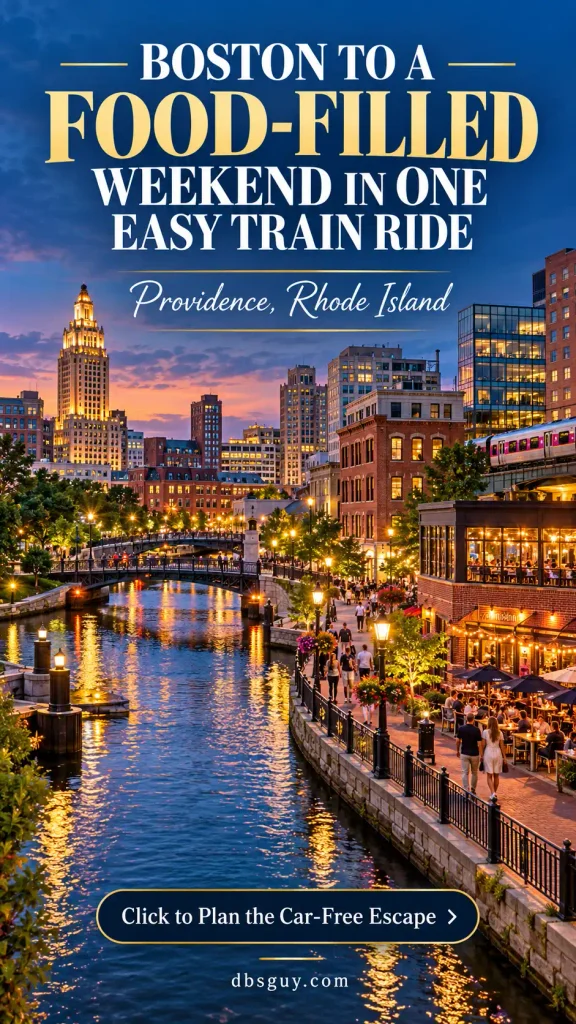
Providence is close enough to Boston that some travelers overlook it as a real getaway.
That is a mistake.
The city is compact enough for a short trip but dense with restaurants, historic architecture, Brown University and College Hill, museums, riverfront spaces, cafés, and neighborhoods that feel distinct within walking or local-transit distance.
Amtrak serves Providence on the Northeast Corridor, and the station also connects with MBTA and RIPTA transit. Providence’s tourism office even publishes a self-guided downtown walking tour, which tells you something important about how naturally the city works on foot.
Make food part of the itinerary
Providence becomes much more satisfying when meals are not treated as gaps between attractions.
Walk the downtown and riverfront, climb toward College Hill, visit a museum or historic area, then let the evening be about eating rather than finding another sight to check off.
Why it works: Downtown arrival, walkable historic areas, strong food, university neighborhoods, and local transit all reduce the need for a vehicle.
Best for: Food lovers, architecture, couples, culture, and Boston-area travelers who want minimal transportation friction.
Watch for: Providence is hilly in places, especially around College Hill. Comfortable shoes matter even on a city weekend.
9. San Francisco to Sacramento, California
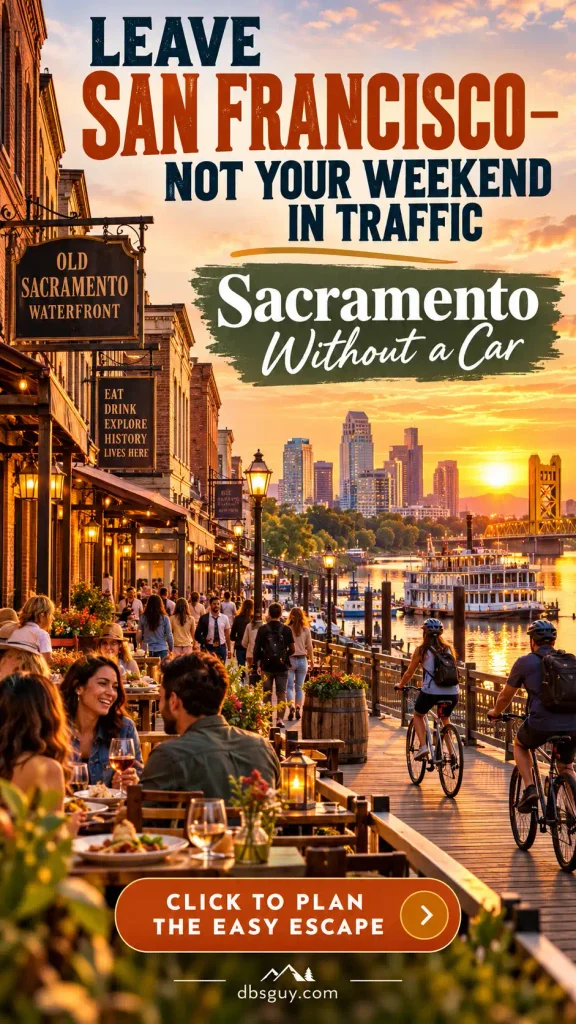
Sacramento is one of the most practical city breaks in Northern California for travelers who want food, history, and an easy central core without renting a car.
Capitol Corridor rail connects the Bay Area with Sacramento, while a dedicated connection links San Francisco with Emeryville for rail trips. On arrival, Sacramento Valley Station sits downtown near Old Sacramento Waterfront and the central city.
Visit Sacramento describes downtown and Midtown as walkable, flat, tree-lined areas with restaurants, public art, parks, bars, coffee, galleries, museums, and local transit. That combination makes the city particularly forgiving for a short no-car stay.
Build the trip around downtown and Midtown
Start with Old Sacramento and the riverfront, then move toward the Capitol, museums, restaurants, and Midtown. Light rail, buses, scooters, bikes, and short rideshares can fill in the gaps without requiring you to manage a rental car.
The city is especially rewarding for travelers who treat food as a main attraction. Sacramento’s farm-to-fork identity gives you a reason to let lunch or dinner become part of the sightseeing.
Why it works: Downtown rail arrival, a flat central grid, Old Sacramento, Midtown, museums, food, and public transit all fit naturally into a two-day trip.
Best for: Bay Area travelers, food, history, museums, friends’ weekends, and anyone who wants an easy Northern California city break.
Watch for: From San Francisco proper, the rail journey can involve a connecting bus to Emeryville rather than a single direct train from downtown San Francisco. Check the current Capitol Corridor itinerary before booking.
Which No-Car Weekend Should You Choose?
The easiest trip depends less on which destination is “best” and more on what you want the weekend to feel like.
For a stylish small-town escape from New York: Hudson.
For seafood, cobblestones, and a working waterfront: Portland, Maine.
For history and hiking close to Washington, DC: Harpers Ferry.
For a fast Midwest city break: Milwaukee.
For beach weather and California architecture: Santa Barbara.
For food, coffee, neighborhoods, and strong transit: Portland, Oregon.
For markets and a slower Pennsylvania city weekend: Lancaster.
For food and historic streets close to Boston: Providence.
For history, farm-to-fork dining, and an easy Northern California downtown: Sacramento.
How to Make a Car-Free Weekend Feel Easier Than Driving
Choose the hotel by location, not just price
The cheapest room on the edge of town can destroy the advantage of arriving by train.
For a two-night getaway, paying a little more to stay near the walkable core may save time, rideshare costs, and frustration every time you leave the hotel.
Check the return train before booking anything else
The outbound trip usually gets all the attention.
Before paying for a room, make sure Sunday’s return schedule actually gives you the kind of weekend you want. A departure that is too early can erase half a day of your trip.
Build the itinerary by neighborhood
Do not cross town repeatedly because individual attractions looked good on a list.
Group breakfast, museums, shopping, parks, and dinner by area. You will walk less without feeling like you saw less.
Use one rideshare without calling the trip a failure
“No car” does not have to mean “I refuse to enter a taxi under any circumstances.”
The point is avoiding the cost and responsibility of bringing or renting a vehicle. If one short ride makes a station transfer or special dinner easier, use it.
Pack like someone who has to carry the bag
A car-free trip becomes much less romantic when you are dragging an oversized suitcase across brick sidewalks.
For a weekend, a small roller or backpack is usually enough. Your shoulders will thank you when the hotel is six blocks from the station.
Keep the destination compact
The easiest no-car weekend is not the one where public transportation theoretically reaches everything.
It is the one where most of what you actually want to do is already close together.
Final Thoughts
A car-free weekend is not really about trains.
It is about removing friction.
No parking garages. No rental counter. No worrying about who will drive after dinner. No Sunday traffic jam becoming the final memory of the trip.
Hudson lets New Yorkers walk straight into an upstate rhythm. Portland turns a Boston train ride into seafood and cobblestones. Harpers Ferry replaces city streets with rivers and Appalachian ridges. Milwaukee gives Chicago travelers a full city weekend without I-94. Santa Barbara makes the California coast part of the journey. Portland, Providence, Lancaster, and Sacramento all prove that a destination does not have to be remote to feel like a reset.
The best choice is the one where getting there feels simple enough that you stop postponing the trip.
Book the train. Pack light. Stay central.
Then spend the weekend thinking about where you are—not where you parked.