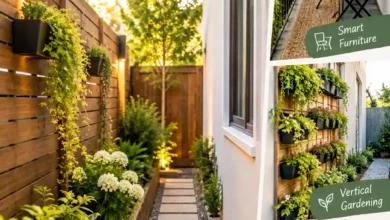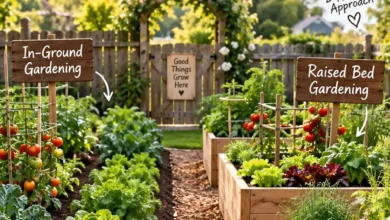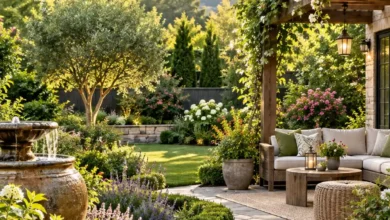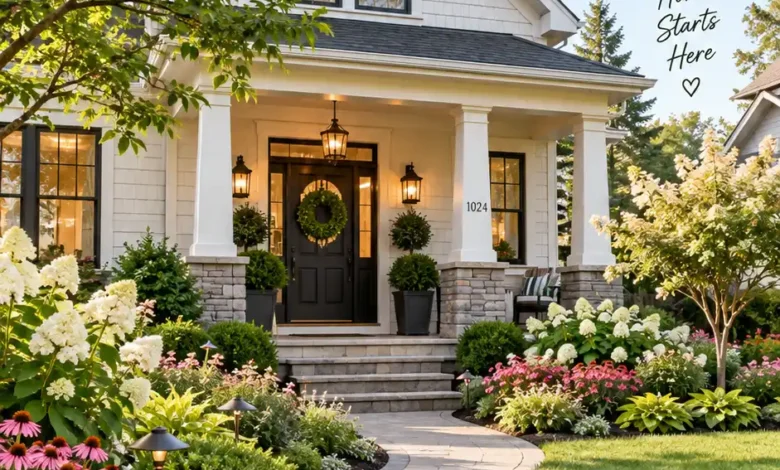
Your home’s exterior forms a visitor’s first impression. A welcoming front yard must balance visual appeal with practical, everyday use. Whether you prefer a modern design or classic cottage character, the front yard garden layout ideas can make your property a neighborhood standout.
This guide offers a practical roadmap for designing an outdoor area that increases your home’s value. We will examine focal points, layered planting, and defined pathways for a polished, professional result. You will find abundant front yard garden inspiration to help you picture your ideal space.

We will guide you through the process, from assessing your site to choosing the perfect plants. You will also learn to add seasonal interest, smart lighting, and low-maintenance materials that complement your architecture. Let’s begin creating a landscape you will enjoy returning to every day.
Key Takeaways
- Assess your site conditions, including sunlight and soil quality, before starting any project.
- Focus on creating a clear focal point to draw the eye toward your home entrance.
- Use layered planting techniques to add depth and visual interest to your landscape.
- Select materials for pathways and borders that match your home’s architectural style.
- Incorporate outdoor lighting to ensure safety and beauty during the evening hours.
Front yard garden layout ideas for stronger curb appeal
Your front yard creates your home’s first impression, so its design strongly affects curb appeal. Effective front yard garden layout ideas can transform a standard lawn into a welcoming landscape that reflects your personal style. By emphasizing structure and flow, you create an inviting path that draws visitors toward your home.

Use a clear focal point near the front entry
A successful design needs a visual anchor that guides the eye. Consider a specimen tree, sculptural shrub, or pair of large decorative containers beside the doorway. These elements act as a natural magnet, keeping the front entrance as the home’s visual star.
“The secret to a great garden is not just the plants you choose, but how you arrange them to tell a story about your home.”
Balance plants, hardscaping, and open space
It is easy to overplant, but balance is key to a professional appearance. Mix lush garden beds with clean hardscaping, such as stone walkways or gravel paths. Leave some open space so the eye can rest and the area avoids a crowded, chaotic feel.
- Incorporate lawn areas to provide a soft, green contrast to garden beds.
- Use pathways to define the transition between the street and your home.
- Keep taller plants away from windows to maintain natural light inside.
Repeat colors and shapes for a cohesive look
Consistency defines a well-designed landscape. Repeating plant shapes or color themes throughout the yard makes the entire space feel unified. These front yard garden layout ideas connect separate elements into one harmonious composition.
Choose one dominant color palette and two accent colors
For a polished appearance, select one primary color for main plantings and two secondary colors for accents. For example, use deep green foliage as your base, then add yellow and purple through seasonal flowers. This intentional layering helps containers, garden beds, and architectural details work in perfect concert.
Assess the front yard before choosing a layout
Successful landscaping for front yard projects begin well before the first shovel reaches the soil. Careful observation helps you create a design that remains attractive and sustainable. Understanding your property’s natural patterns prevents costly mistakes and helps plants thrive.
Map sunlight, shade, drainage, and existing utilities
Track the sun’s movement across your property throughout the day. Note areas with full sun or deep shade because these conditions guide plant selection. Also observe where water pools after heavy rain to identify drainage problems.
Before you finalize your front yard garden plans, locate every underground utility line. Ask your local utility company to mark gas, water, and electrical lines before installation. This step prevents accidental damage and supports a safer, more functional outdoor space.
Match plant choices to USDA hardiness zones
The USDA hardiness zone map helps you select plants suited to your local climate. Each zone reflects average annual minimum winter temperatures, so suitable species can return year after year. Still, microclimates near brick walls or concrete driveways may stay warmer than the rest of your yard.

Measure the home, walkway, driveway, and planting areas
Accurate measurements help create front yard garden plans that complement your home’s proportions. Record your house dimensions, driveway width, and walkway lengths with a measuring tape. These figures show how much room remains for garden beds without crowding the architecture.
Identify views from the street, sidewalk, and front windows
Study your yard from several vantage points to create a balanced design. Walk to the street and sidewalk to learn what passersby notice first. Then look through your front windows to see what you will enjoy inside, and place focal points for maximum visual impact.
| Assessment Factor | Action Required | Goal |
|---|---|---|
| Sun Exposure | Track light for 8 hours | Optimize plant health |
| Soil Drainage | Observe water pooling | Prevent root rot |
| Utility Lines | Call local service providers | Ensure safety |
| Sightlines | View from street and windows | Enhance curb appeal |
Build a welcoming entry path and arrival zone
A well-planned walkway connects the driveway to your front door and creates a memorable experience for every visitor. When developing your front yard garden plans, make the entry path your first priority for style and utility. This space transitions between the public street and your private sanctuary.
Choose between straight, curved, and stepping-stone paths
The path’s shape controls how quickly guests approach your home. A straight path offers a formal, direct route, while a curved path creates a slower, more relaxed arrival. For a casual or cottage-style look, stepping stones set in ground cover provide a charming, informal feel.

| Path Style | Best For | Vibe |
|---|---|---|
| Straight | Modern/Formal | Direct & Bold |
| Curved | Cottage/Natural | Soft & Inviting |
| Stepping-Stone | Informal/Small | Playful & Relaxed |
Frame the walkway without making it feel narrow
Effective front yard garden layout ideas use plants to define the route without narrowing the walking space. Choose low-growing perennials or ornamental grasses to line the edges. This method creates a sense of enclosure that feels luxurious rather than cramped.
“The path to the front door is the handshake of the home; it should be firm, clear, and welcoming to all who approach.”
Add containers, edging, or low plants near the door
The area near your door is ideal for seasonal flair. Decorative containers filled with colorful annuals can draw attention toward the entrance. Stone or metal edging can contain mulch and soil, keeping the path clean throughout the year.
Meet practical width, drainage, and accessibility needs
Function matters as much as beauty when you design your entry. Make the path at least 48 inches wide, allowing two people to walk side-by-side comfortably. Proper drainage prevents puddles, so give the surface a slight slope away from the home. Finally, always choose stable, non-slip materials to keep the entrance safe and accessible for everyone.
Create layered planting beds for depth and dimension
Depth gives a garden the polished character of a professional landscape. Arrange plants in tiers to turn flat spaces into dynamic, eye-catching displays. These front yard garden layout ideas create a lush setting that feels intentional and carefully planned.

Place tall shrubs and small trees at the back
Begin the layered bed at the rear, nearest your home or fence line. Tall shrubs and small ornamental trees provide a solid backdrop for the remaining plants. This vertical structure draws the eye upward and adds privacy without overwhelming the space.
Use mid-height perennials to connect layers
After establishing the backdrop, use mid-height perennials in the middle section. They form a bridge between towering shrubs and low-growing ground covers. Choose varieties with different bloom times to keep the garden vibrant throughout the growing season.
Fill the front edge with ground covers and seasonal color
The final layer belongs along the walkway or lawn edge. Low-growing ground covers or annuals create a soft, inviting border around the design. This method preserves an open view while adding color that welcomes guests to your front door.
Keep mature plant sizes in mind when spacing each layer
Many gardeners space plants according to their current nursery size, which can cause problems. Research the mature width and height of every species so each plant has room to thrive. Proper spacing prevents overcrowding, reduces constant pruning, and keeps your front yard garden layout ideas looking fresh for years.
Design a polished small front yard
A small front yard design often benefits from minimalism, emphasizing clean lines and intentional plant choices. By focusing on scale and proportion, you can transform a tight space into a welcoming feature that complements your home’s architecture.

Make compact spaces feel larger with simple geometry
Clear geometric shapes define the garden and create a sense of order. Rectangular beds and circular focal points guide the eye, creating a structured framework that makes the area feel larger. When square footage is limited, Simplicity is the ultimate sophistication.
“The essence of a beautiful garden lies in the harmony between the structure of the space and the life within it.”
Use vertical interest without blocking windows
Add height with narrow, upright trees or wall-mounted trellises. These elements draw the gaze upward, creating an illusion of depth. Keep vertical choices slim so windows remain clear and natural light enters your home.
Choose multi-season plants and space-saving containers
Choose plants that provide year-round beauty for a low-clutter appearance. Containers suit small spaces because you can move greenery as needed. Consider these options for your layout:
| Plant Type | Benefit | Placement |
|---|---|---|
| Upright Juniper | Evergreen structure | Corner of bed |
| Ornamental Grass | Soft movement | Near walkway |
| Flowering Shrubs | Seasonal color | Foundation edge |
Limit the number of plant varieties for visual calm
A common mistake in a small front yard design is overcrowding the area with too many species. Repeating a few reliable plants creates a cohesive rhythm that feels peaceful rather than chaotic. This restrained palette keeps the garden polished and inviting.
Shape foundation beds around the architecture
Your home’s architecture provides a canvas for a beautiful garden. In front yard landscape design, consider how planting beds meet your house’s structure. A thoughtful layout creates a seamless transition between the built environment and the natural world.

Soften corners with rounded planting lines
Most homes have rigid angles where walls meet or foundations reach the ground. You can effectively soften this severity with curved, organic garden beds. Rounded edges guide the eye gently, making the property feel more inviting and less boxy.
Keep shrubs below windows and away from siding
Large shrubs may hide a plain foundation, but they often create maintenance problems. Choose varieties that remain naturally low, so they do not block windows or reduce natural light. Keep plants a few feet from siding to limit moisture buildup and protect your home from rot or pests.
Coordinate bed shapes with porches, steps, and rooflines
Great front yard landscape design echoes your home’s existing geometry. If you have a curved porch, mirror its arc along your flower bed’s edge. Aligning garden borders with rooflines or step widths creates a sense of intentionality and balance.
Leave breathing room around doors, utility meters, and vents
Function should come before aesthetics when you plan planting beds. Leave clear access paths to your front door, utility meters, and HVAC vents. This “breathing room” simplifies routine maintenance and keeps plants away from critical home systems.
| Feature | Placement Strategy | Maintenance Benefit |
|---|---|---|
| Foundation Beds | Follow roofline angles | Improved drainage |
| Shrubs | Below window sills | Better natural light |
| Utility Areas | Clear 3-foot buffer | Easy technician access |
| Entry Paths | Parallel to steps | Enhanced safety |
Pair plants that make the landscape look intentional
Intentional landscaping pairs plants that complement one another through every season. When varieties work in harmony, your front yard garden layout ideas become more effective and visually striking. This approach makes the space feel curated rather than accidental.

Combine evergreen structure with flowering perennials
Evergreen shrubs and conifers form the backbone of your garden. They provide structure that remains visible during dormant winter months. Anchor beds with these reliable plants to create a stable landscape frame.
Flowering perennials add changing color as seasons progress. Place these soft, blooming plants against evergreens to create striking contrast. This balance keeps the garden engaging throughout the year.
Mix contrasting foliage textures and complementary colors
Visual interest grows from the way leaves and forms interact. Mix broad-leafed plants with fine-textured ornamental grasses to create depth. This strategy enriches your front yard garden layout ideas without requiring many species.
Use the color wheel when selecting plants. Complementary colors, such as purple salvia beside yellow daylilies, make garden beds stand out. Consistency in your palette helps the entire yard feel unified and polished.
Use native plants, pollinator plants, and seasonal performers together
Native species can support long-term success in your design. They suit local soil and climate, reducing the need for extra maintenance. Combine them with pollinator-friendly flowers to create a thriving ecosystem at your doorstep.
A garden is a living canvas where the right combination of plants tells a story of balance and beauty.— Anonymous
Pair hydrangeas, ornamental grasses, conifers, and salvia thoughtfully
For a classic look, place a sturdy conifer behind vibrant hydrangeas. Add ornamental grasses near the edges for movement and soft texture. Finally, tuck in salvia to attract bees and provide deep color.
Check that chosen plants share similar light and water requirements. Grouping plants with the same needs makes your front yard garden layout ideas easier to manage over time.
| Plant Category | Primary Benefit | Best Use |
|---|---|---|
| Conifers | Year-round structure | Back of the bed |
| Hydrangeas | Seasonal blooms | Mid-layer focal point |
| Ornamental Grasses | Texture and movement | Border or filler |
| Salvia | Pollinator attraction | Front edge color |
Arrange a flower garden for continuous curb appeal
A vibrant flower garden layout can transform your home’s exterior into a year-round masterpiece. Choose plants with different bloom periods to keep the landscape welcoming for neighbors and visitors. Careful planning helps each season transition smoothly.

Plan bloom times from spring through fall
Organize your garden around a bloom calendar to maintain visual interest. Begin with early spring bulbs, such as daffodils and tulips, which signal winter’s end. Then add late-spring perennials, summer-blooming favorites, and hardy fall performers, such as asters or sedum.
“A garden is a grand teacher. It teaches patience and careful watchfulness; it teaches industry and thrift; above all, it teaches entire trust.”— Gertrude Jekyll
Repeat dependable flowers along the front border
Consistency gives a professional flower garden layout a polished appearance. Repeat reliable plants along the front edges of your beds instead of creating isolated pockets. This pattern creates rhythm and guides the eye across the landscape.
- Use low-growing perennials like creeping phlox for early color.
- Incorporate hardy lavender or salvia for mid-summer structure.
- Add ornamental grasses to provide movement and texture.
Blend annuals, bulbs, perennials, and flowering shrubs
A diverse garden is more resilient. Mixing plant categories creates layers that support one another throughout the growing season. Flowering shrubs form the backbone, perennials return reliably, and annuals fill gaps with bursts of intense color.
Use height, bloom color, and foliage to avoid visual gaps
Even after flowers fade, your flower garden layout should remain attractive. Use varied foliage textures and plant heights to keep beds looking full. Plants with interesting seed heads or variegated leaves prevent the garden from feeling empty or neglected during the off-season.
Adapt vegetable garden layout ideas for the front yard
Modern vegetable garden layout ideas let you grow your own food while preserving stunning curb appeal. With suitable plants and structures, you can transform a standard lawn into a productive, beautiful landscape that welcomes visitors and feeds your family.
Use attractive raised beds and edible borders
Raised beds provide a clean, organized appearance and keep the garden tidy. Cedar, stone, or galvanized steel define the space and make your vegetable garden layout ideas feel intentional rather than accidental.
Low-growing edibles can border your walkways. They create a lush, green edge that remains functional and visually appealing throughout the growing season.

Blend herbs, vegetables, and flowers in a mixed planting
Mixing edible plants with ornamental flowers supports biodiversity. Flowers attract pollinators, which are essential for a high-yielding vegetable patch.
- Companion planting: Pair basil with tomatoes to improve flavor and deter pests.
- Color contrast: Use purple kale or bright peppers to add pops of color.
- Pollinator support: Interplant marigolds or zinnias to keep your garden healthy.
Place trellises and tall crops where they will not hide the home
Strategic placement keeps your home’s architecture visible. Position tall trellises or climbing crops, such as beans and peas, along side walls or fences.
Keep your tallest plants away from windows and the main entry path. This keeps your home as the focal point while the garden provides a lush, green backdrop.
Choose tidy, productive edibles such as peppers, kale, chives, and lettuce
Choosing the right plants is essential for a polished look. Tidy, compact varieties suit front-yard spaces because they neither sprawl nor appear messy.
Peppers offer colorful fruit, while kale provides deep, textured foliage. Chives and lettuce fill gaps, keeping your vegetable garden layout ideas productive and attractive all year long.
Plan low-maintenance landscaping for the front yard
Designing low-maintenance landscaping for front yard areas is an effective way to reclaim free time while increasing your home’s value. Smart planning lets you enjoy a vibrant outdoor space that needs much less work throughout the year.

Group plants with similar water and soil needs
A healthy garden begins by placing the right plants in the right locations. Grouping species with matching water and soil needs reduces constant monitoring and individual care.
Zoning your garden ensures each plant receives the resources it needs to thrive. This method prevents overwatering in some areas while leaving others dry, creating a more resilient, uniform landscape.
Reduce lawn with mulch, ground covers, and permeable hardscape
Lawns often demand the most time and resources, including mowing and fertilizing. Replace thirsty grass with organic mulch, hardy ground covers, or permeable stone paths to reduce these chores.
These materials create a polished appearance, suppress weeds, and retain soil moisture. Permeable hardscape lets rainwater enter the ground, naturally hydrating plants and reducing runoff.
Select drought-tolerant and disease-resistant plants
Choosing suitable plant varieties is essential for long-term success. Focus on native species or cultivars known for drought tolerance and resistance to common pests and diseases.
These hardy plants establish quickly and need less intervention once settled. Choosing the right flora keeps your landscaping for front yard projects beautiful, even during dry summer months.
Use drip irrigation and defined bed edges to simplify care
A drip irrigation system delivers water directly to roots where it is needed most. This method reduces evaporation and prevents weeds from growing in surrounding areas.
Clean, defined bed edges create a sharp boundary between your garden and lawn. This simple step speeds trimming and keeps your garden professional with minimal effort.
| Feature | High-Maintenance | Low-Maintenance |
|---|---|---|
| Lawn Area | Large, manicured grass | Reduced with mulch/ground cover |
| Watering | Manual hose/sprinkler | Automated drip irrigation |
| Plant Selection | High-water, delicate flowers | Drought-tolerant, native species |
| Bed Edging | None or overgrown | Defined stone or metal borders |
Explore front yard garden design trends that stay timeless
Creating a current yet enduring front yard requires thoughtful design. Focus on durable materials and intentional layouts to keep your home inviting for years. Successful front yard landscape design balances personal style with the natural environment.
Combine naturalistic planting with structured borders
Pair relaxed, wild-looking plants with clean, geometric edges to modernize the space. This contrast prevents a messy appearance while letting the plants’ beauty stand out.
- Use crisp metal or stone edging to define pathways.
- Allow perennials to spill slightly over the borders for a soft, inviting look.
- Maintain clear sightlines to keep the home’s architecture visible.
Use native planting, rain gardens, and habitat-friendly features
Modern front yard garden design trends prioritize ecological health alongside visual appeal. Native species reduce water and fertilizer needs, making the yard easier to manage.
Rain gardens manage runoff while creating a lush, green focal point. They transform functional drainage areas into beautiful, habitat-friendly zones that support local pollinators.

Add modern containers, low walls, or decorative gravel carefully
Hardscaping elements, including low walls and decorative gravel, provide structure throughout every season. Used with restraint, these materials create a sophisticated, contemporary feel for any property.
“The most enduring landscapes are those that respect the site’s natural character while embracing modern functionality.”
Use high-quality containers to add height and seasonal color near your entryway. These pots provide flexible accents that you can update throughout the year without a full redesign.
Balance trend-forward materials with the style of the house
Ensure new additions complement your home’s existing architecture instead of clashing with it. For a traditional brick facade, choose natural stone or classic terracotta containers for a cohesive look.
For more modern homes, sleek concrete or dark metal accents often work best. Materials that echo your home’s colors and textures make your front yard landscape design feel like a natural extension of the building.
Coordinate color, materials, and seasonal details
Your home’s exterior can become a canvas for a unified, inviting outdoor space. Study siding, trim, and brickwork to find front yard garden inspiration for a cohesive property.

Match flowers and foliage to the home’s exterior colors
Start by identifying the dominant tones in your home’s facade. For cool gray siding, choose plants with silver foliage or blue-toned flowers for a harmonious look.
For warm brick or earth-toned stone, select gold, orange, or deep red flowers. This choice helps the garden complement the architecture instead of clashing with it.
Coordinate mulch, stone, edging, and containers
Hardscaping materials should frame your plants. Choose mulch that contrasts with the foundation, such as dark brown or black, to make greenery stand out.
Select containers and edging that reflect textures found on your porch or walkway. When these elements support the architecture, you gain front yard garden inspiration that feels intentional and polished.
Plan seasonal updates without redesigning the entire yard
You do not need a total overhaul to keep the landscape fresh throughout the year. Use modular updates so you can replace specific plants as the weather changes.
Keep structural shrubs and trees in place to save time and money. Refresh annuals or container displays to capture the spirit of each season.
Use fall foliage, winter evergreens, and spring bulbs for year-round interest
To maintain front yard garden inspiration in every season, prioritize plants with lasting beauty. Spring bulbs welcome warmer weather, while fall foliage creates a vibrant final display before winter.
Incorporate hardy evergreens so your garden retains structure during winter. This approach keeps your home well-maintained and inviting, regardless of the calendar date.
Finish the landscape with lighting and maintenance details
Even the most beautiful front yard garden design trends can fade without proper lighting and a reliable maintenance plan. Bringing your outdoor space to life after dark requires careful light placement and consistent care. These final details help your home remain welcoming and safe throughout the year.

Highlight paths, trees, planting beds, and architectural features
Strategic lighting transforms your garden into a dramatic evening display. Place uplights beneath mature trees to reveal their texture and height against the night sky. Use path lights to define walkways, then add subtle spotlights for architectural details or colorful planting beds.
Use warm, low-glare lighting for safety and atmosphere
Light quality matters as much as placement. Choose warm-toned LED fixtures to create a cozy, inviting atmosphere that complements your home’s exterior. Low-glare designs reduce harsh shadows and blinding spots, helping visitors navigate steps and driveways confidently.
Set a practical schedule for watering, pruning, weeding, and refreshing mulch
Consistency keeps a landscape thriving. A structured routine prevents small issues from becoming major problems. Set weekly time aside for basic upkeep to protect your investment and keep plants healthy and vibrant.
Keep sightlines clear around the porch, driveway, and sidewalk
Safety should guide plant selection. Trim shrubs and low-hanging branches that could obstruct views near the porch or sidewalk. Clear sightlines give drivers and pedestrians uninterrupted visibility, supporting modern front yard garden design trends.
| Maintenance Task | Frequency | Primary Goal |
|---|---|---|
| Deep Watering | Weekly | Root health |
| Pruning/Deadheading | Bi-weekly | Shape and blooms |
| Weeding | Weekly | Nutrient access |
| Mulch Refresh | Bi-annually | Moisture retention |
Conclusion
Creating a beautiful exterior begins with careful site observation and precise measurements. Thoughtful front yard garden layout ideas should reflect your home’s unique architecture.
Successful front yard garden layout ideas depend on harmony between your house and surrounding soil. Map sunlight and drainage early to prepare a thriving outdoor space.
Build a welcoming path that guides guests easily toward your door. Layered plantings and intentional color pairings add depth, helping your property stand out in the neighborhood.
You do not need to finish every project in a single weekend. Start with a few manageable front yard garden layout ideas to establish a strong foundation. Watch your garden grow and evolve as you add seasonal details and low-maintenance features over time.
Your landscape is a living project that rewards patience and planning. Pick one area to improve today, then enjoy your home’s transformation.
FAQ
What are the best front yard garden layout ideas for increasing curb appeal?
Effective front yard garden layout ideas create a clear focal point near the main entrance, such as a specimen Japanese Maple or vibrant Monrovia shrub. Balance planted beds with open spaces, then use one dominant color and two accents. This welcoming, professional design guides visitors’ eyes toward your front door.
How do I start creating front yard garden plans for my specific property?
Before using a shovel, map your yard’s sunlight patterns, drainage, and existing utilities. Successful front yard garden plans require accurate measurements of your walkway, driveway, and home exterior. Check your USDA hardiness zone so plants can survive local winters. Also identify sightlines from the street and front windows, keeping views unobstructed.
What is the secret to a successful small front yard design?
In a small front yard design, less is often more. Use simple geometry and clean bed lines to make the space feel larger. Add vertical interest with trellises or narrow upright evergreens, such as Sky Pointer Hollies, without blocking windows. A restrained plant palette prevents a cluttered, overwhelming appearance.
Can I integrate edible plants using vegetable garden layout ideas in the front of my home?
Absolutely! Modern vegetable garden layout ideas for front yards emphasize “edible landscaping.” Use stylish raised beds from brands like Birdies Garden Beds, or add kale, Swiss chard, and herbs to flower borders. This approach provides a fresh harvest while complementing your front yard landscape design.
How should I arrange a flower garden layout for continuous color?
To maintain a beautiful flower garden layout from spring through fall, layer plants by height and bloom time. Combine early bulbs with mid-summer perennials, such as Proven Winners salvias, and late-season performers, including Stonecrop Sedum. Repeat dependable “anchor” flowers along the border to create cohesive visual rhythm.
What are the most popular front yard garden design trends right now?
Current front yard garden design trends emphasize sustainability and “functional beauty.” Many homeowners use native plants, rain gardens, and pollinator-friendly habitats that need less water and chemical intervention. Naturalistic textures paired with structured elements, such as modern steel edging or decorative gravel paths, create a timeless, contemporary look.
Where can I find front yard garden inspiration for a low-maintenance property?
For high-impact, low-effort front yard garden inspiration, explore xeriscaping and group plants by their “hydrozones,” or water needs. Replace high-maintenance turf with wood mulch, ground covers, or permeable pavers to reduce mowing time. Rain Bird drip irrigation systems and disease-resistant varieties like Knock Out Roses keep your landscaping for front yard lush with minimal labor.
How can I ensure my front yard landscape design looks good at night?
A complete front yard landscape design includes a thoughtful lighting plan. Use warm, low-glare LED fixtures to highlight architectural features, safety paths, and specimen trees. Brands like FX Luminaire offer quality options that provide atmosphere and security without harsh shadows, keeping your home prominent after sunset.