19 Nail Colors for February and March That Ease You From Winter Into Spring


If you want one nail color that feels right with both a winter coat and a lighter spring outfit, start with dusty mauve, mushroom taupe, slate blue, or sage green. Each gives you color without making a sudden jump from dark polish to bright pastels.
These 19 nail colors for February and March move from deeper shades to softer, lighter ones. Choose according to what you actually wear and how much color you want on your hands; there is no date when you have to retire burgundy or start wearing yellow.
- Still reaching for dark clothes? Look at black cherry, mulberry, smoky navy, or cocoa.
- Want an everyday middle ground? Try taupe, dusty mauve, rosewood, or lavender gray.
- Prefer a light manicure? Compare sheer blush, milky ivory, and pearl champagne.
- Ready for a spring color? Start with sage, lilac, pistachio, butter yellow, or apricot.
The images are AI-generated color concepts, not photographs of completed salon work or exact product swatches. Use them to discuss color and finish; check a real polish sample before choosing.

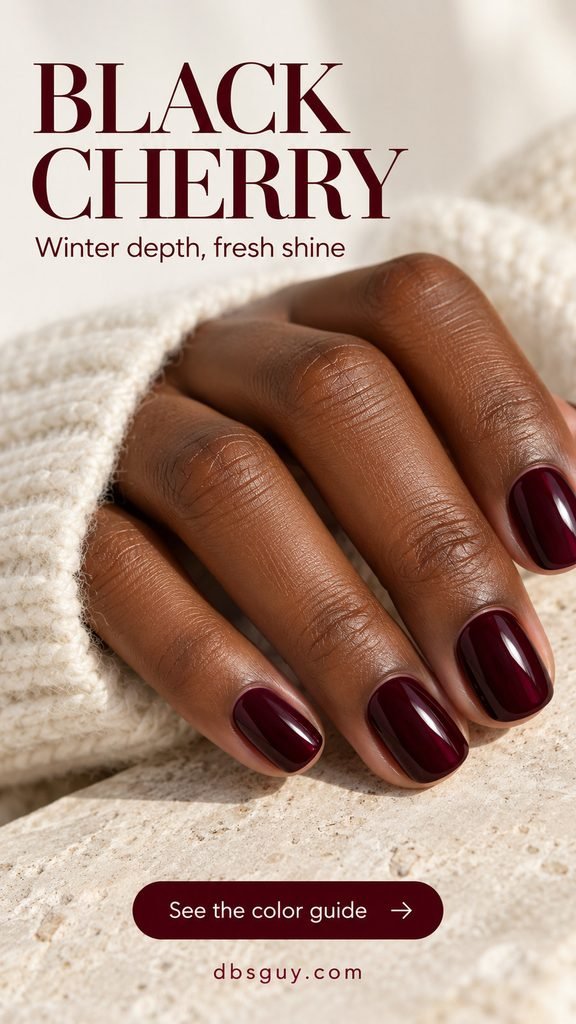
1. Black Cherry for Keeping a Little Winter Depth
Black cherry is the darkest red in this lineup: almost black at a glance, with wine-red color visible where light reaches the nail. It gives a plain cream sweater or a white shirt a strong contrast without adding artwork.
Choose a swatch that still reads red near a window. If it looks black in every light you try, move one shade lighter. Short soft-square nails keep the dark color compact; a longer oval creates a more dramatic version. Ask for an opaque burgundy-black cream with clear gloss, without shimmer.
2. Mulberry When Burgundy Feels Too Heavy
Mulberry brings a noticeable purple note into a deep berry manicure. It is a useful next step if you like wine-colored nails but want something closer to the lilac end of your spring palette.
The reference uses oval nails and a solid cream finish. Keep that finish if you want the purple-red shade itself to stand out. Compare it beside a burgundy swatch: mulberry should look visibly more violet, rather than simply being a lighter red. It pairs especially well with gray, ivory, and faded blue denim.

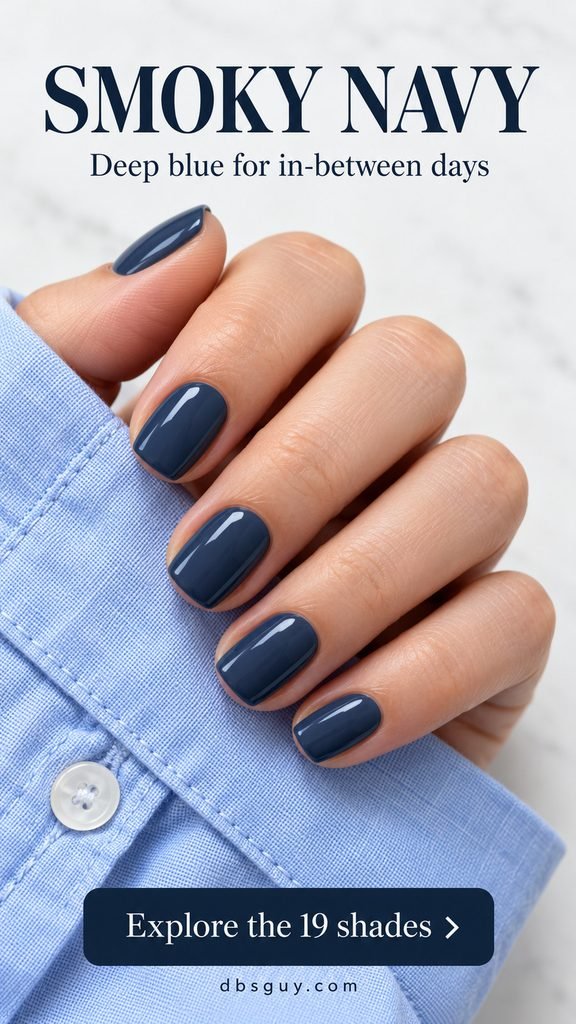
3. Smoky Navy for a Dark Color Beyond Red
A smoky navy keeps the depth of a dark manicure while bringing in blue. The gray note is the detail to look for: it makes the color feel quieter than a vivid cobalt and less stark than an inky blue-black.
Wear it with a light blue shirt now and white cotton later. On short soft-square nails, an uninterrupted glossy finish gives the color a crisp outline. If a salon sample looks almost black, ask to compare a softer navy in daylight rather than adding a glitter topper to brighten it.
4. Slate Blue for a Lighter Take on Navy
Slate blue sits several steps lighter than navy, with enough gray to avoid looking like a sugary pastel. Choose it when you want your manicure to change visibly but still work with charcoal pants, denim, and a navy coat.
The short rounded shape shown here needs no extra detail. Ask for a medium blue-gray cream rather than an icy metallic blue. Hold the sample beside both a white sleeve and your hand; you can decide whether you prefer the bluer version or one that reads closer to gray.

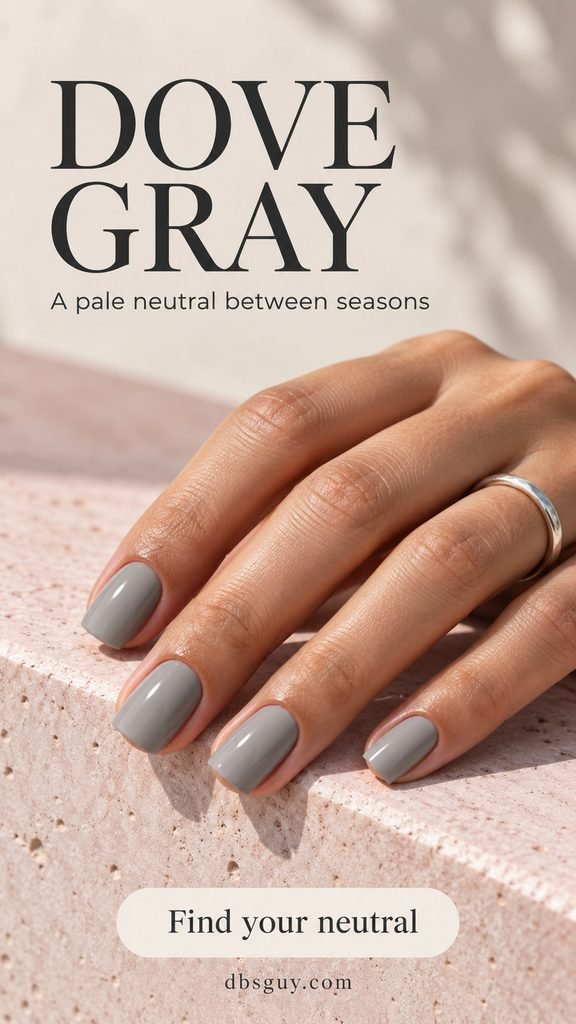
5. Dove Gray When You Want Pale Without Pink
Dove gray gives you a light manicure with a cooler, quieter mood than beige. It is an option for someone who likes pale nails but does not want pink, white, or a noticeable pastel.
Look for a soft neutral gray with no glitter. A very blue gray will start to overlap with slate; a very brown one moves toward taupe. The short squoval outline in the image keeps the pale color defined. If you wear silver jewelry, hold it near the swatch to see whether you enjoy that tonal combination.
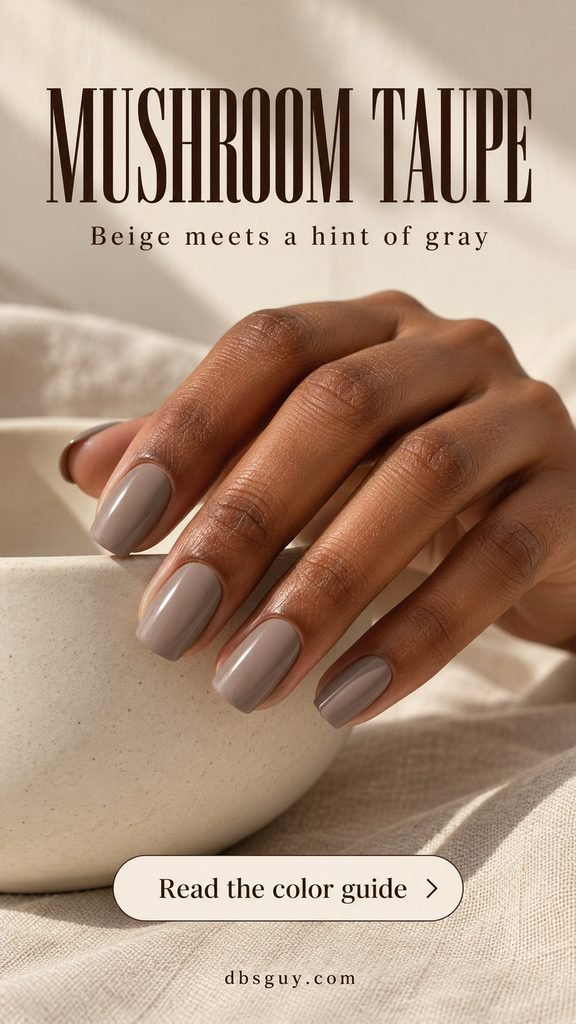
6. Mushroom Taupe for a Wear-With-Everything Middle Ground
Mushroom taupe mixes beige and brown with a gray cast. It can sit comfortably beside a camel coat in February and a white blouse in March, making it a practical choice when your wardrobe is still split between seasons.
Do not choose it only by the word “nude” on a bottle. Compare a warmer taupe and a cooler one against your own hand, then decide whether you want the polish to blend in or create contrast. The medium soft-square nails shown here have opaque coverage, so the color stays distinct from the natural nail.
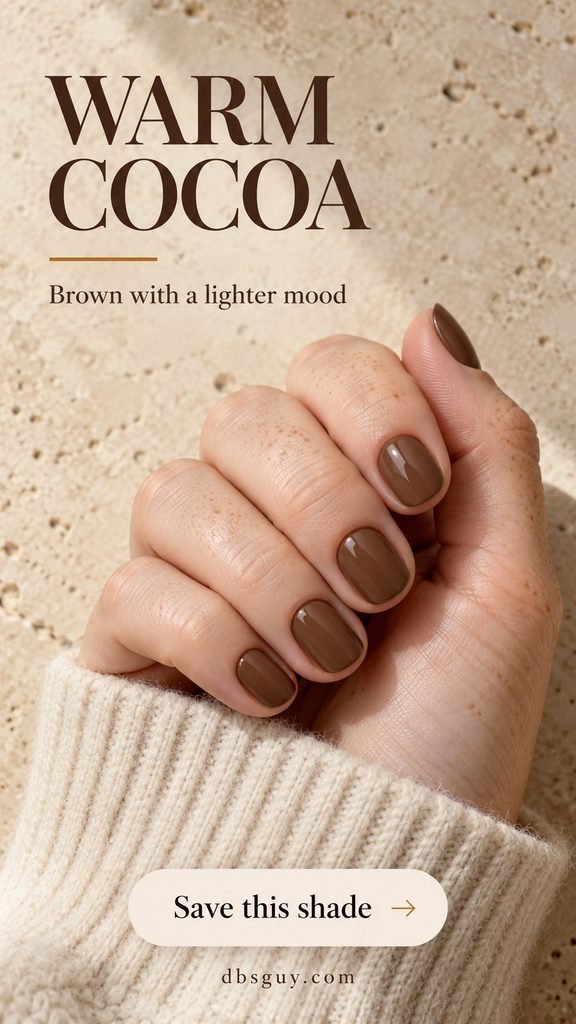
7. Warm Cocoa for Moving Away From Espresso
If deep brown has been your winter default, cocoa offers a gentler change than switching directly to peach. Choose a medium milk-chocolate brown with visible warmth instead of a near-black espresso shade.
Cocoa works particularly well with cream, pale blue, and tan. The reference keeps it on short rounded nails, where you can see the brown clearly without a long extension. If you would like less warmth, compare a cooler cocoa swatch; if you want more contrast, go deeper within the same brown family.
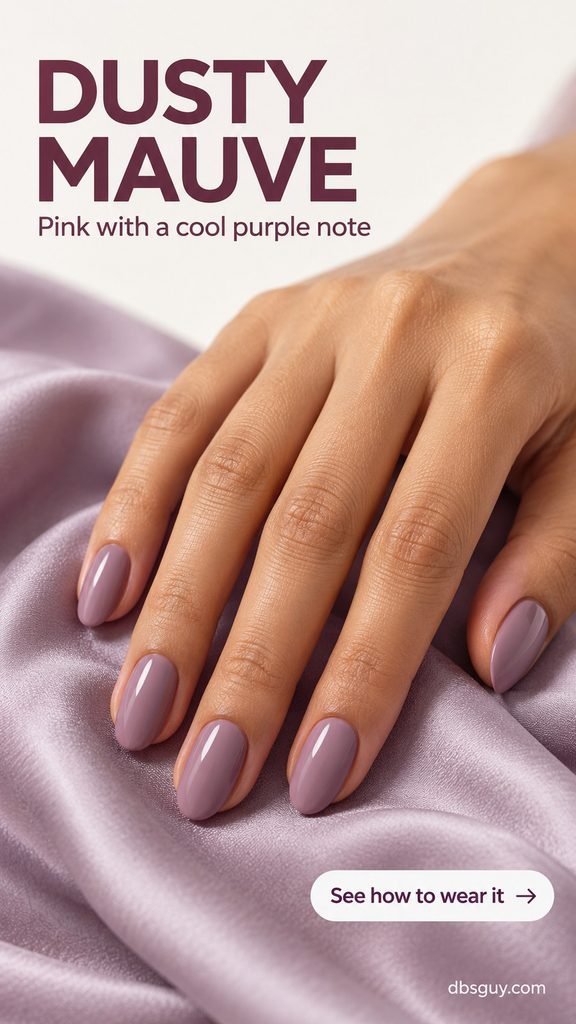
8. Dusty Mauve for a Muted Pink-Purple
Dusty mauve is a good starting point when bright pink feels too sweet and beige feels too plain. Its pink-purple color is softened by gray, so you can wear a full set without the effect of a candy-colored manicure.
A glossy cream finish makes the undertone easy to see. Ask to compare mauve with rosewood before committing: mauve should be the cooler, more purple option. Medium oval nails show the shade in the reference, but a short round shape keeps the same color story.
9. Rosewood for Pink With a Brown Undertone
Rosewood is warmer than dusty mauve, with a subdued red-pink color grounded by brown. It gives you a romantic February shade that can stay in rotation after heart motifs have lost their appeal.
Use rosewood when your outfit includes camel, rust, peach, or warm cream. The short soft-square nails in the concept keep the look simple. At the salon, ask for a muted warm pink-brown with opaque coverage. If the first sample looks orange against your hand, try a slightly rosier version.

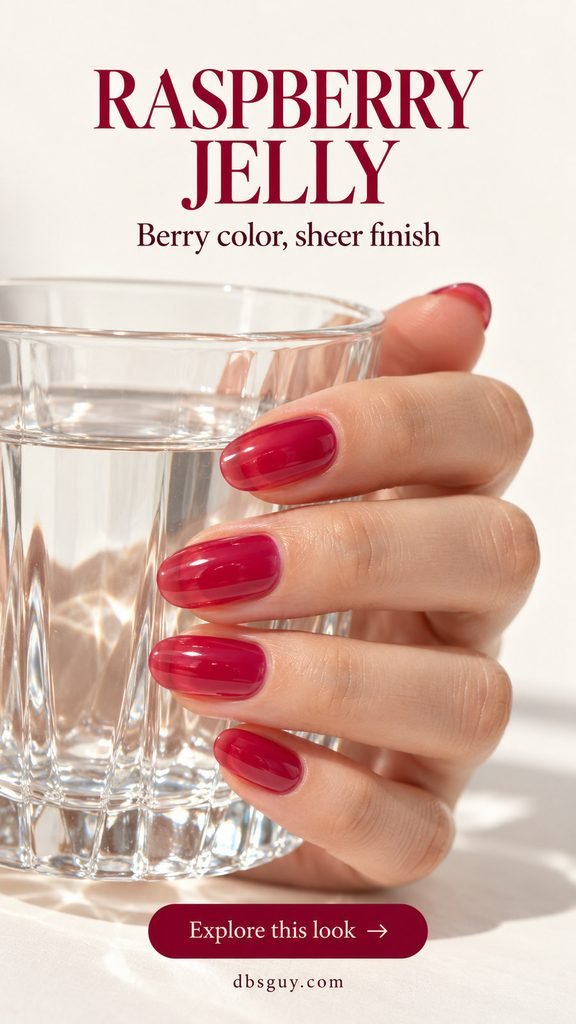
10. Raspberry Jelly for Berry Color With Transparency
Raspberry jelly changes the finish as much as the color. The pink-red tint stays vivid, but a little of the natural nail shows through. That makes it a different choice from the solid mulberry and rosewood creams above.
Ask to see a sheer berry swatch, including how it looks over a visible free edge. If you dislike seeing the tip of your nail, an opaque raspberry cream is the better request. Do not expect a clear top coat over dark opaque polish to create this transparency; the color layer itself needs to be sheer.
11. Sheer Blush for a Barely-There Pink Wash
Sheer blush leaves the natural nail visible beneath a light pink tint. It suits the days when you want your manicure to sit quietly beside a patterned outfit or colorful spring accessories.
Show your nail technician how much of the white free edge you want visible. “Light pink” alone could mean a fully opaque pastel, which gives a different result. For this look, request a translucent pink wash and gloss, without a painted French tip. Choose a tint that you like on your own nail rather than trying to match the skin in a concept image.

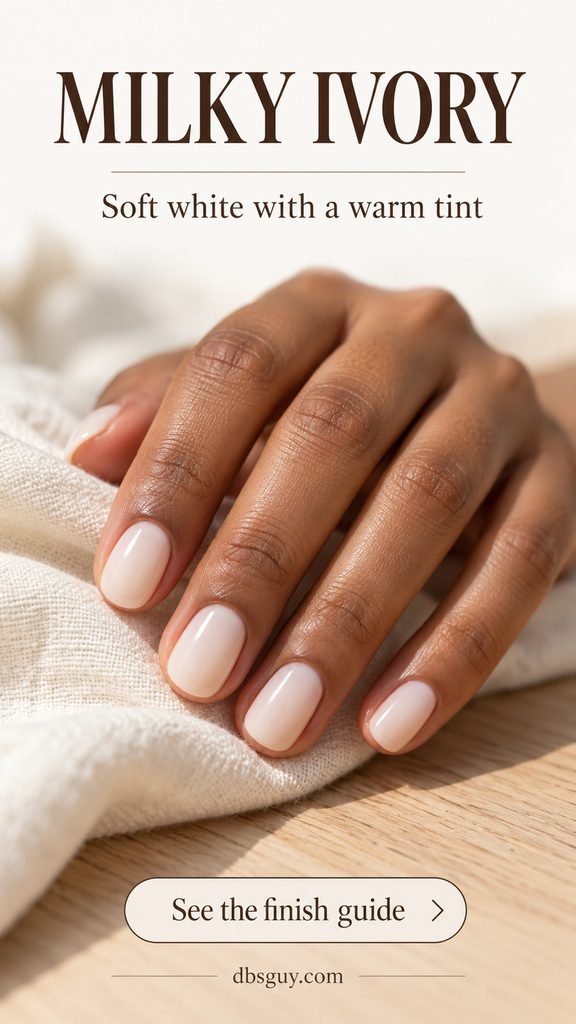
12. Milky Ivory for a Soft, Warm White
Milky ivory creates a warm off-white veil over the nail. Compared with sheer blush, it has a creamier appearance; compared with opaque white, it lets more of the natural nail influence the finished color.
Ask for a softly translucent ivory rather than chalk-white coverage. If a sample looks too yellow, compare a more neutral milky white. Short oval nails suit the restrained look, and the warmer tint is easy to picture with oatmeal knits or cream linen. For more shape references, see 17 Oval Acrylic Nails for February With Soft Edges and Romantic Details.
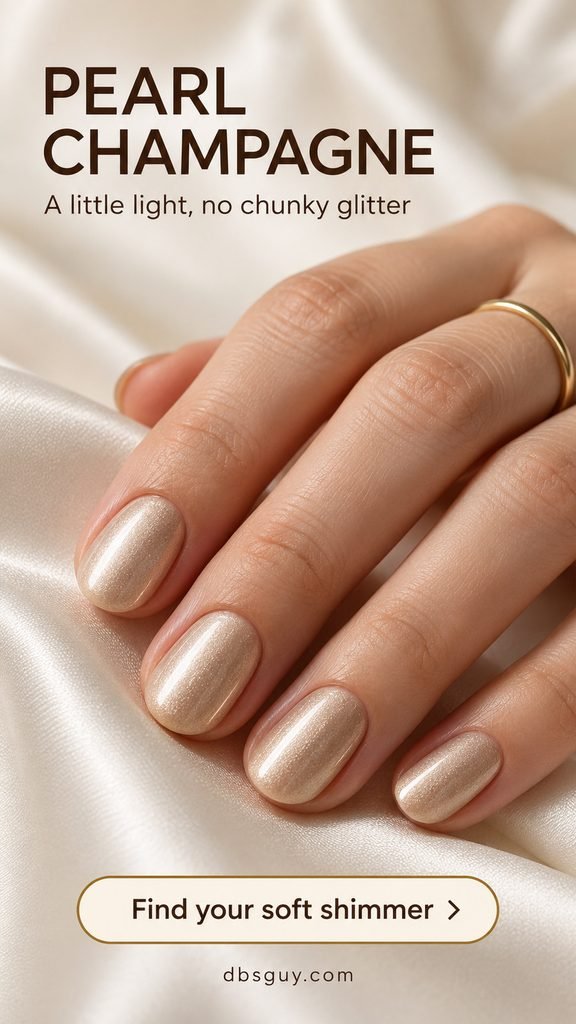
13. Pearl Champagne for a Small Amount of Shine
Pearl champagne adds a fine sheen to a pale beige-gold base. Choose it if you want something dressier than a plain neutral, but a glitter manicure would compete with your jewelry or outfit.
The reference shows a luminous pearl finish rather than a mirror-like chrome surface. Ask for fine pearlescence without chunky particles, and turn the sample in the light to check the effect. Short oval nails keep the finish understated. You can compare jewelry pairings in 15 Elegant January Nail Art Ideas to Pair With Your Winter Jewelry.
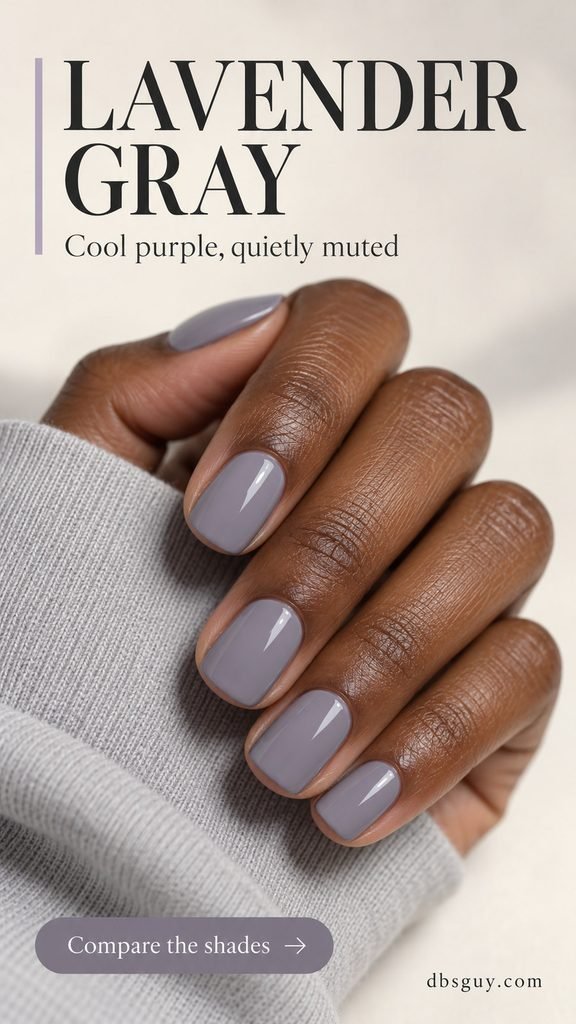
14. Lavender Gray for Purple That Still Feels Quiet
Lavender gray is the most subdued purple in this palette. Gray leads the color, with a lavender undertone appearing more clearly beside a neutral sleeve or a plain white background.
Try it if clear lilac feels like too big a change from winter shades. On short squoval nails, a glossy opaque cream gives it a neat, simple finish. Compare it directly with dove gray: the purple note should be visible, even if it is subtle. If both samples look identical to you, choose a slightly more lavender version.
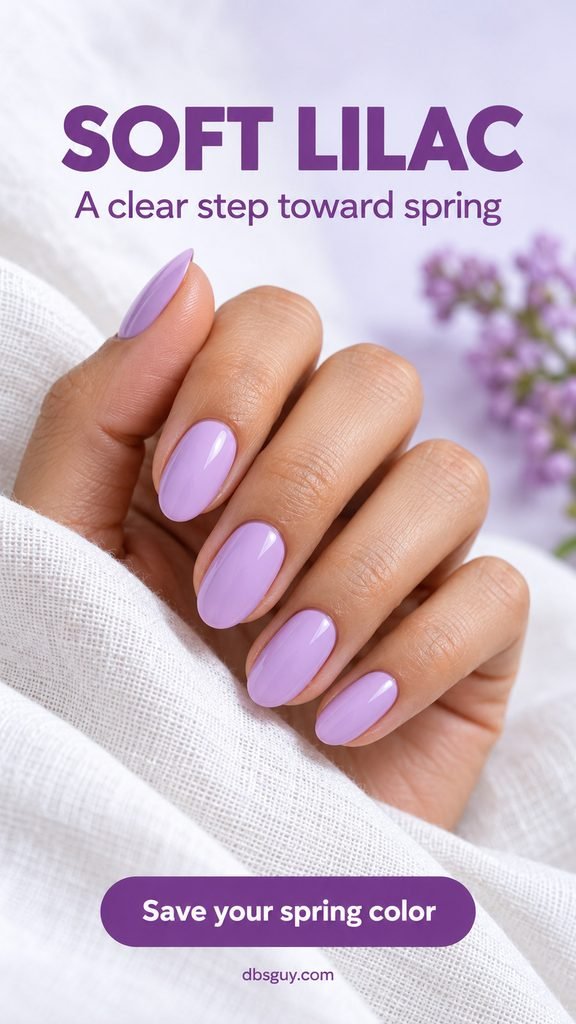
15. Soft Lilac for a More Noticeable Pastel
Soft lilac brings purple into clearer focus. It is lighter and more obviously pastel than mulberry, and less gray than the previous shade, so it makes a visible shift toward a spring palette.
Choose a cream formula if you want the color shown here. A sheer lavender will let your natural nail affect the result and may look much less saturated. The oval outline is optional; a short rounded set can carry the same lilac. Keep the full set one color if you want an easy alternative to floral nail art.
16. Sage Green for an Understated Move Into Green
Sage gives you green with a generous gray undertone. It works as a middle step if winter olive is appealing but feels too dark for the clothes you are starting to wear.
Look for a muted botanical green rather than a blue mint or a yellow pistachio. A short rounded shape and solid gloss keep the focus on the shade. Hold a swatch beside your usual jacket: sage can be a useful color with navy, cream, and denim, but choose the version whose contrast you enjoy on your own hand.

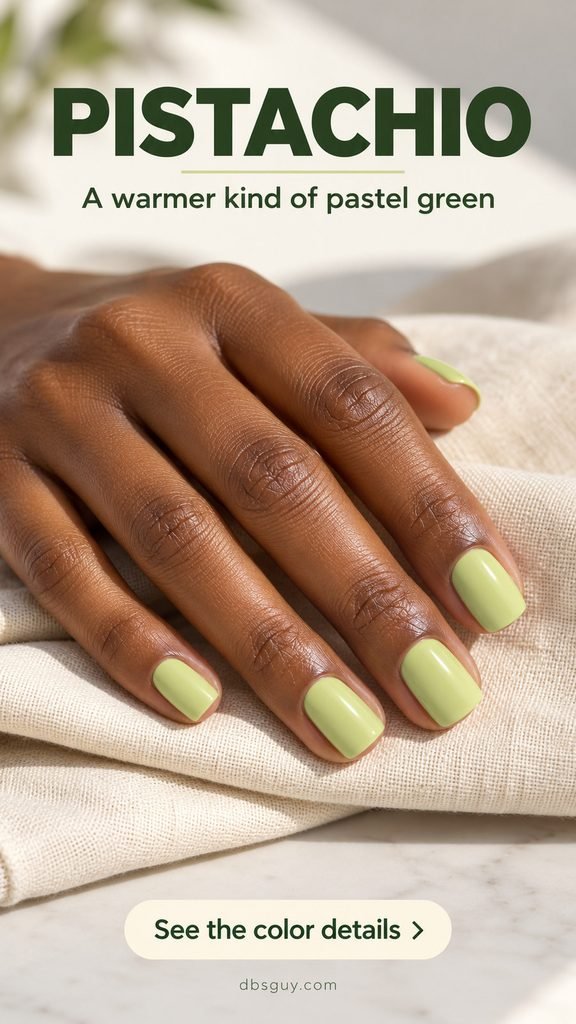
17. Pistachio for a Warmer Pastel Green
Pistachio moves the green palette toward yellow. It is lighter and warmer than sage, with a creamy appearance that feels especially at home beside a white shirt or pale denim.
Check that the swatch reads yellow-green rather than blue-green; that is the difference between this look and mint. The reference has opaque coverage on short soft-square nails. If a pale pistachio seems too close to beige against your hand, try a slightly more saturated version instead of choosing an even lighter one.
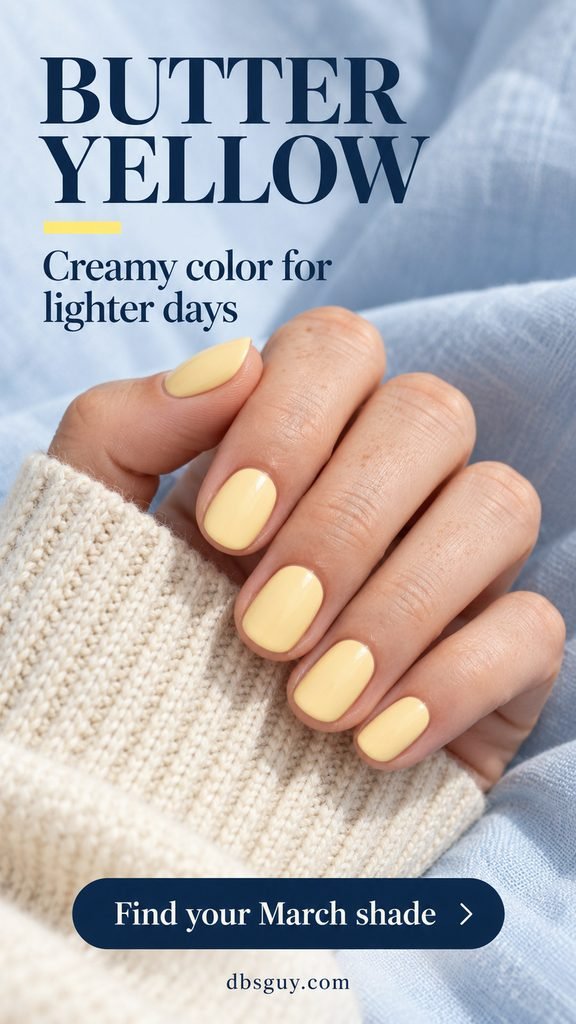
18. Butter Yellow for a Gentle Dose of Brightness
Butter yellow is a soft warm yellow with a creamy base. It makes a bigger color change than the neutrals above, while staying gentler than lemon or neon yellow.
For the result in the image, choose an opaque pastel cream rather than a sheer yellow tint. Short rounded nails give you a compact area of color that pairs well with pale blue and white. Check the shade beside cream clothing: if you want your nails to look clearly yellow, choose a sample with enough color to stand apart from the fabric.
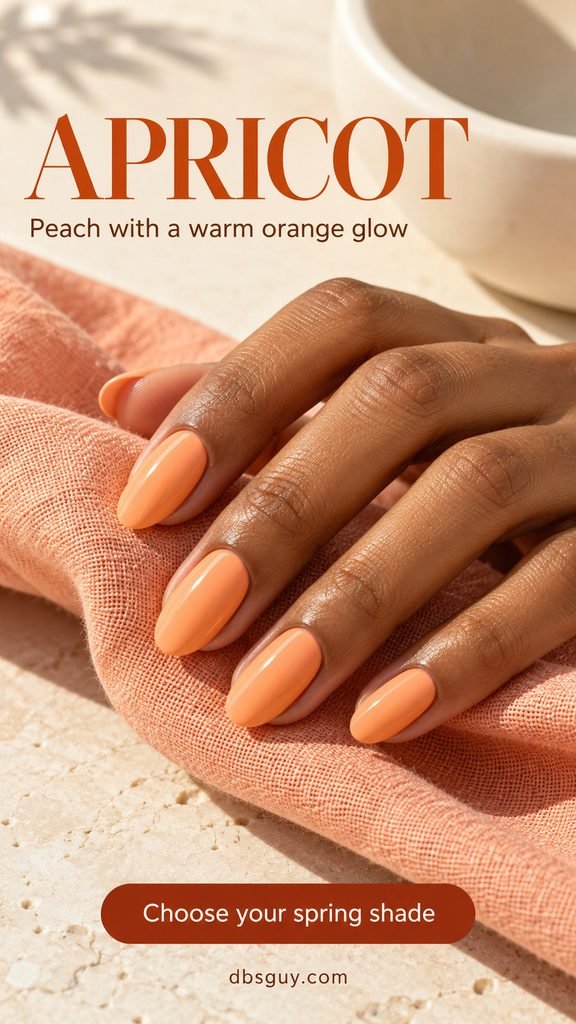
19. Apricot for a Warm Finish to the Transition
Apricot brings orange warmth into the lineup. Compared with rosewood, it has much less brown-red depth; compared with blush, it is visibly peachier and more colorful.
The reference shows a fairly saturated apricot cream on medium oval nails. Choose that version for a noticeable warm color, or compare a lighter, creamier apricot for a quieter result. If a sample looks pink to you, ask for a touch more orange. You can keep the same color on short nails without adding extensions.
How to Narrow It Down at the Salon
Pick two colors from this list, then compare physical swatches against your hand in the same light. Describe three things: the color family, the coverage, and the finish. “Muted sage, opaque, glossy” is a clearer request than “something spring-like.”
If you want a gradual change across appointments, choose a route such as black cherry → mulberry → dusty mauve → lilac, or smoky navy → slate blue → sage. Those are optional color progressions, not a schedule you need to follow.
For regular polish at home, choose a formula designed for the coverage you want and follow its directions. OPI’s nail polish application guide explains applying color through the center and sides of the nail, keeping it off the cuticle, and letting coats dry between applications. A glossy top coat adds shine; it does not make an opaque color translucent.
Questions About February and March Nail Colors
What is one nail color I can wear in both months?
Dusty mauve is a useful starting point if you like pink-purple, while mushroom taupe suits a neutral palette. Slate blue offers cooler color and sage offers a muted green. Pick the family that works with the clothes you wear most.
Can I still wear dark nail polish in March?
Yes. Keep black cherry, cocoa, or navy if you enjoy it. If you want a seasonal change, try a lighter shade in that family or a sheer formula. There is no need to replace a color you like simply because the calendar changes.
Which of these colors work on short nails?
All 19 can be worn on short nails. Solid colors do not require space for a pattern. Use the images to choose the shade and finish, then keep your preferred rounded, oval, or soft-square outline.
Do I need gel or acrylic to get these looks?
No. These are color and finish ideas, so you can look for comparable regular polishes or ask a salon about its available systems. Extensions are a choice about length and shape, not a requirement for wearing a particular color.
How do I choose a pastel that I like against my skin?
Compare two versions rather than ruling out the whole color family. Try warmer versus cooler, and softer versus more saturated. Look at the sample against your hand rather than only against the bottle, fabric, or someone else’s skin.
Also Read
- 60 Winter Nail Colors and Nail Polish Brands — for more options at the deeper end of your palette.
- 27 Elegant Simple Winter Nails: Ideas for a Chic, Cold-Weather Manicure — for simple shapes and finishes to carry into your next appointment.