Editorial note: This is a researched guide for adults starting skiing at 28, not a documented personal trip diary. The title frames the first-timer perspective; no personal ski experience is claimed. Images are AI-generated concepts.
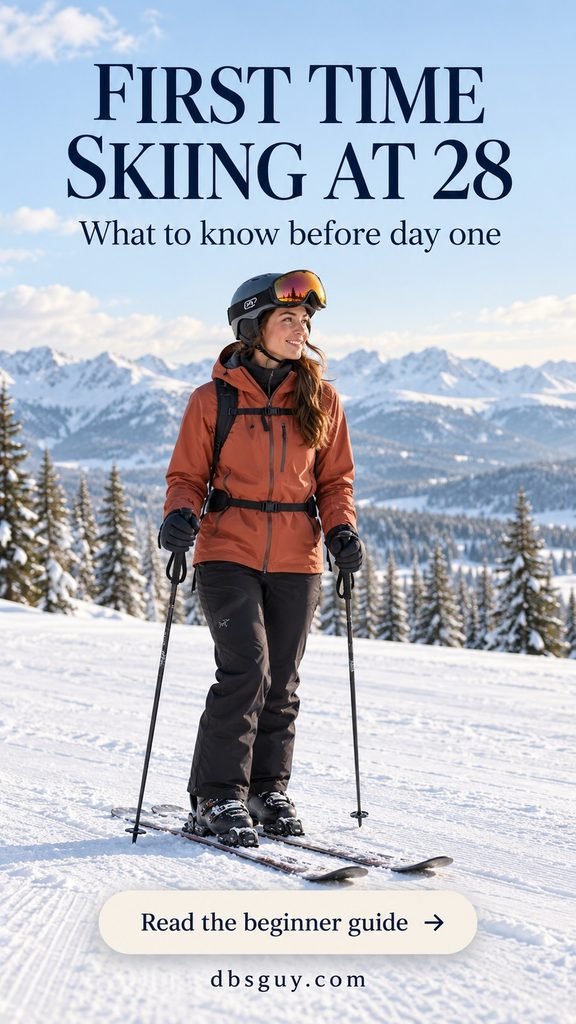
Starting skiing at 28 can make you feel as though everyone else received an instruction manual years ago. They know where to put their lift pass, how to carry their skis, and which line leads to the lesson. Meanwhile, you are trying to work out whether those stiff boots are supposed to feel that strange.
The most useful first-day plan is simple: book an adult never-ever lesson, rent properly fitted equipment, wear weather-appropriate layers, and give yourself permission to stay in the learning area. You do not need to keep up with friends or reach a particular trail by lunch.
This guide covers the decisions worth making before you arrive, what to check while getting dressed, and how to judge a first day without measuring it against someone else’s highlight reel.
Before you go: make the day easier to start
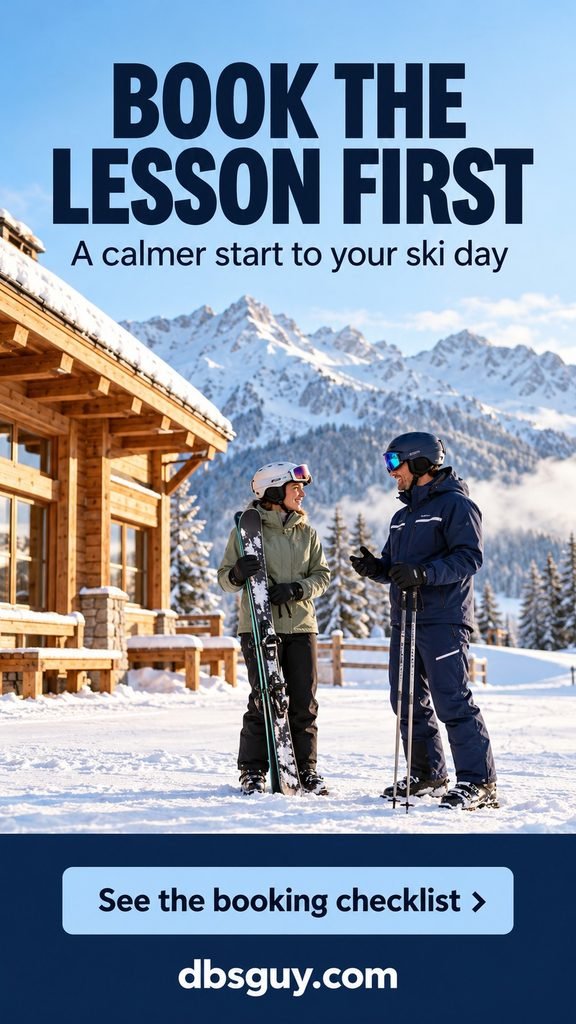
Book the lesson before building the rest of the trip
Look for the words adult first-timer or never-ever. “Beginner” can also describe someone who already knows how to stop and turn. Tell the ski school plainly that you have never skied, even if you are athletic or have tried another board sport.
A group lesson gives you company and shared instruction. A private lesson gives you more individual attention, but it may be a much larger expense. Choose based on your budget, learning preferences, and the actual program—not the idea that an adult should be embarrassed to join a class.
REI’s first-trip planning guide recommends comparing lessons, rental arrangements, travel logistics, and beginner packages. For your first outing, those practical details deserve more attention than a resort’s summit elevation.
The booking checklist that prevents awkward surprises
- Lesson: Is it specifically for adults who have never skied? How long is it, and where does it meet?
- Access: Does the price include a lift ticket or learning-area pass? What areas and hours does that cover?
- Rentals: Are skis, boots, poles, and a helmet included? Ask separately about goggles and clothing.
- Timing: When should you arrive for parking, rental fitting, and check-in? Follow the ski school’s arrival instructions.
- Changes: What happens if weather affects operations, you arrive late, or you need to reschedule?
Keep the confirmation and meeting-point map on your phone, ideally with an offline screenshot. Put the rental location and the lesson location into your plan separately; they may not be the same place.
Budget for the complete day
Write down one total: lesson + required access + rentals + helmet if separate + transportation or parking + food + any clothing you still need. Add lodging only if you actually need an overnight stay. Use live quotes for your chosen dates instead of assuming a package includes everything pictured in its advertising.
For a first attempt, our editorial recommendation is to prioritize a manageable trip over an ambitious vacation. A nearby lesson can help you learn whether you enjoy skiing before you commit to flights and several nights away. For a winter trip, check beginner-area operations and lesson availability for the date you want; an announced opening day does not tell you everything about what will be accessible.
Set expectations with your ski friends in advance
Try this: “I’m taking the first-timer lesson, and I’ll meet you for lunch. Please don’t plan a run for me until my instructor says what I can practice.” It gives everyone a clear plan and removes the pressure to make a terrain decision while standing in a lift line.
Your friends can help with the small things—finding the lodge, carrying lunch, taking a photo. They do not need to turn your first morning into a group performance.
Getting ready: comfort is part of the plan
Pack layers you can actually move in
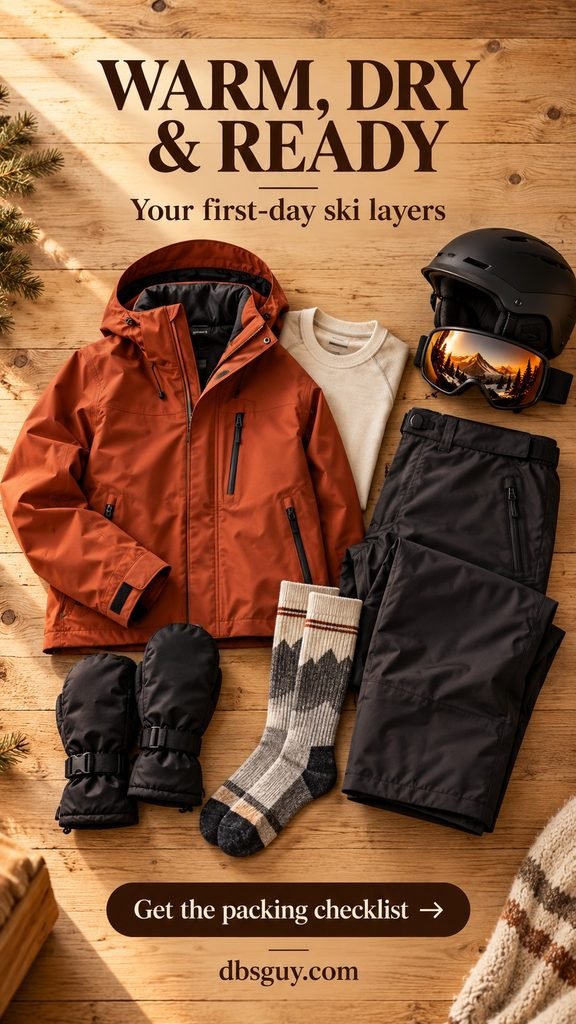
Use a wool or synthetic base layer, an insulating midlayer suited to the forecast, and a waterproof outer jacket and snow pants or bibs. Add insulated waterproof gloves or mittens, a neck gaiter, ski socks, goggles, and a properly fitted ski helmet. Avoid cotton layers and jeans, which stay wet. REI explains these choices in its ski clothing guide.
The outfit in the image is a visual starting point, not a fixed prescription for every temperature. Lay out your clothes the night before, then try them on together. Can you bend your knees, reach your pockets, and fasten your jacket comfortably? Check those details at home rather than at the lesson meeting point.
Give rental boots your full attention
Ski boots feel much firmer than ordinary winter footwear. They should hold your feet securely, but pain or numbness is a reason to tell the rental fitter, not a test of determination. Describe the exact problem: pressure over the toes, a heel moving around, or a painful spot at the ankle. Let the fitter assess it instead of choosing a larger size yourself.
Wear one pair of appropriate ski socks and keep them smooth. Ask the fitter how your clothing should sit around the boot cuff and how to use the buckles. Have rental staff set up your equipment; do not adjust the bindings yourself. Aspen Snowmass’s beginner guide is a useful introduction to equipment and getting ready.
A practical question before leaving the shop is, “If these start hurting during the lesson, where should I return?” Knowing there is a route back to the fitter makes it easier to speak up promptly.
The small-items packing checklist
- Booking confirmation, ID, payment method, and required pass.
- Phone with the meeting point and the resort’s patrol contact saved.
- Sunscreen and lip protection, used according to their labels.
- Water and an easy snack for a break.
- A spare dry pair of socks and comfortable shoes for afterward.
- Any personal essentials, plus a plan for storing your bag.
Ask about lockers or other storage rather than assuming you should ski with everything on your back. Before putting on all your equipment, use the bathroom and check that your essentials are in secure pockets. These ordinary logistics can matter more to your morning than buying another accessory.
On the snow: build a day you want to repeat
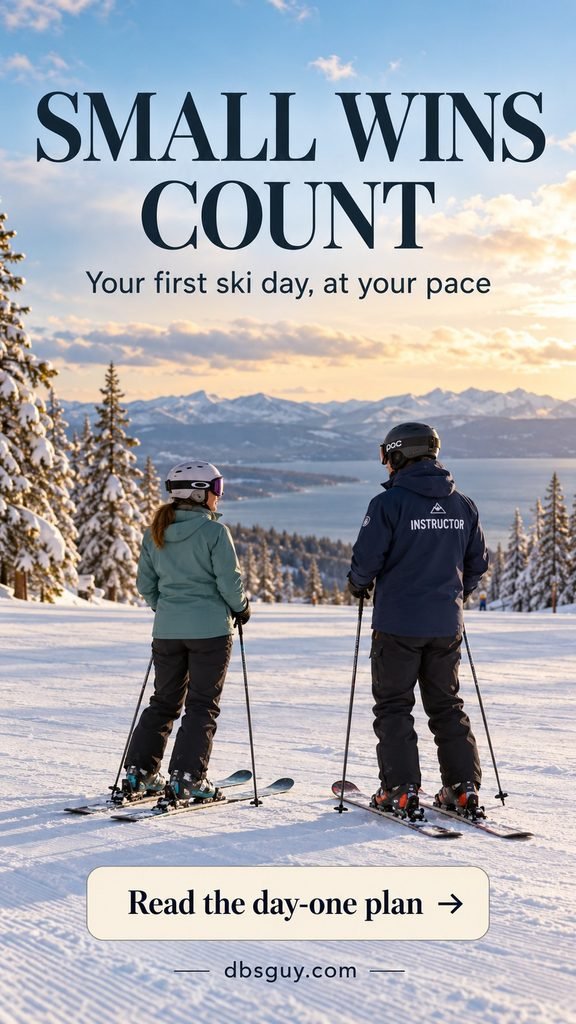
Expect the lesson to begin with very small movements
Your first session may include getting familiar with equipment, moving on flat snow, short glides, and learning to control direction and speed. The order and pace depend on the instructor, terrain, conditions, and group. You are paying for that foundation, even if it looks less exciting than skiing down a mountain.
Tell the instructor when something is unclear. “Could you show that once more?” and “I’m not confident stopping yet” are useful information. Asking early gives them something specific to work with.
Choose terrain with your instructor
In North America, a green circle marks a resort’s easiest category, but ratings are relative to that ski area. A green trail is not automatically appropriate for a first lesson. Ask which exact learning area you should use afterward and whether you are ready to practice independently.
Before using any unfamiliar lift, ask the instructor or lift attendant how to load and unload. You do not have to discover a chairlift’s procedure by following the person in front of you.
Keep the safety basics close
The National Ski Areas Association’s Responsibility Code calls for maintaining control, avoiding people downhill, choosing visible stopping places, checking uphill before entering a trail, obeying signs and closures, and knowing how to use lifts. Read the complete code and follow the resort’s rules.
If you feel overwhelmed, tell your instructor. If you become stranded on terrain beyond your ability, seek resort staff or ski patrol assistance rather than improvising a descent. This article is preparation for a lesson, not a substitute for instruction on the snow.
A realistic first-day rhythm
Before the lesson: Allow the arrival time your ski school requests. Collect rentals, resolve fit issues, find the meeting point, and eat before the session.
During the lesson: Focus on the task your instructor gives you. If cold, discomfort, or confusion is distracting you, say so while they can help.
At the break: Have food and water, warm up, and decide how you actually feel. A ticket that lasts all day is permission to ski, not an obligation to keep going.
After the lesson: Ask for one specific thing to practice and the exact place to practice it. Continue only if the instructor considers it appropriate and you feel able to do so. Otherwise, finish with lunch and return the equipment.
The NSAA’s skiing tips emphasize stopping before fatigue takes over. “One last run” does not need to be part of your first-day story.
Use a better measure of success
At the end of the day, ask three questions: What feels less unfamiliar? What still needs help? Would a second lesson make the next outing feel more manageable?
Useful progress could be understanding your equipment, speaking up about a fit problem, or recognizing the terrain where you feel comfortable learning. Nobody needs to give you a deadline for looking confident in a ski photo.
Questions adult first-time skiers ask
Is 28 too late to learn to ski?
No. Adult first-timer programs exist specifically for people beginning later than childhood. Your starting point, comfort, and instruction matter more than comparing your age with someone else’s years of practice. Avoid any promise that you must reach a particular skill level in one day.
Can I learn everything I need from videos?
Videos can make unfamiliar equipment and vocabulary easier to recognize. An instructor can observe what you are doing, choose suitable terrain, and respond to your questions in real time. Use videos as background, then take a lesson.
Should I buy skis before the trip?
Renting is a sensible starting point. It lets a shop fit the equipment and gives you a way to address problems during the visit. Save major purchases until you have a clearer idea of your preferences and whether you want to keep skiing.
What if I spend the whole day in the beginner area?
Then you spent the day learning where you belonged. Ask your instructor what is improving and what your next session should focus on. The length or height of the slope is a poor substitute for that feedback.
What should I do differently on day two?
Keep a short note after the first lesson: equipment issues to mention, one skill to revisit, and any arrival problem to fix. Use it when booking or checking in again. A second day can begin with a clearer question than “Am I good at this yet?”
You can start at 28 with a beginner lesson, a modest plan, and no impressive story to tell beforehand. The first thing to learn is how to give yourself a workable first day.