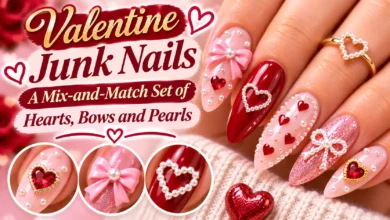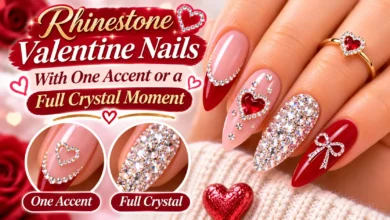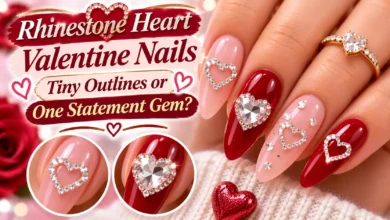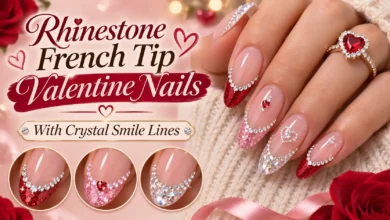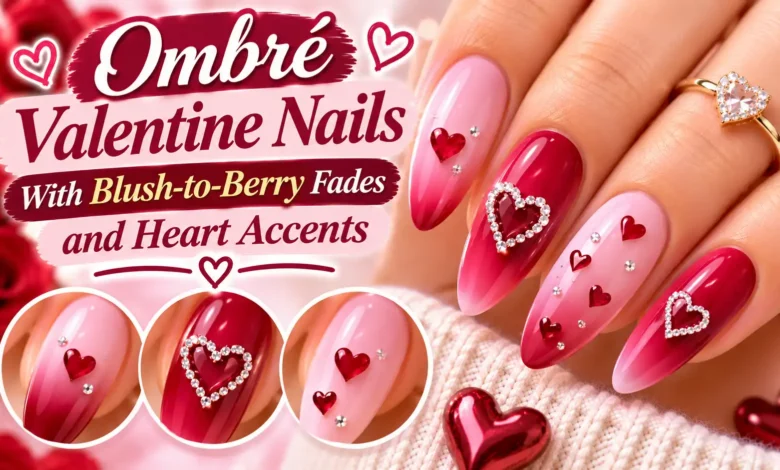
For ombré Valentine nails, start with a blush pink you like beside your hand, deepen it into raspberry or plum, and give the heart its own patch of contrasting color. A pale heart shows clearly over berry; a berry heart stands out over blush. The fade should still be visible around the artwork.
These five designs change where the dark color sits: at the tips, along a short edge, near the cuticle, across a diagonal, or around a blush center. Choose that layout first. It gives your nail tech a more useful reference than “pink ombré with hearts.”
The images are AI-generated manicure concepts, not photographs of completed salon work or exact polish swatches. Use them to discuss the design, then compare real colors before application.
Choose the Blush, the Berry, and the Amount of Contrast
“Berry” can mean a bright raspberry pink, a red-purple wine, or a deeper plum. Here, raspberry gives the lighter designs a colorful edge, while plum makes the reverse fade moodier. Neither needs to look almost black. Ask to see the darker shade away from the strongest salon light so you can tell whether it still has the pink or purple you want.
For a gentle blend, pair a rosy blush with raspberry. If you like a cooler palette, compare a mauve blush with a plum-leaning berry. These are starting points for a color choice, not rules about which shades suit a particular skin tone. Hold the samples beside your own hand.
Coverage matters, too. A milky blush gives the lighter end a more even field of color; a sheer pink lets more of the nail underneath influence the result. Ask your tech to show the proposed blend on a practice tip with the same base and finish you plan to wear.
1. A Classic Blush-to-Raspberry Fade on Almond Nails
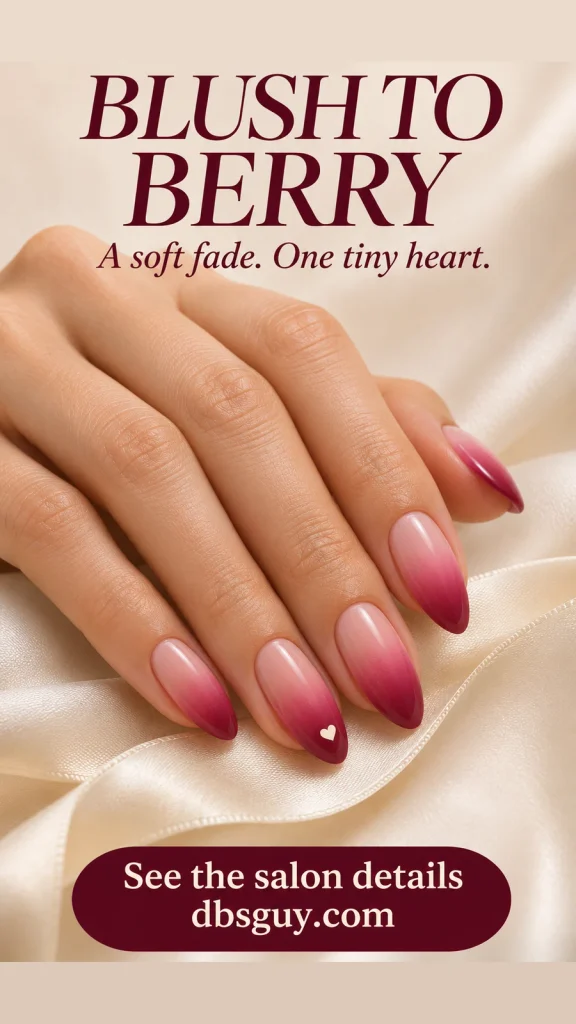
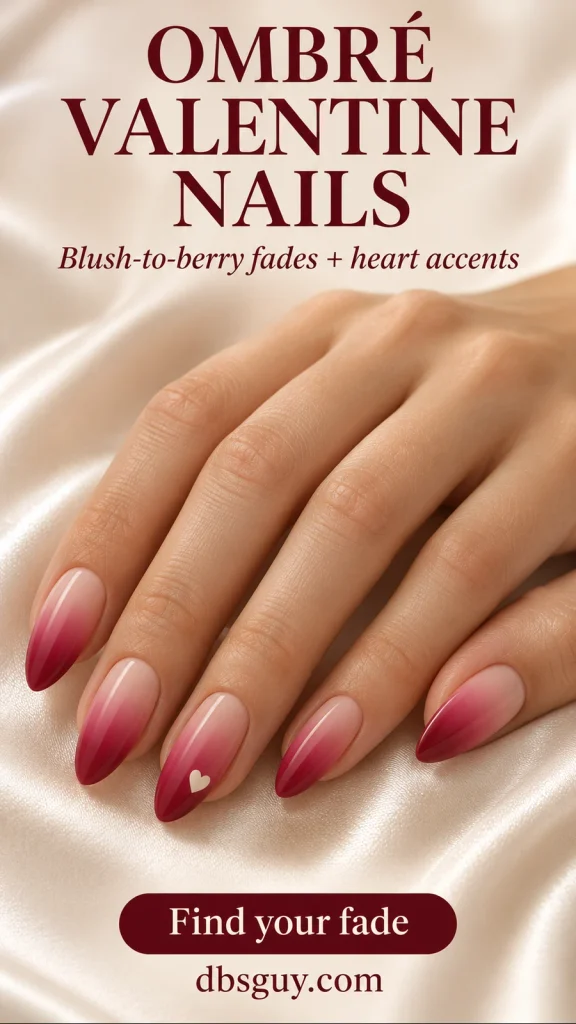
Keep the base pale, let rose fill the middle, and save the richest raspberry for the tip. On a medium almond, that leaves enough length to see the transition before the nail narrows. The single ivory heart sits on the berry part of the ring nail, where its whole outline stays easy to see.
This is the starting point if you want the recognizable blush-to-berry look without extra linework. Ask for a soft transition with no visible stripe where the pink meets the raspberry. A dark block at the end would change the effect toward a colored French tip.
What to ask for: “Medium almond nails, warm blush near the cuticle, rose through the middle, and raspberry concentrated toward the tips. One small ivory heart on each ring finger, with clear berry space around it, and a glossy finish.”
If you prefer your current shorter length, borrow the palette and use the compact layout below rather than extending the nails just to match this picture.
Also read: 15 Almond Valentine Nail Ideas With Heart Tips and Soft Curved Lines.
2. A Short Squoval Fade With a Berry Heart on Blush
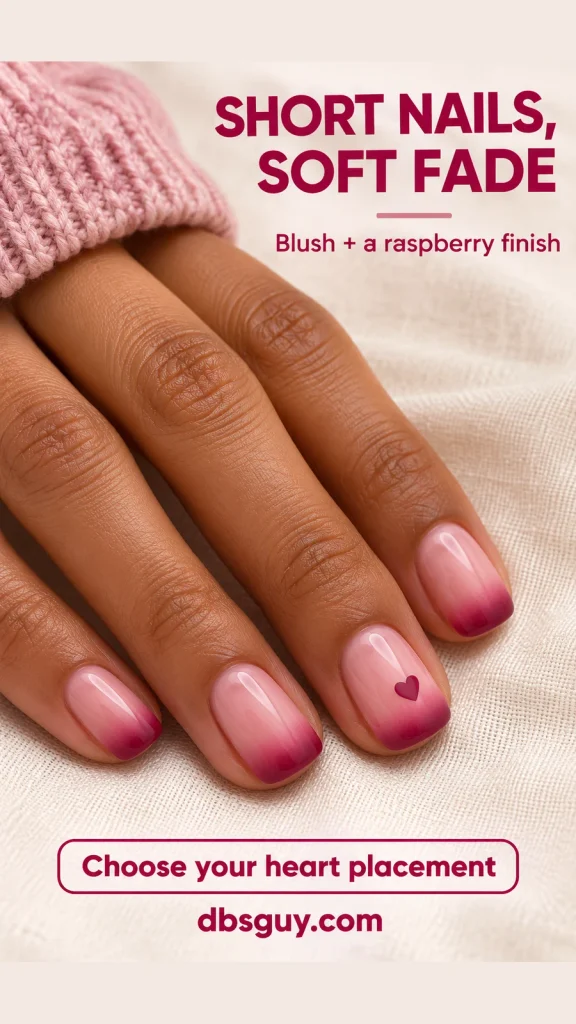
On a short squoval, keep most of the nail blush and feather raspberry into the last part of the edge. There is less room for a long color transition, so the useful choice is how much dark color to keep. In this version, the raspberry reads as a small finish to the pink rather than taking over half the nail.
Move the heart onto the pale area of the ring nail and paint it in berry. That reverses the contrast from the almond design: the motif stays visible without needing a white detail. Leave a gap between the heart and the darkened edge so the two shapes do not merge.
Keep the shape comfortable: Ask for a softly squared edge with rounded corners at your usual length. If there is barely any free edge, the fade can occupy the end of the nail plate; you do not need an extension simply to include raspberry.
Before adding the heart, look at one finished gradient. If the pale area is already small, choose a smaller motif or reduce the dark area on the accent nail.
Also read: Very Short Valentine Nails: Tiny Accents for Barely Any Free Edge.
3. A Reverse Fade With Berry Roots and Blush Tips

Turn the usual gradient around: place plum-berry near the cuticle, soften it through dusty rose, and finish with pale blush at the tip. A medium oval follows the rounded shape of the color transition. It is a useful option when you like a deeper manicure but still want a visibly light edge.
The ivory outline heart sits over the darker section of the ring nail. Its open center lets the berry remain part of the design. Keep the outline narrow enough to look delicate but wide enough that the two lobes and the dip at the top remain distinct.
Check the root color before committing. Because the darkest shade is beside the cuticle, new natural growth may create a more noticeable visual border than it would beside a pale blush base. That is a difference in appearance, not a claim about how long the manicure lasts.
Salon wording: “A reverse ombré on medium ovals: plum-berry at the base, a broad dusty-rose blend, and light blush tips. One open ivory heart over the berry on the ring nail.”
Also read: Valentine Nail Colors: How to Choose Between Blush, Cherry and Wine.
4. A Diagonal Blush-and-Berry Blend
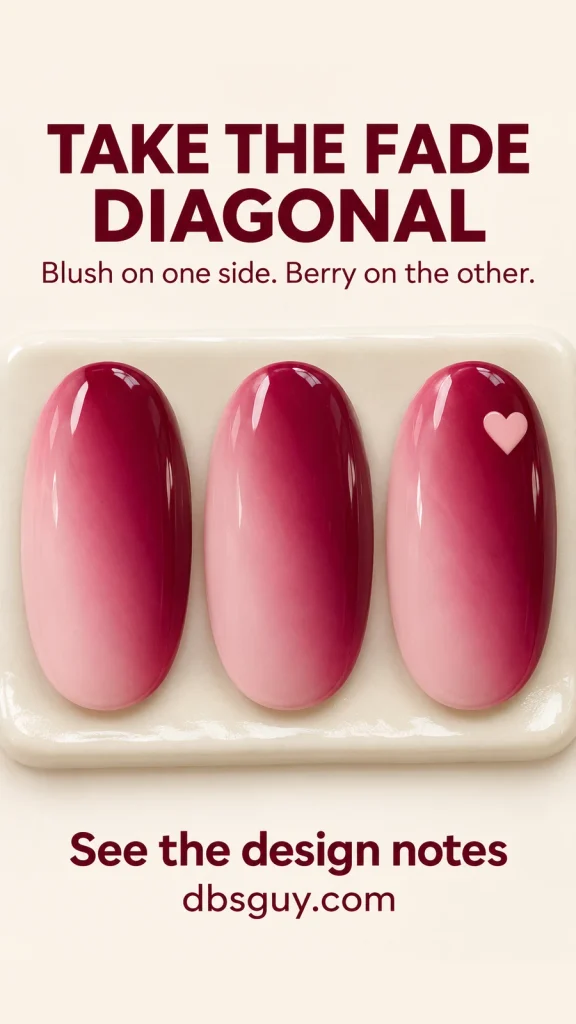
A diagonal fade lets the light and dark colors share the width of the nail instead of sitting only at opposite ends. Ask for blush on one side and berry toward the opposite side, connected by a soft slant of rose. The edge between them should look diffused rather than like a painted diagonal stripe.
Use the same overall direction across the visible fingers if you want an orderly set. The blend does not have to fall at an identical measured point on every nail, but the hand should still read as one coordinated design.
Place one filled blush heart on the berry side of the ring nail. It should sit fully inside the darker area, with enough color around it to show its point and both lobes. If the heart overlaps the pale section, part of its outline can disappear.
This is the choice to bring to the salon when you like an allover gradient but want a different layout from a tip fade. Keep the remaining nails free of art so the diagonal stays readable.
Also read: Valentine Nail Designs Without French Tips: Allover Color and Accent Art.
5. A Blush Center With a Berry Halo on Coffin Nails
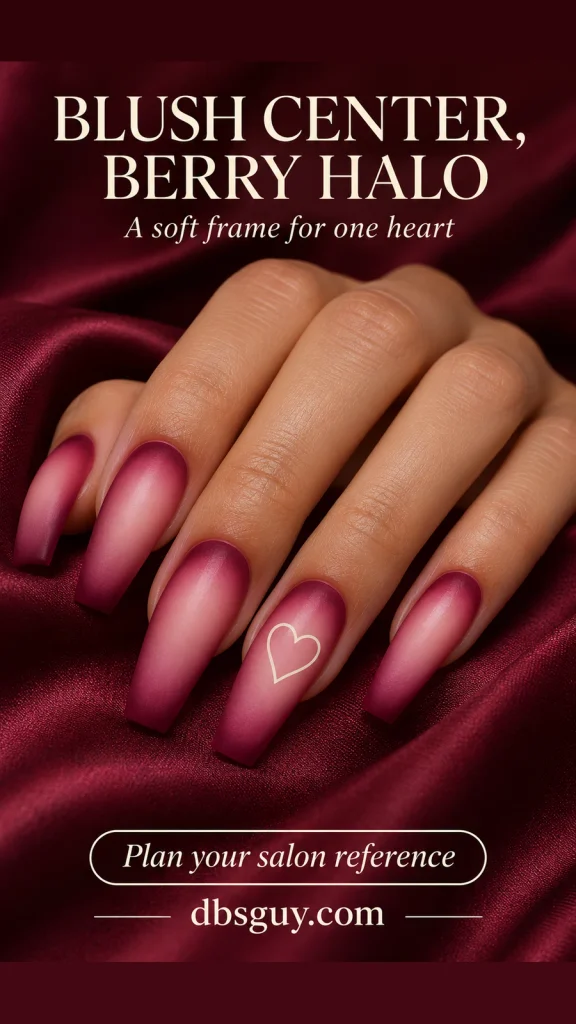
For a framed effect, keep a luminous blush oval in the center and let berry surround it at the base, sidewalls, and flat tip. The reference uses long tapered coffin nails with a soft, satin-looking surface. Unlike the first four layouts, the lightest color sits inside the darker color rather than at one end or one side.
Ask for the berry edge to blend inward. A hard border would look like an outline around the nail, while this design needs a gradual shift into the blush center. Preserve enough pale space that the halo remains obvious after the heart is added.
The ring nail carries one ivory outline heart over the blush. Keep the line defined: an extremely pale, fine outline can become difficult to see against a light center. You can ask for a slightly rosier center if the first sample makes the heart disappear.
Before booking: Send the reference and ask whether the salon can reproduce the blended perimeter at your chosen length. Confirm whether you need an extension service and how the nail art is priced. The image does not establish a particular product system or application technique.
Also read: Long Valentine Nails With Layered Hearts, Lace and Statement Tips.
Send a Clear Reference Before Your Appointment
Choose one design image and describe the parts you want to keep. If you send several references, say which one controls the shape, which one supplies the colors, and where you want the heart. Otherwise, a request for “something like all of these” leaves the main choices unresolved.
A useful booking message is: “I would like the short squoval blush-to-raspberry fade in this reference, at my natural length, with one berry heart on each ring finger. Can you do that with the service I usually book, and should I reserve extra nail-art time?”
Agree on the number of accent nails and check one blended sample before the full set. “One heart” can mean one across the whole manicure or one on each hand; say which you intend. Also confirm the finish. The halo reference has a softened surface, while the tip and reverse fades show more gloss.
If you choose gel, ask about the salon’s application and removal process. Follow the product system’s directions, avoid picking the finish off, and use broad-spectrum, water-resistant SPF 30 or higher on the hands before a UV-cured manicure, or dark opaque fingerless gloves. The color layout itself does not determine wear time.
Questions About Ombré Valentine Nails
Can I get this look with regular nail polish?
Yes. A gradient is a color effect, not a requirement to use gel. OPI’s regular-polish ombré tutorial uses overlapping colors on a cosmetic sponge, followed by dabbing, drying, and top coat. Its pink example explains the basic method; it is not an exact shade match for these concepts. For a first attempt, choose the straightforward tip fade and a small heart decal rather than the halo.
How do I stop the heart from getting lost in the fade?
Place it entirely over one contrasting area. Use berry over blush or ivory over berry, and leave some unpainted background color around the motif. An outline heart needs a clearly open center; if that space looks cramped on your nail, a small filled heart is the simpler choice.
Is ombré the same as a different pink on every finger?
In these designs, ombré means colors blend within each individual nail. A different solid pink on every finger is a separate arrangement. Tell your tech you want a blended transition on the nail itself if that is the detail you saved the reference for.
Do I need long nails for a blush-to-berry fade?
No. Short nails can use a smaller darkened edge and one compact accent, as the squoval design shows. More length creates room for a broader transition or a larger open heart, but it is a design choice. Start with the length you can comfortably wear and adapt the artwork to it.