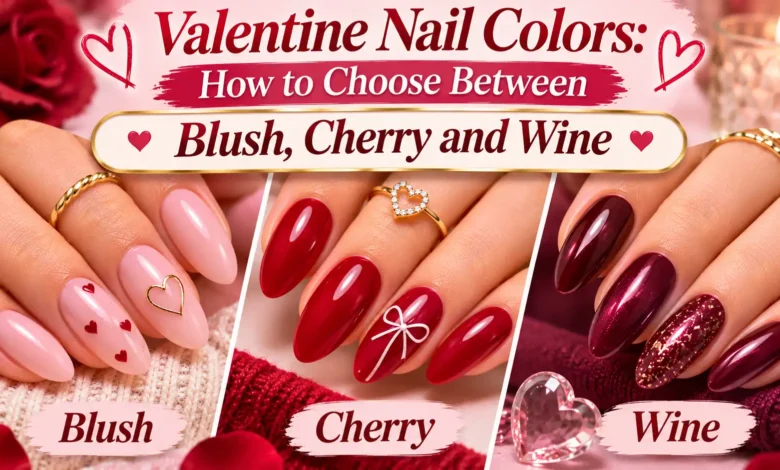
Choose blush if you want a soft pink tint, cherry if you want a bright red manicure, and wine if you want a deeper red with a moodier feel. The more useful question is how much color you want to see across your hand. A sheer blush leaves your natural nail visible; an opaque cherry makes the color the focus; a wine cream gives you a darker, more concentrated look.
None needs hearts or glitter to feel right for Valentine’s Day. Start with the color family, then settle the coverage and finish. That order makes it easier to explain what you want at the salon—or choose a bottle you will enjoy wearing after February 14.
The visuals are AI-generated color concepts for dbsguy.com, not photographs of completed manicures or exact product swatches. Use them to discuss color and coverage, then check a real sample.
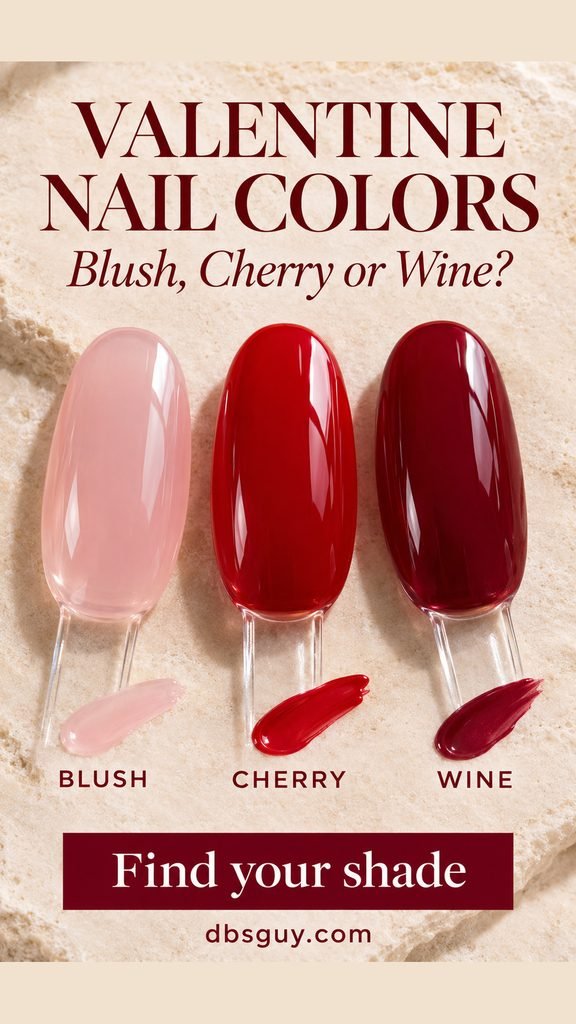
Blush, Cherry, or Wine? Start Here
These shade names overlap between brands. A polish called “dark cherry” might be closer to wine than to a bright red. For this guide, blush means soft pink, cherry means a clear, vivid red, and wine means a deeper red that can lean berry, purple, or brown.
- Pick blush when you want the manicure to blend quietly into your everyday look and prefer a light tint over a solid block of color.
- Pick cherry when you want red to be unmistakable, even on short nails. It is the strongest starting point if pale pink feels too quiet and burgundy feels too dark.
- Pick wine when you already enjoy dark colors and want a rich red beside winter clothes or a dinner outfit. Check that it still looks red in ordinary indoor light.
If two options appeal equally, picture the clothes you will actually wear that week. Decide whether you want your nails to stand out against them or sit within the same soft or deep palette. This is a styling preference, not a rule about which colors you are allowed to wear.
Choose Blush for a Soft Tint and Visible Natural Nail
Blush is a good starting point when you like a pink manicure but do not want the color to cover every trace of your natural nail. The reference uses a sheer rosy pink on short ovals: there is shine and a visible tint, while the lighter free edges still show through.
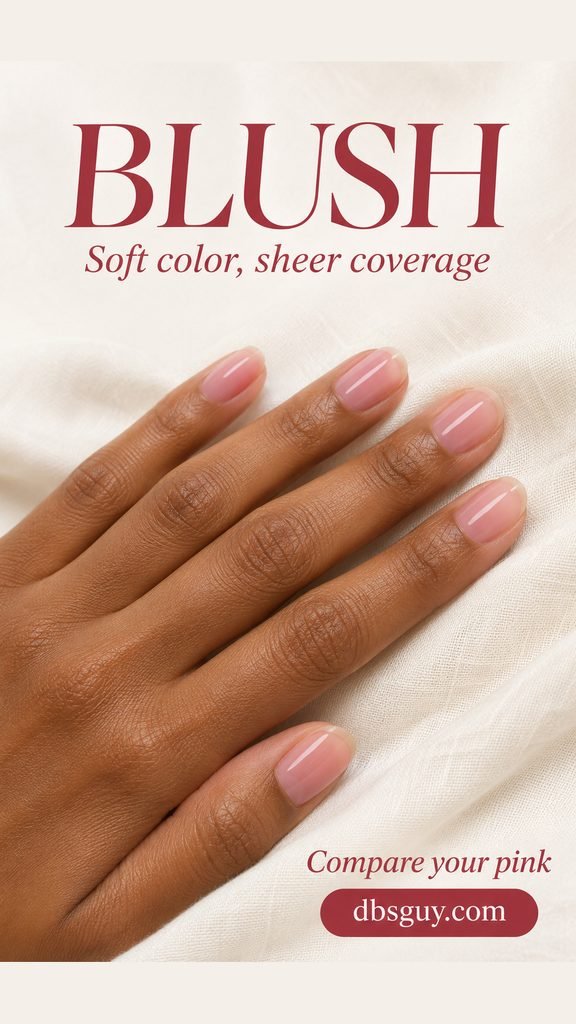
Ask about coverage before choosing the pink. A transparent pink wash and an opaque pale pink can look very different even when both are called blush. “Milky” suggests a softened, cloudy effect, but the word alone does not tell you how much nail will remain visible. Ask to see the finished coverage.
For a real example of why the label needs a closer look, essie describes Blush Jelly as a sheer pink with yellow undertones. Blush is not automatically a cool, blue-toned pink. Use a product description to narrow your options, then compare the actual shade beside your hand.
If a sample looks too pale or white for the effect you want, compare a rosier tint or a more transparent formula. If you dislike seeing the natural tip, choose more coverage deliberately. Extra coats should follow the product’s directions; adding layers does not turn every sheer polish into the opaque pink you had in mind.
Salon wording: “Short, softly rounded ovals, a sheer rosy blush with the natural tips still visible, and a glossy finish. I’d like to check the pink on one nail first.”
Blush also gives a relatively gentle color transition at the base as the nail grows. That is a visual advantage if you dislike a strong border; it is not a promise that pale polish will resist chips better.
Also Read: 17 Oval Acrylic Nails for February With Soft Edges and Romantic Details.
Choose Cherry for a Bright, Clearly Red Manicure
Cherry is the middle choice in depth, but it is the boldest choice in brightness. The reference keeps it simple: short squoval nails, opaque red color, and a glossy surface. The broad tips have rounded corners, so you can borrow the color without needing a long or sharply tapered shape.
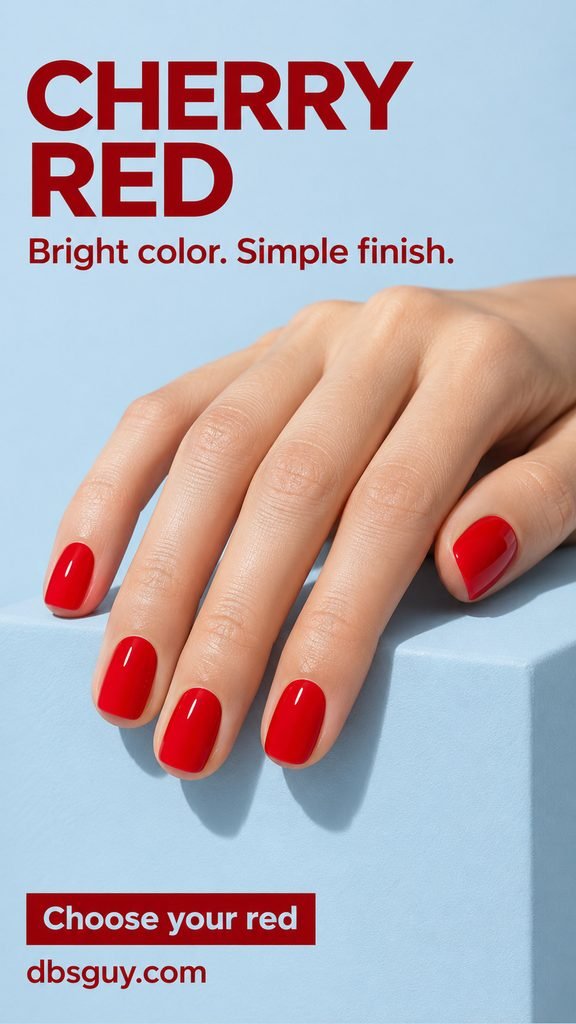
The first decision is whether you want a bright cream or a translucent red. A cream gives a more solid field of color, as shown here. A jelly allows more of the base to show through. Neither word guarantees a specific shade, so check the coverage and color together.
Next, compare two reds side by side. One may lean orange and look warmer; another may lean pink or blue and look cooler. You do not need to diagnose your skin’s undertone to choose between them. Hold each beside your hand and the sleeve or accessory you expect to wear, then notice which red you prefer.
OPI describes Big Apple Red as a bright red, making it a useful named reference when discussing this family. It is a starting point for a swatch comparison, not an exact match to the generated image.
Salon wording: “A bright cherry-red cream on short squoval nails, fully covered and glossy. I want it to look clearly red, rather than orange or dark burgundy.”
Choose cherry when the color itself is the detail you want to notice. You can leave the artwork out and still have a distinct Valentine manicure. If you are choosing from a photograph, look for an image where the red is visible outside the brightest reflection; a white highlight can hide much of the actual shade.
Also Read: 25 Steamy Hot Red Nails for Valentine’s 2027!
Choose Wine for Depth Without Losing the Red
Wine is the option to try when bright red feels too vivid but you still want a red manicure. The reference uses a glossy burgundy cream on compact ovals. Its red-purple color stays visible instead of disappearing into an almost-black finish.
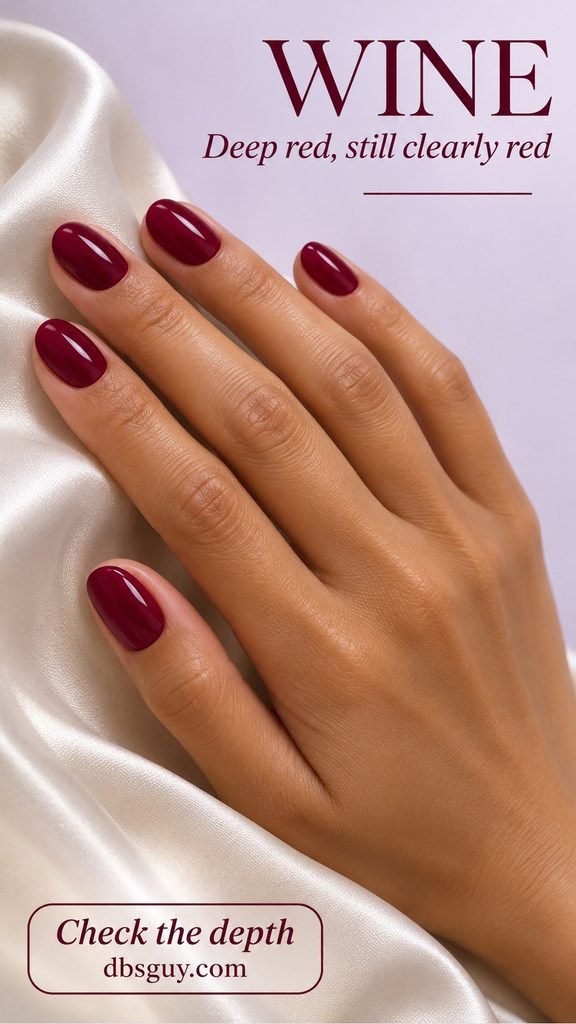
The key check happens away from the strongest light. A deep polish can show a beautiful red glow under a salon lamp and look much darker elsewhere. Hold the finished sample beside your hand in indirect daylight and in ordinary indoor light. If you want an obviously red result, judge the darker areas of the sample as well as the highlight.
Compare a berry-leaning wine with a browner burgundy if both are available. The berry version may give you the red-purple depth you wanted; the browner one may sit more comfortably beside chocolate or camel clothing. Neither is the universal “correct” wine shade.
OPI describes Malaga Wine as a deep wine red with a cream finish. Use that name to begin the conversation, then check the available formula and finished sample rather than expecting a screen image to predict the result.
Salon wording: “A glossy wine-red cream on short ovals, with visible red-purple color. Please show me an option that stays red in indoor light rather than looking almost black.”
You can wear wine with a casual sweater as easily as a dinner dress if you like the combination. There is no need to save it for an evening event. The useful distinction is whether you enjoy seeing that deeper block of color every time you look at your hands.
Also Read: 15 Elegant January Nail Art Ideas to Pair With Your Winter Jewelry.
Use This Swatch Check Before You Commit
Once you have a favorite family, compare actual finished samples. A bottle, a phone screen, and a painted nail show color differently. For sheer blush especially, the base underneath remains part of what you see.
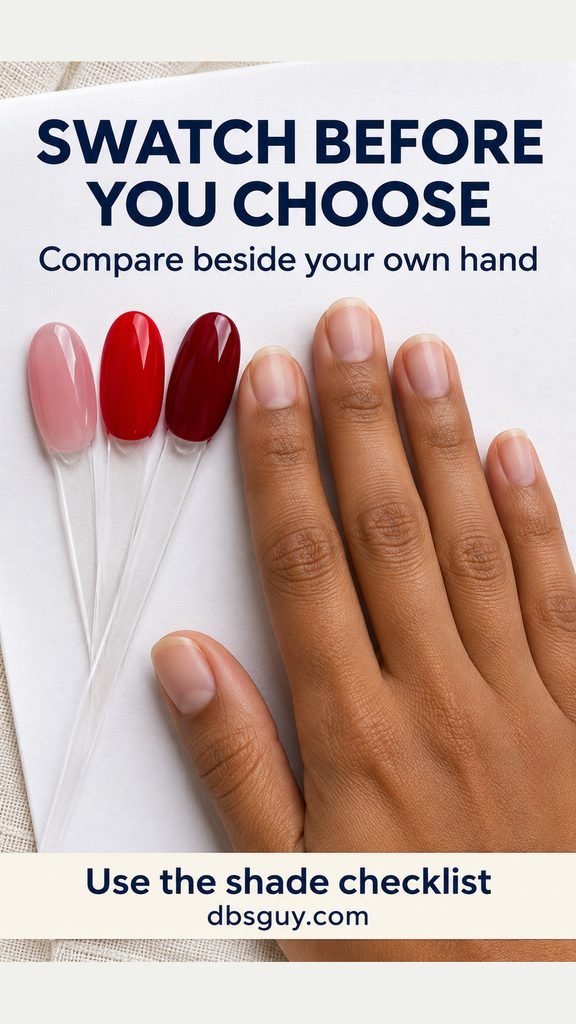
- Compare like with like. Ask for samples with similar coverage and the finish you want. A sheer pink beside an opaque red is useful for choosing an overall look, but it will not tell you which of two pink shades you prefer.
- Bring the sample next to your nail. Look at the color against your own hand, rather than against the wall of polish bottles. If you are choosing extensions, ask how the shade looks over the base you will actually wear.
- Check two lighting situations. Look in indirect daylight and ordinary indoor light. Turn the sample so you can see the color beside the shine, particularly with wine.
- Resolve the one thing that bothers you. If blush is too white, compare a rosier or sheerer option. If cherry is too orange, compare a cooler red. If wine is too dark, choose a lighter wine shade rather than assuming a different top coat will fix its depth.
- Confirm the service separately. Color and finish do not tell you whether a product is regular polish, gel, or part of another system. Name the service you want, check the sample in that formula, and agree on any change before application.
At home, compare dried samples with the top coat you plan to use, following each product’s application directions. Keep the winning bottle name or shade number with your reference image. That gives you something specific to return to next time.
Questions That Help Settle the Choice
Which Valentine nail color works on very short nails?
All three can work. Blush gives a light tint, cherry makes a small nail visibly colorful, and wine creates a compact dark accent. Keep the length you find comfortable; you do not need extensions just to wear a deeper shade.
Which color will last longest?
The color family alone does not establish wear time. Compare the actual formulas, their directions, and the service you plan to use. A sheer blush may make some wear less noticeable than a dark opaque color, but that does not mean the polish itself lasts longer.
Do my nails have to match my lipstick?
No. Matching is an option if you enjoy it. You can also choose blush with a red lip, or let cherry or wine nails provide the red detail while your makeup stays neutral. Compare the colors together if a close match matters to you.
What if I still cannot choose?
Take one sample from each family and remove the one you like least beside your hand. Between the remaining two, choose the one you would still want to wear on an ordinary weekday. Then save the exact shade, coverage, and finish—not just the word “pink” or “red.”
Also Read: 25 Valentine Nail Ideas to Help You Pick Your February Manicure.