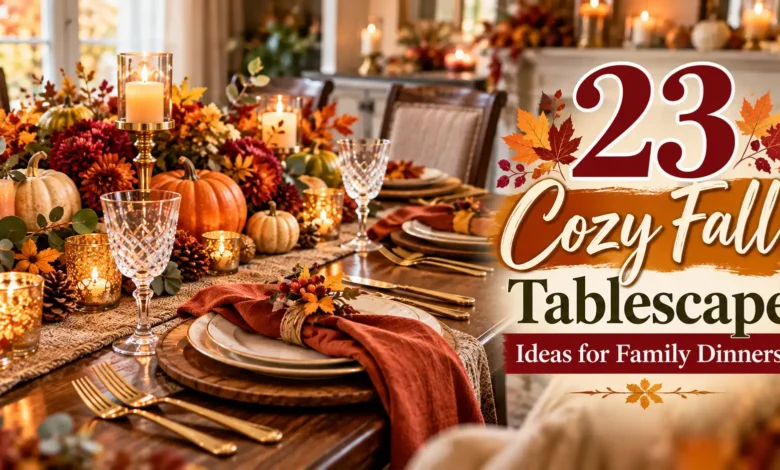
Start with the dishes your family needs, then add one fall detail: a checked cloth, a low bowl of flowers, or warm light beside the plates. A cozy dinner table should still have a place for the casserole.
These 23 fall tablescape ideas cover weeknight soup, Sunday roasts, potlucks, and Thanksgiving. Choose one complete look or borrow its most useful detail. You can keep your everyday dishes for nearly all of them.
The visuals are AI-generated styling concepts, not photographs of completed or tested table settings. Use them as guides to color and placement; adjust the arrangement to your own table and serving pieces.
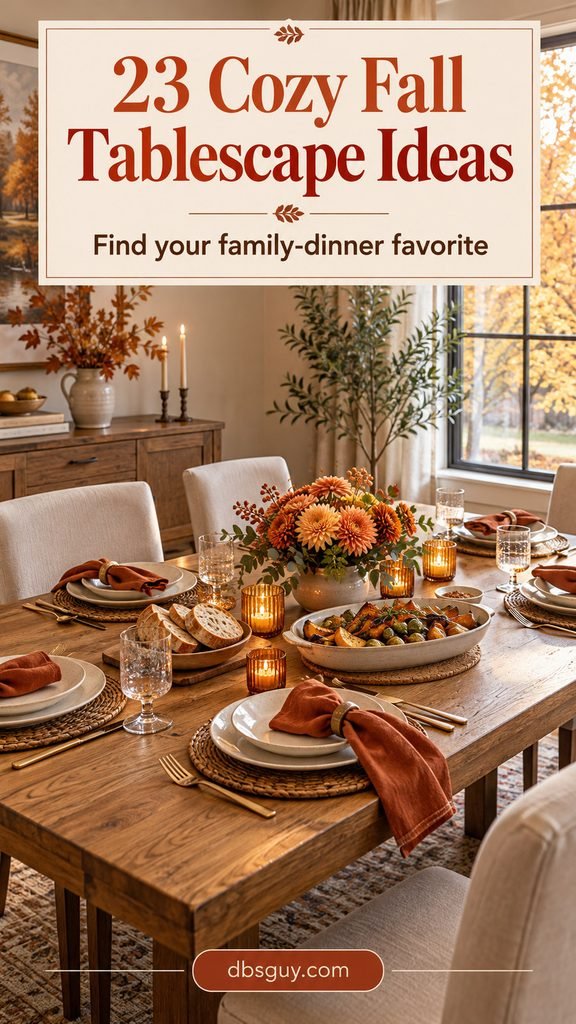
Choose a Setting That Fits Tonight’s Dinner
- A quick weeknight change: start with the soup setting in idea 1, the paper-leaf napkins in idea 4, or the green casserole in idea 20.
- A small round table: try the removable tray in idea 5.
- A meal with lots of shared dishes: choose the food-centered layout in idea 7, the sideboard display in idea 17, or the potluck plan in idea 23.
- A family activity: use the gratitude cards in idea 16 or the doodle runner in idea 18.
Set one complete place before adding decorations. Then put the empty serving dishes on the table and check where their handles, spoons, and hot lids will go. The remaining space tells you how much decor will fit. You can start with four settings and scale up, but do not squeeze extra seats into a layout that already feels full.
For utensils and glassware, let the menu lead. Emily Post’s Thanksgiving table-setting guide shows how a single-course setting can suit a substantial holiday meal; you do not need to set pieces for courses you will not serve.
1. Set a Sage-Check Table for Soup Night
Sage-and-cream gingham makes a bowl of soup feel like a proper fall supper. Put a cream soup bowl on a matching plate at each seat, fold a sage napkin alongside it, and keep the middle for rolls in a small cloth-lined bowl. The check supplies the pattern, so you can skip decorative chargers.
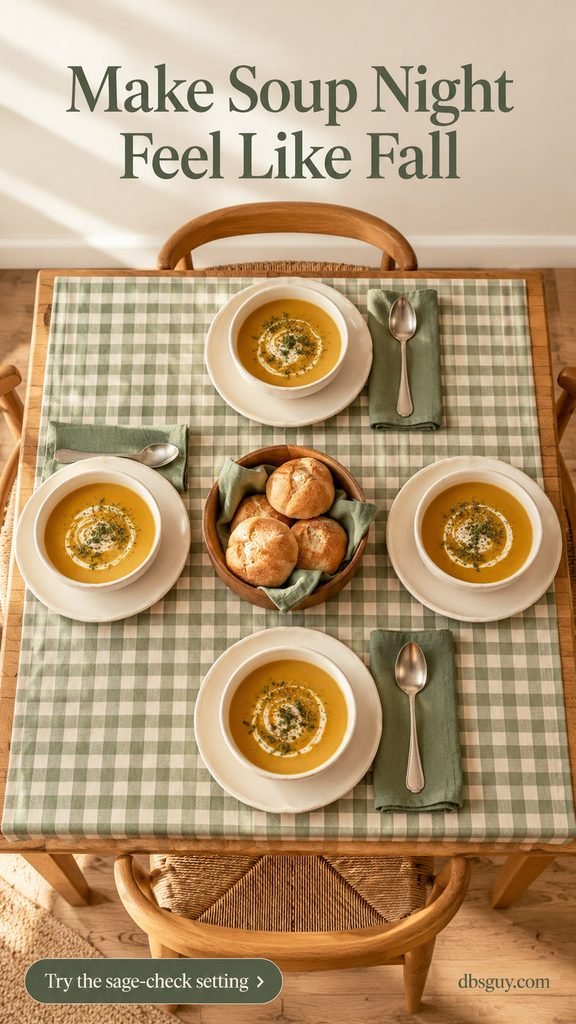
Set only the utensils the meal needs; a soup spoon belongs within easy reach on the right. If dinner is soup and bread, additional forks and glasses simply take up space. Serve soup from the kitchen so nobody has to maneuver a heavy pot around the bread bowl. For a smaller table, use napkins in the checked fabric instead of a full tablecloth.
2. Add Amber LED Votives for an Evening Meal
Three short amber holders create a little pool of light on a walnut table. Use flameless LED tealights inside, then repeat a rich cranberry color in the napkins. Ivory plates keep the darker wood and linens from feeling heavy.
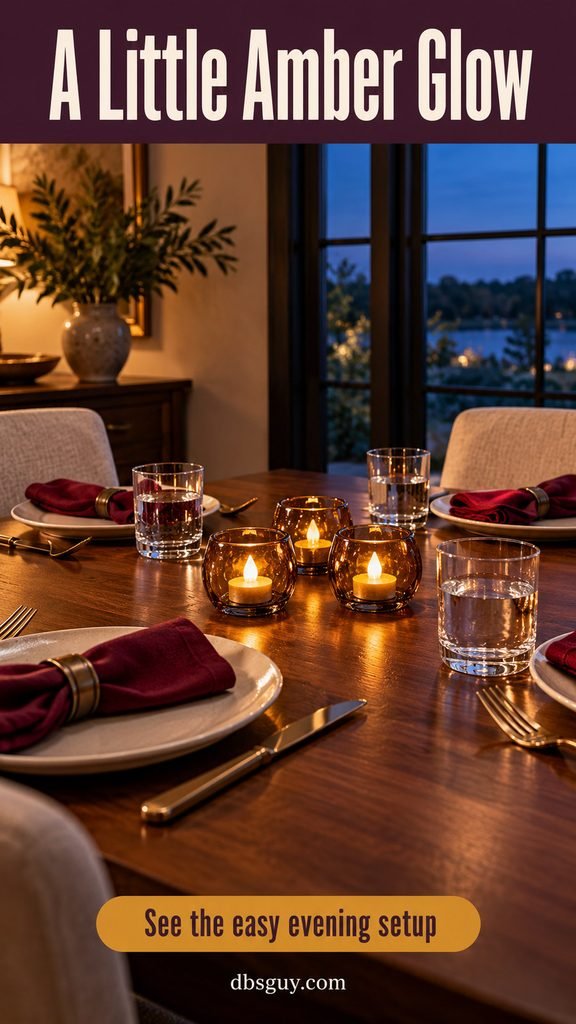
Group the holders close enough to read as one accent, but leave their switches accessible before guests sit down. Choose stable holders that fit the lights rather than balancing a light on a narrow rim. Keep the dining-room lighting bright enough to see the food; the votives add atmosphere, not all the illumination. If a serving platter needs their spot, the small group can move to a nearby console.
3. Bring Orchard Color to Chambray Linens
Fill a shallow white serving bowl with red and golden apples, then bring in blue chambray napkins. The blue gives the fruit a clear backdrop and works with the casual wood and white dishes many families already use.
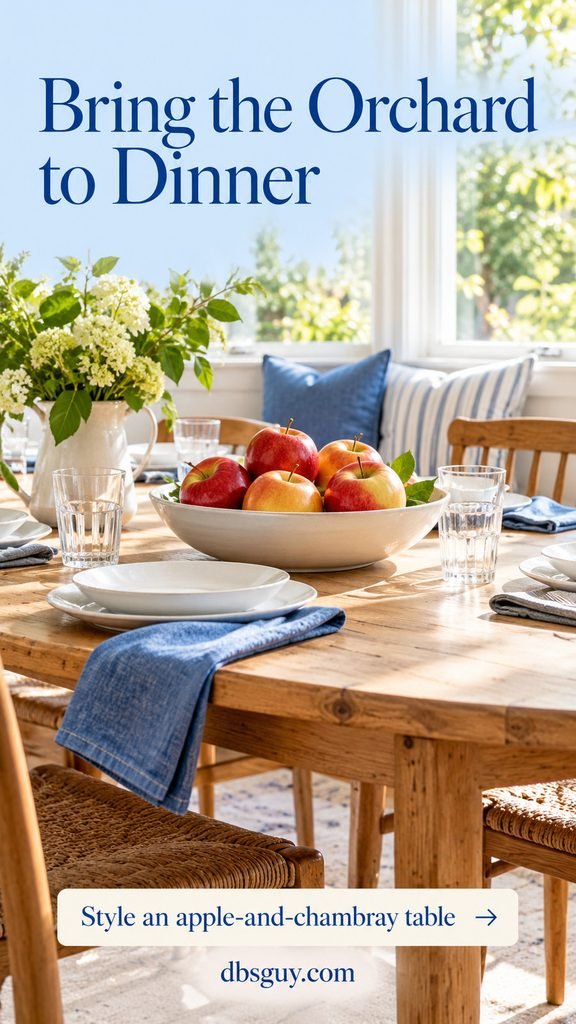
Keep the apples in a settled mound rather than a tall stack. If you plan to eat them, use a clean food-safe bowl and leave out craft coatings, floral products, and decorative foliage. Move a large flower pitcher to the counter during dinner; the fruit bowl is enough on the table. This look suits an early supper near a window, where the red skins and blue fabric stay bright.
4. Tuck a Paper Oak Leaf into a Napkin Pocket
An oversized paper leaf can do the seasonal decorating at each place. Cut a broad oak-leaf shape from kraft paper; about 4–5 inches long is a useful starting size for a dinner napkin. You can leave it plain, as shown, or write a guest’s name on the exposed part.
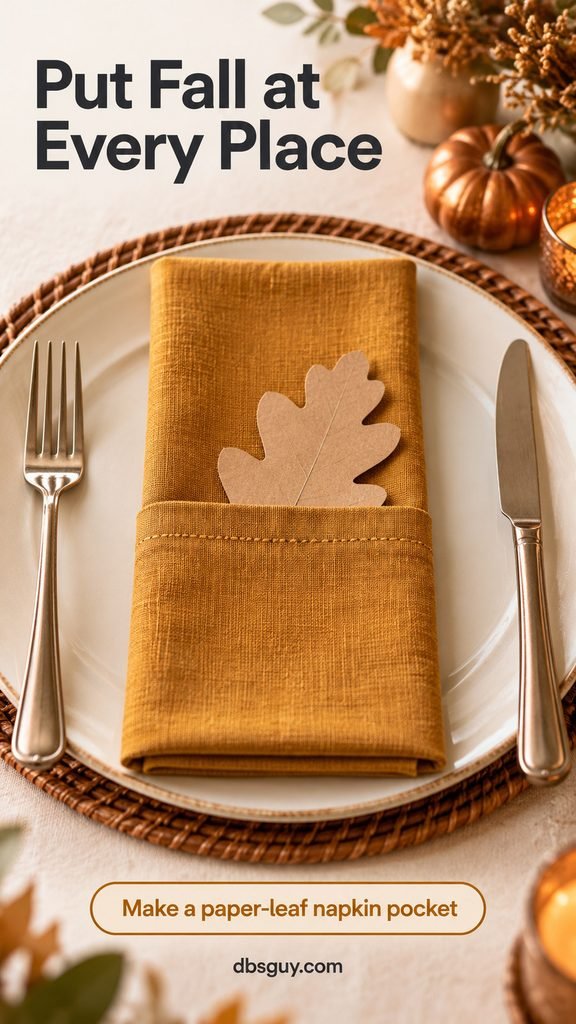
Lay the napkin flat, fold the bottom edge upward to make a front pocket, then fold the sides behind until you have a rectangle that fits the plate. Tuck the leaf halfway into the pocket so its lobes remain visible. Try one fold before cutting the rest of the leaves. Guests can lift out the paper before unfolding the napkin, and the table’s center stays free for shared dishes.
5. Give a Round Table a Lift-Away Pumpkin Tray
A shallow round woven tray gives two pale pumpkins a defined home on a four-person table. Repeat a cinnamon shade in the napkins and keep the dishes white. The repeated round shapes make a small grouping feel deliberate.
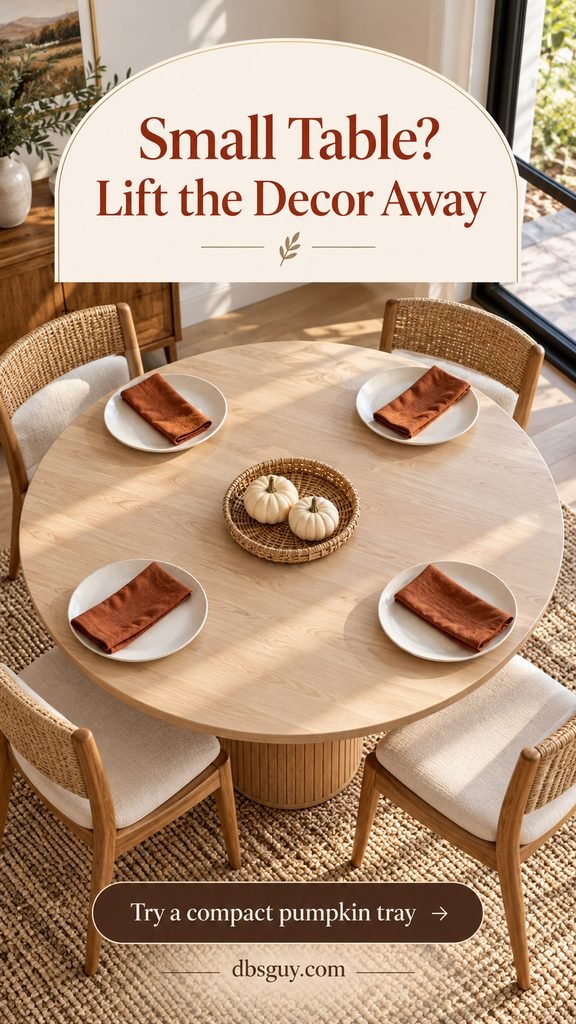
Choose the tray after setting out all four places. It should leave visible tabletop around the plates and enough room to grasp its rim without nudging a glass. Carry it to the counter before bringing out family-style dishes; you do not need to fit both arrangements into the same small space. For more compact layouts, see our 17 Small Space Simple Fall Tablescape Ideas.
6. Unify Mismatched Plates with Patchwork Placemats
Different plates feel connected when each one sits on a similar patchwork mat. Choose cotton pieces in oatmeal, terracotta, and ochre, with a little sage if it appears in your dishes. Repeat that same group of fabrics across the table rather than trying to give every seat an unrelated pattern.
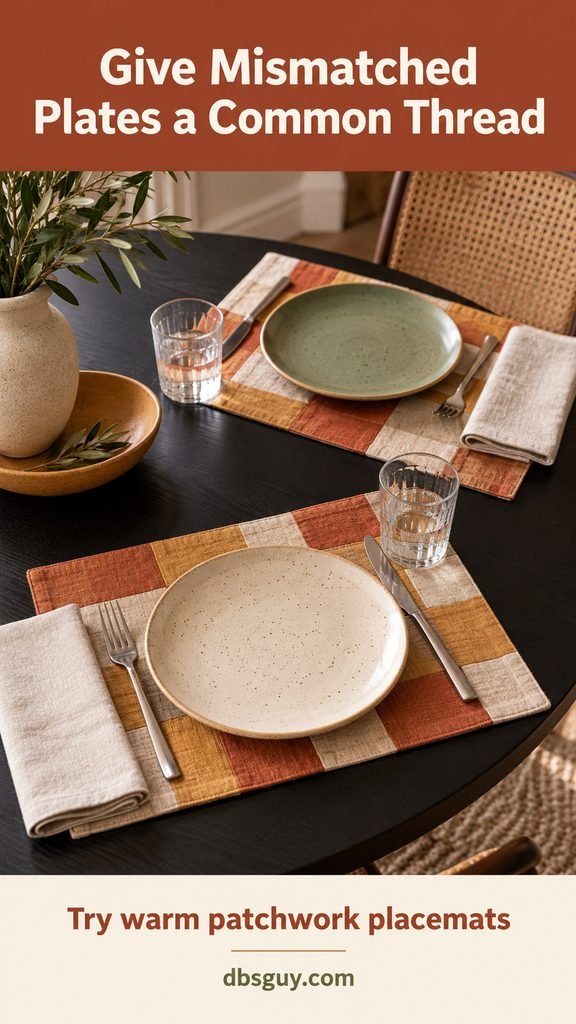
If you sew, join the fabric pieces into flat panels, add a plain backing, and finish the edges. Make one paper template around your largest plate first so the finished mat leaves room for the flatware without overlapping the next setting. A ready-made patchwork mat works too. Keep napkins solid and avoid bulky seams under a plate or glass; the fabric should frame dinner without making the setting wobble.
7. Let Sunday Dinner Become the Centerpiece
For a roast supper, the vegetables and serving bowls can supply all the central color. Set plain white plates around a bare oak table, add burnt-orange napkins, and reserve the middle for the food. This is one of the simplest fall tablescapes to put together when the meal already has several dishes.
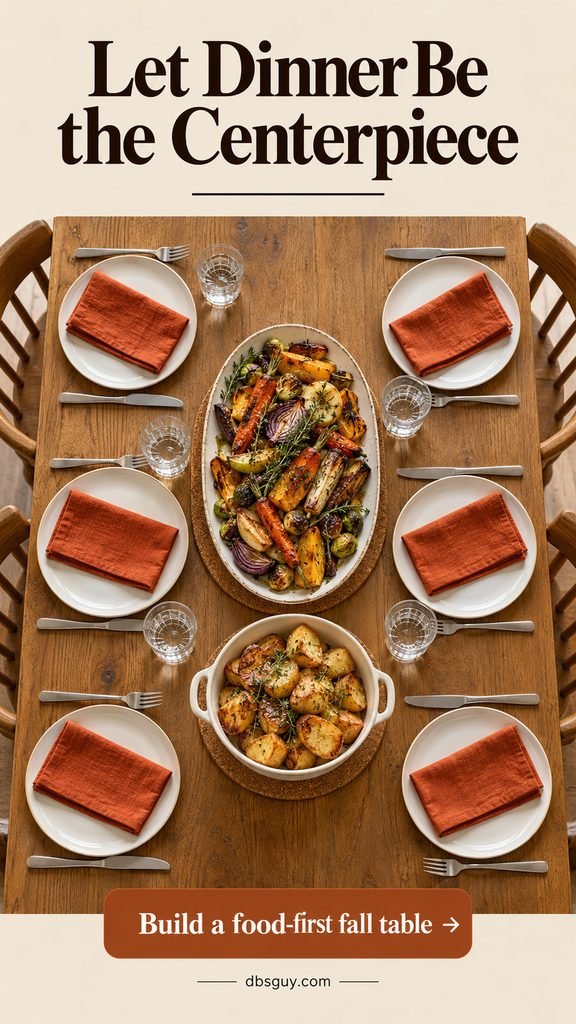
Before cooking, place the empty serving pieces where you expect them to land. Add suitable heat protection beneath dishes that will be hot, and leave room for serving spoons beside them. If a platter blocks someone from reaching a bowl, move one dish to a side counter instead of adding another layer of decor. The seasonal effect comes from the food, fabric, and wood together.
8. Keep an Apricot Mum Arrangement Below the Conversation
Apricot and cream chrysanthemums give a light table a soft fall focal point. Use a low, wide vessel that holds water and trim the stems so the flower heads form a compact mound just above its rim. Peach napkins echo the blooms without requiring matching dishes.
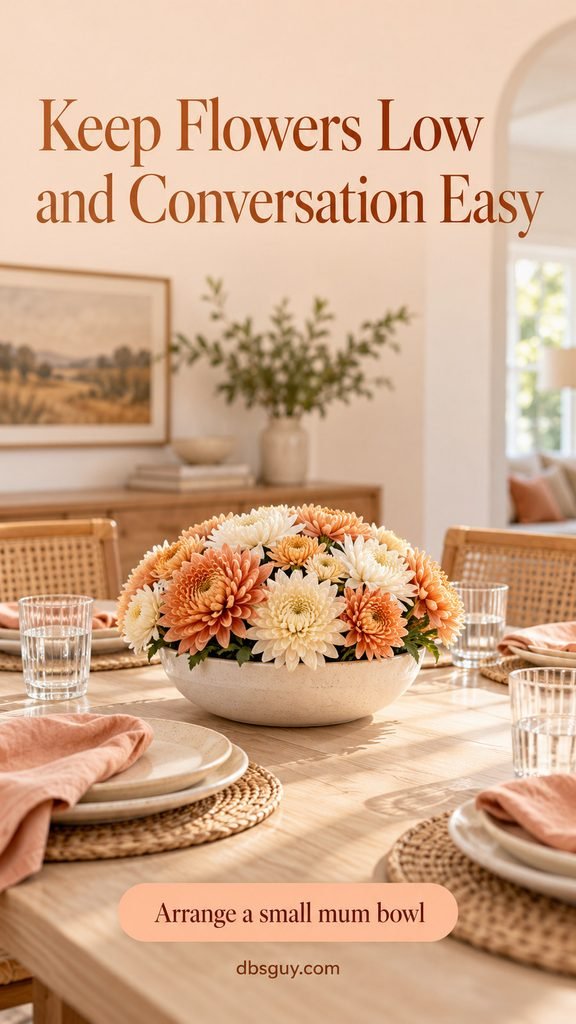
Build the arrangement from the center outward and stop before the outer petals reach nearby glasses. Sit in a dining chair to check the finished height; shorten stems that screen the person opposite you. Put a small watertight container inside a decorative bowl if the outer vessel is not designed to hold water. On a narrow table, use fewer flowers and a smaller bowl rather than pushing the place settings outward.
9. Build a Bread-and-Butter Table on Ticking Stripes
An indigo ticking-stripe runner gives a bread basket a simple frame. Line the basket with a clean cloth, add sliced bread or rolls, and set a small butter dish alongside it. Cream plates and navy napkins make this especially easy to use with soup, stew, or a tray-baked dinner.
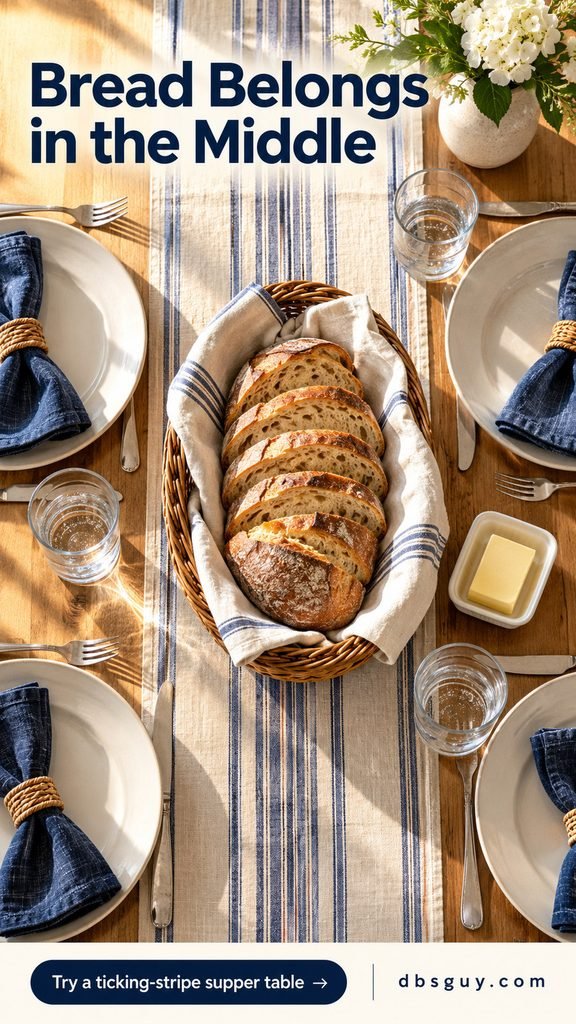
Choose a basket low enough for everyone to see what is inside. Keep a butter knife with the butter dish and leave a landing place for the main course. On a longer table, pass the basket rather than stretching it into an elaborate bread display. The stripe gives the arrangement structure; pumpkins and scattered leaves would only compete with the food.
10. Try Plum Linens and Pears Without Pumpkins
Plum cloth napkins and green-gold pears give fall a quieter color story. Arrange a few whole pears in a shallow plum bowl on a light wood table, then use ivory plates to keep the dark fabric from dominating each place.
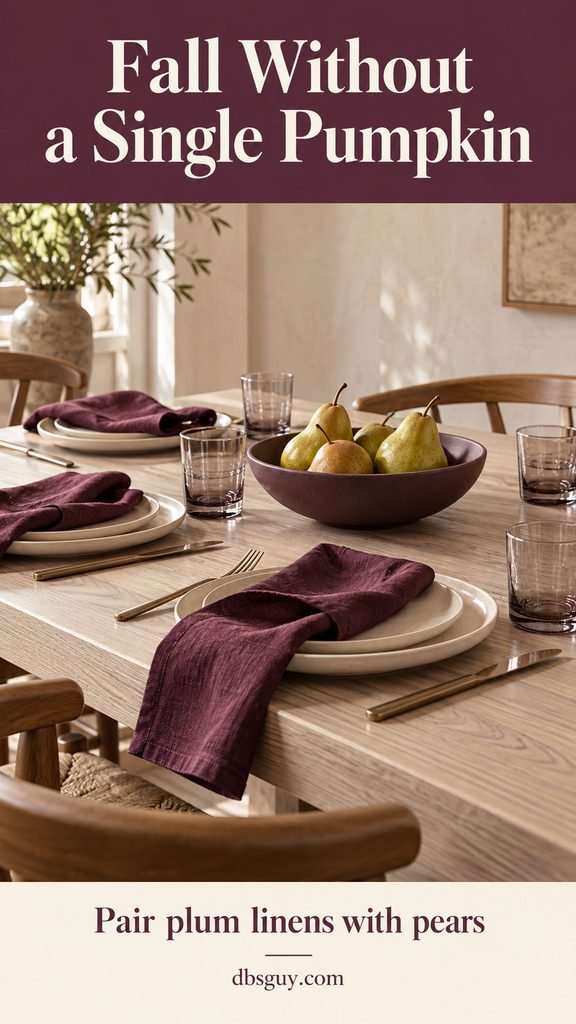
Let the fruit’s uneven shapes show instead of trying to make a symmetrical tower. Keep edible pears free of decorative treatments, and move the bowl out of the serving area when necessary. This combination is useful when orange feels out of place in your dining room. For a deeper wine-colored version, explore our 17 Burgundy & Plum Simple Fall Tablescape Ideas.
11. Wrap Olive Napkins with a Small Rosemary Accent
A short rosemary sprig tucked through a paper napkin band gives each seat a little green detail. Cut a strip of kraft paper about an inch wide, wrap it loosely around a folded olive napkin, and secure the overlapping ends on the back. Slide a clean culinary rosemary sprig beneath the band.
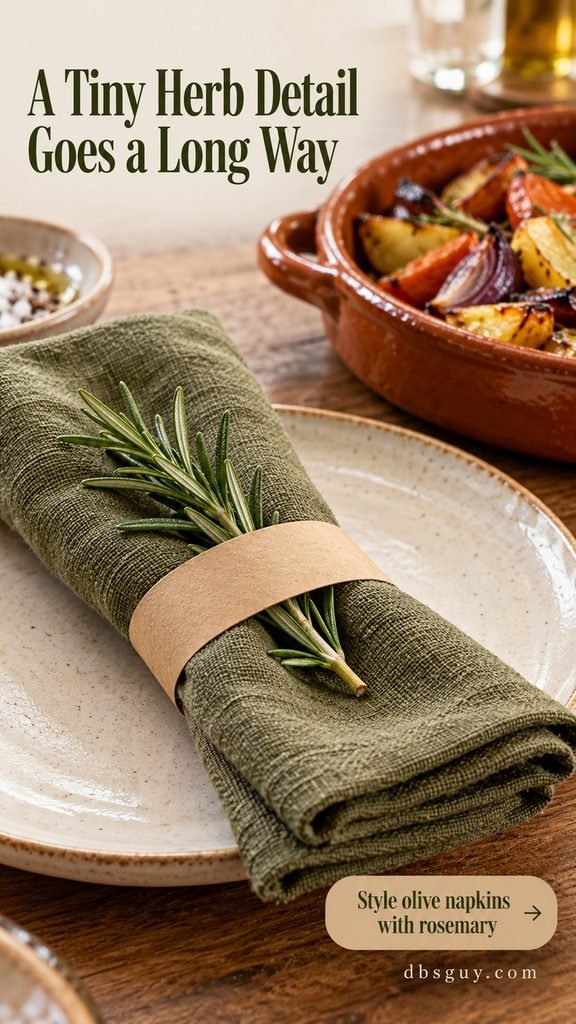
Keep the sprig short enough to stay within the plate, and remove it with the band before eating. A glazed terracotta serving dish brings a warm contrast to the green; choose one intended for food use. This look works well with a vegetable supper and plain cream dishes. For more ways to use the linens, browse our 23 Olive Green Simple Fall Tablescape Ideas.
12. Warm Up Blue-and-White Transferware with Rust
Blue-and-white dishes can stay on the table through fall. Put them on natural woven placemats and add solid rust napkins; the warm fabric changes the mood without covering the plate pattern. Clear glasses let the dishes remain the most detailed part of each setting.
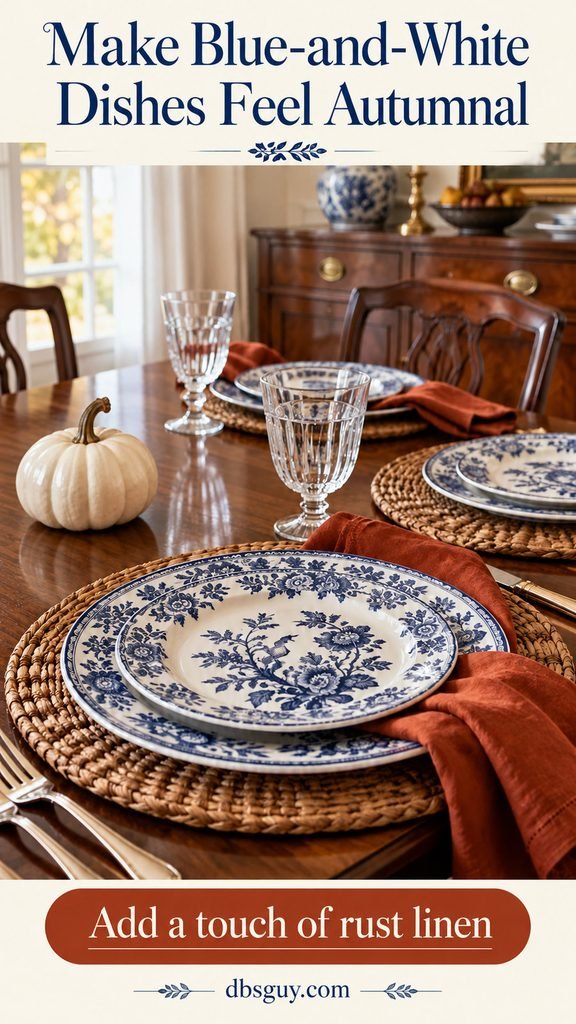
Use a small cream ceramic pumpkin near an unused end if you want a seasonal shape. Keep the rest of the table simple so a patterned cloth does not fight with the transferware. If your collection contains several designs, repeat the same rust napkin at every seat. Use the serving pieces you already trust for hot food rather than treating an unfamiliar vintage dish as oven-safe.
13. Cut Broad Felt Leaves to Frame the Plates
A large felt leaf under each plate makes a playful fall outline. Trace a broad oak-leaf shape onto ochre felt, keeping the lobes rounded enough to cut neatly. Size the template around your actual dinner plate so some of the leaf remains visible once the plate is centered.
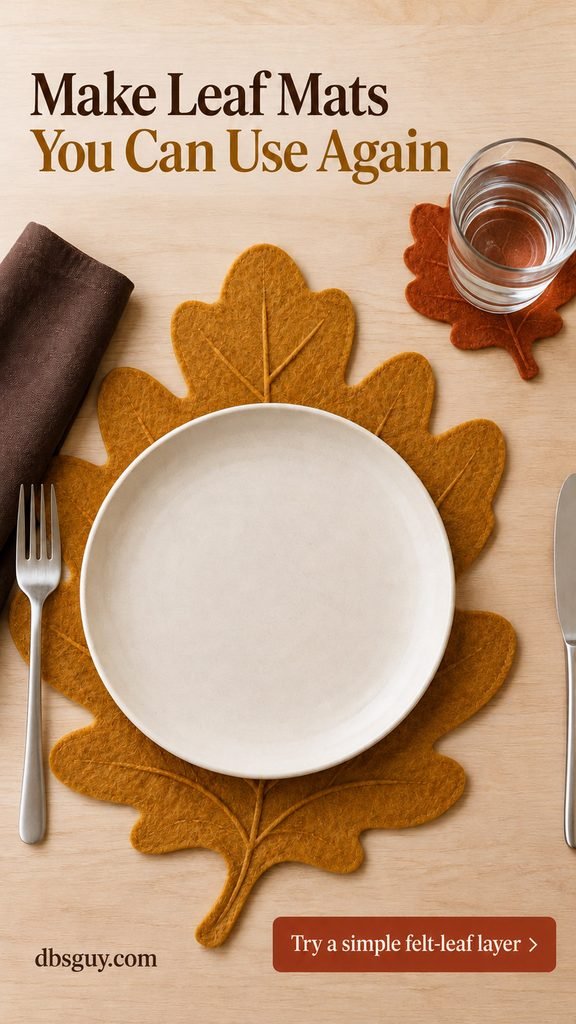
The pictured stitched veins are optional; plain felt gives the same outline. Make a smaller rust leaf for the water glass if there is room. Check that the glass base sits entirely flat on it, without crossing a cut edge. Choose felt with care instructions you can follow and test a scrap before cleaning; not all craft felt is washable. Store the leaves flat afterward. These are decorative mats, so use proper trivets separately beneath hot serving dishes.
14. Light a Banquette Corner with a Cordless Lamp
On a banquette table, a small cordless lamp can use a back corner that would be awkward for a shared platter. Choose a short, stable lamp with a compact shade, then pair its warm light with caramel napkins and plain white plates.
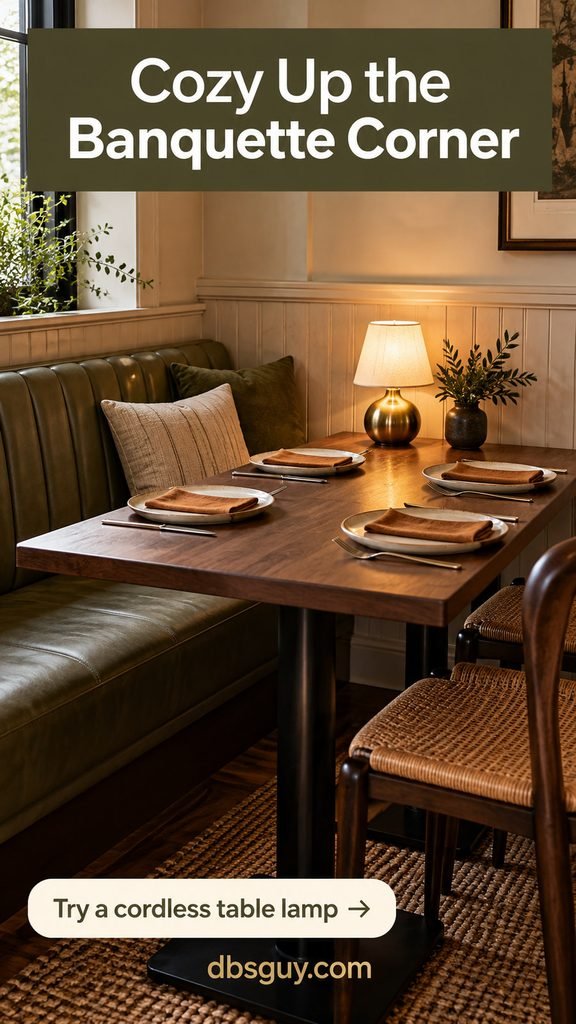
Check the footprint with everyone seated before deciding where the lamp belongs. Keep it clear of elbows and drinks, and make sure it cannot be pushed against the seating by a plate. Charge it before dinner and follow its use instructions. A lamp gives a breakfast nook a different evening mood, but the room still needs enough general light for eating. Leave it off the table if the corner is already part of someone’s place setting.
15. Let a Scalloped Rust Tablecloth Supply the Detail
A rust cloth with a cream scalloped border gives a table its own decorative edge. Keep the dishes ivory and the napkins oatmeal so the scallops stay visible. You can leave the center completely bare; the strongest detail is already around the outside.
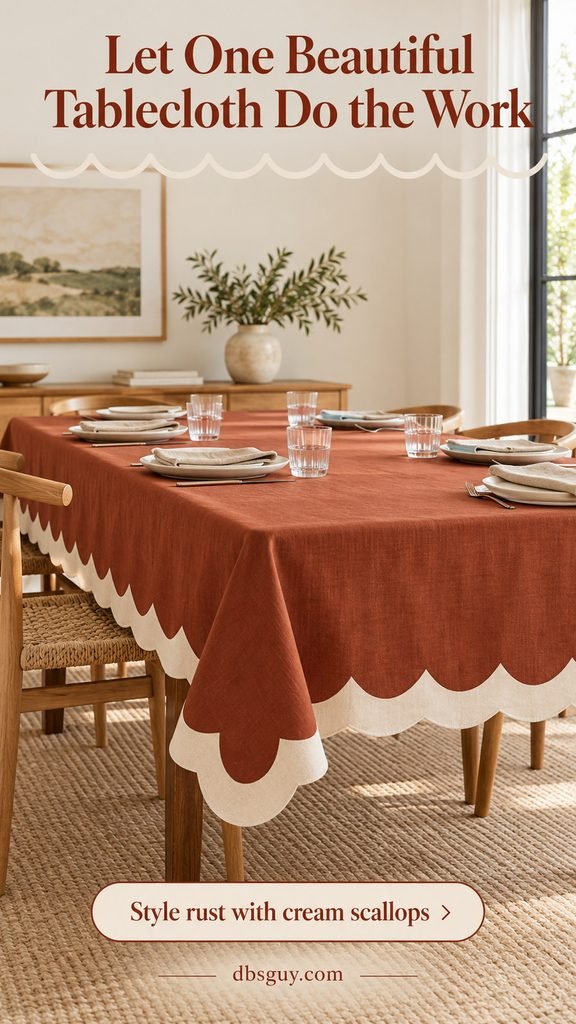
Measure the tabletop and the cloth’s drop before buying. The hanging edge should sit clear of laps and chair arms rather than gathering in the seats. Lay it out with the chairs tucked in to check the fit. If a full cloth feels too fussy for everyday dinner, use this look for Sunday supper and save the plain linen napkins for the rest of the week.
16. Give Each Seat a Small Gratitude Card
Fold small ivory cards into tents and write “One good thing” on the front. Set one by each terracotta napkin, with a pencil if you want guests to jot down an answer. The prompt works for an ordinary family dinner as well as Thanksgiving.
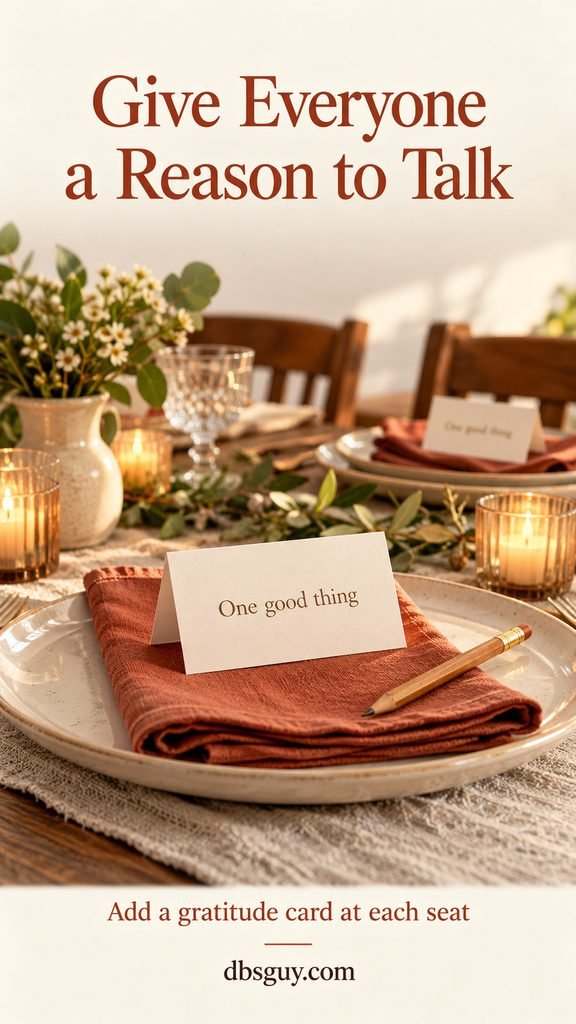
Let everyone decide whether to share; the card should open a conversation without turning dinner into a performance. Children can draw an answer on the reverse. Move cards beside the plates once the napkins are unfolded, and keep the paper away from serving dishes. If you need assigned seats, add names inside rather than introducing another separate place marker.
17. Put the Harvest Display on the Sideboard
You can enjoy tall branches and a generous pumpkin display without eating around them. Arrange the height on a sideboard behind the dining table, then keep the table itself to plates, glasses, mustard napkins, and the meal.
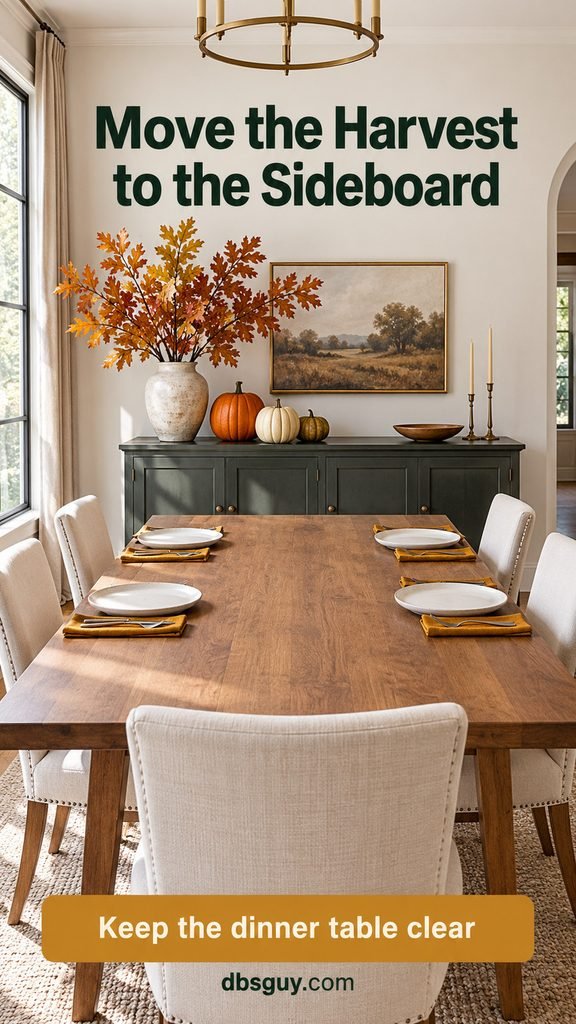
Use a stable vase suited to the branches’ weight and keep the arrangement clear of the sideboard’s serving area. Place the tallest stems toward the back so they do not trail into dishes people are collecting. This is a useful approach when a table looks lovely empty but becomes crowded as soon as dinner arrives. The fall display stays in view from the chairs while every inch of dining surface remains available.
18. Let the Family Draw a Fall Paper Runner
Roll a narrow strip of kraft paper down the table and draw a few simple leaf and pumpkin outlines along its edges. Children can color the outlines or add their own shapes before you set out the food. Ochre napkins and plain dishes keep the finished setting from feeling visually busy.
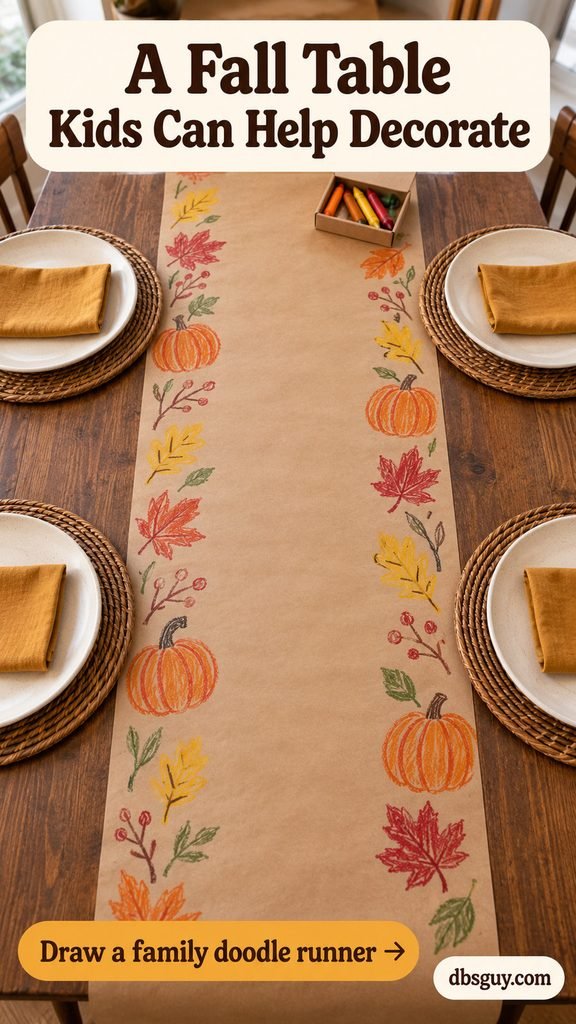
Leave the runner’s middle mostly blank so serving bowls have clear landing spots. Store the crayons away before the meal, especially around younger children, and skip loose beads, acorns, and other tiny decorative pieces. Paper is a drawing surface, not heat protection; put suitable trivets beneath hot dishes. If paper tends to slide on your table, secure it in a way that is appropriate for the finish.
19. Divide a Long Table into Two Small Flower Islands
A long table does not need an unbroken garland. Use two compact bowls of dark red flowers, spaced apart so each end of the table has something to look at. Muted pink napkins soften the red, while cream dishes keep the repeated settings simple.
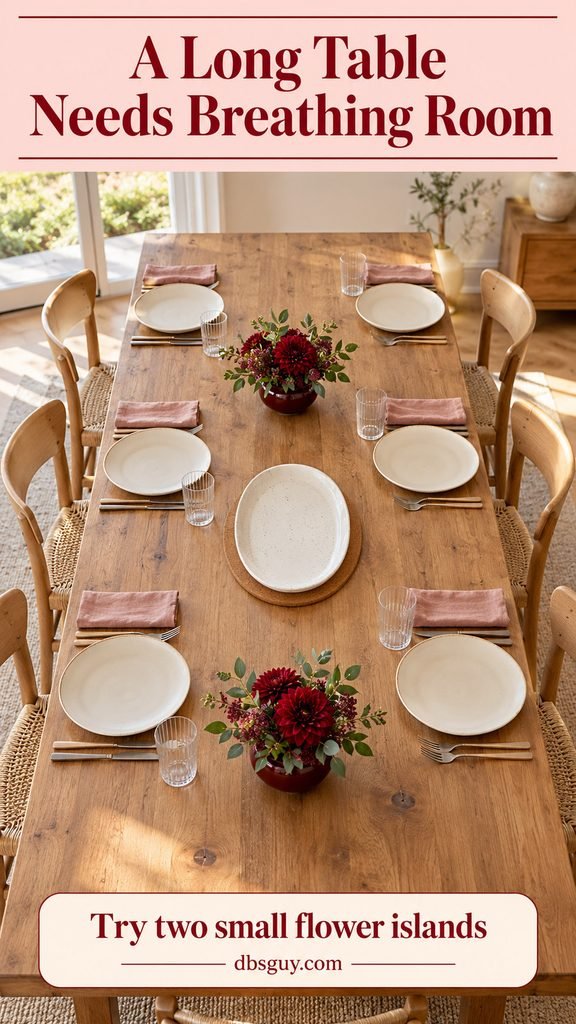
Plan the gap between the arrangements around the largest platter, not an arbitrary distance. The flowers should sit between serving areas rather than occupy every available opening. For a larger gathering, try the layout with the actual glasses and serving spoons in place. If guests still need to reach around flowers to pass food, reduce each bowl’s size or move one arrangement off the table.
20. Build the Palette Around a Deep Green Casserole
A forest-green casserole can be the strongest color on the table. Surround it with oatmeal stoneware, sage napkins, and clear glasses. This works especially well for a one-dish supper, when a separate centerpiece would be competing with the meal.
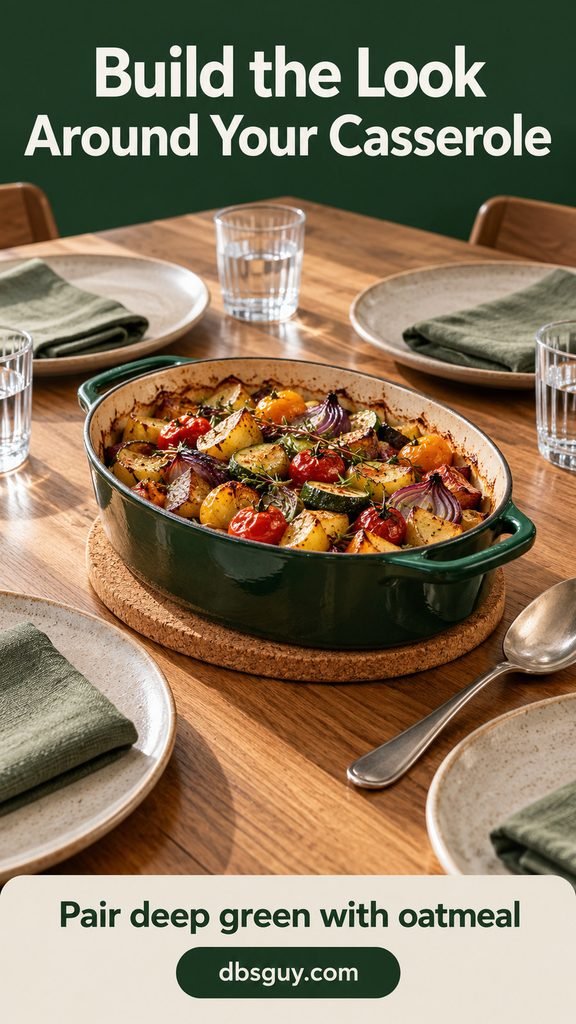
Use the casserole according to its manufacturer’s instructions and set it on appropriate heat protection. Make sure both handles and the serving spoon are accessible. Put a hot lid on a prepared heat-safe landing spot before serving rather than leaving it in someone’s place setting. If you need side dishes, use low neutral bowls so the main green vessel remains the visual anchor.
21. Take Plaid and a Flameless Lantern to the Covered Porch
For a mild fall evening, a navy-and-tan plaid cloth makes a covered porch table feel ready for dinner. Use white plates, tan napkins, and one low LED lantern at a spare end. The garden supplies the autumn backdrop, so loose leaves and extra branches are unnecessary.
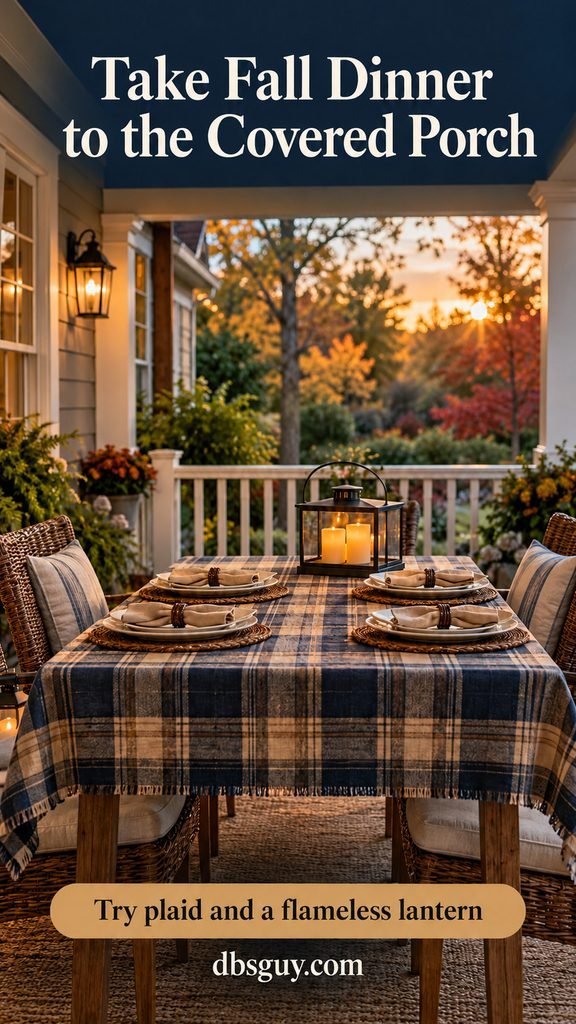
Check the weather and choose a lantern rated for the conditions where you will use it; a roof does not protect a table from every gust or splash. Secure the cloth if it shifts, and keep the porch’s normal lighting on for carrying food. Bring the meal indoors if the temperature or wind makes sitting uncomfortable. A cozy setting only works when the family wants to stay at the table.
22. Use a Small Autumn Landscape at an Unused Table End
A little framed landscape offers a different kind of fall focal point. Choose an image with ochre fields or muted trees, put it in a stable tabletop frame, and place it at a short end where nobody will sit. Echo one of the painting’s colors in the napkins.
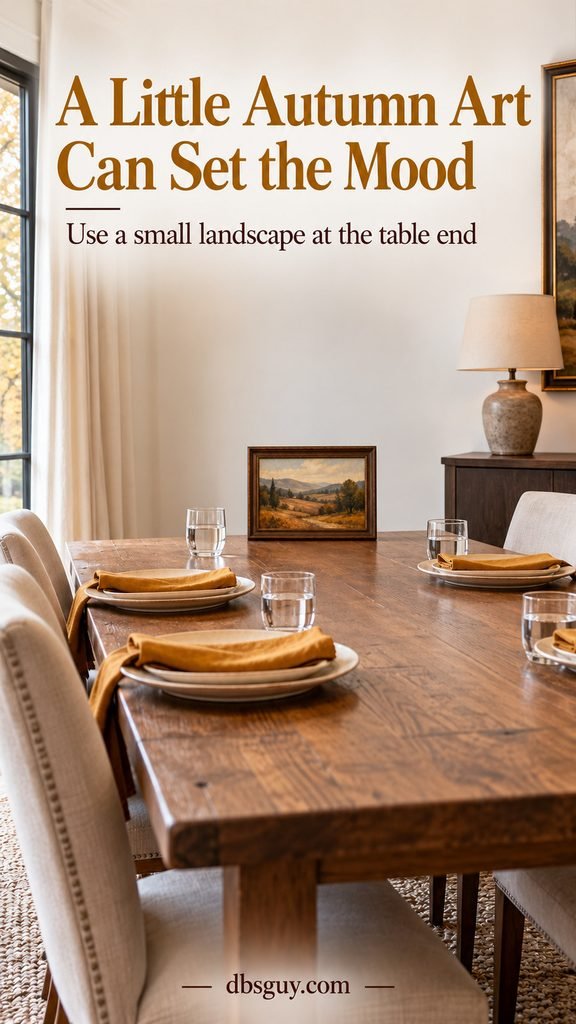
Keep the frame beyond the nearest place settings, away from water glasses and passing dishes. It should face the people at the table, not hide behind a tall centerpiece. If the end becomes a serving station or another guest needs that seat, move the picture to a side shelf. This is a useful no-flower option when you already have small seasonal art to bring out.
23. Plan a Fall Potluck Around the Serving Dishes
For a family potluck, make the arriving dishes part of the plan. Lay a plain oatmeal runner down the center and reserve several heat-protected landing spots for low serving bowls or casseroles. Cream, rust, and sage vessels look comfortable together even when they do not match.
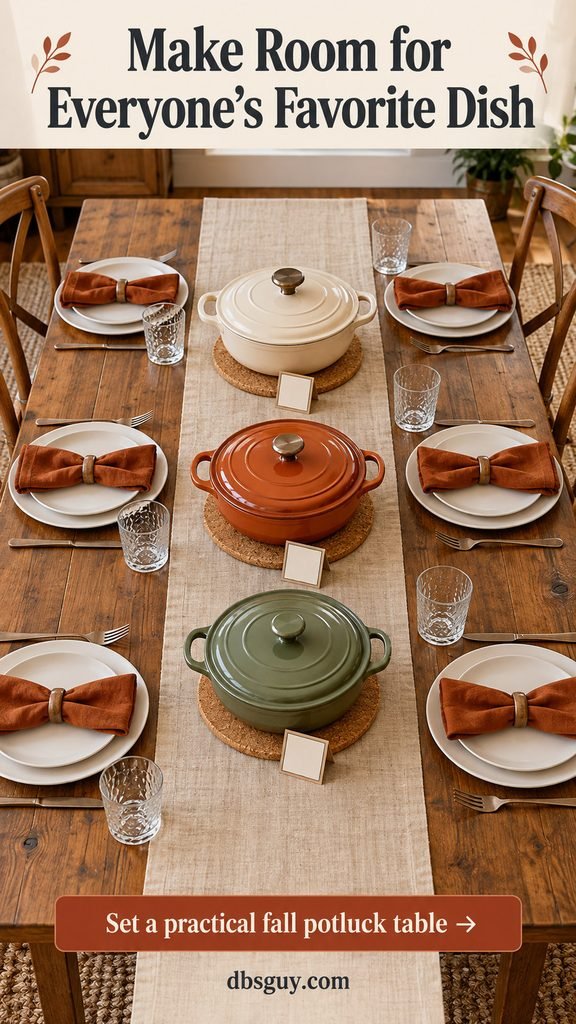
Ask guests what size dish they are bringing so you can test the layout with similar empty pieces. Add a small label beside each dish and a place for its serving utensil; use labels to identify the food, not to make unsupported allergy guarantees. Keep overflow dishes on a counter rather than squeezing them between glasses. Cinnamon napkins repeat one warm detail at every seat while the meal supplies the variety.
Make the Setting Work Once Dinner Arrives
Before calling everyone to the table, sit down in one of the chairs and look across it. Can you see the person opposite? Is the glass clear of your elbow? Can a serving bowl land without moving somebody’s plate? Adjust the arrangement while the dishes are still empty.
For an ordinary family supper, one cloth layer, everyday dishes, and a single seasonal accent are often enough. Use suitable trivets under hot serving pieces; decorative runners, paper, and felt are not substitutes. Let a nearby counter hold anything the table cannot comfortably accommodate.
Frequently Asked Questions
How do I make a fall table cozy without buying a full dinnerware set?
Keep your plates and change something smaller: rust napkins, a checked cloth, or the paper leaves in idea 4. Repeat one color at the seats so the table feels connected. Borrow a serving bowl for apples or pears rather than buying a vessel just for decorating.
What is the best centerpiece for family-style serving?
Choose one you can lift away, such as the tray in idea 5, or let the food be the centerpiece as in idea 7. For a long table, two low flower bowls can work if the serving dishes fit between them. A completely open center is also a useful choice.
Can I adapt these fall tablescape ideas for Thanksgiving?
Yes. The gratitude cards, sideboard display, and potluck layout are useful Thanksgiving tablescape ideas because they make room for people or shared dishes. Test the layout with the actual turkey platter and side-dish bowls. Serve from a sideboard if the dining table cannot hold the whole meal.
What fall colors work besides orange?
Try sage and cream, plum and pear green, or blue-and-white dishes with rust napkins. Choose the combination that works with your room and dishes. There is no need to replace a familiar palette just to follow a seasonal decorating theme.
How can I decorate when children are eating at the same table?
Keep the decor simple and out of the eating area. The doodle runner gives children something to help make before dinner. Use stable pieces and flameless lighting where appropriate, keep battery compartments secured according to the product instructions, and put craft supplies away before serving food.
Also Read
- 19 Budget-Friendly Fall Tablescapes Under $30 — more ideas organized around decorating allowances.
- 15 Modern Farmhouse Fall Tablescape Ideas — more ways to combine simple dishes and tactile materials.
- 15 Neutral White Simple Fall Tablescape Ideas — quieter looks for a light dining room.