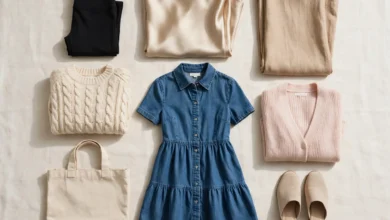
A useful college capsule starts with clothes you can actually repeat: four tops, two layers, three bottoms, one dress, and two pairs of shoes. The 12 pieces below work as a compact everyday core for class, library hours, casual plans, and presentations where a simple polished outfit fits the instructions.
You can build most of it from your current closet. Start with black, ivory, gray, and denim, then use a blue shirt and navy stripes for variety. These are styling recommendations for planning your 2027 wardrobe; you can keep your favorite colors and cuts.

The visuals are AI-generated outfit concepts. They illustrate the combinations rather than document tested garments or specific products.
Your 12-piece college capsule checklist
- Four tops: an ivory tee, a black tank, a striped long-sleeve top, and a blue button-up.
- Two layers: a gray cardigan and a navy zip hoodie.
- Three bottoms: straight-leg jeans, black trousers, and charcoal leggings.
- One dress: a black knit midi.
- Two shoe pairs: everyday sneakers and black flat loafers. Each pair counts as one piece.
What sits outside this count: underwear, bras, socks, sleepwear, workout-only clothing, a bag, accessories, and weather gear such as a rain jacket, winter coat, or snow boots. Keep those as needed. A lab, clinical placement, job, or formal interview may require additional clothing. This list organizes your everyday outfits; your actual packing list can be larger.
Before buying anything, pull out a version of each item you already wear. A navy tee can fill the ivory-tee slot. Your comfortable wide-leg jeans can replace straight-leg denim. Keep the job of the piece, even when the exact color or silhouette changes.
Also Read: The Wardrobe Checklist Worth Printing can help you organize the closet check before you shop.
1. An ivory tee you like wearing on its own
Choose a tee that works without a layer covering it. An opaque knit, a neckline that stays comfortable, and enough length for your preferred tuck matter more than a particular brand. Ivory is the example here; heather gray is an easy substitute if pale tops spend too much time waiting for a separate laundry load.

Try it with your usual undergarments in daylight. Raise your arms, sit down, and check whether the hem or neckline needs constant adjusting. A slightly relaxed body leaves room to move without making the cardigan sleeves feel crowded.
Wear it: ivory tee + blue jeans + sneakers. For a more polished version, switch to the black trousers and add the cardigan, as shown in the cover image.
2. A black tank with a neckline and straps that suit you
A substantial tank gives this capsule a lighter top for warm afternoons and a simple base under the blue shirt. The example has broad straps and a scoop neckline. Choose the coverage you prefer; a black short-sleeve tee can fill the same slot if you do not enjoy wearing tanks.

Check the armholes when you reach forward, and make sure the fabric remains opaque where it stretches. You want to be able to remove the outer layer without feeling that you are suddenly wearing an undershirt.
Wear it: black tank + blue jeans + black loafers for a casual dinner. This changes the neckline and shoe shape from your tee-and-sneaker outfit while using the same denim.
3. A striped long-sleeve top for an easy change of pace
One pattern gives the capsule some contrast without requiring a separate set of matching clothes. Narrow navy stripes on ivory connect with the hoodie, jeans, and black bottoms. If stripes are not your style, use a solid long-sleeve top in a color you already repeat.

Choose a fine knit or jersey that fits comfortably under the cardigan. A thick sweater would occupy more space and do a different job. Test the sleeves together before deciding that two pieces layer well.
Wear it: striped top + black trousers + sneakers for a library day. With blue jeans instead, the same top becomes a relaxed weekend combination.
4. A relaxed blue button-up that works open or tucked
This shirt earns its space by doing two jobs: a collared top with the trousers, and a light open layer over the tank. Look for enough room across the back to reach for a shelf without pulling at the buttons. A relaxed cut should still sit comfortably under the cardigan.

If you want to wear it over leggings, choose a curved hem that gives you the coverage you like. For tucking, check that the shirt stays in place when you sit. You may prefer a softer shirt to a very crisp one if ironing rarely fits your week.
Wear it: blue shirt + black trousers + loafers for a class presentation when the assignment allows this level of dress. Follow any stated requirements; this combination is not a substitute for a required suit or uniform.
5. A gray cardigan that fits over your actual tops
A hip-length cardigan is a useful removable layer when the walk to class and the room temperature feel different. Medium gray gives the black dress some contrast and sits easily beside the blue shirt. Choose a knit weight you can comfortably carry when you take it off.
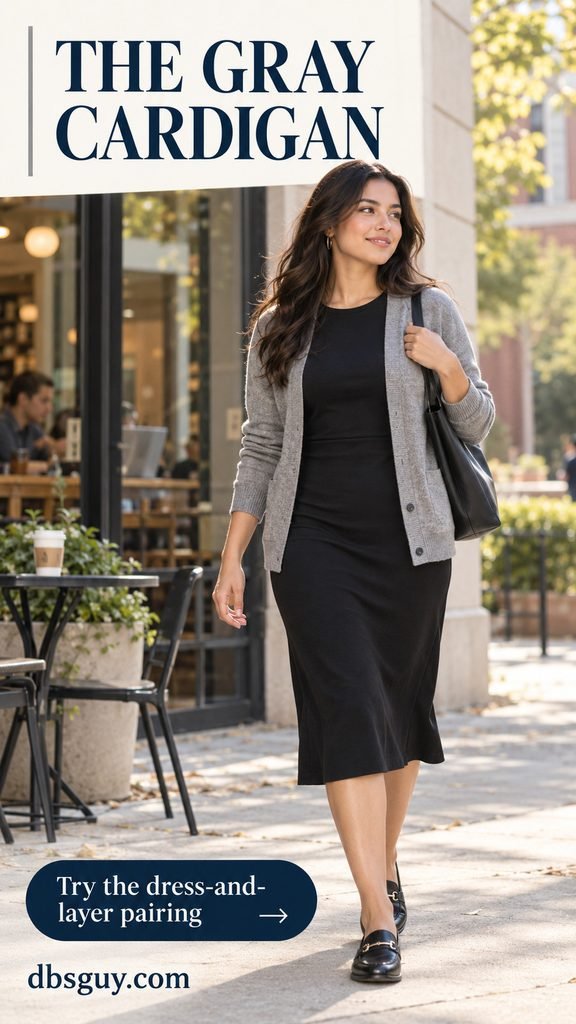
Try the cardigan over both the striped top and the button-up. Check the upper arms, underarms, and shoulders; buying a bigger size does not always solve a sleeve-shape mismatch. Read the care label before choosing a knit that needs drying space you do not have.
Wear it: open gray cardigan + black midi dress + loafers for coffee or a casual campus event. Keeping the front open lets the dress stay simple and comfortable underneath.
6. A navy zip hoodie for your most casual days
The hoodie gives this capsule a softer option than the cardigan. A zip front lets you wear it open over the tee, then close it when you want more coverage. Check that the zipper lies comfortably and that the hood does not tug at your neckline under your bag straps.

A plain navy version connects with the striped top, but a college-logo hoodie you already love can do the job. Prioritize the one you reach for. Test it with your coat if you expect to stack those layers in colder weather.
Wear it: navy hoodie + ivory tee + charcoal leggings + sneakers for a casual class day or a study session. A hoodie supplies an everyday layer; pack appropriate rain or cold-weather protection separately.
7. Straight-leg jeans with a hem that works with your shoes
Medium-blue, unripped jeans are the denim starting point here because the same pair can sit beside all four tops. Use the rise and leg shape that feel right on you. The useful test is whether the jeans work with the rest of your week, including sitting through a long lecture.

Try them with both shoe pairs before altering the hem. Check that the fabric clears the ground and does not bunch in a way you dislike. Sit, bend, and walk in them; a waistband that feels fine while standing may feel different at a desk.
Wear them: blue jeans + striped long sleeve + sneakers. The tee and tank combinations shown earlier use this same slot, so one comfortable pair already has several clear jobs.
8. Black trousers comfortable enough for an ordinary Tuesday
Choose trousers you will wear to class, rather than saving them for a hypothetical special occasion. A relaxed straight leg, usable pockets, and a comfortable waistband make them easier to repeat. If the waistband pulls or the pockets flare when you sit, try a different cut.

Bring your everyday shoes into the fitting decision. A hem that only works with heels introduces another shoe requirement. Check the fabric in daylight and read the care instructions; a pair that needs frequent professional cleaning may not fit your routine.
Wear them: black trousers + ivory tee + gray cardigan + loafers. Swap in the blue shirt when a collar suits the setting. Keep this pair available for the days your jeans feel too casual.
9. Charcoal leggings you have checked in motion
These are the casual bottom in the core, with a different feel from denim or trousers. Test opacity in good light while bending and sitting, rather than judging the fabric only on a hanger. Check whether the waistband stays comfortable and in place when you walk.

Wear them: charcoal leggings + black tank + open blue shirt + sneakers. The longer shirt creates an easy outer layer; the navy hoodie and ivory tee offer another combination using the same leggings.
If you train in this pair and it needs washing afterward, it is no longer available as your clean class bottom. Keep workout gear separate when necessary. If you do not wear leggings outside exercise, replace this slot with relaxed pants or a skirt that works with your tops and shoes.
10. A black knit midi dress that needs little styling
A plain short-sleeve, crewneck midi gives you an outfit without choosing a separate top and bottom. The example has a relaxed shape and a mid-calf hem. Check that you can take a normal stride and sit comfortably; a narrow skirt or clingy fabric may not suit a day moving between buildings.
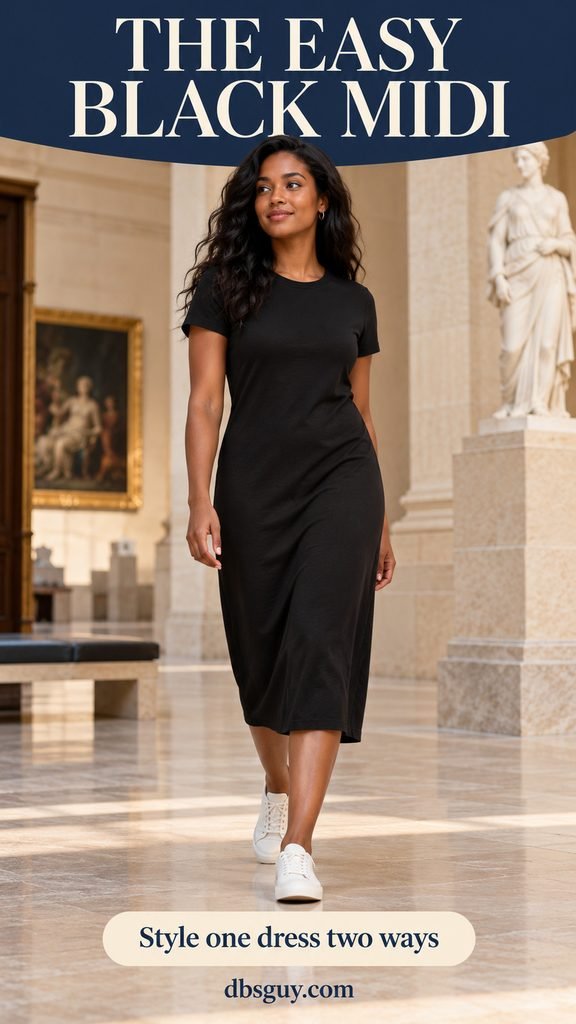
Look at the fabric in daylight, including across the seat. Check the hem with your sneakers and loafers, and make sure the dress works with the undergarments you already use. You should not need several extra purchases to make this one item wearable.
Two ways to wear it: dress + sneakers for a casual day; dress + gray cardigan + loafers for a slightly more polished plan. Both combinations appear in the visuals. If dresses sit unworn in your closet, use this slot for another top or bottom you will repeat.
11. Everyday sneakers you can comfortably walk in
Use your comfortable walking pair before shopping for a particular aesthetic. Cream low-profile sneakers are shown here because they connect with the pale tops, blue jeans, and black dress. A darker pair is just as useful if it suits your clothes and is easier for you to maintain.

Try shoes with the socks you plan to wear. Check for toe pressure, heel slipping, and rubbing during an indoor try-on that respects the seller’s return conditions. A photo cannot tell you whether a particular shoe will fit your feet or suit your campus routes.
Wear them: with the tee and jeans, the striped top and trousers, or the midi dress. Keep appropriate footwear for snow, ice, heavy rain, sport, or course requirements outside this everyday pair.
12. Black flat loafers for your smarter combinations
The second shoe should cover a real gap. Simple black loafers give the trousers, jeans, and midi dress a different finish without adding heel height. If loafers consistently slip on your feet, choose a comfortable flat lace-up or another closed-toe flat that does the same job.

Walk and sit in them with the socks or liners you intend to use. Check heel hold, toe room, and whether the sole feels suitable for your normal route. Color and shape alone do not establish traction or comfort.
Wear them: with the blue shirt and black trousers for a presentation, or the tank and jeans for dinner. For interviews, career fairs, or placements, check the event or employer’s guidance before assuming an everyday capsule outfit is formal enough.
Make the 12 pieces work with your laundry schedule
This core contains four base tops and one dress. If you need a fresh next-to-skin outfit every day and only wash once a week, that is a shortage to solve. Recombining clothes changes the outfit; it does not make worn clothing clean.
Count how many clean tops you actually use between laundry days, including hot walks, spills, and work shifts. Then allow for drying time and a delayed wash. Add extra basics when your real count needs them, even if your total rises above 12. Repeating a favorite tee in another color can be more useful than adding a special-occasion piece.
When shopping, check both washing and drying instructions. A machine-washable cardigan may still need to dry flat. The Coats care-label guide explains the types of washing, drying, and ironing instructions to look for. Follow the label on your particular garment rather than using one wash setting for the entire capsule.
Adjust the core for your campus and your style
For a hot campus: if you rarely wear hoodies, replace that slot with another lightweight top. Choose breathable-feeling fabrics you like wearing, and keep a light layer if your classrooms run cool. Shorts can replace leggings when that suits your schedule and course rules.
For a cold or wet campus: keep a proper coat, rain protection, and suitable footwear in your packing plan. The cardigan and hoodie are layers within that plan. Check the conditions you will actually travel through; a mild-weather outfit picture does not establish winter suitability.
For a different aesthetic: repeat the function of each item in colors you enjoy. Burgundy can replace blue; olive can replace gray. Start with the shoes and bottoms you already wear, then try each top beside them. Patterns and bright colors can work when the combinations work.
For a different body or access need: choose the closures, waistbands, sleeve shapes, lengths, and shoe fastenings that make dressing and moving easier for you. The examples show one styling direction, not a required fit standard.
Also Read: How to Build a Wardrobe That Works in Two Climates for more help organizing shared basics and seasonal layers.
Build it from your closet before you spend
Set out your strongest existing versions of the 12 slots. Make the combinations shown above, including shoes, and take phone photos of the ones you like. Check that you have a casual class outfit, a comfortable study outfit, and something suitable for your next presentation or event.
Write down specific gaps: “a top that works with both pants,” “trouser hems that need shortening,” or “a second comfortable shoe.” Those notes are more useful than a general shopping list. Repairing a button or altering a hem may solve the problem before a new purchase does.
Buy the gap that affects the most ordinary days first. If sneakers are already comfortable and most of the tops work, you do not need replacement sneakers to match this picture. Secondhand options can fill a slot too; check measurements, condition, care instructions, and the full cost before deciding.
College capsule wardrobe questions
Is 12 pieces really enough for college?
It can be a useful everyday core for someone whose schedule and laundry access suit it. It is not a universal total. Your underwear, weather gear, sleepwear, workout clothing, and required uniforms or formal outfits still need space. Expand the basics when your clean-clothes count calls for it.
Do both shoes count toward the 12 pieces?
Yes. This guide counts 10 garments and two pairs of shoes. A bag and accessories sit outside the count. Other capsule lists count differently, so compare what is included before comparing totals.
Can I build this capsule without buying anything?
Possibly. Use the closest pieces you already like and test the combinations. A black tee can replace the tank, and comfortable wide-leg jeans can replace straight-leg jeans. Change an item only when you find a real fit, care, coverage, or outfit gap.
Will these pieces still work in 2027?
Choose them for their place in your routine. The edition gives you a wardrobe plan for that year; it does not promise future stock, prices, or a particular trend forecast. Recheck your classes, climate, fit, and laundry arrangements before packing.
Give your everyday outfits a place to start
Put the pieces you can comfortably wear together at the front of your closet and save the outfit photos on your phone. Try the rotation, notice what is always clean or always missing, and adjust from there. A useful capsule should make getting dressed easier while leaving room for the clothes your actual college life needs.
Also Read: First Week of College: The Freshman Survival Guide (Orientation to First Friday) for the rest of your first-week planning.