For a dark academia dorm on a student budget, start with deep green or burgundy textiles, cream bedding, the wood furniture your school provides, and books you actually read. A useful desk lamp and one small art display can do more for the room than a cart full of themed accessories.
These 15 ideas cover the bed, study area, storage, and shared-room details. Choose two or three that improve your daily setup first. The goal is a bookish room you can study in, clean, and pack up at the end of the year.

The visuals are AI-generated design concepts. Actual products, room dimensions, and campus permissions will vary.
Start With What Your Room Already Gives You
Choose one deep accent—forest green, burgundy, navy, or chocolate—and repeat it in a few visible places. Cream paper, light bedding, and the existing pale walls give darker pieces some contrast. You can keep orange-toned or light wood furniture; darker books and textiles will still make the palette feel deliberate.
Read your own residence hall’s current decorating rules before purchasing wall attachments, lights, rugs, or extra furniture. Policies are specific: Columbia Housing’s decorating guidelines, for example, prohibit added curtains and open-flame candles while identifying certain permitted wall-hanging methods. Those permissions do not apply automatically to another campus. Keep exits, windows, vents, heaters, and fire equipment accessible.
Measure the mattress, usable desktop, dresser surface, and open floor. Take those measurements shopping so the attractive bargain does not become something you have nowhere to put.
1. Build the Palette Around a Forest-Green Bed

The bed is usually the largest textile in the room, so one deep-green layer can establish the whole palette. Keep cream or white sheets and add a green quilt, coverlet, or blanket over the lower part of the bed. A brown cushion connects it to the wood furniture.
If your current comforter is neutral, leave it in place. A blanket from home may do everything you need. If it is brightly patterned, try turning down the top layer so a plain sheet and darker throw become the first things you notice.
Check your assigned mattress measurements before buying fitted bedding; do not assume every campus uses the same size. Choose washable layers you can handle in your actual laundry setup. A special-care blanket stops being a bargain if you cannot clean it conveniently.
2. Put Warm Task Lighting Where You Actually Study

A small brass-tone or dark metal lamp gives a plain desk an old-library reference without an antique electrical fixture. Use a modern, intact lamp that meets your residence hall’s rules, with a compatible bulb or built-in LED.
Start by lighting the open notebook or textbook. Sit in your usual position and move the lamp until your writing hand is not shading the page and the screen is not catching a bright reflection. The right position matters more than the shape of the shade.
Reuse a lamp you already own before shopping for a particular finish. Keep its cord out of walkways and away from anything that could pinch it. In a shared room, aim it toward your own work and agree on nighttime lighting. Cozy styling should still leave the page easy to read.
3. Make a Mini Library From Books You Read

Line up a few novels or course books at one end of the desk, using bookends you already have. The concept shows six upright books and two stacked flat; that is a styling example, not a required shopping list.
Keep the titles readable and easy to reach. Brown, green, burgundy, and cream covers happen to suit the palette, but you do not need matching editions. A paperback with a bright spine can live in the same room as a plaid blanket.
Choose the number after opening your laptop and notebook together. If the books take away your working space, use part of an existing dresser or supplied shelf instead. Skip decorative book bundles and mounted floating shelves: the books you need are the most convincing academic detail.
4. Create a Tabletop Gallery With Three Small Frames

A quiet landscape, a botanical drawing, and an architectural sketch introduce the art-school side of dark academia. Put small easel-backed frames on a deep dresser, where each base and support can sit fully on the surface.
Start with frames from home, then print only the sizes that fit them. A similar cream paper tone can connect mismatched brown and brass-tone frames. Try your own drawings or images specifically marked public domain or Open Access; finding a picture in search results does not establish permission to reproduce it.
Three small frames are easier to rearrange and pack than an oversized gallery wall. If the dresser shakes when a drawer opens, use fewer, smaller frames in more stable positions. Use wall displays only when your campus permits the exact hanging method and placement.
5. Darken the Desk With a Lift-Out Mat

A loose brown desk mat brings a leather-like color to honey-colored campus furniture. It also defines the place where your notebook or keyboard belongs, so the desk can look considered even when its accessories do not match.
Measure the clear desktop before buying. Leave room for the lamp base, built-in features, and anything you need to open or plug in. Choose a surface that works for writing and check its care instructions and compatibility with the finish beneath it.
The important detail is that it lifts away. Avoid wrapping university furniture in adhesive contact paper just to change its color. If your existing mouse pad is brown or black, start there; buying a larger mat is optional.
Also read: 15 Bedroom Design With Study Table Ideas.
6. Give the Supplied Chair One Plaid Layer
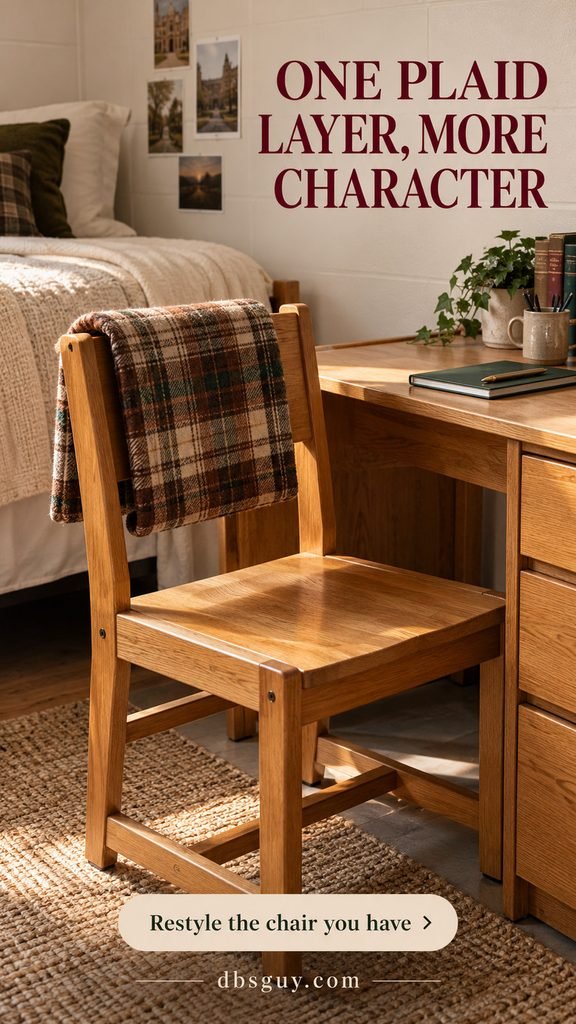
A brown-and-tan plaid throw can make a basic wood chair feel connected to the bedding. Fold a narrow section over the upper back, keeping the seat, chair mechanism, and floor clear.
This is a good place for a blanket or scarf you already own, provided it stays put and does not interfere with sitting down. Take it off if it slips, catches, or makes the chair awkward to use. Skip this treatment on a rolling chair if loose fabric could reach moving parts.
Let plaid be the main pattern in that corner. A plain notebook and simple desk mat give it enough company. You do not need a matching plaid duvet, rug, and storage set to make the idea read.
7. Turn Your Own Boxes Into Labeled Archive Storage

Clean, sturdy shoeboxes can become storage for spare cables, notes, and keepsakes. Wrap your own boxes in leftover brown paper and add a small cream label to each front. Tape or glue goes on the box, not on the school’s furniture.
Measure the shelf or under-bed opening before choosing boxes. Include the lid and the space needed to pull a box out. Group items by how you retrieve them: tomorrow’s class notes should not be buried beneath a semester’s worth of memorabilia.
Use these boxes for dry, lightweight belongings. Store only unplugged spare cables inside; a paper box is not a housing for an operating charger or power strip. Replace a collapsing box rather than stacking more weight on it.
8. Use a Small Tray as Your Bedside Landing Spot

A shallow brass-tone tray adds a little warm metal without committing to expensive hardware or new furniture. Place it on the dresser within comfortable reach of the bed, with room around it to set something down.
Give it a short job description: glasses, keys, and your student ID. A small dish from home can do the same thing. The tray should make those items easier to find, so remove old receipts and anything you never reach for at bedtime.
If you thrift a tray, check for sharp edges and a base that sits flat. For this use, appearance matters more than whether the metal is real brass. Keep the entire tray supported, and avoid stacking it on a pile of books to gain height.
9. Make the Head of the Bed Your Reading Corner

When a second chair would squeeze the walkway, use the bed you already have. Stand your sleeping pillows at the head and add one burgundy cushion or a folded blanket for a comfortable daytime reading position.
Keep your current book on the neighboring dresser when you are finished. Before adding more pillows, decide where they will go at night. Two useful pillows beat a pile that ends up blocking the floor every evening.
The appeal here is a reading spot that takes no extra floor space. Adjust the support to your own comfort, and use the desk when you need a firm writing surface. Leave enough light on the page instead of copying a dramatically dim inspiration photo.
Also read: 28 Cozy Reading Nook Ideas for Small Spaces in 2026.
10. Add One Compact Botanical Detail

A small fern shape and a botanical image suggest a natural-history study. The concept pairs a compact faux fern in a green pot with one framed drawing, leaving the rest of the desktop available for work.
Use an artificial plant you already own, or choose a real plant only after checking its care needs against your room’s light and your schedule. A live plant is optional; the botanical drawing can carry the entire idea if you are often away.
Keep the pot on a suitable coaster or saucer and away from electronics. Do not drape vines around lamps, vents, or fire equipment. One contained detail is easier to dust and pack than greenery threaded across the room.
11. Choose a Small Freestanding Dresser Mirror

An oval tabletop mirror with a brass-tone or dark frame brings a dressing-table detail into the room. It can sit beside a brush and a small dish, giving the dresser a purpose beyond holding random objects.
Look for a stable stand rather than a heavy mirror balanced against the wall. Measure the full base and any adjustment space, and make sure it remains supported when you use nearby drawers.
A mirror you already use is a better budget choice than a decorative replacement. Place it where the reflection is useful and avoids an uncomfortable bright glare. If the dresser is crowded, skip the extra object; the room can feel bookish without a mirror.
12. Use One Small Rug to Bring in a Worn Pattern

A faded burgundy-and-cream rug adds pattern below a mostly plain bed. The concept uses a small rug beside the mattress rather than covering the entire dorm floor.
Measure the open floor with the furniture in its approved position. Check the door swing, the route to the closet, and the space your desk chair uses. Choose a rug that lies flat and, if needed and permitted, an appropriate nonslip backing or pad.
Read the cleaning instructions before buying. A washable label is helpful only if the rug fits the equipment you can use. Do not route power cords underneath it. If a rug and suitable backing exceed your available budget, keep the floor clear and let the bed provide the pattern instead.
13. Pick a Working Clock as Your Vintage-Style Accent

A small clock with a cream dial and brass-tone case supplies a classic detail while doing an everyday job. Set it where you can read it from the bed or desk without adding another shelf.
Prioritize a reliable clock you can actually use. If buying secondhand, check its operation, battery compartment, and controls before paying. Ask whether you can hear its ticking; in a shared room, that small sound may matter more than the finish.
This is an alternative to buying several decorative curiosities. If your phone already handles timekeeping and alarms comfortably, you can skip the purchase entirely. Choose one useful vintage-style object because you like it, not because the aesthetic requires a collection.
14. Make a Weekly Study Board Part of the Decor

A small dark-framed corkboard can give your schedule the same cream-and-brown palette as the room. Use a freestanding board, or an existing campus-provided bulletin board according to its rules.
Start with three headings: Read, Write, and Review. Beneath each, pin the next assignment or deadline on a cream index card. The concept keeps the headings visible; your own board should contain the real task details you need. Leave space to replace a card without rearranging the whole display.
One postcard is enough decoration. Avoid covering the useful part with prints you have to move every time you plan your week. If there is no desk space or permitted board, keep the same layout in a notebook you already own.
15. Coordinate Two Roommates Through a Shared Base

A dark academia dorm can work even when two people prefer different colors. In the concept, cream bedding and plain wood furniture connect a forest-green bed with a burgundy one.
Compare what each person already owns before buying anything shared. Agree on the neutral base, then keep individual books, patterns, and accents on each side. One person can use more cream and the other more green without replacing either bedding set.
Decide who pays for a shared rug or other purchase and who takes it home. Keep the center route, outlets, and storage access usable for both people. Matching decor is optional; agreeing on lamp use, cleaning, and shared surfaces will make the setup easier to live with.
Also read: 13 Blue Dorm Room Ideas for a Calm, Coastal Vibe.
A Student Budget Plan You Can Adjust
Make two lists before buying: what you can bring from home, and what your room is missing. Borrow a frame with permission, reuse a plain dish, and organize your books before deciding you need more decor.
If you have $50 available for a refresh, one possible allocation is:
- Up to $20 for the textile that changes the bed or chair.
- Up to $20 for a compliant task light, only if you need one.
- Up to $5 for printing or a small reused-frame project.
- $5 held back for tax, supplies, or another checkout cost.
These are editorial spending caps, not checked product prices or a promise that a particular item is available at that amount. Compare the full checkout total. If the right lamp costs more, use an existing blanket and move that allowance to the light. If you already have both, save the money rather than finding another thing to buy.
For a no-spend start, try the book arrangement, labeled boxes made from supplies you own, and the bed reading corner. Photograph the room after those changes. It is easier to spot the one missing detail when the basics already have a place.
Dark Academia Dorm Room FAQs
Can I get the look with white walls?
Yes. Treat the walls like the pale pages around the darker details. A forest-green blanket, brown desk mat, a few books, and small artwork can carry the style. Painting or wallpaper is not necessary.
How do I keep a small dorm from feeling too dark?
Keep light bedding visible, leave the existing window treatment clear, and put dark colors in smaller, useful layers. Check the palette in daylight and at your desk in the evening. Add enough task light to read comfortably instead of relying on mood lighting alone.
Do I need antiques or expensive hardback books?
No. Plain supplied furniture, your current books, and a few traditional colors are enough. Spend on function first. A modern lamp that fits your campus rules is a better starting point than an old wired fixture bought only for its appearance.
What should I thrift, and what should I bring from home?
Look at home first for blankets, dishes, frames, books, and organizers. Small hard-surface accessories can be useful secondhand finds if they are intact and easy to clean. Check condition, measurements, care needs, and campus permissions before paying. Skip anything that needs repairs you cannot make.
Are adhesive hooks and removable wallpaper always dorm-safe?
No. A removable or damage-free label is not campus approval. Check your building’s specific policy and the product instructions. Where attachments are restricted, use stable tabletop frames, freestanding organizers, or an existing approved bulletin board.
What is the best first purchase on a tight budget?
Buy the thing your room actually lacks. If study lighting is inadequate, address that first. If the essentials already work, one green or burgundy textile is a straightforward way to introduce the palette. Live with it before choosing another accent.