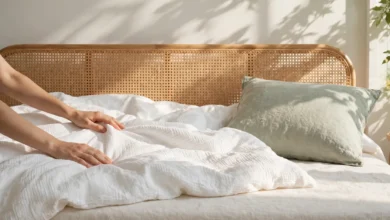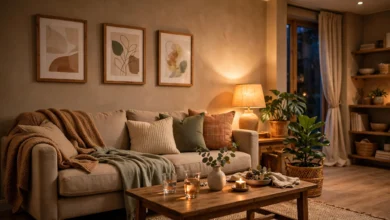
A boho dorm room starts to feel collected when a few things connect: a quilt with texture, colors that work with the school’s furniture, and objects you actually care about. You can build that feeling around an ordinary dorm bed and desk. Let the useful pieces—your lamp, laundry hamper, and storage—carry some of the style.
These 17 boho dorm room ideas offer different places to start. Choose a bed idea, solve one storage problem, and add a personal detail. You don’t need to squeeze every suggestion into one room.

The visuals are AI-generated design concepts. Use them for styling inspiration, then adapt the layouts to your room’s measurements and residence hall rules.
Start With What Your Dorm Allows
Before buying wall hangings, rugs, lamps, or extra furniture, read your housing handbook. Rules differ substantially. For example, UVA’s decoration policy prohibits suspended fabric hangings and candles and restricts wall coverage and mounting methods. Your own school’s policy is the one to follow; a “removable” label doesn’t make a product approved.
Measure your mattress, under-bed clearance, and the space left when drawers, doors, and the desk chair are in use. Keep windows, vents, heaters, fire equipment, and walking routes clear. The ideas below put most of the texture into bedding and useful accessories, so the look doesn’t depend on a tapestry or canopy.
1. Build a Soft Base With Oatmeal and Ivory Bedding
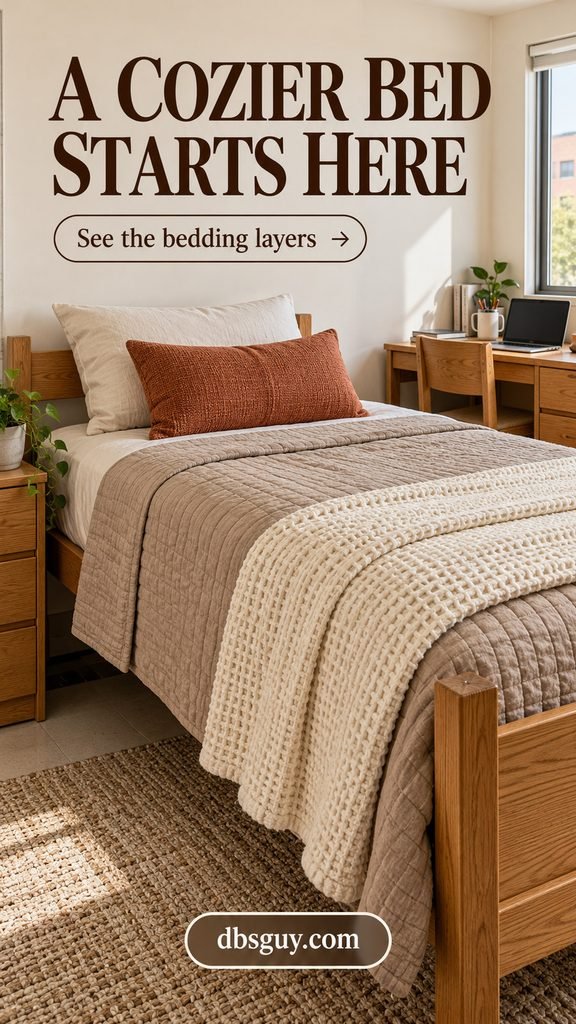
Start with an oatmeal quilt or comforter, then fold an ivory waffle blanket across the foot. The colors sit close together, but the different surfaces keep the bed interesting. A rust lumbar cushion gives the pale layers a point of contrast.
This is a good starting point if you want cozy boho decor without a busy room. Keep your sleeping pillow easy to reach and choose extra layers you’ll use. If you already have cream bedding, the textured blanket may be the only addition you need.
Check the actual mattress dimensions before ordering fitted sheets, and read each textile’s care label. A bulky blanket that won’t fit your available laundry setup adds a chore you may prefer to avoid.
2. Pair a Broad Stripe With a Small Floral
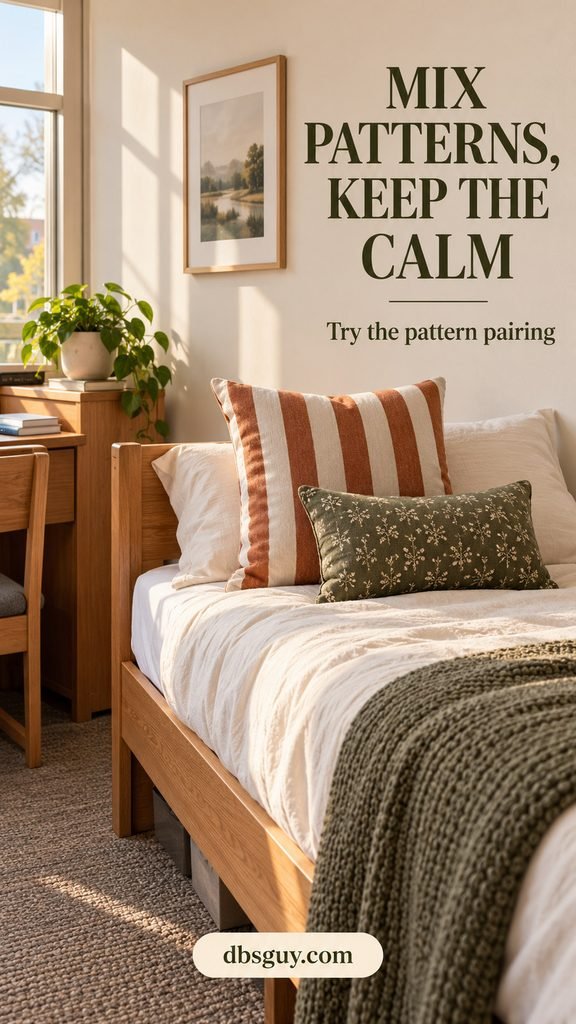
For a more eclectic bed, combine patterns with visibly different scales. Try a rust-and-cream broad stripe beside a smaller olive floral cushion. Plain bedding gives both patterns room to show.
The shared muted palette connects them; their different sizes keep them from competing for the same attention. You can try the pairing with cushion covers rather than replacing a duvet. Lay the fabrics beside each other before buying a second pattern.
If your existing comforter already has a bold print, use that as the main pattern and add only a quieter small-scale accent. Keep an everyday place for decorative cushions at night so they don’t end up across the floor.
3. Work With Orange-Toned Wood Using Clay and Olive

The supplied oak desk doesn’t have to disappear. An olive quilt and clay-colored throw can make warm, orange-toned furniture feel like part of your color scheme. Cream near the pillows keeps the arrangement from becoming too dark.
Use your furniture as the sample: hold an olive pillowcase and a clay textile against the wood in daylight. Some olives lean gray, while others lean yellow; the combination you like in a product photo may look different beside your dresser.
Leave the wood finish visible and repeat clay in one small useful object, such as a cup. This approach works particularly well when you want earth-tone dorm decor without covering furniture or changing the walls.
4. Make a Small Corkboard Personal
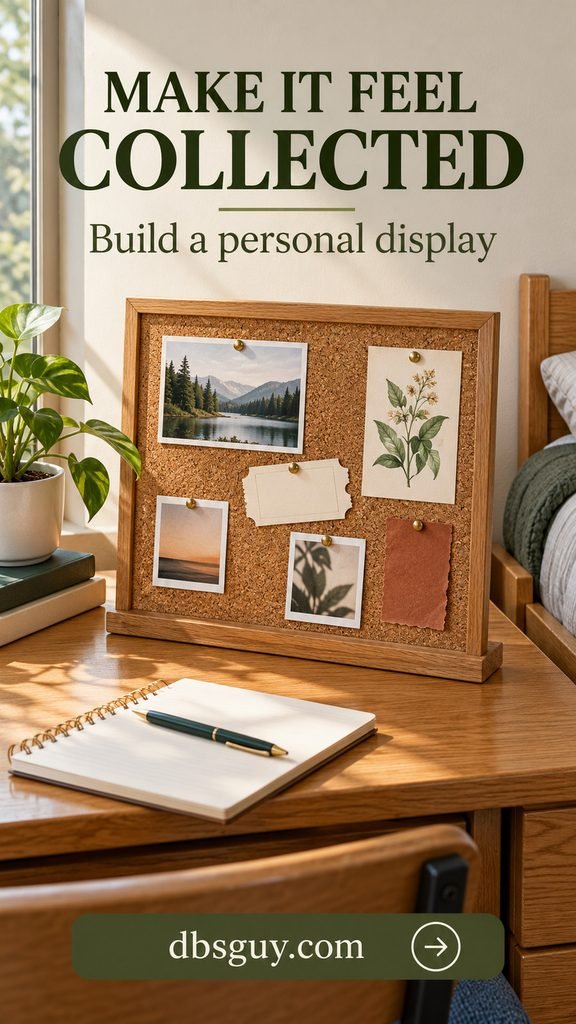
A postcard from a place you love, a photo you took, and a little drawing bring more personality than a large pack of unrelated prints. Give them a small corkboard with visible space between pieces. A rust paper swatch can connect the display to your bedding without making every image match.
The concept uses a freestanding tabletop board, which keeps this idea independent of wall adhesive. Choose a stable stand and a board that fits entirely on the desk without crowding your work. If your room has an approved built-in bulletin board, use that instead.
Try the arrangement flat before pinning anything. Mix a couple of orientations and keep favorite pieces at the center; you can rotate the display as the semester brings new memories.
5. Give a Woven Basket One Everyday Job

A woven basket beside the bed adds texture and gives a spare blanket somewhere to go. Choose an opening wide enough that putting the blanket away is a single easy movement. A smooth fabric lining is useful for keeping textiles away from rough fibers.
Decide what the basket will hold before choosing its size. Blankets need a generous opening; a small basket may work better for a paperback and headphones. Set it where it won’t interfere with drawers or your route out of bed. If the floor is already full, use a smaller woven container on an existing shelf.
6. Keep the Boho Desk Ready for Actual Studying
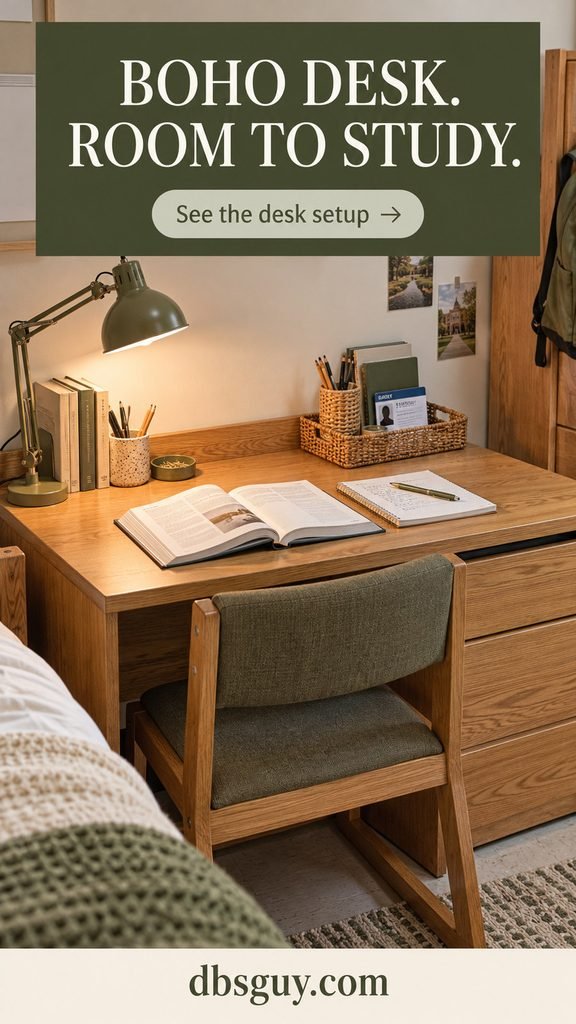
Put a shallow woven tray at the back or side of your desk for a pencil cup, student ID, and the little items that tend to spread. Leave the middle available for an open textbook and notebook. That clear space is part of the design.
Use a task lamp you can position for the work in front of you. Check where your hand casts a shadow when you write and whether the lamp reflects in your screen. Natural cane, a muted green notebook, and the existing wood provide enough color and texture without a second layer of ornaments.
Before adding anything else, sit down and pull the chair in. Your knees, elbows, and charging cable should all have workable space.
Also read: 15 Bedroom Design With Study Table Ideas. Borrow the organization ideas that fit your supplied desk.
7. Add a Warm Pool of Light With a Ceramic Lamp

A small clay-colored lamp with an ivory shade gives the bedside a warm focal point after dark. Its color also works during the day, when the lamp becomes another earthy accent beside plain bedding.
Check your school’s lighting requirements and choose an intact fixture with a compatible bulb used according to its instructions. Leave room to reach the switch and set down glasses without bumping the shade. Keep fabric away from the fixture and route the cord where furniture won’t pinch it or feet catch it.
In a shared room, check the view from your roommate’s bed, too. A shaded bedside glow may suit winding down; use adequate task lighting when you need to read.
8. Use One Faded Rug as the Floor’s Focal Point

A muted rust-and-indigo rug introduces a richer pattern beneath mostly solid bedding. Choose a single low-pile rug for the useful open area beside your bed. Its faded-looking colors give you several shades to pick up elsewhere.
Measure after the furniture is in its approved position. Test the proposed outline on the floor with a tape measure: can the door open, the chair move, and storage pull out? A bedside runner may fit better than the large rectangle in an inspiration photo.
Keep edges flat and follow your campus rules for rugs and backing. Read the cleaning directions, including the required machine capacity if you want a washable version. For a tight dorm, one manageable rug gives you plenty of pattern.
9. Find a Manageable Home for Greenery

One leafy plant in a terracotta pot can break up a row of books and rectangular furniture. Put it on a stable surface where it gets the conditions it needs, with a waterproof saucer to protect the furniture.
Choose a real plant for the light you actually have and the care you can provide, including school breaks. Keep it away from electronics and leave space for watering without lifting it over a laptop. Check whether your housing allows plants before bringing one.
A small faux plant is another option if care or light makes a live one impractical. Pick foliage you enjoy looking at, keep it dusted, and let it stand alone rather than covering the room in vines.
10. Quiet the Under-Bed Area With Canvas Storage

Low oatmeal canvas storage bags make the space under a bed look calmer while keeping spare linens or off-season clothes contained. Rust handles repeat a bedding accent and give you something easy to grasp.
Check three measurements before buying:
- Height: Measure from the floor to the lowest obstruction under the frame, and compare it with the bag’s full height when packed.
- Width: Check the clear space between bed legs, including room for the bags’ handles.
- Depth and access: Allow space to slide each bag out and open it. The two bags in the concept illustrate the arrangement; your frame determines what fits.
Put things you reach for frequently near the accessible edge and add labels facing outward. Use the bed in its approved configuration. If it needs adjusting, ask housing staff about the permitted options before ordering storage that depends on extra height.
11. Trade a Bulky Nightstand for a Slim Cart

A narrow olive cart can make a useful bedside landing spot when there’s no room for a conventional nightstand. Choose a height you can comfortably reach from your mattress and measure the whole footprint, including handles and wheels.
Keep the top simple: glasses, a closed water bottle, and space to set something down. A couple of books can go on the middle tier, with a canvas bin for small items below. Put heavier belongings low and follow the cart’s load limits.
Make sure it stays stable on your floor; locking casters can help hold an appropriate model in place. Skip trailing charging cords if you plan to move the cart. Useful bedside storage should make getting around the bed easier.
12. Style the Existing Bed for Daytime Lounging

When an extra chair would crowd the room, give the bed a daytime arrangement. If its allowed position is along a wall, use a long body pillow against that side and add a smaller cushion for adjustable support.
A rust coverlet makes the bed look intentional from the doorway, while cream and olive pillows connect it to the rest of the room. Keep a throw folded at one end so it’s easy to use without pulling everything apart.
Choose cushions you can put away at bedtime. A basket, shelf, or clear section of under-bed storage should be part of the plan. Start with the long pillow and add another only if it improves how you sit.
13. Try a Floor Cushion You Can Put Away

If you have a genuinely spare corner and enjoy sitting on the floor, a thick rust cushion and a supportive back pillow can create a casual reading spot. Check both arrangements before buying: cushion in use, then cushion stored. It needs to fit under your bed or in your closet without blocking belongings you use every day. Keep the corner away from doors, heaters, and the main walking route.
Floor seating won’t suit everyone. If getting down and back up is uncomfortable, use your existing chair or the bed-lounge idea instead. The point is to make a place you’ll use.
Also read: 28 Cozy Reading Nook Ideas for Small Spaces in 2026. For dorms, focus on portable seating and textiles that your housing permits.
14. Bring Rattan to the Dresser With a Tabletop Mirror

A small rattan-framed mirror introduces curved lines and woven texture without requiring a large rattan chair. Choose a tabletop design with a stable built-in stand, then place it fully on the dresser alongside a shallow jewelry dish.
Check the footprint with the stand open. The mirror should stay stable when drawers move, and its reflection should help with the task you’ll use it for. Keep a clear spot for your comb or daily essentials. If you already have a suitable mirror, bring in the same texture through a small woven container instead of replacing something that works.
15. Let Books and Meaningful Objects Share a Shelf

A few books you read, a small handmade bowl, and a favorite photo give a shelf an accumulated feel. They don’t need to arrive as a set. Repeat one color—perhaps a little ink blue or clay—if the objects otherwise feel disconnected.
Keep books supported upright with sturdy bookends and leave space to remove them easily. A bowl can hold small everyday items, while a tabletop frame keeps a personal picture visible. Avoid placing loose objects on top of books you need for class.
Use an existing low bookcase or shelf when possible. If you bring furniture, follow the manufacturer’s stability and anchoring requirements and your housing rules; choose another display surface if you can’t meet both.
16. Coordinate With a Roommate Through a Shared Palette

Two boho beds can look connected while keeping different personalities. One roommate might choose an olive quilt and clay throw; the other might prefer cream bedding with a rust stripe and an olive blanket.
Share fabric photos before shopping, then agree on the items you’ll both use. One rug or a shared storage solution may deserve more planning than individual cushion covers. Decide where laundry and spare bedding will live, and talk about light and upkeep as well as color. Check each bedside lamp from the other person’s pillow before settling on its position.
Also read: 13 Blue Dorm Room Ideas for a Calm, Coastal Vibe if you want a cooler palette with woven accents.
17. Finish With a Laundry Corner That Belongs in the Room

An oatmeal canvas hamper with rust handles can fit the palette just as well as a decorative basket. Put it where you actually drop laundry, provided the lid opens freely and the location leaves the walking route clear.
Think through laundry day before choosing a hamper. Can you carry it comfortably, or will you transfer clothing into a separate bag? A collapsible hamper and fold-flat tote can be useful when you need to pack the room at the end of the semester.
Keep damp towels and clothing from sitting in a closed hamper, and follow the container’s care instructions. A practical corner that stays easy to use will do more for the room than another decoration with nowhere to live.
What to Add First When Your Budget Is Tight
Start by laying out the bedding and accessories you already own. Pick a common thread from them—a rust stripe, warm cream, or olive green—and use it to guide the next purchase.
- Finish the bed with one useful layer. A textured blanket or cushion cover may be enough if the base bedding already works.
- Solve the daily irritation. Choose storage if belongings have no home, or a suitable lamp if your current light doesn’t work for the task.
- Add something personal. Display a photo, postcard, drawing, or object you already care about.
Take a photo from the doorway before shopping again. It’s easier to see whether the room needs another color, a clearer surface, or simply time to settle in. Secondhand baskets, frames, and ceramics can add character; inspect their condition and clean them appropriately before use.
Boho Dorm Room FAQs
Can a boho dorm room work without wall hangings?
Yes. Put the texture into a quilt, waffle blanket, woven storage, and a rattan-framed tabletop mirror. A small freestanding display can hold photos. Follow your school’s rules for any wall decor you do choose.
What colors work for a cozy boho dorm?
Oatmeal, ivory, rust, and olive are a flexible starting point beside warm wood. If you like cooler colors, try cream and faded indigo with a woven accent. Compare fabrics against the furniture and floor you actually have.
How do I keep the room collected without making it cluttered?
Give each object a place and a reason to stay. Keep the desk’s work area open, contain small belongings, and display a few meaningful pieces where you can see them. Rotate a shelf or corkboard when you want a change.
Do I need macramé, pampas grass, or a canopy?
No. Those are optional visual references, and hanging fabric or dried materials may conflict with your housing rules. Mixed textiles, natural-looking texture, personal artwork, and useful storage can carry the style on their own.
Can I do this with a lofted bed?
Use your school’s approved bed configuration and keep required rails, ladder access, and clearances intact. Apply the color and texture ideas through bedding, the desk, and storage that fits the available space. Don’t copy the low-bed layouts or lounge setup without checking whether they suit your frame.
Choose the idea that fixes something you notice every day. An easier bedside setup, a bed you enjoy settling into, or a shelf of familiar things gives the room a good place to grow from.