There is a particular kind of reader who seems to live in a different relationship with time than the rest of us. While most of us are trying to remember the last time we finished a book, they are quietly working their way through fifty or more a year — roughly one a week, every week, without making a big production of it. They are not necessarily faster readers. They are not necessarily smarter readers. What they have, it turns out, is a small set of habits that remove almost every obstacle between them and the next chapter.
And the stakes are higher than a tidy bookshelf. Reading regularly is linked to better mental health, greater empathy, a lower risk of dementia, and even a longer life. Yet the numbers tell a worrying story. The National Literacy Trust found that the share of teenagers reading for pleasure has fallen 36% since 2005. More than a third of UK adults say they have given up reading as a hobby altogether. A 2025 YouGov poll found that 40% of Britons had not read or listened to a single book in the previous year. In that same poll, just 4% of people qualified as “mega-readers” — people getting through 50 or more books a year, about one a week.
So what separates that 4% from everyone else? It is not a secret talent. It is six practical habits, and every one of them is something you can start tonight. Here is what the heaviest readers do differently.
1. They’re Comfortable Giving Up on Books They Don’t Like

Ask a heavy reader what their most important habit is, and a surprising number will give you the same answer: they quit books. Freely, often, and without a shred of guilt. The writer and economist Tyler Cowen, who claims to finish multiple books on a good night, puts it bluntly — if a book is not pulling you into its world, just stop reading it and put it down. There is no prize for suffering through the last two hundred pages of something you resent.
Online, readers call this “DNF-ing” — did not finish — and many describe it as the single move that ended a months-long reading slump. One reader said the habit took them from one book a month to six, simply because the next book was always allowed to be a better one. When every book is an obligation, reading starts to feel like homework. When every book is a choice, it starts to feel like a treat again.
There is even research behind the instinct. In one study, only books that genuinely absorbed readers — that transported them emotionally into the story’s world — seemed to lift empathy scores. Pushing through pages you dislike, by contrast, appeared to lower them temporarily. A book you love is doing real work on you. A book you are enduring is just taking up your evenings.
That does not mean abandoning every book that challenges you. A slow opening is not the same as a bad book. But if you have given a book a fair stretch — fifty pages, say, or a few honest sittings — and you still feel nothing, close it. The book will still be there later. Your reading life is too short to spend it on books that bore you.
2. They Don’t Put Too Much Pressure on Themselves Early On

The second habit sounds almost too simple: start small. Literary Hub writer Kelsey Rexroat interviewed super-readers who finish more than a hundred books a year, and she found something unexpected — most of them were not childhood bookworms at all. Many of them came to serious reading as adults, and many of them started with a modest daily target they could actually keep.
Chasity Moreno, who works in Reader Services at the New York Public Library, gave the same advice to TIME: do not begin with a goal like “I’m going to read War and Peace.” A goal that big is not inspiring on day one; it is intimidating. And an intimidating goal is one you quietly abandon by the second week of January.
The author of the original piece this blog is based on learned the same lesson firsthand. After years of letting screens eat every spare minute, she fell back in love with reading by setting herself a tiny goal: ten pages a night. No more, no less. Ten pages is small enough to do on a tired evening, and it is large enough that, most nights, you keep going past it. She still uses the ten-page rule whenever her reading stalls.
That is the real trick. A small daily target builds a habit, and a habit builds momentum. Ten pages a night is more than 3,600 pages a year — roughly a dozen novels — before you have even tried to read more. If long, doorstop novels call to you, save them for when the habit is already strong. Our roundup of 9 epic long books to read this winter is the perfect reward for a reader who has already found their rhythm, not a starting line for someone still building it.
3. They Track Their Progress More Often
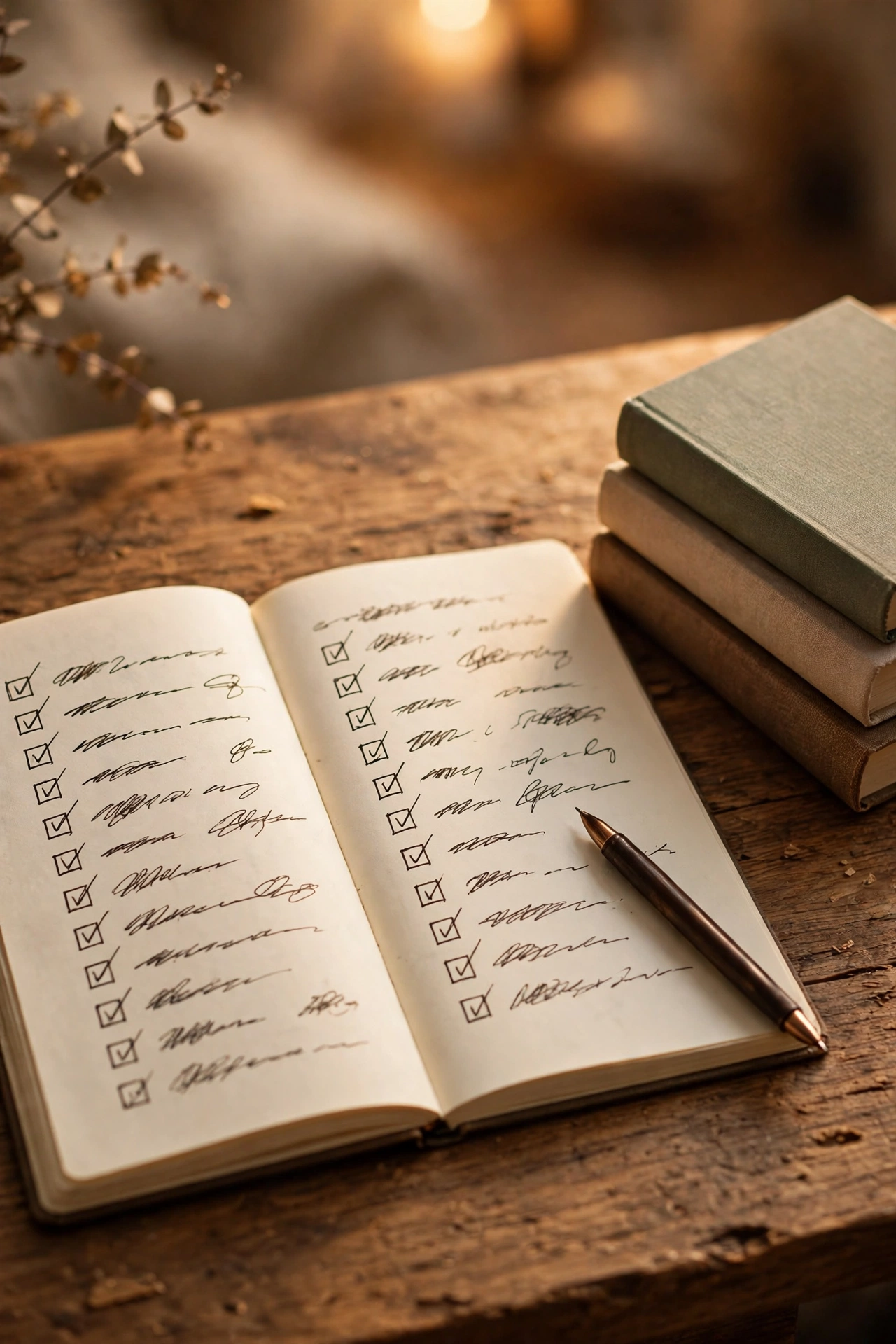
Heavy readers tend to keep score. Anne Bogel, who hosts the Modern Mrs Darcy podcast and reads hundreds of books a year, told TIME that she is a big believer in tracking what you read, because it genuinely helps build a more satisfying reading life. A reading log turns a vague intention — “read more” — into something you can see, count, and feel good about.
It does not need to be elaborate. A notebook on the nightstand works. So does a simple list on your phone, or a page in a journal where you write the title, the date you finished, and a line or two about what you thought. One reader on Reddit put it plainly: watching the month’s total climb is motivating in itself. There is something quietly satisfying about seeing four finished books where last month there was one.
Psychologists have found a similar pattern in other parts of life. Research cited by the American Psychological Association suggests that regularly checking how close you are to a goal is linked to a greater chance of actually reaching it. The mechanism is straightforward: when you can see progress, you want to protect it. When you can see a gap, you know exactly what to do about it.
Tracking also gives you a record worth keeping. Months later, your list becomes a map of your year — what you loved, what you abandoned, what surprised you. And on the weeks when life gets in the way, the log is forgiving: it does not judge a slow week, it just waits for the next entry. Start with one line per book. That is enough.
4. They Create Clusters of Interests

Here is a habit that sounds counterintuitive: instead of reading widely, read narrowly — in clusters. The author of the source piece spent a year working through every Jane Austen novel, along with Austen’s early juvenilia. The restriction helped, she found, because she already knew she liked the style, the humour, and the world. Every next book was a safe bet, so she never stalled between choices.
Tyler Cowen reads the same way, in what he calls “clusters” — groups of books on a single topic, read one after another so each one deepens the last. And Tom Calver, a data journalist at the Sunday Times, used the same approach to complete his resolution of 52 books in a single year: pick a theme, stay inside it, and let curiosity do the choosing.
A cluster can be anything that excites you right now. A single author’s whole catalogue. A period of history. A genre you have just discovered — if a romantasy phase has you hooked, our list of the top 5 romantasy books for spooky season (that aren’t really spooky reads) is a ready-made cluster of its own. Or a book you loved so much you want everything near it: if East of Eden is the one that did it for you, these 9 books to read next if you loved East of Eden keep you inside that same big, complicated, wonderful world.
The beauty of a cluster is that it removes the hardest part of reading: deciding what to read next. When the next book is already chosen by the theme, there is no twenty-minute scroll through recommendations, no half-read first chapter abandoned for something shinier. You just pick up the next one.
5. They Always Carry a Book With Them

The fifth habit is the simplest of all, and possibly the most powerful: always have a book on you. Cowen credits much of his pace to reading “anywhere” — in bed, on the bus, in every spare minute the day hands him. Those minutes look worthless one at a time. Added up across a year, they are dozens of books.
Frederick J. Goodall is the proof. He read 614 books in 2025, and when Literary Hub asked him how, his answer was disarmingly ordinary: he kept a book with him wherever he went. He read in the school car line while waiting for his kids. He read in waiting rooms while taking his mother to the doctor. The book was always there, so the dead time in his day was never really dead.
Most of us lose more reading time than we realise to the gaps between things — the queue, the commute, the ten minutes before an appointment. A phone fills those gaps by default, and a phone will happily keep them. A paperback in your bag, or an e-reader, or an audiobook queued on your phone, turns the same gaps into pages. You do not need an extra hour a day. You need the minutes you already have.
Make it easy on yourself. Keep the current book in the bag you actually carry, not on the shelf where it looks tidy. If you drive everywhere, audiobooks count — listening is reading, and the miles will do the rest. The goal is not to be impressive. It is to make the book the easiest thing to reach for.
6. They’re More Aware of the Links Between Sounds and Written Words
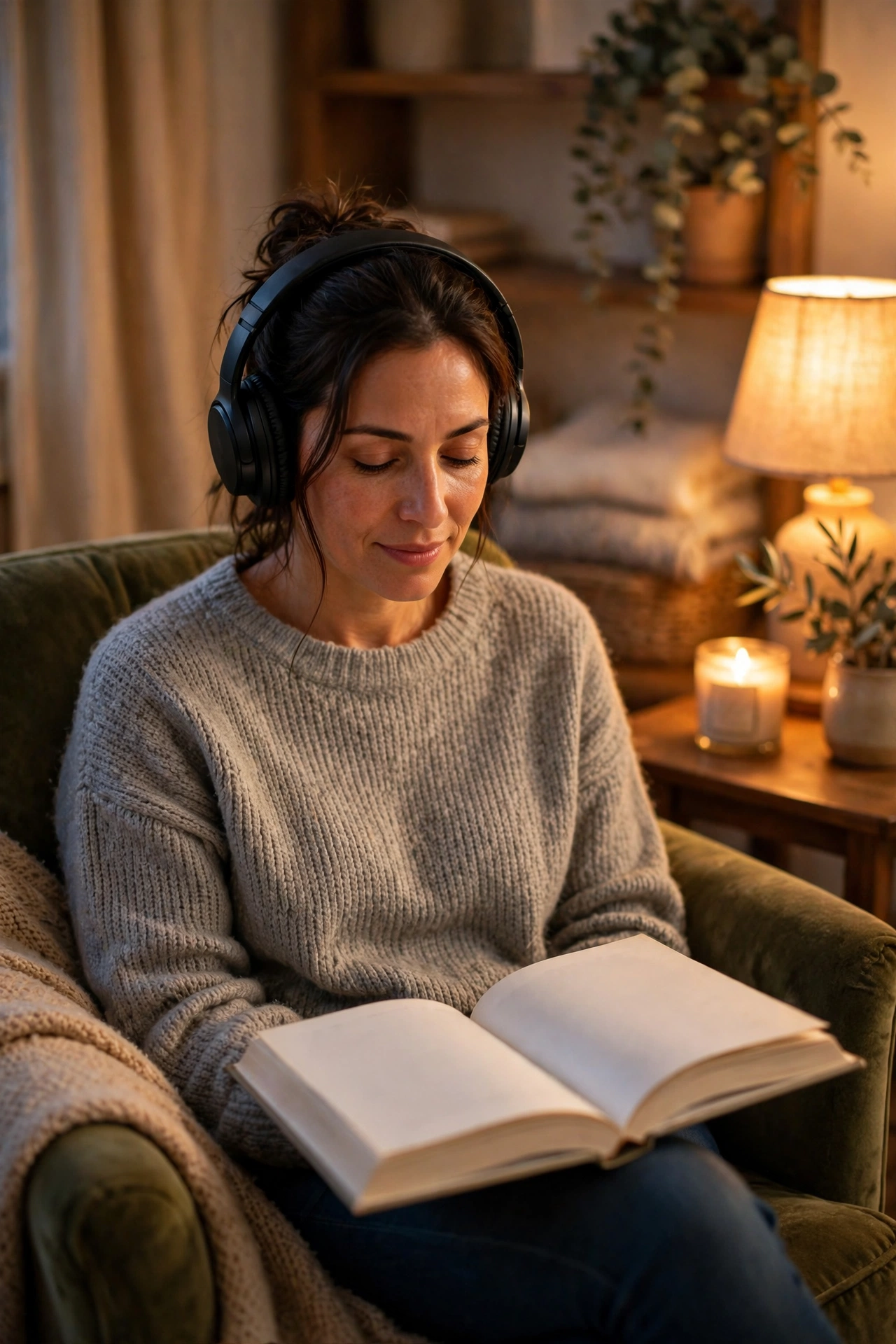
The last habit is the most surprising, and it has nothing to do with willpower. A 2024 study found that the strongest readers tended to have larger brain regions involved in categorising and associating information — and a thicker Heschl’s gyrus, the part of the brain that hosts the auditory cortex. In other words, the best readers may also be the people whose brains are most tuned in to sound.
Professor Mikael Roll, one of the study’s authors, explained the connection to The Conversation: pairing letters with speech sounds first requires an awareness of the sounds of a language. That awareness — known as “phonological awareness” — is a well-established early building block of children’s reading development. It turns out the sound of language matters long after childhood, too.
What does that mean for the rest of us? It is a good reason to let your ears help your eyes. Reading aloud, even quietly to yourself, can make a dense passage click. Following along in a printed book while you listen to the audiobook can deepen both. And if a particular book feels hard to get into on the page, hearing a narrator give it a voice is sometimes all it takes for the story to open up.
It is also a reminder that reading is not one narrow skill. It is listening, noticing, connecting — a whole conversation between sound and meaning. The readers who finish a book a week are not just turning pages faster. They are using every part of how reading works.
That is the encouraging part of all six habits. None of them requires talent, money, or a free afternoon. Quit the books that bore you. Start with ten pages. Write down what you finish. Read in clusters so the next book chooses itself. Carry a book everywhere. And let sound help the words along. One habit at a time, the numbers take care of themselves — and somewhere along the way, you may find you have become one of the readers other people wonder about.
And if a screen adaptation is what pulls you back to the page in the first place, lean into it: seeing how a story changes on screen can make you want the original even more, as our look at 9 major ways Netflix’s East of Eden differs from the original book (and other adaptations) shows. Whatever gets you reading counts — the only wrong way to read is the way that makes you stop.