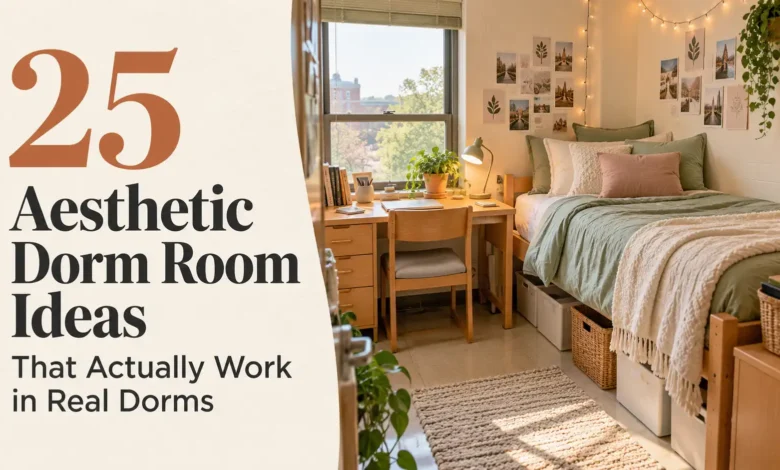
An aesthetic dorm room needs somewhere to put your laundry, enough desk space to open a textbook, and a bed you can make before class. Start with a small color palette, give everyday clutter a home, and add a few things you enjoy looking at. You can do all of that around the furniture your school supplies.
These 25 ideas cover different jobs, from making an awkward storage gap useful to bringing two roommates’ styles together. Choose the ones that solve a problem in your room. You do not need to recreate every scene or buy a coordinated room package.
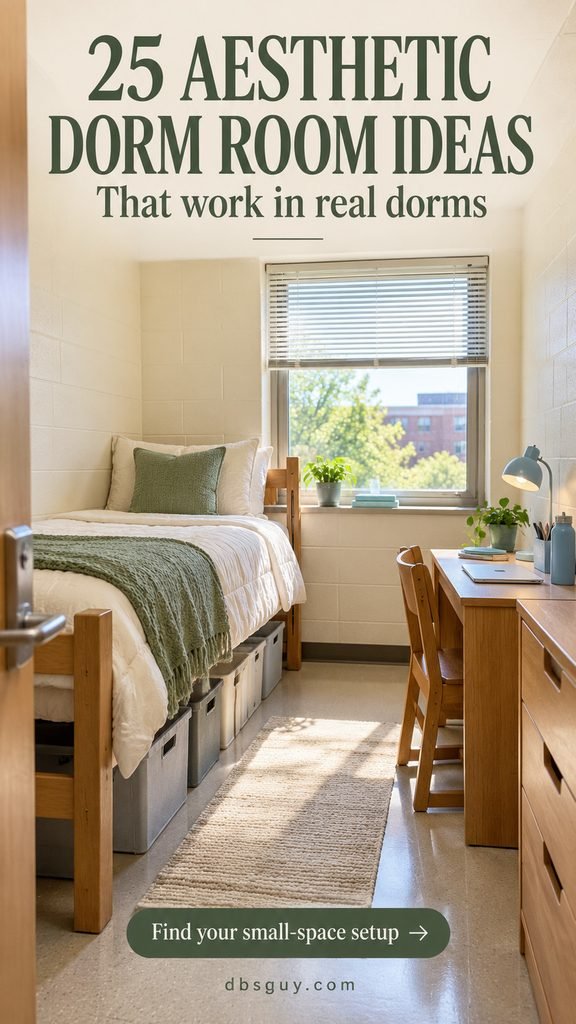
The visuals are AI-generated design concepts, not photographs of completed dorm rooms. Furniture sizes, permitted decor, and room layouts vary by residence hall.
Choose Your Starting Point
- The room looks busy: try the palette, bedding, and pattern ideas in 1–3.
- Things have nowhere to go: start with under-bed bins, a hamper, or closet storage in 4, 13, and 14.
- The desk never feels usable: look at 7, 16, and 18.
- You share a small room: compare the coordination and layout ideas in 23 and 24.
Check the Room Before You Buy
Confirm your assigned mattress size and look up the supplied furniture. Measure usable storage gaps, drawer interiors, and the space a chair needs when pulled out. Include handles, lids, and door swings; the outside width of a bin alone will not tell you whether you can use it.
Read your own residence hall’s decorating rules before choosing adhesives, wallpaper, extra furniture, plants, or lighting. A “removable” label is not permission. For example, Cornell’s community living standards prohibit wall adhesives and removable wallpaper and set specific rules for bed adjustments. Another school may allow different options.
Keep exits, windows, vents, heaters, outlets, and fire equipment accessible. If hanging decor is restricted, use permitted tabletop displays, bedding, and useful accessories to carry the style.
1. Let the Supplied Wood Set Your Palette
Before picking an aesthetic, look at the largest finish you cannot change. Honey-colored furniture can work with cream and olive; darker wood can anchor navy and ivory. Bring a pillowcase or fabric swatch into the room before committing to several matching purchases.
In this version, olive appears on the bed and desk, while cream keeps the larger textiles quiet. Repeating a color in a few useful objects makes the supplied furniture feel included. If you already own colorful bedding, pull one shade from it instead of replacing everything.

2. Make a Bed You Can Reset Before Class
A narrow dorm bed does not need a mountain of cushions. Try a sleeping pillow, one decorative lumbar pillow, a washable quilt or comforter, and a throw folded at the foot. The rust-and-ivory example gets its character from texture and color rather than lots of separate pieces.
Choose bedding for your actual mattress dimensions and laundry routine. Before adding another pillow, decide where it will go while you sleep. If the answer is the floor, the bed probably has enough. Keep the bedding clear of heaters and any nearby lamp.

3. Mix Two Patterns With Different Scales
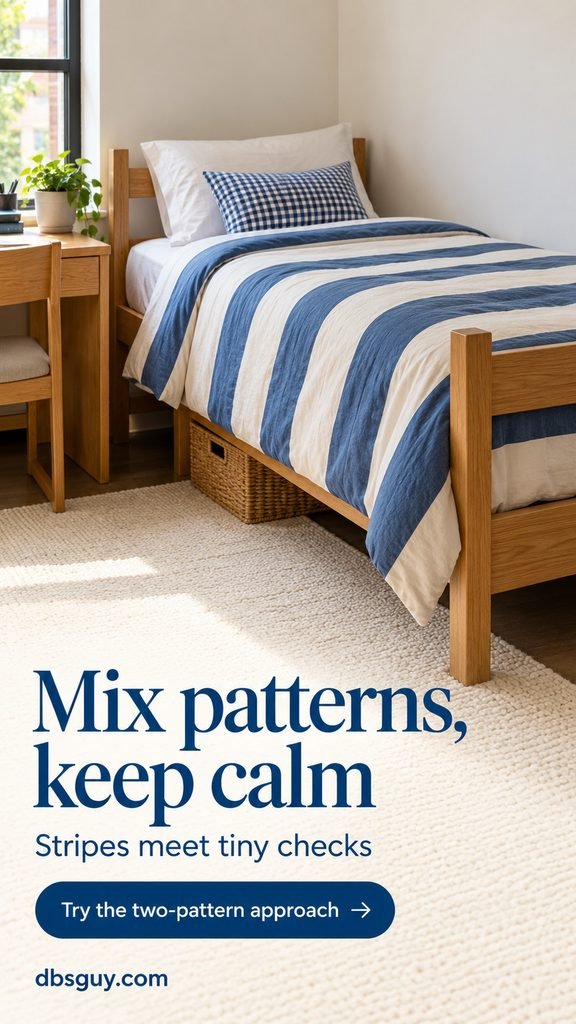
Broad stripes and tiny checks can share a bed when they have a color in common. Here, blue-and-ivory stripes cover the largest area, a small gingham cushion adds a finer pattern, and the sleeping pillow stays plain.
Lay the pieces together before buying more. If both patterns compete from across the room, reduce one to a smaller accessory. A solid rug or plain storage bins give the mix some breathing room. This is an easy way to use a patterned comforter you already own without building the whole room around a matching set.
Also read: 13 Blue Dorm Room Ideas for a Calm, Coastal Vibe.
4. Coordinate the Bins Under Your Bed
Matching container fronts make visible storage look calmer without hiding it behind extra fabric. Choose bins only after measuring the lowest obstruction beneath the bed, the spaces between its legs, and the depth you can reach.
Leave room to pull a container into the aisle and open its lid. Put everyday clothes near the accessible edge and less-used belongings farther back. The three bins shown illustrate the arrangement; your frame may fit fewer. If nothing useful fits, choose another storage location rather than improvising bed risers or changing the frame without housing approval.

5. Replace a Bulky Nightstand With a Bedside Caddy
A fabric caddy can hold the small things you reach for after getting into bed: a paperback, glasses, and your phone. It is especially useful when a side table would take up the last strip of walking space.
Choose an attachment that fits your frame without modifying it, follow the caddy’s load instructions, and check that it stays put when you get in and out. Keep heavy or spillable items elsewhere. A pocket for an unplugged phone also avoids draping a charging cable across the bedding; use a separate accessible charging spot when needed.

6. Use a Desk Lamp to Change the Evening Mood
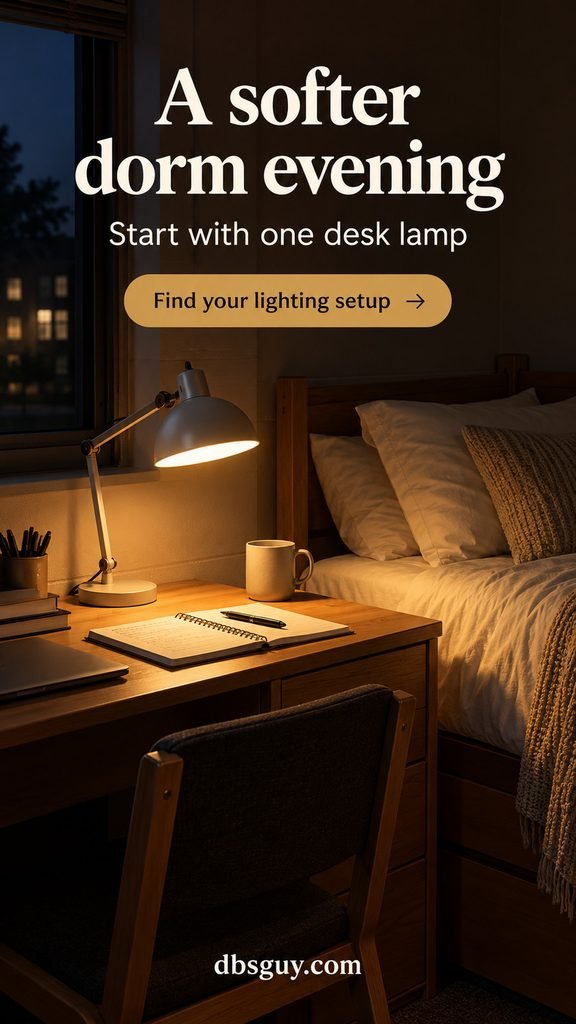
If your room feels stark under the ceiling light, start with a permitted desk lamp. A shaded, adjustable lamp can light a notebook and create a softer evening corner. Pick a stable base and a bulb type and wattage allowed by both the lamp and your school.
Test the position while writing: your hand should not block the light, and your screen should not catch a distracting reflection. Aim the light away from your roommate’s bed. Decorative string lights are not universally allowed, so check your rules before adding them. Keep lamp heat and cords away from textiles.
7. Move Desk Storage to the Back Edge
A low freestanding organizer gives notebooks and pens a vertical home while leaving the middle of the desk usable. In the concept, the teal organizer sits at the rear, with space in front for a laptop and open textbook.
Measure the organizer’s depth against the work surface you need. Check that it does not cover an outlet, interfere with a built-in shelf, or become unstable when you take out a book. Keep frequently used supplies within reach and move backups into a drawer. A taller organizer is not an improvement if it leaves nowhere to write.

8. Give One Tabletop Print the Lead
One piece of art can provide a focal point without covering the wall. Try a lightweight framed print with its own stable tabletop support, placed on a dresser deep enough to hold the full base. Olive and ochre shapes connect this example to the room’s warm wood.
Check stability when opening drawers and walking past the furniture. Size down if the display wobbles or crowds daily essentials. If your school provides a display rail or bulletin board, that may offer another permitted option. Choose artwork you like living with, rather than buying several small objects just to fill space.

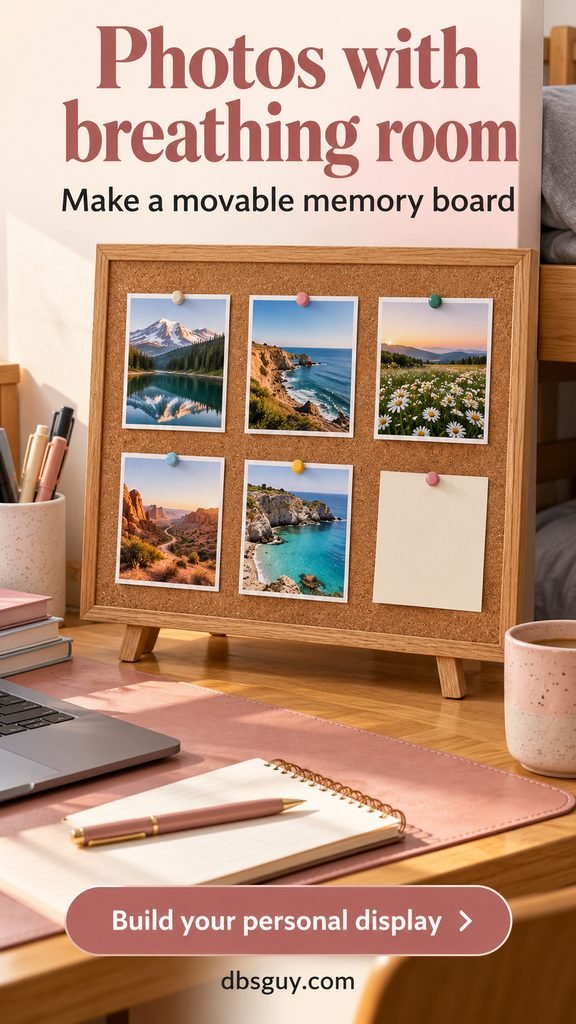
9. Keep Photos on a Movable Memory Board
A freestanding board lets you arrange photos without attaching each one to the wall. Start with a few prints and leave visible space between them. Reserve one corner for a reminder card so the display can be useful as well as personal.
Use pins only within the board and choose a support that stays steady on the desk. If the school already supplies a bulletin board, use that instead of bringing a duplicate. When the photos start hiding every reminder, edit the display or rotate favorites. You can keep the memories without giving up the whole work area.
10. Give One Plant a Deliberate Spot
One small plant is easier to place thoughtfully than a collection spread across every surface. Choose a permitted live plant suited to the light the room actually receives, then give its pot a waterproof saucer and a stable spot.
The desk corner shown keeps the plant near daylight while leaving the window controls accessible. Look up the care needs of the specific plant before buying; “low maintenance” does not mean every room will suit it. If plants do not fit your rules, light, or break schedule, borrow the green color through a print or pencil cup instead. Artificial greenery may also be restricted.

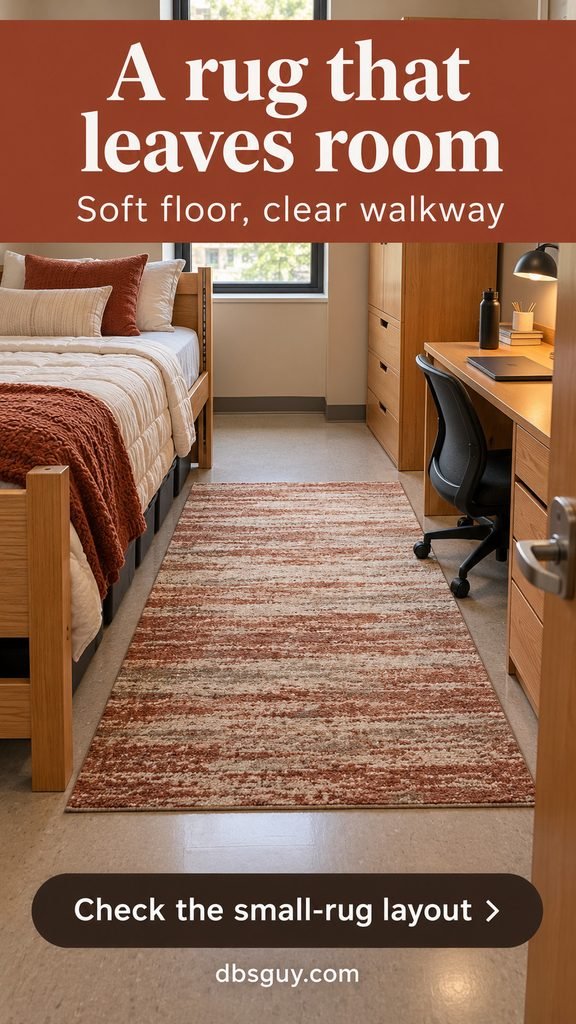
11. Use a Small Rug to Define the Open Floor
A low-pile rug can soften a bare floor without swallowing a small room. Place it where you step out of bed or cross the shared space, rather than assuming it must extend under every piece of furniture.
Check the full door swing and roll the desk chair back before settling on its position. Choose a rug and any needed grip layer that are suitable for the floor and permitted by housing. Flat edges matter more than squeezing in a larger size. Pick something you can realistically vacuum or clean; a thick shag surface may be more work than you want.
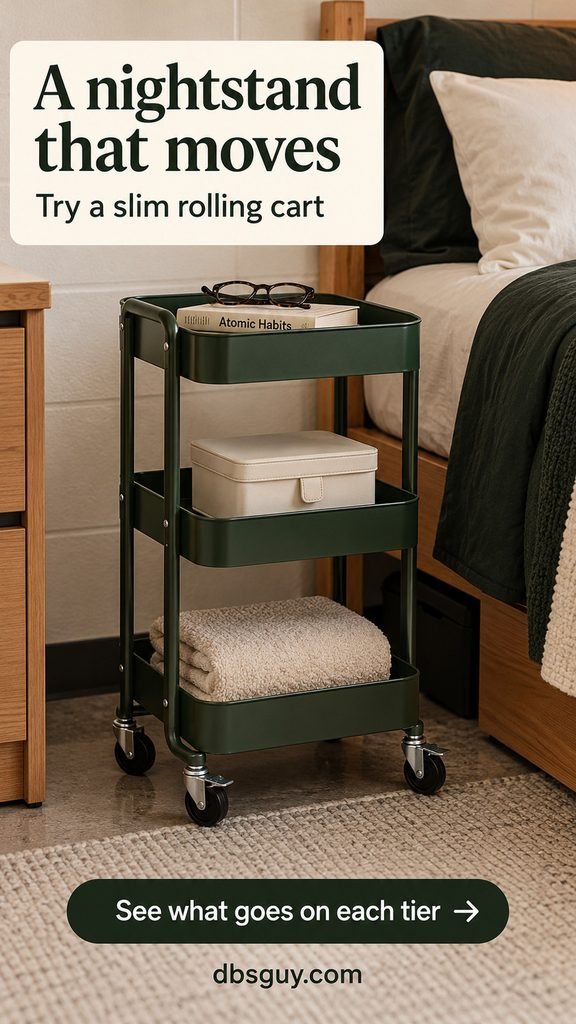
12. Make a Slim Cart Your Bedside Storage
If you need more capacity than a caddy, a narrow cart can hold a book, a small box of essentials, and a spare towel. Measure the frame and casters, not just the tray width, and leave enough room to reach each tier.
Keep heavier belongings low, stay within the cart’s load limits, and use wheel locks when provided. The top does not need a lamp, vase, and several bottles to look finished. A cart is worth considering when you will move it for cleaning or access; if it lives in the walkway, skip it.
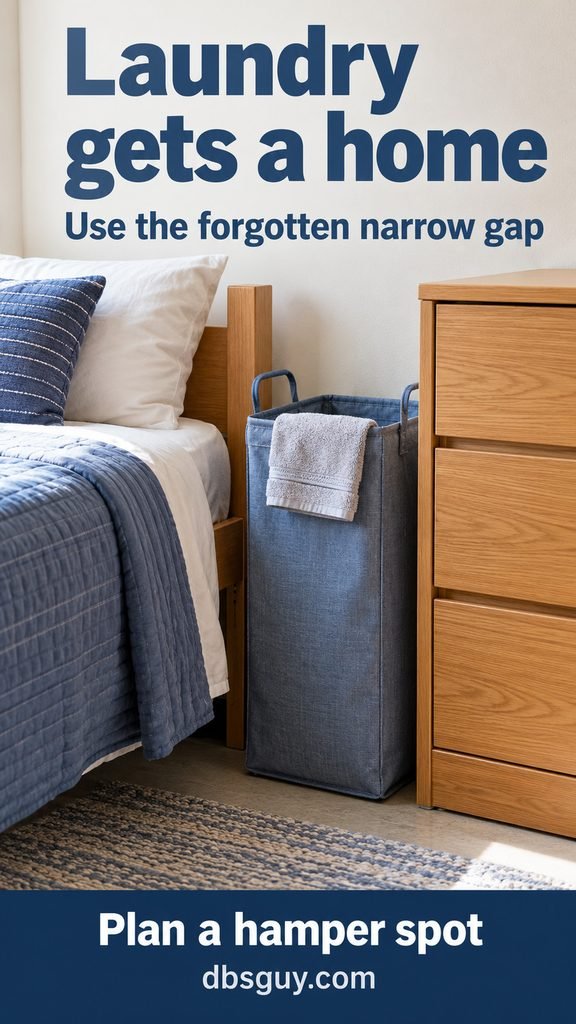
13. Tuck a Hamper Into a Measured Gap
A clear laundry destination helps the bed and chair stay available. Try a slim handled hamper beside a dresser or within your own closet area, wherever you can reach it without moving other furniture.
Measure the filled hamper as well as its empty footprint, and make sure you can lift or pull it out. A narrow opening may look tidy but make laundry day frustrating. Choose a washable or wipeable design suited to the space. Let wet towels dry in a permitted location before putting them away, and keep the hamper clear of room equipment and your roommate’s storage.
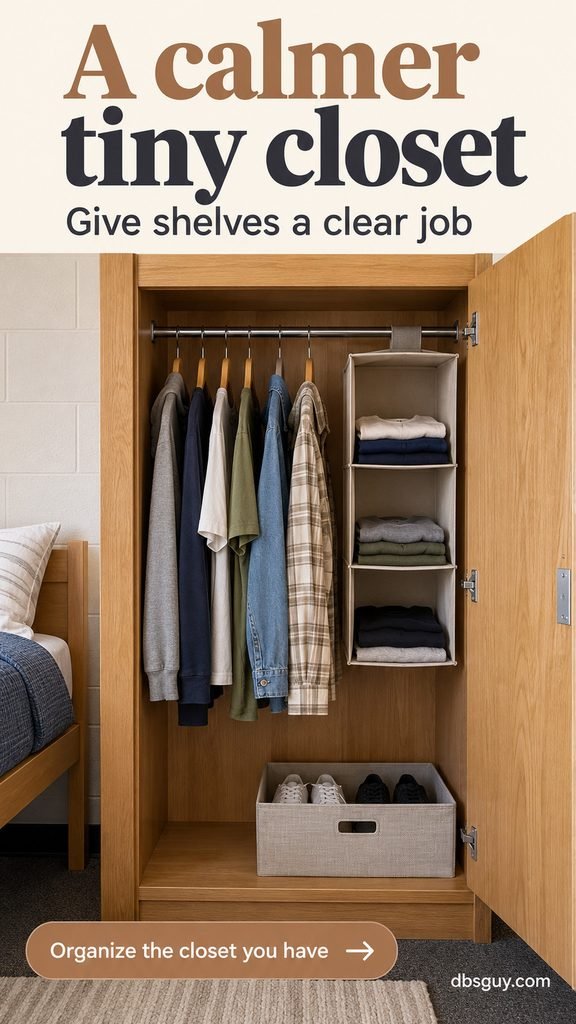
14. Assign Each Closet Cubby a Category
A hanging organizer can turn part of a closet rod into shelves for folded clothing. Use it for categories that work better in a stack—such as T-shirts or workout clothes—while leaving enough rod space for items you hang.
Check the closet height, door clearance, rod suitability, and organizer load limit. The short organizer shown leaves a separate place for footwear below. Do not pack every cubby until it bows or hides what is inside. If hanging clothes already use the full rod, a small organizer inside a drawer may serve you better than adding more suspended storage.
15. Use Dividers Where Small Things Get Lost
Drawer dividers are useful when socks, accessories, and folded clothing mix together each time you look for something. Measure the inside width, depth, and usable height before choosing adjustable pieces or small fabric compartments.
Start with the drawer you open most often. Give its contents broad categories and leave enough space to see and remove them. The example uses four compartments, but you may need only two. Test that the drawer closes without catching on the dividers. This is a good place to reuse small clean boxes you already own if they fit.

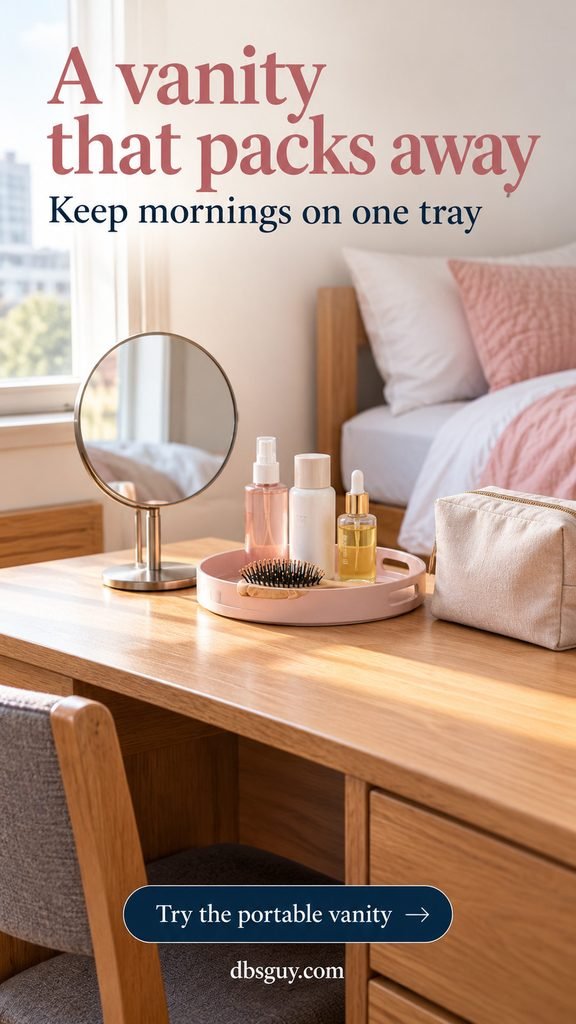
16. Build a Vanity That Can Move Off the Desk
A small freestanding mirror and one handled tray can make a desk serve as a morning getting-ready spot. Keep daily products together; leave backups in a toiletry bag or drawer instead of lining up every bottle you own.
Choose a tray you can lift without rearranging its contents and decide where it goes when you study. Keep it separate from the laptop and papers, especially when using liquids. If you use a shared bathroom, a portable caddy may make more sense than keeping products on the desk. The goal is a routine that packs away in one move.
17. Turn One Existing Shelf Into a Snack Station
Use one shelf for the things you reach for between classes: a few snacks, a mug, and a small dish towel. Contain open dry foods in suitable sealed containers and keep wrapped snacks together so they do not spread across the desk.
The example uses a supplied bookcase rather than an extra cabinet. Measure your actual packages before buying baskets, and leave room to remove them without unloading the shelf. Follow food labels for storage and keep this area clean. You do not need another appliance to make the shelf useful; check campus rules before bringing one.
Also read: 23 Easy Microwave Recipes for Dorm Rooms: No Kitchen Needed.

18. Route Charging Cables Behind the Work Area
A dedicated charging corner keeps a phone cable from wandering across your notebook. Put the device on a stable surface and route its cable toward the back of the desk. Loose reusable ties can organize excess cable without pulling on connectors.
Use only permitted, appropriately rated electrical equipment and follow its instructions. Keep power strips accessible and ventilated, avoid chaining them together, and keep cables away from bedding, rugs, and walking paths. Do not force a cord into a tight bend or pinch it in a drawer. Tidiness should make the connection easier to inspect, not conceal it inside a crowded box.

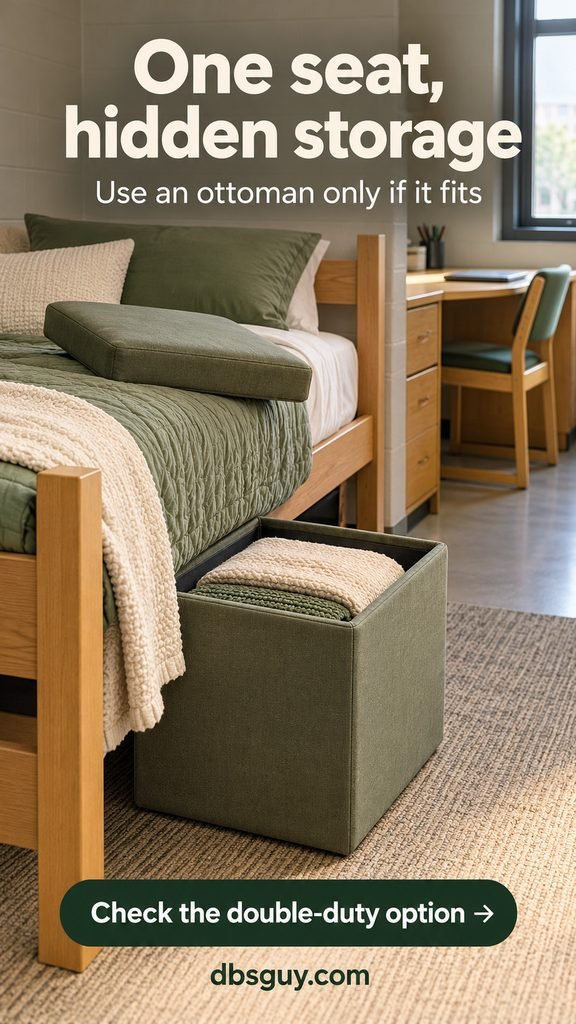
19. Choose a Storage Ottoman Only When You Need a Seat
An ottoman can store a spare blanket and provide a place to sit, but it earns its footprint only if you need both. Choose a product designed for seating, follow its weight limit, and check any housing requirements for added upholstered furniture.
Measure the closed size and the clearance needed to open the lid. In this concept, the lid lifts off; that means it also needs somewhere to rest while you reach inside. Keep the piece outside the walking route. If you only need blanket storage, a bin that fits the furniture you already have is the smaller commitment.
20. Style a Mini Library With Useful Bookends
Books you read can bring color and personality to an existing shelf. Group a manageable selection between stable bookends, then leave enough room to take one out without knocking over a display.
Keep frequently used course books nearby and store heavy volumes low. The blue bookends and warm-toned spines shown create a quiet, collected look without adding lots of ornaments. You do not need books bought for their covers; organize the ones you use in a way that makes sense to you. Avoid putting a heavy stack on a fragile desktop riser.

21. Create a Tiny Arrival Tray
Give keys, your student ID, and earbuds one landing spot near where you naturally unpack. A shallow tray on an existing dresser works without mounting hooks or adding furniture near the door.
Keep the tray small enough that it cannot turn into a second junk drawer. Put only daily carry items there, and store valuables according to your own security needs. Check that the tray sits fully on the surface and does not interfere with drawers. If your dresser is far from the entrance, the corner of your desk may be a better location than the one shown.

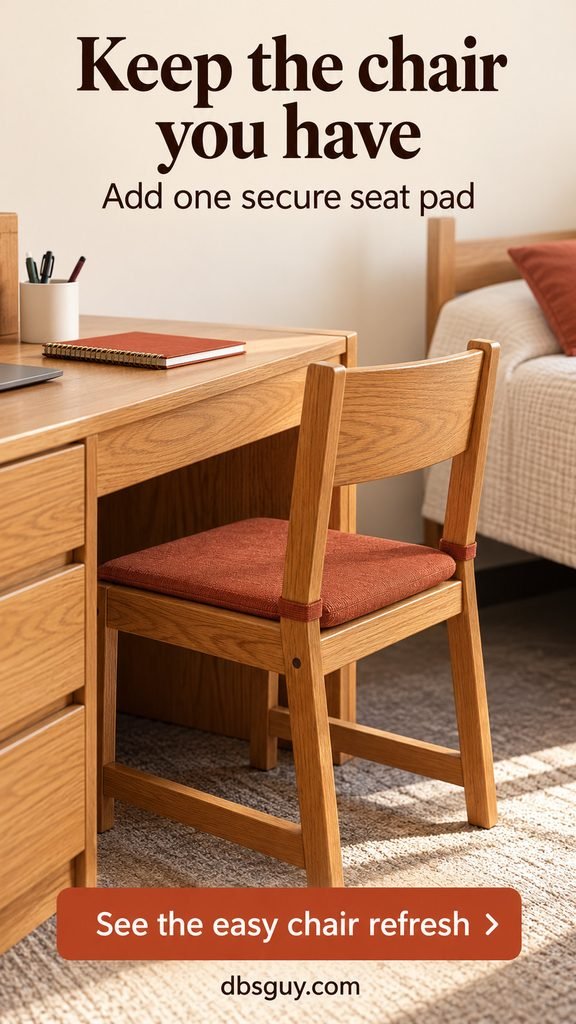
22. Refresh the Supplied Chair With One Seat Pad
A thin seat pad can introduce texture and repeat a color without replacing the school’s chair. Choose one that fits the seat and stays secure; the rust pad shown connects to a notebook on the desk.
Sit at the desk before deciding whether to keep it. Added height changes how your feet and arms meet the furniture, so a thicker cushion is not automatically better. Follow the attachment instructions and keep ties short and contained. Avoid anything that slips, blocks chair movement, or makes the sitting position awkward. If it does not fit comfortably, use the color elsewhere.
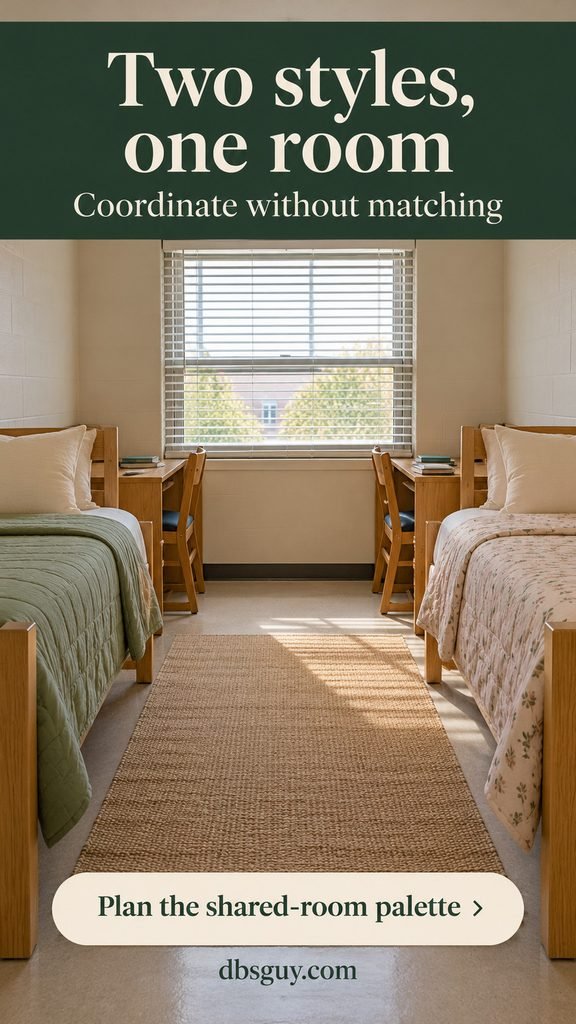
23. Coordinate With Your Roommate Without Matching Everything
A shared palette can connect two sides of a room while leaving each person room for their own taste. Here, cream links a sage bed with a pale floral one; the quilts do not have to be identical.
Agree on shared purchases before ordering a rug or extra storage, and decide who will own each item at move-out. Keep personal displays on each person’s side. Talk about lighting, laundry, and surfaces you both use as well as colors. A coordinated room works better when neither roommate has to store the other person’s decorative pillows.
Also read: First Week of College: The Freshman Survival Guide (Orientation to First Friday).
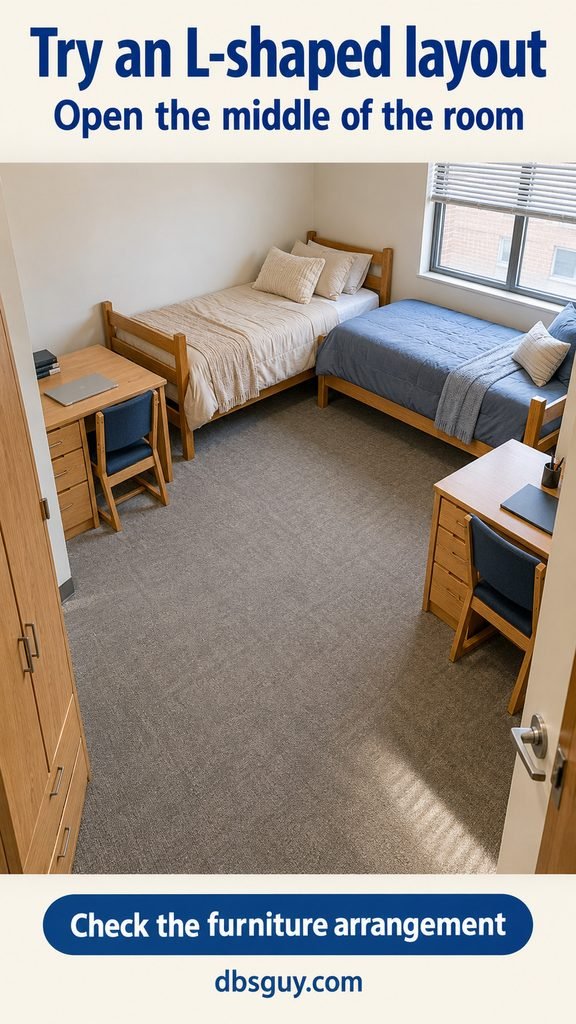
24. Consider an L-Shaped Layout When Moving Furniture Is Allowed
In some square rooms, placing two normal-height beds along adjacent walls can leave a more usable middle. It is an option to compare with parallel beds, not a layout that fits every dorm. Keep both desks and all required furniture in the plan.
Get housing approval where required and agree with your roommate before moving anything. Sketch the actual furniture footprints first, then check bed access, drawer openings, closet doors, outlets, and the exit route. Leave windows and room equipment accessible. Do not change bed height or remove supplied furniture to force the arrangement. If the doors or beds become awkward to use, keep the original layout.
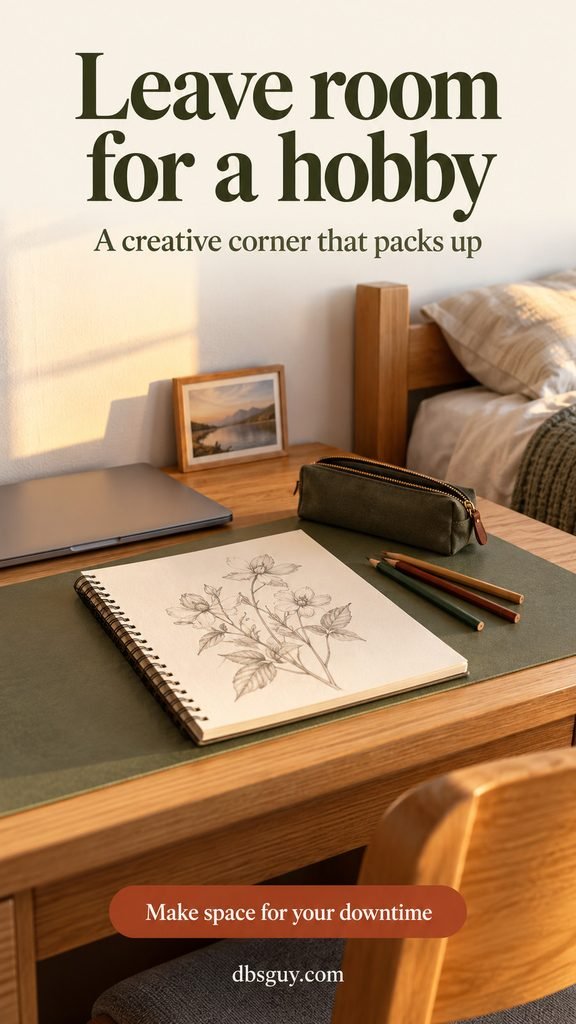
25. Leave Space for a Hobby You Can Pack Away
A room feels personal when it supports something you enjoy doing. Keep a sketchbook and pencil pouch together, or give another quiet, compact hobby a single container that fits your desk. The example makes room for drawing without introducing another table.
Set out only what the current activity needs and choose a storage place before expanding the supplies. Keep liquids away from electronics and check rules before bringing materials with special ventilation or storage needs. A hobby spot should be easy to clear for coursework. It can be as simple as a book and a place to sit.
What to Do First Without Buying a Whole Room
Start with the part of the day that currently feels inconvenient. If you move laundry off the chair every evening, choose the hamper spot first. If you cannot open a textbook, clear the desk before adding art.
- Use what you brought. Make the bed, group belongings by use, and choose a color already present in your bedding or supplies.
- Measure the missing storage. Buy a container for a specific set of belongings and a specific space.
- Add one personal detail. Try a print, photos, or a small hobby setup after the essentials fit.
Take an ordinary photo of the room after a few days of use. Notice where things keep collecting. That spot tells you more about your next useful change than a shopping checklist does.
Aesthetic Dorm Room FAQs
How can I decorate a dorm when I cannot hang anything?
Let bedding, a desk mat, storage containers, and permitted freestanding displays carry the color. A supported tabletop print or photo board can add personality without a wall installation. Check that each display is stable and leaves the furniture usable.
Does an aesthetic dorm room need a headboard or curtains?
No. A quilt, a few coordinated textiles, and an organized desk can give the room a clear direction. Added headboards and window treatments may need permission or may be prohibited. Use the supplied furnishings and blinds unless your housing rules allow a change.
What should I buy before move-in?
Confirm the school’s mattress dimensions and packing list first, then bring the bedding and everyday essentials you need. Check with your roommate about shared items. Wait to buy fitted storage or a rug until you have reliable measurements, ideally from the actual room.
How do I make a small dorm look less cluttered?
Give the most visible surfaces fewer jobs: the bed holds bedding, the center of the desk stays available for work, and laundry goes in one reachable container. Coordinate visible storage if you like, but prioritize containers you can open and return easily.
Can I use peel-and-stick wallpaper or removable hooks?
Only if your residence hall permits that exact type of use. Product claims about removability do not override school policy or guarantee an undamaged surface. Check the housing guide or ask the housing office before applying anything, including to furniture.
For more about making a new room feel familiar, also read: Homesick in College? 17 Ways to Feel Better That Actually Work.