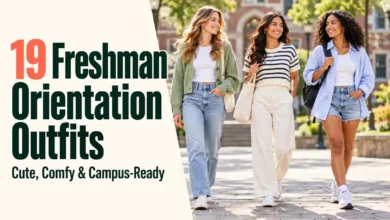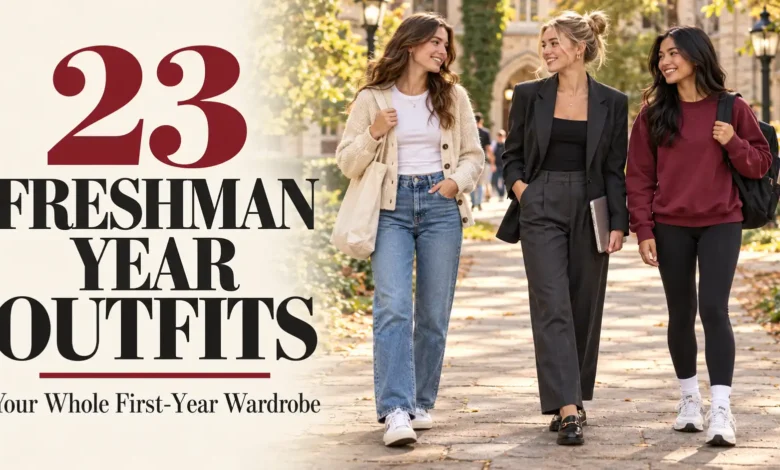
Start with a white tee, jeans you can sit in comfortably, and sneakers you already trust. Add a layer that fits in your backpack. That is a useful first-day outfit—and the beginning of a freshman wardrobe you can keep wearing after orientation.
These 23 freshman year outfits cover everyday classes, changing weather, campus events, and the occasional dressier invitation. Pieces repeat on purpose. Use the looks as combinations to build from your closet, then fill the gaps that matter for your campus.

The images are AI-generated styling concepts, not photographs of outfits we purchased or tested. Use the written details to adapt each look to your fit, budget, and weather.
Start With the Clothes You Will Actually Wear
Build around two or three base colors you already like wearing. Here, blue denim, navy, cream, black, and tan connect most of the outfits; olive, sage, and burgundy add variety. You can replace that palette with your own as long as the tops and bottoms work together.
For a first packing pass, pull out a week of everyday tops, two or three everyday bottoms, a couple of washable layers, and one outfit for a presentation or dressier event. Add shoes, outerwear, sleepwear, workout clothes, socks, and underwear for your laundry schedule. This is an editorial starting point, not a required shopping list.
Choose a look for your day: everyday classes in 1–5 and 7–9; rain and winter in 6 and 10; spring and warm days in 11–12; social plans in 13 and 15–18; exercise in 14; presentations and work in 19–21; weekends and finals in 22–23.
1. A White Tee and Straight Jeans for the First Day
The outfit: White crewneck tee + blue straight-leg jeans + white sneakers + navy backpack.
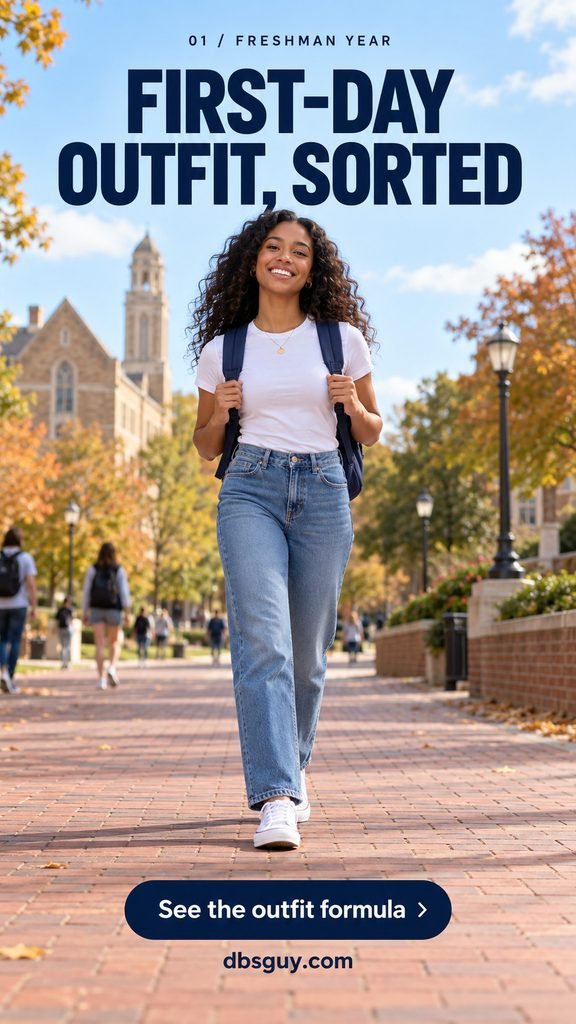
Choose the version of this outfit that already feels familiar. Jeans should let you sit through class and climb stairs without constant adjusting; the tee should stay comfortable under backpack straps. A small front tuck gives the waistband definition, but leaving it loose works just as well.
Before move-in, walk in the complete outfit with your bag packed. If the jeans drag or the shoes rub, solve that before the morning you are also trying to find your classroom.
2. A Sweatshirt and Leggings for an Early Class
The outfit: Gray crewneck sweatshirt + black leggings + white sneakers + backpack.

A hip-length sweatshirt and opaque leggings make an easy choice when you want softness without loose pant hems. Pick a sweatshirt that fits under your weather jacket, and check the leggings in daylight while sitting and bending before relying on them for a full day.
If close-fitting bottoms are not your thing, substitute straight knit pants. Keep the sweatshirt, shoes, and backpack the same; the useful part is having a complete outfit ready when you are short on time.
3. An Open Button-Down and Shorts for Warm Orientation Days
The outfit: Blue striped button-down + white tank + tan pleated shorts + sneakers + canvas tote.

The open shirt gives this warm-weather outfit a removable layer when you step into an air-conditioned room. Choose shorts that stay comfortable when you sit on a bench or take a campus tour, and make sure the tank straps sit comfortably beneath your bag.
For more coverage, swap the shorts for lightweight full-length pants. Use a backpack instead of the tote if orientation means carrying more than a notebook and a water bottle. Our first-week college guide can help you plan the day around the outfit.
4. A Cardigan and Cargo Pants for Long Lecture Days
The outfit: Cream cardigan + black tee + olive cargo pants + white sneakers.
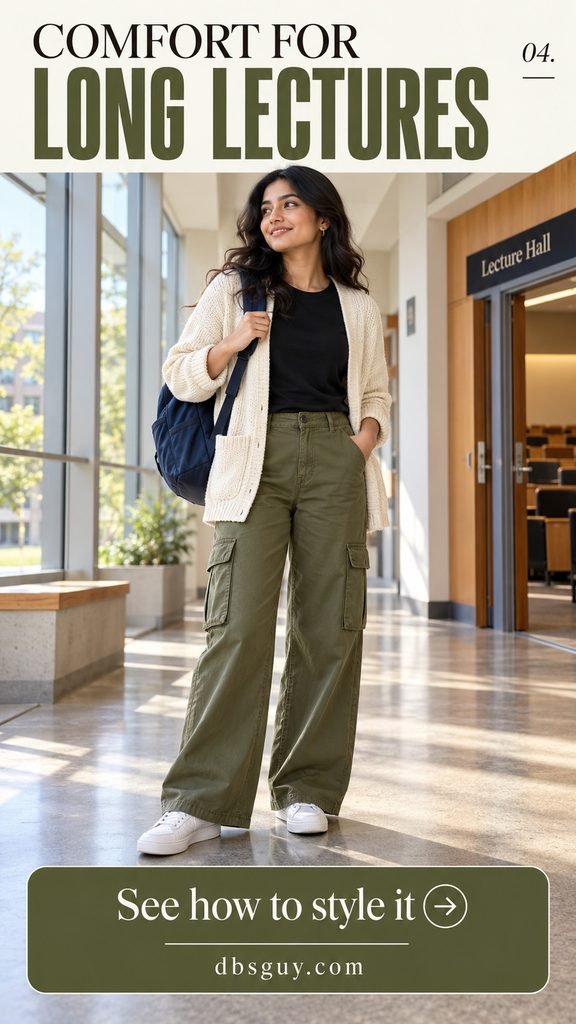
Cargo pants give this look a relaxed shape and usable pockets, while a soft cardigan is easy to remove without pulling anything over your head. Look for a waistband that stays comfortable seated and pockets that lie fairly flat rather than bunching at your hips.
Try the cardigan over your backpack straps before leaving; a bulky knit can feel awkward under a full bag. Keep heavy items in the backpack so the cargo pockets do not pull the pants out of shape.
5. A Striped Shirt and Soft Trousers for the Library
The outfit: Navy-and-cream striped shirt + black ponte trousers + flat loafers + tote.
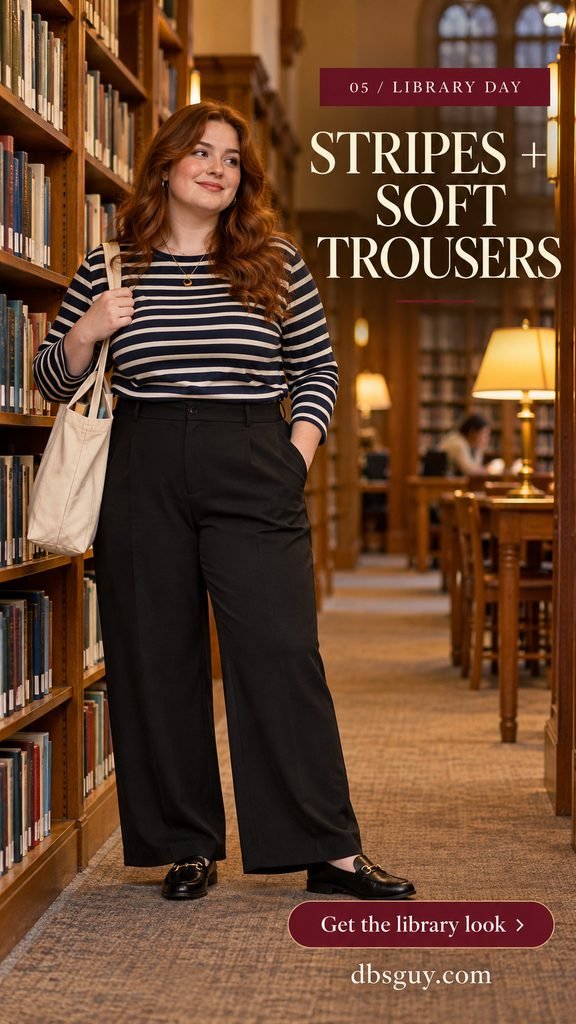
Soft ponte trousers give you the appearance of pants with a stretchier feel. A striped long-sleeve shirt adds interest without another accessory, and loafers make the combination useful for a study session followed by a casual meeting.
Check the trouser hem with the actual shoes: it should clear the floor when you walk. If your loafers are new, use familiar sneakers for a long library day and save the shoe swap until you know they feel comfortable.
6. A Raincoat and Ankle-Length Jeans for a Wet Commute
The outfit: Olive hooded raincoat + gray tee + black ankle-length jeans + waterproof ankle boots.
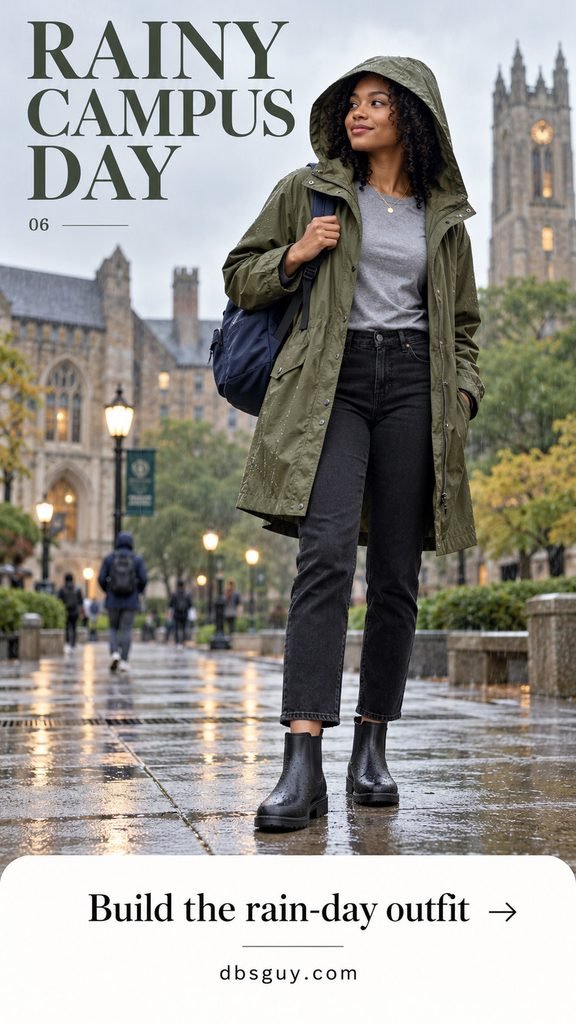
Build this outfit from the ground up. Ankle-length hems keep the jeans from sweeping wet pavement, and a hood leaves your hands free. Choose boots and a coat whose product information actually specifies the weather protection you need; a similar-looking fashion piece may not offer it.
Check that the coat can close over your usual layers and that your backpack fits the plan. On days with a long outdoor walk, protect books and electronics inside the bag rather than assuming the backpack is waterproof.
7. A Quarter-Zip and Chinos for a Chilly Classroom
The outfit: Navy quarter-zip + white tee + tan chinos + white sneakers.
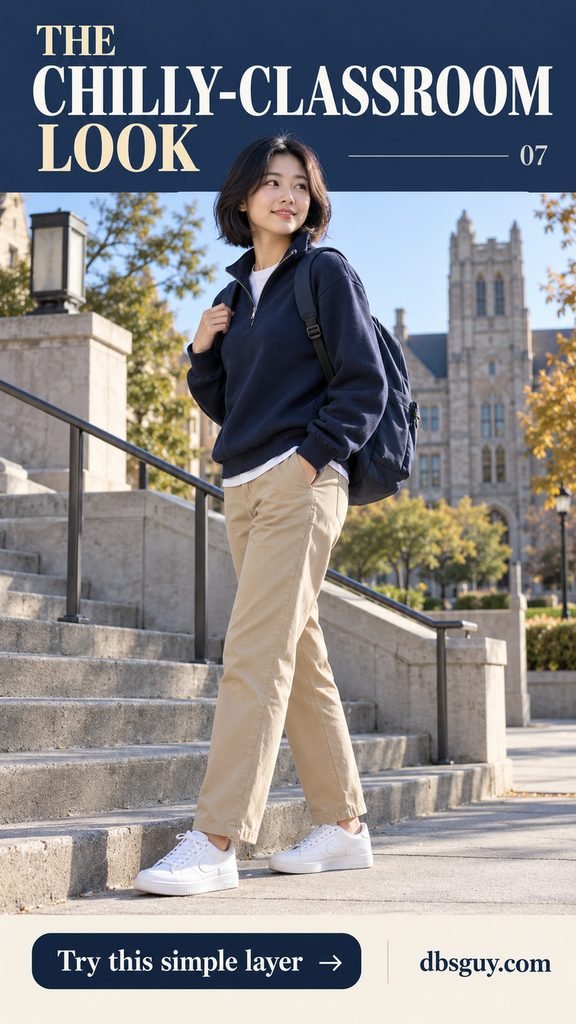
The quarter-zip gives you a small temperature adjustment at the neckline without changing the outfit. Tan chinos also offer a useful break from denim while keeping the same casual shoes and bag.
Try a light or medium-weight pullover so you can carry it easily when the afternoon warms up. For a warmer campus, make the outer layer a thin zip jacket; for a colder one, this becomes the middle layer under your coat.
8. An Open Flannel and Black Jeans for Fall
The outfit: Burgundy plaid flannel + white tee + black straight-leg jeans + flat ankle boots.
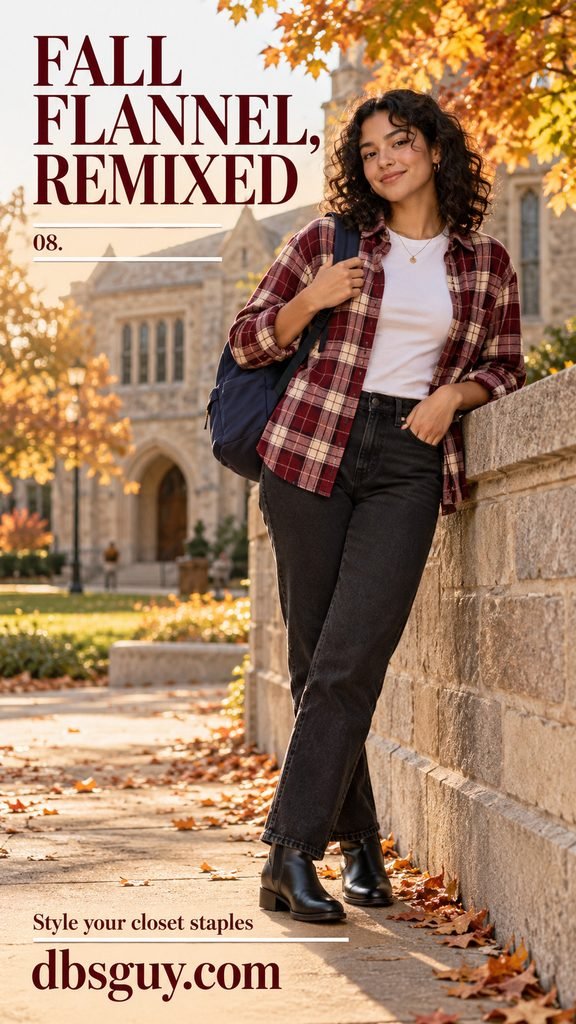
Use the flannel as a light overshirt rather than buying another jacket for every mild fall day. The white tee keeps the plaid readable, and black jeans connect it to the boots without much styling effort.
An overshirt should allow you to reach forward and lift your arms over the tee. If the campus is still warm at midday, carry it in your bag; if the forecast is cold, add proper outerwear instead of expecting a thin flannel to do a winter coat’s job.
9. A Cable-Knit Sweater and Wide Jeans for Cool Days
The outfit: Cream cable-knit sweater + blue wide-leg jeans + white sneakers.

Texture does the work here: the cable knit gives a plain denim outfit more detail without extra layers. A small front tuck can show the waistband if you like it, or choose a sweater length that falls comfortably over the jeans.
The important fit check is the hem. Wide jeans should clear the ground with your everyday sneakers, including when the pavement is damp. If a tuck makes the waistband bulky, leave the sweater out rather than fighting the fabric.
10. A Puffer and Warm Accessories for Winter Walks
The outfit: Charcoal puffer + oatmeal mockneck + black jeans + weather boots + hat and scarf.
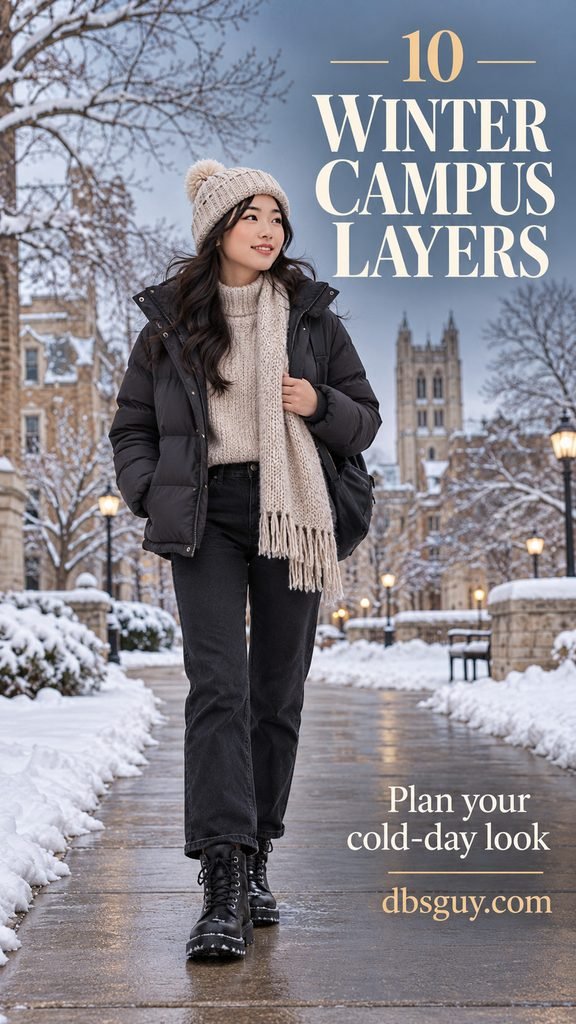
This is the cold-weather version of your everyday jeans outfit. The puffer needs enough room for the sweater, and the boots should work with the socks you plan to wear. A hat and scarf add coverage without needing a completely different outfit underneath.
Adapt it to the actual forecast. For severe cold, snow, or ice, use outerwear, base layers, and traction appropriate to your location; the image is styling inspiration, not a temperature rating. A mild-winter campus may need only a lighter jacket.
11. A Denim Jacket and Midi Skirt for Spring
The outfit: Cream denim jacket + sage tee + blue midi skirt + white sneakers.
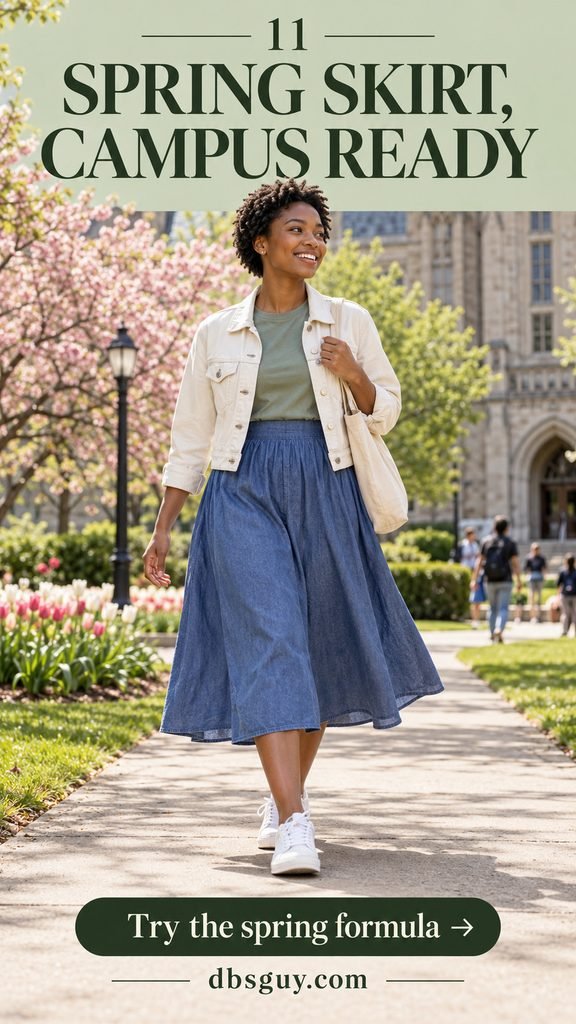
A midi skirt changes the silhouette after months of pants, while the denim jacket keeps the outfit casual. A skirt with enough room to stride works better for campus than one you have to pull down or lift at every staircase.
Try it seated and with your backpack before packing it. If skirts do not fit your routine, wear the same sage tee and jacket with blue jeans or lightweight trousers. The spring palette still works.
12. A Cotton Midi Dress for a Hot Campus Day
The outfit: Navy cotton midi dress + white sneakers + canvas tote.

A casual dress is useful when you want one main garment to choose. Look for a skirt you can walk in freely, a neckline that feels secure under a bag strap, and fabric that is comfortable in your weather.
Check whether the dress is see-through in daylight and follow its care label before the first wash. If your route ends in a cold classroom, pack the cream cardigan from look four. Prefer separates? A navy tee and easy shorts give you a similar low-effort combination.
13. A School-Color Sweatshirt for Game Day
The outfit: Burgundy sweatshirt + denim shorts + sneakers + a venue-appropriate bag.
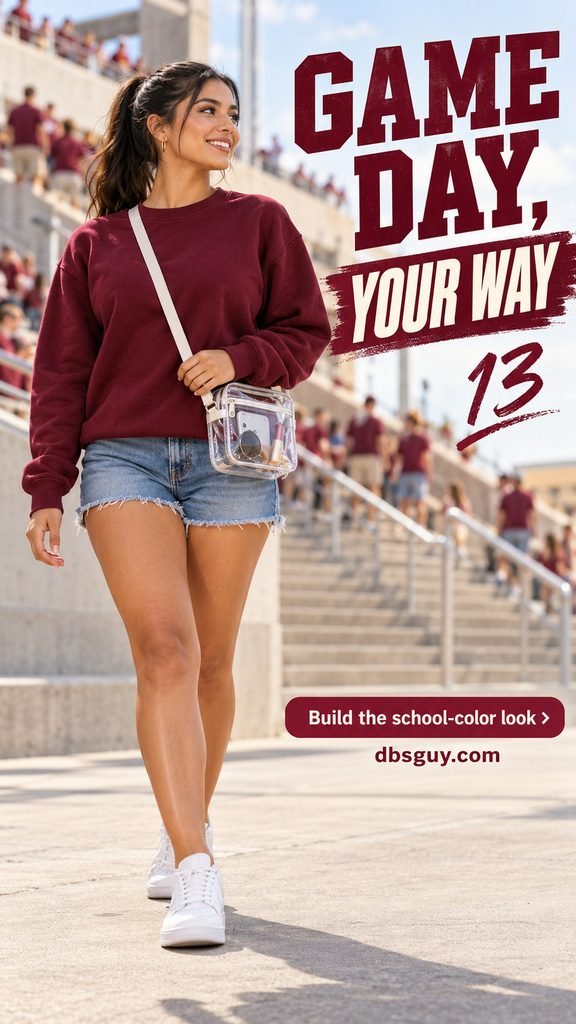
Start with one of your school’s colors rather than assuming you need a new licensed outfit. Denim shorts work for a warm game; jeans are the straightforward swap when temperatures drop. Choose shoes you are comfortable standing and walking in.
Check the venue’s current bag rules before leaving. The small clear bag in the concept image illustrates one possibility, not a universal stadium requirement. Add the right weather layer if the game continues into the evening.
14. A Training Tee and Joggers for a Gym-to-Class Schedule
The outfit: Black training tee + navy joggers + activity-appropriate trainers + backpack.
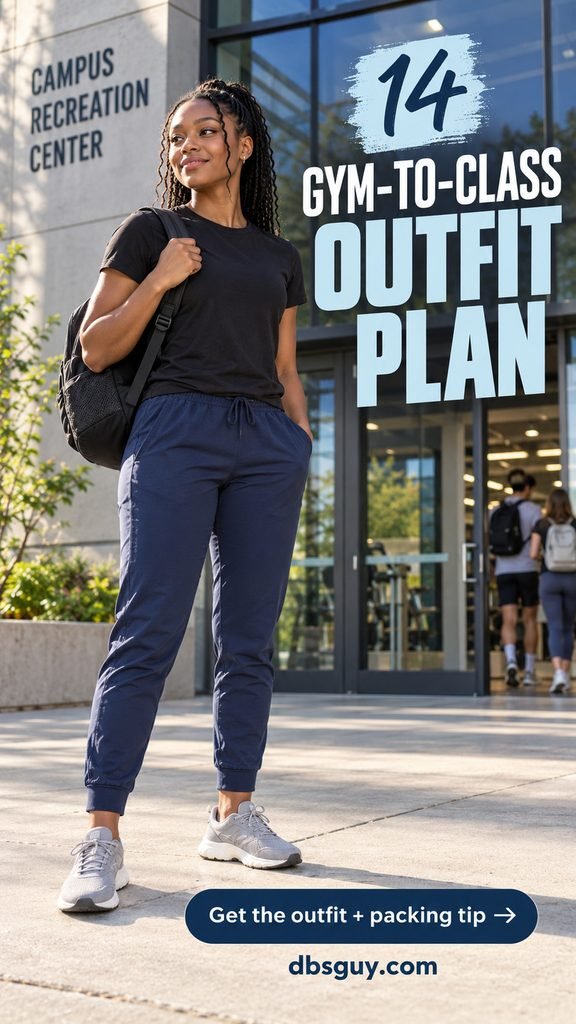
If the gym comes before class, plan the change of clothes as carefully as the outfit. A fresh tee and spare socks take little space in your bag; after a sweaty session, change as needed rather than expecting one set to feel good all day.
The joggers should let you move without fabric catching under your shoes. Use footwear suited to the activity you are actually doing, and choose a regular tee if this is simply an athleisure day with no workout.
15. A Graphic Tee and Cargo Pants for the Club Fair
The outfit: Forest-green graphic tee + tan cargo pants + white sneakers + zippered crossbody.
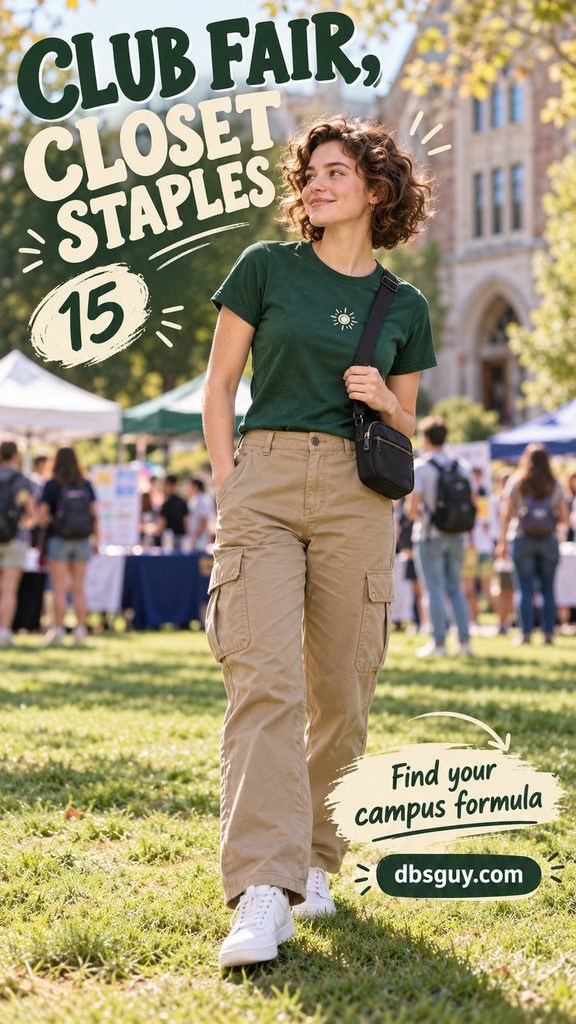
A favorite graphic tee gives this outfit some personality; it does not have to advertise a club you have not joined yet. Tan cargos make room for a phone and a few small essentials, while a zippered crossbody keeps your hands available for flyers and sign-up forms.
Choose a graphic you actually like rather than buying a whole new persona for campus. Then use our guide to joining clubs in college to turn the event into a few realistic next steps.
16. A Buttoned Cardigan and Jeans for Coffee Plans
The outfit: Sage cardigan worn buttoned + blue straight-leg jeans + tan loafers + small shoulder bag.

Wearing a cardigan as the main top gives an everyday pair of jeans a different look. Try it at home while sitting and reaching: if the buttons pull or the neckline shifts, add a tank underneath or wear the cardigan open.
Tan loafers and a small bag make sense for a lighter day without books to carry. If coffee follows a full schedule of classes, keep your backpack and sneakers. The buttoned knit is enough to change the outfit.
17. A Square-Neck Top and Dark Jeans for a Casual Night Out
The outfit: Black square-neck top + dark wide-leg jeans + flat ankle boots + burgundy bag.

A neckline change and darker denim can make the same small wardrobe feel ready for evening. Choose a top you can sit, move, and raise your arms in without repeatedly adjusting it. The burgundy bag adds color while the rest of the outfit stays simple.
Flat boots are one option when your plans include walking. Keep a coat or overshirt with you if the return trip will be cool; the nighttime outfit needs to work outside the restaurant or common room, too.
18. A Floral Dress and Cardigan for a Dressier Dinner
The outfit: Blue floral midi dress + cream cardigan + tan flat shoes + shoulder bag.
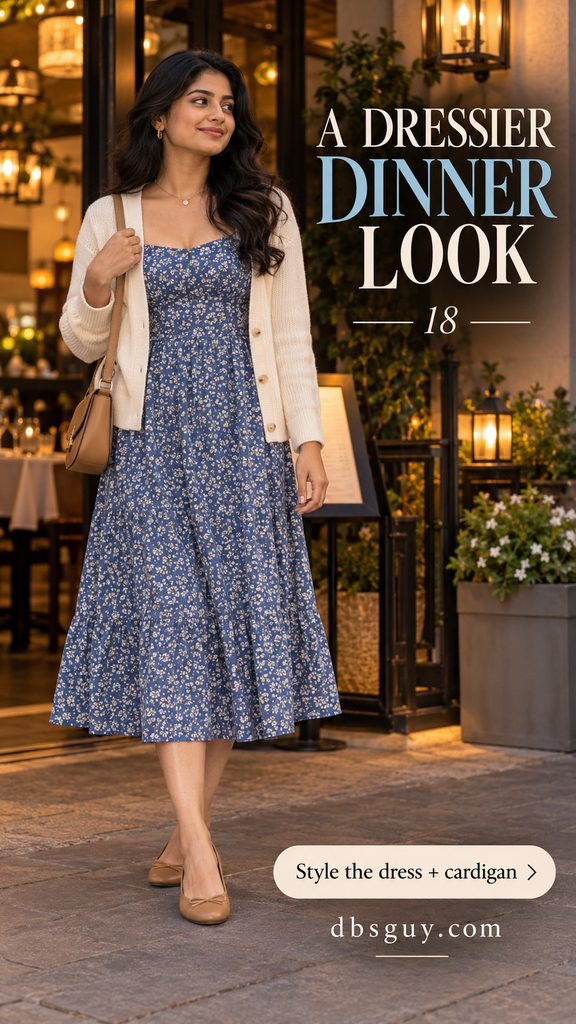
This is a useful option for a birthday dinner, family visit, or event described as dressy casual. A small floral print gives the outfit a different feel from the plain navy day dress, while the familiar cardigan means you already have the layer sorted.
Check the invitation rather than treating any dress as automatically formal enough. For an event that calls for a suit or another specific dress code, follow that guidance. If you rarely wear dresses, use your presentation trousers with a dressier top instead.
19. A Button-Down and Tailored Pants for a Presentation
The outfit: White button-down + black tailored trousers + black loafers + structured tote.

Try the outfit while practicing your actual presentation. The shirt should stay comfortable when you gesture, the waistband should work seated and standing, and the shoes should not distract you while you speak.
A simple tuck is enough if it feels comfortable; a neat untucked blouse is another option when its length works with the trousers. Follow your instructor’s directions if the assignment includes a dress expectation. You may not need a blazer at all.
20. A Blazer and Trousers for a Career Event
The outfit: Navy blazer + pale blue shirt + charcoal trousers + black loafers + structured tote.

A career fair, employer reception, and formal interview can have different expectations. Check the event guidance and your career center’s advice first. This coordinated separates outfit is a starting point for events where that level of dress fits; it is not a substitute for a requested suit.
Try the blazer over the shirt before buying either piece. Shoulders need room to move, and sleeves should let you handle a résumé folder comfortably. Ask whether your campus has a career closet or borrowing program before spending on an outfit you may use only occasionally.
21. A Knit Polo and Chinos for a Campus Job
The outfit: Burgundy knit polo + tan chinos + black loafers + backpack.

This combination can suit a casual office, library desk, or other campus role that allows it. The collar adds definition, while the chinos and loafers are pieces you can also use for classes and meetings.
Ask your supervisor about the dress code before your first shift, including footwear and any uniform requirements. Dining, recreation, lab, and other jobs may need something entirely different. If the polo will be a regular work top, check that its washing instructions fit your dorm laundry routine.
22. A Zip Hoodie and Knit Skirt for a Weekend Reset
The outfit: Gray zip hoodie + white tee + black knit midi skirt + white sneakers + tote.

A zip hoodie makes the skirt feel as casual as your usual jeans. Look for a knit skirt that lets you take a full step and sit comfortably; an elastic waist can be useful for a relaxed day, but check that it stays in place.
This is an easy combination for brunch, errands, or a short off-campus trip. If the skirt limits your stride or you simply prefer pants, use black knit trousers and keep the hoodie open over the tee.
23. A Tee and Knit Pants for Finals Week
The outfit: Navy tee + charcoal wide-leg knit pants + cream cardigan + white sneakers.
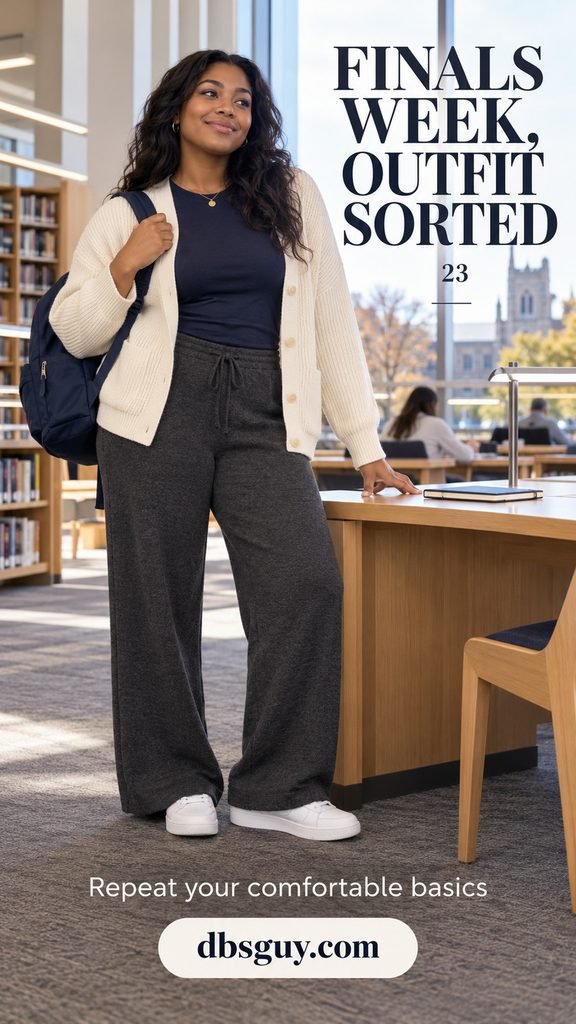
Keep this one focused on a comfortable seated fit. Soft pants should still have hems that clear the floor, and a removable cardigan helps you adjust between a study room and the walk back to your dorm.
Lay out a fresh version the night before an exam, including socks and any weather layer. You do not need a special finals outfit purchase. Repeating a combination you already trust saves your attention for the things you actually need to bring and the time you need to leave.
Turn the Looks Into a Wardrobe That Fits Your Dorm
Pull five outfits you would actually wear next week, then lay out the pieces they share. White sneakers, one good pair of jeans, and a cardigan appear repeatedly here because they can cover several situations. Keep your own most-worn equivalents even if their colors differ from the images.
The University of Cincinnati’s college packing guide includes everyday clothes, dress clothes, and seasonal outerwear. Use your own campus location and calendar to decide when those categories need space in your room.
- Plan around laundry access. Count how many clean tops, socks, underwear, and workout changes you need between realistic laundry days; add a little breathing room rather than packing only ideal-week quantities.
- Bring the next season before you need it. If you will not go home until winter break, the coat you need in November cannot stay in your bedroom at home. If swapping later is easy, store fewer bulky pieces at college.
- Keep special requirements separate. Sleepwear, shower footwear, exercise clothing, and any lab, studio, clinical, job, or organization dress requirements need their own check.
- Buy a missing function first. Walking shoes, a usable rain layer, or an outfit for a confirmed event can matter more than another statement top. Check care labels so new pieces suit the laundry facilities you will use.
- Take outfit photos before packing. Save a few complete combinations on your phone, including shoes and layers, so the clothes still make sense when they are in a different closet.
Freshman Wardrobe Questions
How many clothes should a freshman bring to college?
Start with enough clean everyday clothing for your real laundry interval, plus the weather layers and special-purpose items you will use. There is no universal garment count: a student with a uniformed job, frequent workouts, or no chance to swap seasonal clothes will need a different mix. Try fitting your choices into the actual drawers and hanging space before adding more.
Do I need 23 separate outfits to use this list?
No. Pick the situations that match your first semester and repeat the pieces between them. The white tee, jeans, sneakers, cardigan, trousers, and loafers can each do several jobs. The floral dress, blazer, and extra skirt are optional ideas, not an admission checklist.
What if I want more coverage or do not wear jeans?
Swap shorts for lightweight trousers, use a longer top where you prefer it, and layer a tee or tank under lower necklines. Straight chinos, ponte pants, and loose knit trousers can replace jeans in most casual looks. Keep the useful function of the outfit—movement, layering, and suitable shoes—while choosing the coverage you want.
Will these looks work in both warm and cold climates?
Use the season that fits your campus. Warm-weather students can emphasize the open shirt, light trousers, and casual dress; cold-weather students can repeat the same indoor outfits beneath appropriate outerwear. Check the forecast rather than assigning a fixed temperature range to a styling image.
Choose your first five combinations before adding anything to a shopping cart. Once those work with your bag, shoes, laundry routine, and campus weather, the rest of the year is easier to build a few useful pieces at a time.