After Years Of Minimalism, “Neo Deco” Is Bringing The Drama Back—25 Ideas That Explain The Obsession

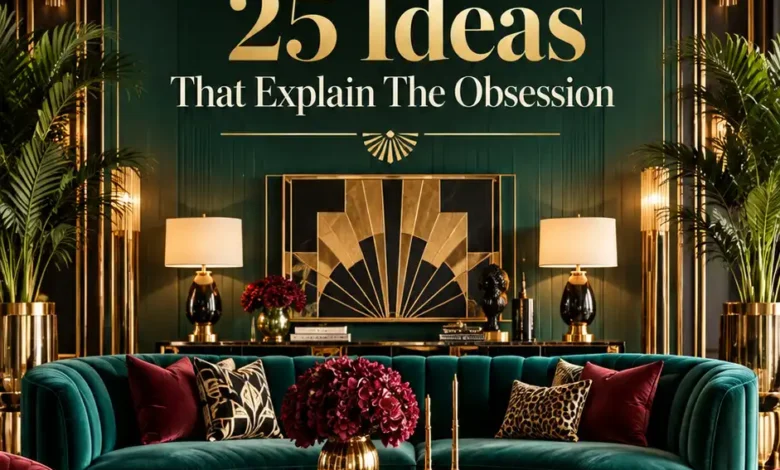
Apparently, the beige room has finally been asked to make space for red marble, brass, velvet, curved sofas, shiny lacquer, and at least one lamp with enough personality to deserve its own entrance music.
For years, a certain version of “good taste” seemed to come with instructions: keep the palette quiet, hide the clutter, choose the sensible sofa, and please do not let the side table become too emotionally expressive.
Now interiors are getting louder again.
Pinterest named Neo Deco one of its major 2026 home trends, describing it as a modern return to Art Deco glamour: crisp geometry, fan arches, chevrons, chrome, brass, leather and more dramatic materials. Its trend data shows searches for antique bar carts up 100%, red marble bathrooms up 80%, pendant lamps up 40%, and both brass aesthetic and leather banquette up 35%. Source: Pinterest Predicts 2026.
But “Neo Deco” is not really about recreating a 1920s hotel lobby in your living room.
Classic Art Deco became internationally famous around the 1925 Paris Exposition, where designers celebrated modern luxury through geometry, exquisite craftsmanship, lacquer, metalwork, rare woods and richly decorative materials. Museums including the V&A and The Metropolitan Museum of Art describe Art Deco as sleek, geometric, luxurious and deeply interested in balancing modernity with ornament. V&A: An Introduction to Art Deco; The Met: Art Deco Paris.
The 2026 version borrows that confidence but edits it. Designers are mixing glossy surfaces with matte ones, jewel tones with quieter neutrals, curved furniture with sharper geometry, and vintage-inspired details with clean contemporary rooms. Architectural Digest describes the current look as more livable and curated than a literal Art Deco revival. Architectural Digest: “Neo Deco” Is the Designer-Approved Trend of 2026.
In other words: the drama is back, but it has learned when to stop talking.
Here are 25 ways Neo Deco is showing up—and why the most convincing rooms do not look like they were decorated by somebody panic-buying gold spray paint.
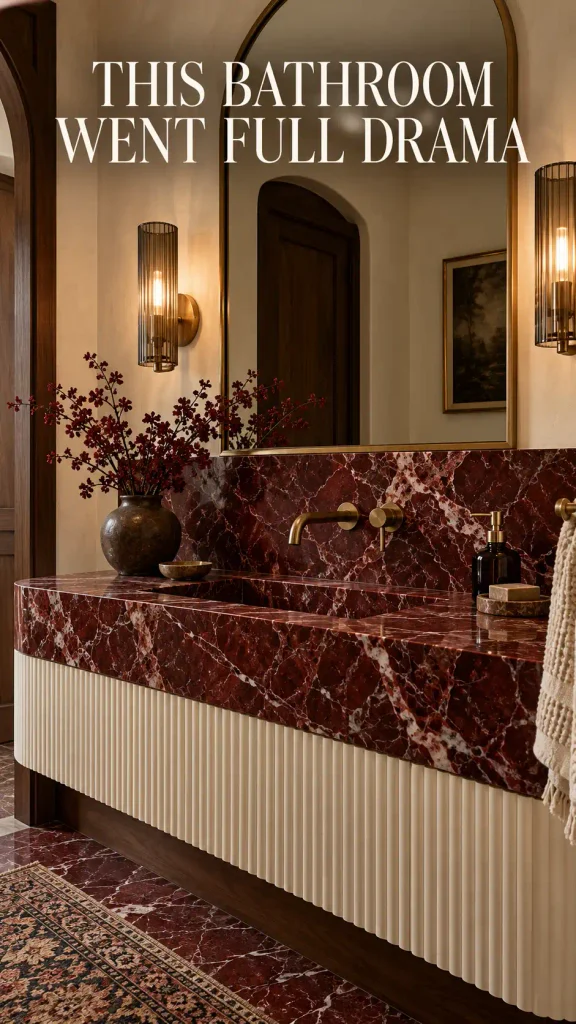
1. Red Marble Bathrooms Are Making “Neutral Spa” Look A Little Nervous
For a long time, the dream bathroom was pale stone, white towels, maybe a wooden stool that looked suspiciously uncomfortable.
Neo Deco has other plans.
Red, burgundy and deeply veined marble bring instant theatre because the material already behaves like artwork. You do not need to cover every surface. A vanity top, backsplash, shower niche, sink surround or single slab behind the basin can be enough to make the room feel dramatically different.
The trick is giving the marble somewhere quiet to land. Pair it with cream walls, dark wood, brushed brass, smoked glass or simple plaster instead of surrounding it with five competing patterns.
If real stone is outside the budget, marble-look porcelain can deliver the same color story with less financial drama.
Why it works: the stone becomes the focal point before you add any decoration.
Easier version: use red marble or marble-look material on one vanity or backsplash only.
Watch out: strong veining plus busy tile plus ornate hardware can turn “glamour” into visual shouting.
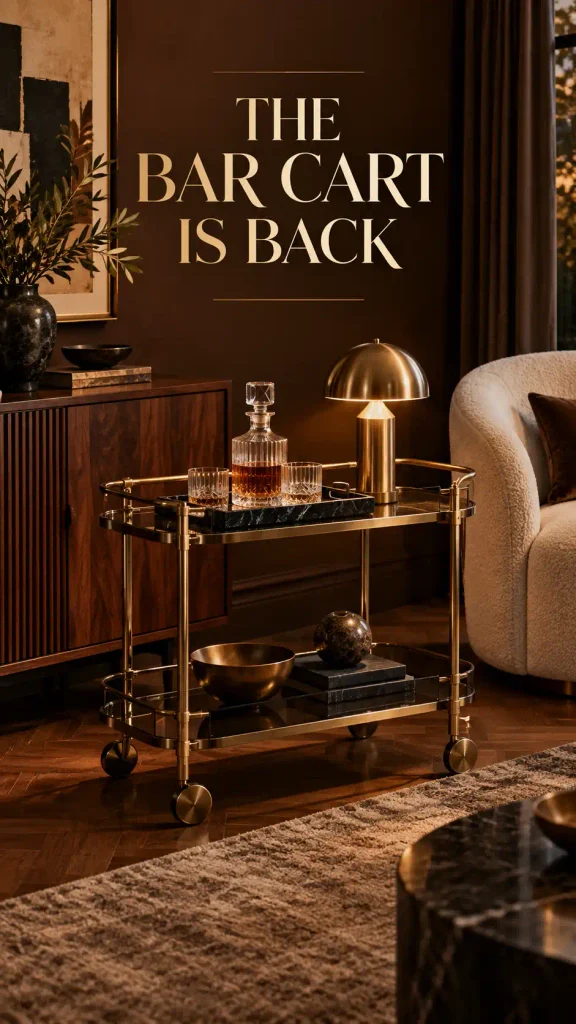
2. The Antique Bar Cart Is Back—And It Is No Longer Hiding In The Corner
Pinterest’s biggest Neo Deco search jump is the antique bar cart, up 100% in its trend data.
That makes sense. Few pieces of furniture manage to be storage, sculpture and an invitation at the same time.
A vintage brass, chrome or dark-wood cart instantly gives a room a little ceremony. But it works best when you resist the urge to turn it into a crowded museum of bottles. A small lamp, tray, two or three beautiful glasses and a decanter—or even coffee and tea things if alcohol is not your thing—can make the cart feel deliberate rather than abandoned after a party.
The 2026 version is less “Great Gatsby costume set” and more “small hospitality zone.”
Why it works: it creates a destination inside the room.
Easier version: use a narrow vintage trolley as a coffee, tea or glassware station.
Watch out: overfilling it destroys the sculptural quality that made it attractive.
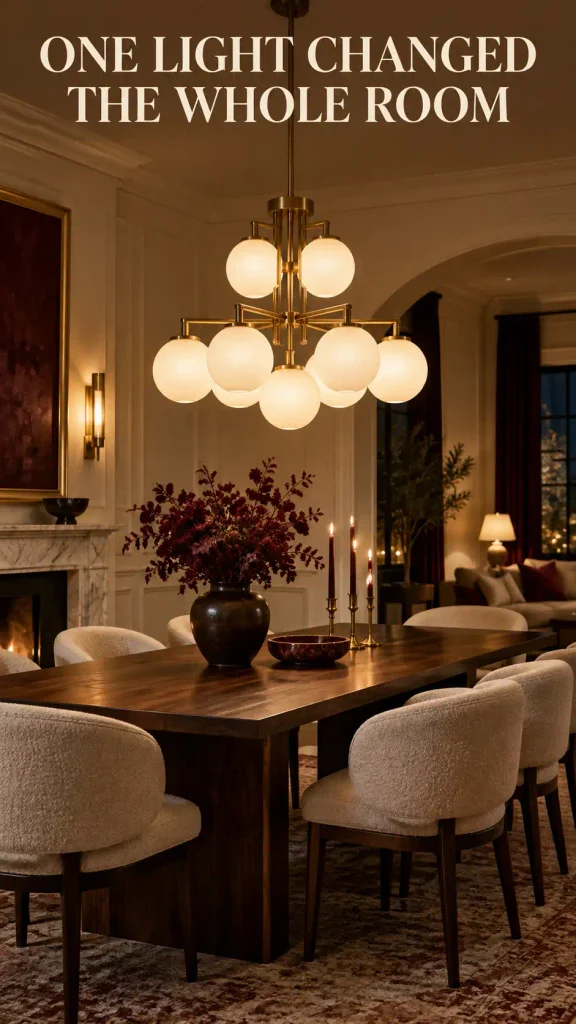
3. Pendant Lights Are Becoming The Room’s Main Character
A small, polite light fixture can illuminate a room perfectly well.
Neo Deco is not especially interested in polite.
Current lighting coverage points to oversized, tiered, geometric and globe-based fixtures as a natural way to bring Art Deco language into a modern room. Brass arms, opal glass, ribbed shades and repeated circles can reference the period without copying an antique chandelier exactly.
The best statement pendant has one job: own the ceiling. That means the furniture underneath can be calmer.
If the dining table, rug, chairs, art and pendant are all trying to be the star, somebody needs to be sent home.
Why it works: lighting adds geometry at eye level and changes the room day and night.
Easier version: swap one central fixture instead of redecorating the whole room.
Watch out: check ceiling height and scale before buying something that turns dinner into a ducking exercise.
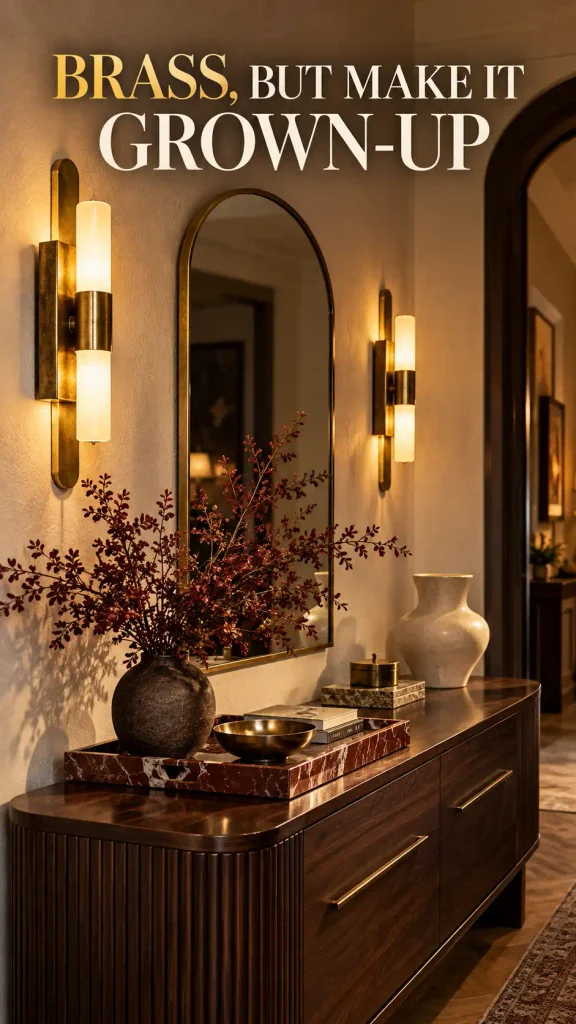
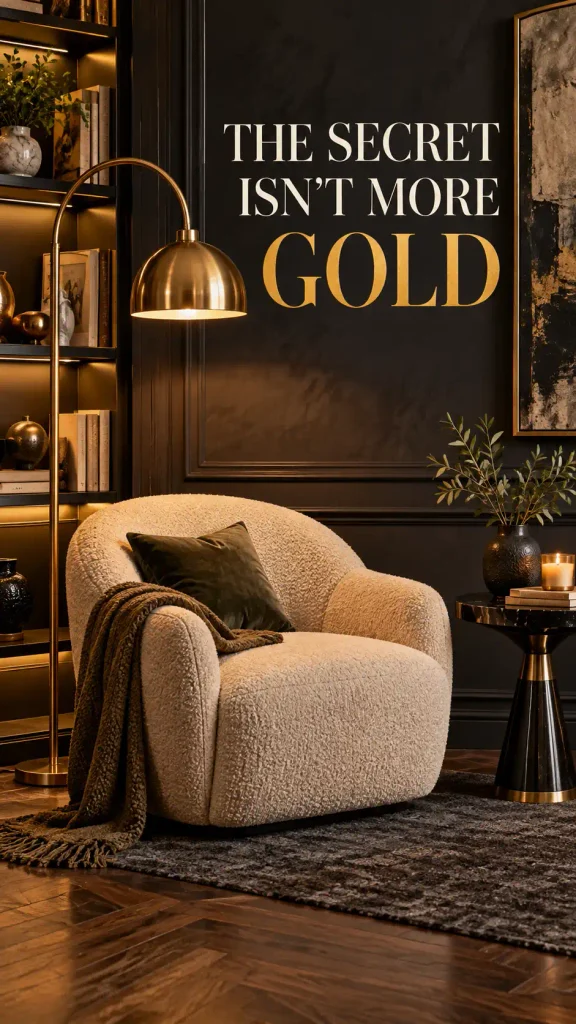
4. Brass Is Warmer, Moodier, And Better When It Does Not Look Brand-New
Brass is one of the easiest Deco references to recognize—and one of the easiest to get wrong.
Very bright yellow-gold everywhere can make a room feel like the fixtures were all sprayed five minutes before you arrived. Neo Deco tends to look richer with aged brass, antique brass, unlacquered brass, bronze or other warmer, less perfect finishes.
Architectural Digest’s description of the trend includes unlacquered brass alongside walnut, velvet and marble: materials that get more interesting when they are not perfectly uniform.
Use metal like punctuation. Handles, sconces, table legs, a mirror edge, a small lamp. You do not need the entire paragraph in brass.
Why it works: warm metal adds shine without feeling cold.
Easier version: change cabinet pulls or add one brass lamp.
Watch out: matching every metal finish exactly can make the room feel like a showroom package.
5. Leather Banquettes Are Turning Dining Corners Into Tiny Hotels
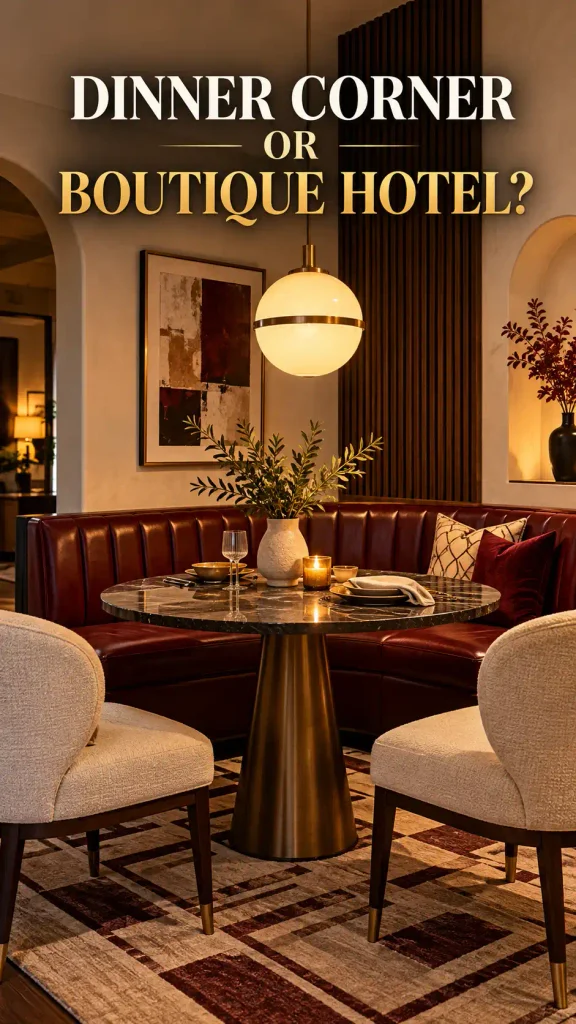
A banquette already makes a dining area feel intentional. Put it in oxblood, tobacco or chocolate leather and the mood changes completely.
Pinterest lists leather banquettes among the Neo Deco searches gaining momentum, and they make sense in this aesthetic because they combine curved upholstery, rich color and hospitality.
You do not need a restaurant-size booth. A built-in corner bench or even a freestanding upholstered bench against a wall can create the effect.
The smartest rooms soften the leather with something less glossy: a woven rug, linen curtains, matte plaster, pale wood or a simple round table.
Why it works: it makes a neglected corner feel architectural.
Easier version: use a freestanding leather or faux-leather bench with a small round table.
Watch out: dark leather plus dark walls plus dark flooring needs enough warm lighting to avoid becoming a cave.
6. Fan Arches Are Replacing Random Curves With Something More Intentional
Curves have been everywhere in interiors for years. Neo Deco gives them a little more structure.
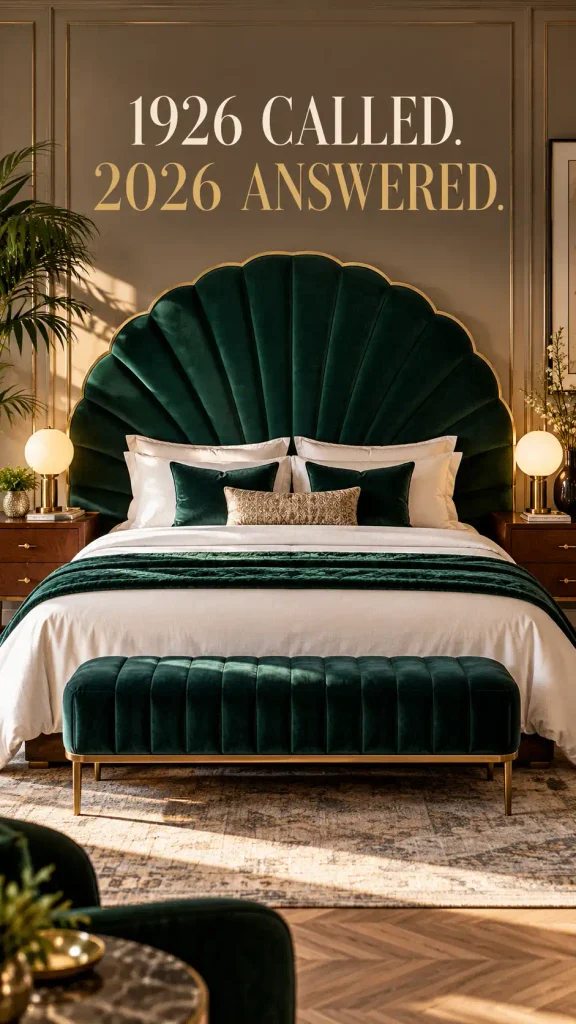
Fan shapes, scallops and stepped arches reference classic Deco geometry without requiring a single antique. They can appear in a mirror, headboard, cabinet door, backsplash, rug or painted wall detail.
One large fan motif usually looks more modern than twenty tiny ones.
This is one of those ideas where repetition matters. If your mirror has a fan top, you might echo the curve once in the lighting or furniture—but you do not need fan-shaped everything from the doormat to the soap dish.
Why it works: it combines softness and geometry in the same move.
Easier version: start with one fan-shaped mirror or headboard.
Watch out: too many literal Deco motifs can make a room feel themed rather than designed.
7. Chevron Is Returning—But It Has Learned Some Restraint
If the word “chevron” brings back memories of aggressively zigzagged everything, you are not alone.
Neo Deco makes a better case for it by using the pattern architecturally rather than decoratively.
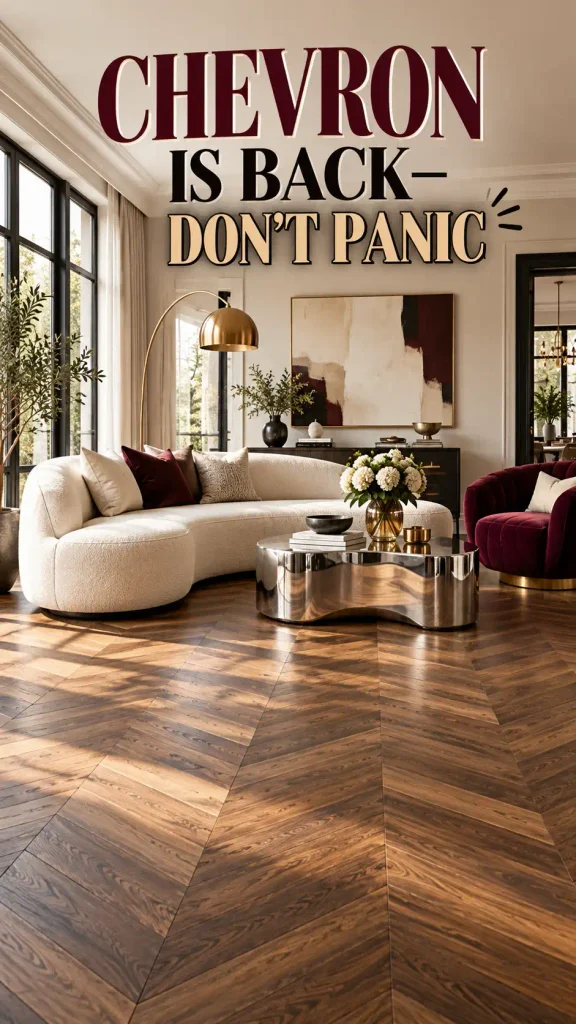
Think herringbone or chevron timber floors, stone inlays, a tiled niche, a cabinet front, or a single rug with a large-scale geometric pattern. Bigger scale and better materials make the motif feel structural instead of crafty.
Chevron works especially well when the rest of the room has curves. The angles give those soft shapes something to push against.
Why it works: sharp geometry adds movement without requiring more furniture.
Easier version: use a chevron rug or tiled backsplash instead of changing flooring.
Watch out: small high-contrast zigzags across a huge area can get visually exhausting.
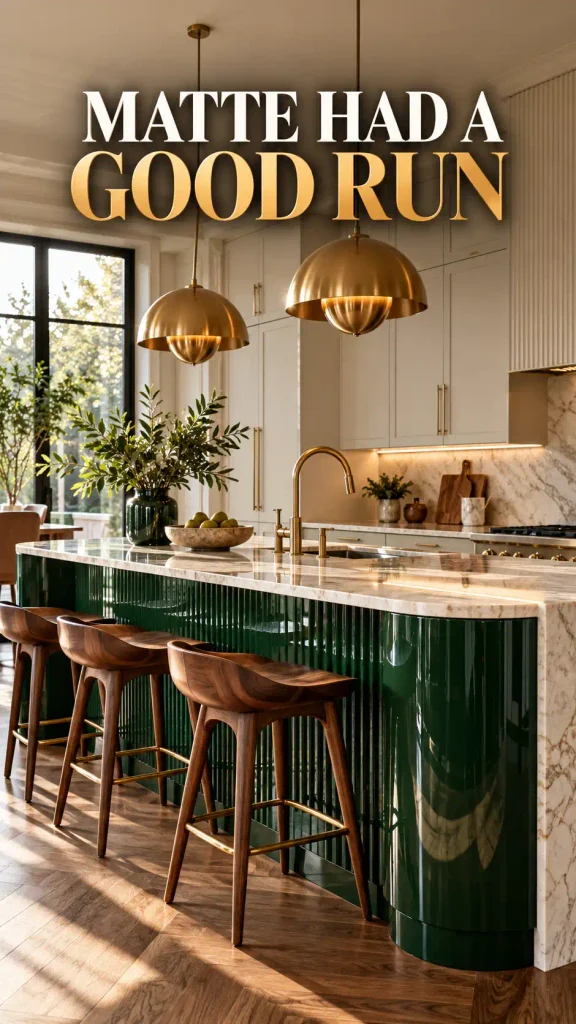
8. Lacquered Cabinets Are Bringing Back The Shine Minimalism Tried To Hide
Matte finishes have had an extremely successful decade.
Gloss is knocking.
Lacquered cabinetry—especially in burgundy, deep green, ink blue or black—creates the kind of reflective depth Neo Deco loves. It catches light, makes color look richer and feels instantly more formal than flat paint.
The modern trick is to use gloss selectively. A lacquered island with matte perimeter cabinets. A glossy drinks cabinet against a textured wall. One high-shine sideboard in an otherwise quiet room.
Shine looks expensive when it has contrast. When every surface reflects you, the house starts auditioning as a nightclub.
Why it works: gloss makes saturated color feel deeper and more dimensional.
Easier version: lacquer one freestanding cabinet or console.
Watch out: high-gloss surfaces show fingerprints and imperfections more readily than matte finishes.
9. Walnut Is Doing What Beige Couldn’t: Making Neutral Feel Rich
Neo Deco does not require jewel tones in every room.
Dark walnut is proof.
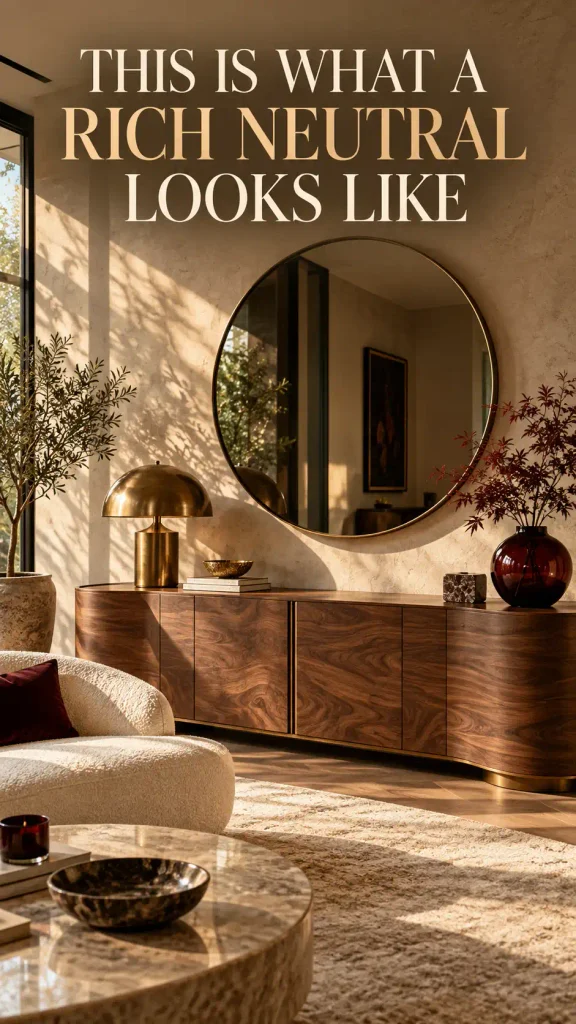
Its natural grain gives a room movement and depth while staying technically neutral. Pair it with cream upholstery, aged brass, oxblood leather, smoked glass or a richly colored stone and the space can feel dramatic without a bright wall color anywhere.
Classic Art Deco designers famously used precious and exotic woods; today, the idea translates better as appreciation for visible grain and high-quality wood rather than recreating the exact rare-material palette of the 1920s.
A walnut sideboard is often enough to introduce that weight.
Why it works: wood grain adds visual complexity without pattern.
Easier version: start with a walnut-toned console, side table or frame.
Watch out: very red wood stains can clash with cooler stone and chrome if there is no color link elsewhere.
10. Curved Velvet Sofas Are Making Straight Lines Feel Very Serious
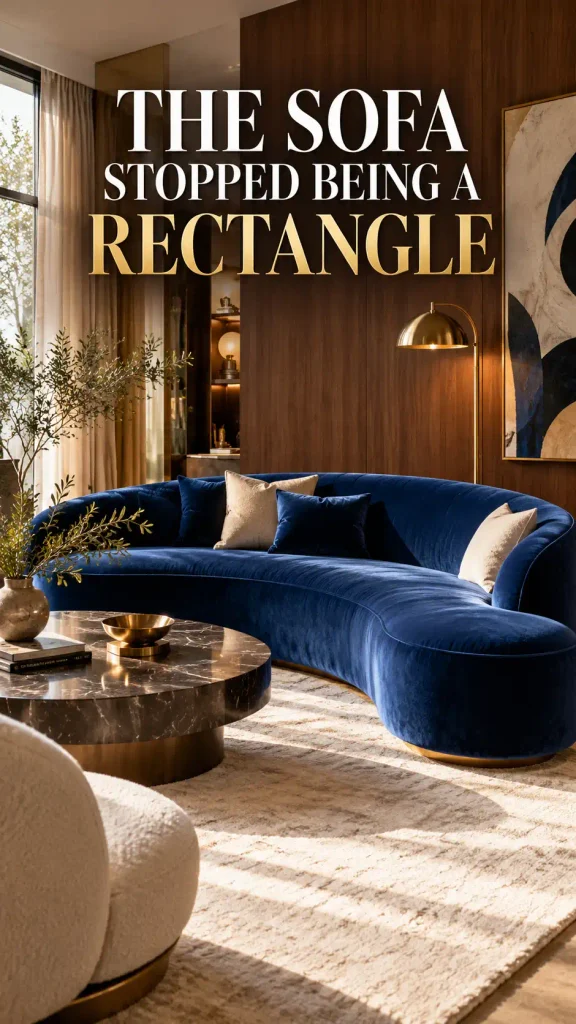
A curved sofa does something a rectangular one cannot: it changes the way people face the room.
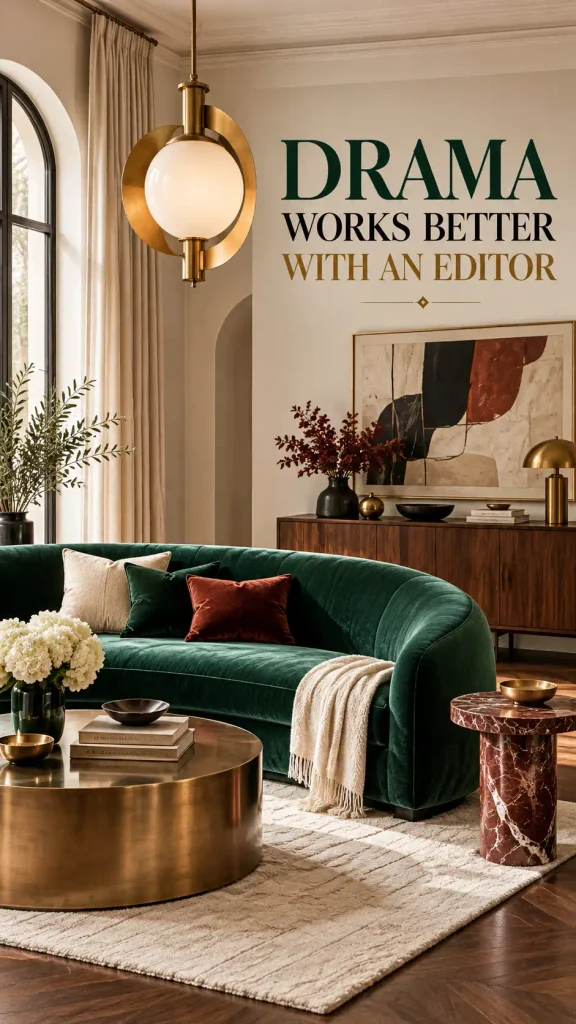
Instead of forming a straight boundary, it creates a soft arc around a coffee table or conversation area. In velvet, especially emerald, sapphire, rust or burgundy, the curve catches light differently across the fabric and becomes even more sculptural.
This is a good example of Neo Deco’s update to classic glamour. The shape does most of the ornamenting, so you do not need fringe, tassels, nailheads and a gold frame on the same sofa.
Let the silhouette do the work.
Why it works: the furniture itself becomes architecture.
Easier version: use one curved accent chair instead of a full sofa.
Watch out: curved furniture needs enough floor space around it to read clearly.
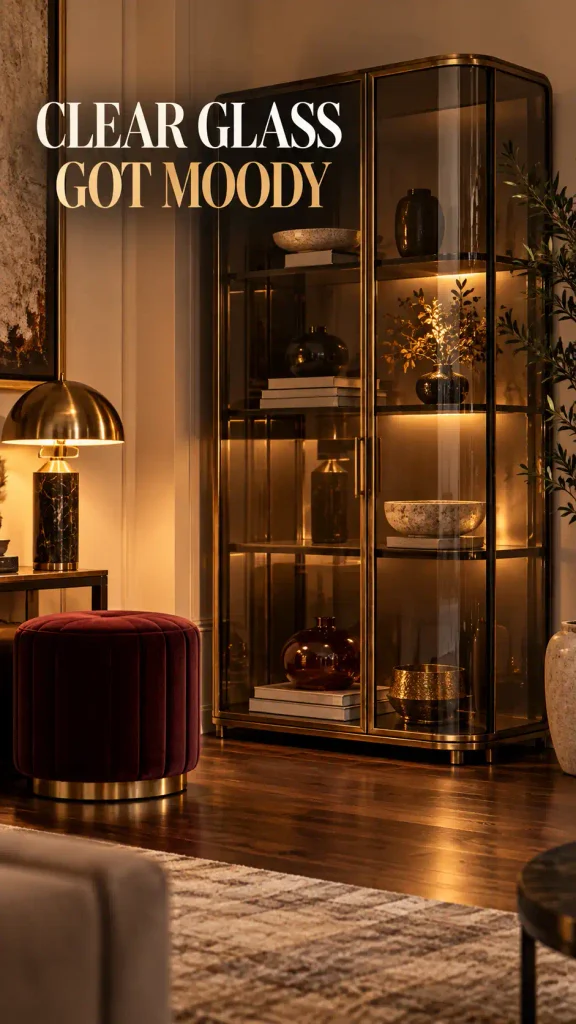
11. Smoked Glass Is The Moody Middle Ground Between Clear And Black
Clear glass disappears. Black can feel heavy.
Smoked glass sits right between them.
On a cabinet door, bar cart, pendant shade, side table or room divider, the tint creates mystery without blocking light completely. It also looks particularly good next to warm metals because the contrast stops brass from feeling too sweet.
Neo Deco loves this kind of material tension: transparent and solid, shiny and matte, dark and luminous.
One smoked-glass piece is usually enough to get the effect.
Why it works: it adds depth while keeping the room visually open.
Easier version: use a smoked-glass lamp or small side table.
Watch out: dark glass can show dust and fingerprints aggressively under direct light.
12. Fluting Is Giving Flat Surfaces Something To Say
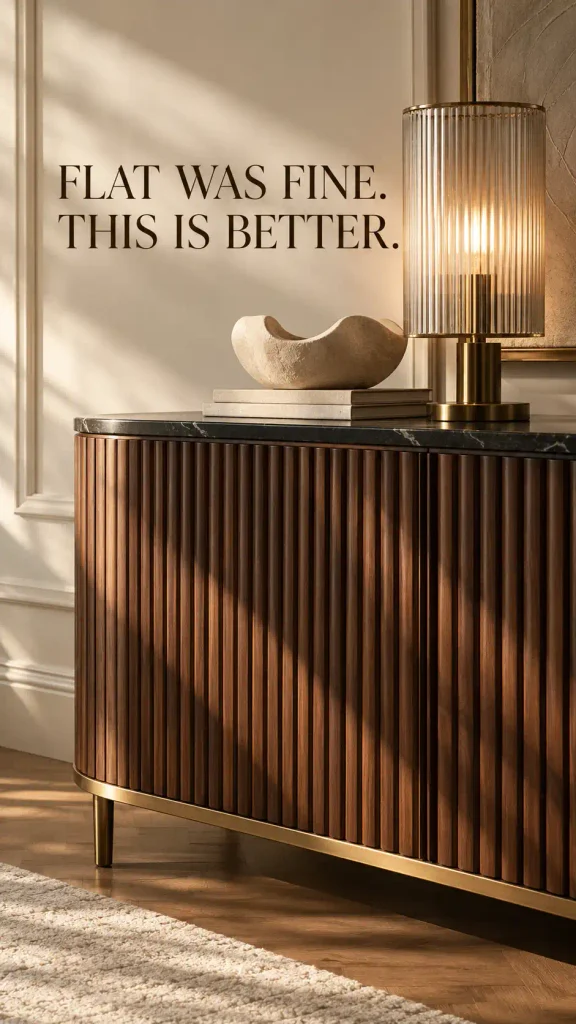
Fluted wood, ribbed glass and reeded cabinet fronts are useful because they add decoration without adding a pattern in the traditional sense.
The surface changes as light moves across it.
That makes fluting perfect for Neo Deco, where texture often replaces overt ornament. Use it on an island, vanity, sideboard, bar front, wall panel or glass door.
Vertical fluting also has a subtle architectural effect: it can make low furniture feel taller and wide cabinets look more carefully proportioned.
Why it works: shadow becomes part of the design.
Easier version: add fluted panels to one cabinet front or use ribbed-glass lighting.
Watch out: deep grooves in high-splash areas can be harder to clean.
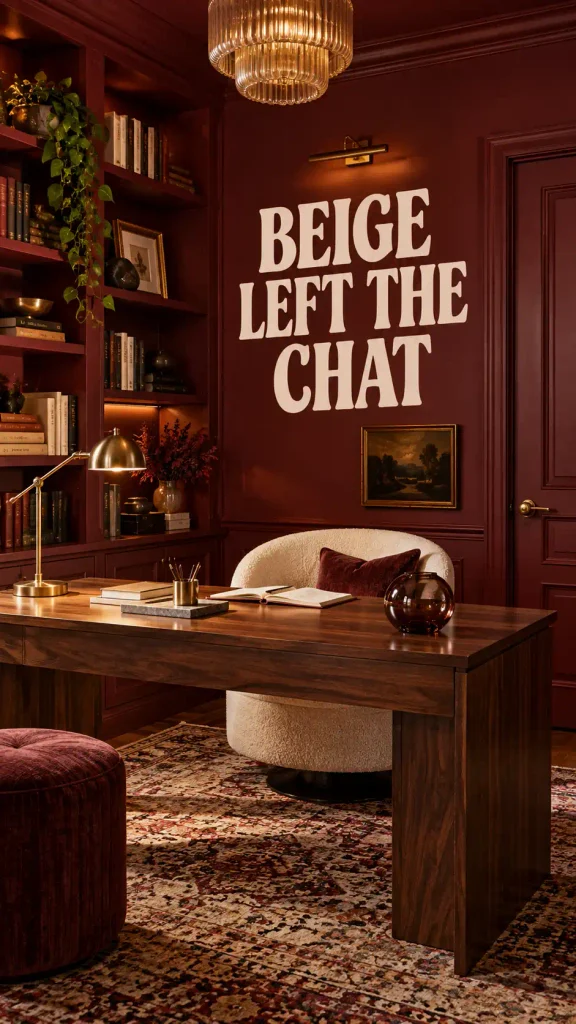
13. Jewel-Tone Color Drenching Is For People Who Are Done Apologizing For Color
Color drenching means taking one family of color across walls, trim, doors and sometimes even cabinetry instead of stopping at the wall edge.
In Neo Deco, this works beautifully with saturated shades: burgundy, emerald, aubergine, navy, tobacco or deep teal.
The surprising part is that a dark room can feel calmer when the boundaries blur. White trim against a dark wall creates lots of visual edges; matching trim lets the room read as one envelope.
Then the metal, stone and furniture can provide contrast.
Why it works: one strong color makes multiple architectural details feel unified.
Easier version: color-drench a small study or powder room first.
Watch out: sample the color in morning and evening light; deep paints change dramatically through the day.
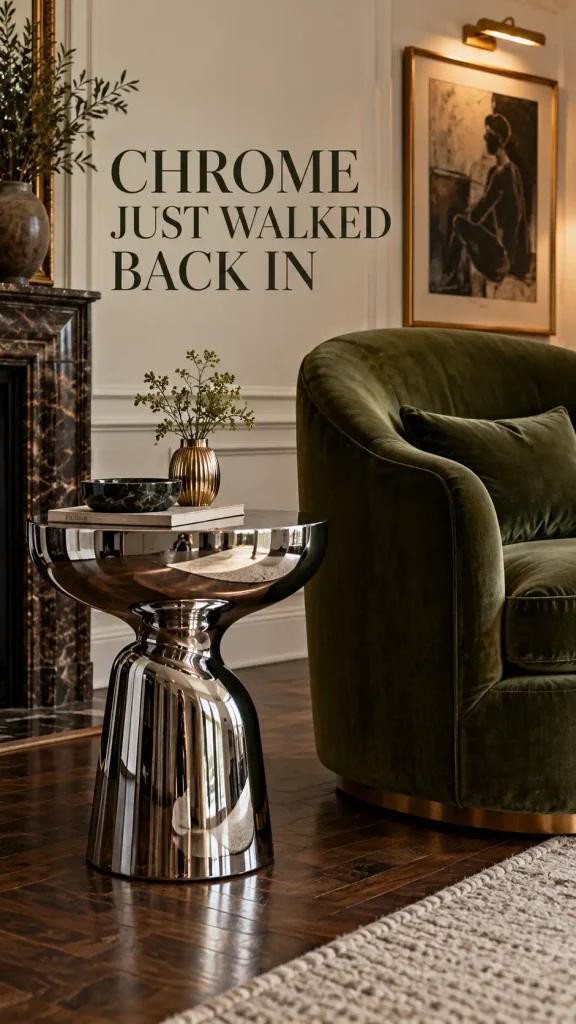
14. Chrome Is Back From The Future It Apparently Never Left
Brass gets most of the attention, but chrome gives Neo Deco a sharper edge.
Polished chrome connects naturally to Art Deco’s fascination with modern industry and machine-age shine, but it also reads surprisingly current next to velvet, lacquer and dark wood.
The easiest place to use it is furniture: a chrome-framed side table, tubular chair, floor lamp or mirror. It can stop a jewel-tone room from becoming too warm and nostalgic.
And yes, you can mix chrome and brass. The metals just need a reason to coexist—usually repeated finishes, a shared shape, or enough neutral material between them.
Why it works: cool metal keeps the look from becoming overly vintage.
Easier version: add one chrome lamp or side table.
Watch out: mirror-polished chrome loves fingerprints almost as much as smoked glass does.
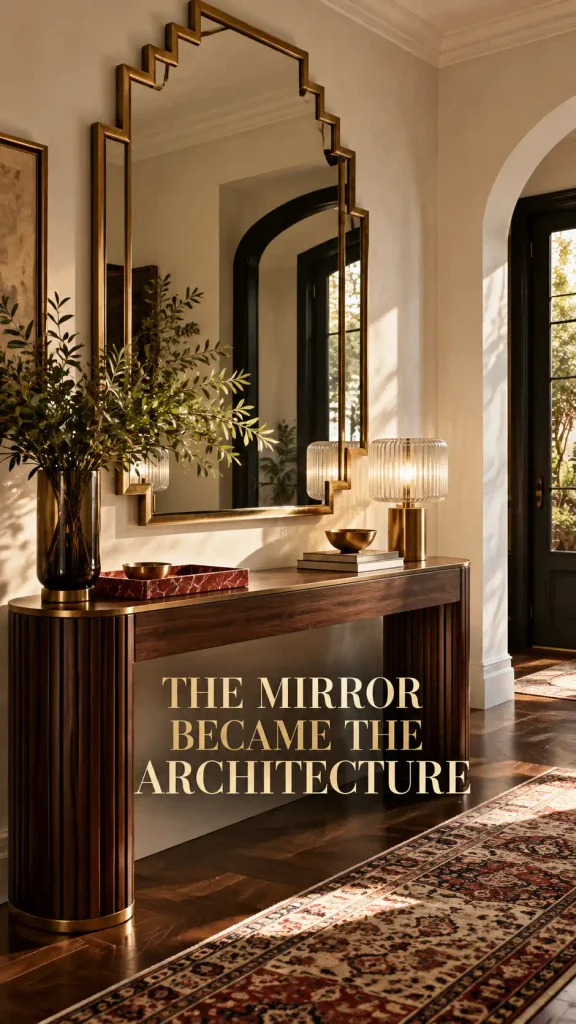
15. Stepped Mirrors Make A Plain Wall Feel Like Architecture
A rectangle with a frame is functional.
A stepped, fan-topped or geometric mirror starts becoming part of the wall design.
Art Deco has always loved repeated geometry, and mirrors amplify that language because their reflective surface introduces another layer without extra color.
Use one oversized mirror rather than a collection of tiny decorative ones. Over a console, vanity or mantel, the shape can organize the entire composition around it.
Why it works: it introduces Deco geometry without changing the room permanently.
Easier version: replace one standard mirror.
Watch out: check what the mirror will reflect; a beautiful shape reflecting a laundry pile remains extremely honest.
16. Black And Brass Still Work—But Texture Is What Keeps Them From Feeling Like A Restaurant
Black and brass are an obvious glamorous pairing.
They are also extremely good at making a home look like a cocktail bar if nothing soft interrupts them.
The Neo Deco fix is texture: matte black plaster, charcoal wool, dark-stained timber, woven rugs, linen and leather alongside the metal. The more varied the surfaces, the less “theme” you feel.
This is a useful principle for the whole trend. Luxury is more convincing when not everything is shiny.
Why it works: high contrast creates instant drama.
Easier version: pair one black piece with one warm-metal detail and a textured neutral.
Watch out: too much glossy black can make ordinary dust look like a full-time resident.
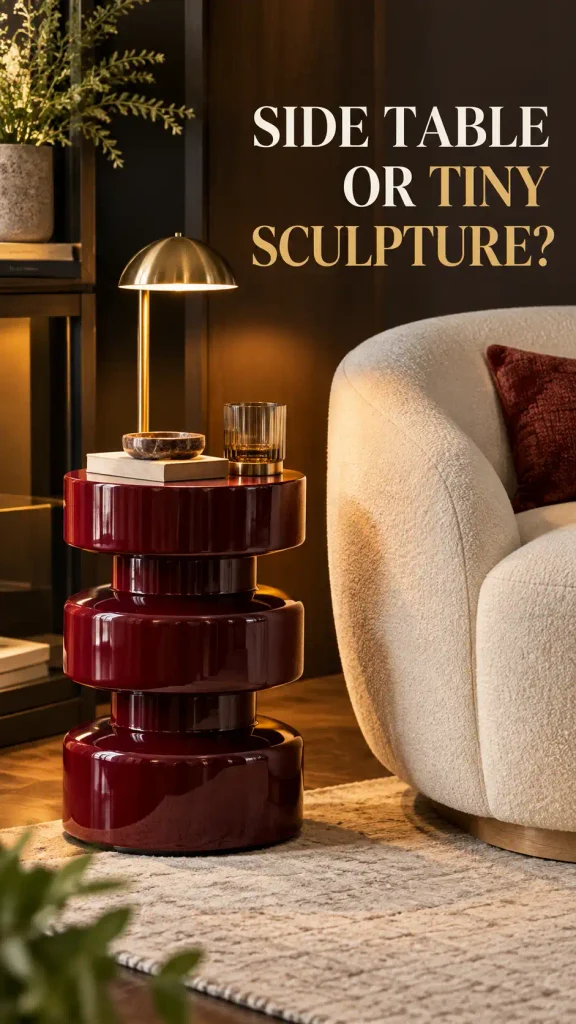
17. Sculptural Side Tables Are Replacing The “Just Put Something There” Table
Side tables are often chosen like punctuation nobody intends to read.
Neo Deco treats them more like small objects of design.
A fluted pedestal, stacked cylinder, lacquered drum, geometric stone block or chrome base can add just enough eccentricity to an otherwise calm seating area.
Because the piece is small, it is one of the safer places to experiment with an unusual shape or material.
And unlike buying a dramatic sofa, a side table is much easier to forgive if your taste changes.
Why it works: a small sculptural object can shift the style of a whole seating area.
Easier version: thrift a pedestal or repaint a simple drum table in a deep gloss color.
Watch out: make sure the surface is still large enough to perform the radical task of holding a drink.
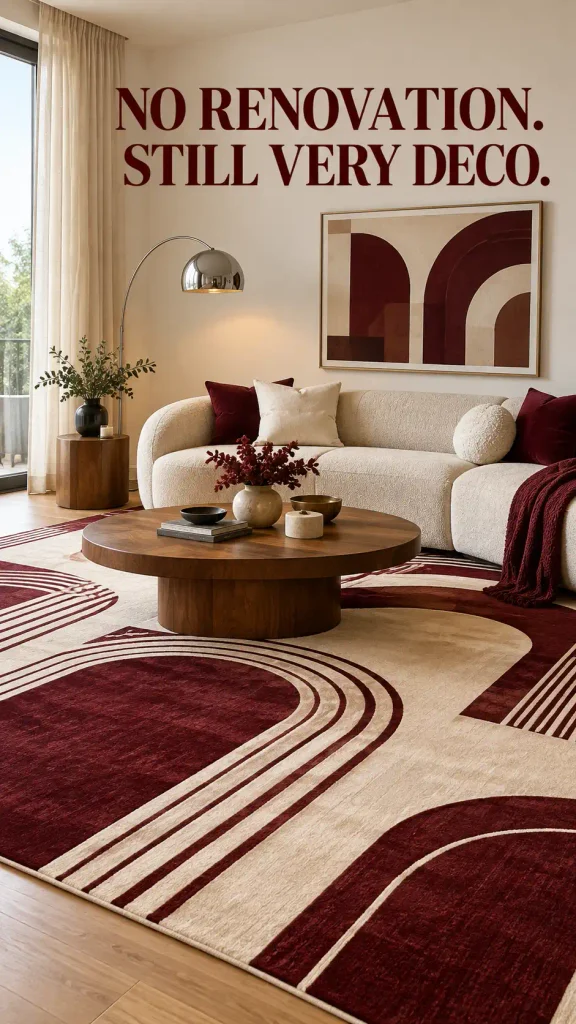
18. Geometric Rugs Can Add Deco Without Touching A Single Wall
Renters, this is your section.
A rug can introduce fans, stepped borders, arches, diamonds or oversized lines with zero commitment from the landlord.
For a modern interpretation, choose a lower-contrast palette or a pattern with generous negative space. The geometry should organize the room, not vibrate underneath it.
A geometric rug works especially well under curved furniture because it gives the soft silhouettes a visual grid.
Why it works: pattern enters the room horizontally, where it is easier to live with.
Easier version: obviously, a rug is already the easier version.
Watch out: measure first; a small rug floating under large furniture can make even glamorous pieces look accidentally stranded.
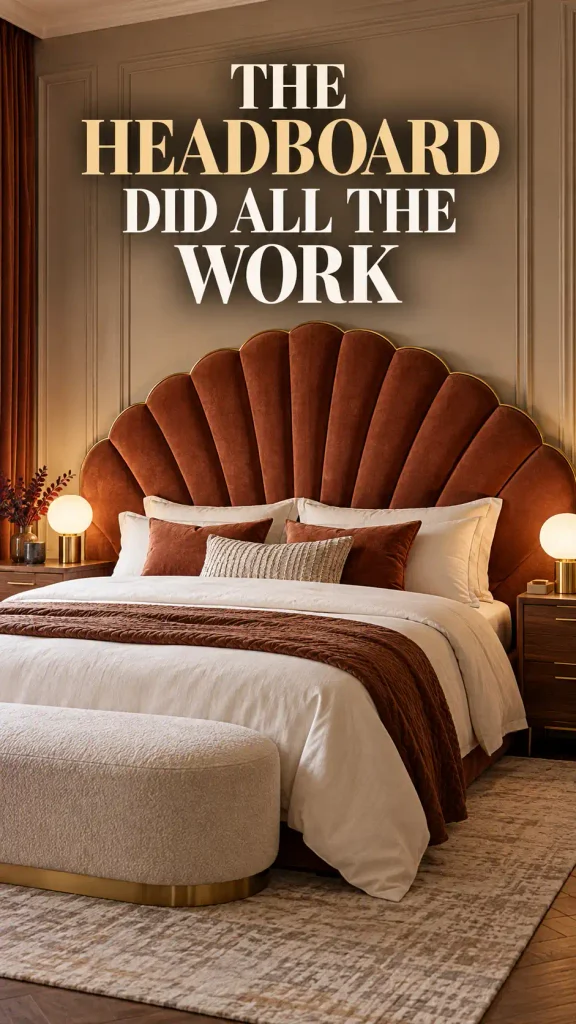
19. The Fan-Shaped Headboard Might Be Neo Deco’s Easiest Bedroom Shortcut
Bedrooms often have one large blank wall and one very obvious object sitting in front of it.
That makes the headboard an efficient place to add drama.
A fan, scallop or stepped headboard can create the Deco silhouette without changing floors, paint, lighting and furniture all at once. Upholstery softens the geometry; velvet adds richness, while textured linen makes the same shape quieter.
Keep bedding comparatively simple and let the headboard explain the trend.
Why it works: one large shape can define the whole room.
Easier version: paint a fan arch behind an existing bed instead of buying a new headboard.
Watch out: very ornate bedding can compete with a strong headboard rather than support it.
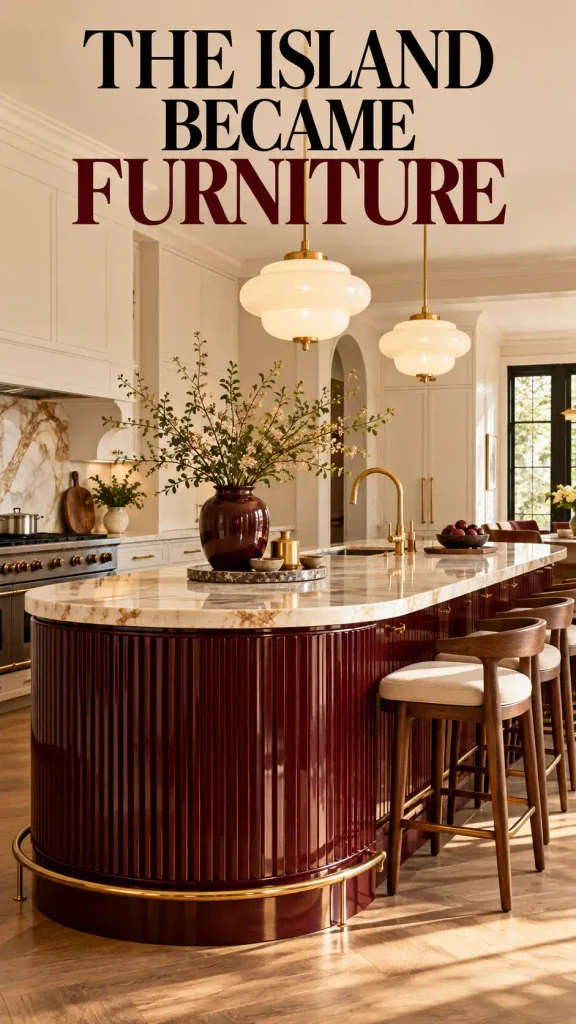
20. Kitchen Islands Are Becoming Furniture Instead Of Just Cabinet Boxes
A standard kitchen island is practical.
A Neo Deco island behaves more like a piece of furniture.
Fluted fronts, rounded ends, rich lacquer, stone waterfall edges, brass foot rails and sculptural pendants can all give the island more presence without requiring every cabinet in the kitchen to participate.
This is one of the strongest ways to use the trend in a modern home: let the island carry the personality while the perimeter stays simpler.
It also means you can update the look later without dismantling the entire room.
Why it works: the island is already the visual center of many kitchens.
Easier version: add fluted paneling, new hardware or a new pendant above an existing island.
Watch out: decorative fronts still need to survive shoes, stools, spills and actual kitchen life.
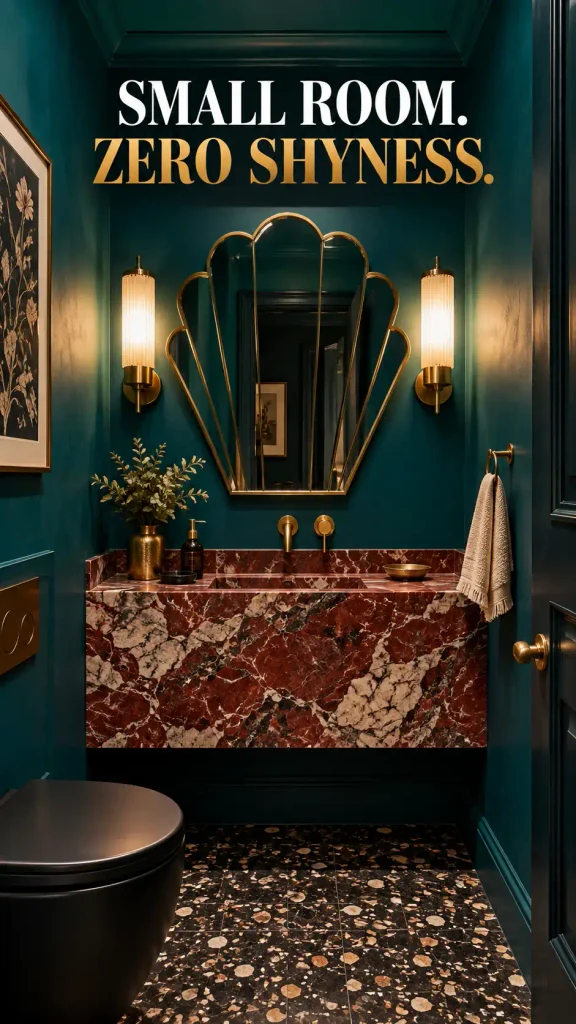
21. Powder Rooms Are Where People Are Taking The Biggest Risks
A powder room is tiny, used briefly and separated from the main living space.
In design terms, that makes it an excellent place to misbehave.
Dark color drenching, dramatic stone, patterned tile, lacquered vanity, sculptural mirror, ribbed glass sconces—elements that might feel intense across an entire house can be thrilling in a small room.
You still need hierarchy. Choose the thing that gets the first look. If the stone is wild, calm the wall. If the wallpaper is dramatic, simplify the vanity.
Small does not mean every idea fits at once.
Why it works: a small enclosed room can handle stronger visual concentration.
Easier version: repaint, change the mirror and add one strong light fixture.
Watch out: tiny spaces magnify both good decisions and chaotic ones.
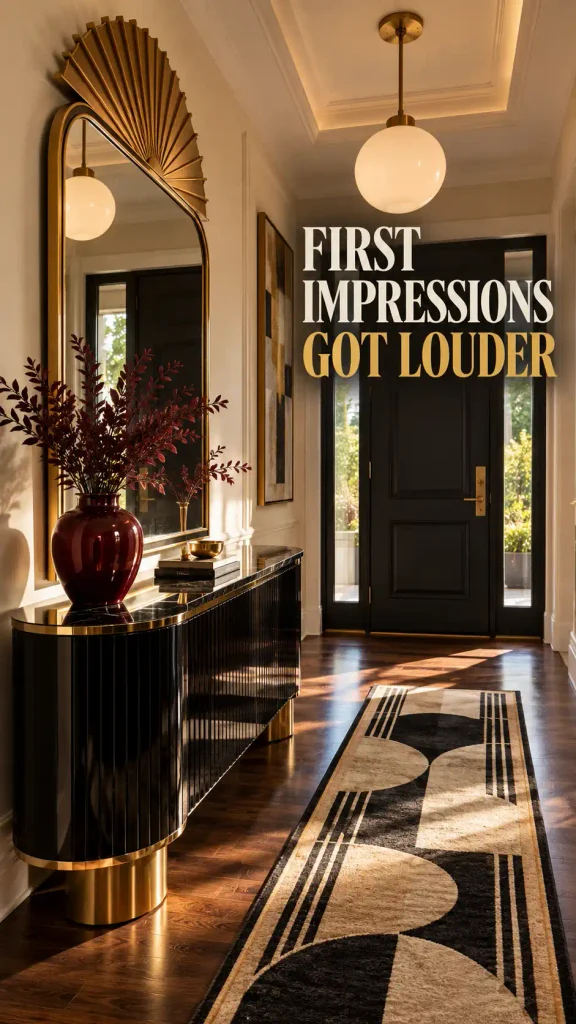
22. Entryways Are Getting The “One Dramatic Thing” Treatment
An entryway does not need a full furniture set.
It often needs one memorable gesture.
A stepped mirror. A lacquer console. A pendant with geometric glass. A stone-topped table. A narrow rug with a Deco border.
Because you pass through an entry rather than live in it for hours, you can tolerate a stronger first impression there. It becomes the room’s opening line.
The mistake is treating the area like leftover space and then trying to fix it with fifteen small accessories.
Why it works: one statement piece gives an otherwise transitional area identity.
Easier version: replace only the mirror or ceiling light.
Watch out: preserve enough clear space for bags, shoes and people actually entering the house.
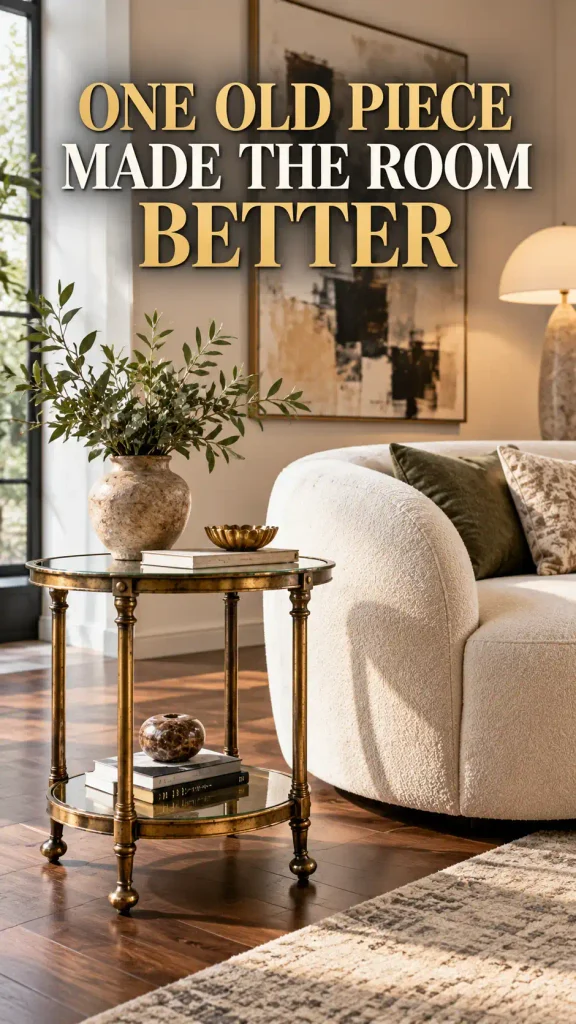
23. Vintage Pieces Work Better When The Room Around Them Is Clearly Modern
A real vintage Deco piece can add depth that a room full of new “Deco-inspired” furniture sometimes lacks.
But context matters.
Put an antique bar cart, lamp, side table or mirror inside a contemporary room and it reads as a collected object. Put five reproductions around it and suddenly you are decorating a set.
This is why the strongest Neo Deco interiors often look layered rather than matched. Something old, something glossy, something soft, something plain.
Rooms feel more personal when not every object appears to have arrived in the same delivery window.
Why it works: age and patina break the perfection of new finishes.
Easier version: thrift one lamp, mirror, trolley or small table rather than a whole furniture suite.
Watch out: inspect old wiring and structural condition before using vintage electrical or load-bearing pieces.
24. The Best Neo Deco Rooms Mix Shine With Something You Want To Touch
Marble, brass, chrome, lacquer and glass are glamorous.
They are also hard.
A room full of them can look excellent in a photograph and oddly unfriendly in real life.
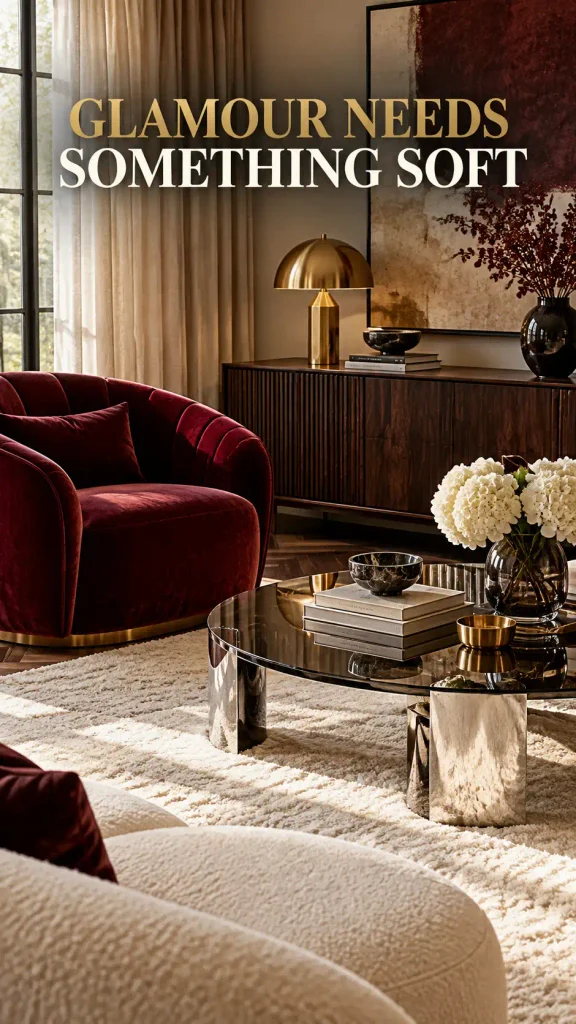
That is why velvet, wool, linen, leather, timber and textured plaster matter. Architectural Digest’s discussion of Neo Deco specifically emphasizes contrast between luxurious shine and softer matte materials.
Put a velvet chair beside a chrome table. Hang linen curtains near a lacquer cabinet. Place a wool rug under polished stone.
The goal is not “more texture” as a shopping instruction. It is giving every shiny object something quiet to lean against.
Why it works: tactile contrast makes glamorous materials feel livable.
Easier version: add a wool rug, linen curtain or velvet cushion near hard reflective surfaces.
Watch out: repeating the same plush texture everywhere can become just as flat as repeating the same hard finish.
25. The Real Neo Deco Trick Is Knowing When You Have Enough
This may be the least glamorous idea on the list, but it is probably the most important.
Neo Deco is memorable because it has strong ingredients. Strong color. Strong geometry. Strong materials. Strong lighting.
That also means it becomes chaotic faster than a quiet style does.
A convincing room rarely needs red marble, chevron flooring, a velvet sofa, brass walls, a fan mirror, lacquer cabinets, a bar cart and a chandelier all competing for the same ten seconds of attention.
Pick two or three signals.
Maybe your room is walnut + brass + one curved velvet chair.
Maybe it is red stone + cream plaster + smoked glass.
Maybe it is a geometric rug + chrome lighting + a fan-shaped mirror.
The original Art Deco movement was extravagant, but it was also highly designed. The forms, materials and ornament were intentional. Neo Deco works best when it remembers that second part.
The goal is not to prove you know the trend.
The goal is to make the room feel like it finally developed a personality.
Why it works: restraint gives the dramatic elements room to register.
Easier version: choose one Neo Deco focal point and one supporting material.
Watch out: if every object is a statement piece, the room no longer knows what the statement is.
Maybe that is why Neo Deco feels so well timed.
Minimalism gave us rooms that could breathe. Neo Deco is not asking us to forget that lesson. It is asking whether those rooms might also be allowed to have a pulse.
A little shine. A better lamp. A curve where there used to be a box. A piece of stone that is impossible to ignore. A bar cart that suddenly makes Tuesday evening feel like somebody made an effort.
You do not need to live inside a 1920s fantasy.
You just need one or two things with enough confidence to make the room feel intentional again.
Which Neo Deco idea would you actually try—and which one is a little too dramatic even for you?
Sources & Further Reading
- Pinterest Predicts 2026 — Neo Deco trend data
- Pinterest Newsroom — 2026 trend overview
- Architectural Digest — “Neo Deco” Is the Designer-Approved Trend of 2026
- Victoria and Albert Museum — An Introduction to Art Deco
- The Metropolitan Museum of Art — Art Deco Paris
- The Metropolitan Museum of Art — Design, 1900–1925
- Homes & Gardens — 2026 Lighting Trends: Neo-Deco