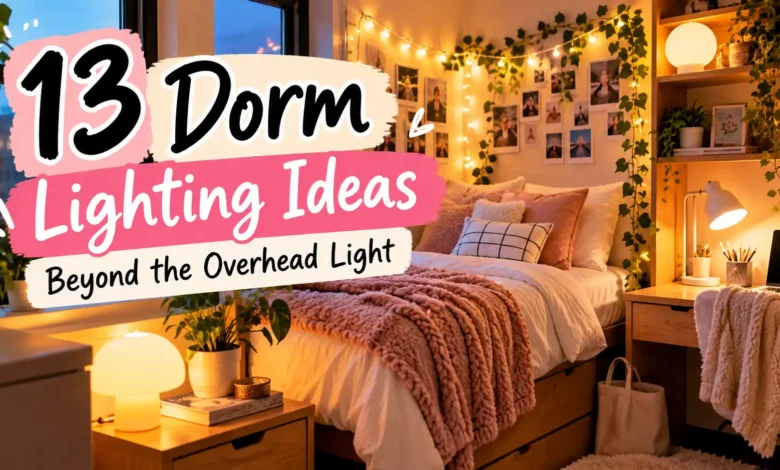
The most useful dorm lighting ideas give you control over one part of the room at a time: a bright page, a softly lit bedside, or a corner that feels inviting after class. Start with an adjustable desk lamp and one warm, shaded lamp. Add decorative lighting only after those everyday jobs are covered.
These 13 options cover studying, reading, getting ready, and winding down. Choose the ones that solve a problem in your room; you do not need a lamp on every surface.
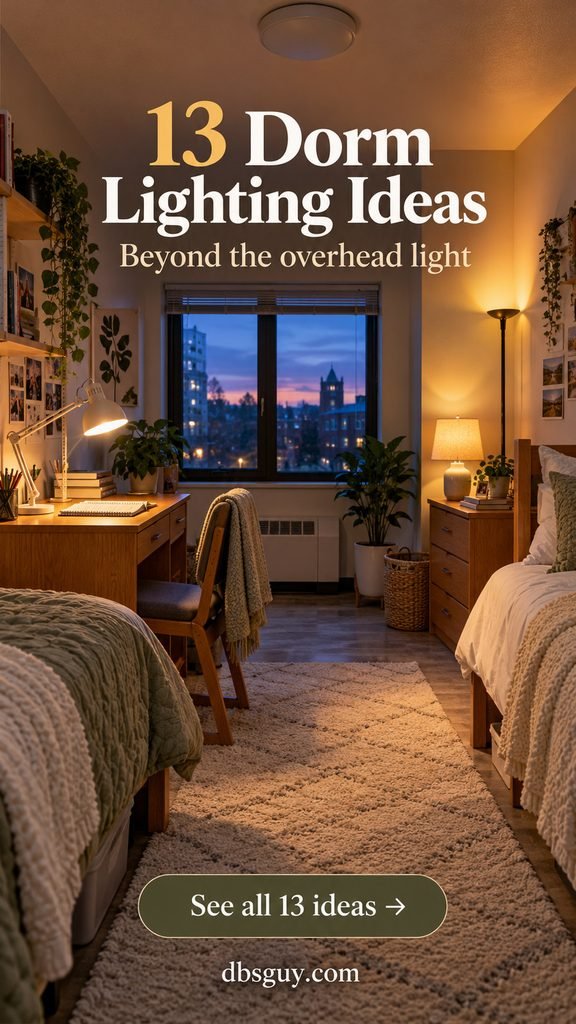
The visuals are AI-generated design concepts, not photographs of completed dorm rooms. Adapt each setup to your room, product instructions, and residence hall rules.
Before You Buy: Check Permission, Brightness, and Placement
Read your own housing policy first. Rules can differ even for LED products. Duke, for example, prohibits all string lights and adhesive-backed strip lights. Other colleges allow selected decorative lights. Battery power and a “removable” label do not automatically make a product permitted. Check lamps, clamps, wall mounts, adhesives, and power accessories separately; ask housing staff about anything unclear.
Shop for brightness and color separately. Lumens describe light output; watts describe power use. Kelvin describes how warm or cool white light looks. For the cozy evening look in these concepts, 2700–3000K is a useful starting preference. A task lamp with adjustable brightness lets you find a comfortable level for your actual page and room. A warm bulb can still be bright, and a cool bulb can still be dim.
For electrical basics, follow Safe Electricity’s dorm safety guidance: avoid overloaded outlets, use a safety-listed power strip with over-current protection when permitted, and check whether your hall prohibits extension cords. Where allowed, extension cords are temporary equipment. Keep cables out of walking routes and away from pinching furniture. Do not connect power strips to one another. Keep lamps clear of bedding, curtains, and clutter, following their clearance instructions; leave vents, exits, sprinklers, and detectors unobstructed. Never cover or modify the supplied overhead fixture to soften its light.
1. Put an Adjustable Desk Lamp Where You Actually Write
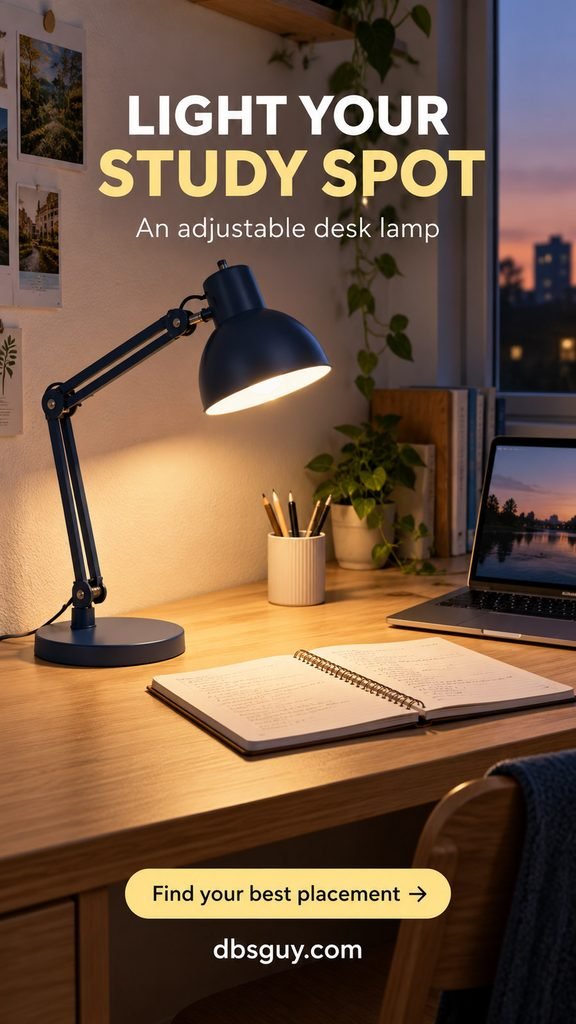
Start here if your notebook disappears into shadow when the ceiling light is off. Look for an adjustable arm or head so you can direct light onto the page without lighting your roommate’s entire side of the room.
Set out your laptop and largest notebook before placing the lamp. Try it on the side opposite your writing hand, then write a few lines and adjust if your hand still casts a shadow. Sit normally and check the screen for reflections. Raising the lamp slightly or changing its angle may work better than turning up the brightness.
A broad base needs enough desktop to sit completely flat. If it crowds your work, consider an approved clamp model instead. Keep the most direct light on the task; a small decorative glow elsewhere should not be your only study light.
2. Give the Bedside a Shaded Table Lamp
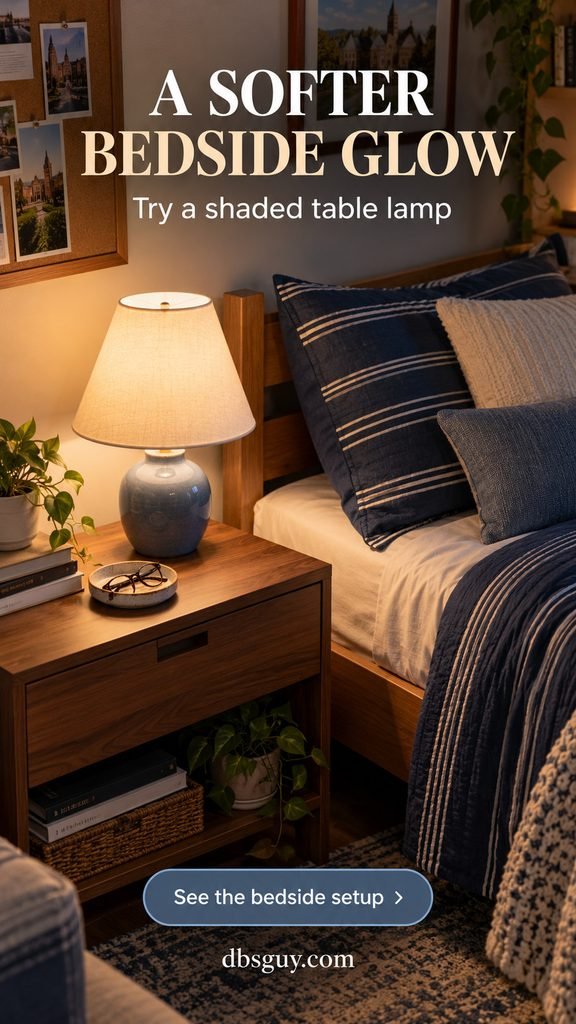
A fitted shade changes the look of a bedside corner by screening the exposed bulb and spreading light around the lamp. The blue ceramic base shown here also carries color during the day, so the lamp earns its place even when switched off.
Measure the surface and the shade’s full width. Leave a clear spot for your glasses and make sure you can reach the switch without stretching across the lamp. From pillow height, check whether you can see directly into a bright bulb; choose a better-shielded lamp or reposition it if you can.
Use the bulb type and wattage specified for the fixture. For a dimmable setup, check that both the LED bulb and the lamp’s dimming system are compatible. This is a good evening light; use idea 3 when you want a tighter beam for reading.
Also read: 13 Blue Dorm Room Ideas for a Calm, Coastal Vibe.
3. Use a Clip-On Reading Light for Your Own Side of the Bed
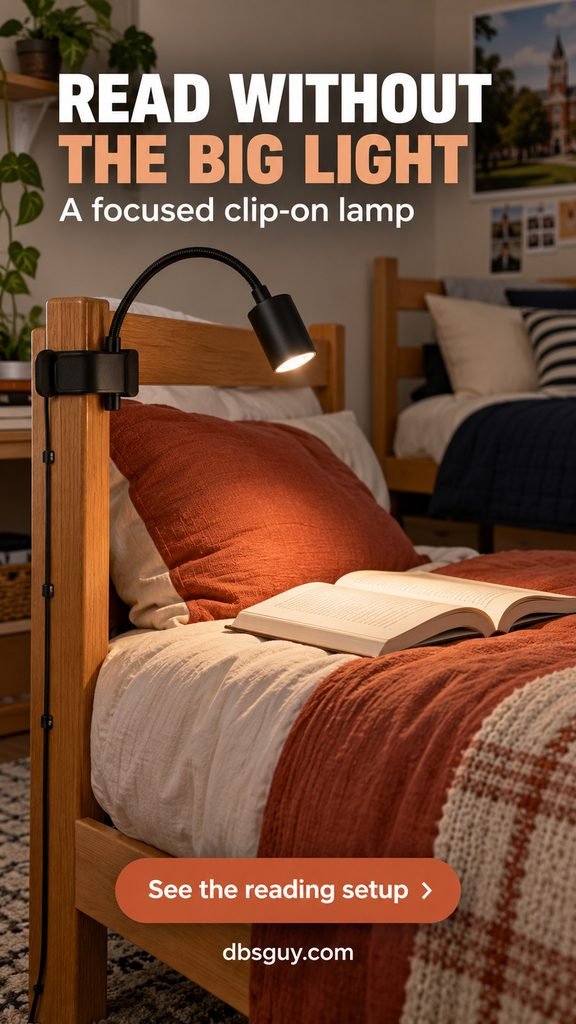
A small reading lamp is useful when one roommate wants a chapter and the other wants darkness. A narrow, adjustable beam gives you more control than switching on a shared room lamp, although some light may still spill beyond the book.
If clamps are permitted, check the lamp’s jaw opening against the approved attachment surface. A solid bed post can work only when the product is designed to grip its shape and thickness securely. Do not attach it to upholstery, a loose accessory, or a required safety rail that the clamp would interfere with.
Aim the head at the page and route its cable down the outside of the frame, clear of bedding and climbing routes. Try the setup together after dark. If the beam crosses your roommate’s pillow, change the angle or move reading time to the desk.
4. Bounce Light Up a Plain Wall With a Floor Uplighter
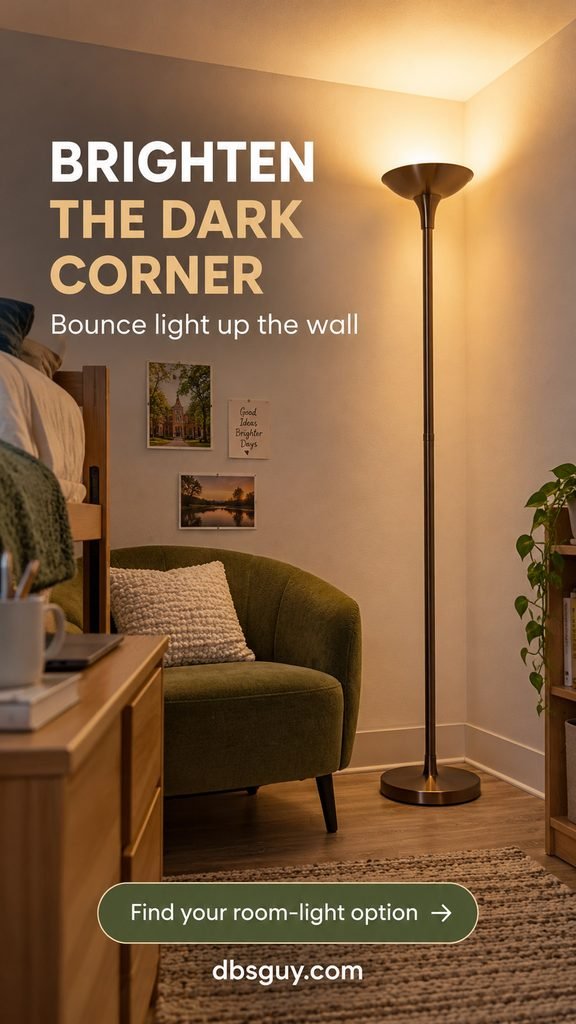
When the whole room feels dim, a freestanding LED uplighter can do a different job from a desk lamp: send light toward the wall and ceiling, then let those surfaces spread it through the room. This works especially well visually against a pale wall.
Choose a stable model with an enclosed LED light source and a base that fits fully in the available corner. Check floor-lamp restrictions before buying; an LED uplighter is a different product from an old halogen torchiere, but your hall still decides what is allowed.
Position it where the base and cord leave the aisle clear, with the manufacturer’s required space around the head. Keep plants and curtains away from the fixture. Use this as room light while hanging out; add a directed task lamp when you need to work.
5. Make One Rechargeable Lamp Your Portable Light
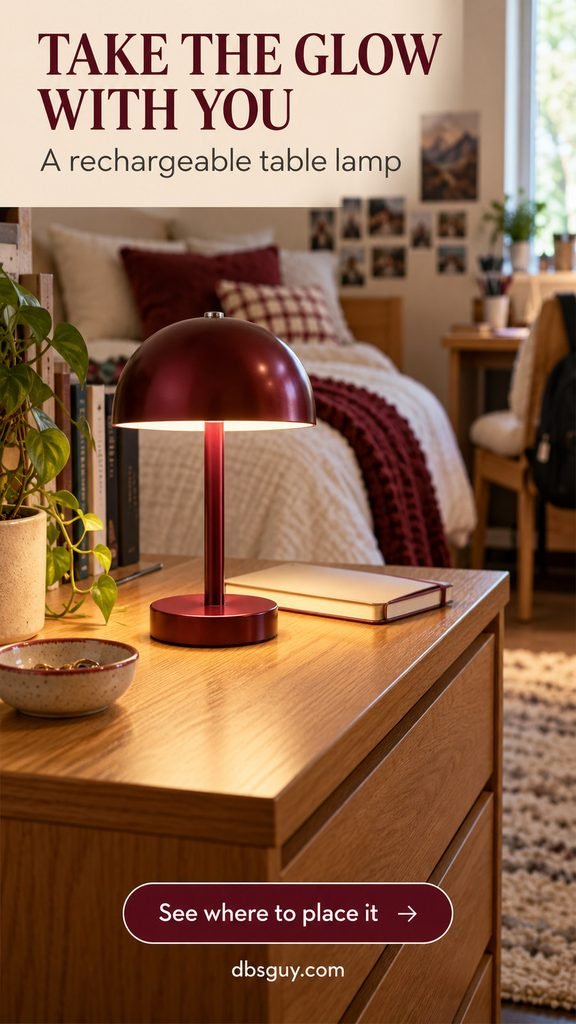
A cordless table lamp makes sense when your preferred sitting spot is far from an outlet. Use it on the dresser while sorting tomorrow’s clothes, then move it to another stable surface for an evening chat. The burgundy metal lamp in this concept adds a little color without requiring a matching furniture set.
Compare battery-runtime information at the brightness you expect to use. A long headline runtime may describe the lowest setting, which might not suit your task. Check charging time, controls, and whether you can operate the lamp without an app.
Charge it on a hard, uncovered surface with the manufacturer-specified equipment and instructions. Portability is useful because you can avoid trailing a cable across the room while the lamp is in use; it does not remove the need for housing approval.
6. Free a Small Surface With an Approved Battery Sconce
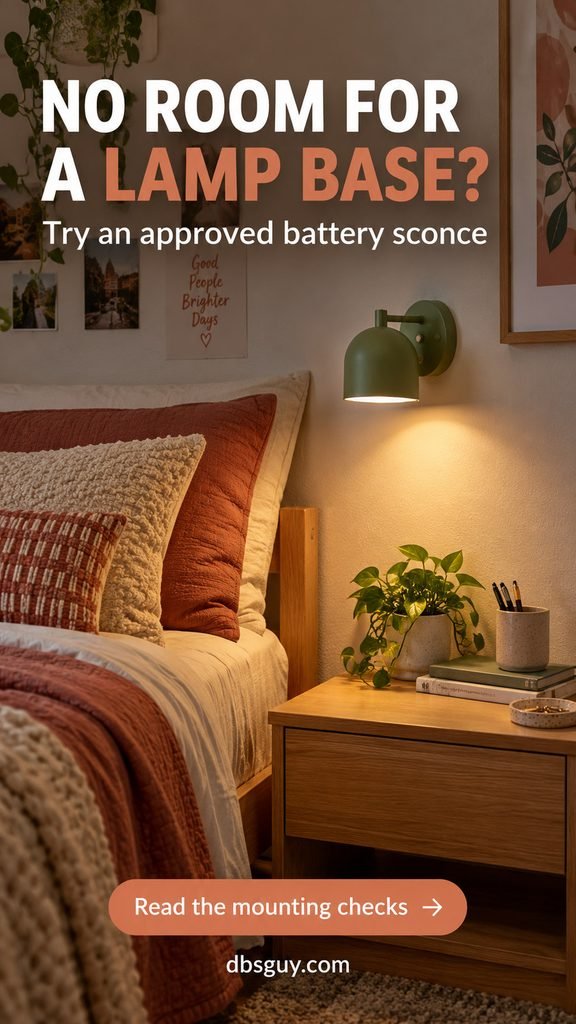
A wall sconce can supply a pool of light beside the bed while leaving the nightstand available. A rechargeable design also avoids a dangling power cord during use. This option is most useful when surface space is scarce and your hall explicitly permits the fixture and its mounting method.
Before ordering, check the complete mounting instructions, fixture weight, wall material, and housing rules. “No drilling” does not mean “no possible paint damage.” Use only an approved, manufacturer-compatible mounting system, allow any required adhesive curing time, and avoid installing a fixture directly over your pillow.
Choose the height by sitting where you will use the light and checking its beam and switch access. If wall mounting is prohibited, skip this purchase; a compact shaded lamp gives you a similar evening function without a wall installation.
7. Light the Work Surface Beneath a Desk Shelf
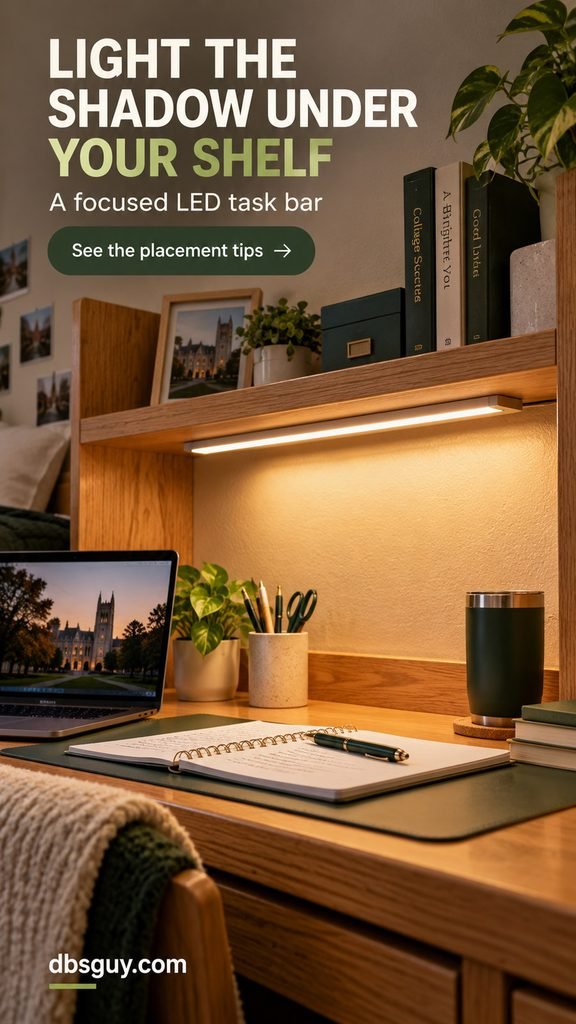
A desk hutch can create a shadow exactly where you want to write. A purpose-built, diffused LED task bar beneath the shelf brings light into that recess without another lamp base beside your laptop.
Measure the shelf’s underside and check that the bar can mount securely using a method approved for the furniture. Position it so the shelf screens the bright light source from your seated eyes while the beam reaches the work area. Test the view before committing to the mount.
Keep the switch reachable and follow the fixture’s clearance and power instructions. This is a targeted solution for a shaded desktop, not a reason to run adhesive strips around the entire hutch. If attachments are prohibited, use a freestanding adjustable lamp.
8. Put a Freestanding Light Bar Behind Your Monitor
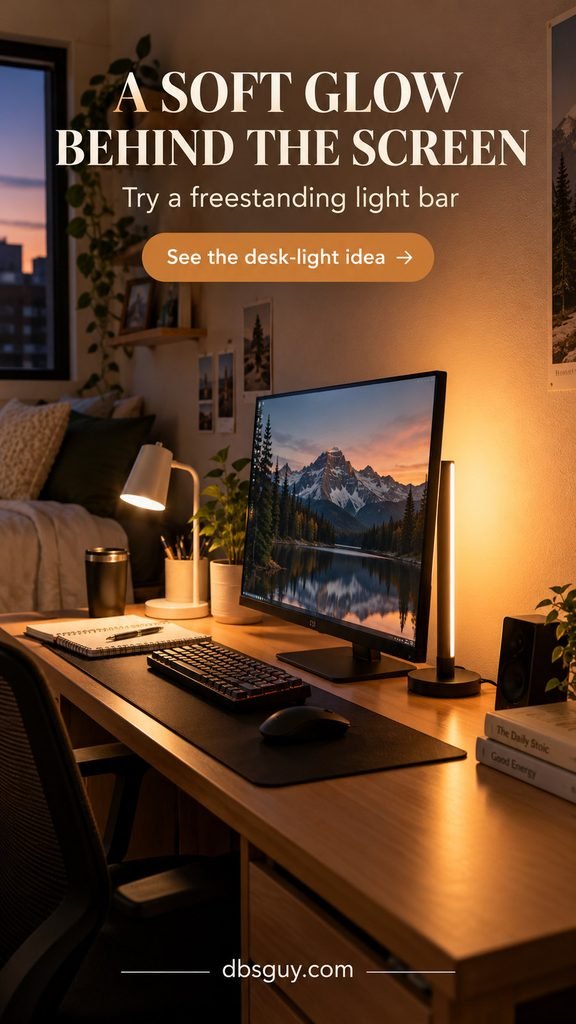
For a computer-heavy desk, a small freestanding LED bar behind the monitor can cast a soft wash onto the wall without covering it in strips. The hidden source makes the desk look quieter than a row of exposed LED dots.
Choose a bar with its own stable stand and enough clearance behind the screen. Aim it at the wall, keep the monitor’s ventilation openings clear, and adjust until the light itself is hidden from your normal seat. Use a white setting for a restrained look or one low-intensity color for an evening accent.
This light is background atmosphere, not a replacement for illumination on handwritten notes. Keep a task lamp available, and check that the extra glow does not shine across the room toward someone else’s bed.
9. Add One Simple Strand of LED String Lights—If Allowed
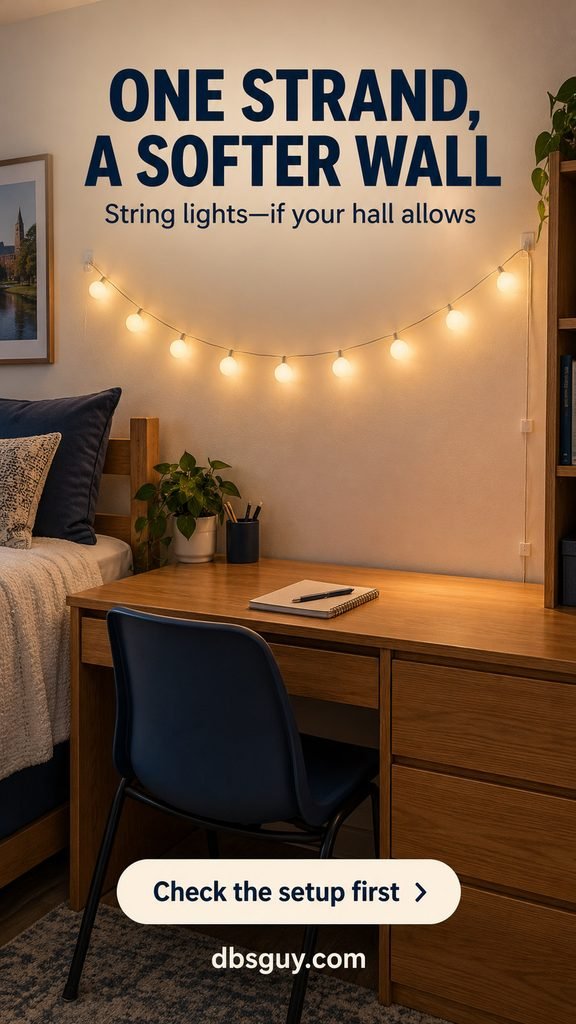
String lights offer a dotted, decorative glow that a shaded lamp cannot reproduce. One relaxed line along an approved bare-wall display area can be enough. Leaving the rest of the wall quiet makes the lights easier to see and avoids tangles.
Check this option especially carefully. Some halls ban string lights altogether; others restrict power type, number of strands, or attachment methods. A battery compartment does not override a ban. Buy only after confirming the exact product and installation are allowed.
Follow the manufacturer’s hanging and clearance instructions. Keep the strand away from curtains, bedding, heaters, and fire equipment; do not staple or pierce the wire. Do not drape fabric over the lights or cover the power supply. If this idea is prohibited, a small shaded lamp can provide evening atmosphere with fewer installation questions.
10. Use a Lighted Tabletop Mirror for Getting Ready
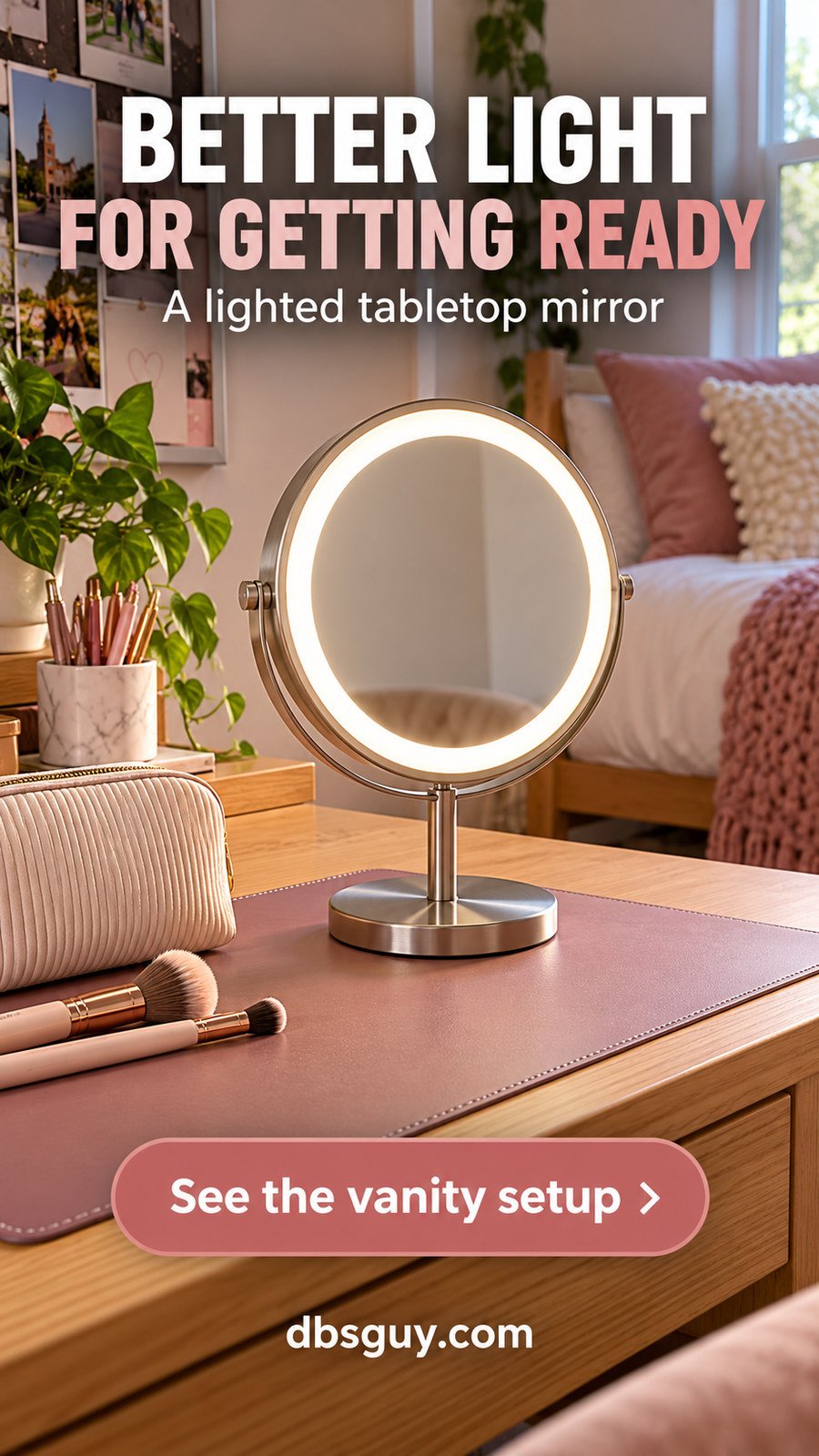
A desk lamp pointed at a mirror often produces an awkward reflection or a shadow on one side. A tabletop mirror with integrated lighting gives this routine its own light source, then moves aside when the desk needs to become a study space again.
Look for a stable base, an adjustable angle, and brightness you can change. If comparing models with published color-rendering information, prioritize accurate color over novelty effects. A light that looks white does not necessarily render makeup colors accurately.
Check the mirror’s full footprint and where you will store it. Keep liquids away from its power connection. When daylight is available, make a final color check there; the mirror is a useful tool, not a guarantee that every room’s lighting will match.
Also read: 15 Pink Dorm Room Ideas That Are Anything But Basic.
11. Keep the Nighttime Route Visible With a Low Night-Light
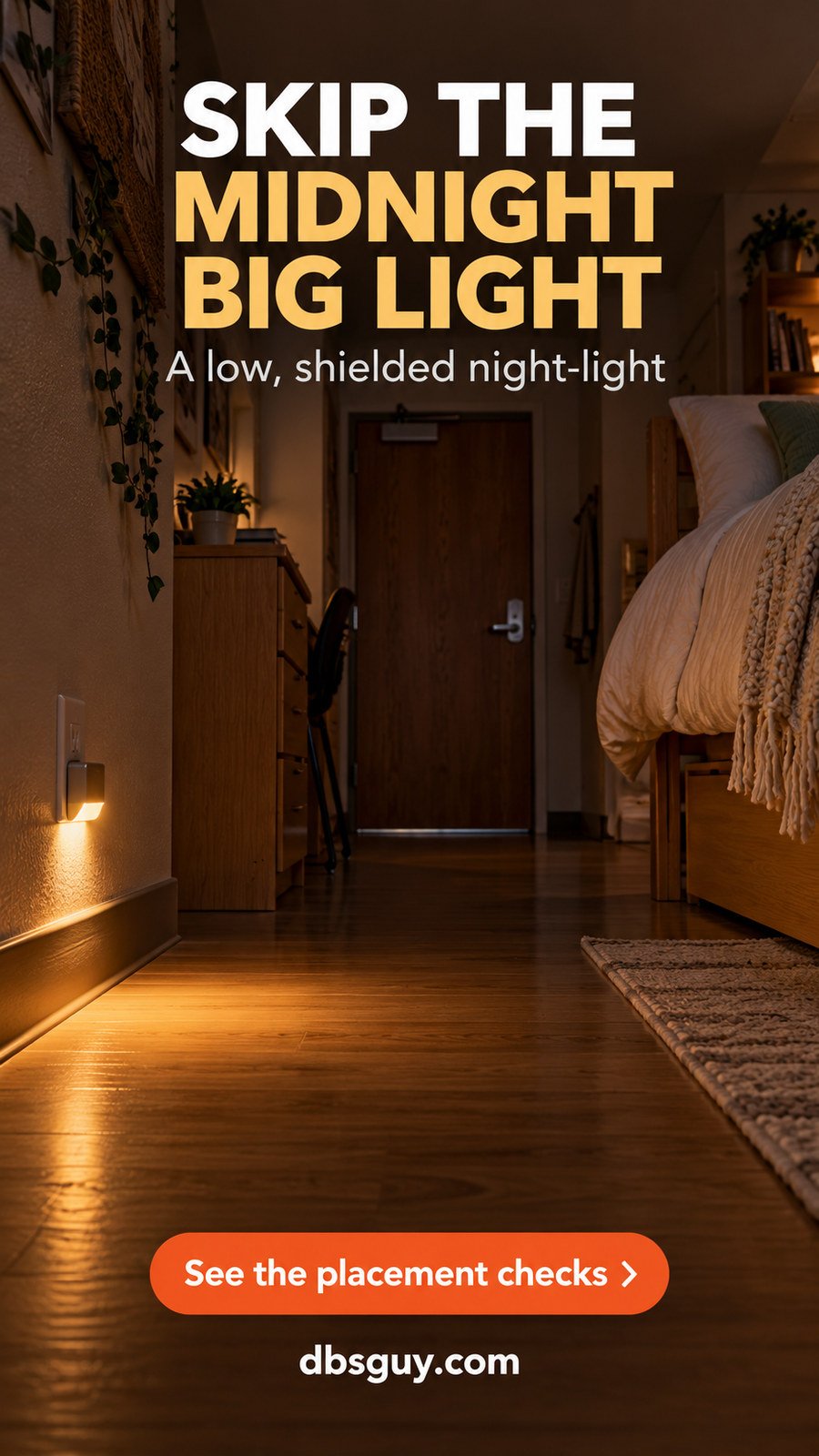
A small night-light near the route from bed to door can help you see the floor without switching on the whole room. Choose a low-output, shielded model and place it where its light falls down onto the walking surface rather than toward a pillow.
A motion-sensing version is useful only if the sensor sees the intended route. Test it by walking past and by turning over in bed; if it triggers constantly, reposition it or use a permitted model with a manual control. Follow the product’s placement instructions rather than hiding it behind furniture.
Keep the aisle clear of shoes and bags as well. A night-light supplements visibility; it cannot make an obstructed exit safe. Agree with your roommate on brightness and whether the light should remain on overnight.
12. Make a Bare Wall the Accent With a Sunset Projector
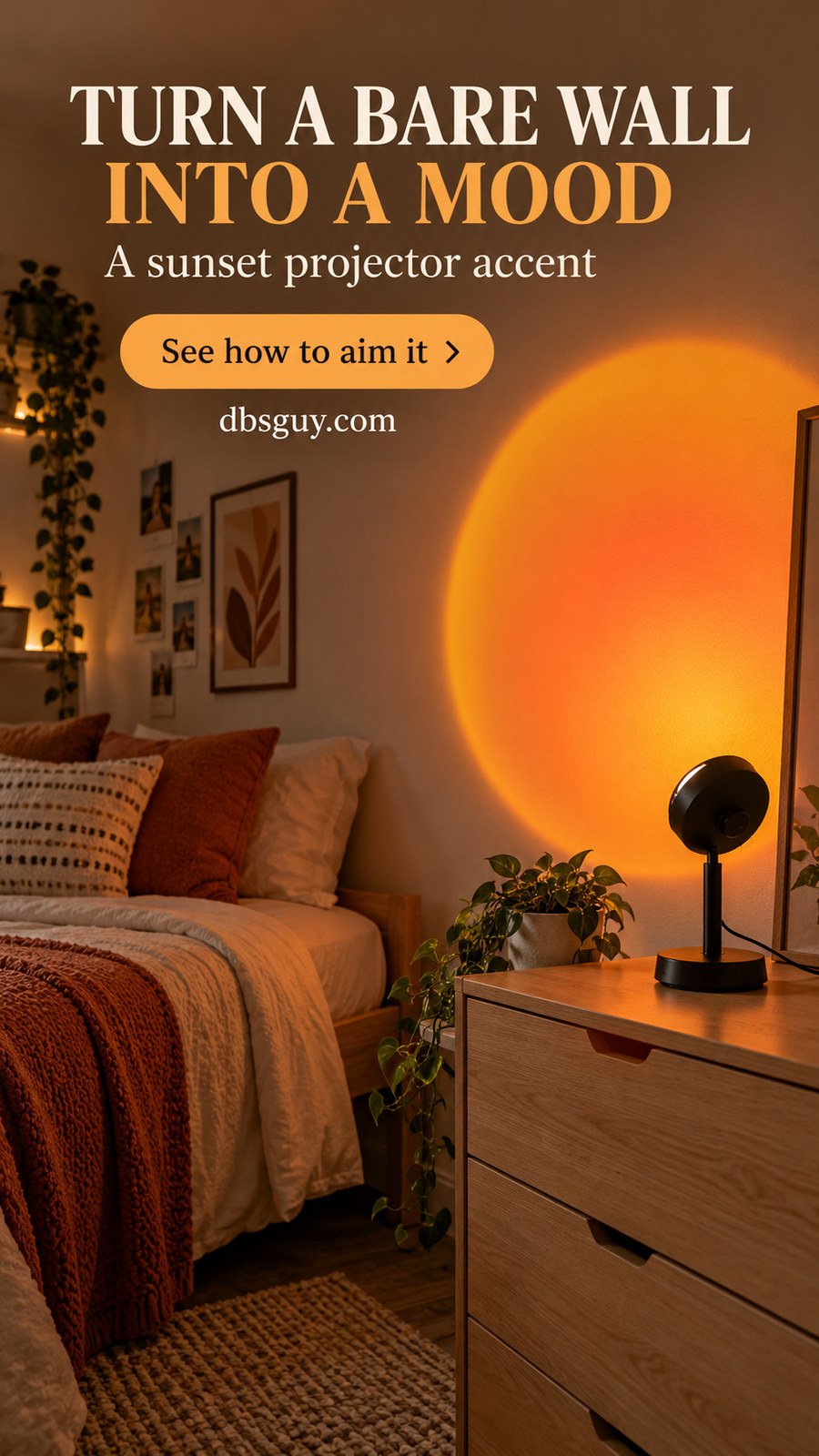
A sunset lamp can turn one blank wall into a warm circle of color without adding artwork. Place a permitted LED projector on a stable dresser, aim it at a clear wall, and keep its stand and cable outside the walking route.
Try the angle before styling the rest of the surface. A smaller pool of light beside the bed may look more deliberate than an oversized projection across every object in the room. Use the adjustment range described by the manufacturer rather than balancing the base on a stack of books.
Keep the beam away from eyes and reflective surfaces that send it toward a roommate. This is decorative light for a change of atmosphere; leave a separate white task light available for reading, writing, and getting ready.
13. Give a Dresser a Candlelike Glow With LED Candles
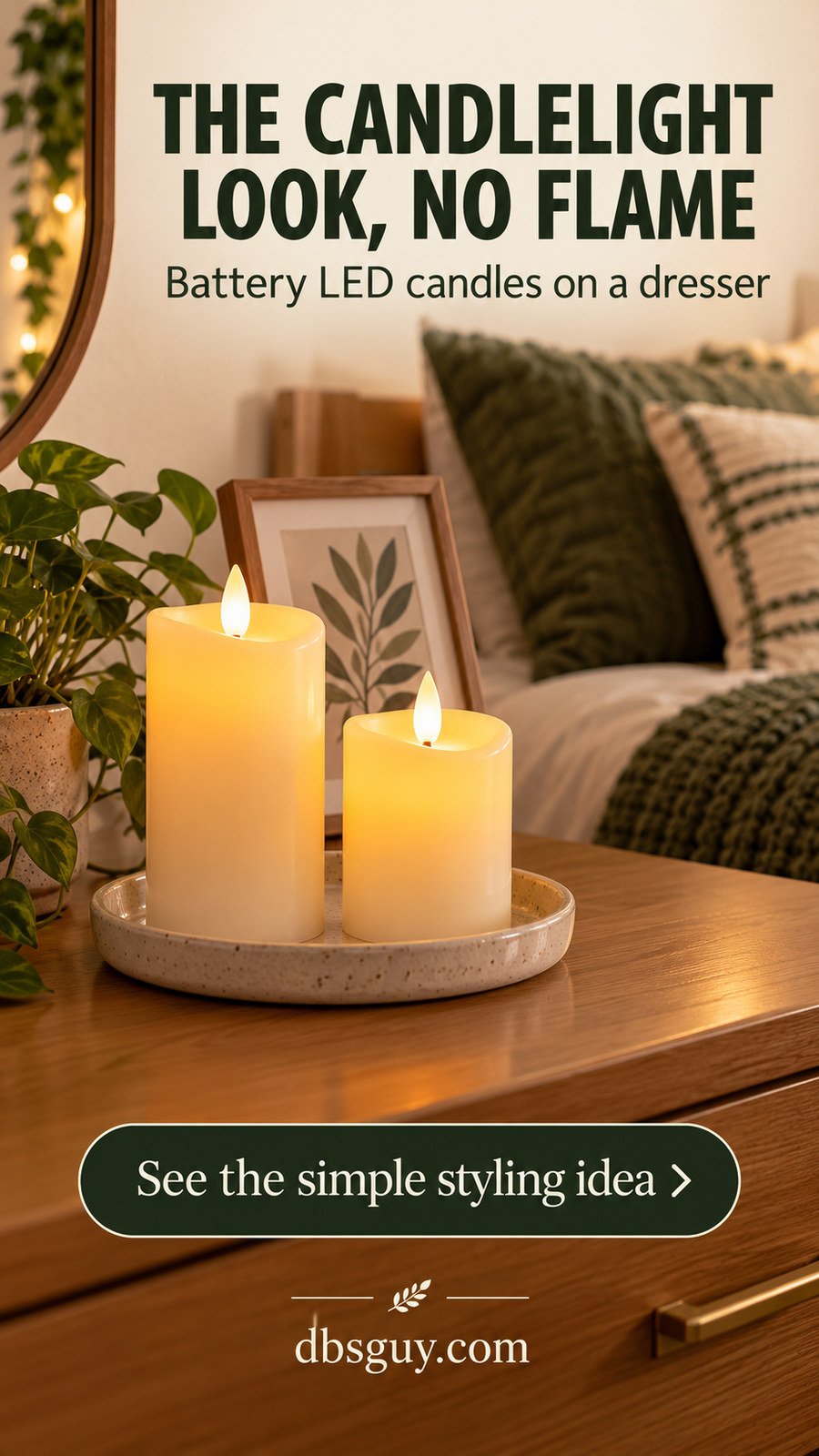
If you like the look of candlelight, battery-operated LED candles create that small amber accent without an open flame. A pair in different heights can be enough on a dresser; the rest of the surface can stay useful.
Choose clearly flameless products, check that your residence hall allows them, and use their timer if one is supplied. Keep the battery compartments secure and follow the instructions for replacing or charging batteries. Avoid adding a candle warmer, fragrance heater, or real tealight to the arrangement.
The effect is intentionally low and decorative. Put the candles where you can enjoy the glow, then switch on a proper lamp for any task that needs visibility. You are styling one small corner, not trying to light the whole room with imitation flames.
Put Together a Setup You Will Actually Use
Start with the problem you notice most, then add a second light only when it has a clear job.
- For a tiny desk: an adjustable task lamp, or an approved under-shelf bar if a hutch blocks the light.
- For different roommate schedules: individual reading lights and a conversation about beam direction, brightness, and lights-out time.
- For an uninviting evening room: a shaded bedside lamp plus an approved floor uplighter if there is clear floor space.
- For a room with strict mounting rules: freestanding desk, table, and floor lamps that your hall permits.
Before keeping the arrangement, sit at the desk, lie on the bed, open the drawers, and walk to the door. Adjust anything that causes glare, blocks a daily movement, or makes the switch awkward to reach. A light earns its space when you enjoy using it on an ordinary Tuesday.
Dorm Lighting Questions
Can I use LED strip lights in a dorm?
Only if your specific hall permits the product and installation. Some policies prohibit adhesive strips, and some also prohibit other string or strip lighting. Check before buying. A freestanding lamp may be the simpler approved alternative.
What light color makes a dorm feel cozy?
Warm-white light around 2700–3000K is a useful starting point for the evening look shown here. Pair it with a shade or an indirect beam and adjustable brightness. Color temperature alone will not prevent glare.
How do I add light without damaging the walls?
Start with freestanding lamps. Use clamps or mounted fixtures only when both the furniture or wall attachment and the product are approved. Removable adhesives can still damage finishes, so do not treat the packaging claim as a guarantee.
Can I put a smart bulb in a dorm lamp?
Check the bulb base, fixture rating, enclosure compatibility, and any dimmer requirements. Also check your campus network rules: app-controlled bulbs may need a connection the residence network does not support. A lamp with physical controls is often easier to operate. Do not alter university fixtures.
What is the first light to buy on a limited budget?
If you will study in the room, prioritize an approved adjustable task lamp. Reposition a lamp you already own before buying decorative lighting. Once the desk works, decide whether you need softer room light or a bedside reading option.