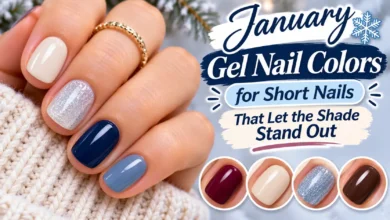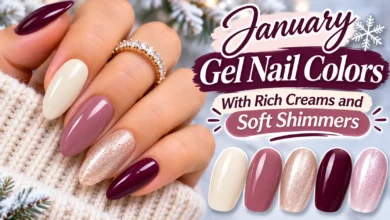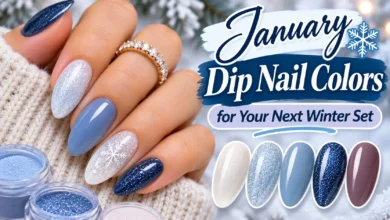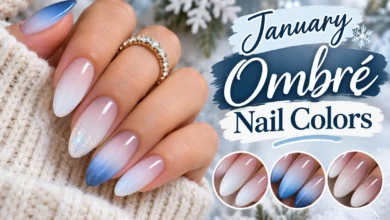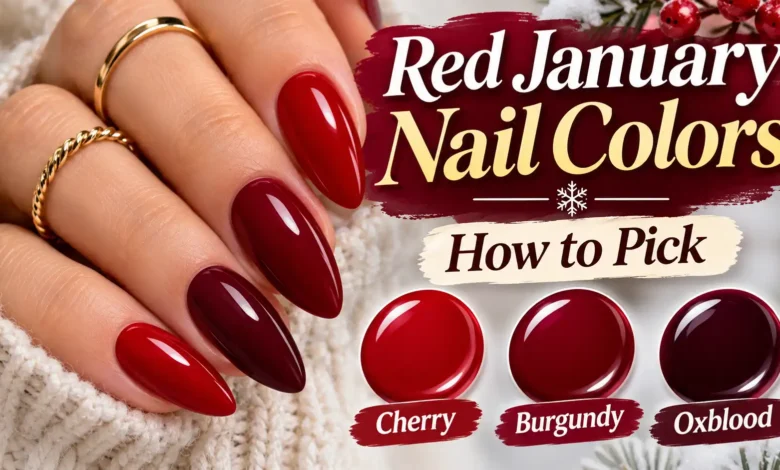
Choose cherry if you want an unmistakably red manicure, burgundy if you want a richer wine tone, and oxblood if you want the deepest brown-red. For January, any of the three can stand on its own: a comfortable length, even color, and a glossy finish give you a complete manicure without holiday artwork.
The decision gets easier when you stop comparing bottles and start comparing finished swatches. How dark does the color look beside your hand? Does it lean berry or brown? Can you still see red in the indoor light where you spend your day?
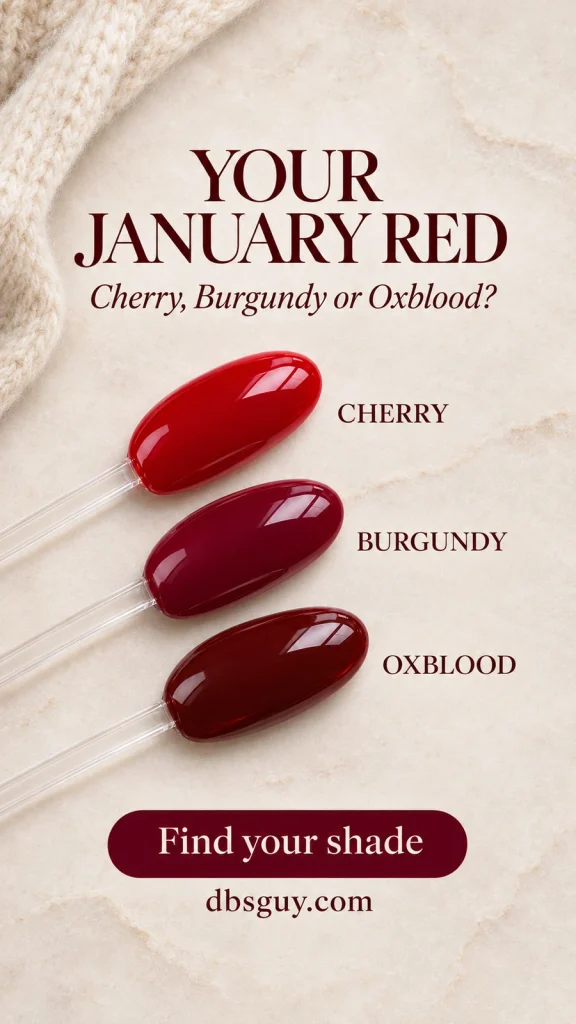
The images are AI-generated manicure concepts. They illustrate the three color directions, rather than documenting salon work, wear tests, or exact branded polish shades. Check a real swatch before choosing a product.
What Separates Cherry, Burgundy, and Oxblood?
Use the names as a starting point. For this guide, cherry is the clearest red, burgundy has a wine character, and oxblood is a very deep red with more brown. Brands use overlapping names, so a bottle labeled “dark cherry” may sit much closer to oxblood than to a bright cherry red.
That distinction shows up in Cirque Colors’ side-by-side red-polish comparison: its oxblood looks browner and darker than its wine-like burgundy, while its cherry is brighter. The brand also explains why bottle photos can hide differences that become clearer on the nail.
- You want people to notice red first: start with cherry.
- You like depth but still want a visible wine color: compare burgundies.
- You like an almost-black impression with a red-brown reveal: try oxblood.
If your main worry is “I don’t want it to look black,” say that before the swatches come out. It is a more useful instruction than simply asking for a winter red.
Cherry Red: Keep the Color Clear
Cherry is the starting point when you want red to remain the main impression, rather than disappear into a dark outline. The concept below uses an opaque, glossy shade on short oval nails. There is enough color to hold attention without adding glitter, a pattern, or extra length.

Try this direction if your usual winter clothes feel visually quiet. Beside an ivory sweater, navy coat, or faded denim, a clear red can provide the color you would otherwise add with a scarf or lipstick. Those are styling suggestions; you do not need a matching accessory to wear it.
When comparing cherry swatches, hold a red that looks a little warmer beside one that looks a little cooler. Notice whether you prefer an orange-red impression or a more berry-red impression against your own hand. If neither feels right, ask for something between them. You can choose a favorite without first assigning yourself an undertone category.
Ask at the salon: “I’d like a glossy cherry red that still looks clearly red indoors. Please keep my nails short with softly oval tips, full coverage, and no artwork. Can I compare a warmer and a cooler red beside my hand?”
Watch for the name trap: “Black cherry” may be far darker than the look shown here. Bring the reference and explain that the visible red matters more than the shade name.
Also Read: January Nail Art for Short Nails With Small but Noticeable Details — useful if you later decide your plain red needs one small accent.
Burgundy: Choose a Wine Tone You Can Still See
Burgundy is worth comparing when cherry feels brighter than you want, but an almost-black manicure would lose too much color. In this reference, the polish has a wine-red cast against gray wool. Keeping every nail the same shade makes that undertone the point of the manicure.
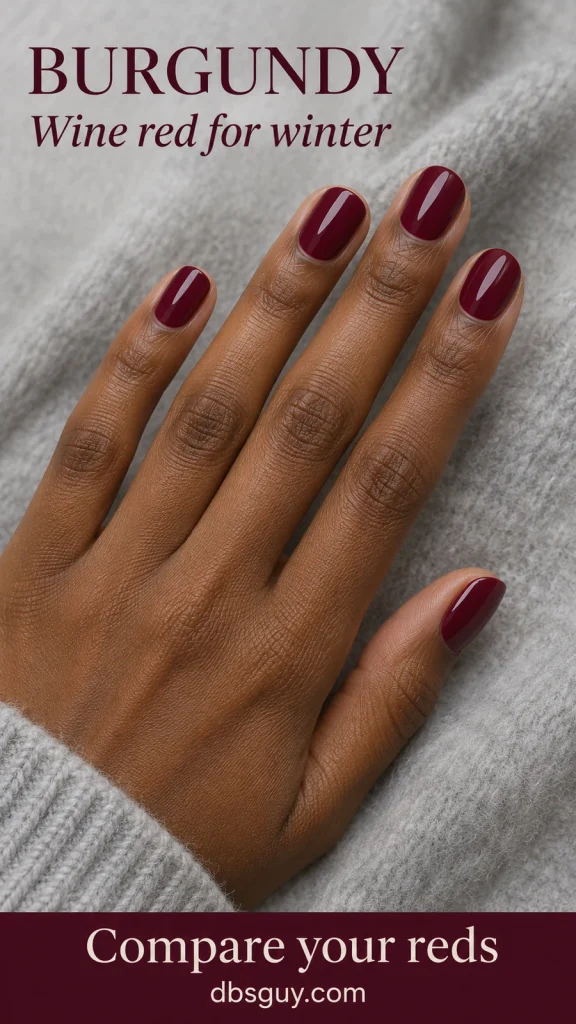
Look closely at what you mean by “wine.” Do you want a berry impression, a muted red, or something edging toward brown? Put two candidates side by side and name the difference you like. “This one, but less purple” gives your artist a workable direction.
For a named color reference, essie describes Bordeaux as a deep red wine polish. Cirque Colors describes Rouge Rockefeller as a burgundy red crème. These are examples to look at, rather than products tested for this article or promises of an exact match to the concept image.
A wine shade can be an appealing middle choice with charcoal, cream, navy, or dark denim. Try the swatch next to a sleeve you wear often; it gives you a more familiar setting than a wall of salon colors.
Ask at the salon: “I’d like a glossy burgundy with a visible wine-red tone. I don’t want it to become mostly purple or look black in normal indoor light. Please show me the finished coverage before we choose.”
Once you find the wine tone you like, check whether the sample is sheer or fully covered. A translucent red over a clear display tip may not look the same over your natural nail. Ask for the sample to reflect the base and coverage you will actually wear.
Also Read: January Almond Nails: Choosing Between Sheer Neutrals and Winter Darks — for deciding how much color you want if you also prefer a tapered shape.
Oxblood: Decide How Dark You Want to Go
Choose oxblood when a deep, earthy red is the attraction. The reference shows short oval nails with reddish-brown color visible through the glossy highlights. The darkest areas look much more subdued, which is part of the effect to consider before committing.
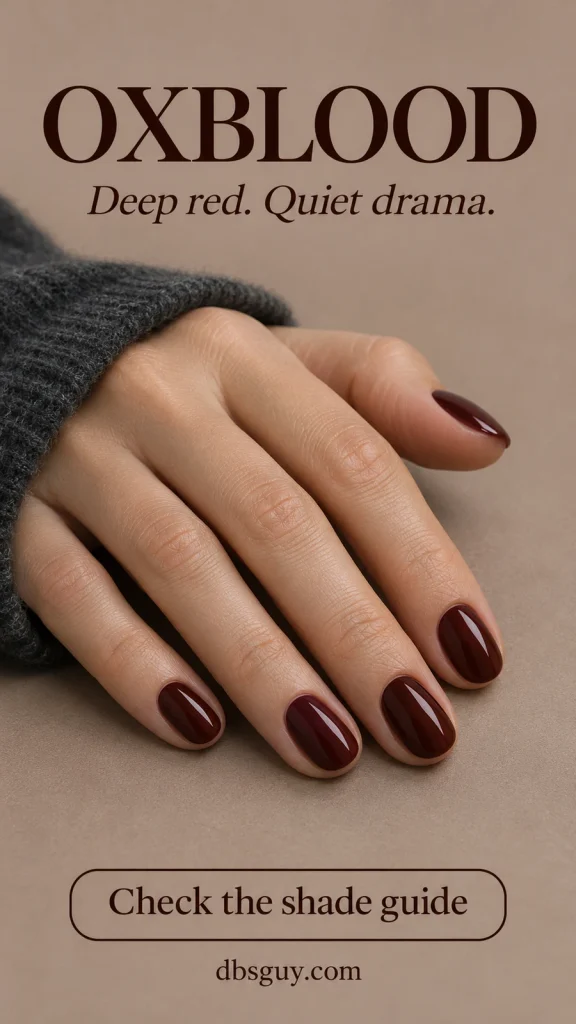
There are two different requests hiding inside “dark red”: a red that looks deep, and a dark manicure that reveals red only up close. Decide which one you mean. If you want the first, a lighter burgundy may serve you better than the darkest oxblood on the display.
Cirque Colors’ Empire State of Mind is one manufacturer-labeled oxblood crème to use as a reference point. Its product directions call for two to three thin color coats. That is a useful reminder to check the intended finished coverage; one lightly painted sample is not necessarily the final result.
For styling, compare oxblood beside camel, chocolate, charcoal, or black. A brown-leaning red may connect neatly with those clothes, while a berry-leaning red creates a different color relationship. Pick the combination you enjoy seeing together.
Ask at the salon: “I want a very dark, brown-leaning red with a glossy finish, at this short oval length. I’m comfortable with a nearly black impression in dim light, but I’d like to see the red-brown tone near a window.”
Before choosing, look at the edge of the swatch as well as its center. Imagine a small pale chip interrupting that dark border. If that would bother you immediately, factor in when you would be willing to touch up or remove the manicure. The color contrast can make wear noticeable; it does not establish how long a particular polish will last.
Also Read: Red January Nail Art That Works After the Holiday Season — the next step if you want to keep a deep red and change its placement or finish.
Make the Final Choice With a Finished Swatch
Use the pictures to narrow the mood, then make the color decision with the product in front of you. These checks help when two reds look almost identical on the shelf.
- Keep the comparison fair. Compare samples with similar coverage, the same finish, and a similar shape. A glossy, fully covered sample and a sheer sample are showing you more than a color difference.
- Hold them beside your own nails. Leave a little space between the candidates so you can consider each one separately. Choose the amount of contrast you like, rather than treating pale, medium, or deep skin as a rule that allows only certain reds.
- Move away from the brightest task light. Check near a window, then in ordinary indoor light. If the shade loses the red you wanted, eliminate it even if it looks beautiful under the salon lamp.
- Confirm the actual base and product. Ask whether the display uses the same polish system and underlying color planned for your nails. For a sheer formula, request a representative finished sample.
- Save the exact choice. Photograph the bottle label or write down the brand, shade, product line, and finish. A photo of your hand is useful inspiration, but that record gives you a clearer starting point next time.
If two shades survive, choose according to the hesitation you started with. Worried about too much brightness? Favor the wine tone. Worried about losing the red? Favor the clearer cherry. Looking specifically for a dark brown-red? Keep the oxblood.
Keep Length and Finish From Complicating the Decision
You do not need longer nails to wear a deeper red. Keep a length that already works for typing, fastening clothes, and putting on gloves. The references use short oval shapes so you can focus on color; borrow the shade even if your preferred outline is softly square.
Start with the finish you intend to wear. A glossy reference is a poor guide to the exact appearance of a matte or chrome-topped result. If you want a different finish, ask to see it over your chosen red before the whole manicure is completed.
Choose the product system separately, too. Shine in a picture does not tell you whether the manicure uses regular polish or gel. If you want to repaint at home, say so when booking. Follow the application, drying or curing, and removal directions for the actual system used.
Questions About Red January Nails
Does red still work after Christmas?
Yes. A plain red manicure does not need a holiday theme. Keep the color you enjoy and skip seasonal motifs if you want the set to fit an ordinary January week. There is no need to replace a favorite cherry red with a darker shade just because the month changed.
Which of these reds works best on very short nails?
All three are options. Choose cherry for a clear red impression, burgundy for wine color, or oxblood for a dark outline. Compare each at the length you intend to keep, since a long display tip can make the overall manicure feel different from your own short nails.
Are cherry red and black cherry the same?
Do not assume so. “Black cherry” commonly signals a darker direction, but the label alone does not settle the color. Ask to compare the finished samples and choose how much red you want visible in normal light.
Do I need gel for a glossy dark red?
No. Regular lacquer is available in deep reds, including the manufacturer examples discussed here. Ask for the look in your preferred product system, then follow that product’s instructions. A glossy concept image does not establish which service created a real manicure.
Also Read
January Nails: How to Choose Your First Manicure of the Year — settle the service, length, and appointment details once you have chosen your red.