Start your freshman dorm room with bedding that fits, a usable desk, and storage for the things you reach for every day. Then add the colors, photos, and small comforts that make the room feel like yours.
These 19 freshman dorm room ideas mix decorating choices with practical setups for a small shared space. You do not need all 19. Choose one look you like, fix the biggest storage problem, and leave a few purchases until you have lived in the room.

Before You Buy Anything for Your Dorm
Check your assigned hall’s room page and packing rules. Confirm the mattress size, furniture provided, under-bed clearance, closet layout, and permitted mounting methods. Twin XL is common, but it is not universal. A room tour video can help you plan; measurements should decide what fits.
Housing policies differ. For example, Purdue’s facilities guidelines identify different mattress sizes in some rooms and set restrictions on appliances, adhesives, and room modifications. Your own school’s current rules take priority. A “removable” label is not a guarantee that a product is permitted or will leave paint intact.
Ask your roommate which items you will share, who will bring them, and how you will divide the space. Keep doors, windows, vents, heaters, and fire equipment clear. Arrange any bed-height changes through the process your housing office approves.
- Want a cohesive look? Start with ideas 1, 2, or 17.
- Running out of storage? Try ideas 3, 8, or 9 before adding larger furniture.
- Need easier daily routines? Look at ideas 4, 10, 11, and 15.
- Working with a very tight room? Use ideas 7 and 19.
The images are AI-generated design concepts. They illustrate possible setups, not completed dorm projects or guarantees of fit. Adapt furniture, wall decor, and placement to your room and housing rules.
1. Build the Bed Around Three Colors
Let one neutral cover the largest area, then bring in two smaller colors. The cream quilt, sage pillow, and terracotta throw shown here give plain wood furniture a clear direction without requiring new furniture or painted walls.
Use bedding you already own if it fits the assigned mattress. Repeat one accent on a desk accessory or storage bin instead of buying a matching set for everything. Keep decorative pillows to a number you can put away easily at bedtime; a bed that needs nightly unpacking can become another chore.

2. Coordinate With Your Roommate Without Buying Identical Sets
Agree on one shared neutral, then choose your own bedding. Navy stripes on one bed and sage on the other can sit comfortably together when both sides use ivory and natural wood.
Talk about shared purchases separately from personal taste. A rug, cleaning tool, or approved appliance needs an owner and a plan for who keeps it after the year. You can coordinate a room while keeping separate spending limits and different styles. For the wider conversation about living together, see Freshman Year: The Complete Survival Guide.

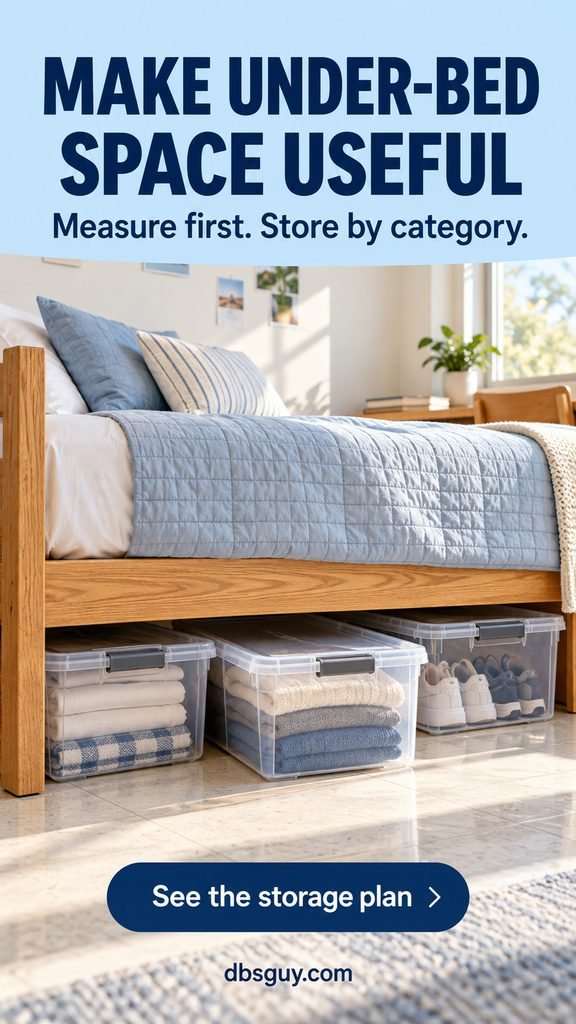
3. Turn Under-Bed Space Into Accessible Storage
Measure the lowest usable clearance under the frame, including any crossbars, before choosing containers. Check the space needed to pull a bin out, too. A box that fits underneath but cannot open is not convenient storage.
Separate spare linens, extra clothes, and shoes so one search does not empty the whole bed. Keep the most-used category nearest the edge and less-used items farther back. The concept uses low lidded bins under a standard bed; it does not require risers. Do not raise a bed unless housing permits the equipment and setup.
4. Give Your Desk Room for Both a Laptop and a Notebook
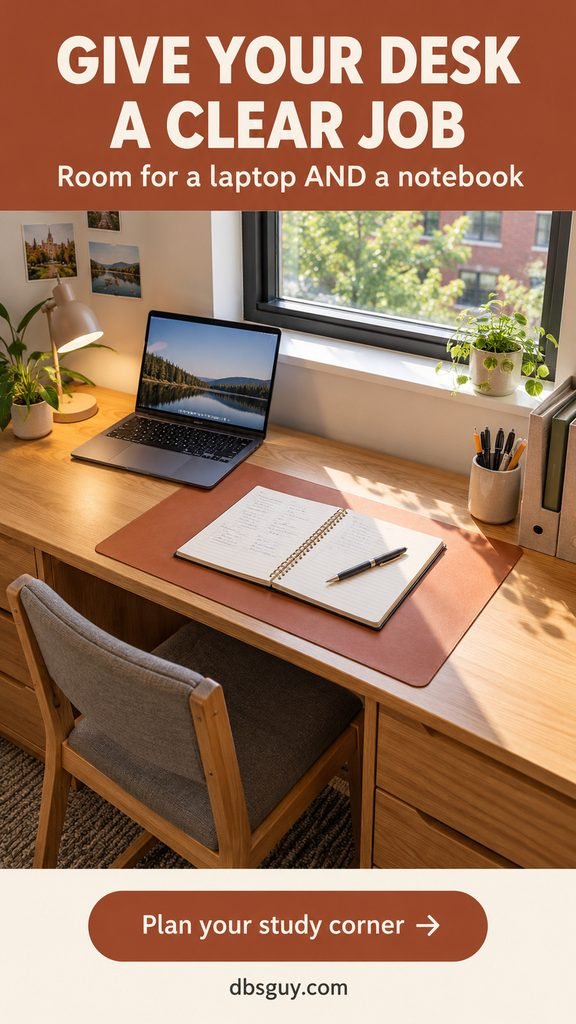
Try the desk with your real study materials before decorating it. Place the laptop toward the back, open a notebook in front, and check that you can sit comfortably without balancing anything on your knees.
A desk mat can define the writing area, while a slim file holder keeps current papers upright at one side. Move unrelated grooming supplies and snacks elsewhere. If the laptop blocks the window or catches glare, adjust its position rather than covering the room’s light source. Browse 15 Bedroom Design With Study Table Ideas for more ways to arrange a dedicated work surface.
5. Use a Small Warm Lamp for Your Side of the Room
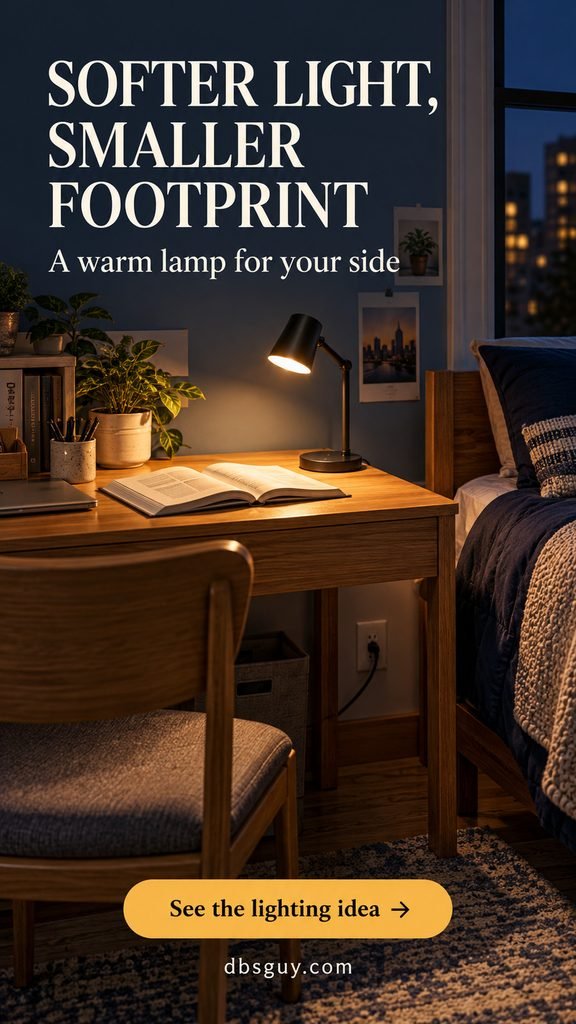
A compact adjustable lamp lets you direct light toward a page instead of lighting the whole room for a late reading session. Set it on a stable surface and check the direction from your roommate’s bed as well as your chair.
Choose a lamp your housing rules allow and keep fabric away from it. Use the permitted electrical connection; do not run cords beneath a rug or join power strips together. A warm light can make the corner feel inviting, but it still needs to be bright enough for the task. Agree on lights-out expectations before the first late night.
6. Make a Tabletop Photo Board Your Personal Focal Point
A small freestanding photo board gives favorite prints a home without spreading them across every wall. Choose a few photos, postcards, or ticket keepsakes and leave some space between them so you can see each one.
Place the board on its own stable stand, fully supported by a dresser or desk. Keep it clear of drawers, windows, and vents. A desktop version is useful when wall mounting is restricted. If you want a wall display instead, check the exact mounting method with housing first. Add new memories during the semester rather than filling the board before you arrive.

7. Swap an Extra Nightstand for a Bedside Caddy
If another table would squeeze the walkway, a fabric bedside pocket can hold a paperback, glasses case, and phone. Choose one designed for your bed type and install it as the manufacturer directs.
Keep the contents light and check that the pocket does not drag on the floor or catch your legs. On an elevated bed, it must not interfere with the ladder or guardrail. Use it for storage rather than as a charging enclosure: keep charging devices on an appropriate open surface, away from bedding. A water bottle belongs somewhere stable where a leak will not soak the mattress.

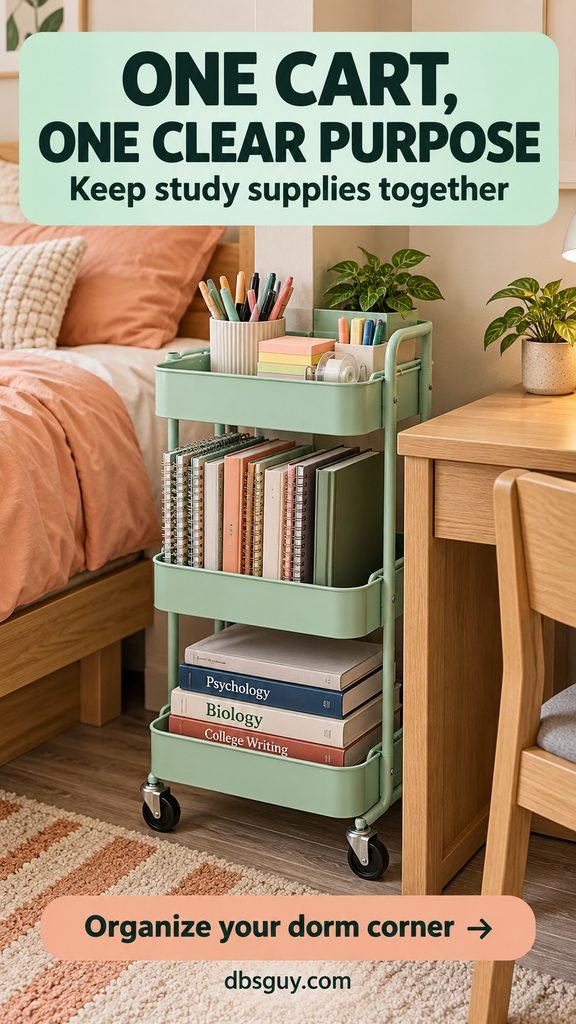
8. Give a Narrow Rolling Cart One Clear Purpose
A cart works best when its job is specific. This study-supply version keeps pens and sticky notes on top, notebooks in the middle, and heavier books below. It supports the desk without taking over the desktop.
Measure the parking spot and the cart’s full width, including handles and wheels. Make sure desk drawers still open and the chair can move. Follow the cart’s load limits and use wheel locks if supplied. If your supplies already fit in a desk drawer, skip the cart; an empty patch of floor can be more useful than another organizer.
9. Add Soft Cubbies Inside the Closet
A hanging fabric organizer can give folded sweaters or T-shirts their own shelves when the room has little drawer space. Place it at one end of the closet rod and leave enough width for clothes that need to hang.
Check the organizer’s size and weight limit, and make sure the existing rod can support the planned load. Keep heavy items low rather than loading the upper cubbies. Before buying, sort what you are bringing: long coats need hanging height, while folded knits need shelf space. An organizer is useful only if its shape suits your actual wardrobe.

10. Set Up a Laundry Corner You Can Carry Out the Door
Give worn clothes one home: a ventilated hamper that fits in your closet or beside the dresser. Keep a carry bag with it if the hamper itself is awkward to take to the laundry room.
Store detergent securely in its original labeled packaging, separate from food, and keep the amount you actually need. Let damp towels dry in a permitted place before putting them in the hamper. Check your hall’s laundry payment system and machine instructions early. A beautiful basket will not help much if you discover you cannot carry it down the stairs.

11. Give Your Shower Caddy a Place to Dry
For a shared bathroom, choose a caddy you can lift comfortably with your usual bottles inside. Drainage matters more than fitting every product you own. Keep occasional extras elsewhere so the daily trip stays manageable.
Back in the room, empty collected water and let the caddy dry on a washable tray in a ventilated spot. Keep it away from electronics and food. Clean the tray rather than letting water sit underneath it, and store clean towels separately. The pictured shelf shows a drying zone; use a surface and location your room can accommodate.

12. Create a Small Pantry for Shelf-Stable Snacks
Use one shelf or a closed bin for the snacks you regularly eat. Keep packages sealed, make the contents easy to see, and avoid turning every free surface into food storage.
The concept shows dry cereal, crackers, and wrapped bars, so it does not depend on a fridge or a cooking appliance. Keep ingredient and allergen information when transferring food into containers, and agree with your roommate about shared items and allergies. Store food away from cleaning products. For options that fit different equipment setups, explore 23 Dorm Snacks for Late-Night Study Sessions.

13. Choose One Storage Ottoman for Occasional Guests
A compact storage ottoman can hold a spare blanket and provide a place for a visitor to sit. It makes sense when you have a real parking spot for it beside or near the foot of the bed.
Check the seating weight limit and confirm that it is intended to be sat on. Leave space to lift the lid and open nearby drawers. Store soft, infrequently used items inside so you are not asking someone to get up every time you need a charger. Do not use an ordinary ottoman as a step to an elevated bed.

14. Use a Low-Pile Rug to Define Your Side
A small flatwoven or low-pile rug can introduce color without changing the walls. Place it beside the bed where you step down, or use it to anchor a personal corner if the room allows.
Measure with doors, drawers, and the desk chair in use. Keep the rug flat, follow housing rules for placement and any backing, and leave electrical cords visible and uncovered. The terracotta-and-cream example adds pattern to plain gray bedding. Choose a rug you can realistically clean with the equipment available in the hall, rather than one that needs care you cannot provide.

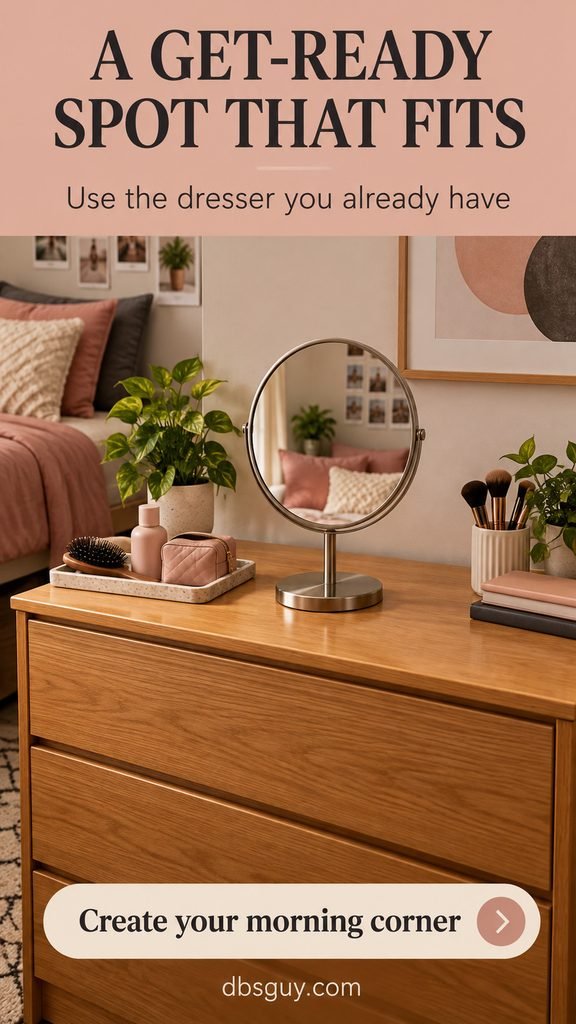
15. Turn Part of the Dresser Into a Get-Ready Spot
A stable tabletop mirror and one small tray can create a morning station on the furniture already provided. Put everyday grooming items in the tray and return extras to a drawer so the surface stays usable.
Choose a broad, secure mirror base that fits fully on the dresser, away from the edge. Check what happens when drawers open and where daylight falls. A small tabletop mirror works for hair and face care; it will not replace a full-length outfit view. Avoid buying a large leaning mirror before you know whether you have a safe, permitted way to secure it.
16. Bring in Natural Texture and One Small Green Accent
Pair a woven pencil cup, a terracotta pot, and a sage notebook for a quiet nature-inspired desk corner. A single plant gives the look a focal point while leaving most of the desk free.
Choose a plant suited to the available light and the care you can provide, with your roommate’s sensitivities in mind. Use a watertight saucer and keep watering away from electronics. If the room is too dark or you travel often, use a botanical postcard or another green accessory instead. Keep plants and their leaves clear of vents and heaters.

17. Let One Bold Pattern Carry the Look
If you prefer a graphic room, make one large textile the statement. A navy-and-cream checkerboard quilt works with a plain sleeping pillow and a small mustard accent; the rest of the room can stay simple.
Repeat one color in a practical item such as a folder or laundry bag. Resist adding another large competing pattern until you see the whole setup. This is an easy approach when the walls must stay bare, because the visual interest travels with your bedding. For another direction, browse 13 Blue Dorm Room Ideas for a Calm, Coastal Vibe.

18. Reserve a Small Shelf for Your Off-Duty Interests
Make a little room for something beyond coursework: a few favorite paperbacks, a sketchbook, a camera, or a framed postcard. Choose items you actually use or enjoy seeing, rather than filling the shelf with decorations bought for move-in.
A compact desktop organizer can keep that collection together if it leaves enough writing space in front. Follow its load limits, keep heavier items low, and make sure the whole base is supported. Leave valuable or delicate equipment secure when you are away. If a shelf crowds the desk, put the collection on an existing dresser instead.

19. Leave the Middle of the Room Open
Before adding a futon, floor cushion, or coffee table, try the room with the standard furniture. A clear route through the center may serve both roommates better than another place to sit.
Sketch a possible arrangement, then check it against fixed wardrobes, outlets, windows, vents, and housing rules. Test the route with desk chairs pulled out and drawers open. Beds along opposite sides can work in some rectangular doubles, as the concept shows, but they are not the right layout for every room. Keep required access clear and ask housing before moving or altering furniture that may be fixed.

What to Set Up First on Move-In Day
Make the bed, clear the route to the door, and unpack the things you will need tonight. Give toiletries, laundry, chargers, and tomorrow’s clothes a place before styling every surface. Then sit at the desk and open the drawers; this is the moment to notice a layout problem.
Use the room for a few days before ordering additional furniture. Keep a short list of specific problems—“nowhere for spare sheets” is more useful than “need more storage.” Choose the smallest change that solves each one. For the rest of the opening-week routine, use First Week of College: The Freshman Survival Guide (Orientation to First Friday).
Freshman Dorm Room Questions
What should I buy before I know my exact room layout?
Start with personal essentials and bedding after confirming the mattress size. Delay fitted storage, extra seating, rugs, and large organizers until you have measurements and know what the room provides. Coordinate any shared purchases first.
Can I decorate a dorm without putting anything on the walls?
Yes. Bedding, a small rug where permitted, a tabletop photo board, a lamp, and useful colored accessories can establish a look. Keep freestanding items stable and avoid using a dresser as a crowded display shelf.
How can I decorate on a small budget?
Choose a palette around what you already own. Reuse a throw, print a few photos, and give existing containers clear jobs. Buy storage only after sorting and measuring. One suitable organizer is more useful than a matching collection that does not fit.
Do my roommate and I need matching decor?
No. Agree on shared space, purchases, and routines. If you both want visual coordination, choose a common neutral while keeping your own bedding and personal items. Different tastes do not prevent a practical room.
Should I loft my bed to make more space?
Only consider it if housing permits it and provides an approved process. Ask about compatible equipment, required guardrails, access, and overhead clearance. Do not improvise supports. If an elevated bed would be difficult for you to use, plan around a lower setup instead.