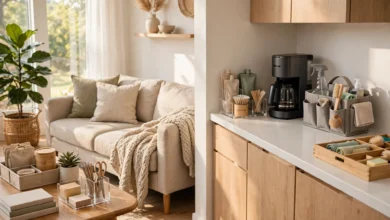
A single dorm room gives you control over where you study, when the lights go off, and what the space feels like when you come back from class. The most worthwhile upgrades make those choices easier: a bed that works for daytime lounging, a desk you can actually use, and storage that stays out of your way.
Choose from these 11 single dorm room ideas to suit your space and routine. Start with the layout in idea 1. Then add the changes that solve your biggest everyday annoyance, leaving room to use the furniture comfortably.
- No space for a sofa? Try the daybed arrangement in idea 2.
- Clothes keep taking over? Start with under-bed storage in idea 3 or the closet setup in idea 9.
- The room feels unfinished? Try the lighting in idea 6 and color plan in idea 7.

The visuals are AI-generated design concepts, not photographs of completed student rooms. Use the arrangements as inspiration and adapt them to your room and housing rules.
Before You Buy Anything, Check the Room You’re Getting
A single room is assigned to one person; it is not automatically larger than a shared room. Ask housing for the floor plan, bed size, furniture inventory, and current decorating rules. Confirm whether furniture can move or must stay in the room. If your “single” is a converted double, do not assume the second set of furniture can be removed.
Measure the room with the door, closet, and dresser drawers open. Include the space your desk chair needs when you sit down and get up. Keep exits, windows needed for escape, vents, and fire-safety equipment clear, and follow your building’s required clearances.
Do not assume “removable” means permitted. For example, Michigan Housing prohibits improvised bed elevation and limits furniture arrangements to approved configurations. Your campus may have different rules for adhesives, curtains, appliances, and added furniture. Treat those rules as part of the design.
1. Arrange the Room Like a Tiny Studio
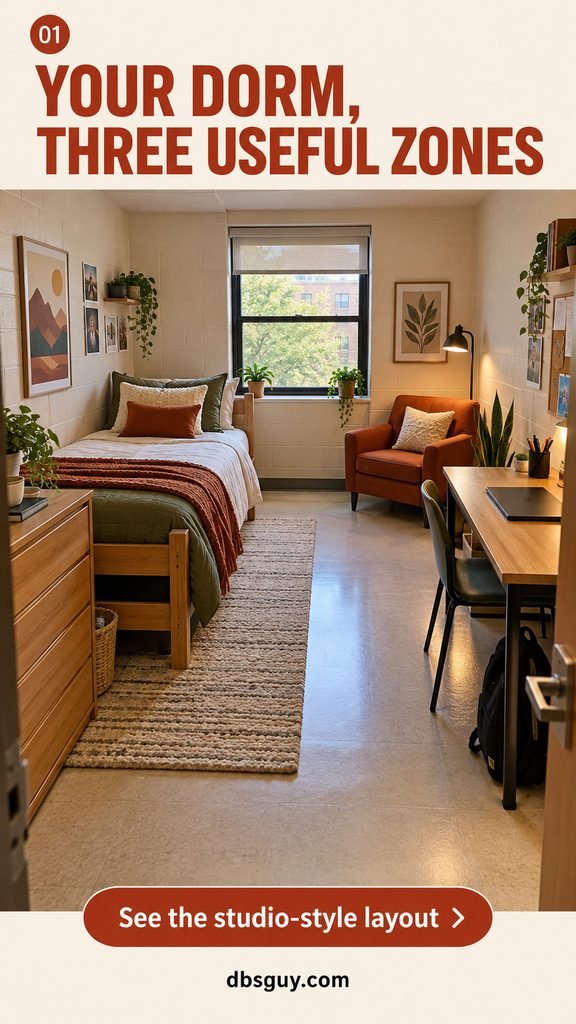
Instead of lining up every piece of furniture wherever it first fits, give the room three jobs: sleeping, working, and unwinding. Put the bed along a long wall, keep the desk on another wall, and see whether a small seat fits in the remaining corner. You get a change of setting without leaving your room.
The useful part is the open route between those areas. Sketch the supplied furniture on your floor plan before moving it. Test the desk chair pulled out, the dresser drawers open, and the closet in use. A layout that works only when everything is closed will get frustrating quickly.
A small, flat rug can mark the bed area if rugs are allowed. Check that its edges lie flat and doors clear it. Skip a divider if it makes the route narrower; the furniture arrangement can define the spaces on its own.
2. Turn the Long Side of Your Bed Into Daytime Seating
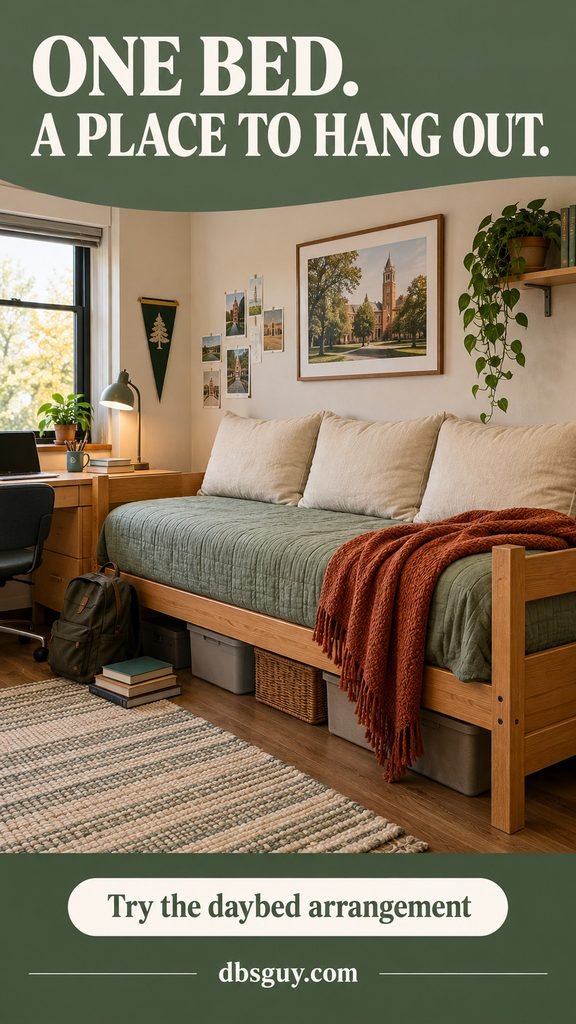
If you want somewhere to chat with a friend but cannot fit another seat, arrange an approved, low bed with its long side against a wall. Add a washable cover and a few substantial cushions along that wall. The back support makes the arrangement more useful for sitting than pillows stacked only at the head.
Choose cushions you can put away easily at bedtime. A huge pile looks inviting in a pin but becomes another daily chore when there is nowhere to store it. Use the existing desk chair as the second seat when someone visits.
This works best when the bed is comfortable to sit on with your feet supported. A high loft or raised mattress is a different setup; do not buy a second mattress or change the frame just to imitate the image. Check the actual mattress dimensions before choosing bedding.
3. Fit Storage to the Space Under Your Actual Bed

Under-bed storage is useful when you can reach it without dismantling the room. Measure from the floor to the lowest rail or brace, then check the gaps between the legs. The outer dimensions of a case, including its handles or wheels, matter more than its advertised capacity.
Use shallow cases for spare sheets, out-of-season clothes, or items you need occasionally. Put the most-used case near the side you can access. Leave enough floor space to pull it all the way out; a bin trapped behind a dresser is not convenient storage.
The image uses an ordinary low frame, not riser blocks. If you need a different bed height, ask housing which configurations are approved and who should make the adjustment. Buying shorter cases is often the simpler choice.
4. Give Studying a Desk That Stays Ready
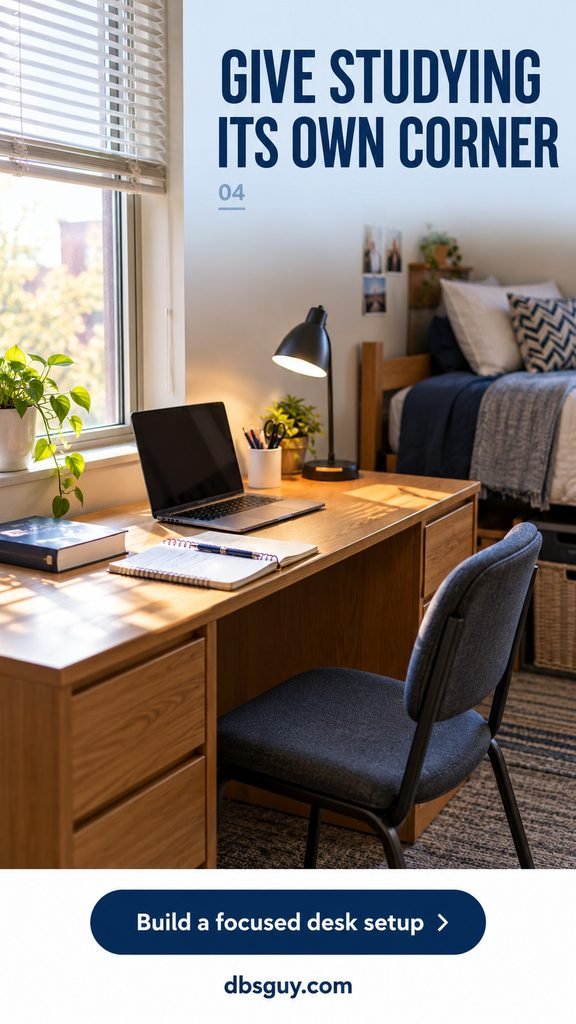
One of the pleasures of a single dorm is being able to set up your workspace around your own habits. If the approved layout allows it, place the desk so daylight arrives from the side. Open your laptop at the time you usually study and check for glare before settling on the position.
Leave room for the combination you actually use: perhaps a laptop and an open notebook, or a textbook beside a problem set. Keep the daily tools on top and less-used supplies in the drawer. A large decorative organizer is a poor trade if it takes the space your notebook needs.
Use a task lamp for evening work and keep the chair’s knee space clear. Before buying a different chair, try the supplied one at the desk and confirm housing’s furniture rules. Move-in-day styling should not make ordinary homework harder.
5. Add One Compact Reading Chair—If It Passes the Fit Test
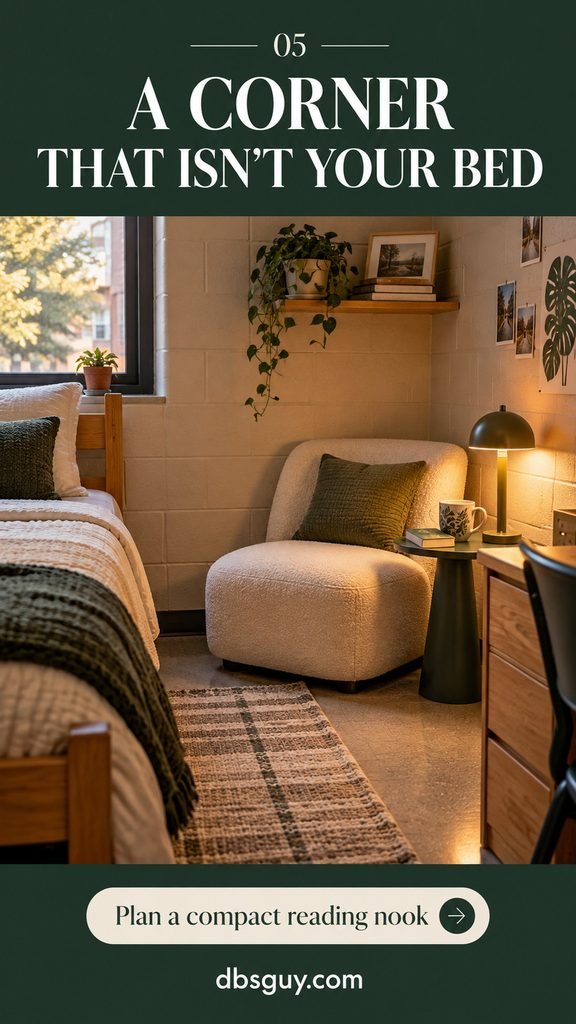
A separate chair gives you a place to read for pleasure, call home, or take a break between assignments. Look for a compact seat with a back you find comfortable. Broad arms, reclining mechanisms, and a matching ottoman all need more space than the seat alone.
Mark its full footprint on your room sketch, including the side table if you want one. Then check whether you can reach the closet, open drawers, and walk past while someone sits there. Cardboard laid on the floor can help you picture the footprint without attaching tape to a surface.
If it only fits by blocking something, leave it out and use the daybed idea instead. For more seating inspiration, see 28 Cozy Reading Nook Ideas for Small Spaces, choosing only arrangements your dorm can accommodate.
6. Use Separate Lamps for Work and Winding Down
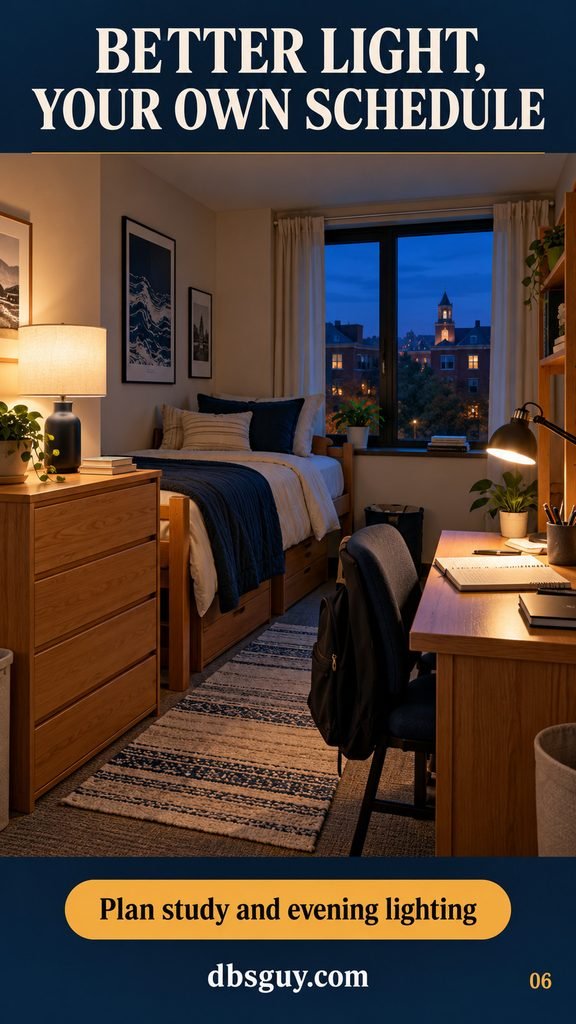
Make it possible to change the lighting without rearranging the room. A directed task lamp can light your notebook, while a shaded lamp on a stable dresser provides a softer evening setting. You may only need one additional lamp if your supplied desk light already does its job.
Think about the controls, too. Can you switch the evening lamp off without climbing over a chair? Does the desk lamp shine into your eyes when you sit down? Try the positions after dark before adding more lighting.
Choose fixtures allowed by housing and follow their instructions. Keep lamps and bulbs away from bedding and other combustible materials, do not overload outlets, and keep cords out of walking routes. The U.S. Fire Administration’s college fire-safety guidance explains the electrical basics. Avoid draping fabric over fixtures to soften the light.
7. Make One Color Story Carry Through the Room

You get to choose the whole room’s palette now. Start with something you already like—a comforter, print, or favorite throw—and repeat a few of its colors. In the concept shown here, navy bedding, warm white linens, and terracotta accents connect the bed, dresser, and artwork.
You do not need to replace every practical object to make that work. Neutral storage can sit quietly in the background while one pillow or desk accessory repeats the accent color. Varying texture keeps a limited palette from feeling flat.
For a cooler direction, browse 13 Blue Dorm Room Ideas for a Calm, Coastal Vibe. Keep favorite personal photos and objects, even when they do not match perfectly. A room can feel coherent and still look like someone lives there.
8. Make the Dresser Your Getting-Ready Station
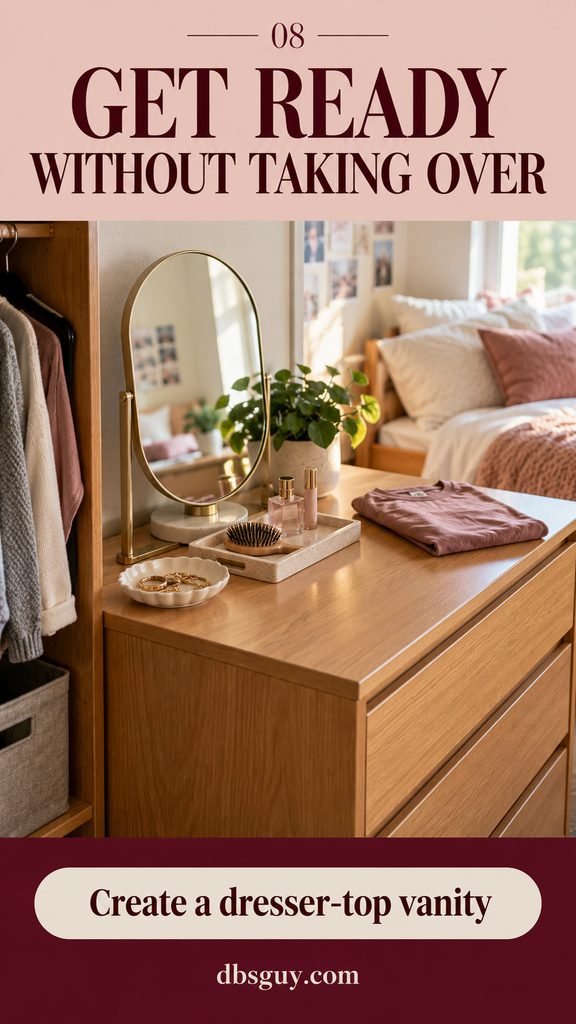
If your desk fills with hair tools, skincare, or jewelry, move the getting-ready routine to the existing dresser. A stable tabletop mirror and one small tray can give it a home without adding a vanity desk.
Keep the things you use each morning in the tray and store backups in a drawer. Leave part of the top clear for a folded shirt or the items you are packing. Position the mirror where you can see comfortably without balancing it on books or blocking the dresser’s use.
If you need a full-length mirror instead, check the permitted installation method and the manufacturer’s instructions; an unsupported mirror leaning against a wall is not a secure substitute. For a softer palette around this corner, see 15 Pink Dorm Room Ideas That Are Anything But Basic.
9. Organize Inside the Closet Before Adding a Clothing Rack

An extra rack can eat up the floor space you gained by living alone. First, work within the closet or wardrobe you have. Put current-season clothes where you can reach them and keep occasional items on the existing upper shelf.
A fabric hanging organizer can hold folded shirts if the rail and organizer permit the load. Measure its width before buying; it takes hanging space away from coats and longer clothes. If you mostly hang your wardrobe, shelf bins may suit you better.
Use lightweight shelf bins you can retrieve safely, and follow the furniture’s load limits. Keep shoes contained at the bottom without obstructing the doors. Organize the clothes you really bring to campus, rather than buying a storage system for an imaginary smaller wardrobe.
10. Contain Snacks on One Easy-Clean Surface
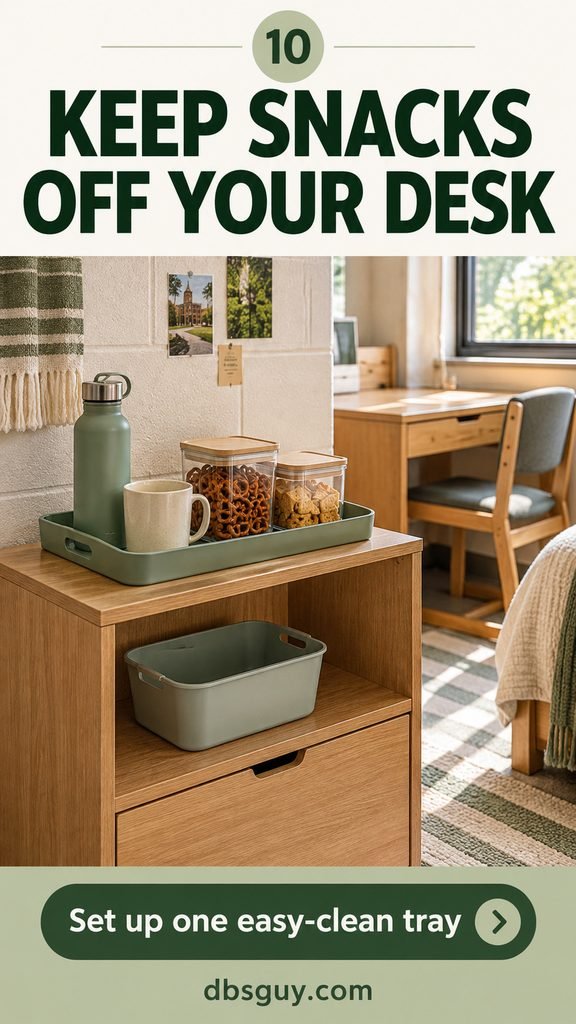
Give drinks and snacks a small home away from papers and electronics. A washable tray on an existing low cabinet can hold a capped water bottle, a mug, and sealed containers of shelf-stable snacks. The tray makes it easy to clear and wipe the surface.
Plan the cleanup route as well. A small washable tub can carry used dishes to the appropriate sink; empty and clean it promptly instead of letting it become a collection point. Store food according to its label, and keep anything that requires refrigeration in suitable cold storage.
The pictured setup needs no heated appliance. If you want a brewer or mini fridge, confirm the specific equipment is allowed and follow its clearance and electrical requirements. Also read: 13 Dorm Coffee Station Ideas That Beat the $7 Latte Habit for arrangements built around different drink routines.
11. Give Your Backpack, Shoes, and Laundry a Landing Place
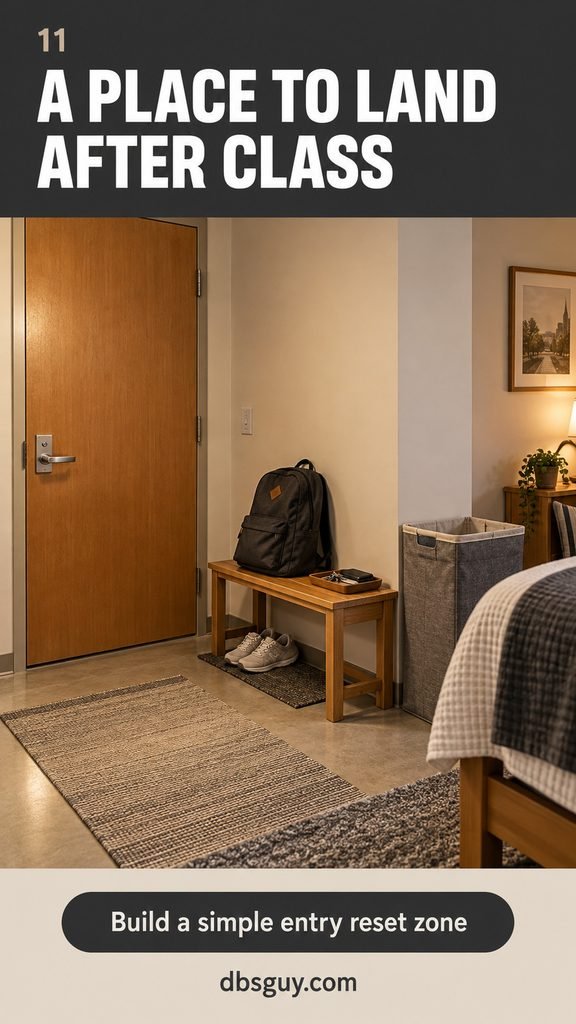
Walk into the room as you would after class. Where do your backpack, keys, shoes, and jacket naturally end up? Build a small reset spot near that location so the bed and desk do not have to collect everything.
A narrow bench can hold a bag and a small key tray, with shoes underneath and a slim hamper beside it. Add that piece only if it sits completely outside the door swing and leaves the route clear. In a tighter room, use the end of an existing dresser for keys and a basket beside it for the bag.
Keep this setup inside your room, not in the hallway. Try it for a few class days before buying more organizers. If the backpack still lands elsewhere, adjust the location. The useful arrangement is the one you can follow when you are tired and carrying too much.
Choose the Upgrade That Changes Your Day
Start with one repeated frustration. If you cannot start homework without clearing the desk, fix the workspace first. If everything ends up on the floor, choose the closet or entry setup. If the room works but feels impersonal, lighting and a favorite color combination may be enough.
Arrange the furniture, live with the layout for a few ordinary days, and buy only what still has a clear job. A single dorm feels more worthwhile when it supports the way you spend your time.
Single Dorm Room FAQs
Is a single dorm room worth the extra cost?
It depends on the actual housing charge and how much you value control over your space and schedule. Compare the single and shared options for the same contract period, then check what the charge includes. Ask about room size, bathroom access, location, furniture, and availability. A single room does not automatically mean a private bathroom or a quiet hallway. Include decorating purchases in your budget before deciding.
What should I buy first for a single dorm?
Confirm what is supplied, then prioritize bedding that fits the mattress and the essentials for your daily routine. Wait on extra seating, large organizers, and a separate vanity until you have measured the usable space. A comforter you already own may be more useful than a coordinated set that leaves no budget for something you need.
Can I decorate without attaching anything to the walls?
Yes. Bedding, a permitted rug, tabletop lighting, and small framed photos on existing furniture can establish the room’s style. Leave shelves and wall decorations out of the pictured concepts if your housing rules do not allow their mounting method. Do not assume a product described as removable is approved or will leave your particular finish undamaged.
Should I loft my bed to make room for a chair?
Only consider a loft if housing permits an approved configuration and you are comfortable using it. Ask about installation, guardrails, ladder space, and required clearances. None of the ideas here requires a high loft; fitting shallow storage under a low bed or using the bed as daytime seating may suit your routine better.