A good dorm room gives your favorite things a place: the colors you wear, the music you replay, the books you keep, or the team you follow. Start with a bed that looks put together, lighting you can control, and one personal detail you actually care about. The standard wood furniture can stay.
These 15 dorm room ideas for guys range from complete color schemes to useful changes for your desk, floor, and storage. For a quick refresh, try navy and rust, a graphic rug, or better evening lighting. For a room that says more about you, head to the music, sports, sneaker, and bookish setups.
The images are AI-generated design concepts. Use them to explore colors and arrangements, then adapt the details to your room measurements and residence hall rules.
Check the Room Before You Fill a Cart
Confirm the mattress size, supplied furniture, and usable floor space. Measure under the bed at its lowest brace, open the dresser drawers, and pull out the desk chair before deciding where another piece could fit. A rack that fits against a wall can still make the room awkward to use.
Read your own housing policy before choosing wall attachments, lighting, rugs, or extra furniture. Rules differ even within a campus. For example, Mizzou’s residence hall decorating rules specify different wall-hanging methods for different buildings and prohibit self-adhesive LED lights. A removable label does not guarantee permission or damage-free removal.
Keep doors, windows, vents, heaters, and fire equipment clear. The concepts below work with portable furnishings and textiles; wall-mounted artwork is optional and needs an approved installation method.
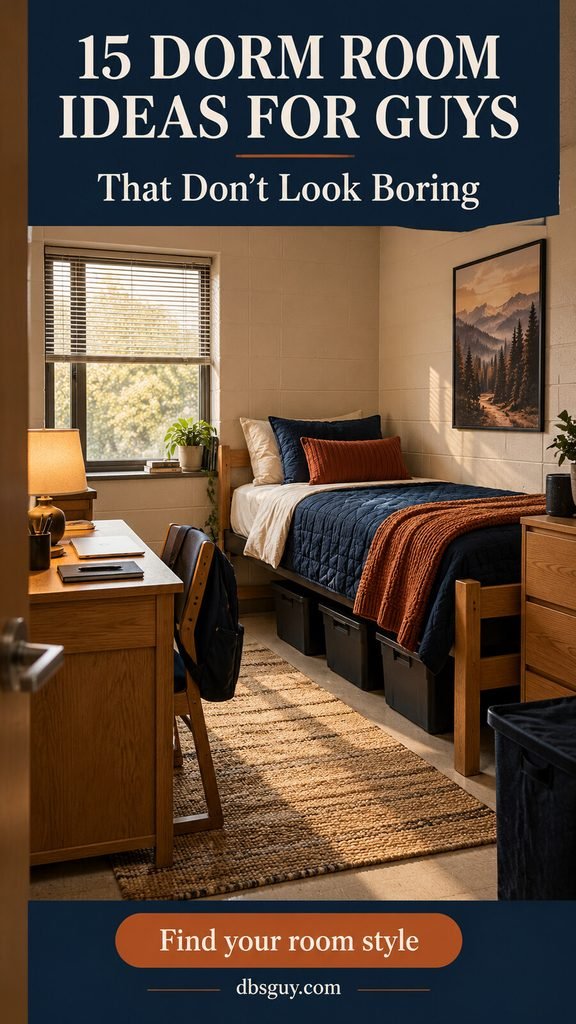
1. Give Navy Bedding a Burnt-Orange Accent

Navy, cream, and burnt orange make a useful starting palette when your room comes with warm wood. Let navy cover the biggest surface—the quilt or comforter—then show cream near the sleeping pillow. A ribbed rust cushion and folded throw bring in a warmer note without competing with the wood.
If you already have navy bedding, start with one orange pillow cover. Repeat the color only if the room needs it; buying orange bins, a lamp, and wall art at the same time can make a small space feel overly coordinated.
For a dim room, leave more cream visible at the top of the bed. You get the contrast without making every large surface dark.
Also read: 13 Blue Dorm Room Ideas for a Calm, Coastal Vibe.
2. Make a Charcoal Room Interesting Through Texture
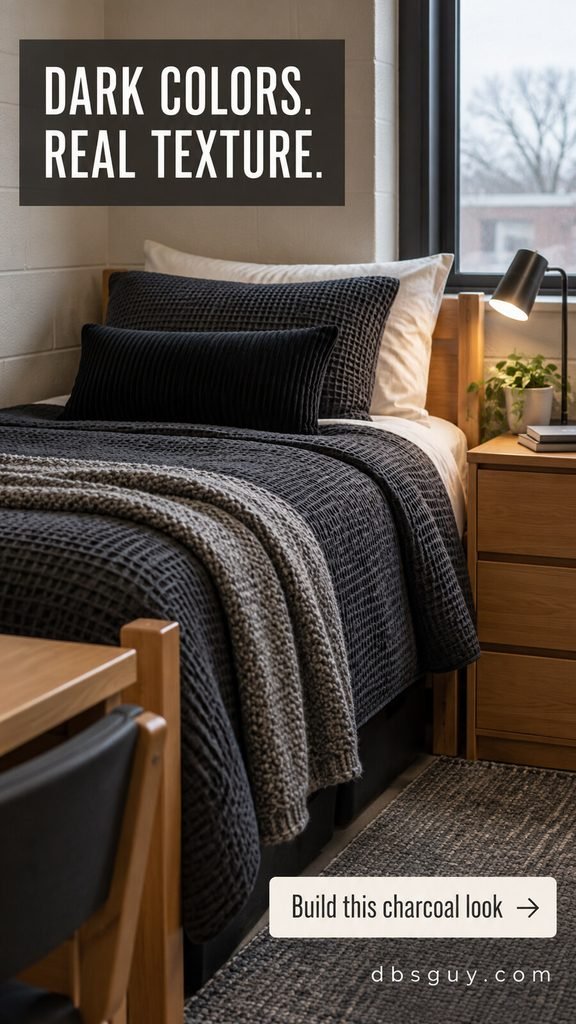
If you like gray and black, change the surfaces rather than adding colors you do not want. A waffle-weave duvet, a heather-gray knit throw, and a black corduroy cushion catch the light differently. That gives a mostly charcoal bed some depth.
Keep an ivory pillow or sheet edge visible so the layers have a clear outline. Leave the supplied wood exposed, too; covering every warm finish in black can flatten the room.
Before buying a textured throw, read its care label. A washable layer that fits your laundry routine is easier to live with than an elaborate knit you have to treat carefully all semester.
3. Build an Outdoorsy Look With Olive and Canvas

Bring the colors of a favorite trail into the room through an olive quilt, an oatmeal blanket, and tan canvas storage. These materials sit comfortably beside typical honey-colored dorm furniture. One small landscape photo gives the palette a personal reason.
The useful detail here is the canvas hamper: it contributes to the look while handling a real job. Choose a shape that stays upright and has handles you can comfortably carry to the laundry room.
Use a photo from a place that matters to you, whether that is a local park or a trip home. You do not need decorative hiking gear or a mountain view outside the window to make the idea work.
4. Let One Oversized Print Set the Direction

A bold print can supply the room’s entire accent palette. The cobalt-and-mustard artwork shown here gives a cream bed and wood desk a sharper focal point; one blue cushion is enough to connect the bed to it.
Mock up the full frame size with paper before ordering. Place it over the desk rather than the sleeping area, and leave visible wall around it. The print should relate to the desk’s width instead of filling every available inch.
Use only your hall’s permitted hanging method and the product’s instructions. If wall installation is not allowed, scale down to a stable tabletop frame whose stand fits fully on the dresser. Keep the color relationship even when the artwork gets smaller.
5. Make a Music Corner That Still Leaves Room to Study
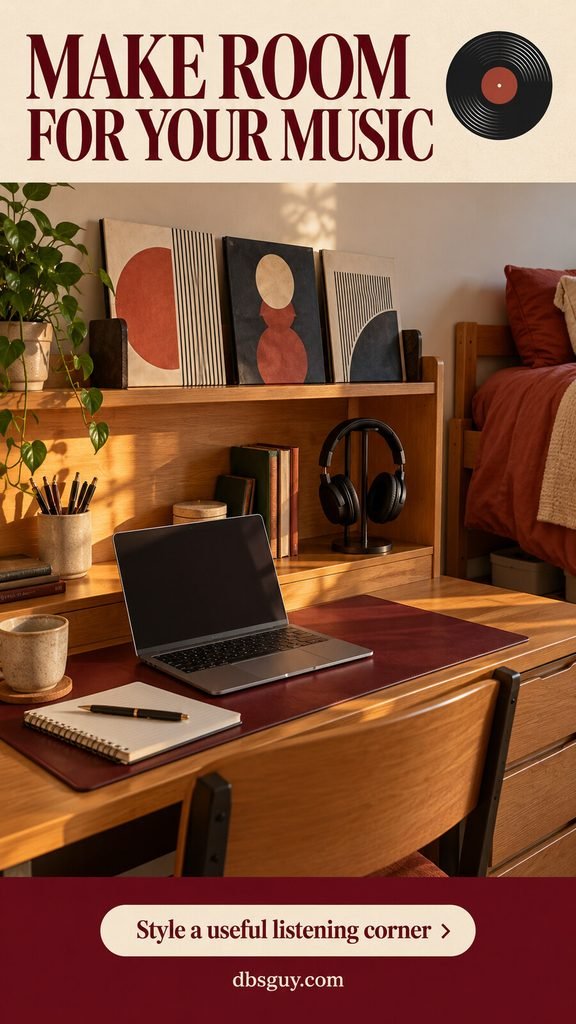
Music can shape the room without requiring a turntable, speaker system, and another piece of furniture. Display a few favorite album sleeves upright between bookends on an existing desk hutch. Put headphones on a compact freestanding stand where you can reach them.
Keep the display behind the work area, leaving room for both your laptop and an open notebook. If the sleeves crowd the hutch, rotate one at a time. A favorite concert photo in a small frame gives the same personal connection when you do not own records.
The burgundy desk mat in this concept picks up the warm tones in the artwork. Choose yours after you select the albums, so the objects you love lead the design.
6. Use Separate Light for the Desk and Bed
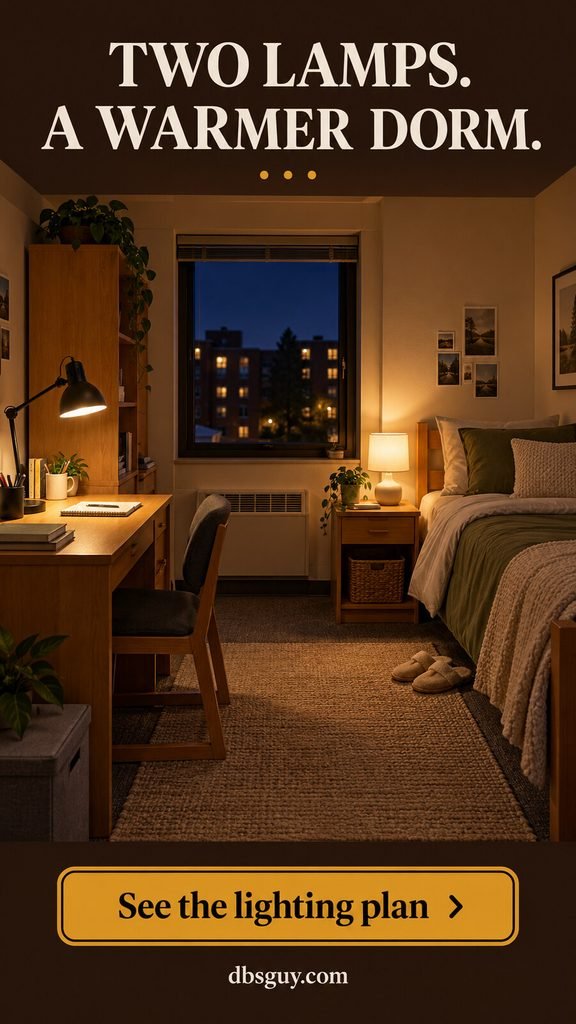
A lamp aimed at your notebook and a shaded light near the bed let the room serve two different activities. Keep the task lamp adjustable so you can direct it toward your work. The bedside lamp can provide softer evening light without illuminating the whole room as brightly.
Warm-white bulbs are an aesthetic choice for this look. Check the lamp’s bulb specifications and your housing rules. A lamp with its own stable base works if furniture clamps are not permitted; either version needs room around its shade.
Before buying both, test the arrangement with a lamp you already own. Check where its light lands from your roommate’s pillow. Route cords beside furniture, keep them away from bedding, and use electrical accessories only as permitted by housing.
7. Give Under-Bed Storage a Consistent Front

Visible storage looks calmer when the containers share a color and height. Here, three low charcoal bins form a simple row beneath the bed. Front handles make them easier to pull out without digging behind the frame.
Measure the lowest clearance, including braces, and check the bin’s height with its lid and handles. You also need enough floor space to pull it fully out. Buy one container first if you are unsure about the fit.
Assign the bins specific jobs: spare linens, off-season clothing, and backup supplies, for example. Store frequently used items closest to the open side. Keep the bed in its approved configuration and choose shallower bins when needed.
8. Turn the Bed Into a Daytime Lounge
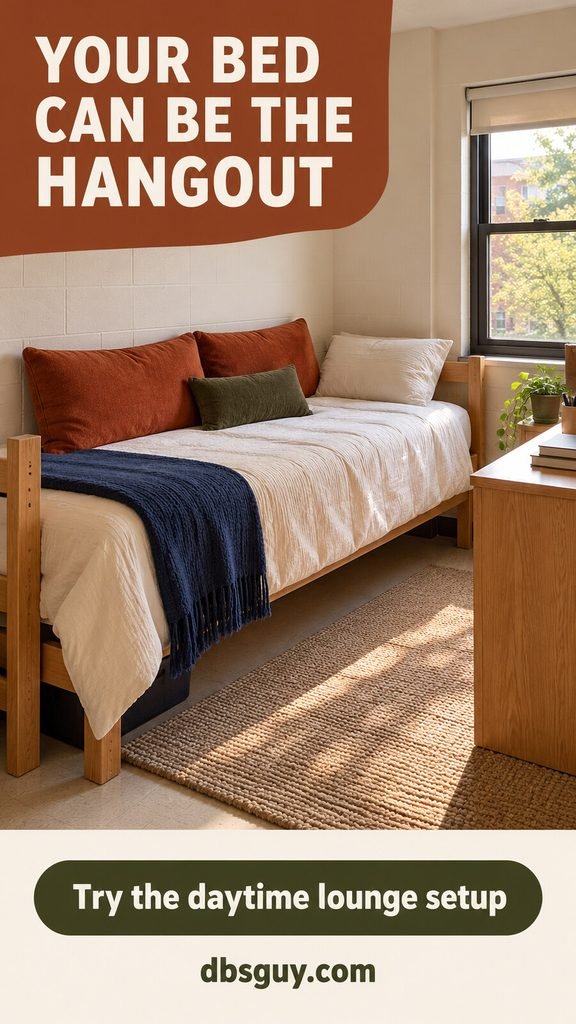
In a room with no space for another chair, use the bed you already have. If its permitted position is lengthwise against a wall, place two larger cushions along that long edge for daytime back support. Keep the sleeping pillow at the head and fold a throw within reach.
A flatter coverlet gives the setup a tidy surface for sitting. At night, the cushions can move to the foot or another designated spot; decide where they will go before buying oversized ones.
Ask before sitting on your roommate’s bed, even if both sides look like lounge seating. This arrangement adds a place to hang out while keeping the central floor available.
9. Let a Graphic Rug Carry the Pattern
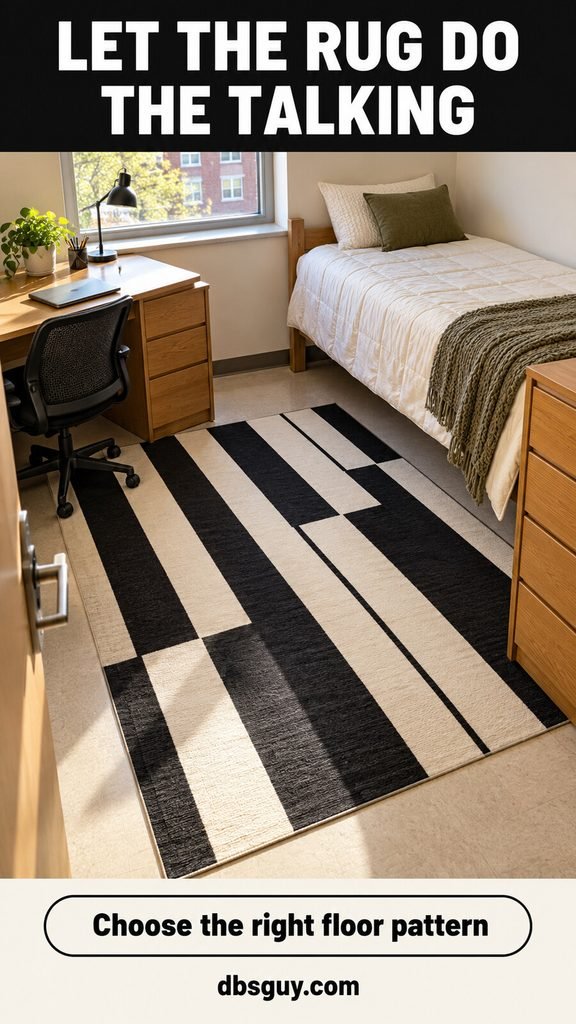
If your bedding is already neutral, a black-and-ivory striped rug can supply the room’s strongest visual detail. Keep nearby textiles mostly plain so the floor pattern has room to stand out.
Measure the exposed floor rather than ordering a standard size from a room photo. Check the door swing, drawer travel, and the desk chair’s full movement. Either keep the rug out of the rolling path or make sure the chair can move over it without catching an edge.
A low-pile or flatwoven option is a practical starting point for this setup. Check cleaning instructions and housing permission, and address any slipping or curled edges with an allowed solution. Skip the rug if it creates a problem in the walking route.
10. Make One Desk Work for Gaming and Class

Plan around the open notebook first. Set one monitor toward the rear of the desk, keep the keyboard easy to move back, and reserve a clear writing area in front. A small tray holds the controller when classwork takes over.
Check the monitor stand’s footprint before buying; the screen width alone does not tell you how much desk it will occupy. Headphones on a freestanding stand keep another item off the writing surface without requiring a wall mount.
Bundle loose cables with reusable ties and route them beside the desk rather than across your feet. A small freestanding accent light can add color if allowed, but it should not replace usable task lighting or shine into your roommate’s bed.
11. Give Team Pride One Clear Display Area
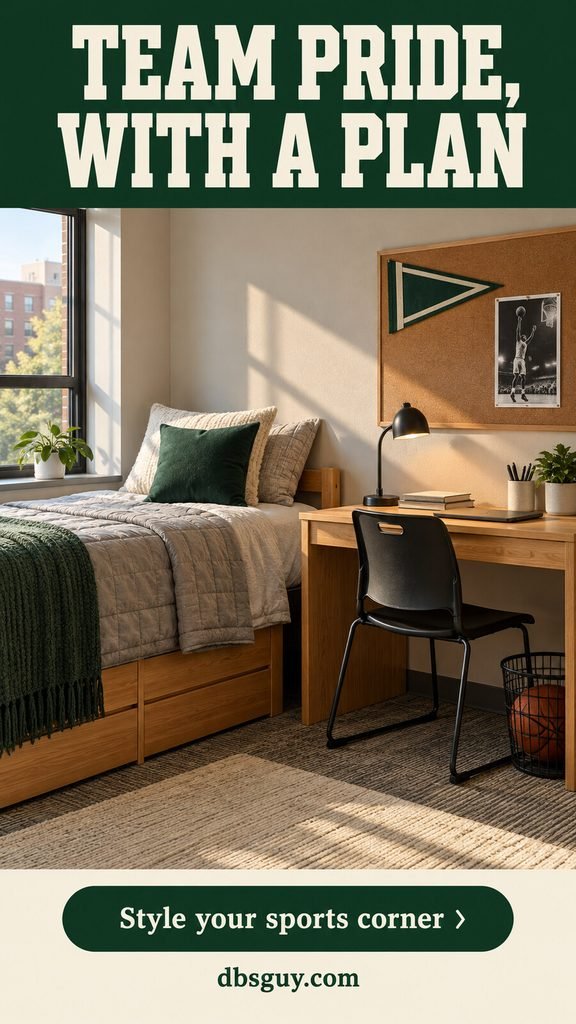
Choose one team color and repeat it in a cushion or throw, then keep memorabilia together. A small pennant and a favorite game photo on a supplied bulletin board make a coherent display without covering every wall.
Use neutral bedding around a bold school color so the personal pieces are easy to see. The green in this concept is just an example; the same approach works with red, blue, gold, or the colors you actually follow.
A basketball or other round gear needs a basket or stand so it cannot roll into the walkway. Keep display objects off the chair and desk space you need every day. Add new memorabilia by swapping pieces rather than spreading the collection across the room.
12. Put a Small Sneaker Rotation on Display

A short freestanding shoe rack can turn a couple of favorite pairs into part of the room. The low black rack shown here keeps two pairs visible on top and a closed box below. Its compact height leaves the surrounding wall quiet.
Choose the rack by both shoe length and available floor depth. Check that it does not obstruct drawers, the closet, or the path beside the bed. If there is no spare floor space, use an existing closet shelf and bring the color into your bedding instead.
Keep the display selective and wipe shoes before returning them to it. Damp sneakers should dry before going into closed storage. The rest of your rotation can stay in the closet.
13. Create a Landing Spot Beside the Entrance
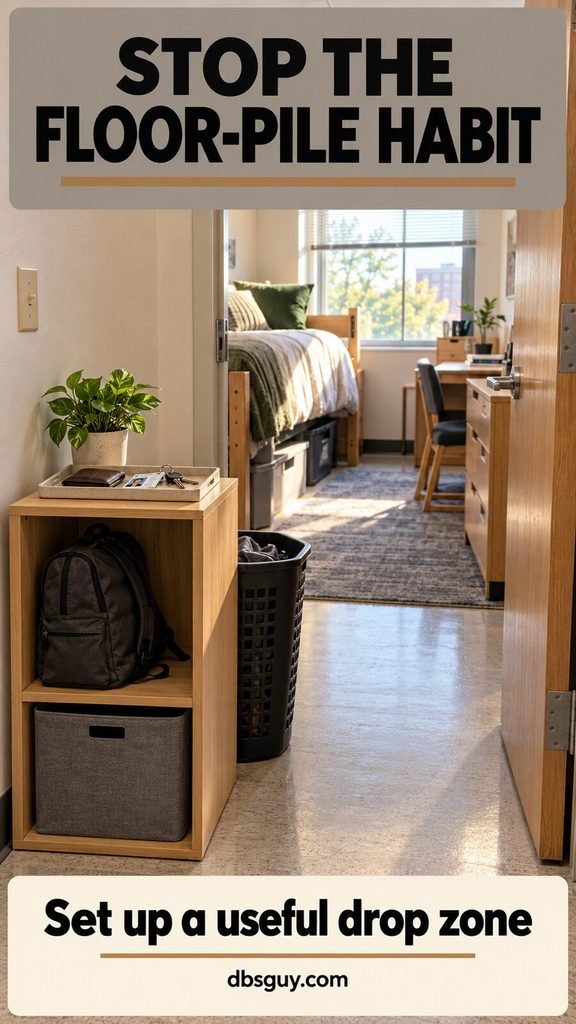
A drop zone works when it catches the things you carry in before they reach the floor. Use an existing dresser corner or a low organizer with a shallow tray for keys, wallet, and student ID. Give your backpack its own cubby or other reachable spot.
Place it to the side of the entrance, with enough room for the door to open fully. Test the route while carrying your laundry basket. If another furniture piece narrows that route, use a tray on furniture you already have.
A nearby hamper can collect dry laundry, but give wet towels an approved place to dry first. Choose a tray you can empty and wipe quickly; a drop zone is less useful when it becomes storage for every receipt and wrapper.
14. Connect Two Roommates’ Styles With a Shared Base
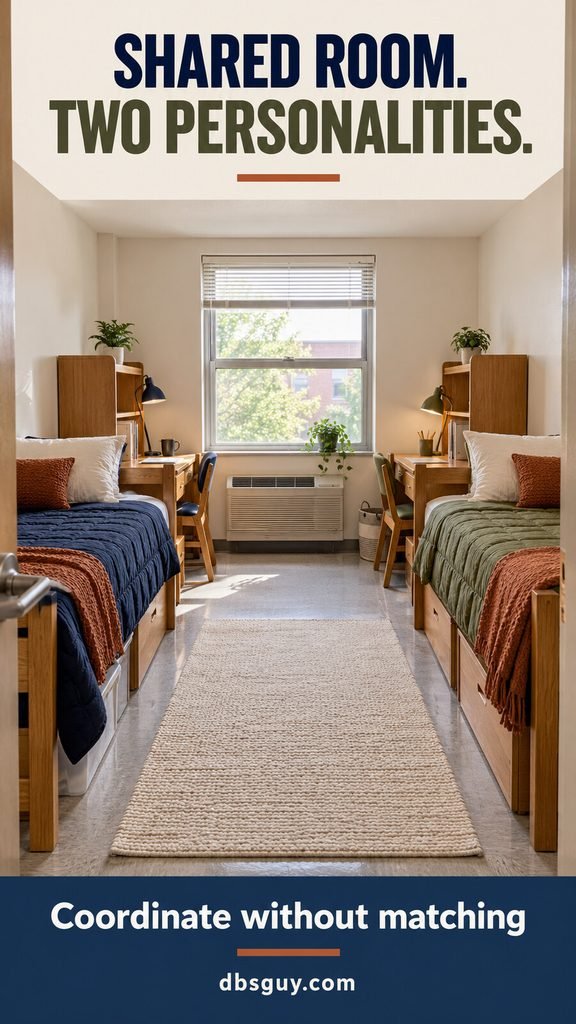
Two people can have different bedding and still create a room that feels connected. This setup uses navy on one bed and olive on the other, with cream pillows and small rust details linking the sides. Each roommate keeps a distinct palette.
Agree on the shared purchases first: perhaps a rug, cleaning tools, or one permitted appliance. Decide who brings each item, how you will handle costs, and who takes it home. Matching personal accessories can wait.
Plan lighting and quiet hours along with colors. A beautiful shared room still needs to work when one person is studying and the other is asleep. Keep personal decor within your own area unless your roommate agrees otherwise.
Also read: How to Actually Sleep in a Noisy Dorm (Even When Your Roommate Doesn’t).
15. Build a Bookish Corner Around the Supplied Desk

For a quieter, academic look, work with the room’s wood furniture. A small row of books between sturdy bookends, a burgundy desk mat, and one architectural sketch can make the supplied desk feel personal. A shaded task lamp finishes the corner without requiring an extra reading chair.
Use the desk hutch if one is provided, keeping its loading instructions in mind. Otherwise, place a few books along the rear of the desktop and leave the front available for studying. Do not buy a tall shelf until you know it fits and can be installed as required.
The sketch can be a postcard, your own drawing, or a small print in a stable frame. Books you actually read give this setup more character than buying decorative volumes to fill a shelf.
Choose Your First Two Changes
Pick one visual direction and one practical improvement. Navy bedding might go with matching under-bed bins; a music corner might need better task lighting; a shared room might benefit most from agreeing where everyday belongings go.
Move the things you already own into that plan before shopping. Then buy for the specific gap you can name: a correctly sized bin, a lamp that fits the desk, or a pillow cover that connects existing colors. Leave optional furniture until you have used the room long enough to know where it belongs.
Dorm Room Decorating Questions
What should I buy first for a guy’s dorm room?
Start with bedding in the confirmed mattress size and the lighting or storage your room actually lacks. You can build the look around a comforter you own. Wait on extra chairs, racks, and shelves until you have measured the space and checked what housing supplies.
How do I make the room look better on a small budget?
Choose one visible change, such as a pillow cover, a printed photo, or a desk mat, and repeat a color already in the room. Rearrange useful objects and clear the work surface before buying organizers. A spending cap is easier to follow when you have a short list of actual needs.
Do all dorm rooms have Twin XL beds?
No. Confirm the assigned mattress size with housing before ordering fitted sheets or a topper. Check the product’s actual dimensions as well as its size label. The storage space below the bed is another separate measurement.
Can I use LED strips or removable wall hooks?
Only when your residence hall allows the specific product, surface, and installation. Permission can differ by building or wall material. If the rule is unclear, ask housing and use freestanding lamps or tabletop artwork in the meantime.
How can a small dorm feel personal without adding clutter?
Give one interest a defined area: a few records on the hutch, a small bulletin-board display, or two favorite sneaker pairs. Protect the space needed to work and move. Rotate the display when you want a change instead of continually adding objects.