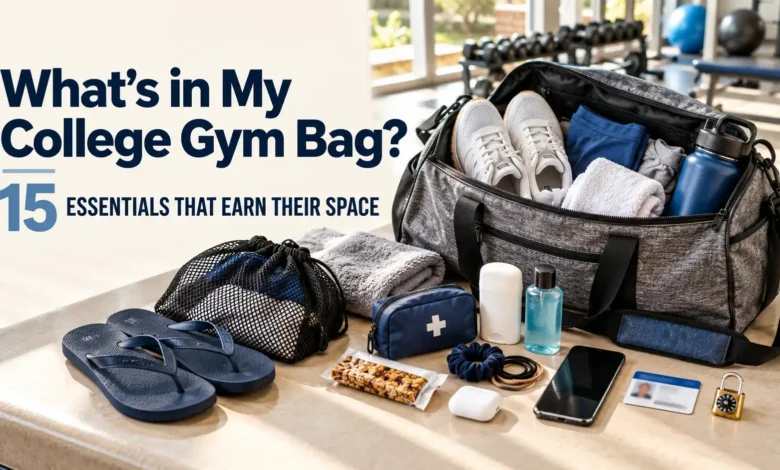
A college gym bag needs to get you from class to a workout and on with your day. Start with campus access, water, the right clothes and shoes, and a way to keep used gear separate. Add shower supplies only when your schedule calls for them.
These 15 college gym bag essentials cover a typical class-to-gym day, with a few extras for heading straight to your next lecture. Treat the list as a packing edit: use what you already own, check what your recreation center provides, and carry the version that fits today’s plan.
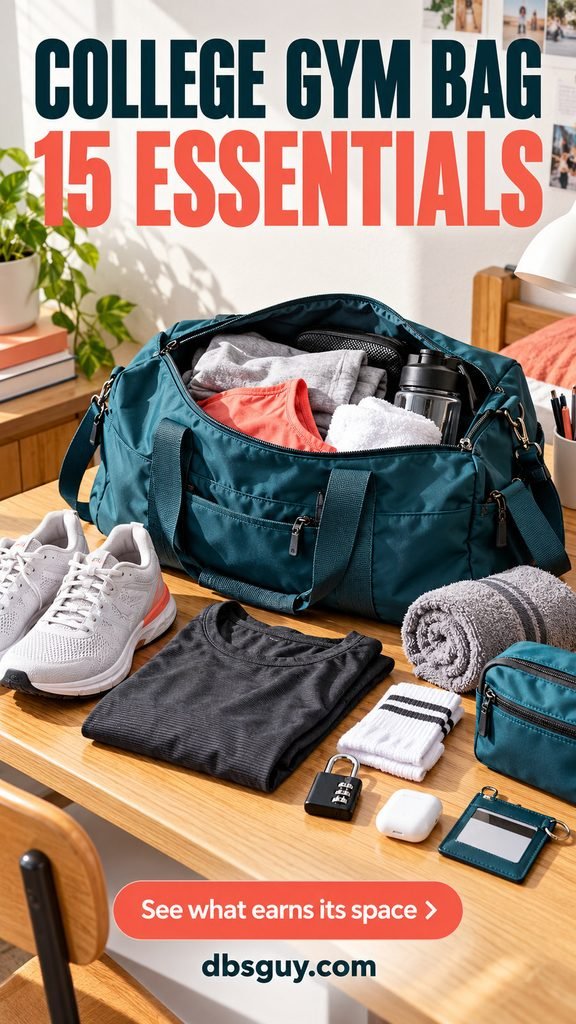
The visuals are AI-generated packing concepts. They illustrate the items and organization described here.
Check your campus gym before you pack
Before buying anything, check your campus recreation page for entry requirements, footwear rules, locker arrangements, towel service, and where bags may be stored. Policies differ between schools and even between rooms in the same facility. A built-in locker lock or available towel can remove an item from your load.
1. Student ID and keys in one secure pocket
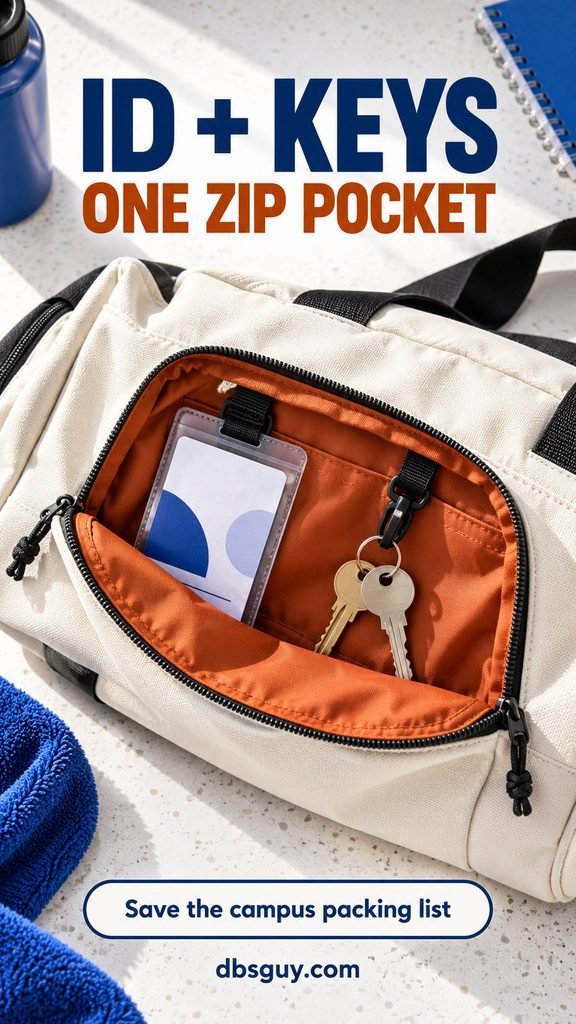
Pack the access method your campus actually accepts: a physical student ID, an activated mobile credential, or both if permitted. A photo of a card may not work. Set up digital access before your first visit, while you have time to resolve a login problem.
Give your ID and room keys a consistent zippered pocket. An internal key clip keeps them from sinking beneath your clothes. If they already live in your everyday backpack, keep them there and do a quick access check before leaving; moving them between bags creates another chance to forget them.
Also Read: First Week of College: The Freshman Survival Guide (Orientation to First Friday)
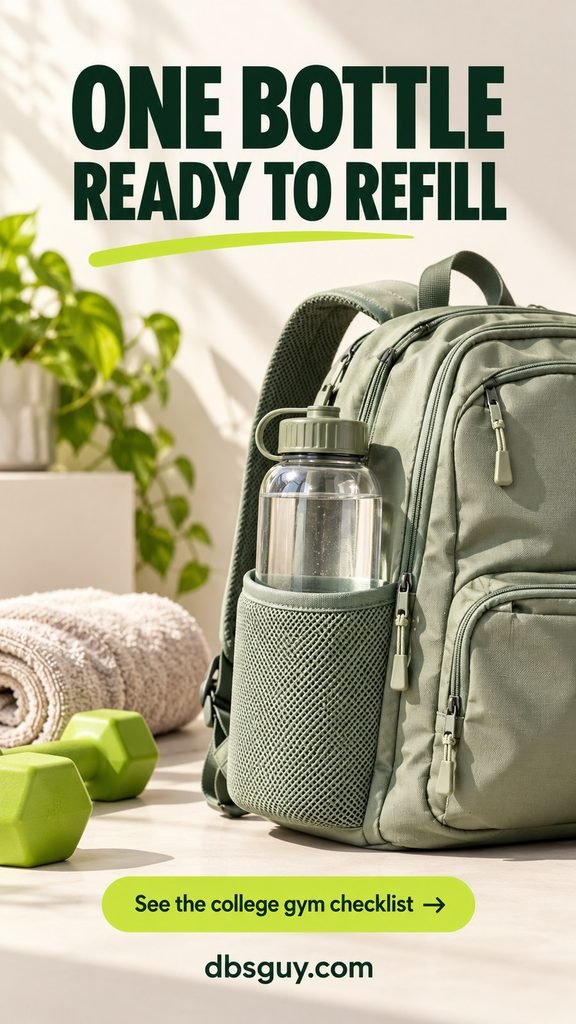
2. A refillable water bottle with a secure lid
Choose a bottle you can open, clean, and carry comfortably. A screw lid or a reliably latched cap is useful when the bottle shares a bag with class materials. Follow your facility’s container rules; some activity areas restrict glass or allow only certain closed containers.
Check the seal over a sink before putting it next to anything important. Use an upright bottle sleeve when available and refill before training. One everyday bottle can cover lectures and the gym, so there is no need to carry a second one just for the workout.
3. Shoes suited to the session
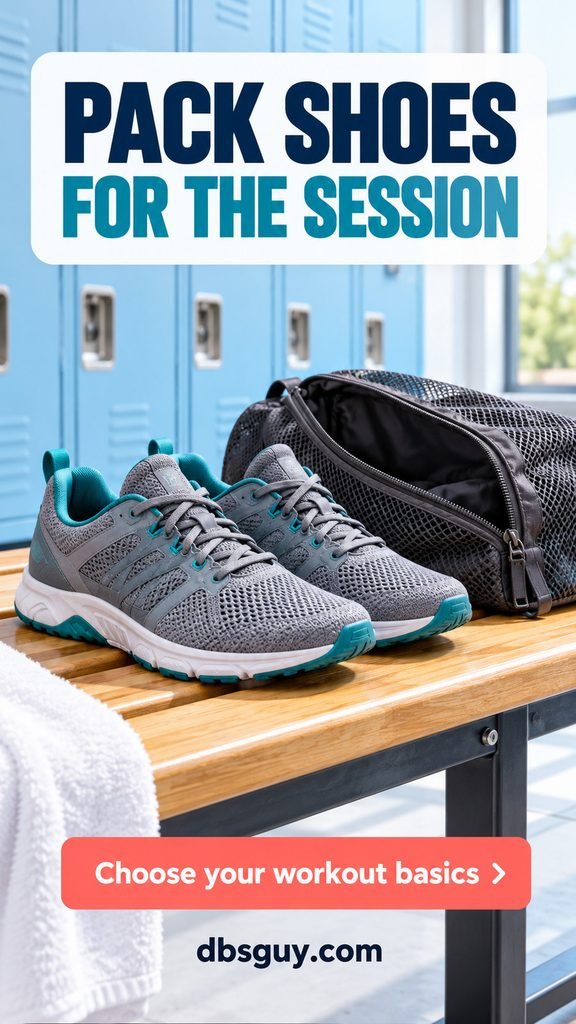
Pack for the activity you have planned. A treadmill run, a lifting session, and a court sport place different demands on footwear. Use suitable athletic shoes that fit securely, meet the facility’s rules, and feel appropriate for your activity. Ask recreation staff or an instructor if a class has special requirements.
If your campus-walking shoes already suit that session and are clean enough for the facility, wear them and save bag space. Otherwise, carry one workout pair in a separate shoe pouch. Remove them when you get home so they can dry; a zipped shoe compartment is useful for transport, not permanent storage.
4. One complete workout outfit
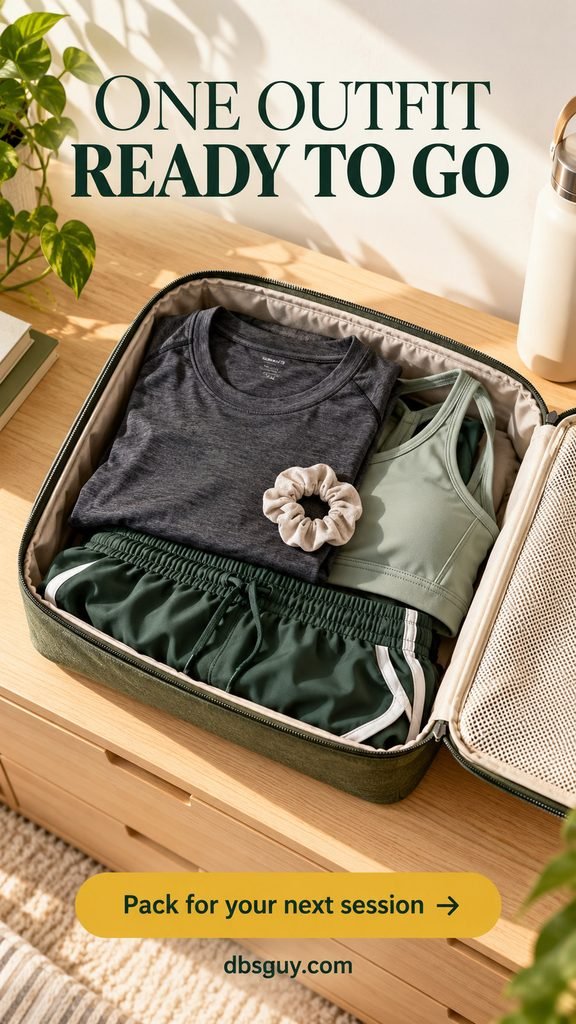
Pack a top and bottoms that let you move comfortably, plus any support garment you use. Check the dress code for your activity space. Before an unfamiliar class, try the outfit through a few comfortable bends and reaches at home so an uncomfortable waistband or shifting top does not become a locker-room surprise.
Keep the pieces together in a small packing cube or a single folded bundle. Add a hair tie if you use one. If you arrive dressed to train, use that space for a clean outfit for afterward. Packing both sets makes sense when the gym sits between classes; it adds little value when you are heading straight home.
5. Fresh socks and underwear for the change afterward
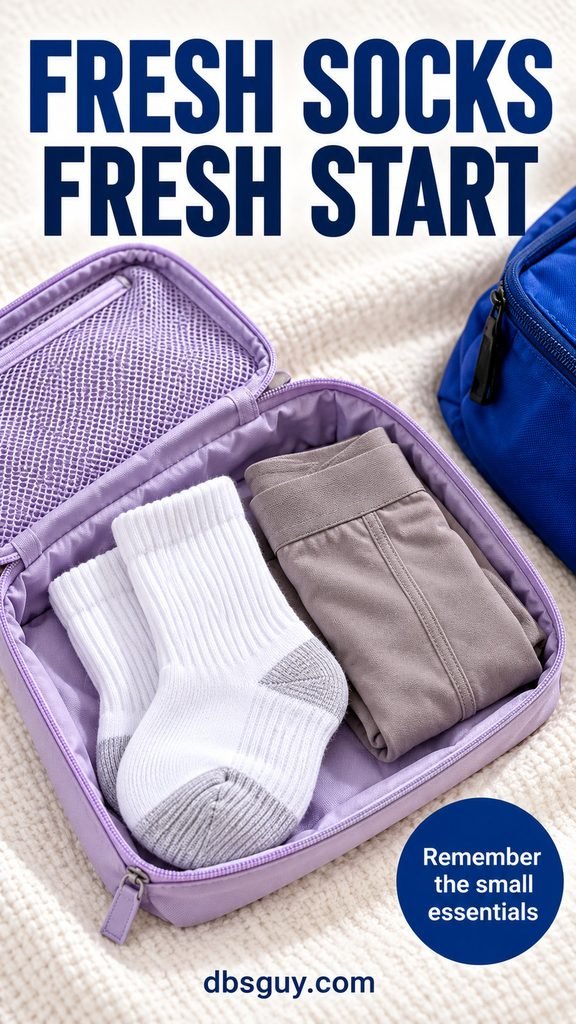
These are easy to leave out when you focus on the visible outfit. Pack a clean pair of socks and whatever fresh underwear or support garment you need when changing after exercise. They earn particular space on a day with a lecture, lab, or work shift after the gym.
Store the clean pieces together in a small dry pouch. Refill it after each visit, before it goes back in the bag. If you wear your workout socks to campus, check that the packed pair is genuinely the fresh replacement. Choose socks that fit well and suit your activity; bringing an extra pair will not fix shoes that rub.
Also Read: How Many of Each Basic Do You Actually Need? Do the Laundry Math
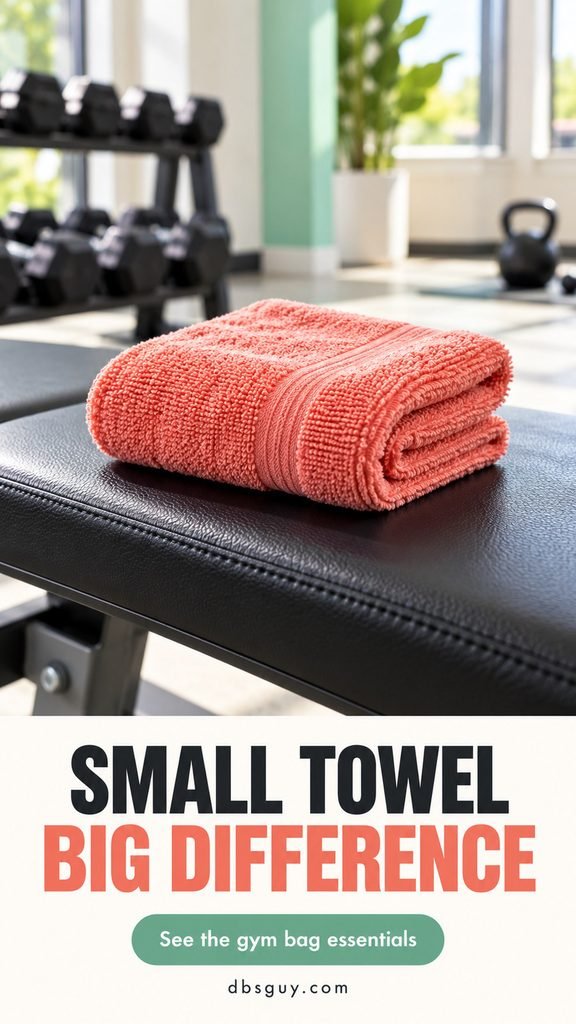
6. A small, clean sweat towel
A hand-sized towel handles sweat without taking up the space of a bath towel. Use your own clean towel and avoid sharing it. If your campus provides workout towels, check how pickup and return work before deciding to leave yours at home.
Keep the towel for your skin separate from equipment cleaning. Use the facility’s designated cleaning supplies as instructed; wiping a bench with your sweat towel does not disinfect it. After training, move the towel into your used-gear bag. Wash it after use and follow its care label for washing and drying before packing it again.
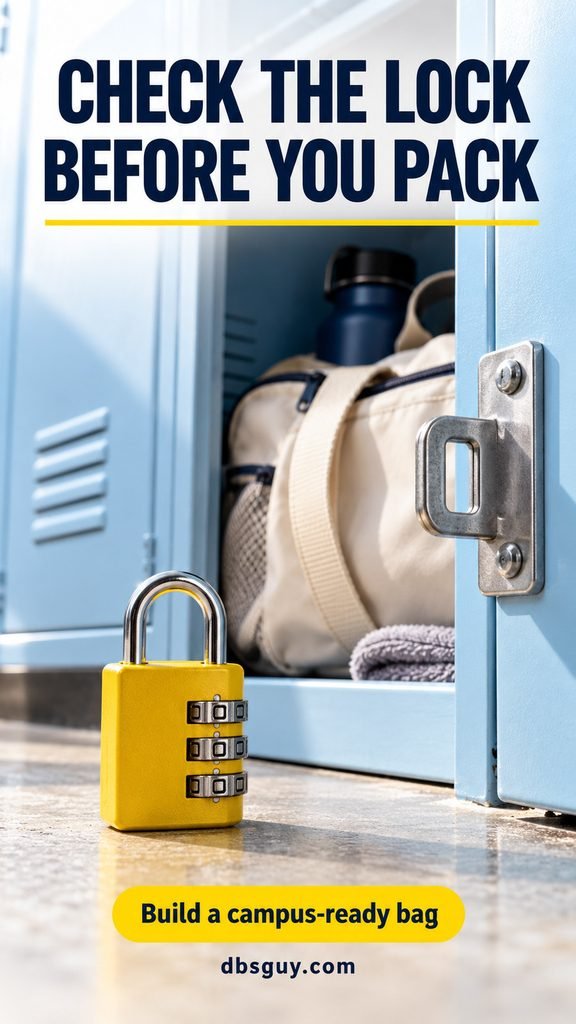
7. A locker lock, if your facility requires one
Find out whether day lockers have built-in locks, accept a personal padlock, or use a checkout system. If you need your own lock, confirm that its shackle fits. Test the combination before leaving valuables inside; a lock you cannot reliably open creates its own problem.
Store the lock where you can reach it before emptying your bag. Read the daily clearing time and any overnight-storage rules. Keep the gym floor clear by using the storage your facility specifies, and leave unnecessary valuables at home. A locker is useful storage, but it is not a reason to carry jewelry or extra electronics you will not use.
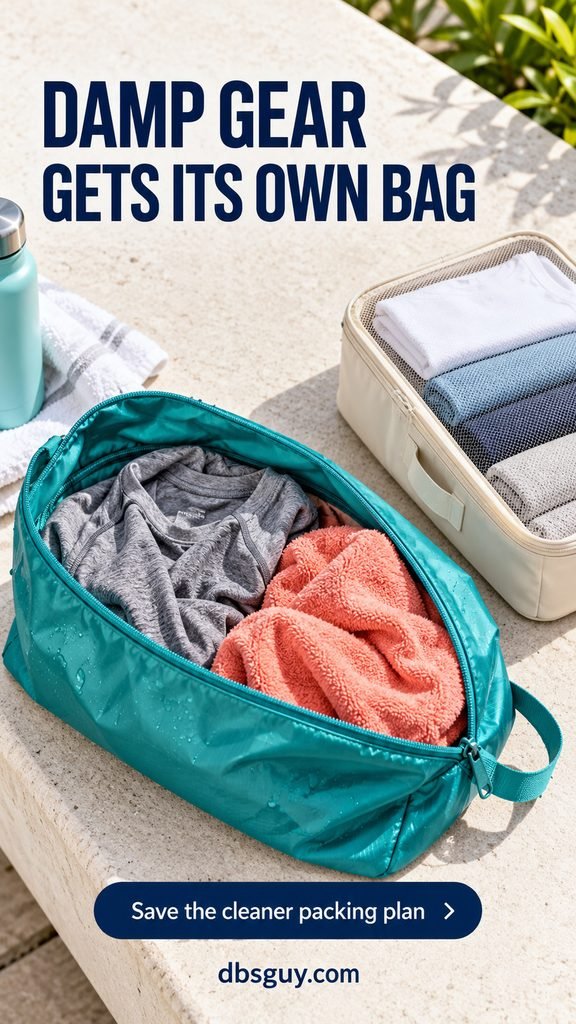
8. A washable bag for damp clothes
A separate washable wet bag keeps a damp shirt or towel from resting against your clean clothes and notebook. Choose one that closes securely and is large enough for the gear you actually use. It should separate the load on the trip home without becoming another bulky organizer.
Empty it when you get back. Put used clothes and towels into the wash, following their care instructions, and clean the wet bag according to its own label. Let the bag dry before repacking. Sealing wet fabric away for days does not clean it or solve odor; the pouch only manages the journey.
9. A compact deodorant you already tolerate
Use a small version of the product that works for your skin. Follow its label, and keep the cap secure so it cannot rub onto clothing. A stick can be a convenient choice when you want to avoid spraying fragrance in a shared changing area.
Deodorant belongs in the after-workout routine alongside changing into clean clothes. It does not replace washing. Keep strong fragrance out of the packing plan if it bothers you or people nearby, and remove any product that leaks or irritates your skin. The useful item is the one you will comfortably use, not a whole collection of backup scents.

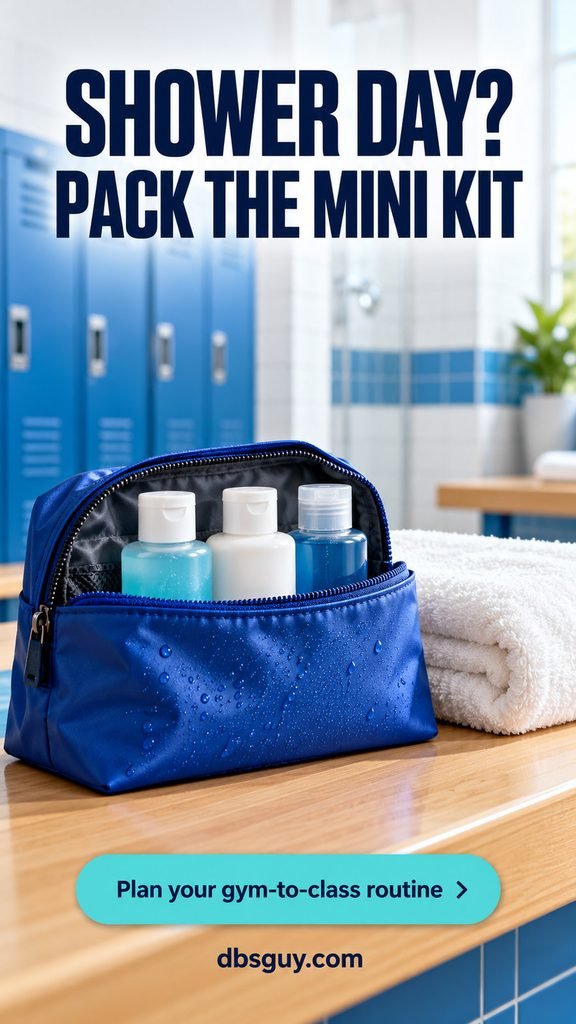
10. A small shower kit for days you need it
When the gym is followed by class or work, pack the wash products you need in tightly closed travel containers. Body wash and a cleanser you already use may be enough; add shampoo only if washing your hair is part of the plan. Keep liquids together in a washable, leak-resistant pouch.
Confirm shower access and bath-towel availability. Bring a separate clean bath towel if you need one; the small sweat towel from your workout has a different job. Shower after exercise as soon as practical. If you are going straight to your dorm to wash, leave the shower pouch there and lighten the bag.
11. Shower shoes for shared wet areas
Keep a pair of washable shower sandals or flip-flops for communal showers and changing areas. The American Academy of Dermatology recommends wearing shoes in public gyms, including locker rooms and showers. Choose a pair intended for wet use that fits securely; slippery or damaged soles are a reason to replace them.
Keep shower shoes separate from clean clothing during transport. Clean them according to their care instructions and let them dry before storage. They are for the shower route, not the training floor. You can read the AAD’s gym skin-infection prevention guidance for more on towels, footwear, and shared equipment.

12. One snack for a long gap between meals
Pack a snack when your schedule leaves a long stretch between the gym and your next meal. An intact piece of fruit, a shelf-stable bar, or crackers with a sealed nut- or seed-butter packet can be easy to carry. Choose food you tolerate and check labels, allergy requirements, and storage instructions.
Keep it in a clean pocket away from shoes and toiletries. Eat only where the facility permits food, and replace anything crushed, opened, or past its usable date. Foods that require refrigeration need appropriate cold storage; a regular gym bag is not a cooler. A snack bridges a gap, so plan an actual meal for a long day on campus.

Also Read: 23 Easy Microwave Recipes for Dorm Rooms: No Kitchen Needed
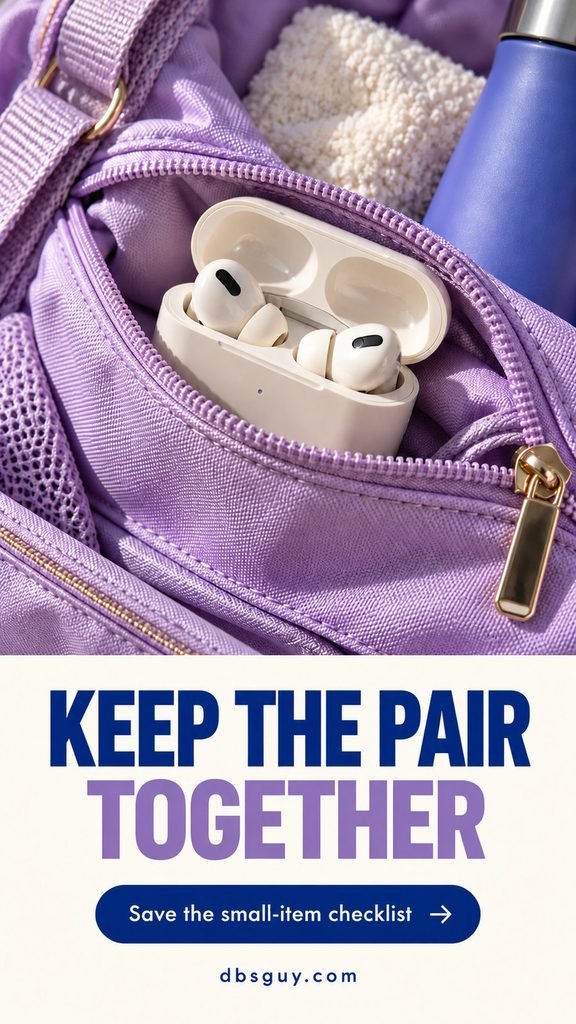
13. Earbuds in their charging case
If you like music or audio guidance, a small pair of earbuds is easy to carry between classes and the gym. Put them back in their case after use, and check the charge before leaving. Clean them according to the manufacturer’s instructions and avoid lending them around.
Use a level that lets you remain aware of staff instructions and activity around you. Put audio aside when learning a movement with an instructor or when the activity requires full attention. If you already carry earbuds for class, use that same pair. They can stay home on a day when you prefer to train without audio.
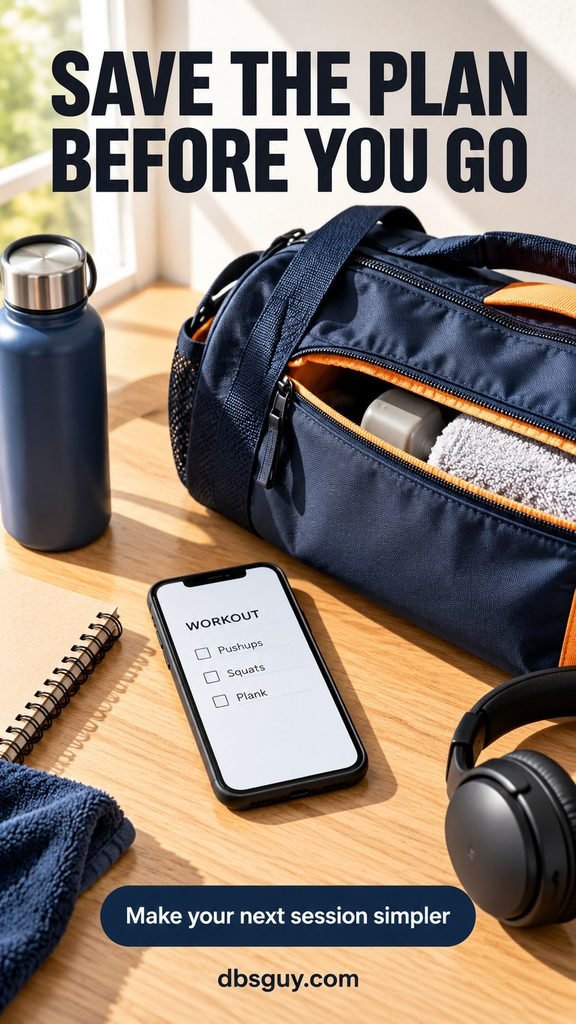
14. Your phone with a saved workout plan
Open your planned session before arriving and save what you need for offline access. A simple note can hold the exercises, instructions from your coach, and the sets or repetitions you want to record. A phone already in your daily bag can do this job without another notebook or device.
Charge it beforehand and keep it in a secure dry pocket between checks. Follow the facility’s device rules, especially in changing areas; some prohibit all phone use there. Get appropriate permission before recording anywhere, and respect other people’s privacy. If a paper plan works better for you, bring one small card instead.
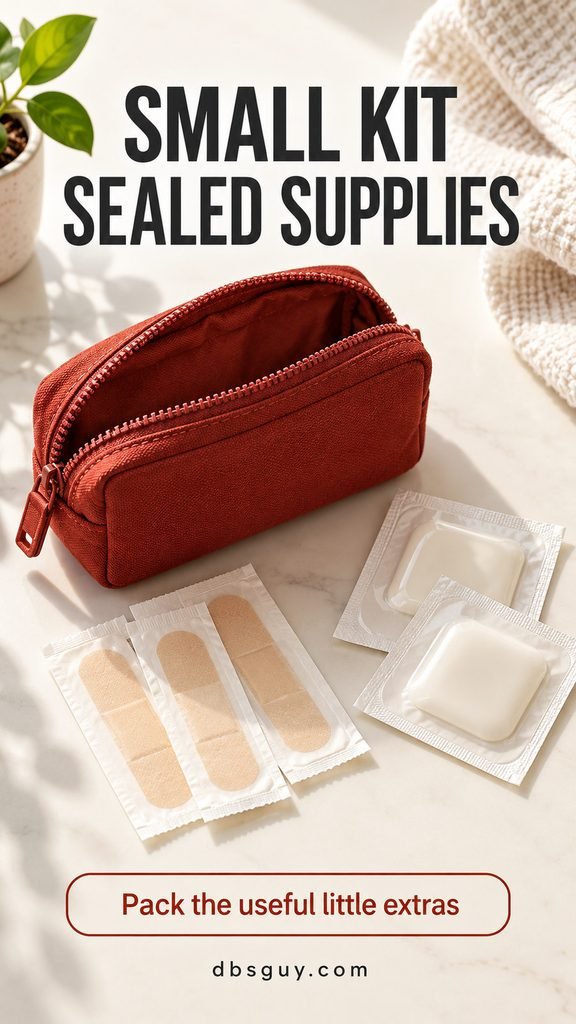
15. A few sealed bandages and blister dressings
A slim pouch with a few individually wrapped adhesive bandages and blister dressings is enough for small problems. Keep the packaging intact and follow the dressing’s instructions. Wash your hands before handling a wound, and keep minor cuts clean and covered.
Do not use a dressing to push through worsening rubbing or pain. Stop and check what is causing the problem. Ask campus health or gym staff for help with an injury you cannot manage; spreading redness, warmth, swelling, or pus needs prompt medical attention. Personal medication and emergency supplies should follow your own care plan and take priority over optional items in this list.
Pack the bag around your next stop
For a workout followed by a return to your dorm, you can often wear your training outfit, carry the access items, bottle, and towel, and wash at home. Bring a lock only if the locker system needs one. Keep a separate pouch for anything damp on the return trip.
For gym-to-class days, add the clean clothing bundle, fresh socks and underwear, deodorant, and any shower supplies you will use. A commuter may need more than someone living a few minutes away. Check what the facility supplies before filling every pocket.
Use your current backpack or duffel first. Keep class materials in a dry section, put shoes in a separate pouch, and choose a bag that fits the available storage. If the packed bag is awkward to carry across campus, remove unused extras before buying a larger one.
The reset that keeps the bag usable
- At home, remove used clothes and towels. Wash them after use and follow their labels for washing and drying.
- Empty and clean the damp-gear pouch. Take shoes out to dry, and clean the bottle according to its care instructions.
- Replace the clean clothing bundle and anything used from the small supply pouch.
- Before the next visit, check campus access, the workout plan, and whether today’s route needs the shower kit.
College gym bag questions
Do I need a dedicated gym bag?
No. An existing backpack can work if it holds your workout items comfortably, keeps class materials dry, and fits the facility’s storage. Separate shoes and used clothing in suitable pouches. Check whether bags must stay in lockers rather than on the gym floor.
Should I buy all 15 essentials before my first visit?
No. Check the rules, use the items you already own, and pack for one planned visit. Audio gear, shower supplies, and a personal lock depend on your preferences, schedule, and campus facilities. Your own medical or accessibility needs come first.
What can I leave out to save space?
Start with duplicate bottles, full-size toiletries, extra shoes that do not match the session, and gear for activities you are not doing. Check whether your gym provides towels or locks. Pack the shower kit only when you plan to wash there.
Do protein powder and pre-workout belong on the essentials list?
They are optional purchases, not requirements for packing this bag. Plan ordinary meals and a practical snack if your schedule needs one. If you use any supplement, follow qualified advice appropriate to your health and needs rather than treating a packing list as a recommendation.
Give every item a job
Before zipping the bag, ask three questions: can I get in, do the planned session, and leave comfortably for my next stop? After a week, take out the optional items you never reached for. Refill the pieces you actually used. That is how a college gym bag earns its space.