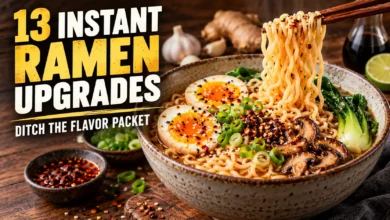
A satisfying bowl of ramen needs more than noodles and salty broth. These 11 healthy ramen recipes pair noodles with vegetables and a clear protein source, then build flavor with browned ingredients, garlic, ginger, citrus, and measured seasonings. The goal is a dinner you want to eat, with more control over the sodium that goes into it.
Start with ginger chicken for a familiar soup, peanut-lime edamame for a saucy bowl, or golden curry chickpea for a plant-based option. Every recipe makes two servings and includes its own ingredient quantities and cooking steps.

Recipe note: These original, research-informed recipes have not been kitchen-tested. Cooking times are estimates. The AI-generated visuals illustrate serving concepts rather than photographed test batches. Several bowls use fusion flavors; they are home-cooking variations made with ramen noodles.
Start Here: Keep the Flavor and Check the Sodium
Putting spinach into a very salty soup does not remove its sodium. Neither does adding water if you still eat the entire batch. The useful changes happen when you choose the noodles, broth, and seasonings.
- Use 4 ounces of dried ramen noodles for two bowls. Weigh the noodles rather than assuming two cakes equal 4 ounces. Omit every seasoning packet. Some noodle cakes contain sodium themselves, and a package label may combine the noodles and seasoning in one total. Look for a noodle-only Nutrition Facts panel when possible.
- Compare broth by the cup. Unsalted or no-salt-added broth is a useful starting point, but neither wording guarantees zero sodium. For these recipes, try to find broth with 70 mg sodium or less per cup. That is a shopping target for this article, not a regulated definition or a medical limit.
- Measure sauces with a teaspoon. “Less sodium” soy sauce still contributes sodium. The recipes that use it call for 2 teaspoons across the entire two-serving batch. Do not add a seasoning packet, bouillon cube, miso, and soy sauce on top of that.
- Choose plain proteins and vegetables. Use unbrined chicken or turkey, plain tofu, unsauced frozen vegetables, and no-salt-added canned beans or tomatoes. Smoked salmon, seasoned tofu, rotisserie chicken, and treated shrimp can change the sodium total substantially.
- Cook noodles separately in unsalted water. Follow their package timing, drain, and assemble just before eating. This controls texture and keeps the noodles from drinking up the broth while you finish the toppings; it does not guarantee a particular sodium reduction.
The FDA’s sodium label guide uses a Daily Value of less than 2,300 mg per day and explains why serving size matters. These recipes are sodium-conscious starting points, not a claim that every finished bowl meets a “low sodium” definition. If you have an individual sodium limit, calculate your bowl using your actual ingredients.
A Quick Sodium Calculation Before You Cook
For a soup with 3 cups of broth and 2 teaspoons of soy sauce, suppose your broth has 50 mg sodium per cup and your sauce has 590 mg per tablespoon. The broth contributes 150 mg to the pot. Since a tablespoon contains 3 teaspoons, the soy sauce contributes about 393 mg. Divide that 543 mg by two: about 272 mg per bowl from broth and sauce alone.
You still need to add the sodium in the noodles, protein, vegetables, and toppings. If your noodles add 300 mg per portion, the subtotal is already about 572 mg before those other ingredients. This is an ingredient-label example, not a nutrition analysis of the recipes below.
Have a saucepan, a separate noodle pot, a skillet, measuring spoons, and two roomy bowls ready. An instant-read thermometer is useful for the chicken, turkey, and salmon recipes. The two roasted bowls also need an oven and a sheet pan.
1. Ginger Chicken Ramen With Bok Choy
Serves: 2 · Estimated total: 25–30 minutes · Style: Clear-broth chicken soup
Fresh ginger gives this mild bowl some warmth, while a quick sear adds flavor to the chicken before it meets the soup. Keeping the carrot in thin matchsticks lets it soften alongside the bok choy.

Ingredients
- 4 ounces dried ramen noodles, seasoning packets omitted
- 8 ounces boneless, skinless chicken breast, sliced horizontally into 2 thin cutlets; choose chicken without added broth or brine
- 2 teaspoons neutral oil, divided; ¼ teaspoon black pepper
- 2 garlic cloves, minced; 2 teaspoons grated fresh ginger
- 3 cups unsalted chicken broth
- 2 baby bok choy, about 8 ounces total, washed and quartered lengthwise
- ½ cup carrot matchsticks
- 2 teaspoons less-sodium soy sauce; 1 teaspoon unseasoned rice vinegar
- 2 scallions, thinly sliced
How to Make It
- Pat the chicken dry and season with the pepper. Heat 1 teaspoon oil in a skillet over medium-high heat. Cook the thin cutlets for about 3–5 minutes per side, checking that the thickest part reaches 165°F. Transfer to a clean plate.
- Warm the remaining teaspoon oil in a saucepan over medium heat. Stir in the garlic and ginger for 30 seconds. Add the broth, bok choy, and carrot. Simmer gently for 5–7 minutes, until the bok choy stems are tender.
- Meanwhile, cook the noodles separately in unsalted water according to their package. Drain and divide between two bowls.
- Stir the soy sauce and vinegar into the broth. Slice the chicken, then divide the soup, chicken, and scallions between the bowls.
Sodium check: Keep the chicken plain. A small amount of soy sauce is easier to account for than salt already added through a brine.
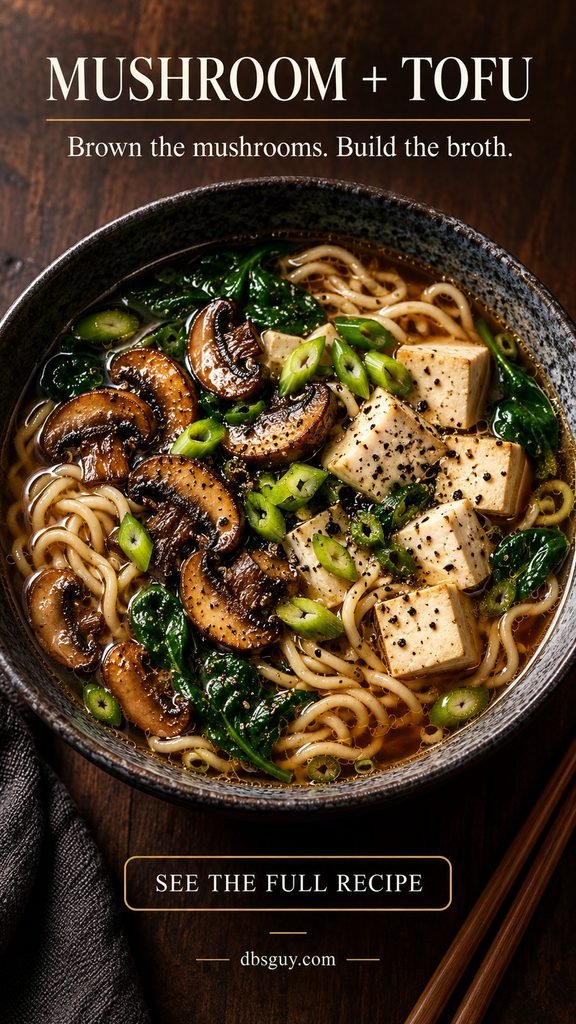
2. Browned Mushroom and Tofu Ramen
Serves: 2 · Estimated total: 25–30 minutes · Style: Earthy, plant-based soup with suitable noodles
This is the bowl to make when you have a little more time for the skillet. Letting the mushrooms brown before adding liquid gives the soup a deeper flavor than simply boiling them from the start. Black pepper keeps the finish lively.
Ingredients
- 4 ounces dried ramen noodles, seasoning packets omitted; choose egg-free noodles if plant-based
- 8 ounces cremini mushrooms, thinly sliced
- 1 tablespoon neutral oil, divided
- 2 garlic cloves, minced; ½ teaspoon coarsely ground black pepper
- 3 cups unsalted vegetable broth
- 12 ounces plain extra-firm tofu, drained and cut into ¾-inch cubes
- 3 cups loosely packed baby spinach
- 2 teaspoons less-sodium soy sauce; 2 teaspoons unseasoned rice vinegar
- 2 scallions, thinly sliced
How to Make It
- Heat 2 teaspoons oil in a wide skillet over medium-high heat. Add the mushrooms in a fairly even layer. Cook for 7–10 minutes, stirring occasionally, until their released liquid evaporates and the edges brown. Work in batches if the pan is crowded.
- In a saucepan, warm the remaining teaspoon oil over medium heat. Stir in the garlic and black pepper for 30 seconds, then add the broth, tofu, and browned mushrooms. Simmer for 5 minutes.
- Cook and drain the noodles separately. Stir the spinach into the soup and cook just until wilted, about 1 minute.
- Finish the broth with the soy sauce and vinegar. Divide over the noodles and scatter the scallions on top.
Make it work: Use plain tofu rather than a marinated or smoked version. You can replace the spinach with thinly sliced chard, but simmer its chopped stems with the broth first.
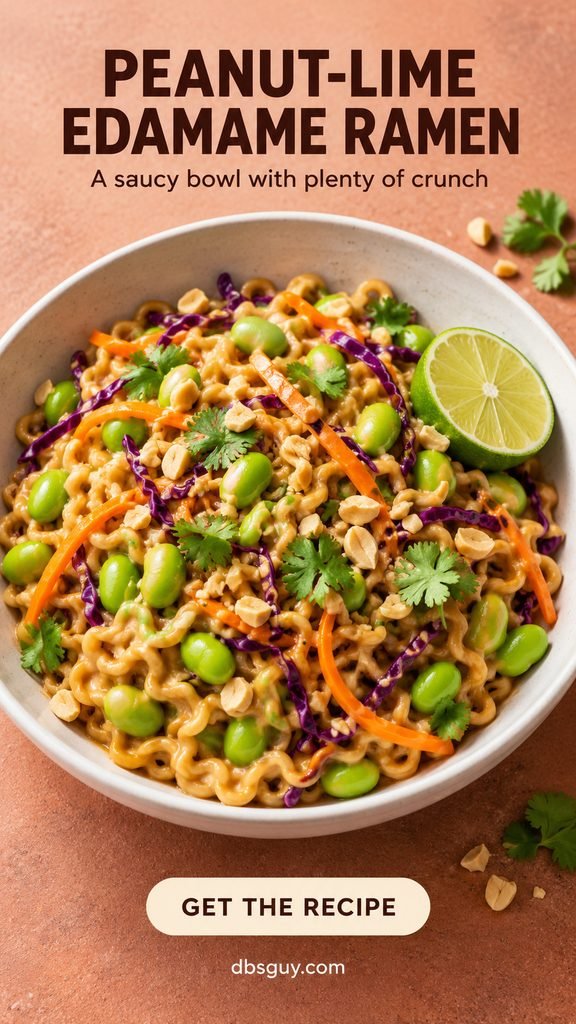
3. Peanut-Lime Edamame Ramen
Serves: 2 · Estimated total: 20 minutes · Style: Saucy, brothless noodle bowl
A spoonful of peanut butter can become a coating sauce without turning dinner into a heavy peanut soup. Edamame supplies the main protein, while cabbage and carrot give the soft noodles something crisp to lean against.
Ingredients
- 4 ounces dried ramen noodles, seasoning packets omitted
- 1½ cups frozen shelled edamame, unseasoned
- 3 tablespoons smooth unsalted peanut butter
- 1 tablespoon lime juice; 2 teaspoons less-sodium soy sauce
- 2 teaspoons toasted sesame oil; 1 teaspoon maple syrup
- 1 teaspoon grated fresh ginger; 3–5 tablespoons warm water
- 1 cup finely shredded purple cabbage; ½ cup thin carrot ribbons
- 2 tablespoons chopped unsalted roasted peanuts; 2 tablespoons chopped cilantro
How to Make It
- Cook the edamame according to its package directions and drain. Cook the noodles separately in unsalted water, then drain thoroughly.
- Whisk the peanut butter, lime juice, soy sauce, sesame oil, maple syrup, ginger, and 3 tablespoons warm water in a large bowl. Add more water a tablespoon at a time until the sauce pours in a thick ribbon.
- Add the warm noodles and edamame. Toss until coated, then fold in the cabbage and carrot. Divide between bowls and finish with peanuts and cilantro.
Sodium check: Unsalted peanut butter and peanuts matter here. Add a squeeze of lime or some water if the sauce needs loosening, rather than another splash of soy sauce.
Also Read: For more noodle dinners with a different texture, browse 15 Creamy Ramen Recipes That Taste Like Restaurant Noodles. Those are separate recipes; use their own ingredient lists and sodium labels.
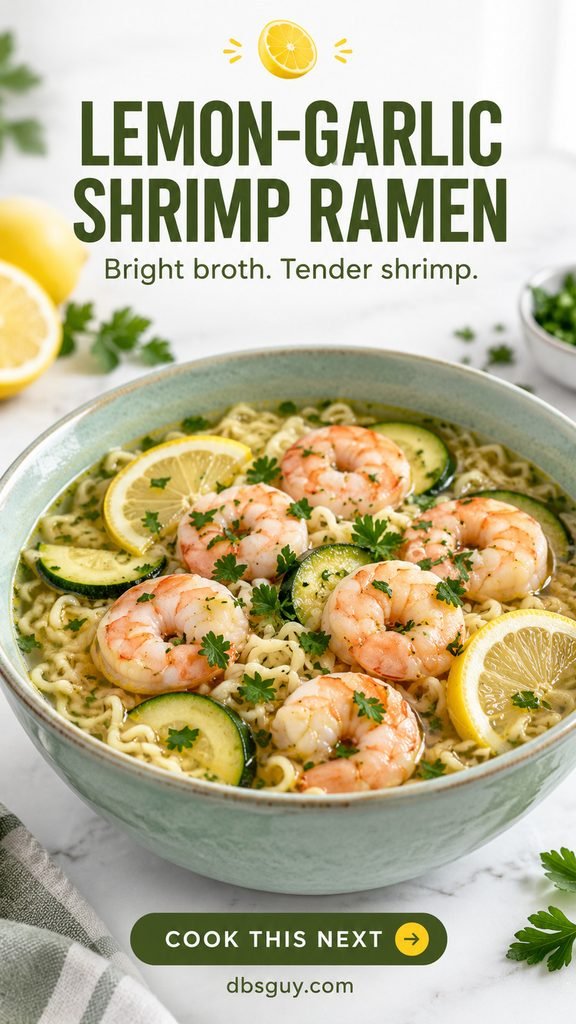
4. Lemon-Garlic Shrimp and Zucchini Ramen
Serves: 2 · Estimated total: 20–25 minutes · Style: Bright, light-broth seafood bowl
Lemon zest carries citrus aroma without needing a large amount of juice. Add the shrimp after the zucchini begins to soften so they finish together instead of letting the shrimp simmer until rubbery.
Ingredients
- 4 ounces dried ramen noodles, seasoning packets omitted
- 10 ounces raw shrimp, thawed if frozen, peeled, deveined, and tails removed; compare labels and choose shrimp without added salt when available
- 2 teaspoons olive oil; 3 garlic cloves, thinly sliced
- 1 medium zucchini, about 8 ounces, cut into thin half-moons
- 3 cups unsalted vegetable broth
- ½ teaspoon finely grated lemon zest; 1 tablespoon lemon juice
- ¼ teaspoon black pepper; 2 tablespoons chopped parsley
- 2 thin lemon slices, optional, for serving
How to Make It
- Warm the oil in a saucepan over medium-low heat. Cook the garlic for 1 minute, keeping it pale. Add the zucchini and cook for 2 minutes.
- Pour in the broth and add the lemon zest and pepper. Simmer for 3–4 minutes, until the zucchini is nearly tender.
- Add the shrimp and gently simmer until their flesh is pearly and opaque throughout, usually 3–5 minutes depending on size. Meanwhile, cook and drain the noodles separately.
- Remove the soup from the heat. Stir in the lemon juice and parsley, then ladle over the noodles. Add a thin lemon slice to each bowl if using.
Sodium check: Frozen shrimp are convenient, but their sodium can vary considerably. The ingredients and Nutrition Facts panels are more useful than assuming every bag of plain-looking shrimp is the same.
5. Egg, Spinach, and Sweet Corn Ramen
Serves: 2 · Estimated total: 20–25 minutes · Style: Mild, meatless soup
Sweet corn rounds out the flavor of a simple ginger broth. A hard-cooked egg on each bowl makes this an approachable option when you want a meatless dinner using a small grocery list.

Ingredients
- 4 ounces dried ramen noodles, seasoning packets omitted
- 2 large eggs
- 1 teaspoon neutral oil; 1 garlic clove, minced; 2 teaspoons grated fresh ginger
- 3 cups unsalted vegetable broth
- 1 cup frozen corn, without sauce or added salt
- 3 cups loosely packed baby spinach
- 2 teaspoons less-sodium soy sauce; 1 teaspoon unseasoned rice vinegar
- 2 scallions, thinly sliced
How to Make It
- Bring a small pot of water to a gentle boil. Lower in the eggs and maintain a gentle simmer for about 11–12 minutes. Cool in cold water, peel, and halve. The whites and yolks should be firm; cook longer if needed.
- While the eggs cook, warm the oil in a saucepan over medium heat. Stir the garlic and ginger for 30 seconds, then add the broth and corn. Simmer until the corn is cooked, following any longer package directions.
- Cook the noodles separately according to their package and drain. Stir the spinach into the broth until wilted, then add the soy sauce and vinegar.
- Divide the noodles and soup between bowls. Add two egg halves and half the scallions to each.
Make it work: Already have refrigerated hard-cooked eggs? Use those and make the soup while the noodles cook. The firm-yolk version also matches the serving concept shown here.
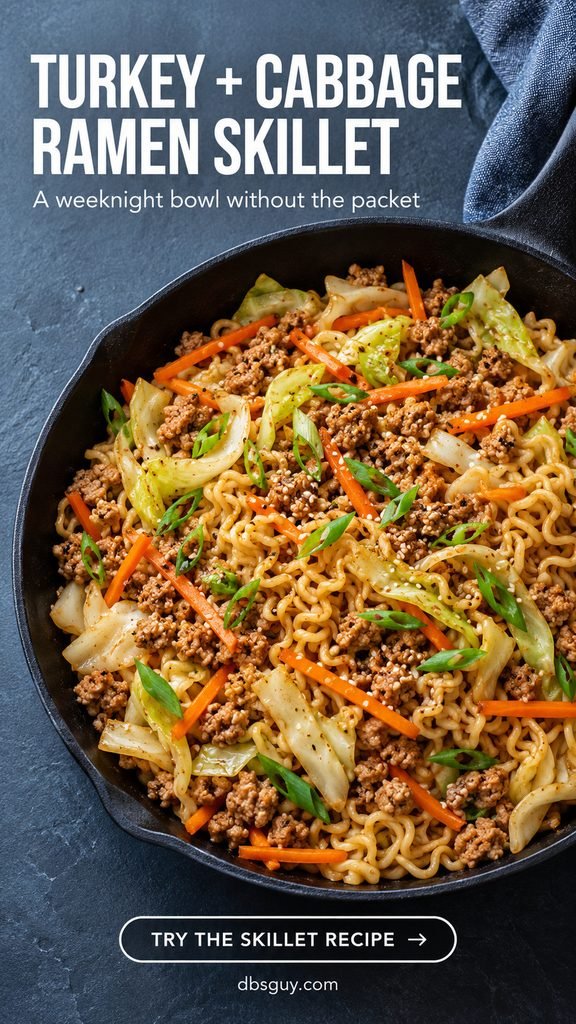
6. Turkey and Cabbage Ramen Skillet
Serves: 2 · Estimated total: 25 minutes · Style: Brothless skillet dinner
Ground turkey and cabbage turn a modest amount of noodles into a full pan of dinner. Browning the turkey first keeps the finished dish from tasting like everything was steamed together. The small amount of broth loosens the pan juices into a light sauce.
Ingredients
- 4 ounces dried ramen noodles, seasoning packets omitted
- 8 ounces plain lean ground turkey
- 2 teaspoons neutral oil
- 3 cups thinly sliced green cabbage; ½ cup carrot matchsticks
- 2 garlic cloves, minced; 2 teaspoons grated fresh ginger
- ⅓ cup unsalted chicken broth
- 2 teaspoons less-sodium soy sauce; 2 teaspoons unseasoned rice vinegar
- 1 teaspoon toasted sesame oil; ¼ teaspoon black pepper
- 2 scallions, sliced; 1 teaspoon unsalted sesame seeds
How to Make It
- Cook the noodles in unsalted water just until tender according to their package. Drain well. Whisk the broth, soy sauce, vinegar, sesame oil, and pepper in a cup.
- Heat the neutral oil in a large skillet over medium-high heat. Add the turkey, break it into small crumbles, and cook for about 6–8 minutes, until browned and 165°F.
- Add the cabbage and carrot. Cook, stirring, for 4–6 minutes, until the cabbage softens. Add the garlic and ginger for the final 30 seconds.
- Add the sauce mixture and scrape up the browned bits. Toss in the noodles for 1–2 minutes, until hot and coated. Finish with scallions and sesame seeds.
Sodium check: Use plain ground turkey rather than turkey sausage. A brothless bowl still needs measured seasonings; the absence of soup does not automatically make it lower in sodium.
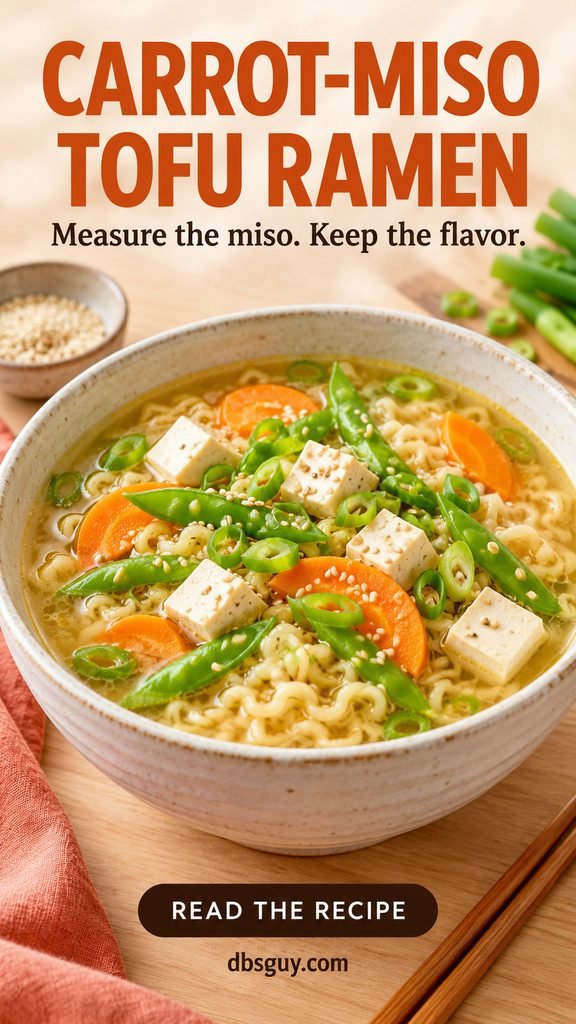
7. Carrot-Miso Tofu Ramen With Snow Peas
Serves: 2 · Estimated total: 25 minutes · Style: Light miso soup
Miso stays in the picture here, but in a measured amount. Thin carrots bring sweetness, snow peas keep some snap, and sesame oil adds aroma. This is a gentle broth rather than the concentrated miso flavor of some restaurant bowls.
Ingredients
- 4 ounces dried ramen noodles, seasoning packets omitted
- 1 teaspoon neutral oil; 2 teaspoons grated fresh ginger
- 3 cups unsalted vegetable broth
- 2 medium carrots, thinly sliced into half-moons
- 12 ounces plain extra-firm tofu, drained and cut into ¾-inch cubes
- 1½ cups snow peas, strings removed and cut into thin strips
- 2 teaspoons white miso; compare sodium amounts on the label
- 1 teaspoon toasted sesame oil; 1 teaspoon unseasoned rice vinegar
- 2 scallions, sliced; 1 teaspoon unsalted sesame seeds
How to Make It
- Warm the neutral oil in a saucepan over medium heat. Stir in the ginger for 30 seconds. Add the broth and carrots, then simmer for 6–8 minutes, until the carrots are almost tender.
- Add the tofu and simmer gently for 3 minutes. Add the snow peas and cook for another 1–2 minutes. Meanwhile, cook and drain the noodles separately.
- Put the miso in a small bowl and whisk with a few tablespoons of the hot broth until smooth. Remove the saucepan from the heat and stir in the miso mixture, sesame oil, and vinegar.
- Divide the noodles and broth between bowls. Add the scallions and sesame seeds.
Sodium check: There is no soy sauce in this recipe. Divide the sodium listed for 2 teaspoons of your miso by two, then add the other ingredients when calculating a serving. Miso brands are not interchangeable for sodium totals.
8. Golden Curry Chickpea and Cauliflower Ramen
Serves: 2 · Estimated total: 25–30 minutes · Style: Plant-based curry noodle soup with suitable noodles
Salt-free curry powder lets you add warm spice without relying on a salty curry paste. A little light coconut milk rounds out the soup, while chickpeas and small cauliflower florets give it enough substance to be dinner.

Ingredients
- 4 ounces dried ramen noodles, seasoning packets omitted
- 2 teaspoons neutral oil; ½ small onion, finely chopped
- 2 garlic cloves, minced; 1 teaspoon grated fresh ginger
- 2 teaspoons salt-free curry powder
- 3 cups unsalted vegetable broth
- 2 cups small cauliflower florets
- 1½ cups no-salt-added canned chickpeas, drained and rinsed
- ½ cup unsweetened light canned coconut milk, stirred before measuring
- 2 cups loosely packed baby spinach
- 1 tablespoon lime juice; 2 tablespoons chopped cilantro
How to Make It
- Warm the oil in a saucepan over medium heat. Cook the onion for 4–5 minutes, until softened. Add the garlic, ginger, and curry powder; stir for 30 seconds.
- Add the broth and cauliflower. Simmer for 7–10 minutes, until the florets are tender when pierced.
- Add the chickpeas and coconut milk. Simmer gently for 3 minutes, then stir in the spinach until wilted. Cook and drain the noodles separately while the soup simmers.
- Remove the soup from the heat, add the lime juice, and divide over the noodles. Scatter cilantro on top.
Make it work: If the flavor seems flat, check that the curry powder is fragrant and fresh, then add a little more lime. Curry paste is not a teaspoon-for-teaspoon substitute here; its salt and heat can be very different.
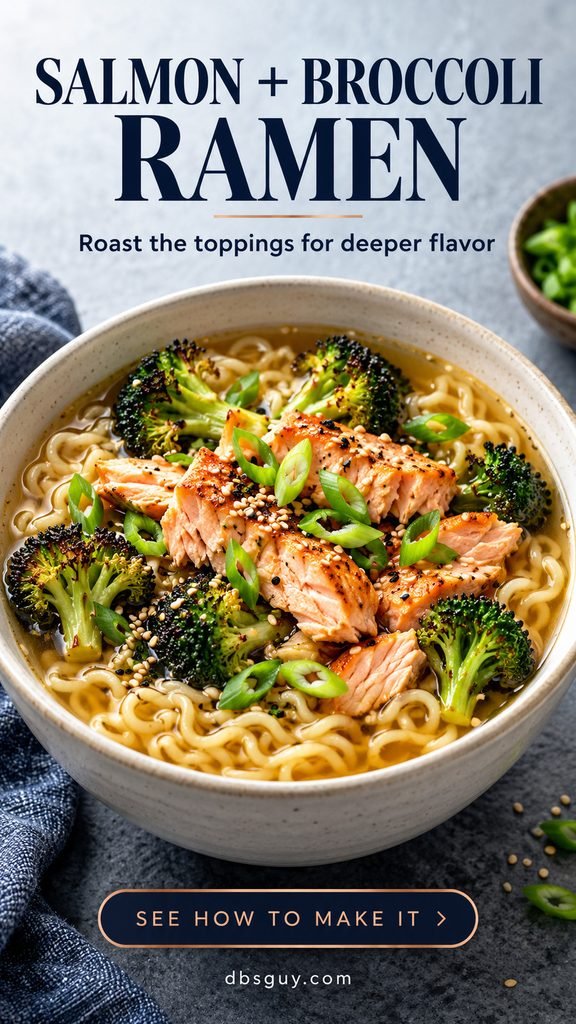
9. Roasted Salmon and Broccoli Ramen
Serves: 2 · Estimated total: 30–35 minutes · Style: Clear broth with roasted toppings
Give the oven the job of building flavor. Broccoli picks up browned edges, and a salmon fillet becomes easy-to-flake pieces for the top of the bowl. The broth can stay simple because the toppings bring their own character.
Ingredients
- 4 ounces dried ramen noodles, seasoning packets omitted
- 3 cups small broccoli florets, stems trimmed
- 8 ounces raw salmon, cut into 2 portions, pin bones removed; use plain fish rather than smoked or seasoned salmon
- 2 teaspoons olive oil, divided; ¼ teaspoon black pepper
- 3 cups unsalted vegetable broth
- 2 teaspoons grated fresh ginger; 1 garlic clove, thinly sliced
- 2 teaspoons less-sodium soy sauce; 1 teaspoon lemon juice
- 2 scallions, sliced; 1 teaspoon unsalted sesame seeds
How to Make It
- Heat the oven to 425°F. Toss the broccoli with 1 teaspoon oil on a sheet pan, leaving room for the salmon. Roast for 8 minutes.
- Brush the salmon with the remaining teaspoon oil and season with pepper. Add it to the pan without overlapping the broccoli. Roast for another 10–14 minutes, checking sooner for thin pieces. The salmon should reach 145°F in the thickest part; remove it when done and give the broccoli more time if needed.
- Meanwhile, simmer the broth, ginger, and garlic in a saucepan for 5 minutes. Cook and drain the noodles separately.
- Stir the soy sauce and lemon juice into the broth. Divide over the noodles, then add broccoli and large flakes of cooked salmon, discarding the skin if desired. Finish with scallions and sesame seeds.
Sodium check: Smoked salmon brings a different flavor and sodium load. Keep this recipe centered on plain fish and the measured broth seasoning.
10. Tomato and White Bean Ramen With Kale
Serves: 2 · Estimated total: 25–30 minutes · Style: Tomato-based fusion noodle soup
Think of this as a pantry bean soup that happens to use ramen noodles. White beans soften the tomato flavor, and kale holds up well in the pot. It is a useful option when you want a savory bowl without soy sauce or miso.

Ingredients
- 4 ounces dried ramen noodles, seasoning packets omitted
- 2 teaspoons olive oil
- ½ small onion, finely diced; 1 celery stalk, finely diced
- 2 garlic cloves, minced; ½ teaspoon dried oregano; ¼ teaspoon black pepper
- 1 can (14.5 ounces) no-salt-added diced tomatoes, with their juices
- 2 cups unsalted vegetable broth
- 1½ cups no-salt-added canned cannellini beans, drained and rinsed
- 2 cups finely chopped kale, tough stems removed
- 1 teaspoon red wine vinegar; 2 tablespoons torn fresh basil
How to Make It
- Heat the oil in a saucepan over medium heat. Cook the onion and celery for 5–6 minutes, until softened. Stir in the garlic, oregano, and pepper for 30 seconds.
- Add the tomatoes with their juices and the broth. Simmer for 8 minutes, breaking up a few tomato pieces with a spoon.
- Add the beans and kale. Simmer for 5 minutes, or until the kale is tender. Meanwhile, cook and drain the noodles separately.
- Stir the vinegar into the soup and ladle over the noodles. Finish with the basil.
Sodium check: No-salt-added tomatoes and beans do much of the work in this bowl. Regular canned versions are not equivalent swaps for the sodium calculation, even if you rinse the beans.
11. Smoky Sweet Potato and Black Bean Ramen
Serves: 2 · Estimated total: 35–40 minutes · Style: Brothless fusion bowl
Roasted sweet potato, black beans, and lime give the final bowl a completely different direction. Smoked paprika adds the smoky note without bacon, and a small tomato dressing coats the noodles instead of pooling underneath them.

Ingredients
- 4 ounces dried ramen noodles, seasoning packets omitted
- 1 medium sweet potato, about 10 ounces, scrubbed and cut into ½-inch cubes
- 1 tablespoon olive oil, divided
- 1 teaspoon smoked paprika, divided; ½ teaspoon ground cumin; ¼ teaspoon black pepper
- 1 small red bell pepper, thinly sliced
- 1 garlic clove, minced
- 1½ cups no-salt-added canned black beans, drained and rinsed
- 1 tablespoon no-salt-added tomato paste; ⅓ cup water
- 1 tablespoon lime juice; 2 tablespoons chopped cilantro
- Pinch of cayenne, optional; lime wedges, optional
How to Make It
- Heat the oven to 425°F. Toss the sweet potato with 2 teaspoons oil, ½ teaspoon smoked paprika, and the black pepper. Spread on a sheet pan and roast for 22–28 minutes, turning once, until tender with browned edges.
- Near the end of roasting, cook and drain the noodles. Heat the remaining teaspoon oil in a large skillet over medium heat. Cook the bell pepper for 4–5 minutes, then stir in the garlic, cumin, remaining paprika, and optional cayenne for 30 seconds.
- Add the tomato paste, water, and beans. Simmer for 3 minutes, stirring until the tomato paste disperses and the beans are hot.
- Toss in the noodles and lime juice. Fold in the roasted sweet potato gently so the cubes stay intact. Divide between bowls and finish with cilantro and optional lime wedges.
Make it work: Use plain smoked paprika and cumin rather than a taco seasoning blend. Add another tablespoon of water if the noodles need loosening; the finished dish should be lightly sauced.
Meal Prep Without Mushy Noodles
Store noodles separately from soup, and keep raw garnishes in their own container. For the brothless recipes, reserve a spoonful of water to loosen the sauce when reheating. For the best noodle texture, make the broth or topping ahead and cook the noodles on the day you eat.
Refrigerate cooked food in shallow, covered containers within 2 hours, or within 1 hour when the temperature is above 90°F. Keep the refrigerator at 40°F or below. Use refrigerated soup and cooked leftovers within 3–4 days, counting from when the earliest cooked ingredient was prepared, and reheat leftovers to 165°F. Bring reheated soups to a rolling boil before serving.
Also Read: Working with a microwave instead of a stove? 23 Easy Microwave Recipes for Dorm Rooms: No Kitchen Needed provides appliance-specific quantities and steps.
Healthy Ramen Questions, Answered
Is ramen healthy without the seasoning packet?
Removing the packet gives you more control over one major source of seasoning, but it does not tell you everything about the meal. Check sodium in the noodle cake, then look at what you add. Vegetables and a protein source make the bowl more substantial; salty broth and several condiments can bring the sodium right back up.
Can I use ordinary instant ramen in these recipes?
Yes. Weigh out 4 ounces of noodles for two servings, leave out the packets, and follow the noodle package’s cooking directions. Check whether the nutrition label describes the noodles alone or the complete prepared product. If the manufacturer does not separate them, you cannot precisely subtract the packet’s sodium from the total.
Are rice ramen or whole-grain noodles automatically better?
Choose for the quality you actually need: texture, a wheat-free option, fiber, or a sodium amount you can work with. Compare the labels for your portion. Rice-based noodles do not automatically solve every nutrition concern, and gluten-free meals also require suitable broth, miso, and sauces.
How can I add more heat without adding lots of sauce?
Use a small pinch of plain chili flakes or cayenne, or thin slices of fresh chili. Start small and add more at the table. Chili crisp, hot sauce, and chili-garlic sauces vary in sodium, so measure and count them if you use them.
What if the broth tastes too mild?
Check the recipe’s flavor builders before pouring in more soy sauce: brown the mushrooms properly, use fragrant ginger and garlic, and add the listed citrus or vinegar at the end. If you prefer additional seasoning, measure it and include it in your sodium total. A more restrained bowl will taste different from a concentrated instant soup.
For the easiest first dinner, choose one bowl and buy the plain version of its protein, vegetables, and broth. Keep the noodles and seasonings measured, then let that recipe’s ginger, roasted vegetables, mushrooms, or citrus carry the flavor.