
Start with one generous patch of sage—your bedding or a throw—then repeat the color in something you use every day, such as a desk mat or storage bin. Add cream, keep your existing wood furniture, and you have the beginnings of a cozy dorm without changing the walls.
These 17 sage green dorm room ideas cover different looks and different problems: an orange-toned desk, a crowded bedside, a shared room, or a bed that needs a little personality. Choose the ones that solve something in your space; you do not need to buy all 17.
The images are AI-generated dorm design concepts created for dbsguy.com. Adapt layouts and decorating methods to your assigned room and housing rules.

Before You Buy: Check the Bed, the Rules, and the Color
Check your room assignment for the mattress size before buying sheets. Twin XL is common, but your assigned bed is what matters; include any topper when checking fitted-sheet pocket depth.
Read your own housing rules before ordering wall adhesives, curtains, headboards, extra furniture, or lighting. For example, the University of Oregon’s packing and decorating guidance specifies permitted hanging materials and directs students to their housing contract. Another campus may have different requirements. ‘Removable’ on a package is not campus approval.
For the easiest starting palette, hold one sage fabric beside your actual furniture and a cream pillowcase. Look at them in daylight and with your room lights on. A gray-leaning green can look quite different from a yellow-leaning one, so use a piece you already like as your shopping reference.
1. Start with Sage Bedding and Cream Layers
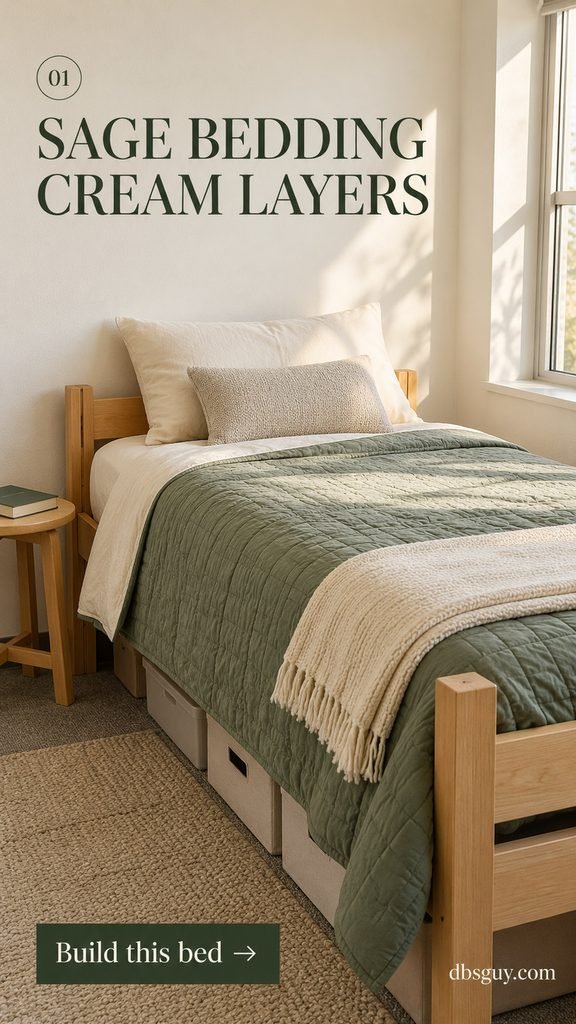
If you are furnishing the room from scratch, make the bed your color anchor. A solid sage quilt or duvet covers a large visible area, so the rest of the room can stay simple. Cream sheets and an oatmeal lumbar pillow keep the green from turning into a matching-set overload.
Look for bedding you can wash with the facilities you will actually use. Check both the care label and the available machine capacity before choosing a bulky comforter. Fold an extra blanket at the foot rather than stacking on decorative pillows you will have to relocate every night.
2. Give Gingham the Main Pattern Role
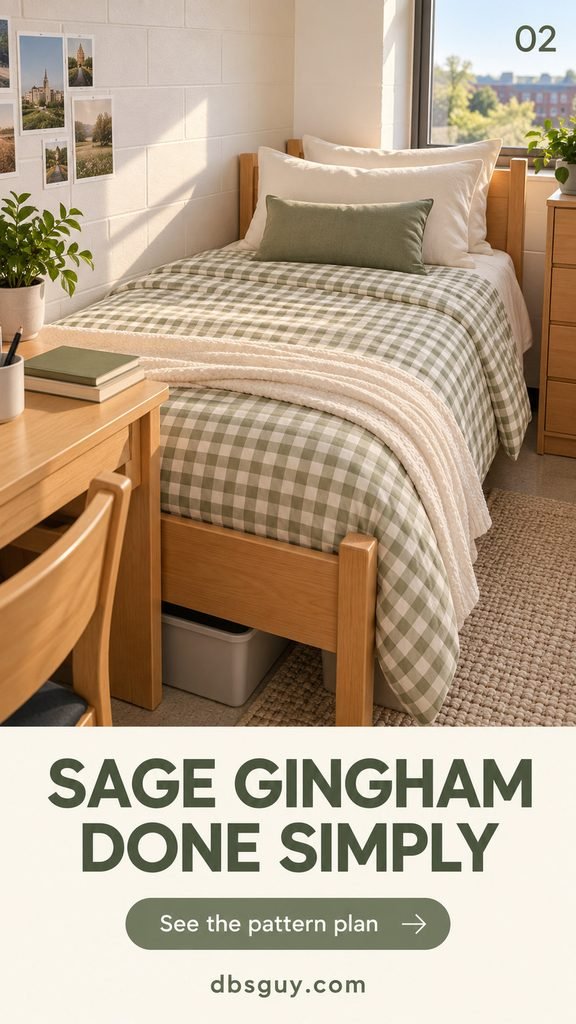
Sage-and-ivory gingham gives a plain dorm bed a cottage feel without adding a floral wall or a collection of tiny decorations. Choose it for the duvet or comforter, then use solid pillowcases so the checks remain the clear feature.
Check a close-up product image as well as the styled room photo: very small checks read differently from a bold checkerboard. If you already own patterned bedding, try one gingham pillow cover instead. Keep the other large textiles quiet so the patterns do not compete across a narrow bed.
3. Work with Maple Furniture Using Terracotta Accents

That honey-colored dorm desk can become part of the palette. Pair sage bedding with one muted terracotta pillow and a small clay-colored pencil cup. The warm accents connect to the wood, while cream sheets give the colors some breathing room.
Use a dusty orange-brown rather than a bright pumpkin shade if you want this combination to work through the whole school year. Before buying accessories, put a green fabric sample on your actual desk. You may find that the furniture needs much less disguising than you expected.
4. Soften Sage with Dusty Blush and a Little Brass

For a softer take on sage, add dusty blush in a pillow and a small tray. Keep cream as the bridge between them. A little brushed brass on a permitted table lamp adds a different surface without bringing in another large block of color.
Keep the pink pieces smaller than the sage bedding if you want green to remain the main color. This also makes the look easier to change later: switching a pillow cover is simpler than replacing the whole bed set. Choose your lamp for its size and usable light first, then its finish.
Also Read: 30 Sage Green Bedroom Ideas for a Calming Retreat
5. Make a Botanical Display on Your Dresser

You can get the feeling of a little gallery without putting anything on the wall. Arrange three lightweight, freestanding botanical frames on a dresser: one taller print at the back and two smaller ones in front. Sage leaves and warm white paper tie the display to your bedding.
Use frames with their own stable backs and keep them away from the dresser’s edge. Check that you can still open drawers and set down everyday essentials. If the surface is also your getting-ready station, use one print instead of three; the botanical reference will still be clear.
6. Put Personal Photos on a Freestanding Sage Pinboard

A sage fabric pinboard gives snapshots, postcards, and reminders a place to belong. Choose a desktop version with supports that stand securely on their own. That leaves the wall untouched and makes it easy to move the display when you rearrange your side of the room.
Begin with a few meaningful photos and one note card, leaving open fabric between them. Keep pins within the board rather than using it as a backing for wall fasteners. On a shallow desk, measure the support feet as well as the board itself; a pretty board is less useful if it steals your notebook space.
Also Read: Why Your Home Office Needs a Felt Board
7. Build a Study Station Around a Sage Desk Mat

A desk mat carries the green across the room without turning every school supply into decor. Place the laptop toward the back and leave enough depth in front for an open notebook. A matching pencil cup can hold the tools you use most; the rest can go in a drawer.
Measure your desk before ordering the mat, including the space needed for a lamp base. Look for a surface that suits your mouse and is easy to clean according to its care instructions. Skip decorative stacks under the laptop if they make the keyboard awkward to use.
Also Read: Modern Office Decorating Ideas
8. Give Your Side Its Own Warm Light

A small, housing-approved LED table lamp can make the bedside feel more settled after dark. A sage shade or base continues the palette, while a shaded light source is easier to place thoughtfully than a bright exposed bulb.
Keep a separate task light for reading and writing, and aim it toward your work rather than your roommate’s pillow. Check reach to an approved outlet before choosing the lamp’s position. Follow campus electrical rules and the lamp’s clearance instructions; do not drape a blanket over a shade to soften the light.
9. Add a Small Checkerboard Runner Beside the Bed

A sage-and-ivory checkerboard runner gives you a soft place to step and an obvious pattern at floor level. It is especially useful when your bedding is mostly solid. Start beside the bed rather than buying a room-size rug from a photo alone.
Measure with the desk chair pulled out and the closet door open. Keep the rug out of the chair’s rolling path and use a compatible nonslip backing or pad if your housing permits it. Low pile is a practical choice for crumbs and frequent cleaning; check the care instructions before assuming a rug is machine-washable.
10. Use Sage Storage Bags Under the Existing Bed
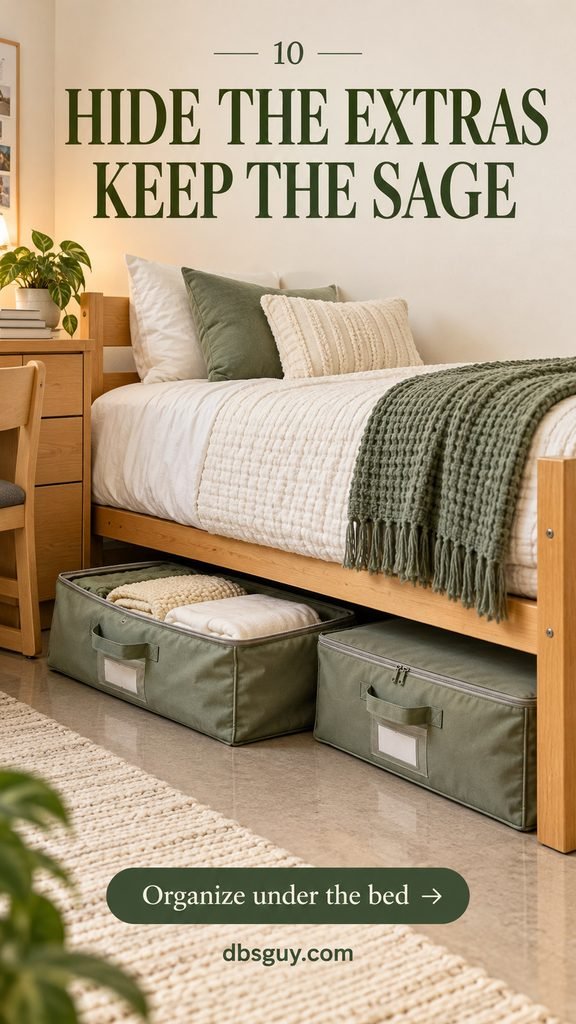
Low zippered storage bags make spare bedding and off-season clothes easier to contain under the bed. Sage fabric keeps visible storage connected to the room, but fit matters more than color. Measure the lowest crossbar and the opening between the bed legs, not just the mattress height.
Choose bags you can pull out by their handles without moving the desk. Put less-used items farther back and keep your spare sheets near the accessible side. Store textiles clean and fully dry. Work with the supplied bed height first; ask housing about any adjustment instead of improvising lifts.
11. Turn a Slim Sage Cart into Bedside Storage
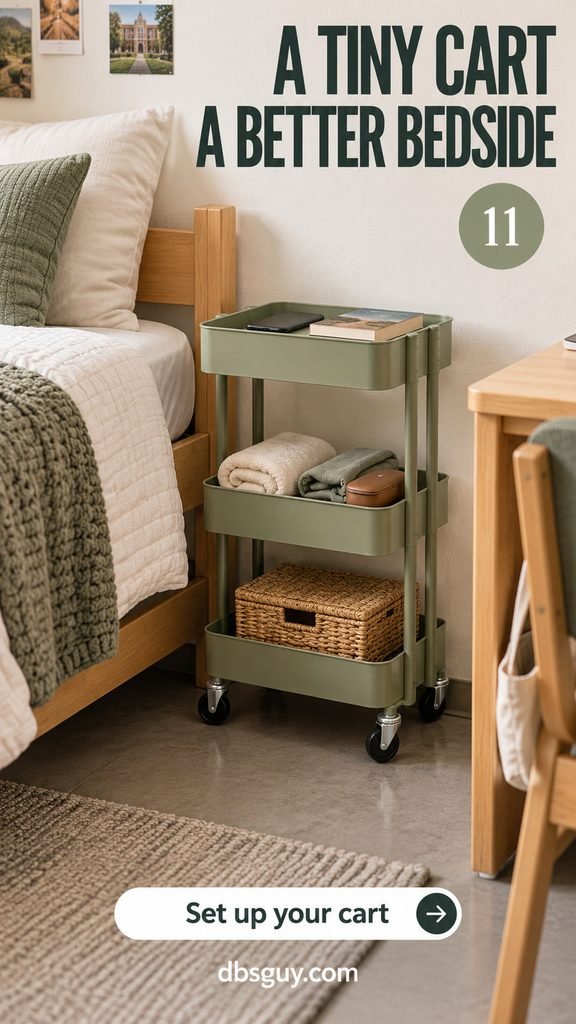
Where extra furniture is allowed, a slim cart can fill a bedside gap that is too narrow for a nightstand. Keep the top tray for a phone and your current book. Use the lower tiers for a glasses case, folded cloths, or a small basket of personal items.
Check the cart’s full footprint, including its wheels and handle, and compare its height with your mattress. You should be able to reach the top without leaning far over the edge. Lock the casters if fitted, stay within the maker’s load limit, and leave the route out of the bed clear.
12. Coordinate Roommates with Reversed Bedding Colors

You and your roommate can share a palette without owning identical bedding. Try a sage quilt with cream pillows on one bed and cream bedding with a sage throw on the other. The repeated colors do the connecting, leaving each person free to choose texture and accessories.
Agree on shared purchases before ordering a rug, cart, or lamp. Decide who is bringing each item, where it belongs, and who takes it home later. Keep the center aisle, door swing, and access to both closets open. A coordinated room should make daily life easier for both people.
13. Give Your Existing Chair a Reading-Corner Moment
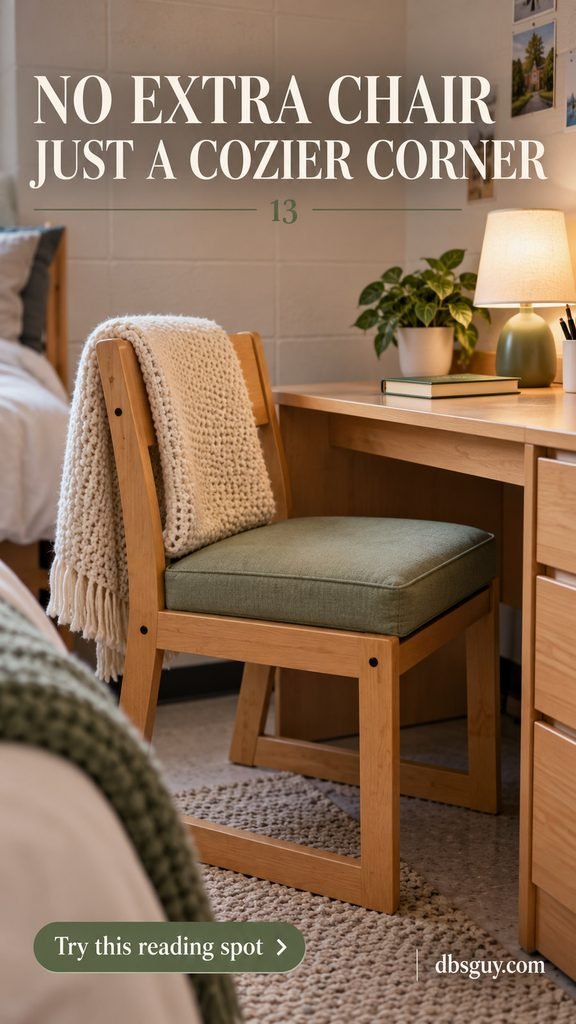
A reading spot does not have to mean squeezing in an armchair. Add a well-fitting sage seat cushion to the existing desk chair and fold a cream throw over the back. When the desk is clear, the same chair can serve for a chapter break or a call home.
Choose a cushion that stays put and does not leave you sitting awkwardly high at the desk. Keep the throw away from wheels and moving parts. In a tight room, make the corner feel different with a book and a warm lamp rather than another piece of furniture.
Also Read: 28 Cozy Reading Nook Ideas for Small Spaces in 2026
14. Create a Small Greenery Spot with Faux Plants

If you will be away during breaks or do not want another care routine, use a pair of small faux plants. Put one in a sage pot and one in cream on a dresser or an existing shelf. Different leaf shapes give the little group variety without needing lots of objects.
Keep the display contained, with leaves clear of lamps, vents, and window controls. Dust the foliage when you clean the surface underneath. If you prefer a living plant, choose it for the light your actual room receives and make a plan for watering during breaks; pot color comes after those decisions.
15. Make a Get-Ready Tray That Packs Away

A sage tray can turn one end of the desk into a temporary getting-ready spot. Add a folding tabletop mirror, a small brush cup, and only the products you reach for each morning. The tray creates a boundary so the routine does not spread across your study area.
Before settling on its size, check that the loaded tray fits on the shelf or in the cubby where you will store it. Keep liquids upright and closed. Follow your housing’s mirror-placement guidance, and put hot tools on a suitable heat-resistant surface away from the tray’s contents.
16. Carry Sage into the Closet with Bins and a Hamper

An open closet can feel more connected to the rest of the room with two sage fabric bins and a narrow hamper. Give the bins specific jobs, such as spare towels and accessories. Keeping categories separate makes it easier to find things without emptying the shelf.
Measure the shelf opening before buying bins, leaving enough space to lift them out. Keep heavier belongings lower down. Choose a hamper you can carry to the laundry room and check that it fits inside the closet with the door closed. Let damp towels dry before they join the laundry pile.
17. Try a Three-Piece Sage Refresh with Bedding You Own
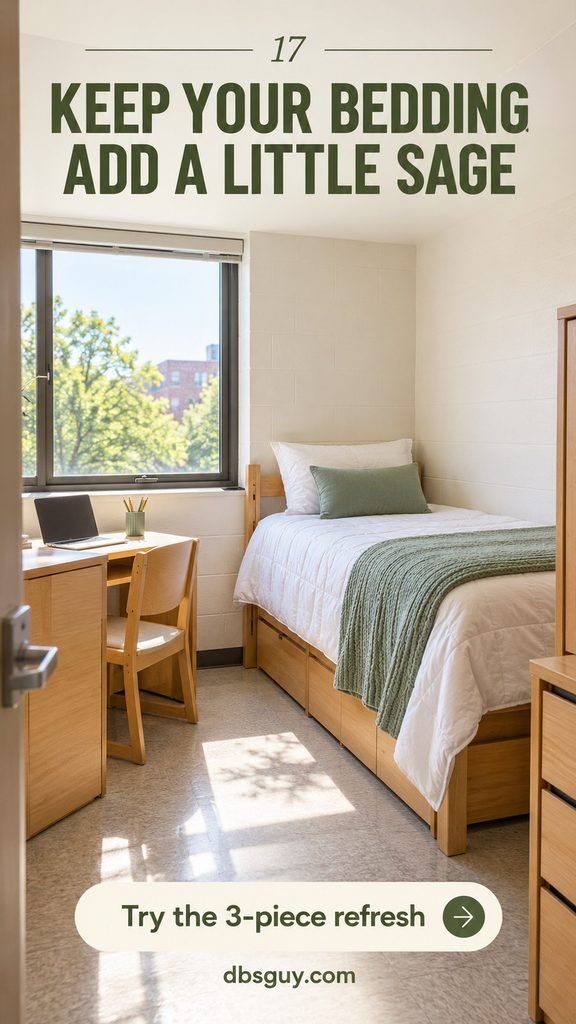
Already have white or cream bedding? Keep it. Introduce sage with a throw, a pillow cover that fits an insert you own, and a pencil cup. These three pieces connect the bed and desk without requiring a new bedding set or a shelf full of matching accessories.
Start with the throw because it gives you a fabric reference for the smaller items. The greens can vary slightly; aim for a similar muted feel rather than an exact match from different screens. If your existing bedding is strongly patterned, skip the pillow cover and let the solid throw be the main change.
Choose Your First Three Changes
Pick one look from the bed ideas, one practical fix, and one personal detail. For example, combine the solid sage quilt in idea 1, under-bed bags in idea 10, and the photo board in idea 6. If your bed is already comfortable, start with the desk mat, warm lighting, or closet storage instead.
Before adding anything else, live with that setup. Notice where you set your phone, drop your bag, and run out of workspace. Those habits will tell you more about the next useful purchase than another perfectly styled room photo.
Sage Green Dorm Room FAQs
What colors go with sage green in a dorm room?
Cream and oatmeal are simple starting points. Dusty blush adds softness, while terracotta connects well with warm wood. Pick one accent direction and repeat it in a small piece or two rather than introducing every combination in the same room.
How can I decorate in sage without painting the walls?
Use bedding, a desk mat, storage bags, and freestanding photo or art displays. These put color in several parts of the room without changing the walls. Check housing approval for any mounting product, even one labeled removable.
Does every sage item need to be the same shade?
No. A slightly deeper green pillow can work beside a lighter quilt. Compare pieces next to one cream or oatmeal reference so the mix feels intentional. Check them under the room’s lighting before removing tags or discarding packaging.
What should I buy first if I am on a tight budget?
Check what you already own, then choose the missing item with the biggest daily use. That might be correctly sized bedding, a desk lamp, or accessible storage. If those needs are covered, the throw-and-pencil-cup approach in idea 17 introduces sage with fewer purchases.
Can I use peel-and-stick wallpaper or add my own curtains?
Ask your housing office before buying either. Surface coverings, window treatments, and attachment methods can be restricted. If they are not allowed, carry the color through textiles on the bed and use tabletop displays instead.