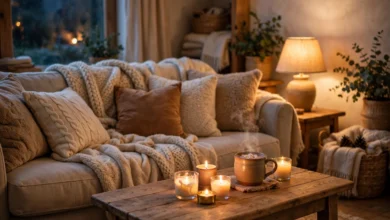
The easiest way to bring this look home is to choose one light-catching piece and give it a calm background. An iridescent vase adds a subtle rainbow shift; an opal-glass lamp brings a milky evening glow. The 11 ideas below show where each finish works, what to pair it with, and what to check before you buy.

These visuals are AI-generated design concepts, not photographs of completed rooms or exact products. Actual finishes vary with the material, lighting, and viewing angle.
Choose the kind of glow you want
Iridescent describes a surface that appears to shift color as the light or viewing angle changes. Opalescent often describes a milky, pearly appearance in decor listings, sometimes with subtle color play. Opal glass in lighting can simply be milky white. Read the material description instead of assuming these labels mean the same thing.
As an editorial starting point, pair a luminous finish with matte linen, wood, or painted walls. Cream makes pastel shifts feel airy; charcoal gives pale shell detail more definition. Choose the vase, pillow, tray, or glassware for an easy first experiment. Save tile and window film for after you have checked samples and installation requirements.
1. Start with one iridescent vase
An iridescent glass vase is an easy way to try the look without changing your room. Choose a rounded silhouette with a translucent finish: its curves show different hints of pink, blue, and green as your viewpoint changes. Put it on an oak console or a shelf that receives soft side light, where you will see it regularly.
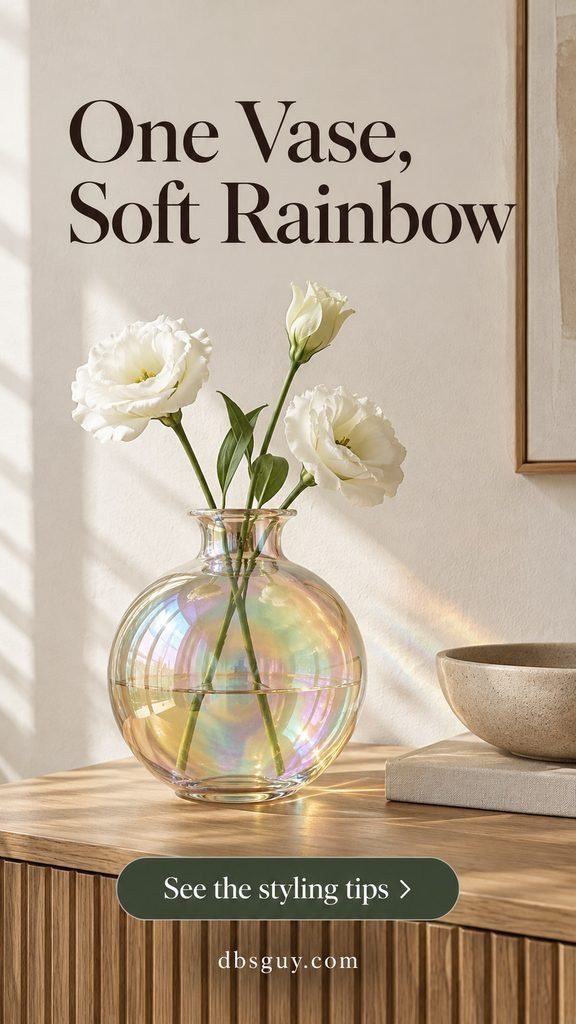
Keep the arrangement spare. A few white stems let the glass remain the focus; a dense bouquet can hide the finish. Set a matte ceramic bowl nearby to give the eye somewhere quiet to land. Check whether the vase is watertight before using fresh flowers, and follow the finish-specific cleaning directions.
2. Choose an opal-glass lamp for a softer evening glow
For a bedroom or reading corner, milky opal glass offers a quieter version of the glow trend. A globe shade looks sculptural during the day and becomes a luminous focal point after dark. Walnut, sage walls, and linen bedding keep the setting warm and grounded.
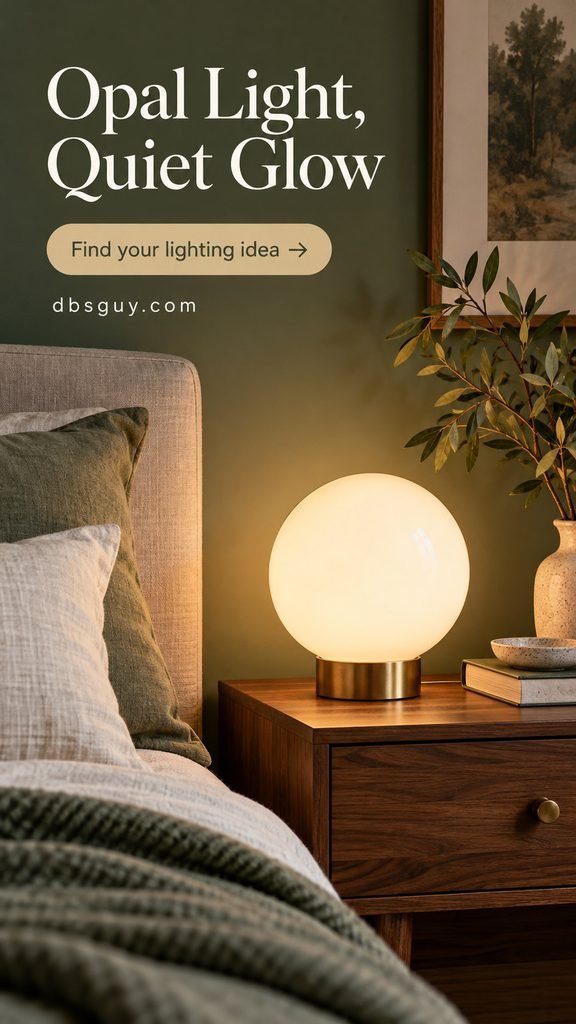
Opal glass does not automatically mean rainbow glass. It commonly gives a milky, diffused effect; IKEA describes the opal-glass shade on its SIMRISHAMN lamp as providing diffused light. The pictured lamp is a concept, not that product. Choose a lamp with room for your book and water glass, then use the bulb type and wattage its maker specifies. For reading, check that the light reaches the page rather than relying on ambient glow alone. Our small-space reading nook ideas can help with the surrounding chair and layout.
3. Frame an entryway mirror with mother-of-pearl
A narrow mother-of-pearl frame gives an ordinary mirror a jewelry-like edge. The small shell pieces offer gentle variations in ivory, silver, and pink, while the center stays useful for a last look before you head out. Against charcoal or mushroom walls, the pale frame becomes especially noticeable.

Pair it with a slim wood console and leave the surface mostly clear. Measure the wall and console together before buying so the mirror does not crowd adjacent doors or switches. Use mounting hardware appropriate to the mirror weight and wall construction. Natural shell varies from piece to piece, so inspect close-up photos or a sample rather than expecting a perfectly uniform white frame.
4. Add a pearly woven pillow to a matte sofa
A pillow is a good choice when you want shimmer close enough to appreciate its texture. Look for a woven fabric with a restrained lilac-to-blue sheen, rather than a rigid holographic surface. One luminous pillow beside a plain oatmeal cushion keeps a cream sofa inviting.

Ask for a fabric swatch if possible and view it under both daylight and your evening lamps. Check the reverse, zipper, and care label as carefully as the pretty front; a delicate decorative fabric may not suit the seat everyone uses daily. If your room already has glossy tables or metallic accessories, let this be the only new reflective accent. For a quieter foundation, borrow the wood and linen balance in our Japandi living room ideas.
5. Let iridescent drinking glasses dress the table
Iridescent glasses make a familiar table setting feel special without requiring decorative plates, elaborate flowers, or a new tablecloth. Start with one water glass per place setting, plain ivory dinnerware, and linen napkins. The walnut table in this concept gives the pale reflections a warm background.

For fall dinners, plum napkins add depth without turning the whole table into a seasonal display. For spring, keep the same glasses and switch to ivory linen. Buy glassware explicitly intended for drinking, not decorative vessels. Verify dishwasher guidance for the exact finish; appearance alone cannot tell you whether a coating tolerates machine washing. Leave enough clear space for serving dishes.
6. Use a luminous tray to organize a coffee table
A shallow iridescent tray gives everyday objects a defined home. On a light oak table, an oval shape softens the arrangement and catches light around its rim. A plain ceramic cup and a closed book are enough to show the effect without hiding most of the tray.
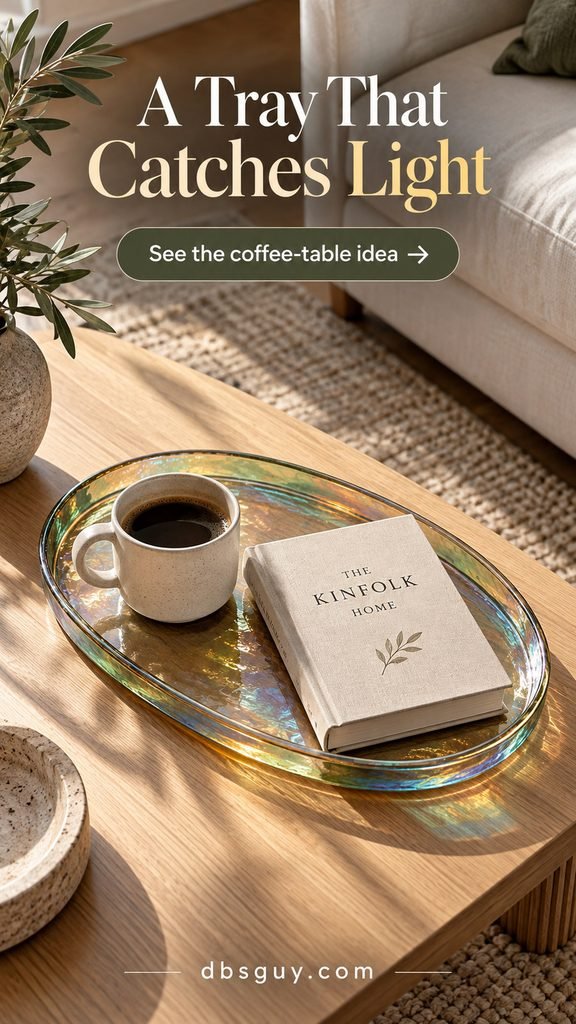
Choose a tray that leaves usable table space around it. If the surface is slippery, consider a discreet protective pad suitable for both materials. Do not assume a decorative glass tray is heat-safe or food-safe: use it for organization unless the maker confirms those uses. This idea works particularly well when the room needs a small accent but cannot accommodate another piece of furniture.
7. Create an evening vignette with LED votives
Pearl-finish glass holders look different against a deep plum wall than they do in a bright white room. Group three small holders on a stone shelf and use flameless LED tea lights inside. The warm points of light give the arrangement an evening presence while the glass remains the main visual detail.
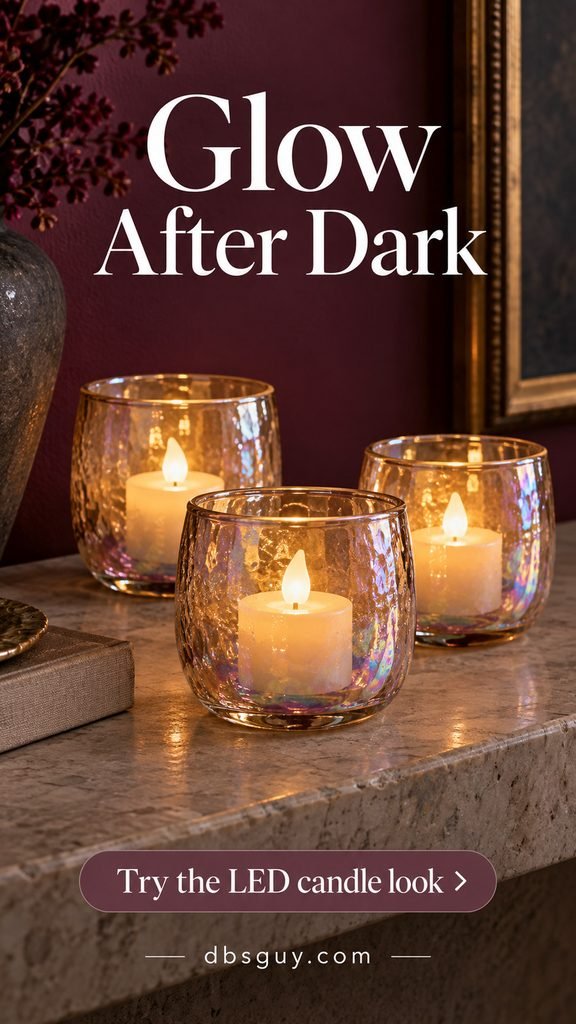
Vary spacing slightly, but keep the holders in one compact group rather than spreading them across every shelf. Confirm that the LED lights fit and that their switches or battery compartments remain accessible. The pictured arrangement uses LEDs; a decorative glass cup is not automatically a holder suitable for a real flame. Follow the light maker’s instructions and keep loose batteries out of children’s reach.
8. Confine iridescent tile to a vanity backsplash
A small glass-mosaic backsplash can provide a stronger dose of shimmer while keeping a bathroom calm. Limit the finish to the wall immediately behind the basin, then use plain walls, an oak vanity, and a simple mirror elsewhere. Pale aqua and pearl tones offer dimension without asking every surface to compete.
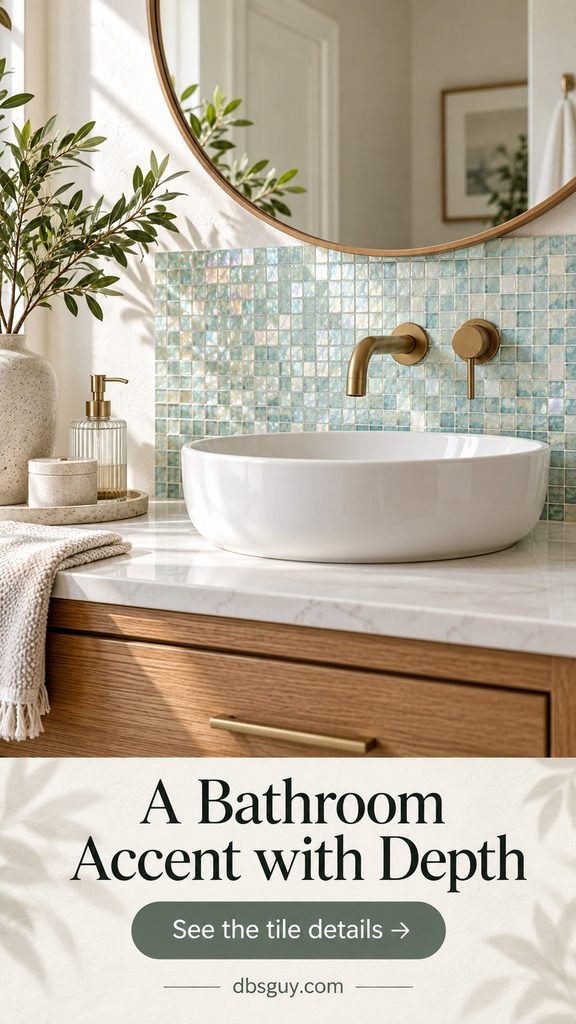
Order a sample and look at it vertically in your bathroom under its actual lighting. Review it beside the proposed grout color, since grout changes how clearly each small tile reads. Ann Sacks’ glass-tile overview shows the breadth of reflective glass finishes, but suitability must be checked for the exact tile. Ask your installer to confirm approved location, substrate preparation, setting materials, and edge treatment. Decorative wall tile should not be assumed suitable for floors or wet areas. In a windowless room, use our bathroom ideas with no window to plan the broader lighting first.
9. Try a color-shifting film on one window pane
Window film offers a larger luminous surface without adding furniture. In a home office, covering only a lower pane keeps the view through the upper glass open. A subtle iridescent tint works well beside a simple wooden desk and plain walls; intense rainbow patterns can become distracting near a screen.

Measure the pane, check the film’s width, and follow its own trimming and application instructions. Confirm compatibility with your specific glazing, coatings, and window warranty before buying. Gila’s window-film FAQ illustrates why application location and glass compatibility are product-specific; it is not approval for a different iridescent film. Also check privacy claims separately. A colorful finish does not guarantee nighttime privacy, and a rainbow coating does not guarantee rainbow projections across the room.
10. Swap small cabinet knobs for pearl-faced hardware
Pearl-faced knobs offer a tiny, tactile version of this look. On sage cabinetry, brushed nickel rims and pale shell centers feel considered without requiring glossy cabinet doors. This is especially effective on a bedside cabinet or a small freestanding chest where a few knobs can change the whole impression.

Bring an existing knob when shopping and check screw diameter, screw length, and door thickness. For pulls, match the existing hole spacing unless you intend to fill and refinish the doors. Order one sample before a full set: shell patterns and rim finishes can differ from online photos. For the rest of the room, our sage green bedroom ideas offer compatible palettes.
11. Make pearlescent wall art the main event
A single pearlescent artwork can carry the trend when you prefer clear surfaces and fewer accessories. Choose ivory and lavender textures with restrained blue shifts, then surround the piece with a simple frame and a quiet wall color. An oak sideboard gives the composition a warm base.

Ask the artist or seller for photographs or video from several viewing angles. A pearlescent paint finish may look soft head-on and more noticeable under side light; a flat printed image of shimmer will not behave the same way. If the work is glazed, check how reflections look from your usual seat. Avoid choosing a size solely from a close-up product photograph: mark the proposed outline on the wall first and assess it with the furniture below.
Before you commit to the finish
- Look twice: inspect a sample in daylight and with the lamps you actually use at night.
- Choose a focal point: start with one accent; add another only if the room still feels balanced.
- Check the base material: coated glass, woven fabric, shell inlay, and pearlescent paint require different care.
- Separate beauty from suitability: verify food contact, heat exposure, wet-area approval, or glazing compatibility when relevant.
For an autumn or winter refresh, warm wood, plum linen, and evening lamplight can ground these pale finishes. In spring and summer, the same pieces can sit comfortably beside cream fabric and fewer accessories. You do not need to replace the decor with every season.
Frequently asked questions
Will iridescent decor glow in the dark?
Usually, no. An iridescent finish needs light to reveal its color shift. A lamp or LED votive adds its own illumination, while a vase, pillow, or shell frame is visible through reflected light.
Does iridescent glass cast rainbows on the wall?
Do not assume it will. A surface can look rainbow-colored without producing distinct rainbow projections. If that effect matters to you, request a demonstration of the exact product in the lighting conditions it requires.
How do I keep the room from looking too busy?
Begin with one luminous object and keep the nearby surfaces simple. Repeat a quiet base color or material, such as oak or oatmeal linen, rather than buying every accessory in the same rainbow finish.
What is the easiest renter-friendly starting point?
A freestanding vase, pillow, tray, or table lamp requires no permanent installation. Treat window film and hardware changes separately: confirm product compatibility, removal instructions, and any lease restrictions first.
How should I clean pearl and iridescent finishes?
Follow the maker’s care instructions for the exact item. Do not infer dishwasher safety from a glass appearance or use an abrasive cleaner just because a finish seems hard. Keep the care label or product page so you can check it later.
Start with the spot you use every day
Pick the nightstand you see before bed, the console you pass on the way out, or the table where you have coffee. One well-placed luminous detail is enough to try the glow trend and learn which finish you enjoy living with.