
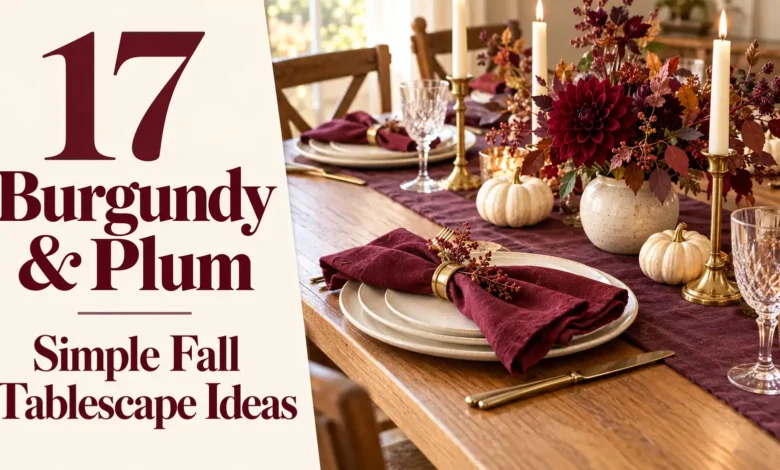
Start with the plates you already own, add one burgundy or plum textile, and choose a centerpiece that leaves room for dinner. That is enough to give a fall table a clear direction without buying a new set of everything.
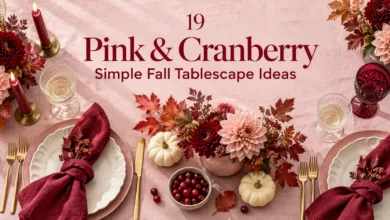
These simple fall tablescapes use red-wine burgundy and purple-leaning plum in different ways: a fruit bowl, a few flowers, paper leaves, everyday dishes, or a centerpiece you can lift away. Pick the idea that solves your table’s biggest problem, whether that is limited space, mismatched dishes, or too much decorating to do.
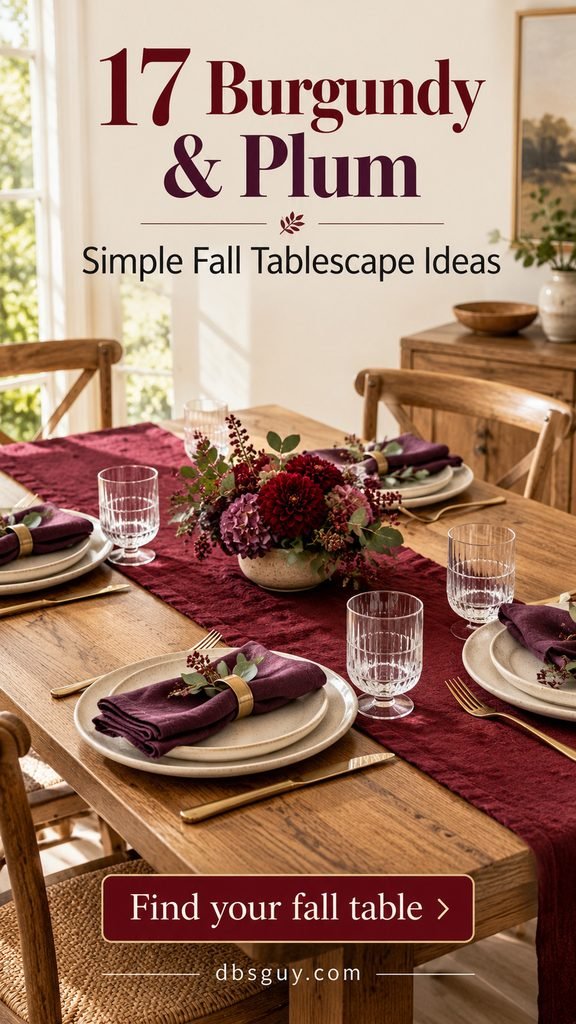
The images in this guide are AI-generated styling concepts, not photographs of completed or tested table setups.
Choose the Setup That Fits Your Table
- Fewest changes: start with the runner in idea 1.
- No fresh flowers: try the fruit bowl, flameless candles, or paper leaves in ideas 2, 5, and 14.
- Limited space: use the round-table approach in idea 7 or the end arrangement in idea 8.
- Family-style dinner: put the detail at each seat in idea 15, or use the removable tray in idea 17.
You do not need exact color matches. Choose a red-leaning burgundy and a purple-leaning plum, then repeat each somewhere on the table. If your room is dim, keep the plates and main surface light. Treat the combinations below as starting points rather than shopping lists.
1. Let a Burgundy Runner Do Most of the Work
If you want the smallest possible change, put a burgundy runner down a bare wood table and keep your white dinner plates and clear glasses. Fold a plum napkin into a plain rectangle at each place. The long band of color connects the settings; you do not need chargers or napkin rings.
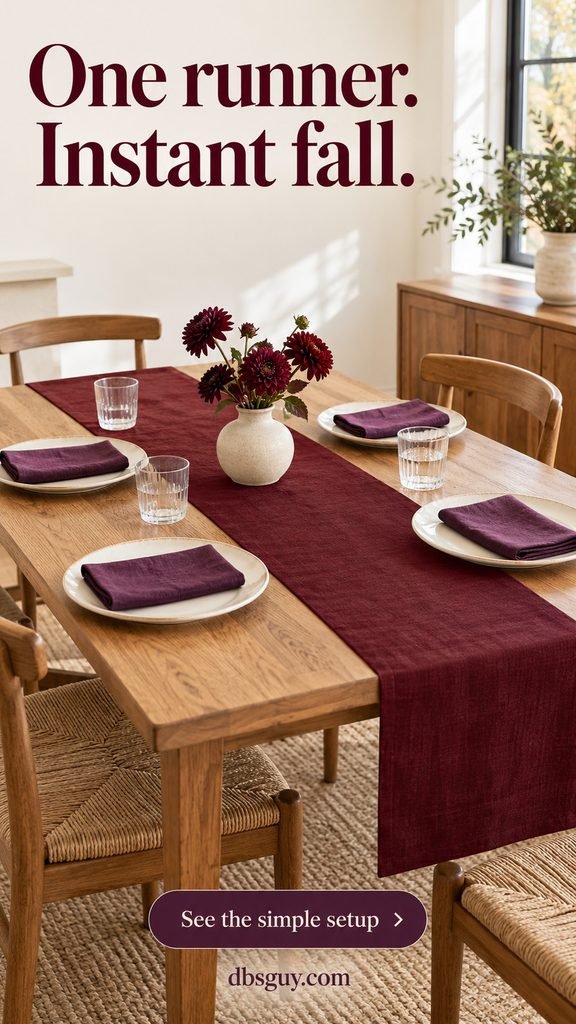
Finish with one short cream vase holding a few burgundy blooms. Set the plates and serving dishes down before adjusting the runner so its folds stay out of everyone’s eating space. If the fabric puddles across a place setting, smooth it into a narrower strip.
2. Make a Low Bowl of Plums and Pomegranates
For a table without flowers, arrange whole purple plums and burgundy-red pomegranates in a shallow cream bowl. Keep the fruit in a low mound instead of building a tower. An oatmeal tablecloth and burgundy napkins give the bowl a quiet background.
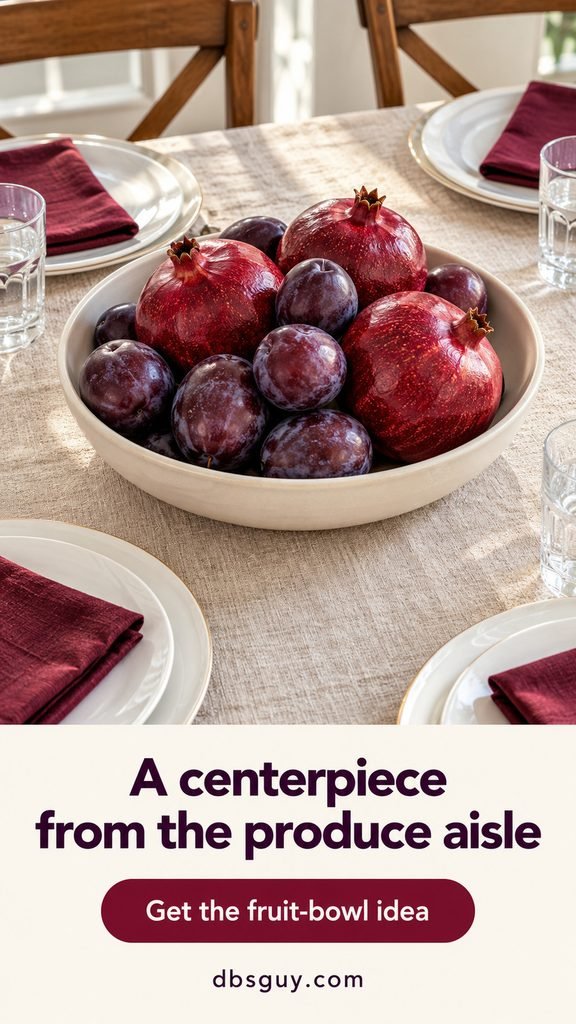
Choose a bowl small enough to pass around the table without moving every glass. Leave the fruit whole during the meal; cut pomegranates make the display harder to handle neatly. Use a clean, food-safe bowl and keep decorative paint, glitter, and floral products away from fruit you plan to eat.
3. Split a Small Bouquet Among Three Bud Vases
Three small clear bud vases let you spread color along a rectangular table without making one bulky arrangement. Divide a small bunch of burgundy carnations or spray roses between them, then repeat plum in the napkins. Start with one stem per vase and add another only if the opening needs it.
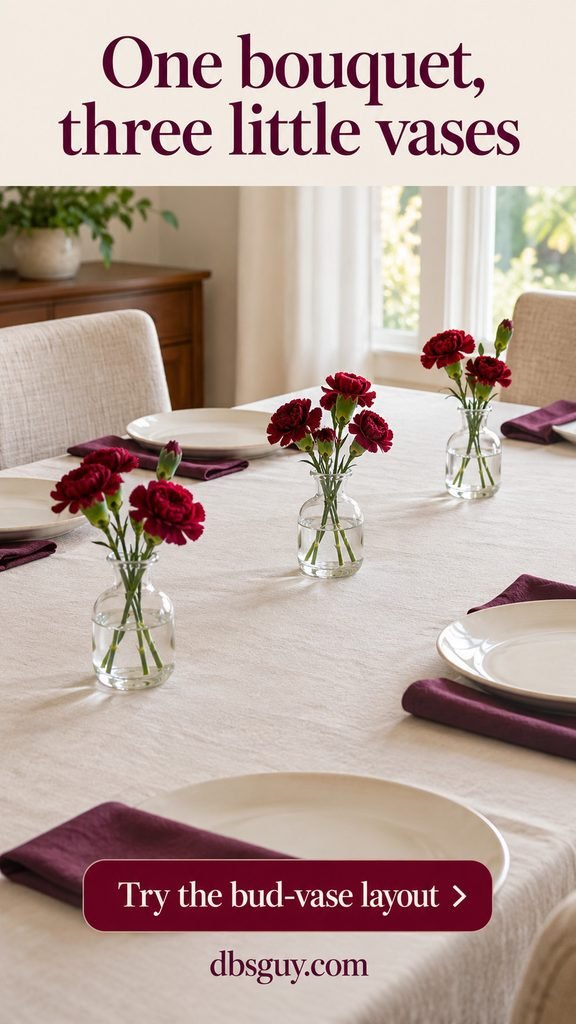
Cut stems to suit the vases and keep the blooms out of the seated sightline. Leave open gaps between the vases for a bread basket and serving bowls. If a vase feels easy to tip when you reach for food, swap it for a shorter one with a wider base.
4. Pair Three White Mini Pumpkins with Plum Linen
White mini pumpkins make a clear fall reference without adding orange to the palette. Place three directly on a flat plum runner, with the largest in the middle and the smaller two nearby. Burgundy napkins against white plates bring the red tone back into the setting.
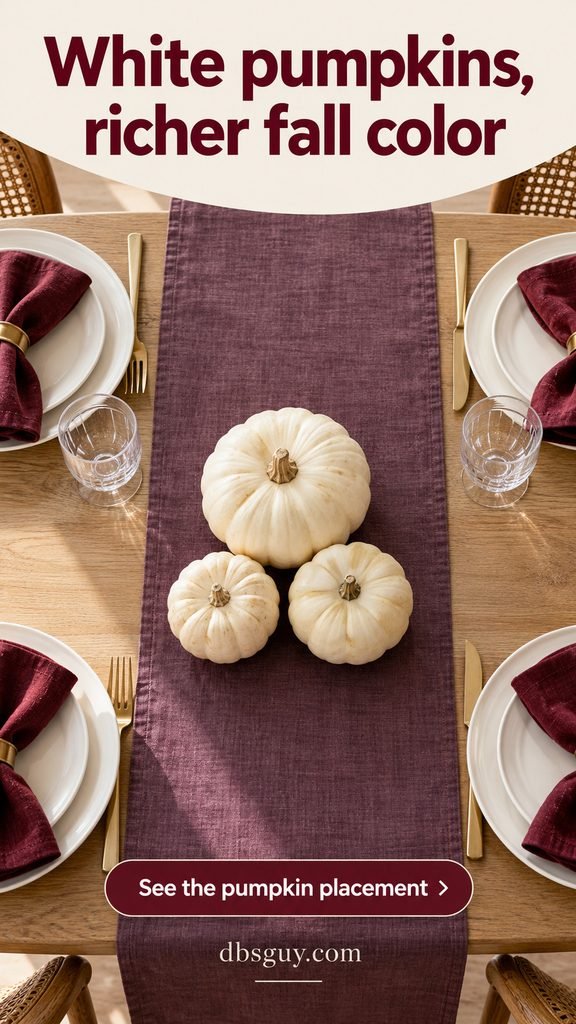
Keep the pumpkins in a compact group rather than scattering them beside every glass. Clean and dry the bottoms before setting them down, and protect delicate surfaces. This is a useful option when you want a recognizable fall detail without arranging flowers.
5. Use a Candle-Only Centerpiece for an Evening Table
Skip flowers and pumpkins altogether. Group three cream battery-operated pillar candles on a shallow plum tray, then use burgundy napkins and plain ivory dishes. The tray supplies the second accent color even if you own only neutral candles.
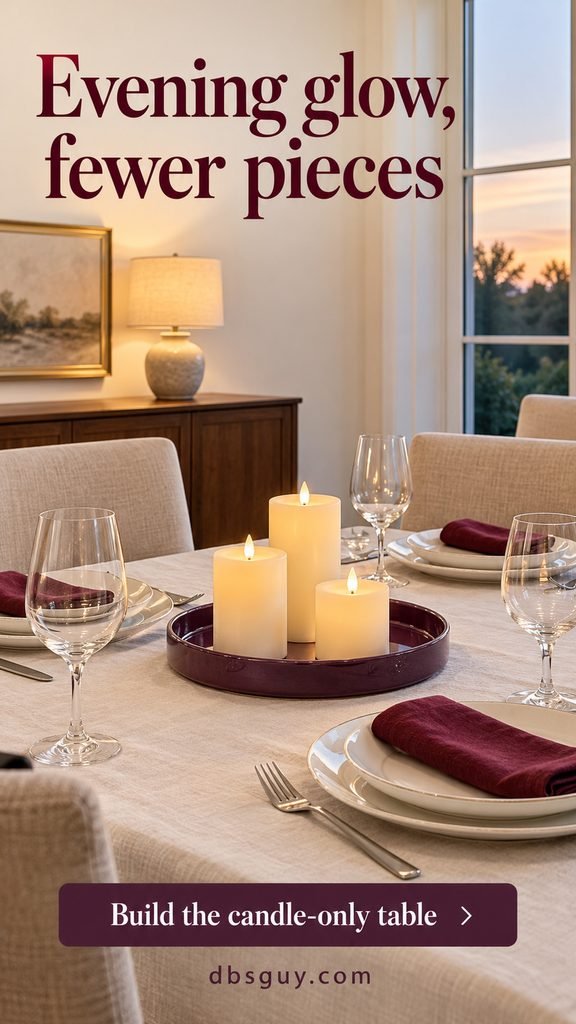
Choose a low group that you can see over while seated. Switch the candles on before guests arrive and check the glow with your room lights at dinner level. Keep enough background light to see the food and place settings; the candles are an accent, not the only lighting.
6. Warm Up Bare Wood with Woven Placemats
Let a wood tabletop show instead of covering it with a cloth. Round woven placemats, white plates, and burgundy napkins make a relaxed base; plum drinking glasses provide the purple accent. This is especially useful if your table already has a warm grain you like.
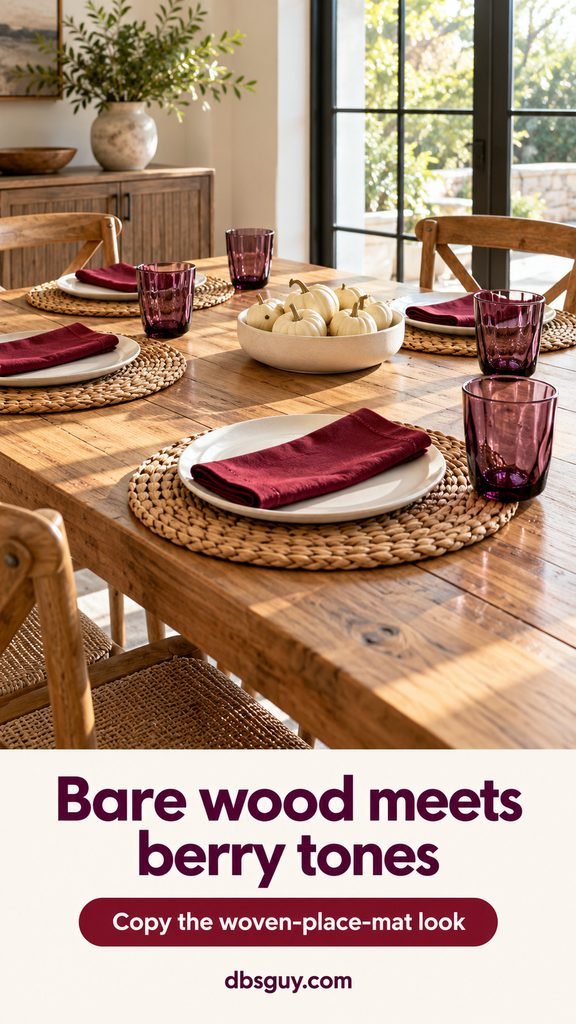
Check that each placemat fits fully in front of its chair without overlapping the next setting. If the table starts to feel crowded, remove extra salad plates rather than shrinking the eating space. Keep the center almost bare, with just one low cream dish of small white gourds if there is room.
7. Give a Round Table One Compact Centerpiece
A round table does not need a long runner. Use a small, low plum bowl of burgundy flowers in the center, with four simple place settings around it. An ivory tablecloth makes the bowl and blooms easy to see without introducing another pattern.
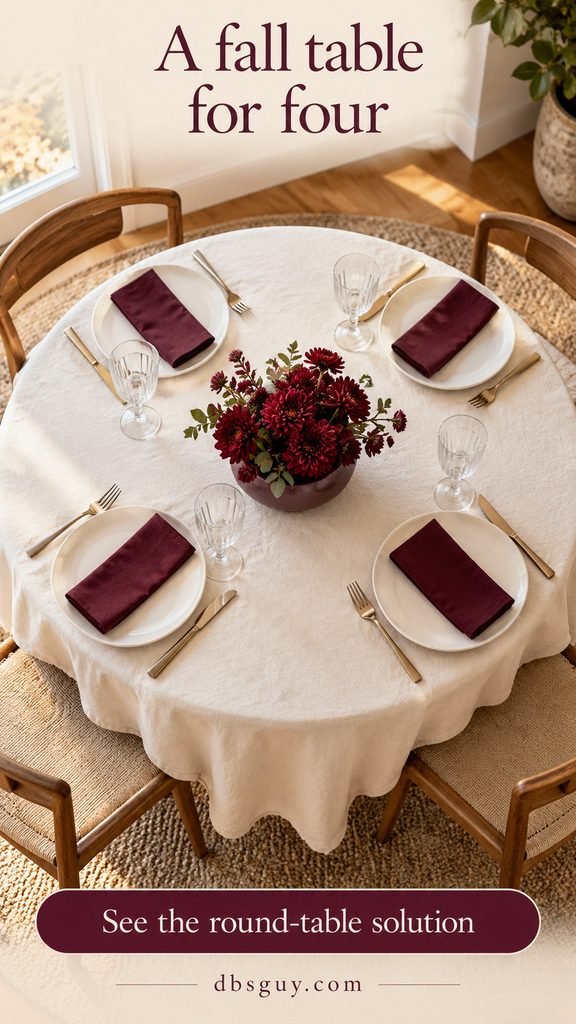
Before adding flowers, place your largest serving bowl on the table to check the space. If both pieces will not fit, plan to serve from a sideboard or lift the centerpiece away at mealtime. Keep the arrangement’s width modest; sprawling stems can be more intrusive than the container itself.
For other palettes beyond burgundy and plum, browse our 5 Gorgeous Thanksgiving Tablescape Looks That Look Expensive (But Aren’t).
8. Move Decor to One End of a Narrow Table
If a centerpiece fights with your serving dishes, move the decoration to an unused short end of the table. Put a small plum vase of burgundy stems there and carry the palette through the napkins along the sides. Leave the middle open for the meal.
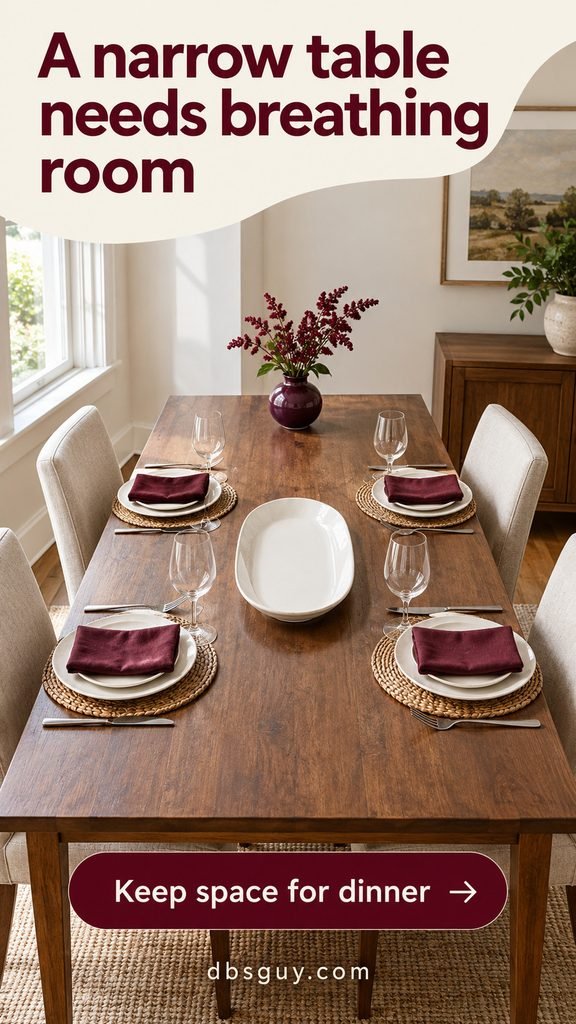
This arrangement works only if nobody is seated at that end. Set out an empty serving platter while you decorate so you can judge the usable space. If every end seat is needed, move the vase to a nearby console and let the napkins do the decorating.
9. Add Charcoal for a Clean, Modern Setting
For a contemporary room, use charcoal rectangular placemats under ivory plates, with plum napkins folded into flat bands. Put a few burgundy blooms in one squat black vase. Clear glasses keep the dark accents from taking over the whole setting.
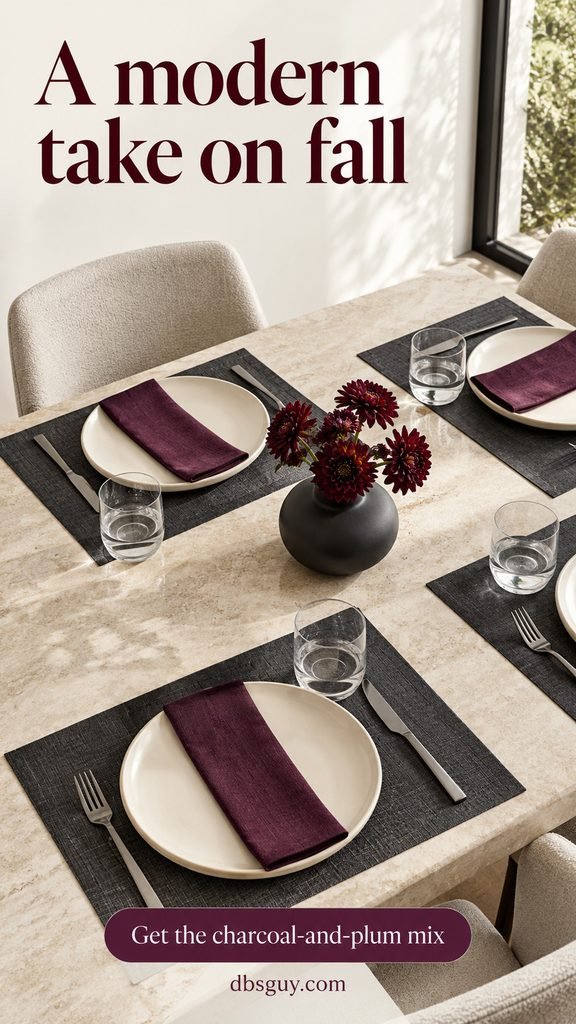
Use charcoal as the frame, not as a color on every surface. A pale tabletop or light cloth gives the plates a visible edge. Skip extra metallic decorations here; the straight placemats, rounded plates, and compact flowers already give you enough contrast.
10. Try Burgundy Gingham for a Casual Cottage Table
A burgundy-and-cream gingham runner adds pattern without requiring patterned dishes. Pair it with plain white plates and solid plum napkins. A small cream pitcher with a loose handful of burgundy flowers keeps the table feeling informal.
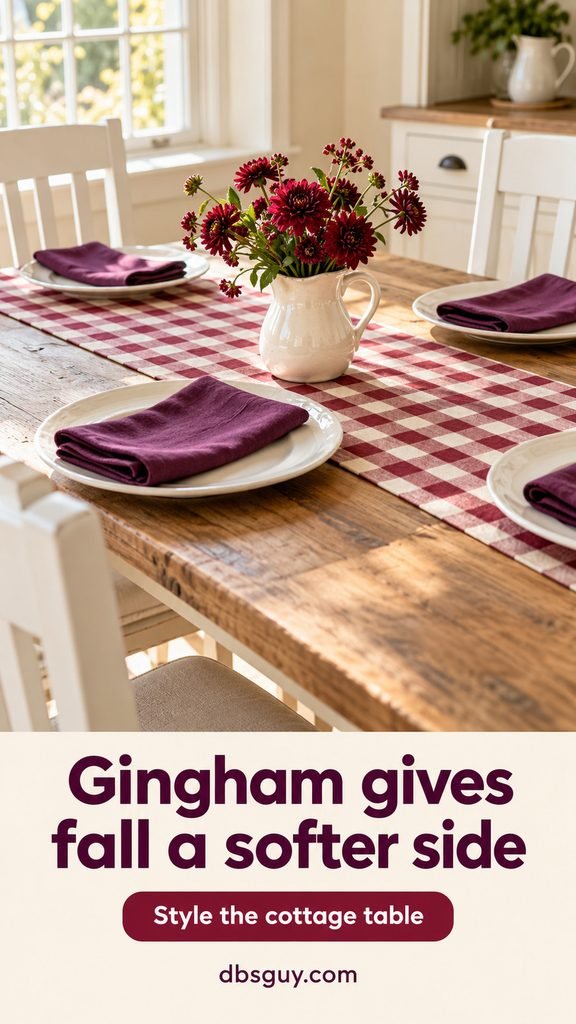
Let the checks be the only strong print. If you already have floral plates, choose either those or the gingham for this version. Flatten the runner before adding the pitcher so its base sits steadily rather than balancing on thick folds.
11. Tie Mismatched Floral Plates Together with Plum
If your salad plates come from different sets, look for a shared detail such as a cream background or a small red flower. Set them over plain dinner plates on a muted plum tablecloth. Repeat the same cream napkin and narrow burgundy ribbon at every seat to give the mixed plates a common frame.
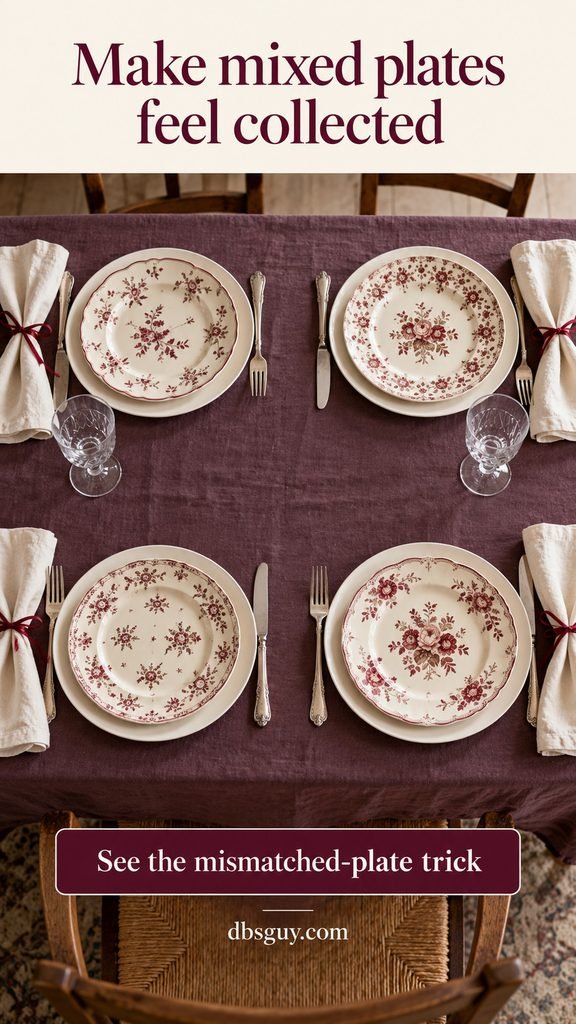
Tie the ribbon loosely enough that guests can slip it off, and keep it separate from the food. You do not need a matching centerpiece. The plate patterns are the feature, so leave the center available for serving.
12. Use Copper as a Small Warm Accent
If you already own copper-colored flatware or chargers, use that finish with a burgundy runner and plum napkins. Ivory dishes leave a clear break between the dark textiles and the metal. A small bowl of green pears can bring in a lighter note without another purchase of flowers.
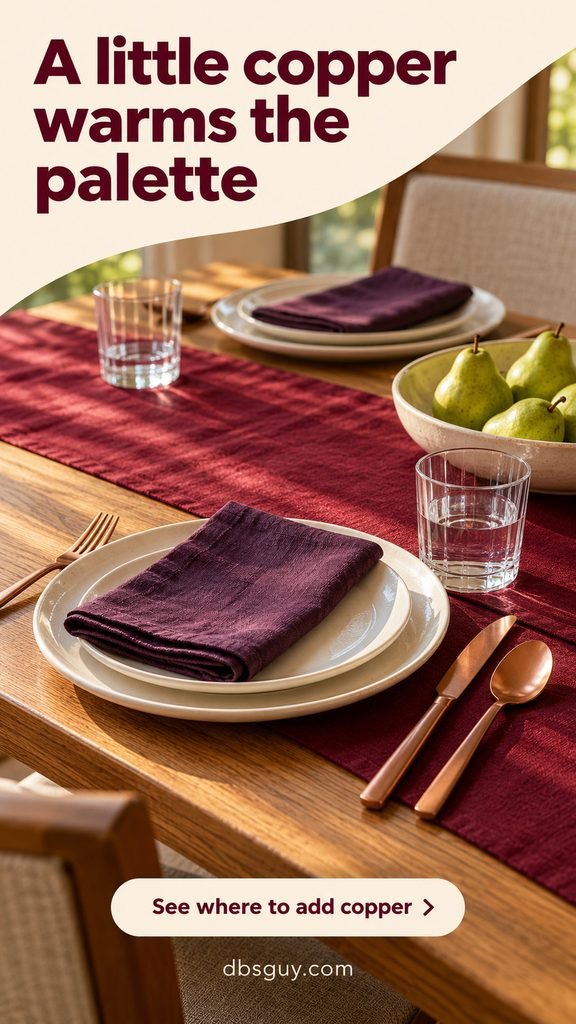
Pick one copper accent per setting instead of stacking a copper charger, cup, ring, and flatware together. Use ordinary food-safe dinnerware for eating, and treat decorative chargers as the layer beneath it. You can keep your everyday clear glasses; the metal does not need a matching glass.
13. Use a Small Wheat Bundle Instead of Fresh Flowers
For a dry arrangement, place a small bundle of wheat in a short plum vase and repeat burgundy in the napkins. Keep the rest simple: a cream cloth, white plates, and clear glasses. The wheat adds a tan harvest texture without introducing a second floral color scheme.
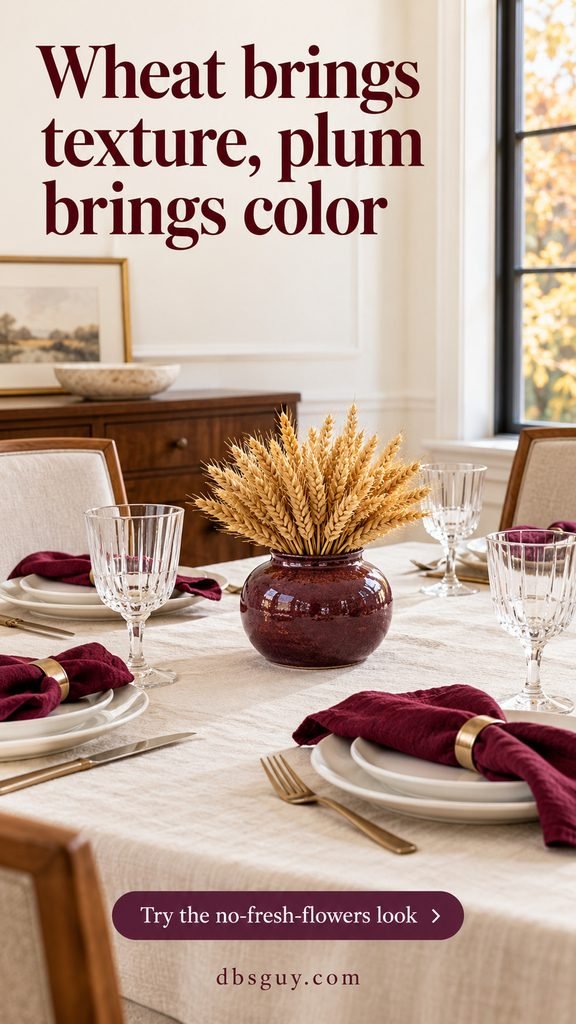
Trim the bundle so the stems stand compactly rather than fanning across the plates. Give it a gentle shake away from the table before arranging to remove loose bits. Keep dried stems away from food and use no open flames with this setup.
14. Make a Flat Paper-Leaf Runner
Cut simple leaf shapes from burgundy, plum, and warm cream cardstock. Arrange them in a narrow, loosely overlapping trail along the center of a bare table. White plates and plain cream napkins keep the handmade leaves as the main detail.
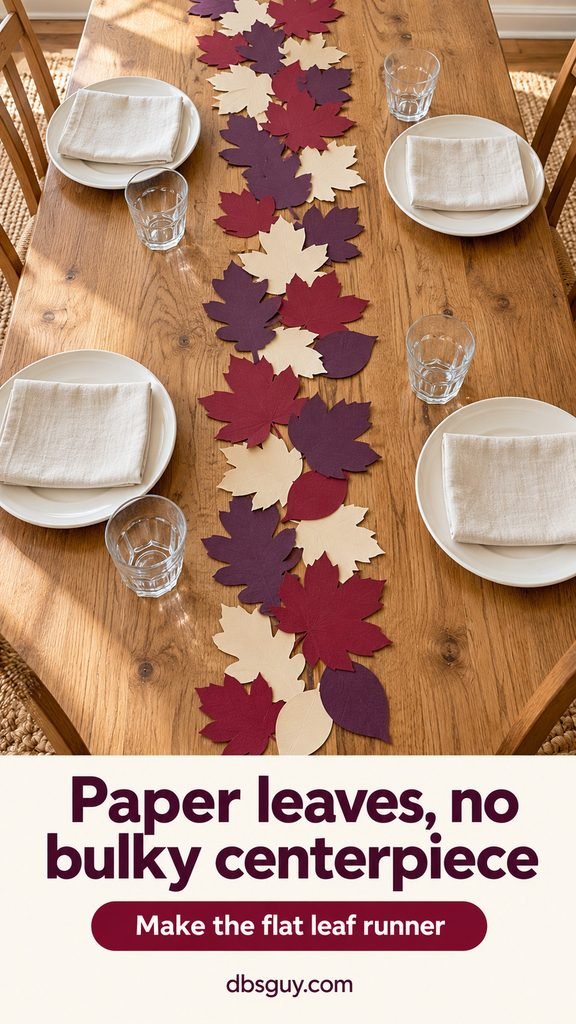
Use removable adhesive dots between overlapping leaves to make small connected sections you can lift away. Test any adhesive before letting it touch a finished tabletop. Keep the paper clear of plates, hot dishes, and damp glasses; move a section aside when a serving bowl needs the space. Skip candles for this version.
15. Put the Detail at Each Place with a Plum Bow
When the center of the table belongs to the food, decorate the napkins instead. Tie each cream napkin with plum ribbon and rest a burgundy place card above the plate. Use a light-colored pen so the names are easy to read against the dark card.
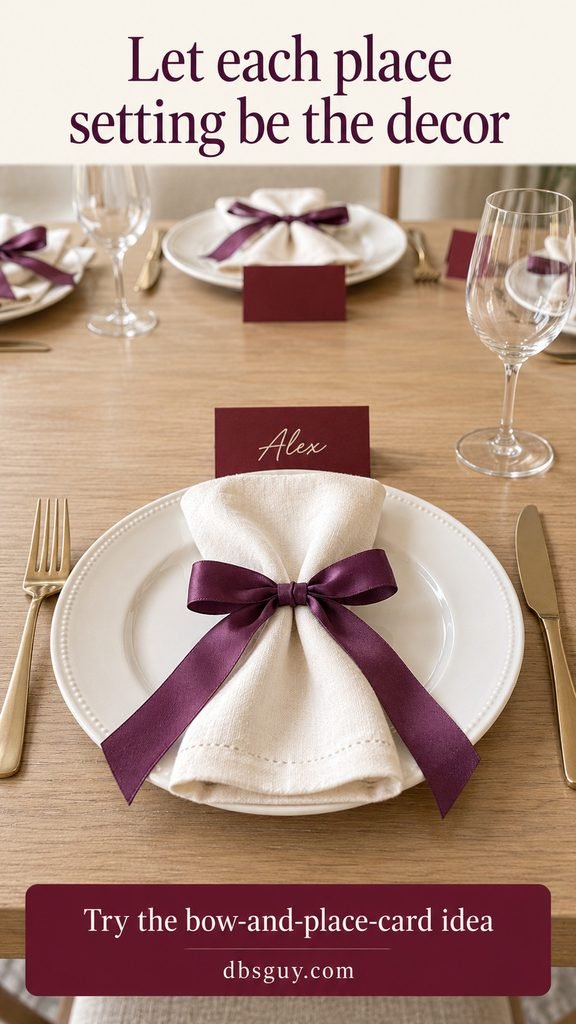
Make the bows loose and simple rather than winding ribbon around the flatware. Repeat the same detail at every seat, then leave the center clear. This works for a potluck or family-style meal because the color stays at the edges where serving dishes will not displace it.
16. Take Burgundy Plaid Outdoors
For a sheltered porch meal, use a burgundy plaid runner, plum napkins, and sturdy everyday plates. One low lantern containing a battery-operated candle gives the table a focal point without loose petals or lightweight paper decorations.
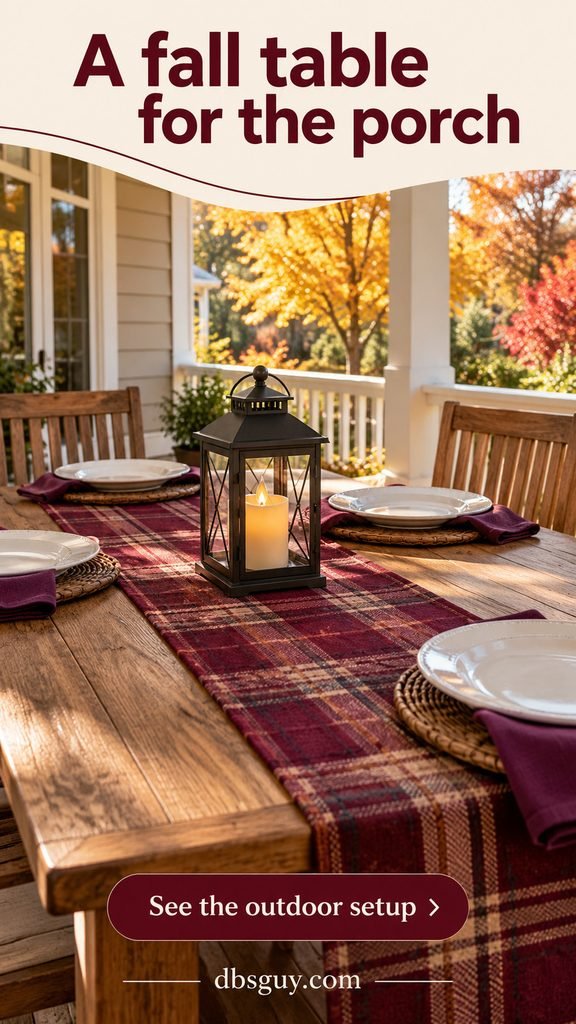
Clip the runner underneath the tabletop and keep the napkins tucked under the plate edges until guests sit down. Choose lighting rated for the conditions and bring everything in afterward. Have an indoor table ready if wind or rain makes the meal uncomfortable; the same linens can move with you.
If this table is part of a gathering with friends, our 27 Fun & Cozy Friendsgiving Ideas Everyone Will Love can help you plan the rest of the evening.
17. Build a Centerpiece You Can Lift Away on One Tray
Group one short cream vase of burgundy flowers and two small plum glass holders with LED tea lights on a low rectangular tray. The tray turns several pieces into one movable arrangement. Plain plates and burgundy napkins finish the table without competing with it.
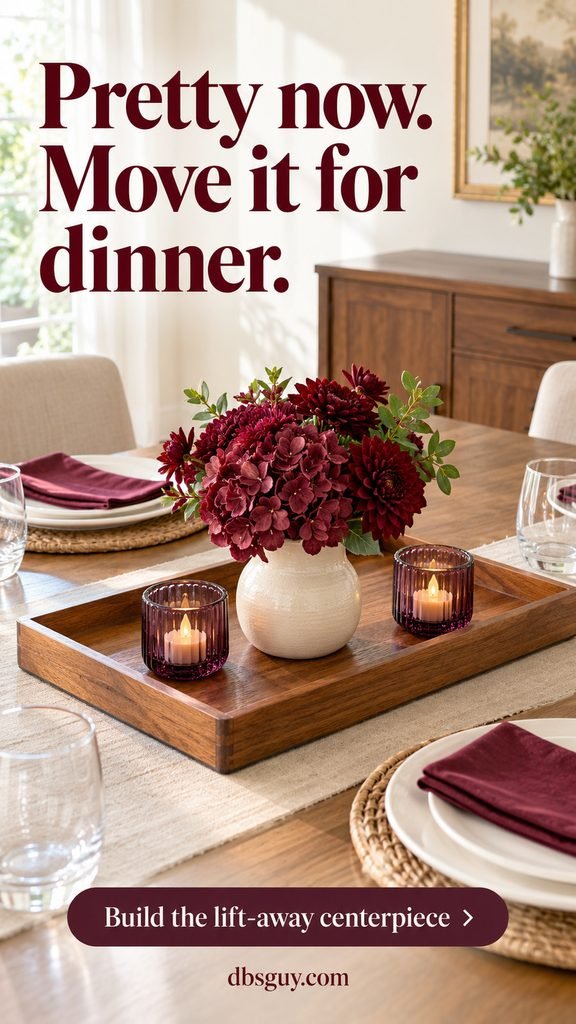
Test the weight and balance before filling the vase, then test again with water. Choose a tray with a raised edge and enough room to grasp it without touching the flowers. Set aside a clear spot on a sideboard so you can move the whole centerpiece there when hot dishes arrive.
Set It Up Around the Meal
- Put out the essentials first. Set plates, glasses, and the utensils you need. Add an empty platter or serving bowl in the place it will occupy during dinner.
- Add one main decorative feature. Choose the fruit bowl, flowers, pumpkins, or another single approach from this list. Avoid combining several complete centerpieces.
- Check from a chair. Sit down, look across the table, and reach for the serving dish. Shorten stems, shift a vase, or remove a piece if it blocks conversation or passing food.
For Thanksgiving, decide whether the turkey and sides will be served on the table or from a buffet before you decorate. A buffet leaves more room for a centerpiece. A family-style meal usually benefits from smaller decorations or a tray you can remove.
Keep Candlelight Practical
The candle-based concepts above use battery-operated lights. If you choose real candles instead, follow the U.S. Fire Administration’s candle safety guidance: use stable holders, keep candles at least 12 inches from anything that can burn, and extinguish them when you leave the room. If that clearance will not fit around linens, paper, or dried stems, use flameless lights.
Questions About Simple Fall Tablescapes
Can burgundy and plum work together without looking too dark?
Yes—give them a light background. Use cream plates, a pale cloth, or visible light wood, then place the darker colors in smaller areas such as napkins, a runner, or a vase. Check the combination under the lights you will use for dinner, since two deep fabrics may look nearly identical in a dim room.
What should I buy first if I am starting with white dishes?
Choose the one textile you will use most often: burgundy napkins or a runner. Add plum through something you already own, or through a small vase or ribbon. You can build a complete setting without buying new dishes, chargers, and glasses at the same time.
Can I set the table the day before?
You can arrange clean, dry linens and dishes ahead if the table will stay undisturbed. Check fresh flowers and fruit on the day of the meal, refill vase water as needed, and switch on battery lights shortly before guests arrive. Recheck the serving space once you know which dishes are actually going on the table.
Do I need a tablecloth and a runner?
Use either, both, or neither according to the table. A runner adds a narrow strip of color; a cloth changes the whole background. On a small table, start with the simpler option and only add another layer if it still leaves the place settings comfortable.
Pick the setup that fits your dishes and the way you serve dinner. A burgundy runner, plum napkins, and one well-placed feature are a useful place to begin; the rest can stay in the cupboard.

3 Comments