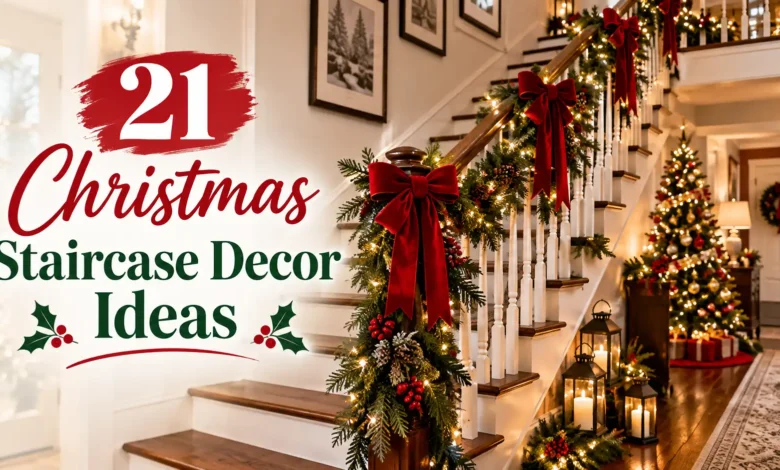
The easiest way to make a staircase feel ready for Christmas is to choose one decoration that reads clearly from the hallway: generous red bows, a rhythm of little wreaths, or a softly lit line of greenery. Then let the shape of the stairs do the rest.
These 21 Christmas staircase decor ideas include full garlands, simple ribbon arrangements, and options for stairs with very little room to spare. Each look has its own materials and placement tips, so you can choose something that suits your railing, your home, and the decorations you already own.
The images are AI-generated styling concepts, created to illustrate the ideas rather than document finished installations.
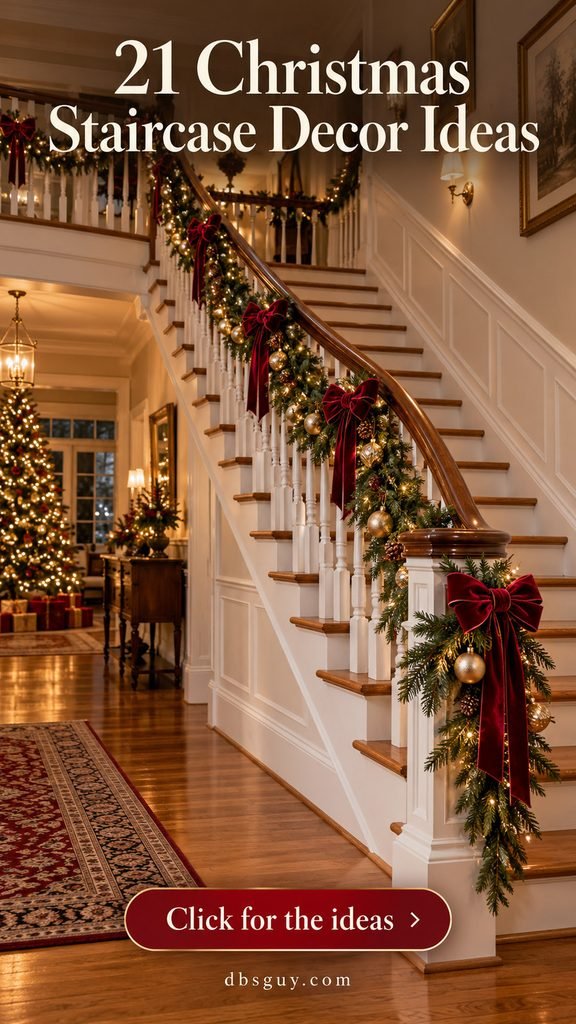
Choose a Look That Fits Your Staircase
For a traditional entry, start with the red-bow swags in idea 1. For a slim railing, try velvet bows, mini wreaths, or a light strand. If the staircase has a solid wall instead of open spindles, the paper stars and Christmas-card gallery give you festive options without a banister garland.
Choose one main look from the list. Keep the walking route, stair edges, and handrail clear, and repeat one color or material from the nearby tree or entryway. You do not need to decorate every visible surface.
1. Drape Evergreen Swags With Classic Red Velvet Bows
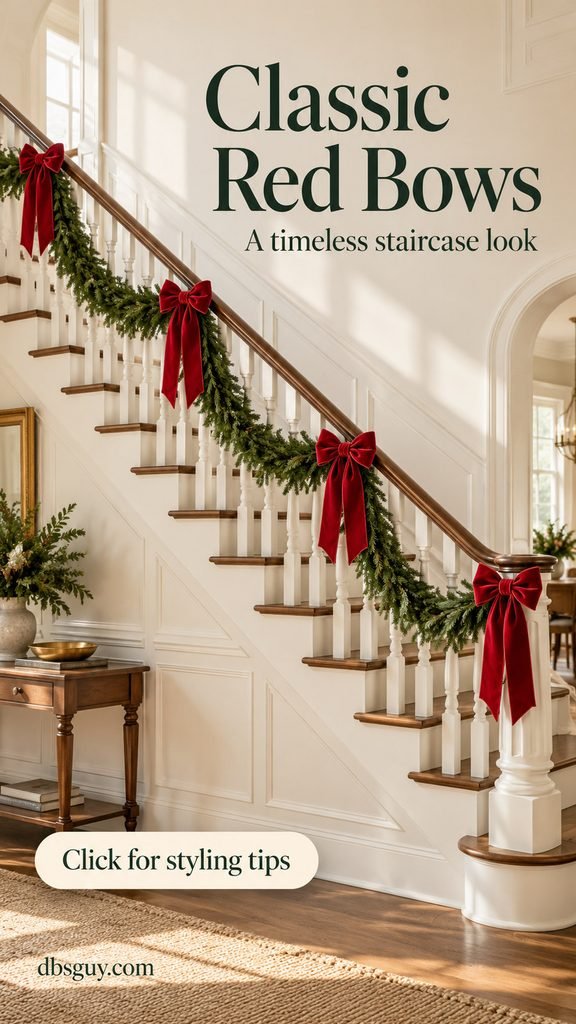
Red velvet against deep green branches gives a white-and-wood staircase an instantly recognizable Christmas look. The important detail is the rhythm: shallow greenery loops, with a substantial bow marking each place the garland is supported.
Lay the garland out first and decide where the dips will fall. Secure it to the outer faces of the balusters—the vertical spindles—below the handrail, then add the bows over the attachment points. A 2- to 3-inch-wide ribbon is a useful starting point for a medium staircase; test one bow before making the whole set.
Keep the bow tails within the decorated side of the railing. If the arrangement starts feeling crowded, remove the extra ornaments and let the velvet and greenery carry it.
Also Read: 21 Christmas Tree Bow Ideas That Turn Simple Ribbon Into a Statement
2. Skip the Garland and Tie on Velvet Bows
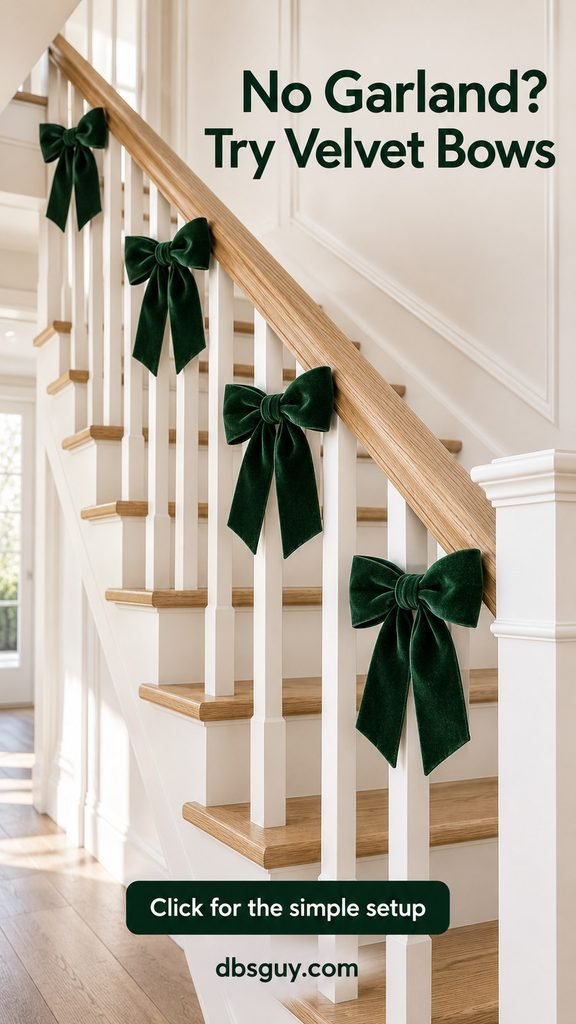
A row of forest-green bows brings Christmas to a narrow staircase without the bulk of greenery. The open spaces between the bows make the railing part of the design, which works especially well with simple white spindles.
Tie one bow around the outside of a baluster, a little below the rail. Step back and choose a spacing pattern: every third spindle might look right on one staircase, while every fifth works better on another. Repeat the same interval instead of filling every gap.
Use soft ribbon with neatly finished edges and relatively short tails. Wired ribbon gives more structured loops, but tuck its ends away. Moss green, deep red, and midnight blue are all good options; choose whichever connects to the room beyond the stairs.
3. Layer Cedar and Eucalyptus for an Airy Garland
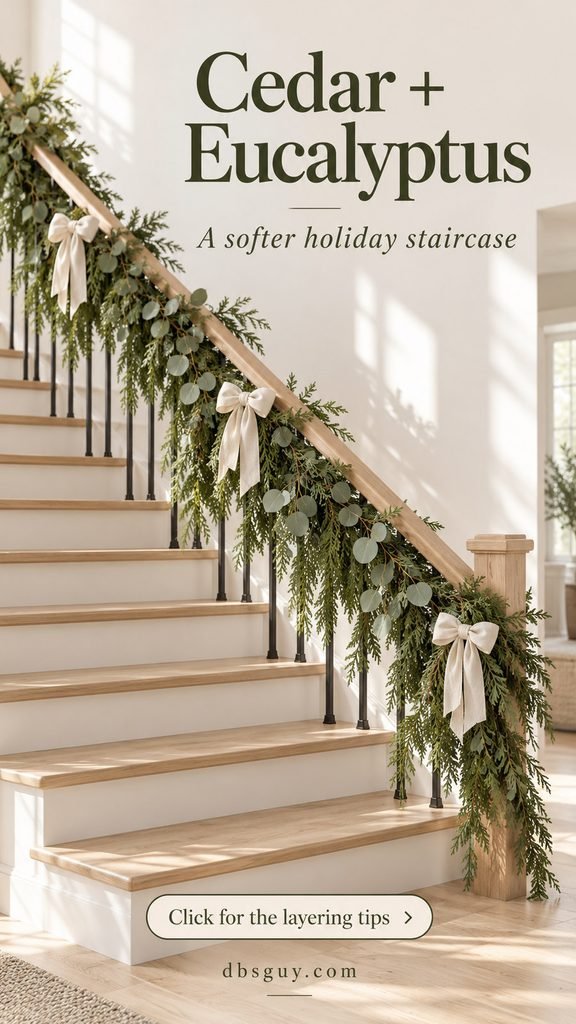
Cedar-style branches create a loose, trailing shape, while eucalyptus adds soft round leaves. Together, they make a staircase garland feel relaxed rather than densely packed. Small ivory bows bring in a textile detail without interrupting the greenery.
Start with a flexible faux cedar garland. Add individual faux eucalyptus stems where the foliage looks thin, pointing their leaves in the direction of the sweep. Secure each stem to the garland’s central support rather than balancing it among the tips.
This is a lovely choice for pale wood, black metal balusters, and neutral rooms. Keep the longest stems on the outer side and trim the silhouette if branches creep toward the steps. The goal is an airy outline, with room to notice the different leaves.
Also Read: How to Make Christmas Garland Look Fuller: 9 Easy Styling Tricks
4. Show Off Magnolia Leaves and Copper Ribbon
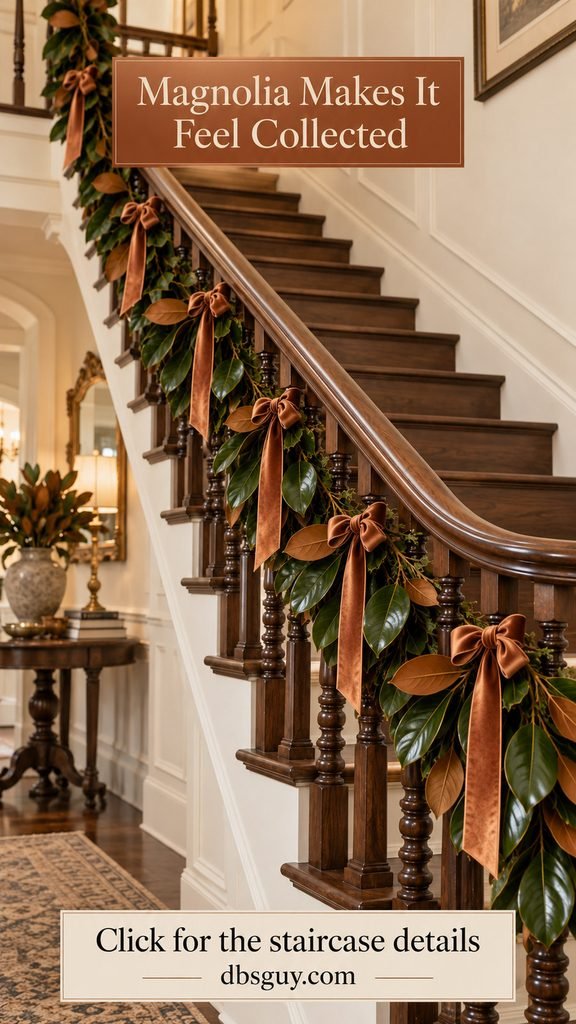
Magnolia foliage has a different character from fir: broad leaves, strong shapes, and warm brown undersides. A magnolia-style garland looks particularly at home beside dark wood, antique frames, or a cream-painted stair wall.
Use a faux version if you want consistent leaf color throughout the season. Turn some leaves outward to show their copper-brown backs, and leave others glossy green. That small adjustment gives the arrangement depth without needing baubles.
Add muted copper ribbon at a few support points. Avoid pulling it so tightly that the leaves become a flat band. On a short stair run, one generous sweep can be enough; on a longer one, repeat the same broad-leaf texture so the garland reads as a continuous design.
5. Add Dried Orange Slices and Cinnamon Bundles
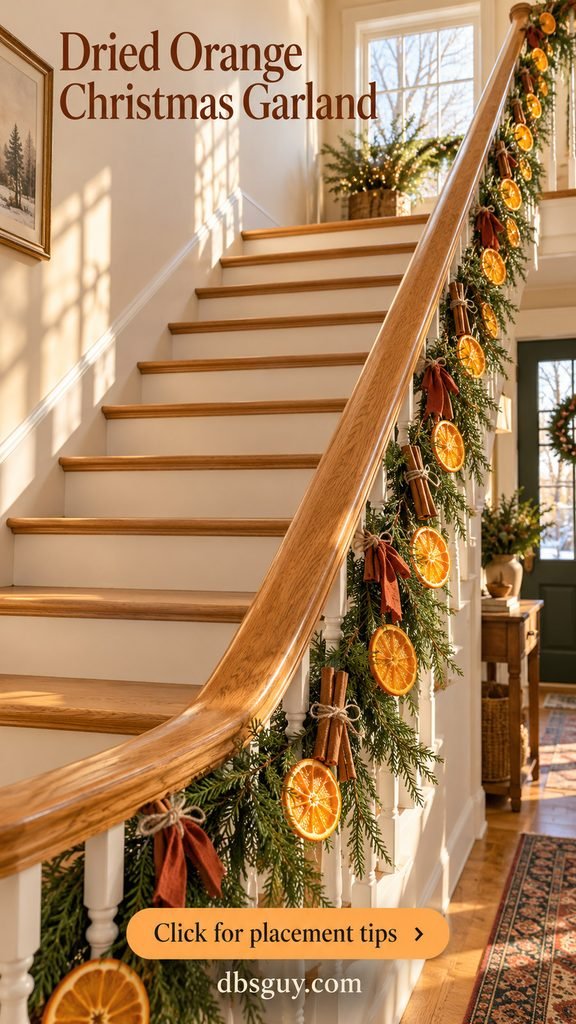
Amber orange rounds make a green garland feel warm and handmade. They are especially pretty near a window, where the light can catch their translucent centers. Small cinnamon bundles and rust-colored ties deepen the natural palette.
Use fully dried decorative orange slices, or realistic faux ones, and attach each separately with short twine loops. Place a few along the garland before filling the remaining spaces, so you can judge the balance from the hallway. Keep the cinnamon bundles small rather than building heavy clusters.
If you use real dried fruit, check it during the season and discard any pieces that develop moisture or mold. Keep food-like decorations away from curious children and pets. Faux slices are a practical alternative when the staircase is a busy household route.
6. Build a Woodland Look With Pinecones and Burlap
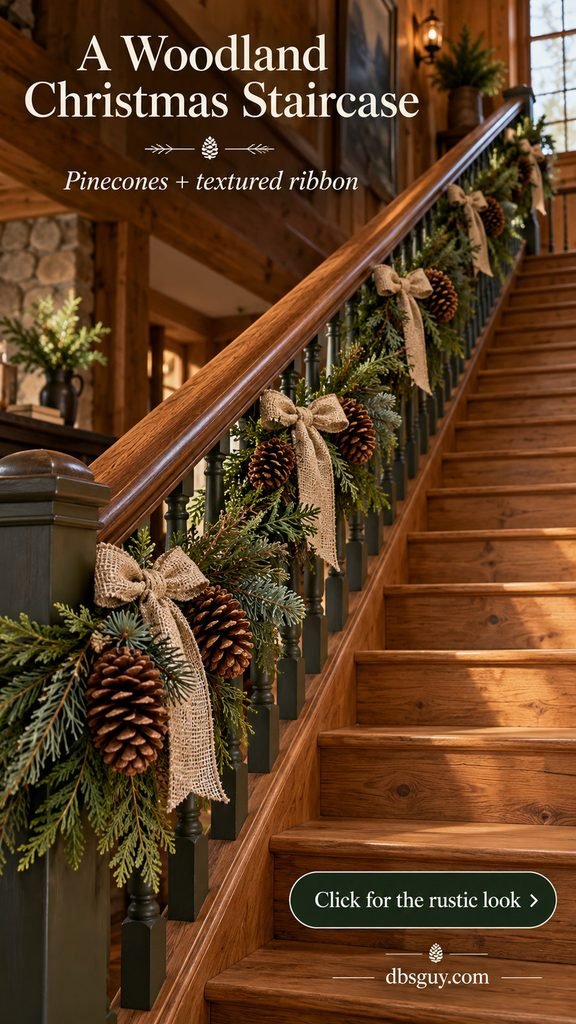
For a cabin-style Christmas, lean into texture: brown pinecones, varied evergreen tips, and soft oatmeal burlap. This arrangement looks comfortable beside warm timber and darker spindles, without needing a shiny ornament collection.
Choose lightweight craft pinecones or clean decorative ones with secure hanging loops. Group a larger cone with one smaller cone, then leave some greenery visible before the next group. A few burlap bows soften the shapes and conceal the supports.
Check the ribbon edges before installing it; loose strands can make a tidy arrangement look unfinished. If the burlap feels too coarse for your room, use an oatmeal linen-look ribbon instead. Keep the pinecone placement deliberate and the rest of the palette quiet.
7. Create a Winter Look With Flocked Greenery and Snowflakes
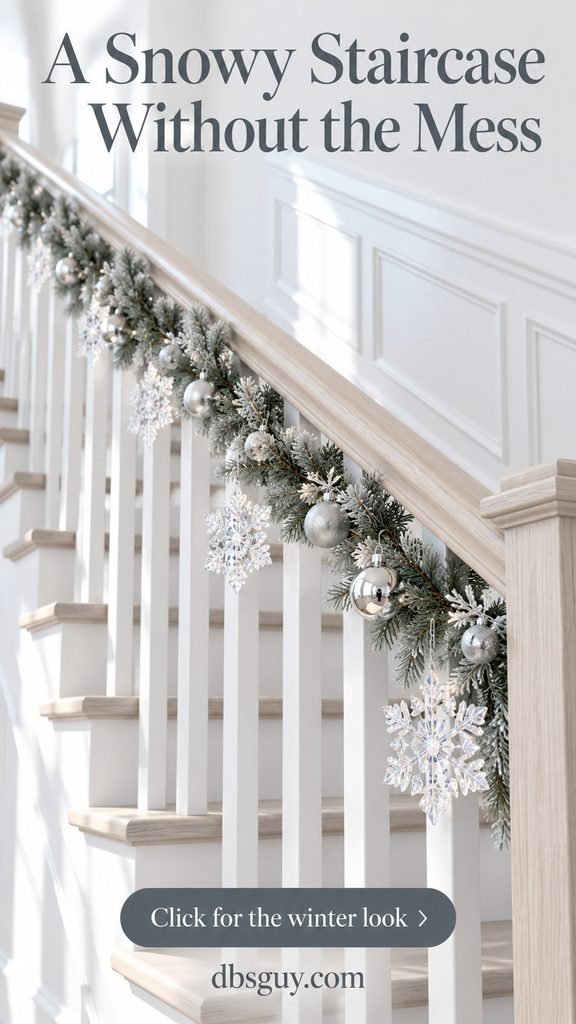
Lightly flocked branches, silver baubles, and clear snowflake ornaments make a white staircase feel wintry without introducing a strong accent color. The snowflakes provide recognizable shapes, while the silver reflects whatever light is already in the entry.
Choose a prefinished faux garland with a light dusting rather than adding loose artificial snow over the stairs. Hang the snowflakes on short loops on the outer side, with space between them so each outline remains visible. Mix matte and reflective silver pieces sparingly.
Handle the garland over a sheet before hanging it and check whether its coating sheds. If it leaves debris behind, use plain greenery with white felt snowflakes instead. The winter effect can come from the ornaments, without a snowy finish on every branch.
8. Pair Burgundy Velvet With Small Brass Bell Clusters
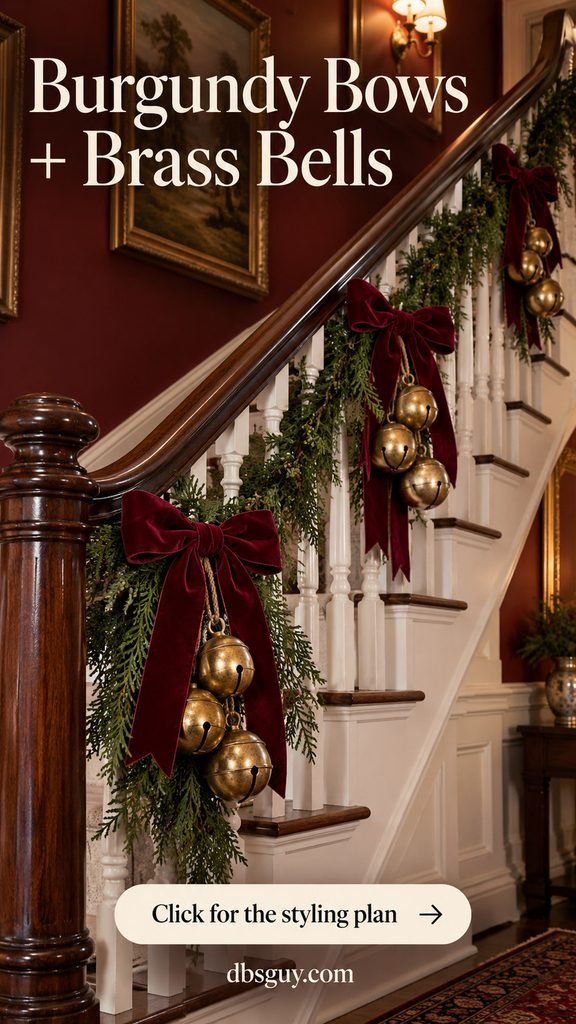
Burgundy bows and antique-looking brass bells give a staircase a warm, collected feel. Unlike a bauble-covered garland, this look relies on a few distinct clusters with quieter greenery between them.
Choose lightweight decorative bells and attach each cluster directly to a supported section of the garland or a suitable spindle tie. The bow should finish the attachment, rather than carry the bells’ weight. Lay the pieces together first to check whether your burgundy leans purple, brown, or deep red beside the wall color.
Keep the clusters close to the outer balustrade so they do not swing into the stairs. If repeated jingling would become irritating, use decorative bells that do not ring. A small number of well-placed clusters is more effective here than a continuous metallic fringe.
Also Read: 17 Burgundy and Gold Christmas Decor Ideas for a Rich, Candlelit Look
9. Suspend Gold Stars Beneath Navy Ribbon
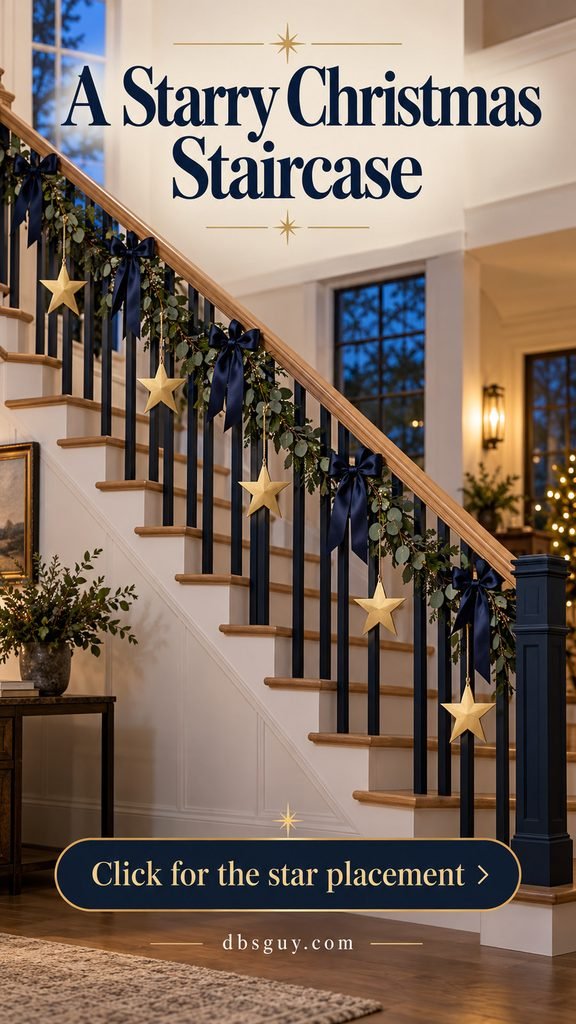
Gold stars add a graphic shape to the staircase, and navy ribbon gives them a calm backdrop. This combination suits an entry with dark metal balusters, blue accents, or a room where traditional bright red would feel out of place.
Use lightweight star ornaments with smooth edges. Hang them from short ties at slightly varied heights, always on the outer side of the railing. Keep the variations modest; a long pendant may look lovely from the doorway but be awkward beside a busy passage.
Repeat one star finish, such as muted gold, and use greenery sparingly behind the navy bows. If the stars disappear against a dark background, position them where they catch the room’s existing light. Their silhouettes should remain easy to see.
10. Layer Faux Pearl Strands Over Fine Greenery
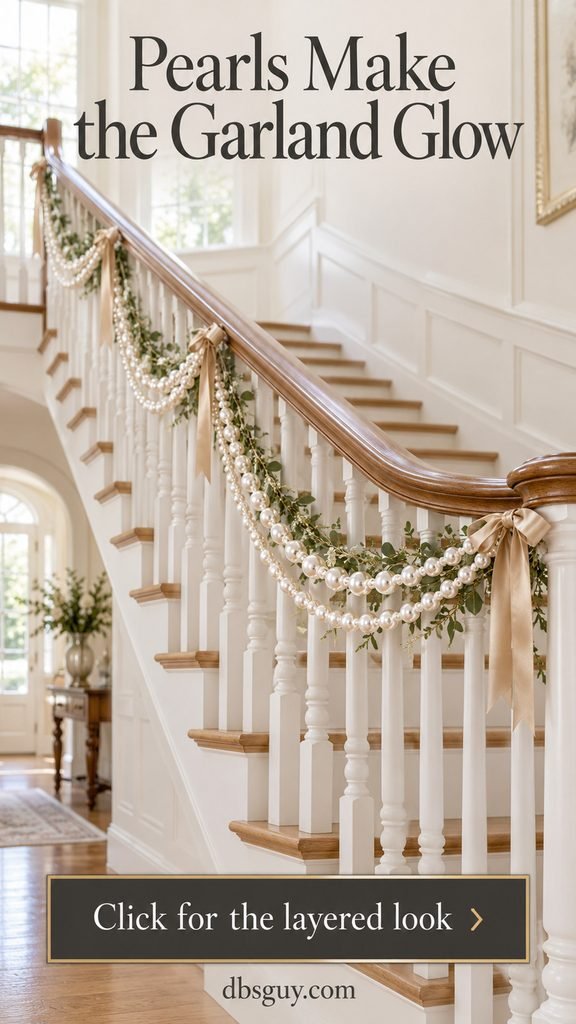
Pearl-like beads add a delicate scalloped line to a staircase. They work beautifully with ivory walls, champagne ribbon, and a slim garland that leaves the bead strands visible.
Choose lightweight decorative strands with securely joined beads. Attach them independently to the balusters, creating gentle loops in front of the greenery. Start with one strand and add another only if the first looks too sparse from the entry. Slightly different loop depths create the layered effect.
Avoid wrapping the strands around the grip surface of the handrail or letting them droop toward the floor. If your household includes young children who might pull at beads, choose a different look or move the decoration to a genuinely inaccessible location. Keep the strands as decoration, never as a support for other ornaments.
11. Try a Pastel Candy-Inspired Garland
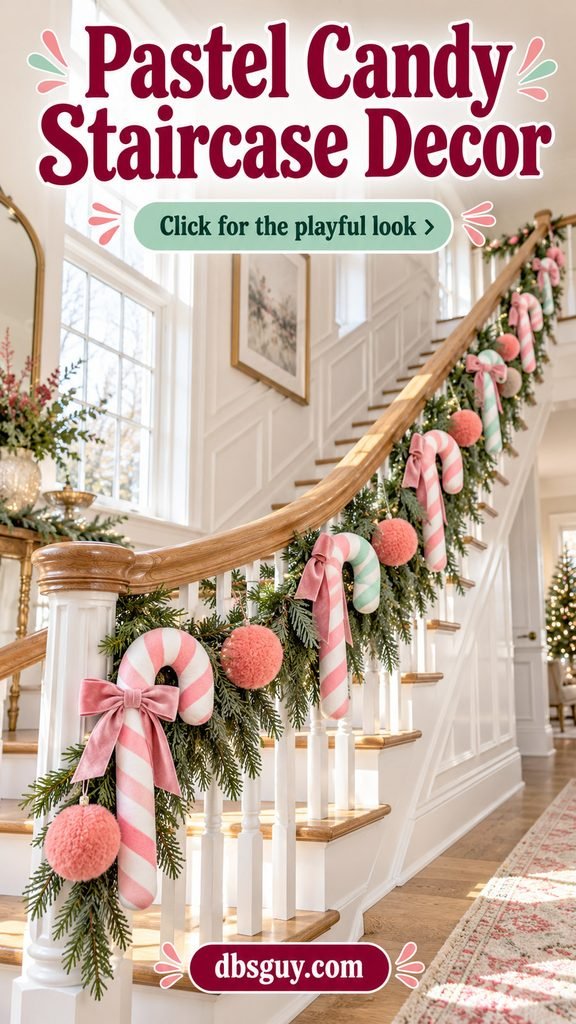
Soft pink and mint candy-cane shapes bring a playful Christmas mood to a bright hallway. Coral pom-poms add a different texture, making the arrangement feel more interesting than a row of identical ornaments.
Use fabric or lightweight decorative shapes, with a narrow green garland as the backdrop. Space the larger candy canes first, then add pom-poms to a few gaps. A restrained set of pastel colors helps the shapes stay readable.
This is best for a household where food-shaped decorations can be kept away from small children; faux candy can still invite a bite. For a safer adaptation in a home with toddlers, keep the pink-and-mint palette but replace candy shapes with large fabric bows securely attached to the outside of the railing.
12. Hang Oversized Paper Stars on the Stair Wall
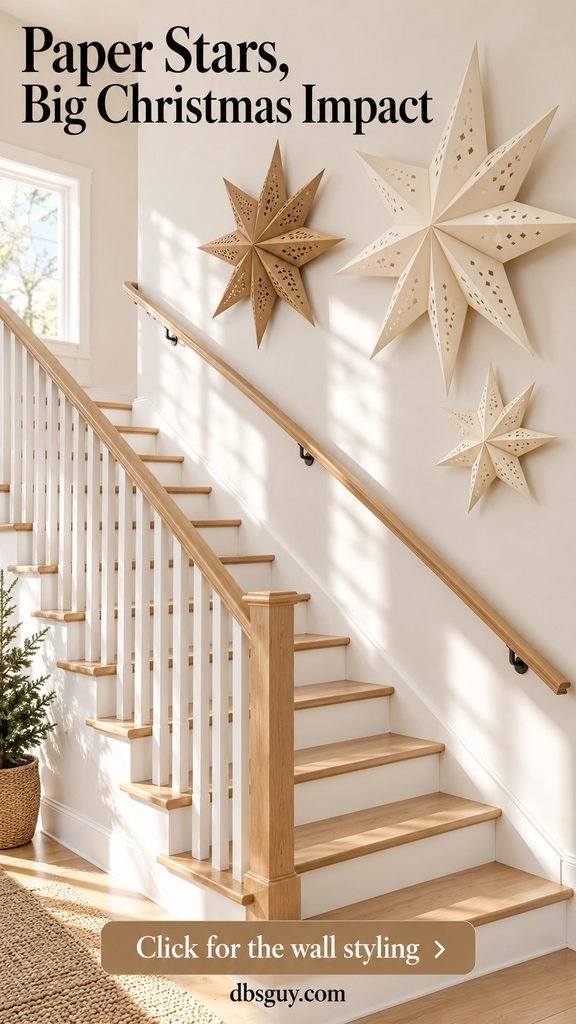
A stair wall can carry the Christmas display when the railing needs to stay completely plain. Folded paper stars create depth and soft shadows, especially in a mix of ivory and warm kraft paper.
Arrange the stars on the floor before hanging them. Try one large star and two smaller companions, following the rise of the stairs without placing every point on the same line. Leave enough space around each star to see its whole shape.
Use supports appropriate for the wall finish and the manufacturer’s stated weight limits. Position the stars above the handrail and away from head clearance, heat, and light fixtures. On a narrow staircase, smaller folded stars or flat paper cutouts will be easier to accommodate than a deeply projecting decoration.
Also Read: 13 DIY Paper Christmas Decorations That Look Surprisingly Expensive
13. Bring Back a Red, Green, and Cream Paper Chain
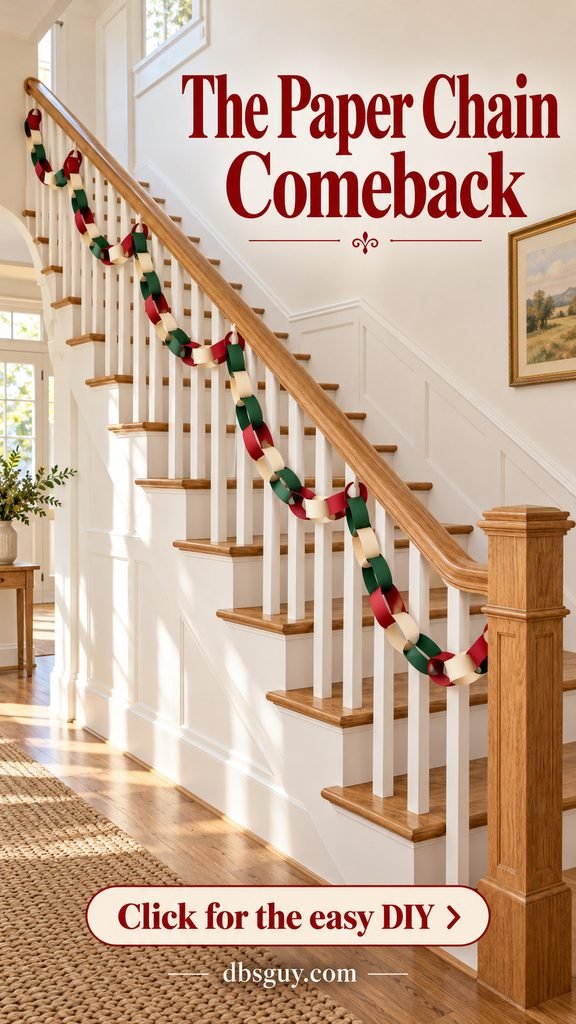
A paper chain has a nostalgic charm that does not need greenery around it. Alternating red, green, and cream links makes the pattern feel intentional, while shallow swags give it a tidy place on the outside of the railing.
Cut equal strips from paper that bends easily. For a first sample, try strips about 1 inch wide and 6 inches long, adjusting the size to your staircase. Close one strip into a loop, pass the next through it, and repeat, allowing glued joins to set fully.
Hang the chain from separate spindle ties so its links are not taking all the strain. Keep the loops shallow and clear of the handrail. Paper should stay well away from flames, heat sources, and electrical connections; an unlit chain can still make a cheerful statement.
14. Repeat Three Mini Wreaths Along the Balusters
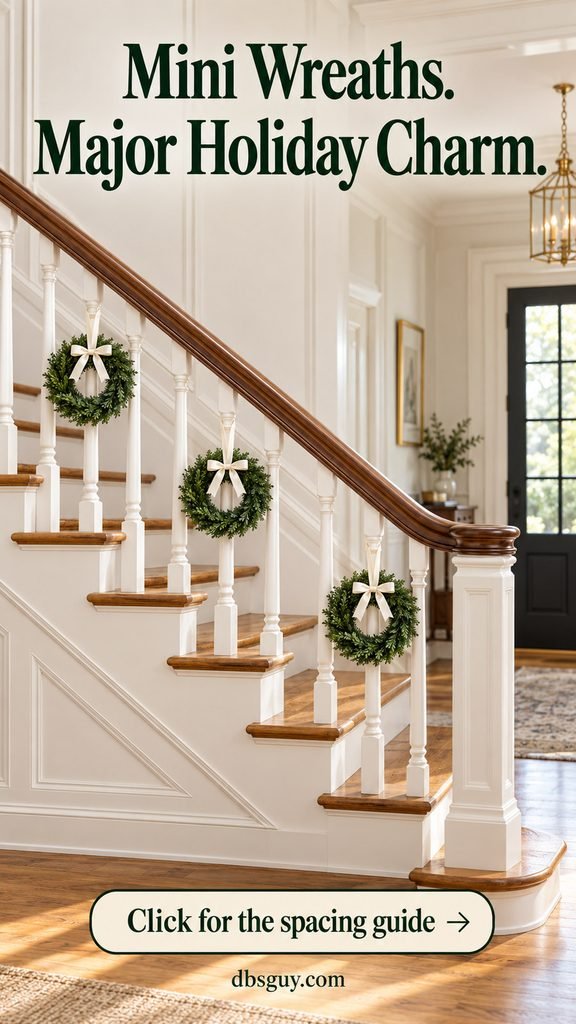
Mini wreaths create an orderly pattern without covering the whole railing. Three matching wreaths are a useful starting arrangement on a short stair run, with the bottom, middle, and upper sections each getting a focal point.
Choose small lightweight faux wreaths and tie them to the outside of separate balusters. Use the same drop relative to the sloping handrail, rather than forcing all the wreaths to hang at one horizontal height. Their centers should rise with the stairs.
Keep the wreath size proportional to the spindle spacing and avoid covering the newel where people place a hand. Ivory ribbons look soft against white woodwork; burgundy adds more contrast. Step back before adding anything else—the repeated circles may already be all the decoration the staircase needs.
15. Hang Knit Stockings When You Do Not Have a Mantel
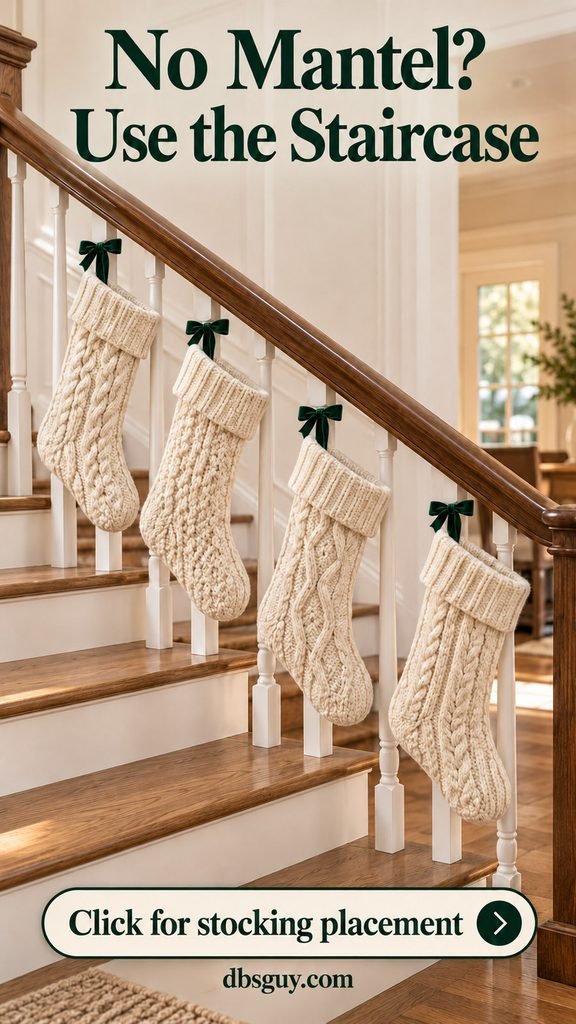
A staircase can become the family’s stocking spot. Ivory cable-knit stockings look especially warm against white spindles and wood treads, with green ribbon adding a small Christmas accent.
Hang each empty stocking independently from a suitable outer spindle tie, below the handrail. Match the drop from the rail so the arrangement follows the slope. Keep the stocking toes facing the same direction if you want a calmer pattern.
Use lightweight stuffing if needed to show the shape, and leave heavy gifts elsewhere. Check the display from both sides: stockings should not poke through into the walking route or brush the stair edges. Before filling them on Christmas Eve, move them to a stable spot intended to hold the gifts’ weight.
16. Turn Extra Baubles Into Short Ornament Drops
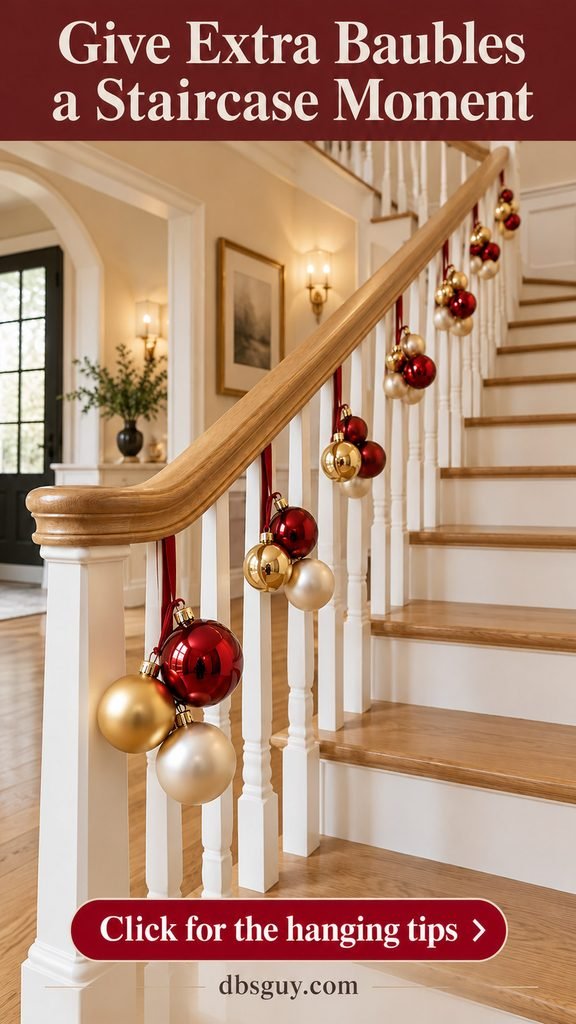
Leftover ornaments can create a festive staircase without a garland. Small groups of ruby red, warm gold, and cream baubles make each drop look deliberate, with empty space between the clusters.
Use lightweight shatter-resistant ornaments with secure caps and hanging loops. Tie two or three together at slightly different lengths, then attach the cluster below the handrail on the outside of a spindle. Test one group before preparing the rest.
Keep the cords short enough that the ornaments stay close to the decorated side rather than swinging across a passage. For a small staircase, use smaller baubles and fewer clusters. Store each finished drop separately after Christmas so the ribbons do not become one tangled bundle.
17. Make Tartan Ribbon the Garland
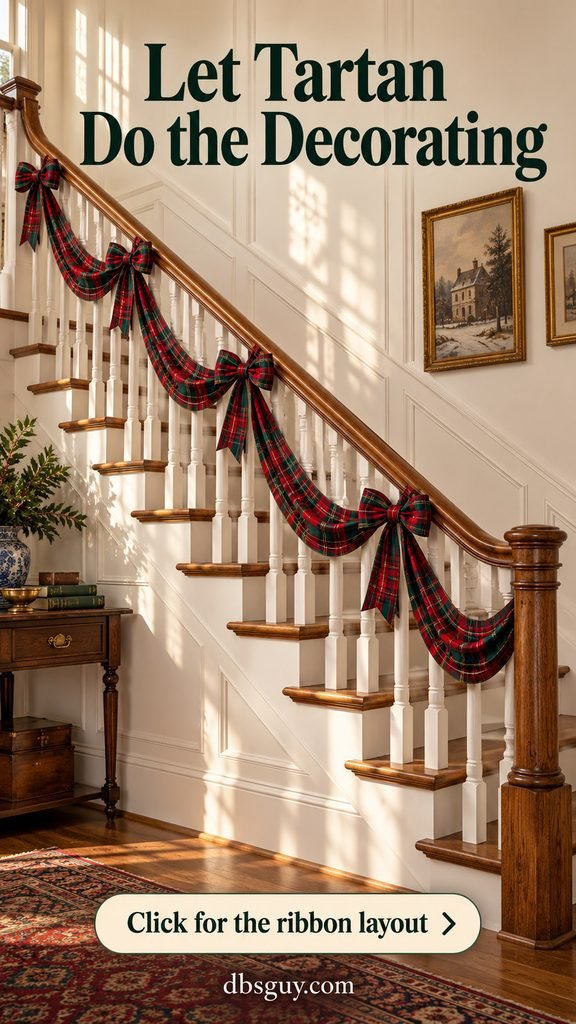
Wide tartan ribbon can form its own swags, giving you a Christmas staircase with very little bulk. The woven pattern brings the cozy feeling of a plaid throw into the entryway.
Use a ribbon wide enough for its checks to read from across the room. Lay it along the outer balustrade, allow a shallow dip between supports, and secure it to spindle ties below the rail. Small matching bows can conceal those supports.
Check the pattern as you work so the ribbon does not twist and show its reverse side unexpectedly. Wired ribbon holds sculpted loops; soft woven ribbon makes gentler drapes. Let the tartan lead and leave the greenery out for this version. Repeat the same plaid once nearby, perhaps on the tree or a pillow.
Also Read: 19 Ralph Lauren–Inspired Christmas Decor Ideas for a Cozy, Classic Living Room
18. String Together Felt Gingerbread Houses and People
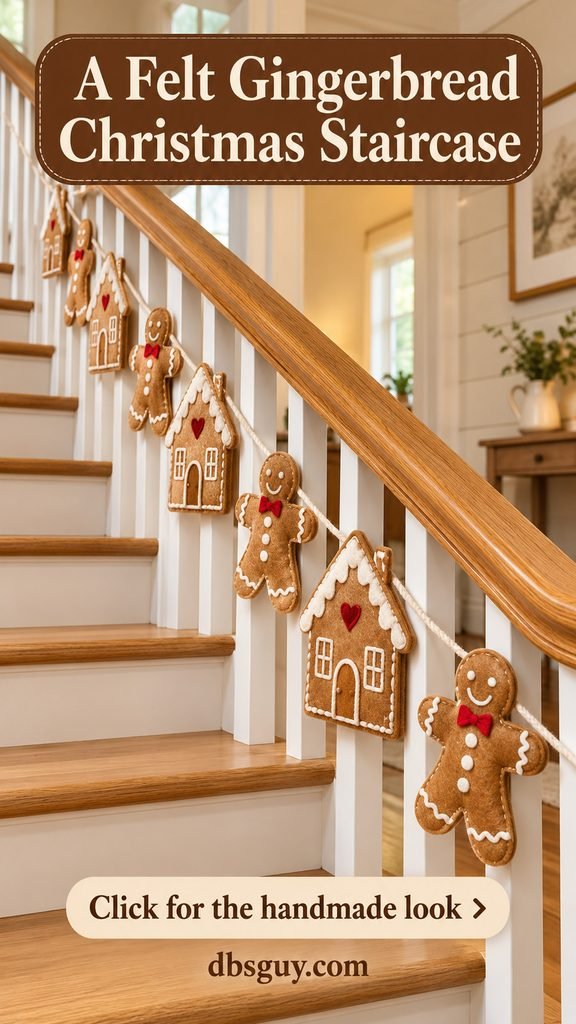
A felt gingerbread garland gives the stairs a storybook Christmas detail. Tan houses and little gingerbread people, finished with white stitched accents, look handmade without needing actual cookies on display.
Choose flat, lightweight felt shapes and space them along a sturdy cord. Keep the same general scale for the houses and people, with an occasional small red detail to connect the pieces. Attach the cord to several outside spindle ties so it does not sag into the stairs.
Even fabric food-shaped decorations should be kept away from small children who may mistake them for something edible. If that is a concern, swap the gingerbread shapes for felt trees and stars. Avoid glued-on beads or buttons that could detach; stitched details give a tidy alternative.
19. Follow the Railing With a Simple Warm Light Strand
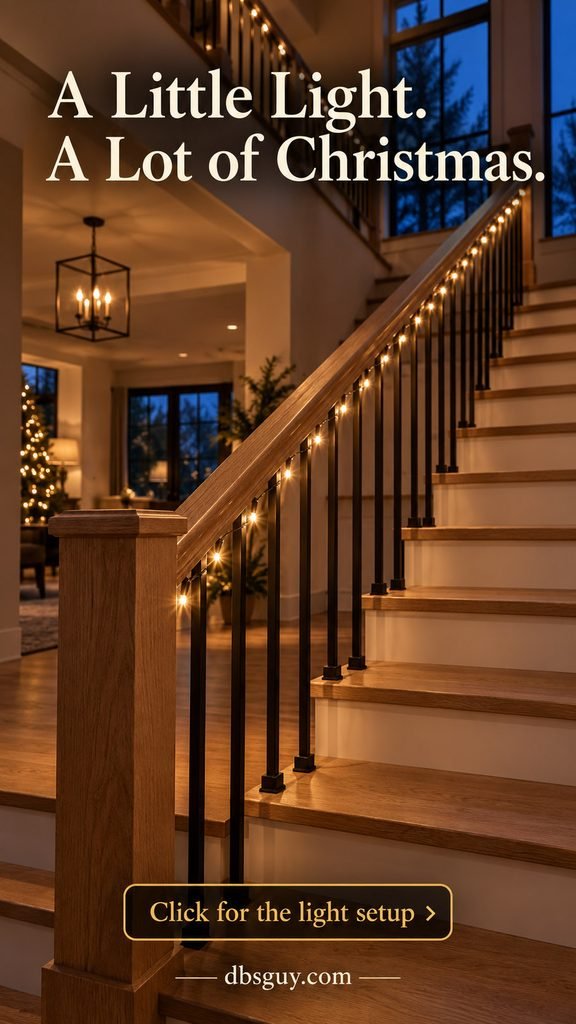
If you enjoy the glow more than the ornaments, try a single warm-white light strand below the rail. It defines the staircase after dark and suits a modern home where a full garland would feel too busy.
Choose indoor-rated LED lights, preferably a battery set if it avoids a cable crossing the hallway. Secure the strand to the outside balusters in a shallow line, keeping the grip surface bare. Place the battery case where you can reach it without leaning over the stairs, but where children cannot access it.
Follow the light set’s instructions, check for damage, and switch it off when leaving home or going to bed. Decorative lights supplement the atmosphere; keep the staircase’s normal lighting available so the treads remain clearly visible.
20. Make One Newel Post the Focal Point
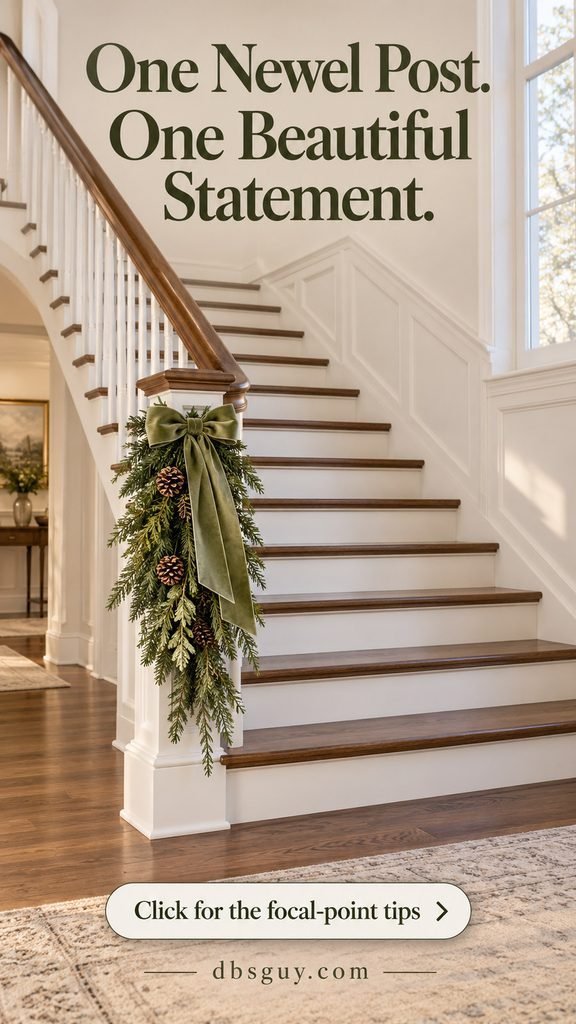
You can decorate only the bottom newel post and still give the entry a strong Christmas moment. A single cascade of fir and cedar, a few pinecones, and a moss-green bow draws attention to the staircase’s starting point.
Build the arrangement as a separate lightweight spray, then attach it securely to the outward-facing post surface below the handrail joint. Let the greenery taper, with the fullest part near the bow. Keep the rest of the railing plain so the focal point stays clear.
The ends should finish above the floor and outside the approach to the first step. If the hallway is tight or the post is needed for steadying yourself, shorten the spray or move the idea to a wall beside the stairs. A smaller silhouette can be just as effective.
21. Create a Christmas-Card Gallery Above the Handrail
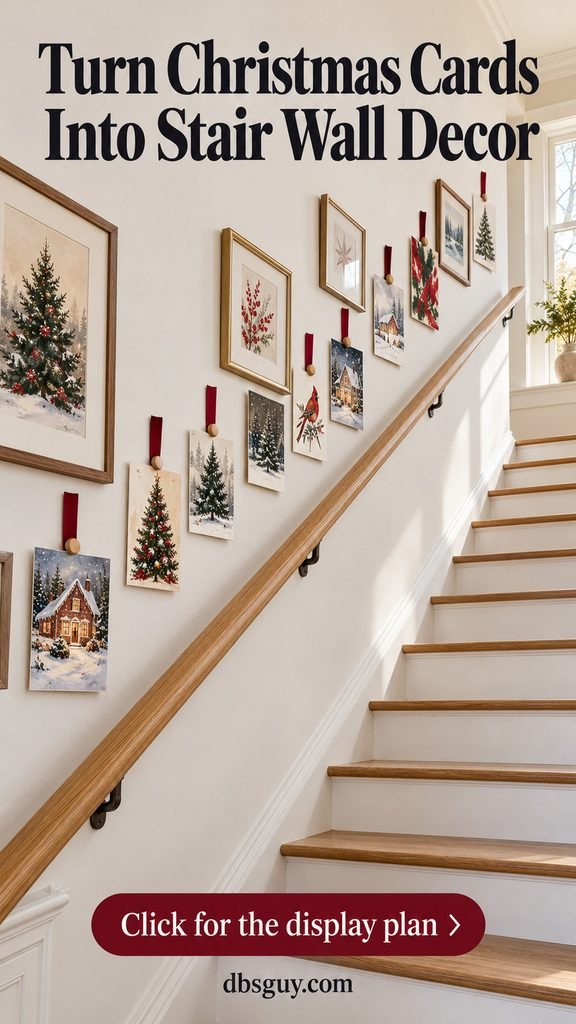
Holiday cards can become the most personal decoration on the staircase. Display them between existing frames, using short burgundy ribbon tabs and small clips to turn the stair wall into a changing December gallery.
Arrange the cards to follow the rise of the stairs, keeping them above the handrail and close to the wall. Use wall supports suitable for the surface and the combined weight of each card, ribbon, and clip. Group similar card sizes together so the display feels considered rather than scattered.
You can add cards as they arrive without rebuilding the whole arrangement. Keep bulky folded cards closed and avoid long loose ribbons. This is a useful option for a narrow stairwell, because the seasonal detail stays on the wall and the railing remains available.
How to Hang Christmas Staircase Decor Neatly
Measure the Shape You Want, Not Just the Rail
Run a piece of string along the proposed route on the outside of the railing, including each planned dip. Lay the string flat and measure it. A straight garland and a deeply swagged one need different lengths, even on the same staircase.
Allow for the overlap at joins. For example, two 9-foot sections overlapped by 6 inches provide about 17½ feet of continuous coverage. Check the usable length of predecorated garlands, and do not assume the end connectors disappear inside the greenery.
Choose Supports for Your Surface and Decoration
Soft fabric ties can be a useful starting point on suitable spindles. Protect delicate finishes and test any material in an inconspicuous place. Keep metal wire, hard edges, and cut plastic tie ends away from contact surfaces. A ribbon bow can conceal a support; it should not substitute for a secure attachment.
If using removable hooks, follow the manufacturer’s surface requirements, weight limits, preparation, curing, and removal directions. No hanging method is guaranteed to leave every finish untouched. Support long garlands at several points and follow their own instructions rather than asking one hook to hold everything.
Finish With a Walk-Through Check
Walk up and down slowly and check the entrance to the first step. You should be able to grasp the handrail naturally, see the stair edges, and use nearby doors. Shorten anything that brushes the route. Keep sharp or breakable ornaments and small detachable pieces away from children.
The U.S. Consumer Product Safety Commission’s holiday decorating guidance advises checking light sets for damaged wiring and sockets, using safety-tested lights, and keeping burning candles away from greenery and decorations. Follow each product’s indoor-use and connection instructions, and keep paper decorations away from heat and electrical connections.
Christmas Staircase Decor FAQs
How can I decorate a staircase without garland?
Try velvet bows, mini wreaths, empty knit stockings, short bauble drops, or tartan ribbon swags. If you want the railing completely clear, use paper stars or a Christmas-card gallery on the wall. Choose one repeated detail instead of combining every option.
How much garland do I need for my staircase?
Measure the actual hanging route with string, including the swags and joins. The length of the rail alone will underestimate a draped arrangement. Check the measured route against the usable length of the garland sections before buying.
What is the simplest Christmas staircase look on a small budget?
Use ribbon you already own to make a spaced row of bows. Extra shatter-resistant tree ornaments can become short drops, and a handmade paper chain needs very little material. Repeat one color and leave clear gaps so the arrangement looks intentional.
Should I choose real or artificial greenery?
Artificial greenery is useful when you want to decorate early, reuse the arrangement, or avoid fallen needles on the stairs. Real greenery offers natural variation, but its condition changes indoors. Inspect it regularly and remove it when it becomes dry or starts shedding heavily; neither type belongs near a heat source.
How do I make the staircase match the Christmas tree?
Carry over one ribbon, ornament finish, or greenery texture. A red-bow staircase can echo a few red bows on the tree, while pearl strands can connect to ivory ornaments. You do not need to use every tree decoration on the railing.