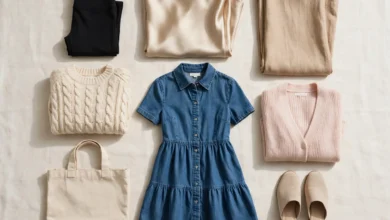
Start with comfortable walking shoes, repeatable tops, bottoms that fit when you sit down, and enough underwear and socks to reach laundry day. Then fill the weather and dress-code gaps. Those purchases will do more for an ordinary college week than a closet full of outfits waiting for the right occasion.
These 15 college wardrobe essentials are a buying guide, not an instruction to replace everything you own. Cross off anything that already works. The examples lean toward a casual women’s wardrobe, but the priorities—comfort, useful combinations, and manageable laundry—are easy to adapt to your style.

The visuals in this guide are AI-generated styling concepts. They illustrate clothing choices, not specific products or personally tested outfits.
What Should You Buy First for College?
If money is tight, buy for the problem you will encounter first. Shoes that hurt, too few clean basics, and missing weather protection deserve attention before an extra going-out outfit.
- Before your first week: check your everyday shoes, underwear, socks, tees, jeans or another favorite bottom, sleepwear, and the outerwear your campus weather requires.
- After you know your routine: add a second type of everyday pants and whichever layer you keep wishing you had in class.
- Before a scheduled event: finish one outfit that meets its dress code. Check whether your campus career center has a clothing closet before buying presentation or interview clothes.
The order below is a useful starting point; move a category up when you have a real gap. A student starting in a cold climate should prioritize appropriate outerwear immediately. If your sneakers are already comfortable, keep them and spend elsewhere.
1. Comfortable Walking Sneakers

Choose your everyday campus shoes around the walk between buildings. An off-white or navy pair can work with jeans, trousers, and a casual dress, but the color matters less than how the shoes feel on your feet.
Try them with the socks you plan to wear. Walk, turn, and use stairs if the store allows it. Your toes should have room, your heel should feel secure, and nothing should pinch or rub. Follow the seller’s indoor try-on and return rules rather than assuming an uncomfortable shoe will become comfortable later.
Buy first: one pair you can use for your normal campus route. Activity-specific gym shoes or weather footwear may have a separate job; a casual sneaker is not automatically suitable for either.
2. Everyday Tees You Can Wear on Repeat

A tee earns its place when it works on its own and under your other clothes. Start with a neckline and sleeve length you already like. Cream, navy, gray, or your favorite solid color are all reasonable choices; there is no requirement to build a beige wardrobe.
Check a light-colored shirt in bright light with the undergarments you intend to wear. Reach forward, lift your arms, and sit down. Look for a hem that stays where you want it and sleeves that do not bunch under a layer.
Buy one unfamiliar style first. Wear and wash it according to its label before ordering several more. For a weekly laundry routine, four or five everyday tops can be a starting point if other tops already cover the remaining days; increase the number when you change more often.
3. One Reliable Pair of Jeans

Bring the jeans you reach for now. Straight-leg dark denim is an easy example because it works with a hoodie or a button-down, but a different cut is just as useful when you actually enjoy wearing it.
Do a sit-and-walk fit check: sit as you would in a lecture, bend to pick something up, and walk in your usual shoes. Check whether the waistband digs in, the rise pulls, or the hems catch under your heels. Choose an inseam for your everyday footwear instead of buying a length that only works with shoes you rarely wear.
A second wash can wait until you know whether you need more jeans or would get more use from another kind of pants.
4. An Everyday Underwear Rotation

Count the days between realistic laundry trips. If you plan to wash every seven days, nine everyday pairs gives you seven daily changes plus two spares. That is a planning example, not a universal requirement: add more for extra changes or longer gaps between washes.
Keep the cuts, waistbands, and coverage you already find comfortable. If you wear bras, check them under your actual tees and layers; straps, seams, and support preferences can change which tops feel wearable. A new silhouette does not need a whole new underwear drawer unless the clothes genuinely require it.
For underwear, buy the quantity you need in a fit you trust. For unfamiliar bras, try one before buying multiples.
5. Socks That Work With Your Everyday Shoes

Socks deserve their own line on the list because the right underwear count does not tell you whether you have enough pairs that work with your shoes. Try the combination together: a thick sock can make a previously comfortable shoe feel tight.
Crew socks, like the pair pictured, cover the ankle; lower-cut styles may suit other shoes better. Check that the heel stays in place and the cuff feels comfortable during a short walk. Start with enough for the days you wear socks between washes, plus a small buffer for exercise or wet weather.
A few pairs of the same style can make matching laundry easier. You can add warmer options when your climate and footwear call for them.
6. Outerwear for Your Campus Weather

Buy for the place where you will be walking to class, including the months before your next trip home. A smooth hooded rain shell and a padded winter coat solve different problems; the image shows the difference in construction, not a guarantee of either garment’s performance.
For regular rain, check the manufacturer’s rain-protection specifications, hood adjustment, closures, and care requirements. For cold conditions, assess insulation and coverage for your expected weather. A lightweight shell does not replace an insulated coat, and a puffer is not automatically waterproof. Some campuses call for both.
Try outerwear over the layers you expect to use and move your arms as you would while carrying a bag. If storage is tight and travel home is practical, plan a seasonal swap. Our guide to building a wardrobe that works in two climates can help you think through the layers.
7. Comfortable Trousers for Days Beyond Denim
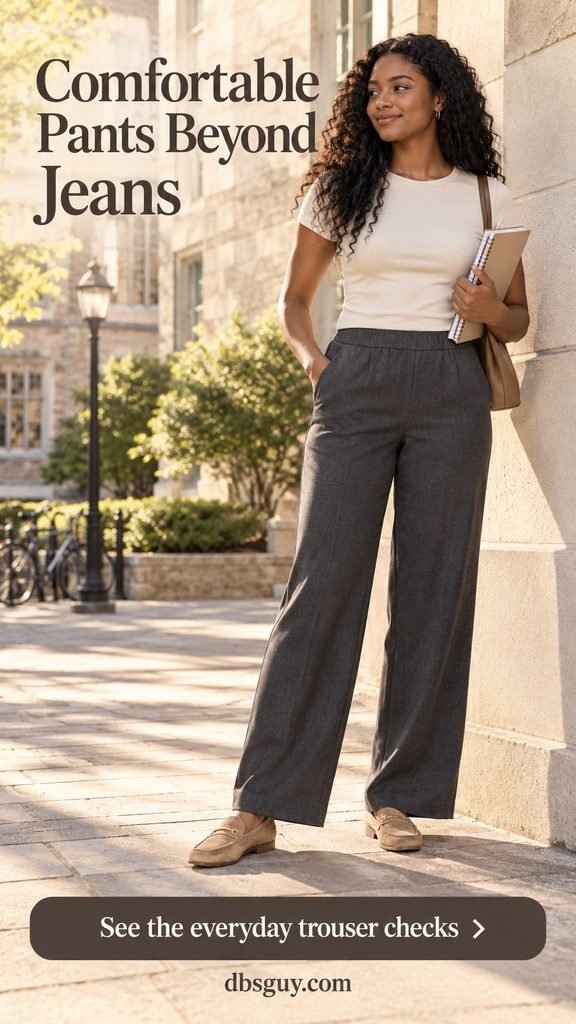
Charcoal, black, or navy trousers can fill the gap between jeans and sweatpants. A pull-on style with a neat waistband is one option for class, campus work, or a presentation with a casual dress code.
Try the pants with a tee tucked in and left out. Sit down to check the waistband, then look at the pockets: they should not pull open when you stand normally. Test the length with both your sneakers and any smarter shoes you already own.
Read the care label before choosing a pair for frequent wear. A trouser that requires maintenance you cannot manage is unlikely to become your dependable weekday option.
8. A Zip Hoodie for Easy Temperature Changes

A zip hoodie is useful when you want to add or remove a layer without pulling it over your head. Pick one that fits over a tee without tight upper arms and still leaves room under your outerwear.
Work the zipper several times, check the pocket openings, and sit down while it is zipped. If the hood and sleeves create an uncomfortable amount of bulk under your coat, try a less bulky cut.
You do not need a matching sweatsuit to make it useful. A gray hoodie, dark jeans, and walking sneakers already make a straightforward class outfit. Campus-branded clothing can fill this role if you want it, but a logo is optional.
9. A Long-Sleeve Tee That Fits Under Your Layers

A long-sleeve tee gives you sleeve coverage without committing to a bulky sweatshirt. The navy-and-cream striped example adds a pattern while staying easy to pair with dark pants.
Try it under your hoodie or cardigan before buying. Check the shoulder seams and forearms for bunching. If you prefer a relaxed fit, allow enough room for movement without choosing sleeves that jam inside your next layer.
Start with one if your climate is mild and you already own plenty of tees. Move it higher on the list if you regularly prefer covered arms. Its job is everyday layering; treat specialized cold-weather base layers as a separate climate decision.
10. A Cardigan for a More Polished Layer

A simple cardigan changes the feel of the same tee and trousers you wear with a hoodie. The dusty blue knit pictured is an example of adding color without needing a separate set of bottoms.
Check the cardigan open and buttoned. The placket should sit comfortably, the sleeves should let you reach forward, and the fabric should feel pleasant against your skin. Follow the garment’s own care instructions rather than assuming every knit can go through your usual dryer cycle.
Buy this after a hoodie if you will mostly dress casually. Reverse that order if you prefer knitwear or need a neater layer for your campus job. Owning both is useful only when both have a role.
11. One Button-Down That Fits Across the Shoulders and Chest

A relaxed blue-striped or solid shirt can dress up your everyday pants and serve as an open layer over a tee. Choose it for those uses, rather than buying a stiff shirt you will avoid until an event forces the issue.
Button it and reach forward. Look for pulling across the chest, gaping between buttons, and shoulders that restrict movement. If you intend to tuck it in, sit down and raise your arms to see whether the hem stays put.
Pair the shirt with your trousers and smart shoes for an event that permits that combination. Check the organizer’s guidance first: some interviews, presentations, and programs require more formal clothing.
12. Workout Bottoms Suited to Your Actual Activity
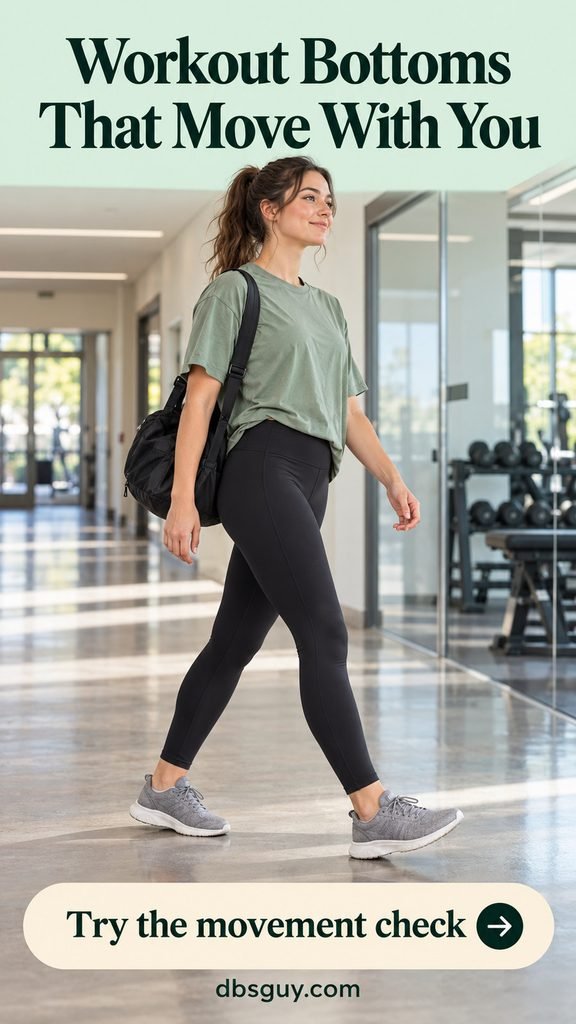
Choose leggings, shorts, or track pants for the movement you plan to do. The black leggings shown are one option, not a requirement for a college wardrobe.
In a fitting room, bend, step, and squat if you can comfortably do so. Check that the waistband stays where you want it, the fabric has the coverage you prefer when stretched, and the seams do not restrict movement. If you need a phone pocket, test it with your own phone.
Buy for scheduled workouts or an activity you already enjoy. You can wait on several coordinated sets until you know how often you will use them and how frequently you can wash them.
13. Comfortable Sleepwear With a Clean Backup
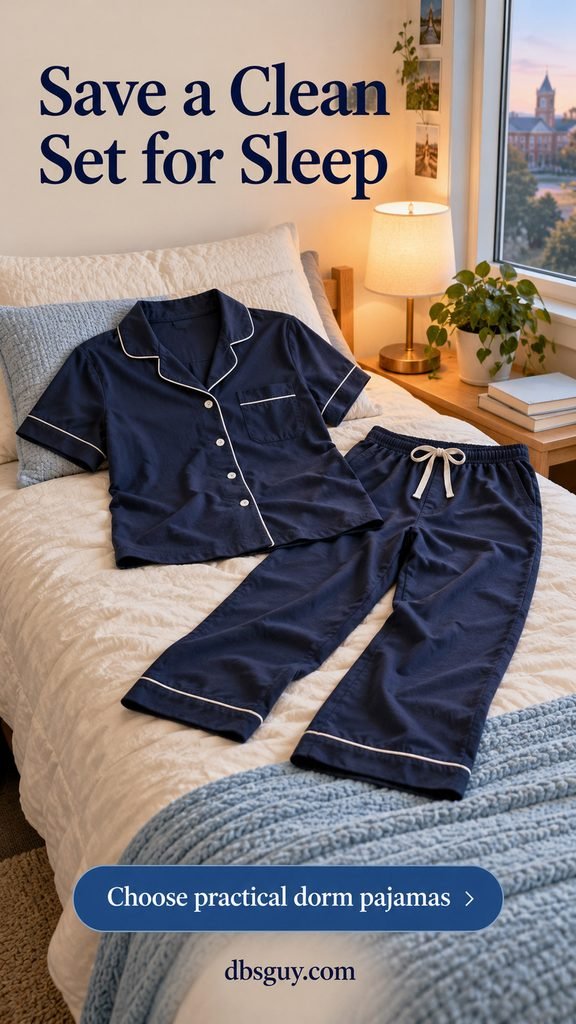
Set aside clothes for sleep so you are not choosing between an outdoor outfit and the last clean tee. A soft shirt and comfortable pants you already own count; the coordinated navy pajamas are a styling option.
Think about your room temperature, waistband comfort, and any shared hallway or bathroom trips. Try sitting and lying down in the clothes before deciding that they are comfortable enough for bed.
Two sets can be a starting point if they let you keep a clean option while one is in the wash. Adjust to how often you change, your laundry schedule, and the space you have. There is no need to buy a separate lounge set for every activity in your dorm.
14. Smart Flat Shoes for Presentations and Campus Events

Loafers, flats, or another pair of simple closed-toe shoes can finish the shirt-and-trouser outfit without requiring heels. Choose the shape you can walk in comfortably, and test it with the socks or hosiery you will wear.
Check the heel for slipping and the front for pressure. Walk more than a few steps before deciding. A sleek shoe that only feels tolerable while standing still is a poor choice for crossing campus before a meeting.
Keep this purchase tied to a real need. Borrowing a suitable pair can be enough for an occasional event, provided the fit works. For a formal interview, check the whole outfit against the expected dress code rather than assuming smart shoes make every combination appropriate.
15. A Versatile Dress—If You Wear Dresses

A simple knit midi dress can cover a casual lunch, an outing with family, or a day when you want fewer separate pieces to coordinate. The navy short-sleeve example works with sneakers; the cardigan provides another way to wear it when you want a layer.
Check the neckline, armholes, opacity, and hem while sitting and walking. Ask whether it works with your existing underwear and at least one pair of shoes. If it needs several extra purchases before you can wear it, it is a lower priority.
Skip this category if dresses are not part of your routine. Keep your shirt-and-trouser option instead. A casual knit dress also does not replace clothing required for a formal event.
How to Spend Less Without Buying the Wrong Basics
Before placing an order, make three piles: already useful, needs a small fix, and genuinely missing. A repaired button or corrected hem may solve the problem that was about to send you shopping. If you are unsure what you can combine, start with how to shop your own closet and find the outfits you already own.
For each missing item, write a short specification: “washable dark trousers, comfortable seated, wearable with my sneakers” is more useful than “new pants.” Check secondhand options for shirts, knits, and outerwear, inspecting seams, closures, odor, and visible wear before buying. Treat fit and condition as decisions for that particular garment.
Care is part of the buying decision. The FTC’s care-label guidance explains why garment-specific cleaning instructions matter. Read both washing and drying directions before choosing an everyday item, especially when shared laundry is your main option.
When comparing prices, use realistic wear estimates. For example, a $60 item worn 60 times costs $1 per wear before cleaning or repairs; a $25 item worn five times costs $5 per wear. That illustration does not predict durability. It simply helps you question an inexpensive purchase you cannot picture wearing.
College Wardrobe Questions
Does this mean I only need 15 pieces of clothing?
No. These are 15 categories to consider, with different quantities and priorities. Underwear, socks, and tees usually need a rotation. Outerwear depends on climate, and the dress is optional. Plan around your laundry schedule, existing clothes, activities, and actual storage.
Should I buy a whole college capsule wardrobe before move-in?
Cover your immediate daily needs first, then leave room in the budget for what your routine reveals. If you will be unable to shop easily after arriving, check the campus weather, course requirements, and available storage before you pack. You can still bring familiar clothes instead of replacing them.
Do I need a blazer for college?
You may need one for a particular interview, program, job, or event, but it is not automatically an everyday essential. Check the dress code before deciding. Your campus career center may be able to advise you about suitable clothing and whether a lending or clothing-closet service is available.
What should I leave off the first shopping trip?
Duplicates of styles you have not worn yet, special-occasion clothes without an occasion, and pieces that need several new accessories to work. Keep a short gap list after your first few weeks. The next purchase should solve something specific you have noticed while getting dressed.