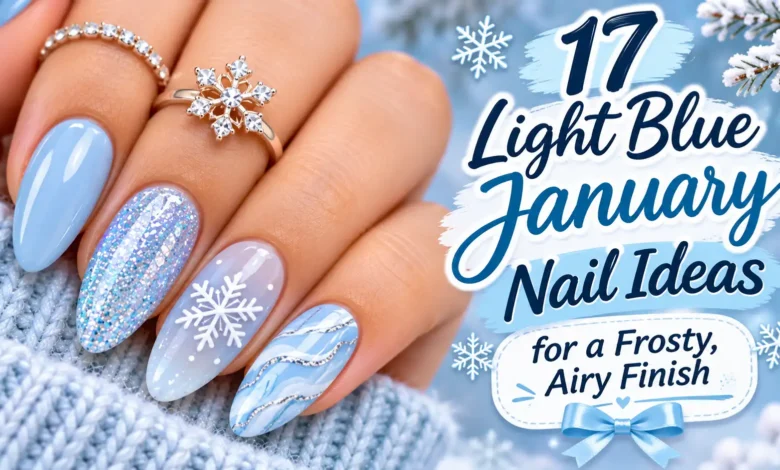
Light blue January nails can look crisp without feeling heavy. For the softest result, choose a sheer blue wash or a tiny French tip. For more of an icy finish, compare a pearl glaze, a white fade, or a little silver at the edge.
These 17 ideas show different ways to use that same cool palette, with details you can scale to your own nail length. Start by deciding how much blue you want to see: the whole nail, a transparent tint, or just one small curve.
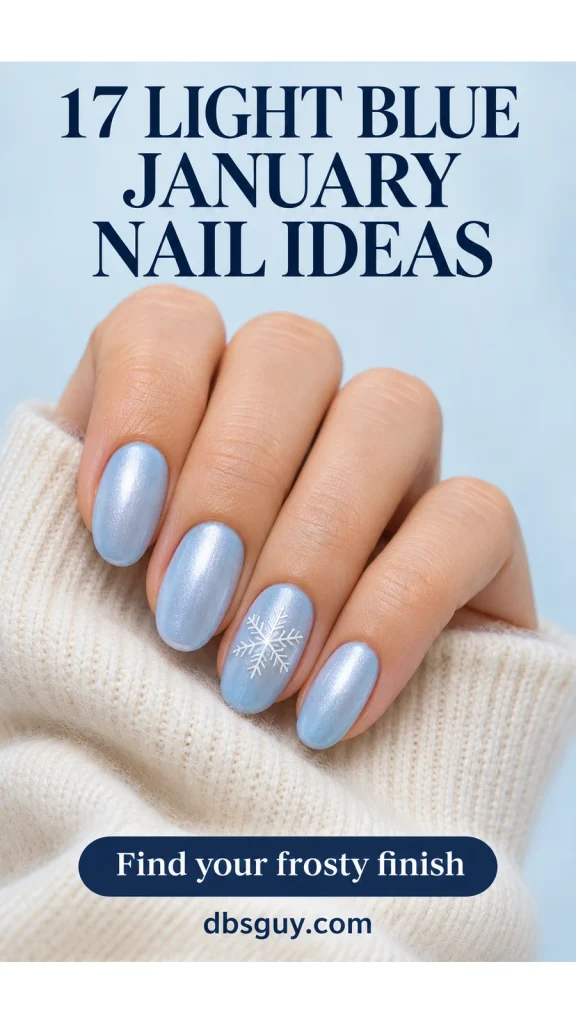
The images are AI-generated design concepts created for dbsguy.com. They illustrate color, placement, and finish rather than completed salon work or tested results.
Choose Your Kind of Light Blue
- For a barely-there tint: start with the jelly wash in idea 2 or the micro French in idea 3.
- For very short nails: compare plain powder blue in idea 1 with the small snow dots in idea 7.
- For glow without a pattern: look at the pearl finish in idea 4 or magnetic velvet in idea 13.
- For one winter detail: choose the snowflake in idea 6 or the argyle accent in idea 15.
Compare a swatch beside your hand in daylight as well as indoor light. A gray-leaning blue will feel more muted; a white-based pastel will create a stronger contrast. Neither belongs to only one skin tone. Choose the contrast you enjoy, and check the final finish over the actual base color.
1. Powder-Blue Gloss on Short Squoval Nails
If you want the color to do all the work, start here. A creamy powder blue gives short nails a definite blue finish, while rounded square corners keep the outline soft. There is no accent finger to plan around and no sparkle competing with the shade.
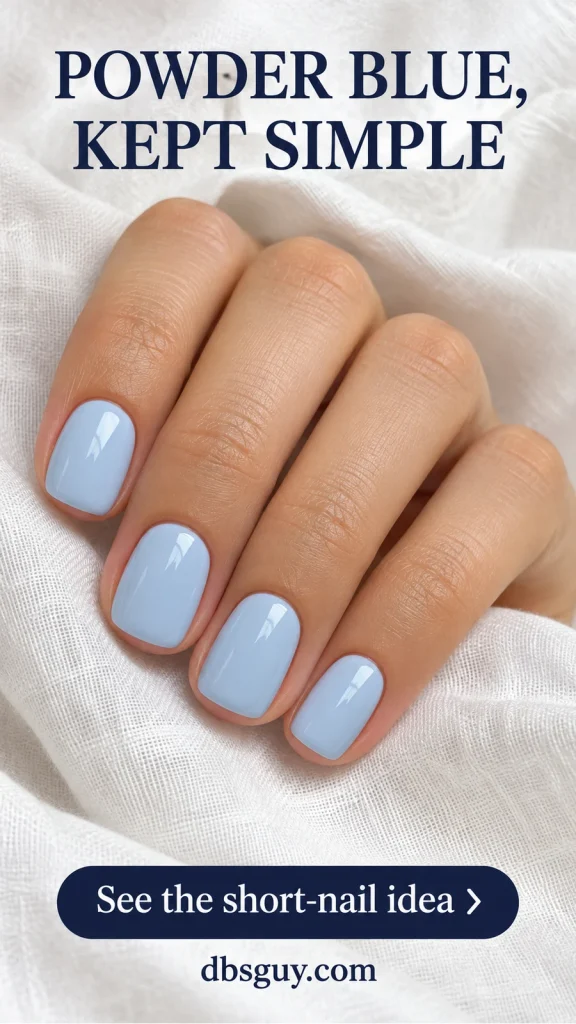
Look for a pale blue that still reads blue beside a white shirt. A very white-based shade will look chalkier; a slightly grayer one will feel quieter. For the reference look, request an opaque powder-blue cream on short squoval nails with a glossy finish. Build coverage according to the polish directions rather than trying to hide streaks with one thick coat.
2. A Sheer Ice-Blue Jelly Wash
This is the lightest-looking option in the edit. The blue is a transparent tint, so you can still see the natural nail underneath. On short rounded nails, that watery finish feels particularly airy.
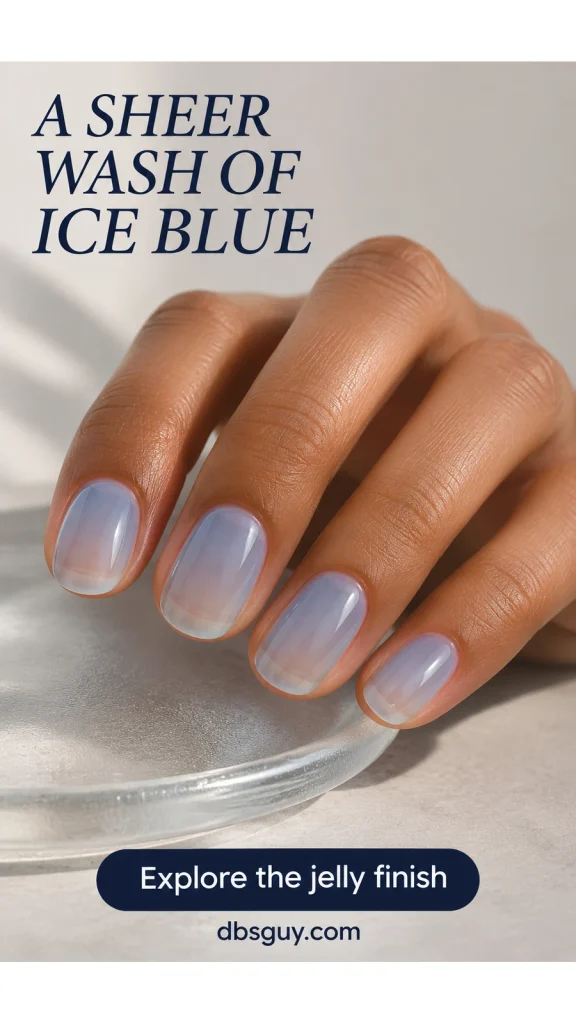
Choose a polish described as sheer or jelly and check a swatch before committing. An opaque pastel will not give the same result simply because you apply less. If a visible nail line bothers you, choose the cream finish in idea 1 instead; extra layers can deepen a sheer blue without fully hiding the line. At the salon, show how much transparency you want as well as the color.
3. Pale-Blue Micro French Tips
A micro French gives you a little blue every time you move your hands, with most of the nail left sheer. The slim edge is useful when you like your usual neutral manicure but want a small seasonal change.

Pick the sheer base against your own hand; it does not need to match the pink in the concept image. Ask for a fine powder-blue smile line following the free edge, with the band scaled to each nail. On a very short nail, a shallow curve will preserve more open space than a deep French. Keep the finish glossy and skip extra outlines for this version.
Also Read: Almond Gel-X Nail Designs for January: Icy Tips and Soft Winter Shimmer
4. A Pearly Blue Glaze
Pearl changes the surface rather than the layout. Over a pale-blue base, a soft white reflection gives medium almond nails an icy glow. It is a good choice when you want something dressier than cream polish but still want an uncluttered set.
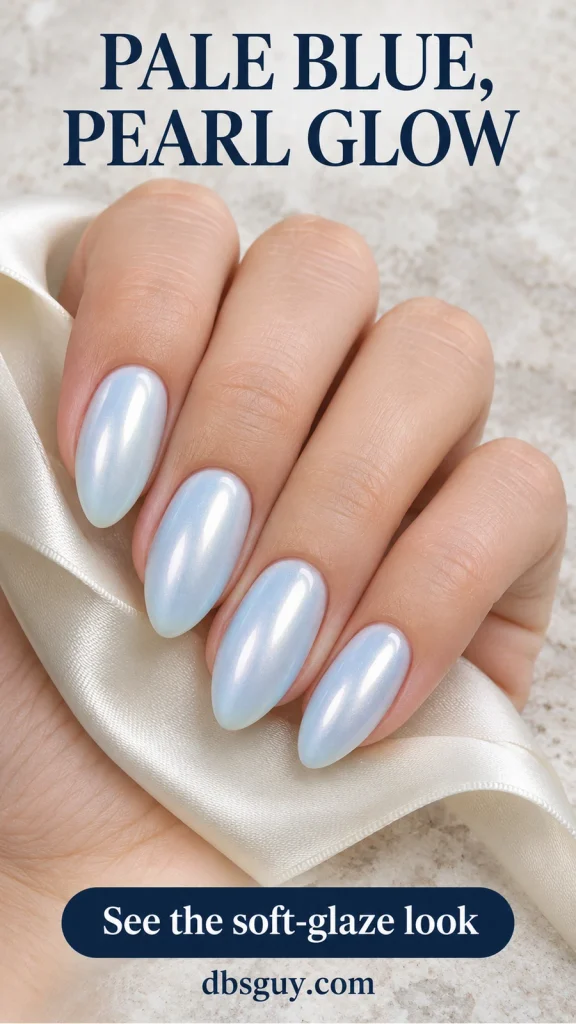
Ask to see the finish over the actual blue you choose. Some iridescent toppers introduce a noticeable green or pink flash; that can be lovely, but it is a different effect from this silvery-white glaze. A pearlescent lacquer offers a regular-polish interpretation. If you choose a powder finish, let your nail artist select a compatible application system.
5. Light Blue Fading Into Milky White
This ombré makes the tip look softer than a crisp French. Pale blue begins near the cuticle and gradually turns milky white toward the outer edge, with no stripe between the two colors. Medium almond nails give the blend room to show.
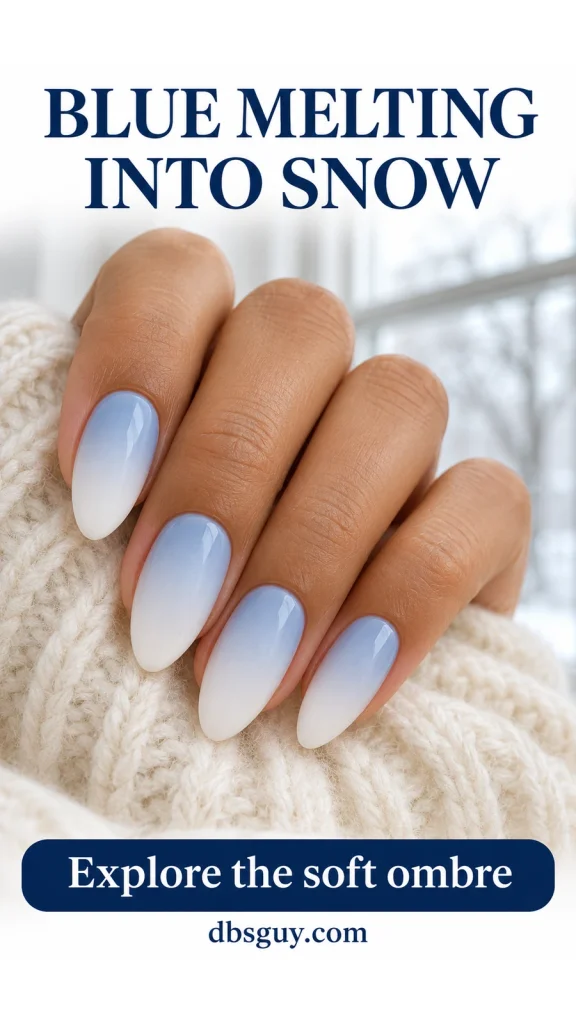
For a salon request, name the direction: “Blue at the base, white at the tips, and a soft transition.” A reference alone can be easy to reverse. If your nails are short, keep the white concentrated near the edge so it does not swallow the blue. Leave out glitter and snowflakes on this version; the gradual color change is the detail.
6. One White Snowflake on Soft Blue
A single snowflake makes a plain blue set feel tied to January without turning every nail into a tiny illustration. In this reference, the ring finger carries the detail and the surrounding nails stay glossy blue.
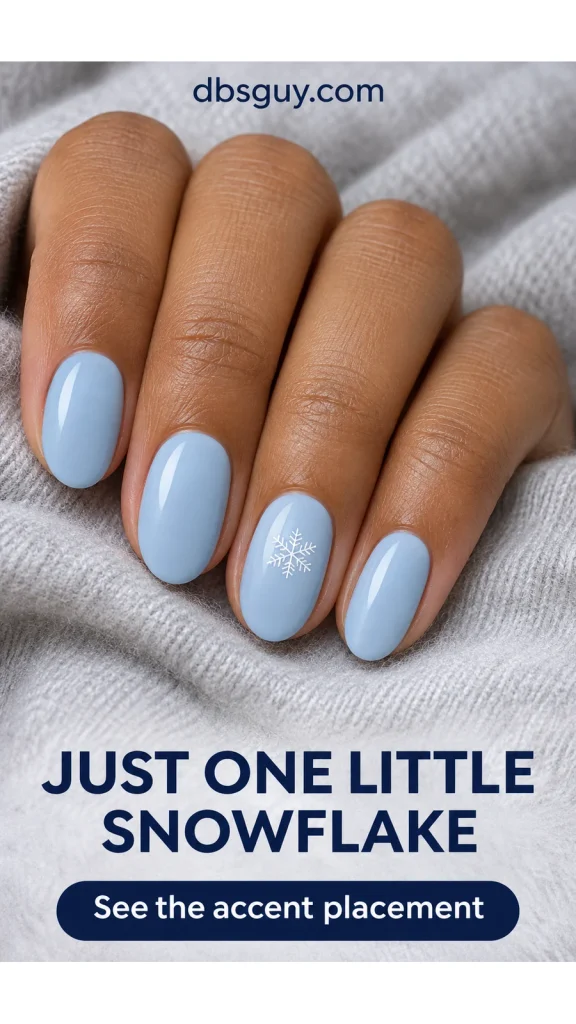
Choose a small design with visible blue around its branches. A dense, oversized decal can read as a white patch on a short nail. Ask for a fine white snowflake rather than a heavy glitter outline, and bring the image at your intended nail length. If you are applying a decal at home, follow its placement and sealing directions; do not assume every decal works with every polish system.
Also Read: 19 Snowflake Nails So Delicate They Look Freshly Fallen
7. Tiny Snow Dots on Short Blue Nails
Snow dots give you the winter reference without the branching lines of a snowflake. Keep them on the middle and ring nails, with the index and pinky plain. Uneven spacing feels softer than a perfectly measured polka-dot grid.
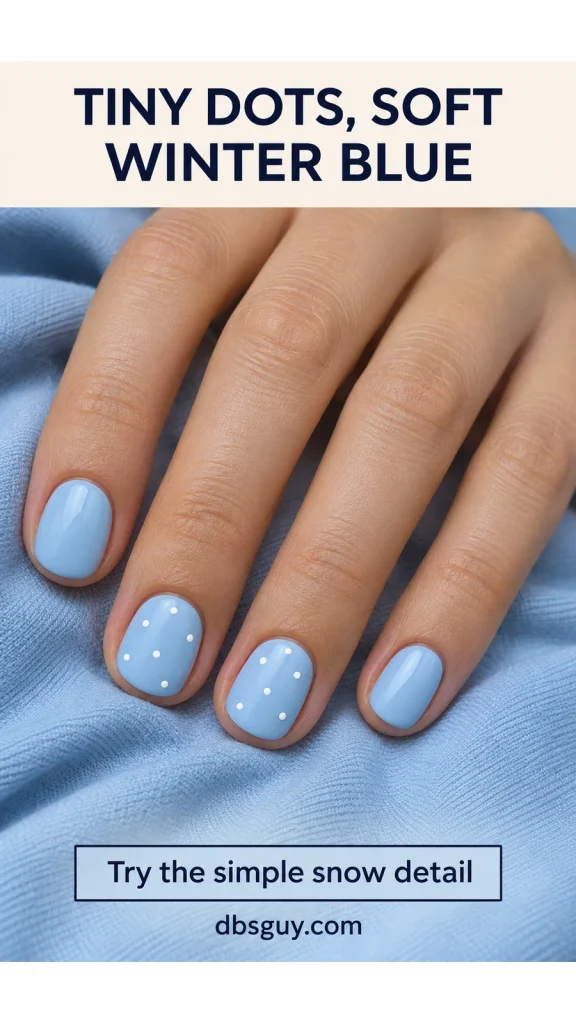
For an at-home version, use regular blue and white lacquer with a small nail dotting tool, following the products’ drying directions. Try a few dots on a practice tip first. The aim is separate marks with open blue between them, so stop before the accent becomes crowded. On extra-short nails, three tiny dots on one finger are enough to keep the idea recognizable.
Also Read: January Nail Art for Beginners: Simple Designs to Practice at Home
8. A Fine Silver Glitter Fade at the Tips
A little silver at the edge gives light blue a frosty finish without covering the whole nail in glitter. The close-up shows the important part: sparkle is strongest at the free edge, becomes sparse toward the center, and leaves the lower blue area clear.
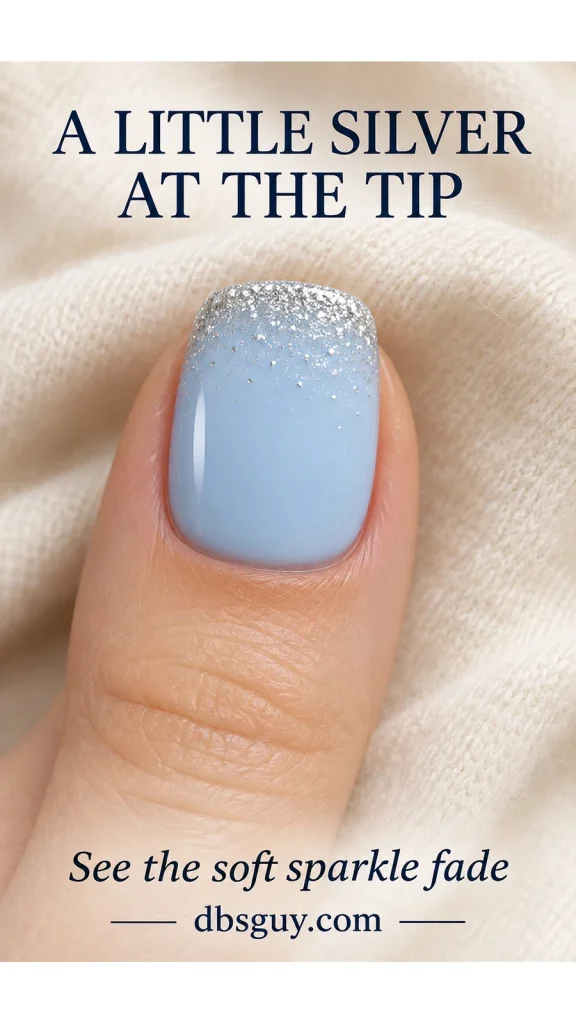
Choose a fine glitter topper with a clear base rather than solid silver metallic polish. Ask for a scattered fade, not a hard French band. You can repeat it across the set or use it on the thumbs and ring fingers only. Smaller particles keep the transition delicate; large pieces create a more obvious confetti effect.
9. Thin Silver Crescents Near the Cuticles
Move the silver to the other end of the nail for a reverse-French look. A narrow metallic crescent follows the curved base, while the rest stays pale blue. It is a more defined, graphic option than the glitter fade.
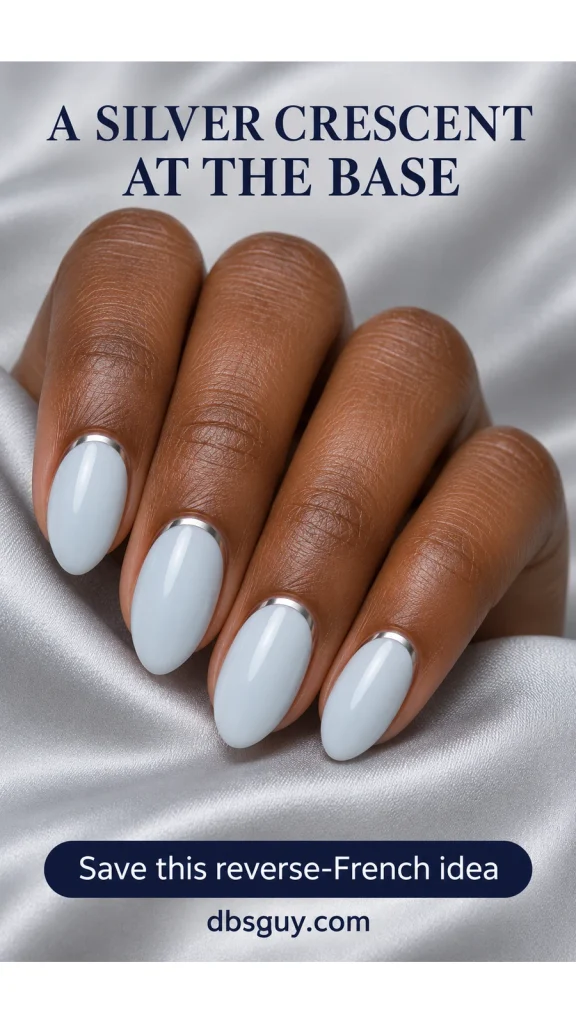
Ask for the silver to sit on the nail surface just inside the cuticle border, with the skin kept clean. Keep the crescent slim enough to read as an outline rather than a large half-moon. If outlining every finger feels too busy beside your rings, use the detail on one or two nails and leave the others blue.
Also Read: 15 Elegant January Nail Art Ideas to Pair With Your Winter Jewelry
10. Matte Blue With Glossy Blue Tips
Here, the body and tip use the same pale blue. A matte surface makes most of the nail look velvety, while a glossy arc catches the light at the edge. The result is quiet in soft light and more noticeable when the shine moves.
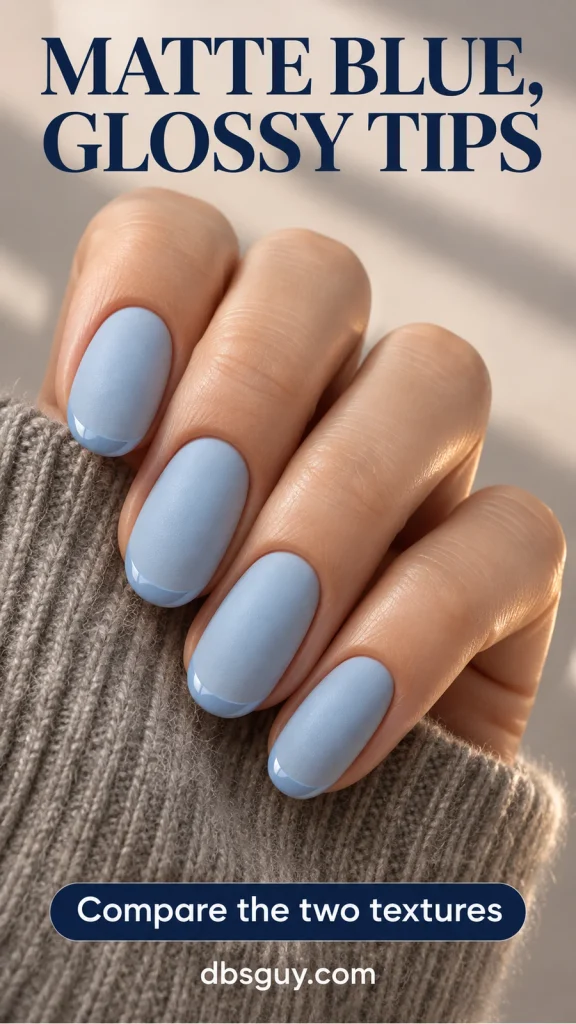
Tell your nail artist you want a finish contrast rather than a white or darker-blue tip. Ask to see a finished swatch tilted under the light, since this distinction can disappear in a straight-on photograph. On short nails, a narrow glossy edge is enough. Check that the finishing products are compatible instead of layering unrelated top coats and hoping for the same effect.
11. An Airy Blue Side Swoop
A blue swoop gives the manicure movement without filling the nail. Most of the surface stays sheer, while one curved ribbon runs along a side and widens toward the tip. It feels a little more playful than a French but keeps the same open space.
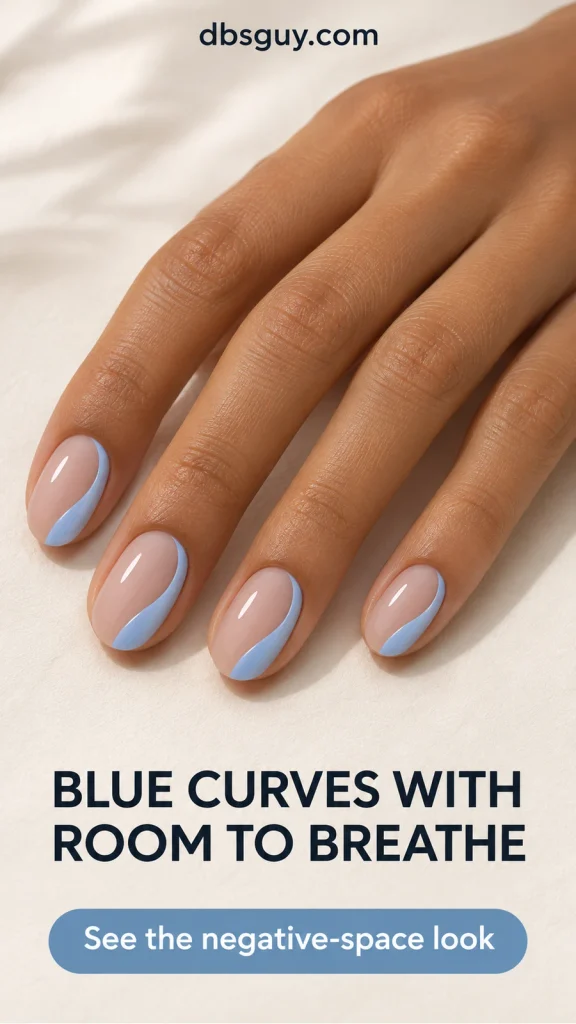
Choose the curve’s width before adding anything else. If it becomes too broad, the nail starts to look diagonally half-painted, which is a stronger graphic effect. For the airy version, keep a large uninterrupted sheer area. The curves can vary slightly from finger to finger; you want a related set, not four identical stamped shapes.
12. A Single Blue-and-White Marble Accent
One marbled ring nail adds the suggestion of cloudy ice to an otherwise plain set. The reference keeps the white lines translucent and irregular, so the blue remains visible through and around them.
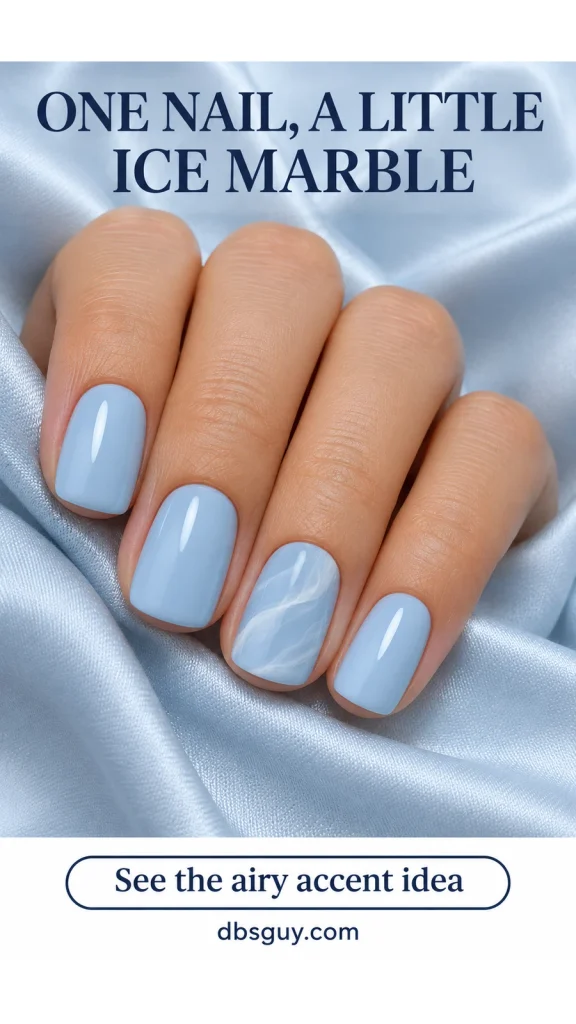
Show your nail artist the density you like. Fine, widely spaced white veins will feel much lighter than a thick stone pattern or an accent nail filled with white. Keep the other nails the same blue and skip metallic foil for this look. On a narrow nail, two or three soft veins may be enough; there is no need to squeeze in the full pattern from a wider reference.
13. Pale-Blue Magnetic Velvet
Magnetic velvet is the option to choose when you want shifting light rather than painted decoration. A pale silvery-blue base and broad luminous reflection give the nails depth while keeping the overall color light.
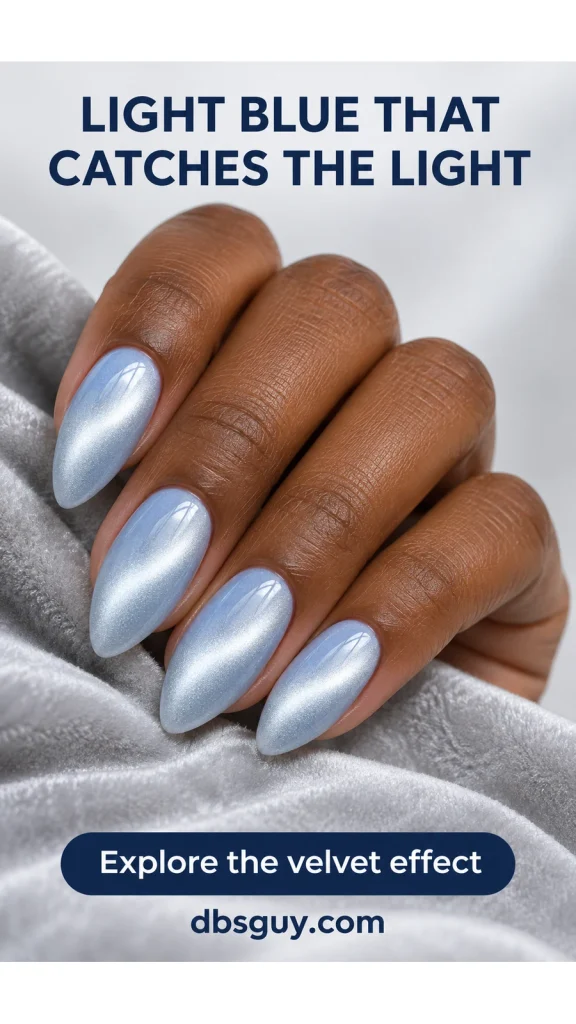
At the salon, ask to see the magnetic effect over a light base before deciding. The same general finish over a dark base can look much moodier than this concept. Request a broad velvet glow rather than a sharp, narrow cat-eye stripe. This effect needs magnetic polish; an ordinary shimmer topper will give a different reflection. For any gel version, use the product maker’s specified application and lamp system.
14. A Tiny White Ribbon Bow
If you want something sweet before Valentine’s Day without switching to pink, try a little white bow. The pale-blue base keeps it connected to the rest of your winter wardrobe, and the short square shape gives the ribbon a tidy backdrop.
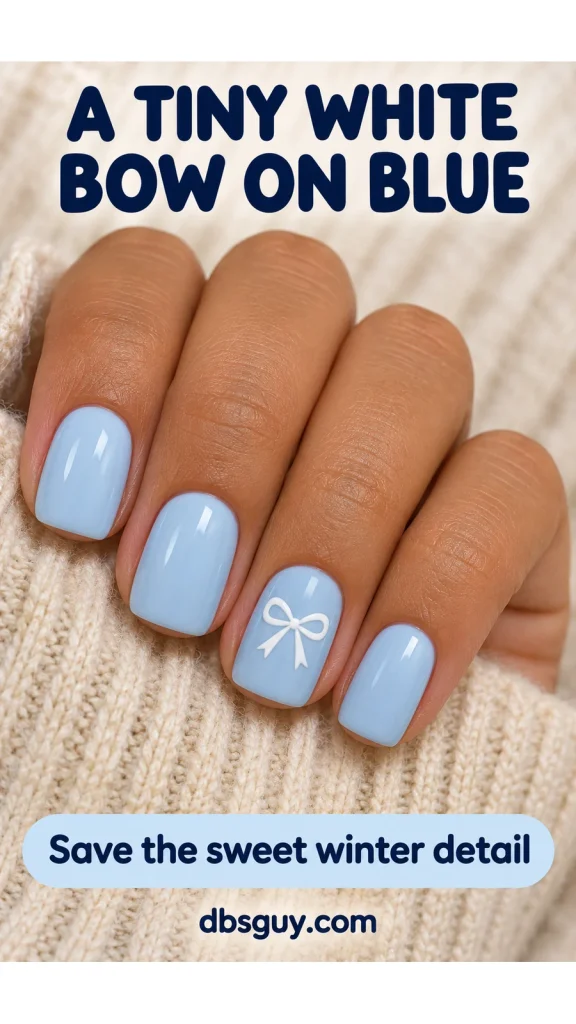
Keep the bow on one ring nail, with short tails and blue space around both loops. Ask your artist about a small painted version if you prefer minimal texture; a bulky charm will change both the look and the feel. Let the bow be the only decorative element here. Hearts, rhinestones, and extra ribbon details would turn this quiet accent into a different manicure.
15. One Cozy Argyle Accent
Argyle brings a knitwear reference into the manicure without using a raised sweater texture. One ring nail carries white diamonds and fine navy crossing lines, while the rest remain powder blue.
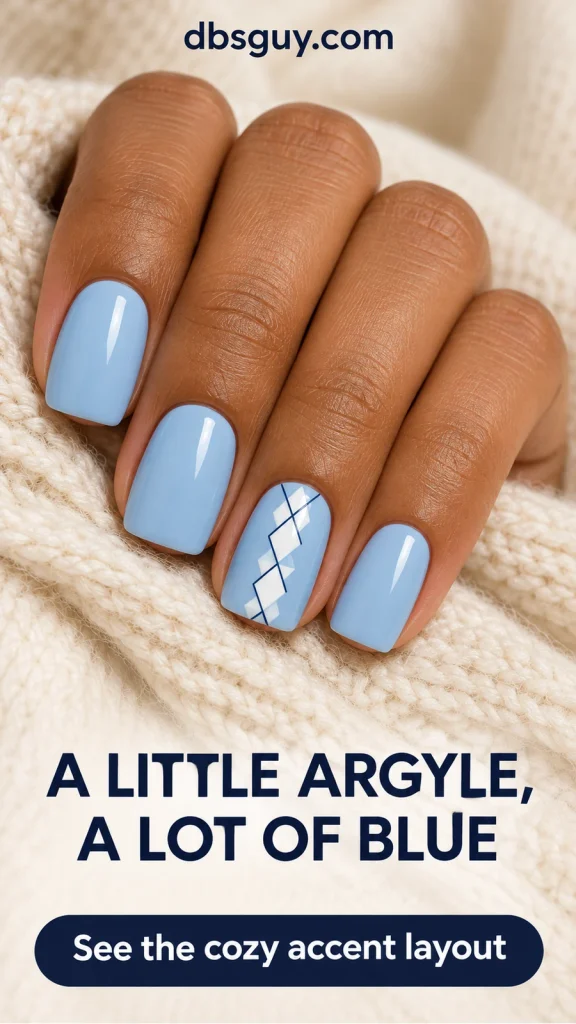
The dark lines should be the smallest part of the design. If they become thick, they can overpower the soft palette. For short square nails, ask for one narrow column of diamonds rather than a dense all-over repeat. A salon artist can scale the pattern to the actual nail. Keep it on one accent finger so the set still reads light blue at a glance.
Also Read: 23 Winter Nail Designs: Snowflakes, Chrome and Cozy Knits
16. A Single Vertical Silver Line
A silver line is a useful alternative when you want precision without a recognizable winter motif. Put one fine line down the center of the ring nail and keep every surrounding nail plain blue. The empty space makes the small metallic detail easy to see.
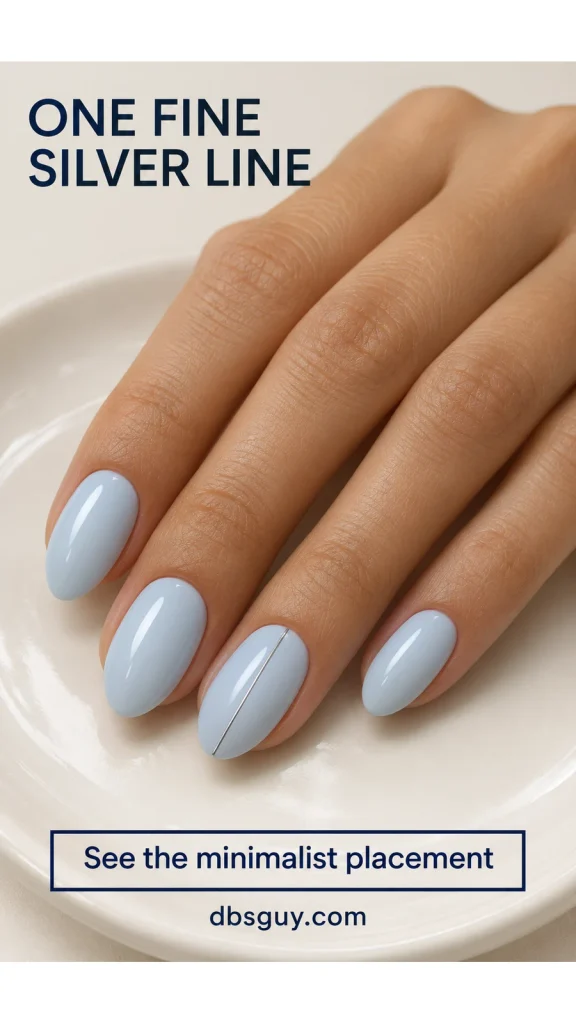
Ask for a narrow line running from near the base toward the free edge, kept entirely on the nail. A strip of nail-art tape and a painted metallic line may have different finishing needs, so let the artist choose the method. On a very short nail, keep the line especially fine rather than making it wider to compensate for the shorter length.
17. A Soft Tonal Blue Skittle Set
Cannot settle on one blue? Use a small family of light-blue creams across the hand. The reference moves between icy, powder, sky, and misty blue, with each nail carrying its own shade. Matching the shape and glossy finish makes the mix feel connected.
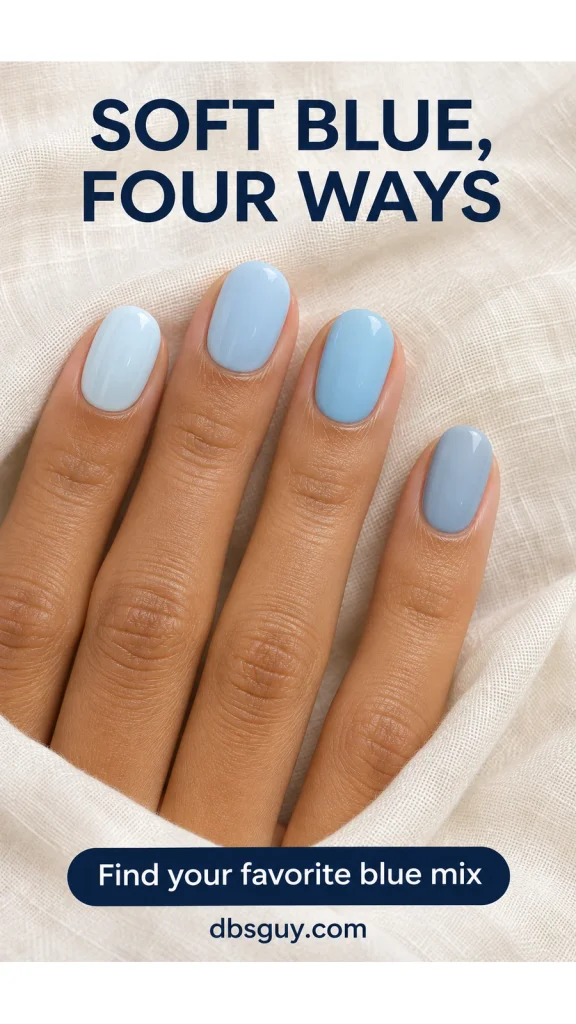
Lay the swatches next to each other before choosing the order. Aim for enough difference that the change looks intentional, while keeping every shade pale. Repeat your favorite blue on the thumb, or add a fifth related shade if you have one. If a bottle turns noticeably lavender or teal beside the others, decide whether you like that extra color before including it.
Turn Your Favorite Image Into a Clear Salon Request
Save one main reference and name four things: your comfortable length and shape, the blue’s opacity, where the detail sits, and the finish. For example: “Short squoval nails, opaque powder blue, a fine silver fade at the tips, and a glossy finish.” If you like the color from one image and the art from another, explain that difference before the appointment starts.
At home, plain cream, sheer blue, dots, and a fine glitter accent are useful starting points with regular lacquer. Follow your products’ preparation, drying, finishing, and removal directions. Treat chrome, magnetic effects, and detailed linework as separate techniques rather than assuming the same polish or top coat will create every finish.
If you choose gel, follow the specified product and lamp system. The American Academy of Dermatology’s gel-manicure guidance recommends broad-spectrum, water-resistant SPF 30 or higher on the hands before a gel manicure, or dark opaque gloves with the fingertips exposed. It also advises against cutting cuticles or picking off gel. Keep moisturizing your nails and surrounding skin between manicures.
Light Blue January Nail Questions
What is the difference between baby blue, powder blue, and ice blue?
Polish shade names are not a fixed color system. In this edit, baby blue means a soft pastel, powder blue is a muted creamy blue, and ice blue is very pale and cool. Check the swatch and opacity rather than choosing by the bottle name alone.
Can light blue nails look wintry without snowflakes?
Yes. For this palette, a pearl reflection, silver fade, blue-to-white ombré, or matte-and-gloss contrast gives a frosty impression without a seasonal drawing. The side swoop and silver line also work when you want to keep wearing the set after January.
Which idea should I choose for extra-short nails?
Start with solid powder blue, a sheer blue wash, or a few snow dots on one nail. If you prefer a French, keep the blue edge narrow. You can also use one thin silver line; it does not require a long nail to make sense.
Do I need gel or extensions for these designs?
No. The color and placement ideas can be adapted to natural nails, and several have regular-lacquer versions. A powder glaze or magnetic velvet effect needs suitable products and its own application method. Choose the finish first, then ask which system can create it on your preferred length.
How do I keep the blue from looking too bright?
Try a muted gray-blue, a translucent blue, or a small blue detail over a sheer base. Compare them before adding shimmer: a reflective topper can change how light or colorful the finished manicure appears. If the plain swatch already feels stronger than you want, choose a softer base rather than relying on the top coat to mute it.
For a first choice, save the reference closest to the length you already wear. Then keep the one detail you like most—a sheer wash, a blue edge, a white snowflake, or a silver glint—and let the rest of the manicure stay simple.