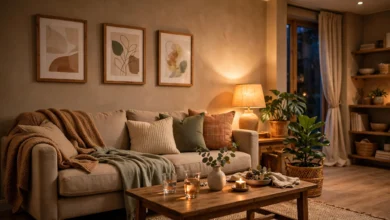
A patchwork quilt, a mushroom lamp, or a tiny paper cottage between your books can give a plain dorm room a playful personality. The most useful whimsy dorm room ideas start with something you already need—bedding, light, storage—and give it an unexpected color, shape, or handmade detail.
Pick one main feature, then repeat a color from it in two smaller places. You can stop there. These 21 ideas work individually, so you can build a room around your own belongings instead of buying a whole matching collection.

The visuals are AI-generated styling concepts. They illustrate the ideas rather than document completed student rooms; follow your residence hall’s rules when adapting a scene.
Find Your Starting Point
- Keeping your current bedding? Try the desk lamp in Idea 2, postcard board in Idea 3, or useful ceramics in Idea 10.
- Drawn to storybook rooms? Start with botanical bedding in Idea 4 or a miniature book nook in Idea 14.
- Want less color? Idea 20 uses texture and curved edges in cream and oatmeal.
- Sharing with someone whose taste is different? Idea 21 connects two sides of a room through one accent color.
Check the Room Before You Shop
Confirm your assigned mattress size, then measure the desk, dresser top, bedside floor space, and any cubbies you plan to use. A pretty object still needs room for its base, power cord, or lid to open. Keep the desk chair’s movement and the route to the door clear.
Read your own housing handbook before choosing lights, wall hangers, wallpaper, curtains, or paper decorations. Policies differ: the University of Nebraska’s decoration guidance, for example, prohibits wallpaper and decals and gives different hanging advice for concrete and drywall. A product labeled “removable” does not establish permission or guarantee that it will leave a surface undamaged.
The ideas below mostly use textiles and portable objects. Check any applicable decoration and electrical rules, keep fabric and paper away from heat sources, and leave windows, exits, and fire safety equipment unobstructed. You can get a storybook mood without attaching anything overhead.
1. Let a Patchwork Quilt Choose Your Colors
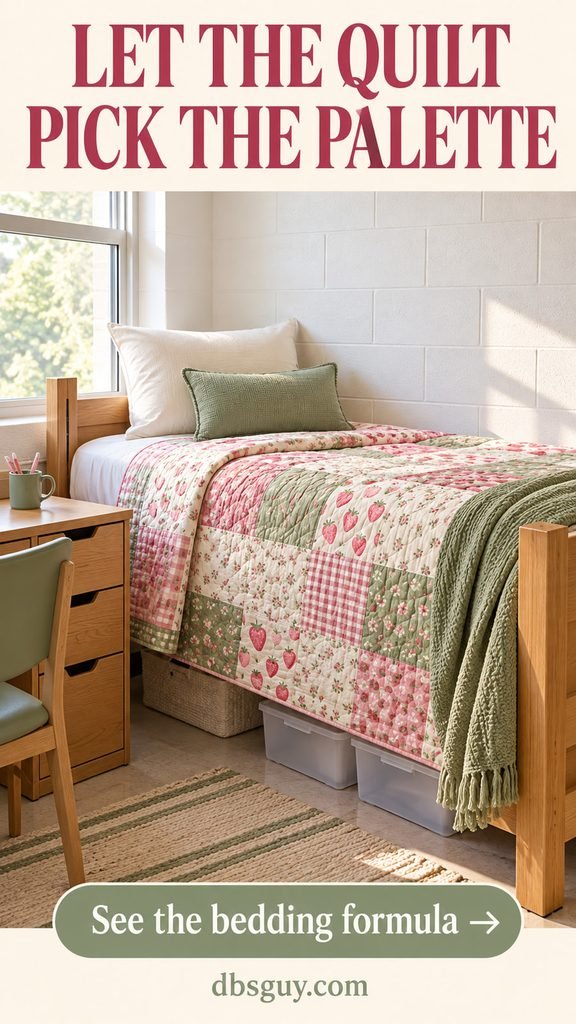
A quilt already combines several patterns, which makes it a useful starting point when you like a collected look but do not know which colors to pair. In this version, strawberry pink, sage, and cream sit comfortably with the supplied wood furniture.
Choose one quilt color for a plain accent pillow and another for a desk cup or notebook. Keep the sleeping pillow simple so the bed has somewhere visually quiet. If you already own a neutral comforter, fold a smaller quilt across the foot instead of replacing it. Check the dimensions against your actual mattress and decide how much overhang you want before ordering.
2. Give Your Desk a Mushroom Lamp

A rounded mushroom shade brings the whimsy into an item you will use every evening. Pink works with warm wood and cream bedding; a cream version gives the same curved silhouette with less color.
Measure the base footprint and leave enough space to open your laptop and write beside it. Choose a lamp your hall permits and use it according to the manufacturer’s instructions. A soft glow can be pleasant for winding down, but check whether the lamp actually lights your notebook clearly; you may still prefer your existing adjustable task lamp for studying. Route the cord behind the desk rather than through your walking space.
3. Make a Freestanding Postcard Gallery

Give postcards, small drawings, and a couple of favorite photos one portable home. A desktop corkboard with a sturdy base lets you rearrange the display without turning the room’s walls into a project.
Lay out your pieces first, keeping a little cork visible between them. A repeated blue or red is enough to connect otherwise unrelated pictures. Use pins only in the board, and put it toward the back of the desk where it will not crowd your keyboard or tip when you reach for a book. If desk space is scarce, display three cards at a time and store the rest for later swaps.
4. Build a Storybook Garden Through Bedding
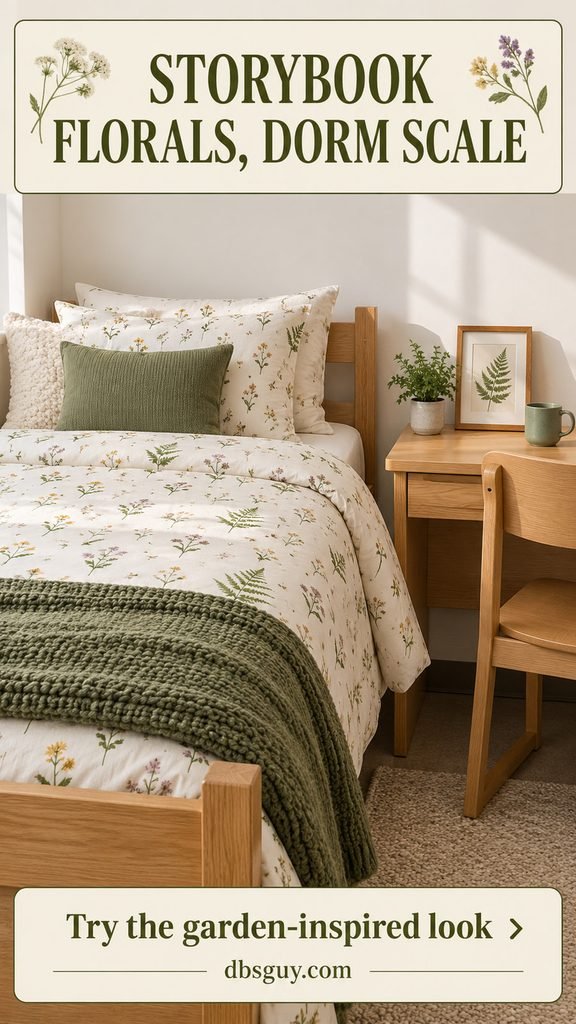
Tiny wildflowers and fern prints create a garden mood on a surface that is easy to change. Cream floral bedding, a moss-green knit, and one botanical picture give this bed its storybook character without needing a canopy or artificial vines.
Let the print stay small enough that it reads as a gentle texture across the bed. Repeat green once on the adjacent desk, then let the wood furniture show. The picture can stand in a small tabletop frame. Choose washable bedding with care instructions that fit your laundry routine; delicate trim is less appealing when it complicates every wash.
5. Put the Stars on the Duvet

For a celestial dorm, use navy bedding scattered with small stars and moons. The pattern carries the theme while an ordinary bedside lamp supplies the evening light. You can keep whatever wall color your room already has.
Add a cream sleeping pillow to separate the dark bedding from the wall, and use one blue accent cushion if you want another layer. Skip the temptation to add moons to every surface. This is also a good way to introduce a darker look to a bright shared room: the color stays on your own bed, and your roommate can keep a completely different palette.
6. Choose a Wavy Tabletop Mirror

A wavy frame adds movement to a dresser full of straight edges. Choose a small mirror with its own stable base, then check that it sits securely with the drawers opening below it.
The lavender mirror and matching catchall here make a useful getting-ready spot. Before settling on the position, sit or stand where you will actually use it and check the reflection. A mirror that looks lovely from the doorway may be too low for your morning routine. Keep it back from the dresser edge, and leave enough clear surface to set down the things you use every day.
7. Keep Checkerboard to a Bedside Landing
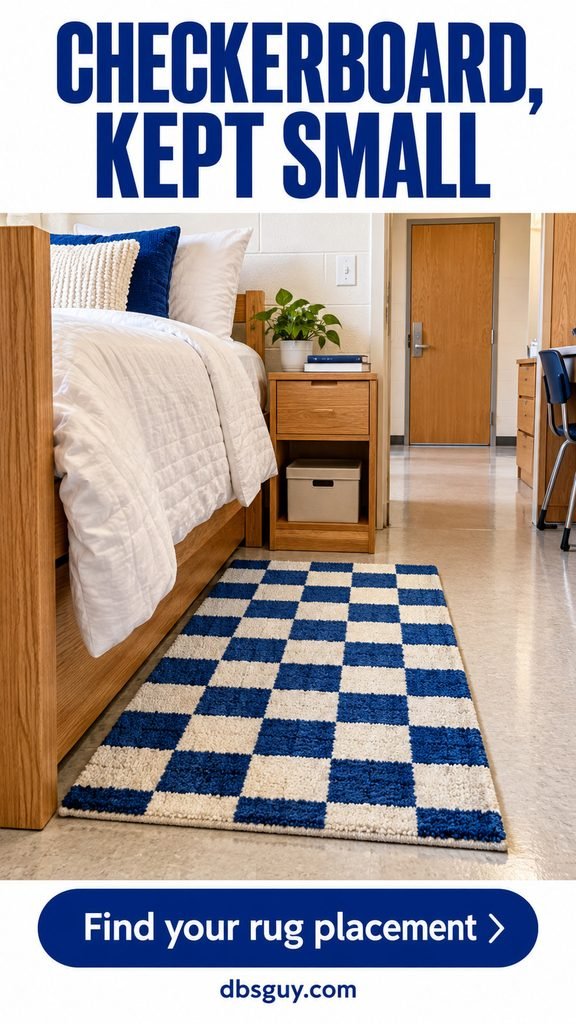
A blue-and-cream checkerboard rug gives a plain bed a graphic neighbor. A small rectangle beside the bed is easier to place than a room-size rug, especially when two people share the floor.
Measure the landing area after the furniture is in position. Favor a low-profile rug that lies flat, with backing or a compatible rug pad appropriate for your floor and permitted by housing. Check that corners stay down and doors clear it. Keep the desk chair’s rolling area and the main walkway free; the rug should mark a comfortable spot to put your feet, not become an obstacle you step around.
8. Add Scalloped Edges to Simple Bedding

A scalloped pillowcase gives a plain bed a playful outline. The cream fabric and thin red edging shown here stand out against pale blue without adding another busy print.
Start with one scalloped piece. If you want a second, use the same edge color on a folded throw so the two details feel connected. Check pillowcase measurements and washing instructions, especially if the trim is embroidered. This approach suits anyone who likes decorative detail but still wants mostly solid bedding. You get the curved shape without adding another object to the desk or dresser.
9. Turn Your Existing Bed Into a Reading Corner

If there is no room for an armchair, make the bed more inviting for a chapter between classes. A supportive back cushion and one smaller lumbar cushion can make sitting up more comfortable; move them aside when you sleep.
Place a suitable reading lamp on a stable nearby surface and check that the light reaches the page without shining toward your roommate. Keep your current book within reach and the rest in their normal storage. Cream and rust make this version warm without needing extra furniture. For broader room inspiration, browse our cozy reading nook ideas for small spaces and adapt the textile details to your dorm.
10. Let Useful Desk Tools Be the Quirky Objects

A strawberry pencil cup and a cloud-shaped dish can add more personality than several unrelated figurines. They also give pens and paper clips a place to return to when the desk gets busy.
Choose the objects around what you actually need to store. A cup should be deep and stable enough for your pens; a catchall should be easy to empty and wipe. Put both at the back or side of the desk and preserve the middle for work. If you already have a favorite mug you no longer drink from, try it as the pencil holder before buying anything.
11. Create a Tiny Gallery With Secondhand Frames

Three small frames can give the back of a dresser a collected, slightly nostalgic feel. Mix an oval with two rectangles, then connect them through warm wood and brass-tone finishes rather than identical shapes.
Look for intact frames with dependable stands; do not rely on one frame propping up another. Fit them with a drawing, a botanical sketch, or a postcard you already own. Arrange them directly on the dresser with the tallest toward the back, leaving the front usable. Measure before shopping—three individually small frames can still take up more surface than you expect.
12. Put a Crochet Bouquet on the Desk

Yarn daisies and tulips bring the flower shape into a room without a vase of water beside your electronics. Soft pink petals, cream daisies, and a yellow vase make this version feel handmade and cheerful.
If you crochet, use a pattern suited to your skill level and make a few stems in colors from your bedding. Otherwise, choose a small finished bouquet or display a handmade flower you already have. Keep the arrangement short enough that it does not interrupt your view across the desk. Use a stable container, tuck any wire ends inside the stems, and dust the flowers as needed.
13. Mix Broad Stripes With Tiny Florals

Pattern mixing is easier when the two prints have different scales. Broad blue-and-ivory stripes can cover the bed while a small floral print stays on one accent pillow. A plain sleeping pillow gives both patterns room to show.
Keep the blue shades reasonably close, but do not worry about an exact match. If your current duvet is striped, take a photo of it in daylight before choosing the floral fabric. Add one plain knit throw if you want texture. You can also reverse the arrangement—floral bedding with a striped cushion—while keeping the same limited palette.
14. Tuck a Miniature Storybook Scene Between Your Books

A narrow book-nook diorama turns one shelf opening into a little discovery. Think a tiny cottage facade, a painted path, and paper flowers contained inside a rigid, book-size box.
Measure the shelf height and depth first, and leave the books easy to remove. An unlit version keeps the setup simple; use painted details instead of adding electrical parts or loose natural materials. Place it on an existing shelf or a permitted, stable desktop bookcase. Treat the miniature as decoration unless its maker specifically rates it to support books—ordinary bookends can do that job beside it.
15. Give Your Hobby a Compact Supply Station

A pastel cart makes art supplies feel like part of the room while giving them a place to go after a project. The blue version shown here keeps brushes and a watercolor tin together, with bulkier supplies below.
Measure a parking spot before buying the cart, including its handles and wheels. It must leave enough knee room and let the desk chair move normally. Store heavier items low, respect the maker’s load limits, and lock the wheels when parked if locks are provided. No spare floor space? Use one portable tray inside your existing cupboard instead; the useful part is having a kit you can bring out and put away.
16. Paint Your Own Storage Boxes
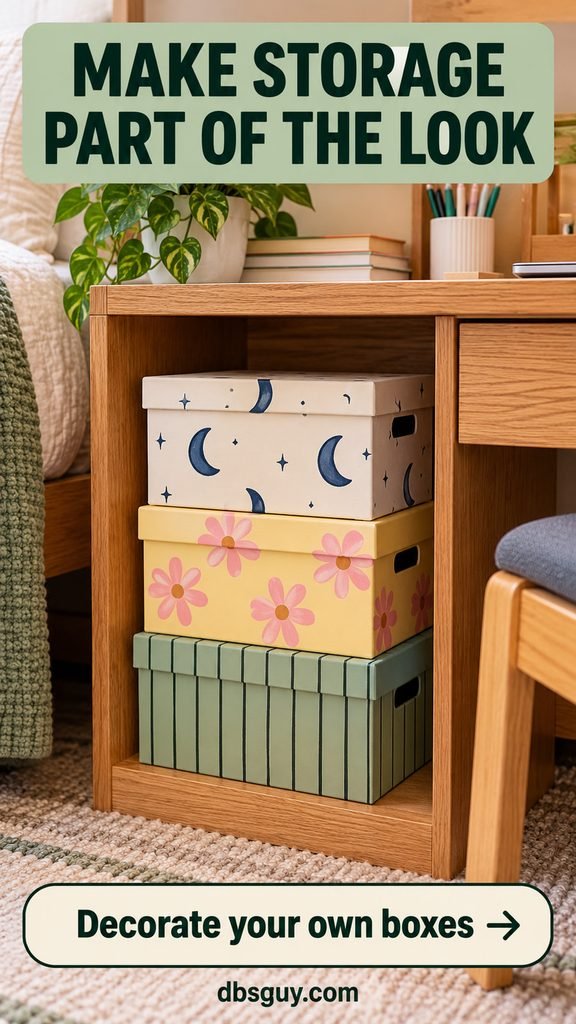
Plain lidded boxes are a good place to try moons, daisies, or stripes. Decorate portable boxes you own rather than applying paint, paper, or adhesive to university furniture.
Check the cubby dimensions and leave room to lift the lids or pull the boxes out. Use paint suitable for the box material, follow its ventilation and drying directions, and let everything dry fully away from the furniture before putting it in place. Keep the stack low and stable. A small label on the back can tell you what is inside without competing with the painted front.
17. Keep a Paper Chain Inside One Small Display

A short paper chain gives a desktop board a crafty finish without filling the room with garlands. Use a few loops in two or three colors, keeping the chain close to the board’s top edge.
If your hall permits this kind of paper decoration, cut equal strips, join the first into a loop, then thread each new strip through the previous loop before closing it. Clip the finished chain to your own sturdy board. Keep it away from lamps, heaters, outlets, and any place it could snag. If paper decorations are restricted, use the same colors in a drawing on the board instead.
18. Repeat One Citrus Motif

An orange-slice cushion makes a cheerful focal point against cream bedding. Repeat the orange once in a useful dish on the desk and let the rest of the room stay simple.
This is an easy direction to try if you already own white or pale-yellow bedding. Choose a removable, washable cushion cover when possible, and check that the shape is comfortable enough to keep around. You do not need matching fruit prints, a fruit rug, and another novelty lamp. Two related accents give the motif a clear home while leaving room for your own photos and belongings.
19. Make a Small Tabletop Origami Mobile

Three paper cranes hanging from a desktop stand add a little movement without needing a ceiling hook. Keep the whole display compact enough to sit within the dresser’s footprint.
Use a freestanding craft stand with a broad, stable base and suspend lightweight folded shapes from short threads. Space the cranes so they can move without constantly tangling. Place the stand away from the edge, your roommate’s reach, fans, and heat sources; check your hall’s paper-decoration rules first. If the stand wobbles or the surface is busy, arrange the folded cranes in a shallow tray instead.
20. Try Quiet Whimsy in Cream and Oatmeal

You can make a room playful through shape instead of bright color. An oatmeal duvet, a cream bobble-textured cushion, and a scalloped throw bring three different textures into a mostly neutral bed.
Keep the differences visible: smooth bedding beneath raised bobbles and a curved blanket edge. A small asymmetrical tray can repeat that softness on the desk. This works especially well when you already like your neutral basics and only want a small change. Choose pieces you can wash or clean easily, and stop before decorative pillows take over the part of the bed you use.
21. Connect Two Roommates’ Styles With One Color

Shared rooms can feel connected without matching bedding. One side might have pink florals while the other uses blue stripes; a butter-yellow cushion on each bed gives them a common detail.
Agree on shared purchases and where they will go before ordering anything large. Each person can choose their own bedding and desk objects while you coordinate a single accent color. Discuss lamp placement, nighttime light, and what belongs in the central walkway too. If coordinating colors feels like one more chore, keep the shared floor area simple and let the two private sides be different. Our Freshman Year: The Complete Survival Guide covers more of the practical side of settling into college.
Bring Your Favorite Ideas Together
Start with the item your room needs most. If the bed feels unfinished, choose one bedding idea. If the desk feels bare, pick one useful object or a personal display. A room can combine the patchwork quilt, mushroom lamp, and postcard board from this guide without needing any of the other 18 ideas.
Try the arrangement during a normal study day before adding more. Open drawers, pull out the chair, put away your laundry, and see whether the decor gets in the way. Keep the pieces that make those routines more pleasant and move the rest back into storage.
Whimsy Dorm Room FAQs
What makes a dorm room whimsical?
An unexpected shape, a playful pattern, a small handmade object, or a personal collection can do it. A mushroom lamp is enough to start. Cottagecore leans toward a nature-and-cottage mood; whimsical decor can also be graphic, celestial, colorful, or mostly neutral.
How can I try the look without spending much?
Rearrange what you own first. Display postcards, use a spare mug for pens, put a handmade drawing in an existing frame, or change one cushion cover. Spend on a needed item before buying decorations that duplicate things you already have.
Can I do this if I cannot put anything on the walls?
Yes. Bedding, a stable tabletop mirror, small frames, and decorated storage boxes can carry the style. Check your hall’s rules for portable boards and other accessories too, and keep furniture surfaces usable.
Do I need fairy lights or a canopy?
No. A permitted table lamp and playful textiles can create the mood. Decorative-light and hanging-fabric policies vary, so do not assume an attractive dorm photo shows an installation your hall allows.
How do I keep it from looking cluttered?
Give each display a boundary: one board for pictures, one tray for small things, or one shelf opening for a miniature. Leave the work surface, drawer access, and walking route clear. When a new item has nowhere useful to go, swap it for something instead of adding another layer.
Also Read
- Why Your Home Office Needs a Felt Board — more inspiration for a personal study-space display.
- Homesick in College? 17 Ways to Feel Better That Actually Work — support for making a new place feel more familiar.
- Dorm Yoga for Beginners: Quiet Flows for Tiny Spaces — ideas for using the floor space you kept clear.