
A terracotta dorm room starts with a warm clay color you can bring in through bedding, textiles, and useful everyday pieces. You can leave the walls and school-issued furniture alone. Pair a dusty rust duvet with cream for a lighter look, add sage for contrast, or keep your existing bedding and introduce the color through a rug or desk setup.
These 13 terracotta dorm room ideas show different ways to make that work in a college room. Choose one main direction first; you do not need to combine every idea or buy a roomful of matching accessories.

The visuals in this article are AI-generated styling concepts, not photographs of completed dorm rooms. Adapt the arrangements to your room dimensions and housing rules.
Before You Buy: Match the Color to Your Actual Dorm
“Terracotta,” “clay,” “rust,” and “burnt orange” can describe quite different shades. For the softer earthy look shown here, look for a muted reddish brown rather than a bright orange. Compare your largest textile with the furniture already in your room. A clay shade that looks balanced beside pale wood may look much more orange beside a yellow-toned oak desk.
Start with the largest item you want to change, then choose its supporting colors. Cream keeps a clay bed visually lighter; sage adds another earthy color; black makes the same palette more graphic. Those are styling choices, so use the combination you enjoy rather than trying to follow a fixed color ratio.
Check your assigned mattress size, furniture dimensions, curtain rules, and permitted mounting methods before ordering. Campus policies vary: the University of Oregon’s housing packing guide, for example, specifies particular removable adhesives and prohibits LED strip lights and candles. Your own residence hall’s current rules determine what belongs in your room.
1. Make a Terracotta Duvet the Main Color

If you want the clearest change with the fewest new pieces, start with the bed. A solid clay duvet or comforter creates one broad area of color, which is easier to coordinate than several small accessories bought separately.
Keep cream visible around the sleeping pillows and fold an oatmeal throw across the bed. The pale fabrics break up the rust without hiding it. A waffle or loosely textured throw gives the bed some detail without adding another pattern.
Buy for the mattress in your room assignment, including the fitted sheet and protector. Many residence halls use Twin XL beds, but do not assume yours does. Check the bedding’s care label against your laundry options, too. If you already own a duvet insert, a cover that fits it may be the only large textile you need.
2. Balance Clay Accents With Sage Bedding

This combination suits you if you like terracotta but want green to occupy more of the room. Use a sage comforter as the base, then place a pair of clay cushion covers against a cream sleeping pillow. A cream throw finishes the bed without introducing a third strong color.
Choose a dusty sage rather than a bright mint if you want the muted palette pictured. The two colors should have a similar softness; a very vivid orange cushion can feel disconnected from a faded green duvet.
Already own green bedding? Bring one pillowcase or a clear daylight photo when comparing clay fabrics. Start with the cushion covers and live with the combination before adding a rug, curtains, or another expensive piece.
Also read: 30 Sage Green Bedroom Ideas for a Calming Retreat for more green-and-earth-tone combinations. Use the textile palettes as inspiration while keeping your dorm’s wall and furniture rules in mind.
3. Use Thin Terracotta Stripes for a Lighter Bed

A narrow clay stripe on an ivory background gives you a patterned option that still leaves most of the bed light. It works especially well when a solid rust duvet feels like too much color beside dark furniture.
Let the stripe be the main pattern. Add one solid clay accent pillow and keep the sheet fold oatmeal or cream. From across the room, the repeated lines provide detail; up close, the solid pillow connects the thin stripes to the warmer color you want.
Look closely at product photos before ordering. A thin stripe and a wide cabana stripe create very different effects, even in the same colors. If your rug already has a busy motif, choose the finer stripe or keep the duvet solid so the two patterns do not compete.
4. Add Black Accents for a More Graphic Look
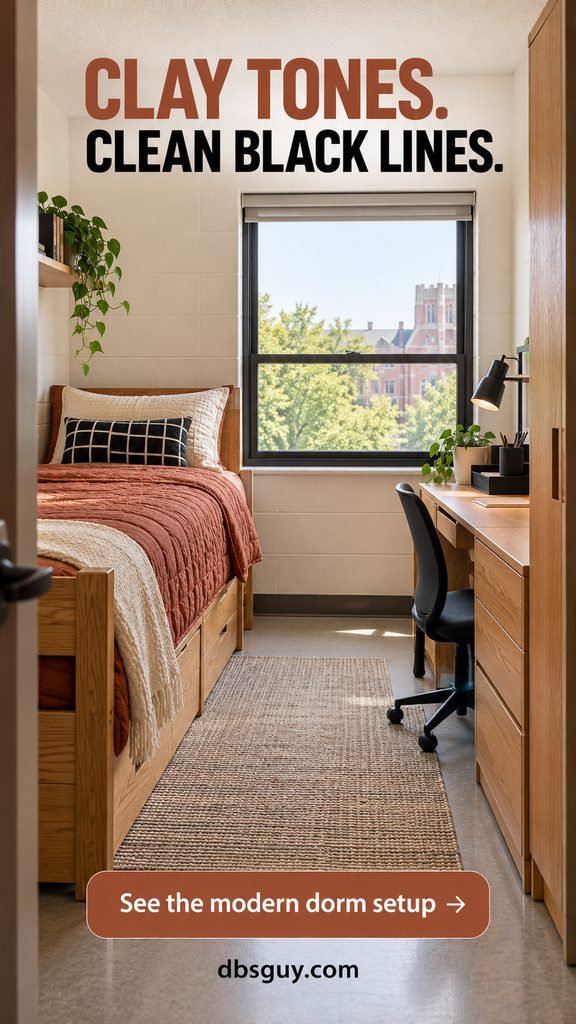
Terracotta can look clean and modern with just a few dark lines around it. Pair a clay quilt with a black desk lamp, a slim black organizer, and one black-and-cream grid pillow. The school’s oak furniture can stay exactly as it is.
Keep cream visible on the bed and the desktop fairly open. The black pieces work best as small outlines and accents; covering every surface with dark accessories changes the balance considerably.
This is a useful direction if you already own a black monitor, chair, or lamp. Repeat that finish in one other small item instead of replacing functional equipment to match a softer aesthetic. Choose either a grid pillow or another bold patterned accent, then leave the remaining textiles plain.
5. Frame the Window With Clay Curtains

Where your residence hall permits curtains, two terracotta panels can put the color at eye level while the bed stays cream. That is helpful if you like your current bedding and want the window to become the room’s focal point.
Measure the window recess and check how the existing blinds operate before choosing a rod. The concept shown uses a simple tension rod within the recess, with the panels open and the blinds still accessible. A tension rod is an option only if the window shape, rod instructions, and housing policy allow it.
Choose a length that clears the floor and keeps fabric away from heating units, vents, and electrical equipment. Lightweight woven panels soften the window, but they are not automatically blackout curtains. If curtains are prohibited or the recess cannot hold a suitable rod, use this color on the bed instead.
6. Create an Earthy Art Vignette on Your Dresser

You can introduce a terracotta focal point without covering the wall. Set a medium abstract print and a smaller landscape on a dresser or desk back edge. Warm wood frames connect the artwork to standard dorm furniture, while a shallow rust tray repeats the color in something useful.
Choose prints that share one clay or brown tone rather than buying a large matching set. An abstract arch beside a quiet landscape gives you two different subjects without a jumble of unrelated colors.
Use lightweight frames with stable supports on a surface that does not wobble. Keep them out of the way of opening drawers, doors, and daily work, and away from the pillow end of the bed. If leaning frames slide or crowd the surface, use a small freestanding frame instead. Nothing about this idea requires drilling or wallpaper.
7. Bring Terracotta Into a Desk You Actually Use

A clay desk mat gives a study corner a clear color direction without taking up extra floor space. Add a small coordinating pen cup and a cream organizer at the back, then leave the front of the desk available for your notebook.
Measure the usable desktop before buying a mat. It needs to fit around your laptop, monitor base, or keyboard while leaving the writing space you need. Keep laptop vents clear and follow the device’s instructions about the surface it sits on.
The useful edit here is deciding what stays on display. Keep current supplies within reach and put spare stationery in a drawer. If your budget is limited, the mat alone can carry the look; a matching lamp, chair, and complete accessory set are optional.
8. Use Rust Storage Boxes Under the Bed
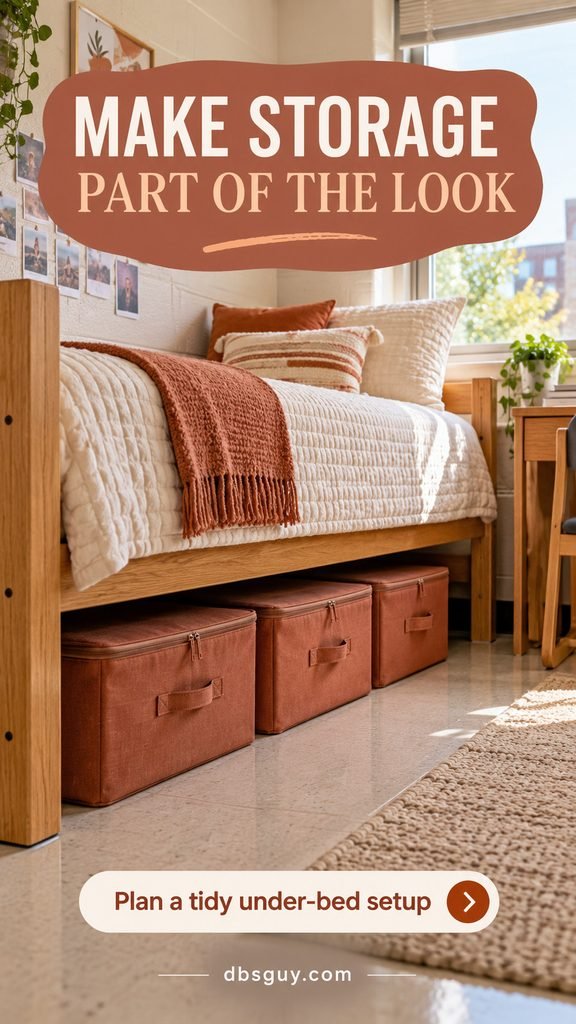
Visible storage can contribute to the room’s color scheme. Low terracotta fabric boxes look coordinated under a cream bed, especially when the handles face the aisle and the boxes are easy to pull out.
Measure the clear height beneath the lowest rail, plus the width between supports and the usable depth. Allow space to grip each handle. Three boxes are shown in the concept, but the right number is whichever fits your bed without squeezing or stacking them awkwardly.
Keep frequently used items toward the accessible side and reserve deeper space for things you rarely need. Use the bed at its supplied height unless housing approves an adjustment. Ask staff about permitted configurations rather than improvising supports. Matching storage should make belongings easier to reach, not conceal outlets or block the path beside the bed.
9. Let a Faded Rust Rug Carry the Pattern
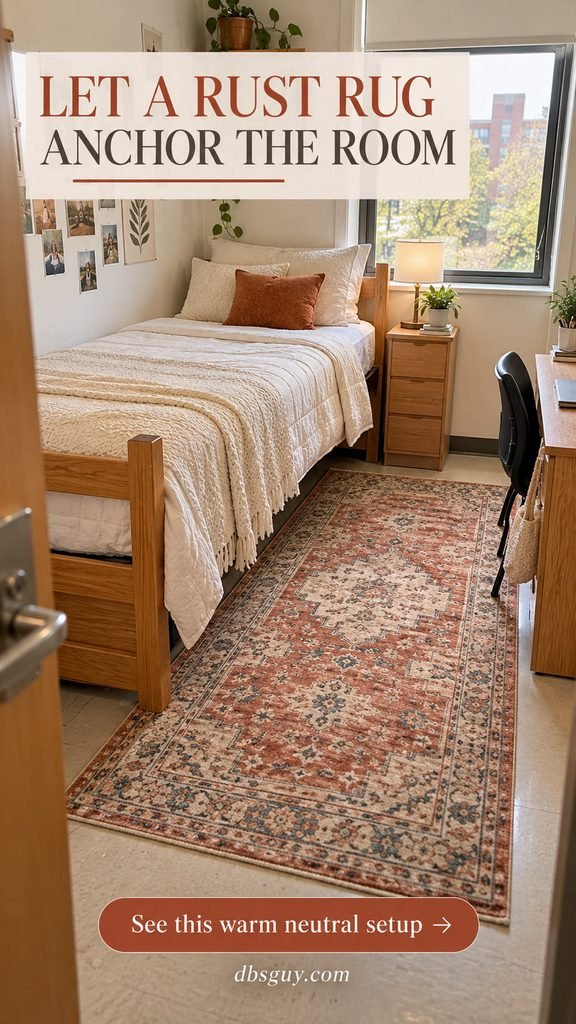
If the bed is already neutral, a vintage-inspired rug can introduce terracotta below it. A faded rust, cream, and dusty blue motif adds several shades to work with, so one small rust pillow is enough to connect the bed to the floor.
Mark out the proposed rug footprint before ordering. Check the door swing, drawers, and the route between the bed and desk. In a tight room, a smaller rug beside the bed can be more useful than one extending into your desk chair’s rolling area.
Choose a low-profile construction and a floor-compatible nonslip solution permitted by housing. Keep the edges flat and avoid layering another rug on top. If a listing says “washable,” check the care instructions and whether your available machine can accommodate it. A rug you cannot conveniently clean is a less practical choice for a busy dorm.
10. Use a Terracotta Lamp for Evening Warmth

A clay-colored table lamp adds the palette to a dresser even when the main bedding is cream. With an ivory shade, the base remains a clear decorative feature during the day and gives the corner a softer atmosphere in the evening.
Choose a complete manufactured lamp that meets your residence hall’s requirements. Use a compatible warm-white LED bulb within the fixture’s stated limits. Check the lamp’s dimensions as well as its color: a broad shade can take over a narrow bedside surface.
Keep the fixture clear of bedding and curtains, and route the cord where it cannot catch a foot or drawer. Treat it as ambient light. If you need brighter light for reading or desk work, use suitable task lighting rather than expecting a shaded accent lamp to do both jobs.
11. Pair One Green Plant With a Terracotta Pot

One plant can add a living green accent without turning the desk into a display shelf. Put it on a stable surface near suitable window light, then repeat the pot’s clay color with a small textile elsewhere in the room.
Choose the plant for the light your window actually receives and the care you can provide. A room that looks bright in a styled image may have very different conditions from your assigned dorm. Keeping a plant you already understand can be simpler than buying several new ones at move-in.
The concept shows a terracotta pot on a matching saucer. A nursery pot nested inside a decorative clay cachepot is another option. Protect the furniture, keep water away from electronics, and empty collected water as appropriate for the plant. If you want the green shape without plant care, a small faux plant in a clay-colored pot can fill the same styling role.
12. Arrange the Bed Like a Daytime Lounge

When housing allows the furniture arrangement, placing the bed’s long side against a wall can give you a place to sit without adding a sofa. A cream coverlet forms the base, and terracotta cushions along the wall create the daybed effect.
Use only as many cushions as you can comfortably store at night. The concept has three larger clay cushions and a small oatmeal lumbar pillow; in your room, two cushions may be plenty. Keep your sleeping pillow at the head and move the decorative pieces aside before bed.
Check that the bed position leaves outlets, windows, and the walking route accessible. This idea uses furniture already in the room, but it still needs to fit the layout and your roommate’s space. A tidy place to put the daytime cushions matters more than recreating the exact pillow count.
Also read: 28 Cozy Reading Nook Ideas for Small Spaces for textile and lighting inspiration. For a dorm, favor arrangements that work with the furniture and floor space you already have.
13. Coordinate a Shared Room Without Matching Both Beds

Two roommates can use terracotta as a shared accent while keeping different bedding. In this setup, one bed has a cream duvet and clay throw; the other has sage bedding with a clay cushion. The repeated accent gives the room a connection without requiring identical purchases.
Agree on shared items first, especially a rug or anything that occupies the middle of the room. Decide who is buying each piece and what happens to it at move-out. Then let each person choose their own bedding and smaller accessories.
Keep the central aisle and both study areas usable. If only one roommate likes terracotta, confine it to that person’s bed and desk and choose a shared neutral you both enjoy. A coordinated room should make living together easier, including room for different tastes.
What to Buy First—and What Can Wait
Choose the idea that works with the largest piece you already own. If you have a cream comforter, try a clay throw or a rust rug. If you have sage bedding, begin with terracotta cushion covers. If the bed is already sorted, a desk mat or lamp can bring the color into a second area.
Make your first purchase the piece that changes the room most, then wait until move-in to fill any gaps. Curtains, extra seating, and large decorative objects are easier to judge once you know your clearance, window arrangement, and daily routine.
Terracotta Dorm Room FAQs
What colors go with terracotta in a dorm room?
Cream, oatmeal, sage, muted blue, warm brown, and small black accents are useful starting points. Choose one supporting color and a neutral, then compare them with the furniture already supplied. You do not need every earthy shade in the same room.
Will terracotta make a small dorm feel dark?
A large area of deep rust can look visually heavy in a dim room. Try a lighter clay shade, thin stripes on an ivory background, or a cream bed with a rust throw. Keep the window usable and judge fabric samples in the room’s actual light before committing to several large pieces.
Can I get the look without painting or wallpaper?
Yes. Every setup here uses textiles, freestanding decor, or everyday items to introduce the color. Bedding gives you the largest area; a mat, lamp, or pot provides a smaller accent. Curtains depend on your residence hall’s rules and window arrangement.
What if my dorm furniture is dark brown or gray?
Keep more cream or oatmeal around the clay color so the room does not become one large block of dark tones. With dark brown furniture, start with a small terracotta textile and compare it in daylight. With gray furniture, a muted clay duvet and cream pillows are a straightforward combination to try before adding other colors.
Pick the one change that solves your room’s biggest styling problem: bedding for a strong color anchor, a rug for a bare floor, or a desk accessory for a study corner that feels unfinished. Add the next piece only when you can see what the room still needs.