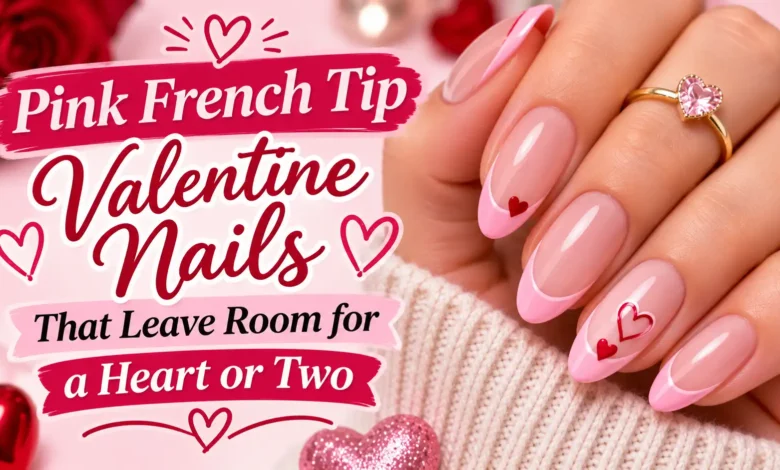
For pink French tip Valentine nails, keep the pink at the edge and give a small heart its own patch of open nail. A baby-pink micro tip with one red heart is a gentle starting point. A white heart tucked inside a hot-pink tip makes a brighter choice without adding artwork across the whole nail.
These six designs change where the heart sits, how the French line travels, and how much pink you see. Choose the placement you like first; then adjust the shape and tip depth to the nails you actually wear.
The visuals are AI-generated manicure concepts for dbsguy.com. Use them to discuss color and placement with your nail artist; they do not document completed salon work or tested wear.
Pick Where You Want the Heart
A heart on the sheer nail bed needs space between the motif and the French line. A heart inside the colored tip needs enough pink around its edges to stay recognizable. An outline heart needs an open center. Those three decisions matter more than matching a reference nail’s length exactly.
- For short nails: start with the baby-pink micro French in design 1.
- For brighter color: compare the hot-pink tip in design 2 with the two-tone tips in design 6.
- For a less traditional French line: try the diagonal sweep in design 3 or the two-color border in design 4.
- For a delicate motif: choose the open heart in design 5.
1. Baby-Pink Micro Tips With One Red Heart
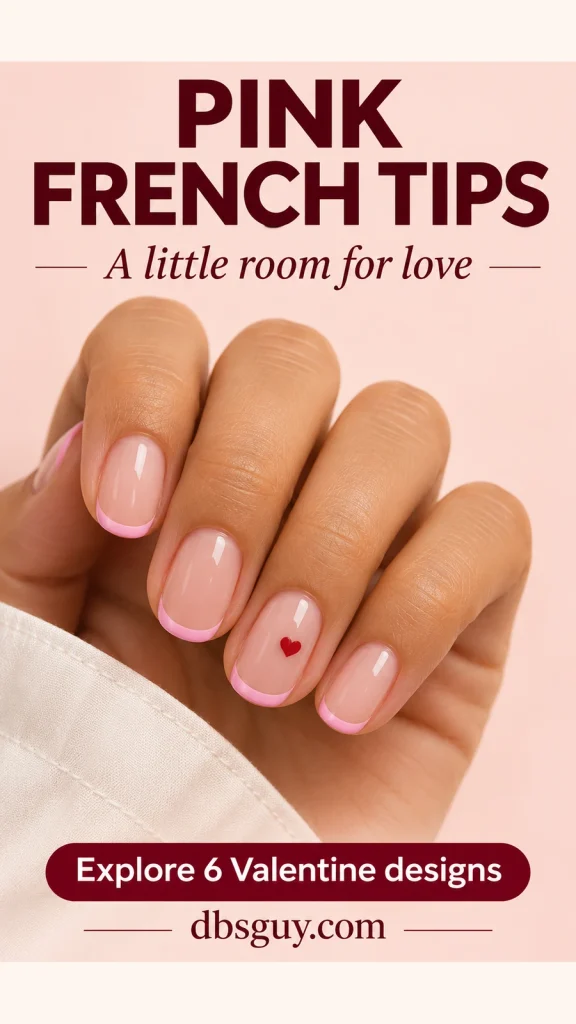
A fine baby-pink band follows the edge of a short squoval nail, while a tiny cherry-red heart sits on the ring nail. The contrast does the work: pale tips, a translucent pink-beige base, and one clear red mark.

Keep a strip of base color between the heart and the tip. If the two touch, the red can look like part of the French border. Ask your artist to show you the heart’s size on one nail before repeating it on the other hand.
This is the first design to consider if you want to keep your nails short. A soft square with rounded corners gives the thin tip a simple path to follow. Leave the thumb and remaining fingers with plain pink tips. For an at-home version, a small flat heart decal can replace the painted heart; check that it fits comfortably below the curve.
Also Read: 11 Simple Valentine Nail Designs Built Around One Little Detail.
2. Hot-Pink Almond Tips With a White Heart Inside
Here the heart moves into the colored tip. Use vivid hot pink on medium almond nails and put one small white heart entirely within the ring nail’s pink band. The nude-pink nail beds stay free of separate motifs.

The white heart needs pink visible around both lobes and its point. Choose its size after the French boundary is planned, rather than making the tip deeper just to accommodate an oversized heart. An opaque white gives the little shape a clear edge against the bright pink.
On a shorter nail, make the heart smaller or use a broader soft-square accent nail. If it still will not fit, move it onto the nail bed as in design 1. Keeping the motif readable matters more than preserving the exact placement from a longer reference.
3. A Rose Side French With a Burgundy Heart
A muted rose sweep travels diagonally around the free edge instead of making a symmetrical French curve. One burgundy heart sits in the open area beside it on the ring nail. The darker heart gives this soft pink palette a distinct focal point.

Point out which side should carry the deeper part of the rose sweep. Ask for that color to taper as it moves around the tip, leaving a broad sheer area beside it. Place the heart within that open area, with base color separating it from the diagonal band.
A short or medium oval suits the rounded sweep pictured here. If you want matching hands, decide whether the diagonal should mirror from one hand to the other or travel in the same direction when both hands lie flat. That detail is easier to settle before painting starts.
Also Read: 17 Oval Acrylic Nails for February With Soft Edges and Romantic Details.
4. Baby-Pink Tips With a Fuchsia Border
A fine fuchsia curve traces the inner boundary of each baby-pink tip. The two colors meet to make a bordered French edge, with one filled fuchsia heart on the ring nail. Most of the nail bed stays sheer.
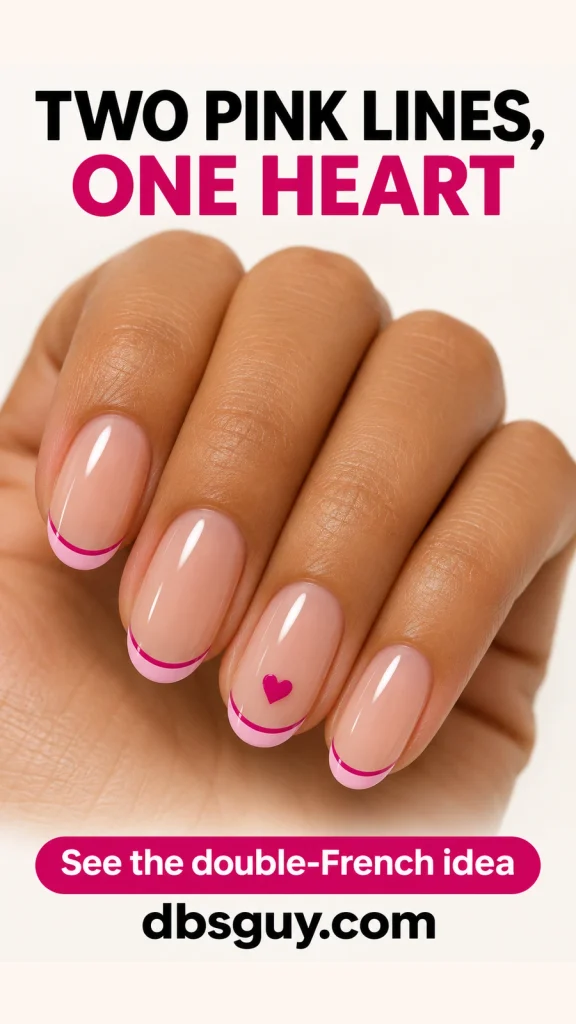
Keep the fuchsia visibly finer than the pale-pink band. It should define the curve without becoming the main block of color. Ask to see one finished edge with your hand relaxed, especially on the smaller nails, where a heavy border could cover most of the pale pink.
Place the heart in the sheer area above the border, with a visible margin between the two. For very short nails, use the bordered tip on the ring nail only and a single baby-pink edge elsewhere. This reduces the amount of linework while keeping the two pink shades connected.
If the border is the part you love, you can also leave the heart off the second hand. Confirm the total accent count when you show the reference.
5. Pale-Pink Tips With an Open Rose Heart
An outline heart leaves the base visible through its center. Combine it with narrow pale-pink French tips and place the rose outline near the middle of the ring nail. The result keeps both the motif and the surrounding nail visually light.

Ask for a complete, closed outline with a recognizable notch between the lobes. The heart should sit apart from the French tip. Choose a rose shade that remains visible over your base; two nearly identical pinks can make fine linework difficult to see.
This is a small design that asks for careful brush control. A thin outline decal is another option if you are doing your own manicure. If you prefer a flat finish, request a painted outline rather than an applied heart charm. On a narrow nail, reduce the heart’s size only while the center remains visibly open. If the line begins to fill that center, use a small solid heart instead and keep the same pale French tips.
6. Two-Tone Pink Tips With Two Off-Center Hearts
Divide each French tip into two colors: baby pink on one side and brighter rose pink on the other. Keep the split consistent across the set. Add one tiny rose heart to the index nail and another to the ring nail, just below their tips.
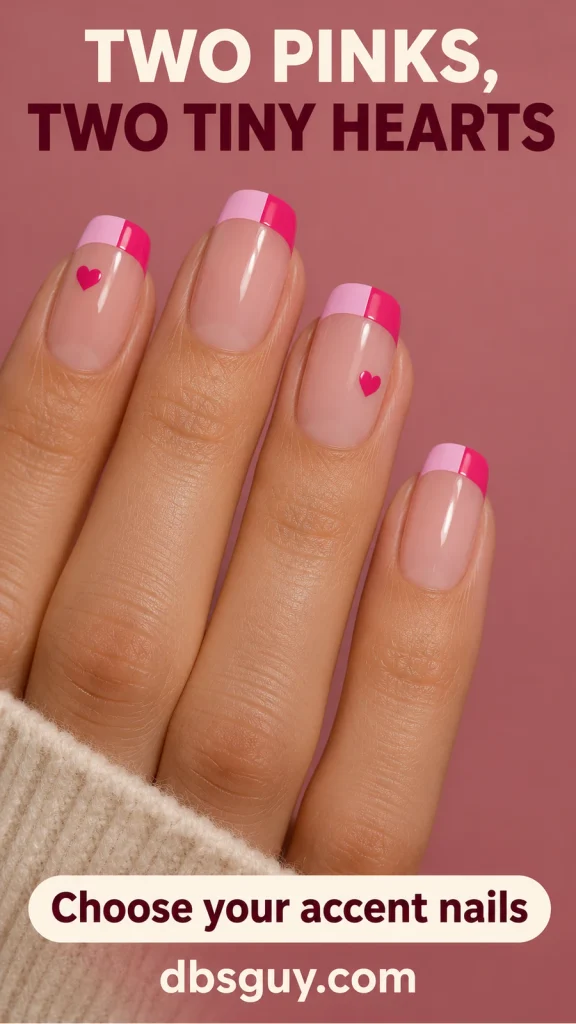
These are two hearts per hand, each on its own nail. Their off-center placement keeps them from lining up like a repeated stamp down the middle. Leave a little nude-pink space between each heart and its French band so the shapes remain separate.
A medium soft-square tip gives both pink halves room to show. Have the artist paint a sample tip before committing: the two shades should still look different once they are beside each other. On a smaller pinky, a single-color rose tip is a reasonable simplification. Repeat the split on the thumb, without adding a third heart.
Also Read: 15 Almond Valentine Nail Ideas With Heart Tips and Soft Curved Lines.
Make the Pink Tip and Base Look Different
Choose the base on your own nail before settling on the tip shade. A sheer pink-beige leaves more of the natural nail visible; a milkier base gives more coverage. Either can work, but a pale pink tip needs enough contrast against it to show its boundary.
Check one finished sample in ordinary room light as well as under the salon lamp. If the tip disappears into the base, adjust one of the shades. Adding more hearts will not fix a French line you cannot see.
For a regular-polish manicure, keep the sequence clear: base coat, sheer color, French tip, heart detail, then a compatible top coat. OPI’s lacquer heart-tip tutorial demonstrates a layered color-and-detail approach. Its drying directions apply to the named products; follow the instructions for your own polish rather than borrowing a universal waiting time.
A Clear Request to Take to Your Nail Artist
For the first look, you could say: “I’d like short squoval nails with a translucent pink-beige base and very thin baby-pink French tips. Please add one small, flat red heart on each ring nail, separated from the tip. Keep the other nails, including the thumbs, plain French.”
For another design, change the tip shape, pink shades, and heart position in that request. Confirm whether you mean one or two hearts per hand, and ask for painted artwork if you want a smooth surface. The concept image communicates a design; it cannot identify the exact products needed to recreate it.
Questions Before You Choose Your Set
Can pink French Valentine nails work on very short nails?
Yes. Start with a narrow pink edge and one small heart on the nail bed. Keep your comfortable length, and move or simplify the artwork if there is no room inside the tip. The two-color borders and split tips need more visible space than a single fine band.
Which pink makes a tiny heart easiest to see?
Think about contrast with the heart, not just the shade name. A red heart stands out against sheer blush; a white heart is clearer inside a strong hot-pink tip. For a pink outline over a pink base, choose a deeper rose and check a sample before decorating both hands.
Do I need gel or extensions for these designs?
The color placement does not require extensions or a particular polish system. Regular lacquer, a salon gel manicure, or decorated press-ons can interpret these ideas. Choose the length and service separately, and follow the application and removal directions for the products used.
How do I keep the set from looking crowded?
Decide the heart count before adding details. Keep the chosen tip pattern on the other nails and leave their bases open. If you combine references, borrow one feature at a time—for example, the rose shade from design 3 with the single-heart placement from design 1.