
Dating looks very different today than it did even a decade ago. Between dating apps, situationships, and a brand-new vocabulary for every stage of a relationship, the rules have been rewritten — and not everyone is thrilled with the new version. When millennials were asked which Gen Z dating habits would have counted as huge red flags when they were younger, they had a lot to say. Some of their complaints are about kindness and effort. Others are about commitment, honesty, and simply showing up as yourself. Here are 16 Gen Z dating habits that older generations just cannot wrap their heads around — and what each one reveals about how dating has changed.
1. Getting The “Ick” Over The Smallest Things

Few phrases sum up modern dating like “the ick” — that sudden, unexplainable wave of repulsion over something tiny. The way someone holds a coffee cup, laughs a little too loudly, or texts with too many emojis can apparently end a budding romance on the spot. Older daters find this baffling, because in their day a small quirk was something you got used to, or even grew fond of. Ending things over a trivial habit — sometimes by simply ghosting — feels less like having standards and more like refusing to see a person as a whole.
There is nothing wrong with knowing what you cannot live with. The problem is the speed and the scale: when every small imperfection becomes a reason to walk away, nobody survives long enough to be known properly. Little quirks are often what make someone real, and they are also what make a relationship feel personal instead of polished. A habit that seems odd on a first date can become the exact thing you find most endearing a year later — but only if you give it the chance.
2. The “Exclusive But Not Official” Phase

One of the most confusing inventions of modern dating is the stage that is exclusive but not official. Two people see only each other, act like a couple, and yet neither one will call it a relationship. To older generations, this looks like a way of enjoying the benefits of commitment while avoiding the word itself. It keeps one foot out the door at all times, and it leaves the other person unsure where they stand.
Supporters say the phase gives people space to decide without pressure, and for some couples that breathing room genuinely helps. But without honesty about what the arrangement means, it can quietly become a holding pattern that lasts for months. A label is not the point — clarity is. Two people can move slowly and still be upfront about it. When everyone knows what the situation actually is, nobody has to guess whether they are building something or just passing time.
3. Teasing Men For Being Affectionate

Here is a strange contradiction of modern dating: everyone says they want a kind, emotionally open partner, yet a man who is openly loving toward his girlfriend can still get mocked by his own friends for it. Affection gets dressed up as weakness, and caring gets treated as something embarrassing. Older generations find this genuinely confusing, because in their experience, being loving was never something to apologize for.
The teasing usually comes disguised as a joke, but jokes shape behavior. When men learn that tenderness earns them ridicule, many of them simply hide it — and then everyone wonders why partners seem distant. There is nothing unmanly about holding your partner’s hand, saying something sweet, or showing that you care. If anything, the willingness to be affectionate in front of other people is a sign of confidence, not a lack of it.
4. Faking Confidence And Forced Nonchalance

A lot of young men today feel they have to perform a very specific kind of confidence: serious, detached, and completely unbothered at all times. Caring too much is treated as a flaw, so interest gets hidden behind short replies, delayed texts, and a carefully maintained air of indifference. To older daters, the whole act looks exhausting — and, frankly, unnecessary.
Real confidence does not need a performance. It looks like being yourself, saying what you think, and letting the other person see that you are interested. Pretending not to care might feel safe, but it also makes genuine connection almost impossible, because the other person can never tell what you actually feel. The people who come across as most attractive are rarely the ones trying hardest to look cool; they are the ones comfortable enough to be sincere.
5. Dropping People Over Minor Flaws
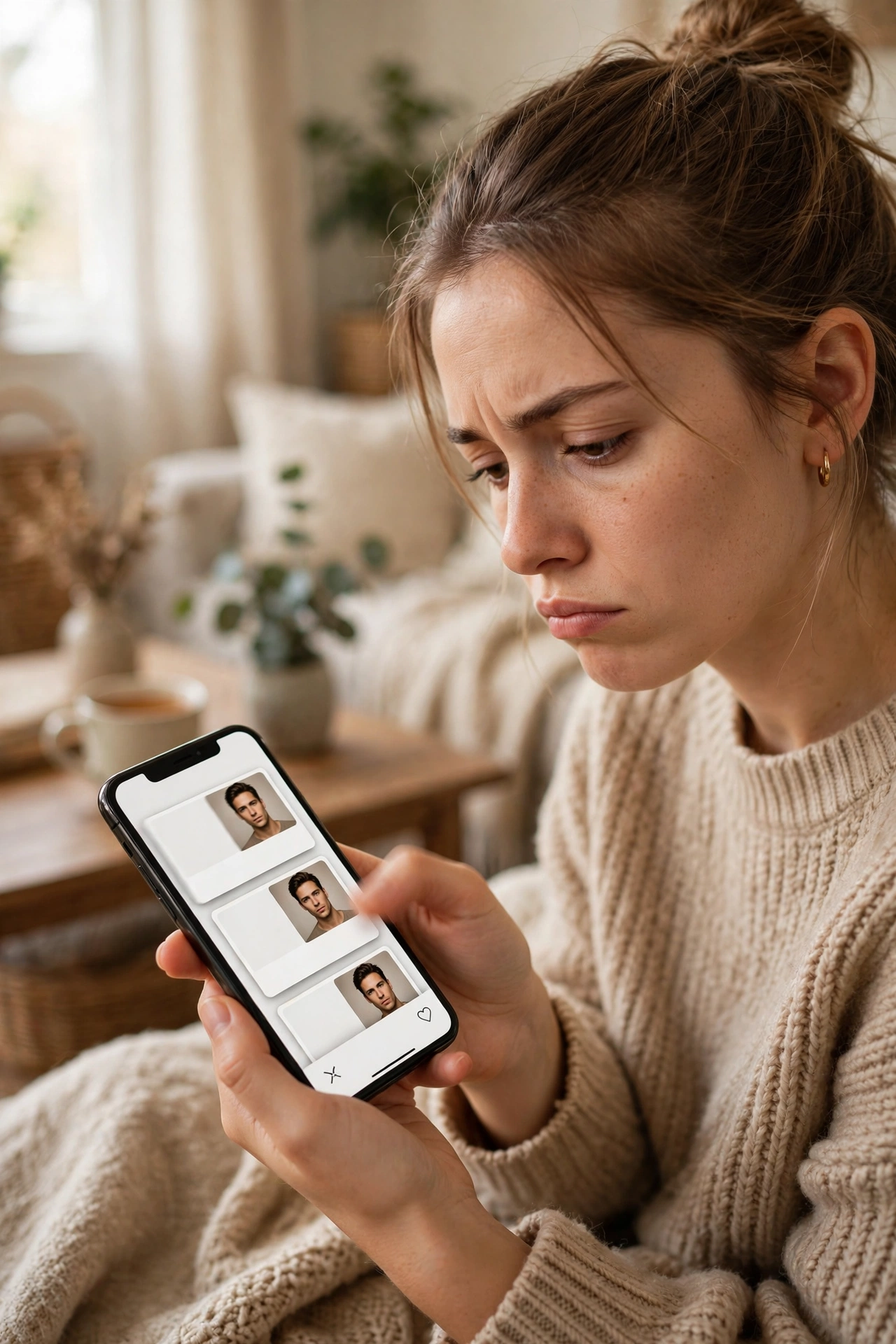
When the next potential match is always one swipe away, it becomes very easy to treat people as replaceable. Someone is a little untidy, a little impatient, or a little awkward on a first date — and instead of getting to know them, the search simply starts again. Older generations see this as the biggest downside of app dating: the feeling that there is always someone slightly better waiting, so nobody is worth the effort of working through a flaw.
Nobody is arguing that you should stay with someone who treats you badly. But minor imperfections are not character defects; they are just part of being a person. Every lasting relationship involves accepting things that are not perfect, and usually the trade is worth it. The endless search for a flawless partner tends to end the same way every time — with no partner at all, and a list of dealbreakers that keeps growing.
6. Unrealistic Standards From Social Media

Social media has quietly rewritten what a normal partner is supposed to look like, earn, and do. The feeds are full of perfect bodies, perfect dates, and perfect lifestyles, and it is easy to start demanding all of it from a real person — while bringing far less to the table yourself. Older generations notice the double standard: sky-high expectations for a partner, paired with very little self-reflection about what you offer in return.
The problem is not having standards. The problem is borrowing them from a highlight reel. Real people have bad days, ordinary jobs, and imperfect lives, and a relationship built on a filtered fantasy will always feel disappointing. The healthiest approach is also the simplest one: ask of a partner only what you are genuinely willing to give yourself. That single rule clears up most of the frustration.
7. Calling Green Flags Red Flags

Perhaps the strangest twist of modern dating is how often the labels have flipped. A partner who communicates well, respects boundaries, or shows steady affection can get written off as boring — while genuinely worrying behavior gets excused, romanticized, or even celebrated. Older daters watch this happen and can only shake their heads: the things that should reassure you are treated as warning signs, and the things that should worry you are treated as chemistry.
Part of the confusion comes from the way the internet talks about relationships, where every trait gets sorted into a color-coded flag. But a calm, kind, reliable partner is not a red flag; it is the whole point. Excitement is not the same as compatibility, and a little boredom on a quiet Tuesday evening is usually a sign that things are going well, not badly. Learning to recognize a green flag when you see one might be the most useful dating skill there is.
8. Treating Genuine Effort As “Cringe”

A surprising number of young daters seem afraid of being seen trying. Putting yourself out there, showing enthusiasm, or doing something sincere gets labeled “cringe,” so many people retreat into irony and detachment instead. Spending a whole weekend indoors, scrolling through feeds, starts to feel safer than actually meeting people and risking an awkward moment.
Older generations find this sad more than anything else, because the fear of looking silly keeps people from the very experiences that make life interesting. Every good relationship started with someone being brave enough to look a little foolish — sending the first message, suggesting the date, saying the honest thing. Genuine effort is not embarrassing. It is the only way anything real ever begins.
9. Overly Forward Flirting Across Big Age Gaps

Another habit that surprises older generations is how bold and direct young flirting has become — sometimes across age gaps so wide that the older person is startled rather than flattered. Being approached by someone ten or twenty years younger can be a compliment, but when the attention ignores obvious boundaries, it stops feeling flattering and starts feeling awkward for everyone involved.
Confidence is attractive at any age, and nobody is saying younger people should never approach someone older. The issue is reading the room. A little awareness goes a long way: if the other person seems uncomfortable, or the age gap clearly makes them uneasy, taking the hint gracefully matters more than persistence. Good flirting is a conversation, not a performance — and the best openers are the ones that leave the other person smiling, not searching for an exit.
10. Calling Everything Weird Just Because It’s Unfamiliar

There is a habit in modern dating of dismissing anything unfamiliar as weird or cringe — a person’s taste in music, their hobbies, the way they dress, or a pastime you have never tried. Instead of curiosity, the response is instant judgment, and the person gets written off before they have had a chance to explain what they love about it.
Older generations see this as a missed opportunity, because differences are often what make a person interesting. The things that seem strange at first glance frequently turn out to be the most rewarding parts of getting to know someone. A little openness costs nothing and can lead somewhere wonderful. The next time a date mentions a hobby you have never heard of, try asking about it instead of dismissing it — you might discover something you end up loving too.
11. Too Much Therapy Speak, Too Little Experience

Modern daters have a bigger emotional vocabulary than any generation before them, which is genuinely a good thing. The trouble starts when that vocabulary becomes a weapon: every disagreement gets diagnosed, every boundary gets announced like a press release, and every conversation sounds like a session — often from people who have barely any real relationship experience behind the words.
The language of therapy is useful when it helps people understand themselves and communicate kindly. It becomes a problem when it is used to win arguments, shut down discussion, or avoid taking responsibility. Knowing the right words is not the same as doing the right thing. The healthiest couples are not the ones with the most impressive vocabulary; they are the ones who listen, apologize when they are wrong, and keep showing up.
12. Expecting The Other Person To Read Your Mind

One of the most common complaints from older daters is the expectation that interest should be obvious without anyone actually saying anything. The thinking goes: if they liked me, they would just know. They would ask me out, figure out that I was flirting, and take it from there — no clear signal required. When that does not happen, the other person gets blamed for missing something they were never really told.
The truth is that most people are not mind readers, and even the most confident person can miss a subtle hint. Showing interest clearly is not desperate; it is kind. A little personality, a direct invitation, or a simple honest sentence can change everything. Dating works much better when both people are willing to be a little brave instead of waiting for the other one to do all the guessing.
13. Mixed Messages About Who Pays

Few topics cause more confusion on a first date than the bill. On one hand, many young women say they no longer need a partner to pay for them. On the other, expecting the man to pay is still treated as completely normal — and a man who does not reach for the check can be judged for it. Older generations see the contradiction clearly: independence and tradition are both fine, but they cannot both be demanded at the same time.
The fix is refreshingly simple: talk about it, or just be fair about it. Splitting the bill, taking turns, or letting whoever suggested the date pay — any of these works, as long as both people feel respected. What does not work is a silent test that the other person is expected to pass without being told the rules. A first date should be about getting to know each other, not about passing a secret exam over dinner.
14. Making Politics A Dating Dealbreaker

Dating has always involved values, and values matter. But an increasing number of young daters treat a person’s political views as an instant disqualifier, before they have learned anything else about them. Different opinions — even on big issues — get sorted into categories of acceptable and unacceptable, and the conversation ends before it begins.
Shared values are important in a lasting relationship, and nobody should have to compromise on the things that matter most to them. But writing someone off entirely over a single disagreement can mean missing out on a person who is kind, honest, and thoughtful in every other way. There is a difference between a genuine clash of core values and a simple difference of perspective. The first is a real dealbreaker. The second is a conversation — and sometimes a really interesting one.
15. Swapping Real Connection For Screens And AI

Perhaps the most worrying habit of all is the quiet replacement of real relationships with their digital substitutes. Dating apps that function more like games, endless scrolling, and even AI chat companions that offer conversation without any of the risk of a real person — all of these can start to feel easier than actually dating. Why risk rejection when a screen never says no?
The problem is that screens cannot give you what a relationship is actually for: being known, being challenged, and being loved by someone who chose you on purpose. Apps and chatbots can fill an evening, but they cannot fill a life. The cure is not to throw the phone away; it is to use it as a tool for meeting real people instead of a replacement for them. A real date, with all its awkwardness and unpredictability, is still worth a hundred perfect conversations with a screen.
16. Feeling Second To A Partner’s Career

The final complaint is one that many people recognize immediately: dating someone whose career always comes first. Work emails at dinner, weekends swallowed by deadlines, and the constant feeling of competing with a job for attention. Even people with demanding careers of their own notice the difference — they switch off when the day ends, while their partner seemingly never does.
Ambition is not the problem; everyone understands that work matters and that busy periods happen. The problem is when work becomes the permanent priority and the relationship becomes whatever is left over. A partner does not need to come first every single minute, but they do need to feel like they matter — like there are hours that belong to them and only them. Careers can wait until Monday. The person sitting across from you right now cannot.
So, are millennials being too harsh, or do they have a point? The honest answer is probably a bit of both. Some of these habits are simply the way a new generation does things, and every generation has looked at the next one and shaken its head. But underneath the complaints is a real wish — for more honesty, more effort, and more genuine connection. The good news is that none of these habits are permanent. They are choices, and choices can change. Whether you are Gen Z, a millennial, or somewhere in between, the best dating advice never really changes: be kind, be clear, show up as yourself, and give the other person a real chance.
You May Also Like
16 Partner Traits You’ll Hate Despite The Appeal
17 Relationship “Red Flags” That Are Actually Totally Normal Signs of a Healthy Partnership
26 Brutally Honest Dating Advice Tips for Women
7 Signs You’re Having a Really Good Date — And None of Them Involve the Price of Dinner