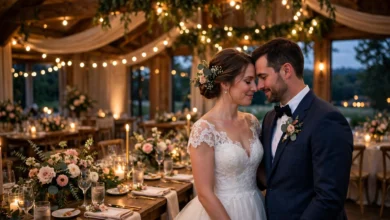
The wedding is one day. The marriage is every day after it — the ordinary mornings, the tired evenings, the small choices that quietly decide whether two people grow closer or drift apart. Nobody hands you a manual at the altar, so the best advice usually comes from the couples who have already lived it: people married ten, twenty, thirty years who figured out, often the hard way, what actually keeps a partnership strong.
What follows is a collection of those hard-won, unspoken rules — the little habits and agreements that long-married couples say changed everything for them. None of them are grand gestures. All of them are things any couple can start doing this week. Here are 19 marriage tips that changed everything for the couples who shared them.
1. Say Thank You Out Loud — Every Single Day

Gratitude is the cheapest marriage insurance there is, and it is also the easiest to forget. After a few years together, the things your partner does for you start to look like background noise — the errand run after work, the dinner started before you got home, the laundry folded without being asked. The couples who stay happiest are the ones who refuse to let those things go unnoticed.
Saying thank you out loud does two things at once. It tells your partner they are seen, and it trains your own brain to keep noticing the good instead of keeping score of the bad. A quick “thanks for grabbing that for me” costs nothing and buys a surprising amount of warmth. Make it a daily habit, not a special-occasion performance, and watch how much lighter the whole house feels.
2. Be A Team Of Two, Always

Every long-married couple seems to say some version of the same thing: you are a team of two, and you have each other’s backs above everyone else. That does not mean agreeing on everything. It means that when the world pushes — a difficult relative, a stressful week, a disagreement with friends — the two of you face it together instead of letting it come between you.
Being a team shows up in small ways: complimenting each other in front of other people, checking in before making a decision that affects you both, and never making your partner the punchline of a joke. When both people know the other one is firmly in their corner, even hard seasons feel survivable, because nobody is carrying the weight alone.
3. Consider Separate Bathrooms (Seriously)

It sounds almost too practical to count as marriage advice, but plenty of happily married couples swear by it: if you can manage it, give each other your own bathroom space. The toothpaste wars, the hair in the drain, the counter crowded with someone else’s bottles — these tiny daily frictions add up to real irritation over the years.
Separate bathrooms are not about distance. They are about giving each person a small patch of the house that is entirely theirs, so the shared spaces stay peaceful. Even separate sinks, or a simple agreement about whose shelf is whose, can take a surprising amount of friction out of the morning routine. Sometimes the secret to a happy marriage is just a little more counter space.
4. Learn To Speak Their Love Language, Not Yours

Most of us show love the way we most want to receive it — and then wonder why our partner does not seem to notice. One person brings home flowers; the other would have preferred an hour of undivided attention. One person says “I love you” constantly; the other feels loved when the car gets filled with gas without being asked. Both are speaking love, just in different languages.
The fix is simple to say and takes real effort to do: learn how your partner actually feels cherished, and make the effort to show up in their language, not yours. Maybe that means gifts, or physical closeness, or acts of service, or words, or quality time. When someone feels loved in the way that lands for them, the whole relationship gets easier — and they are far more likely to return the effort in yours.
5. Start With “I”, Never With “You”

There is a world of difference between “You never help around the house” and “I feel overwhelmed when the chores pile up.” The first sentence sounds like an accusation, and the natural response is to get defensive. The second sentence describes your own experience, and it invites your partner to help solve a problem instead of defending themselves against a charge.
Couples who communicate well treat this as a ground rule, not a suggestion. When something bothers you, start with how it feels to you and what you need, rather than a list of what the other person did wrong. It does not mean avoiding hard topics — it means raising them in a way your partner can actually hear. A conversation that starts soft is far more likely to end well.
6. Fight Fair — And Never Name-Call

Every couple argues. The couples who last are not the ones who never fight — they are the ones who fight fair. That means sticking to the issue at hand, refusing to drag up old mistakes, and never, ever resorting to name-calling or contempt. Harsh words said in the heat of an argument have a way of sticking around long after the argument itself is forgotten.
It also helps to have a few agreed rules for the hard moments: resolve things quickly rather than letting them fester, and if tempers are rising, take a timeout — step into another room, breathe, come back when you can both think clearly. A pause is not avoidance; it is respect. The goal is never to win the argument. The goal is to come out of it still on the same side.
7. Know What You Can — And Can’t — Live With Before You Marry

Before you marry someone, it is worth being honest with yourself about what you can genuinely live with for the long term — and what you cannot. Every person brings quirks, habits, and history into a marriage. Some of those things are charming. Some are genuinely hard. The mistake is assuming the hard parts will disappear once the wedding is over.
Long-married couples advise deciding your boundaries before the vows, not after. That means talking honestly about money, family, habits, and expectations while you still have clear eyes — and listening to what your partner tells you about who they are, rather than who you hope they will become. Marriage does not fix people. Choosing someone whose real, everyday self you can love for decades is the whole point.
8. You Handle Your Side, I’ll Handle Mine

Families are wonderful, and families are complicated — often at the exact same time. One of the smartest agreements long-married couples make is simple: each partner deals with their own side of the family. If your mother is overstepping, it is your job to have that conversation. If your partner’s sibling is being difficult, your partner handles it. Nobody gets thrown under the bus, and nobody has to fight a battle on someone else’s turf.
This one rule prevents an astonishing number of arguments. It keeps in-law friction from becoming a fight between the two of you, because the person who knows their family best — its history, its sensitivities, its sore spots — is the one doing the talking. It is not about taking sides. It is about each of you protecting the marriage from the outside, together.
9. Keep The Couple At The Centre Too

Kids change everything, and the best parents in the world will tell you that it is easy to let the marriage quietly slip to the bottom of the priority list. The school runs, the packed lunches, the bedtime routines — they take every spare minute. But the couples who stay close make a point of protecting time for just the two of them, even when life is at its busiest.
This is not about choosing the marriage over the children. It is about remembering that the partnership is the foundation the whole family stands on. A regular date night, a coffee together after the kids are in bed, a conversation that is not about logistics — these small investments keep the connection alive. Children thrive when the adults around them have a strong, warm relationship to lean on.
10. In-Laws Are Family, Not The Leading Role

When you marry someone, you marry into a family — and that family matters. But plenty of experienced couples will tell you that in-laws work best as a beloved supporting cast, not as the directors of the marriage. The two of you decide how your household runs, how you spend your holidays, and how you raise your children. Everyone else gets a voice, not a vote.
That boundary is not unkind. In fact, it usually makes the relationship with in-laws better, because expectations are clear and nobody is quietly resentful. Be warm, be welcoming, include them often — and be united about the decisions that belong to the two of you. A little clarity early on saves years of tension later.
11. The “Two Yeses, One No” Rule For Big Decisions

For the decisions that genuinely change your life — moving house, changing jobs, a big purchase, starting a family — many couples live by a beautifully simple rule: it takes two yeses to go ahead, but only one no to stop. If one of you is genuinely against it, the answer is no, and the conversation continues another day.
This rule works because it builds trust. Nobody has to worry about being dragged into a life-changing choice they dread, and nobody has to win an argument to protect themselves. It forces both people to slow down, listen properly, and find a version of the plan they can both stand behind. Big decisions made together, with both people truly on board, almost always age better than ones pushed through over an objection.
12. Love The Little Quirks — Closet Doors And All

Every marriage has its small, ridiculous frictions: the closet door that never gets closed, the towel that always ends up on the bed, the cupboard left open, the shoes in the hallway. After years together, these tiny habits can start to feel enormous — as if your partner is doing them on purpose, just to annoy you. They are not. They are just being themselves.
The couples who laugh about this stuff last longer than the ones who keep score over it. Sometimes the answer is a small trade — you close the closet, I’ll pick up the towel — and sometimes the answer is simply accepting that the person you love comes with a few lovable oddities. Pick your battles, and let the tiny ones go. A peaceful home is worth more than a perfectly shut closet door.
13. Learn How They Celebrate — Before The Next Birthday

Here is a surprise many couples discover too late: the way you celebrate a birthday, a holiday, or an anniversary is not universal. One person grew up with big noisy parties; the other grew up with quiet dinners. One person loves surprises; the other finds them stressful. If you never talk about it, you will keep disappointing each other on the days that are supposed to feel special.
So find out early how your partner likes to mark a milestone — and tell them how you like to be celebrated, too. It does not take a grand gesture. A small cake, a favorite meal, a quiet evening, a handwritten note: the right celebration is the one that fits the person, not the one that looks best in a photo. Getting this right is one of the easiest ways to make someone feel truly known.
14. Be Gentle With Each Other’s Struggles

Everyone carries something — old wounds, worries, bad days, habits they are trying to change. A marriage works best when both people remember that their partner’s struggles are real, even when they look different from their own. Being sensitive to what the other person is carrying, and asking for the same sensitivity in return, is one of the quiet foundations of a strong marriage.
That gentleness matters most when things are genuinely hard. If you or your partner are dealing with something bigger than everyday stress, do not try to carry it alone as a couple — reaching out to a trusted professional, a counsellor, or a support group is a sign of strength, not failure. The strongest marriages are the ones where both people feel safe saying “I am struggling” and know they will be met with patience, not judgment.
15. The Small Stuff Is Rarely About The Small Stuff

When a small thing turns into a big argument — the dishes, the thermostat, the way someone loads the dishwasher — it is worth pausing and asking what is really going on. Experienced couples say the small stuff is almost never about the small stuff. It is usually about a bigger issue that has not been talked about yet: feeling unappreciated, feeling unheard, feeling like the load is not shared fairly.
Once you see the pattern, you can stop fighting about the dishes and start talking about the real thing. That takes honesty from both sides, and it takes the willingness to listen without getting defensive. But it is how small irritations stop piling up into resentment — and how a couple keeps its arguments about the right things.
16. Try “The Four”: Comfort, Talk, Solutions, Space

One couple’s favorite tool is beautifully simple, and they call it “The Four.” When one of them is having a rough time, they work through four steps together: first comfort, then talking it out, then solutions, and finally space if it is needed. Not in a rush, and not all at once — just a shared rhythm that both of them understand.
What makes it work is that nobody has to guess what the other person needs. The struggling partner gets comfort before advice, a real conversation before anyone tries to fix anything, and room to breathe when the talking is done. You can borrow the idea and shape it to fit your own relationship — the point is having a simple, agreed way to show up for each other when one of you is hurting.
17. Ask First: Do You Need To Vent, Or Want Solutions?

This might be the single most useful question in any marriage: “Do you just need to vent, or do you want to find solutions together?” It sounds almost too simple, but it solves a problem that trips up countless couples. One person comes home upset and starts talking; the other immediately starts fixing. The first person feels unheard, the second feels unappreciated, and nobody gets what they actually wanted.
Asking the question first takes the guesswork out of it. Sometimes your partner just needs you to listen and say “that sounds really hard.” Sometimes they genuinely want your help figuring it out. Either way, you will be giving them what they asked for — and that small act of asking turns an ordinary conversation into real support.
18. A Baby Amplifies What’s Already There

If you are planning to have children, here is the honest truth long-married parents want you to hear: a baby does not fix a struggling relationship, and it does not break a strong one — it amplifies whatever is already there. The kindness, the patience, the teamwork, and the cracks and tensions all get bigger once a tiny person is depending on you around the clock.
That is not a warning against having children. It is an invitation to strengthen the partnership first — to build the communication, the fairness, and the mutual support that will carry you through the sleepless nights and the endless laundry. Couples who go into parenthood as a real team usually say the hard parts made them closer. Go in with your eyes open, and with each other.
19. Never Drop The Please And Thank You

It is strange how quickly the manners we would never dream of dropping with a stranger can disappear at home. We say please and thank you to the barista, to the delivery driver, to a colleague — and then we bark a request across the kitchen at the person we love most. Familiarity is comfortable, but it can quietly turn into taking each other for granted.
Long-married couples say common courtesy is not formal or old-fashioned; it is a daily act of respect. Saying please when you ask for something and thank you when you get it keeps the relationship warm and equal. It costs nothing, it takes no time, and it is one of the clearest signs that you still see your partner as a person worth being kind to — not just a fixture of the household. Never let the politeness run out.
None of these tips require money, a grand gesture, or a perfect relationship to begin with. They ask for something simpler and harder: paying attention, being kind on purpose, and treating the marriage as something you build together every single day. Pick one tip from this list and try it this week — the small rules are the ones that change everything.
You May Also Like
If you enjoyed these marriage tips, you will love these wedding reads too: 2027 Brides Share Their Best Wedding Planning Tips is full of practical advice from real brides, 19 Marriage Myths Divorced People Wish They Knew Sooner clears up the misconceptions people carry into marriage, 25 Wedding Etiquette Rules Then Vs. Now shows how wedding manners have changed, and 12 Rudest Wedding Behaviors, According To Experts is a useful reminder of what not to do as a guest.