The Dog Has a Birthday Party—and a Budget: 25 Ways Pets Are Reshaping American Life


From the sofa you choose to the trip you book, life with a pet has a way of rewriting the plan.
The birthday guest cannot read the card. He has already sniffed the gift bag, lost interest in the decorations, and identified the person holding the treats. Everyone else is taking pictures.
A dog’s birthday party is easy to laugh at. Follow that same dog home, though, and the more interesting story appears: the washable sofa cover, the budget category, the neighbor with a spare key, the vacation booked around a boarding reservation. A surprising amount of adult life can revolve around someone who considers a sock a meal opportunity.
The family feeling runs deep. In a nationally representative survey, Pew Research Center found that 97% of U.S. pet owners considered their pets part of the family. What makes the subject worth a closer look is how that attachment shows up in ordinary choices, from where people live to what they do when money gets tight.
The 25 examples below mix longstanding habits with newer products, spending patterns, and expectations. Some are especially visible among younger owners; others will be familiar to anyone who has ever whispered an apology for moving a sleeping cat. Together, they raise a useful question: when we build a life around an animal, how much of it actually works for the animal?
All illustrations are AI-generated and depict imagined scenes.The homeDaily routinesFamily ritualsBig decisionsEveryday care
Part I · The home
First, the house starts making room
A pet gets a bed. Then, gradually, the entire floor plan enters the conversation.
1. The dog gets a corner—and then the corner becomes a project
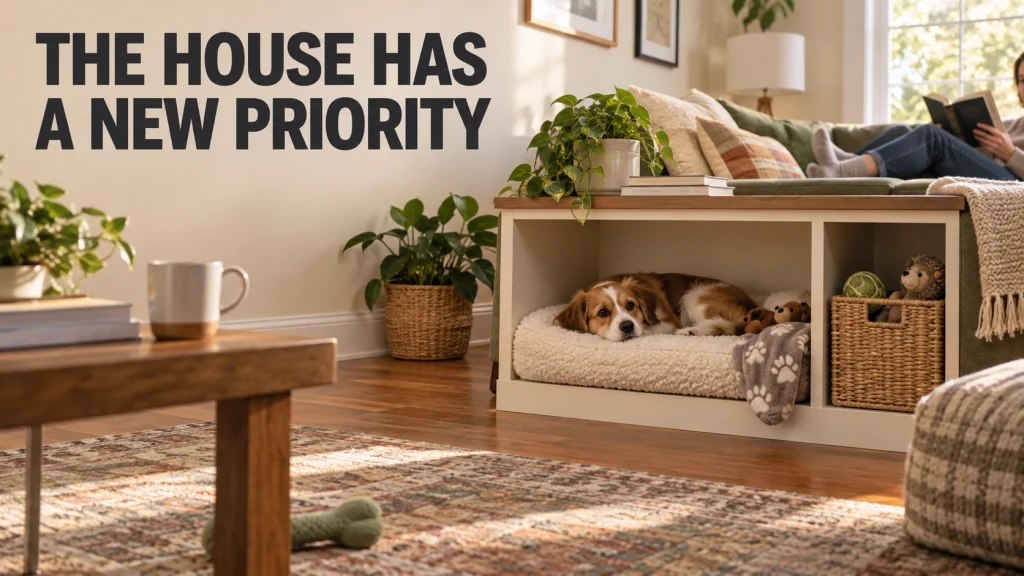
It can begin with moving a chair so the dog has somewhere quiet to sleep. Add a toy basket and a washable mat, and suddenly a small part of the house has its own brief.
In a Harris Poll survey, 49% of Gen Z and Millennial pet owners reported designing part of their home around their pet. That covers a wide range of choices; it does not tell us how many commissioned a custom dog room.
The useful shift is giving the animal’s everyday needs a place in the design. A resting spot outside the main footpath can make more sense than a handsome bed beside a slamming door. Before buying anything, watch where your pet already chooses to settle. That preference is a better starting point than the empty corner you wanted to fill.Start small
Try a movable bed or mat in the proposed spot before committing to built-in furniture. Let the pet test the location.
2. Cats are getting a floor plan above the floor
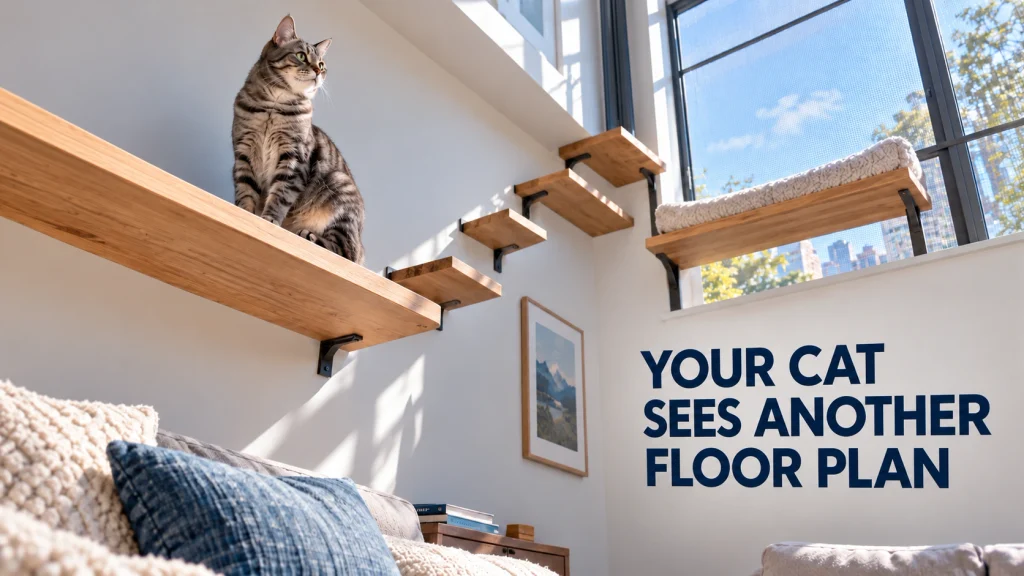
Humans see a blank wall. A cat might see a route to a better lookout. Shelves, sturdy cat trees, and enclosed outdoor spaces invite owners to consider a home from an entirely different height.
The AAFP/ISFM environmental guidelines treat a safe place and opportunities for normal feline behavior as basic needs. Thinking that way changes the shopping question: where can this particular cat rest, retreat, scratch, and explore comfortably?
A spectacular climbing wall offers little value if the steps are too awkward for its intended user. A window perch also needs secure support and safe window protection. For older cats or cats with mobility difficulties, discuss an accessible arrangement with the veterinarian. The best route is one the cat can use willingly, including a comfortable way back down.
3. The sofa is being interviewed for a very practical job
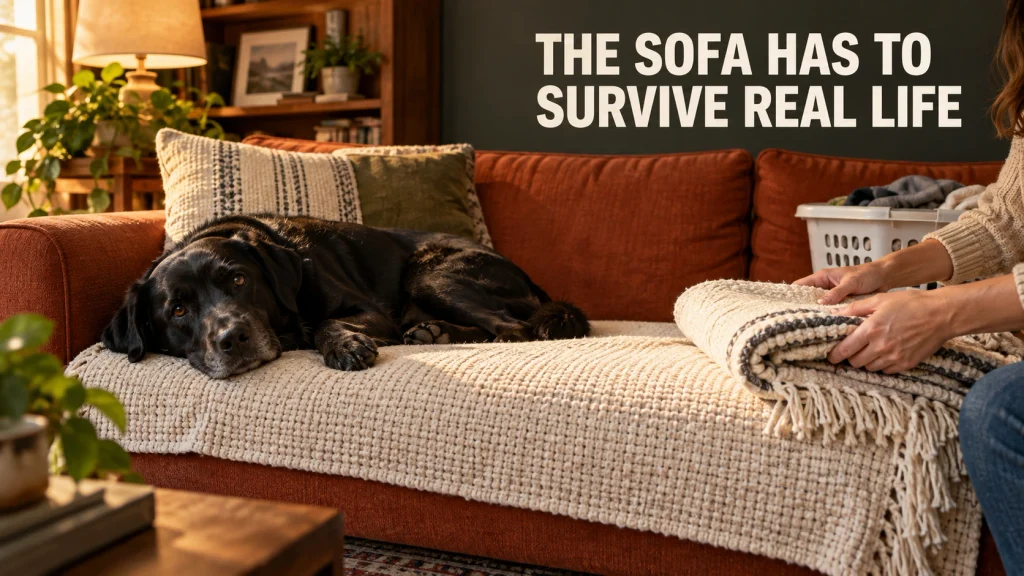
The showroom question is whether a sofa looks good. The household question is whether the cover comes off after muddy paws, a hairball, or a mysterious damp patch that nobody wants to investigate.
Living with an animal adds a second set of furniture criteria: cleaning instructions, accessible replacement covers, places where hair collects, and whether everyone agrees about which seats are shared. A beautiful fabric sample cannot answer all of those questions.
There is also a small negotiation hiding inside the décor. If the dog is allowed on the couch, a designated throw can make the arrangement easier to maintain. If the couch is off limits, the alternative resting place needs to be comfortable and the household rules consistent. The furniture purchase is partly a decision about how daily life will work.Before you buy
Read the actual care label. A removable cover is only convenient if its washing and drying requirements fit your home.
4. Aging pets are changing the route to the couch
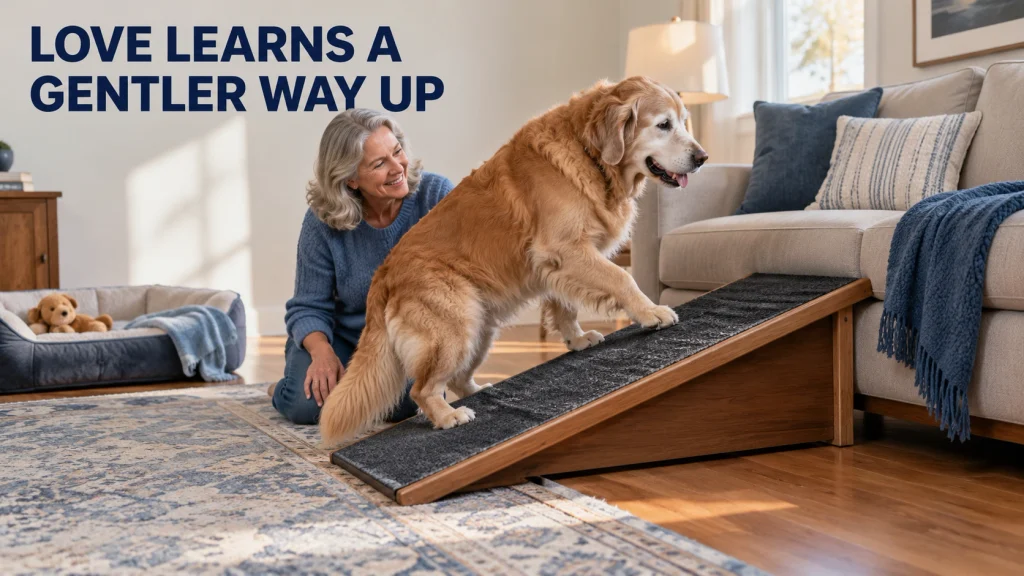
The first change may be almost invisible: a pause before the stairs, a different sleeping spot, a cat who stops jumping onto a favorite chair. A home that worked for a young animal may become harder to navigate later.
The AAHA senior care guidelines discuss appropriate ramps, better traction, accessible bedding, and changes to litter-box placement and design. They also caution against dismissing potentially treatable problems as simply old age.
This is where pet-centered decorating becomes quietly meaningful. A nonslip runner along a familiar route may matter more than another toy. New reluctance to move deserves a veterinary conversation; rearranging furniture can support a care plan, but it cannot explain the underlying problem. The aim is to help the animal keep reaching the places and people it enjoys.
5. The yard becomes part of the housing interview
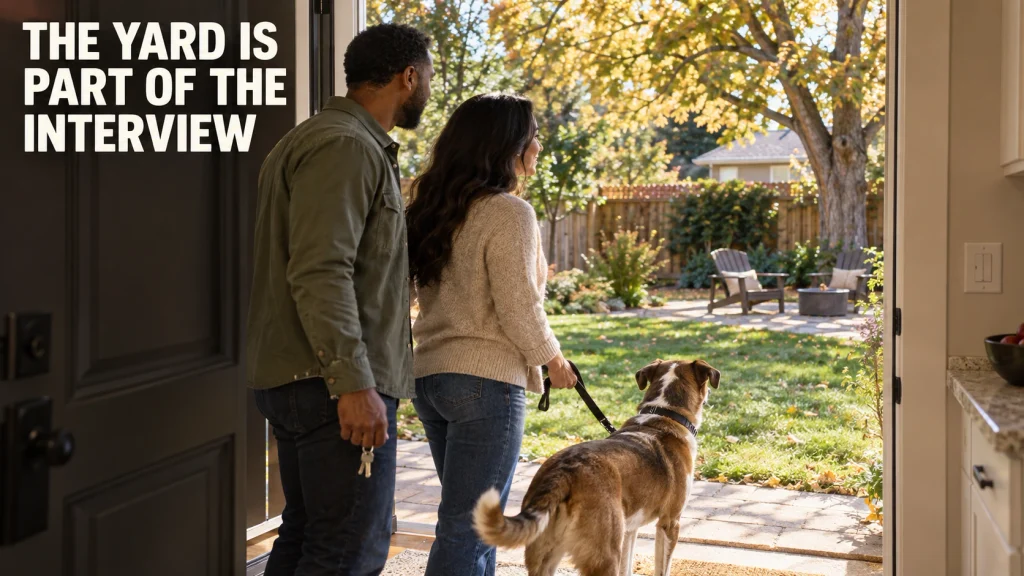
A promising apartment can look different when you imagine getting an elderly dog outside at two in the morning. So can a charming house with an awkward staircase or a gate that does not quite close.
For a household with pets, square footage is only part of the decision. The practical questions include the route outdoors, secure boundaries, noise, access to veterinary care, and the daily journey between home and work. A large yard still leaves someone responsible for walks, supervision, and attention.
Renters have another layer to check: the property’s written pet policy, fees, restrictions, and any approval required for their particular animals. An appealing listing photograph cannot settle those details. Walk through a normal weekday in your head before signing, including the inconvenient bits. That is where a home’s suitability becomes much clearer.The everyday test
Imagine the trip from your bed to the outdoor toilet spot in rain, darkness, or snow. A short route on paper may feel very different in practice.
Part II · The routine
The day gains another set of needs
The purchases are visible. The daily work behind them is easier to miss.
6. The walk becomes the day’s most reliable appointment
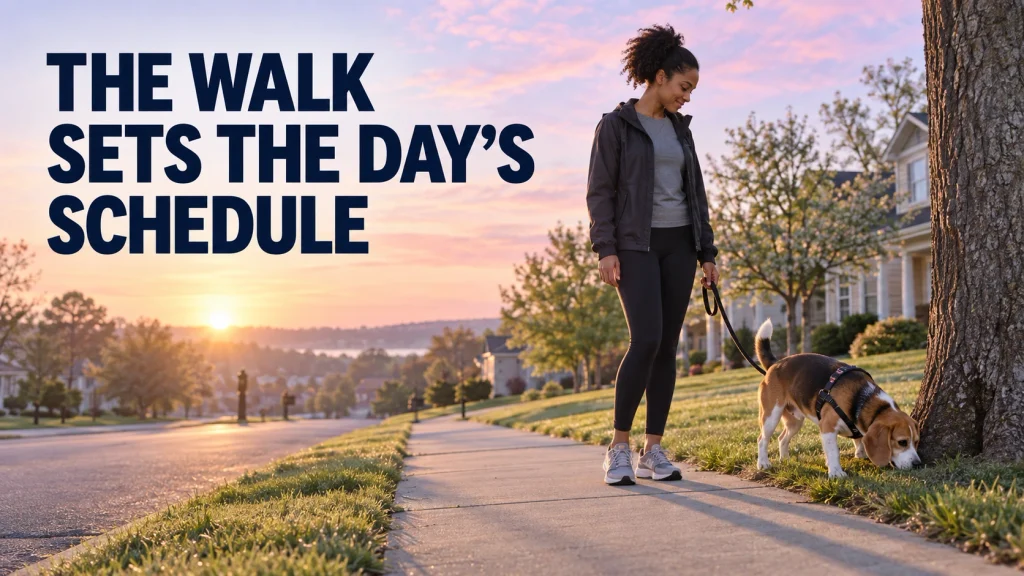
The dog has never opened a calendar. Somehow, it still has a standing appointment before breakfast.
A regular walk can become one of the points around which a household arranges its day. The late meeting, the extra errand, and the invitation across town all have to fit around somebody getting home. Shared care makes that question more explicit: who is doing the next outing?
The experience of the walk matters, too. An owner may be measuring distance while the dog wants another moment with an apparently fascinating patch of grass. Leave room for safe sniffing and exploration, and fit the route and pace to the animal’s condition, the weather, and veterinary advice where needed. Some days, a successful walk simply means both of you returned comfortable and ready for breakfast.
7. The food bowl now comes with a backstory

Dinner can arrive with a subscription, a personalized portion, a list of ingredients, and a story about what a good owner ought to serve. The emotional appeal is easy to understand: feeding is one of the ways care becomes tangible.
The less glamorous starting point is the nutritional adequacy statement. The FDA explains that a complete and balanced food must meet specified nutrient profiles or pass an appropriate feeding trial. The intended life stage matters, and a treat or topper may not be suitable as the whole diet.
A persuasive package still leaves practical questions unanswered. Does the food suit this animal’s needs? Can the household afford it consistently? How should it be stored and portioned? For a pet with a medical condition, take those questions to the veterinarian before changing the menu. A bowl does not need an elaborate origin story to deserve thoughtful attention.Read this first
Find the nutritional adequacy statement and intended life stage before getting distracted by the front-of-bag adjectives.
8. Love gets its own budget category

Food is the easy number to remember. The harder ones arrive at different intervals: a grooming appointment, a medication refill, a sitter, an exam, an unexpected bill. A pet budget makes those separate expenses visible in one place.
Start with recurring costs, add predictable occasional ones, and decide how you would handle an urgent expense. Local prices and an animal’s health can make a generic national monthly estimate a poor fit for your household.
Insurance is another decision with fine print. The National Association of Insurance Commissioners advises checking exclusions, waiting periods, deductibles, and coverage limits. Many policies work by reimbursement, so paying the veterinarian upfront may still be necessary. Looking at that payment sequence is as important as looking at the premium.A useful split
Separate ordinary care, planned occasional costs, and a plan for unexpected bills. Then review extras against what is actually left.
9. The pet camera turns an empty room into something to check
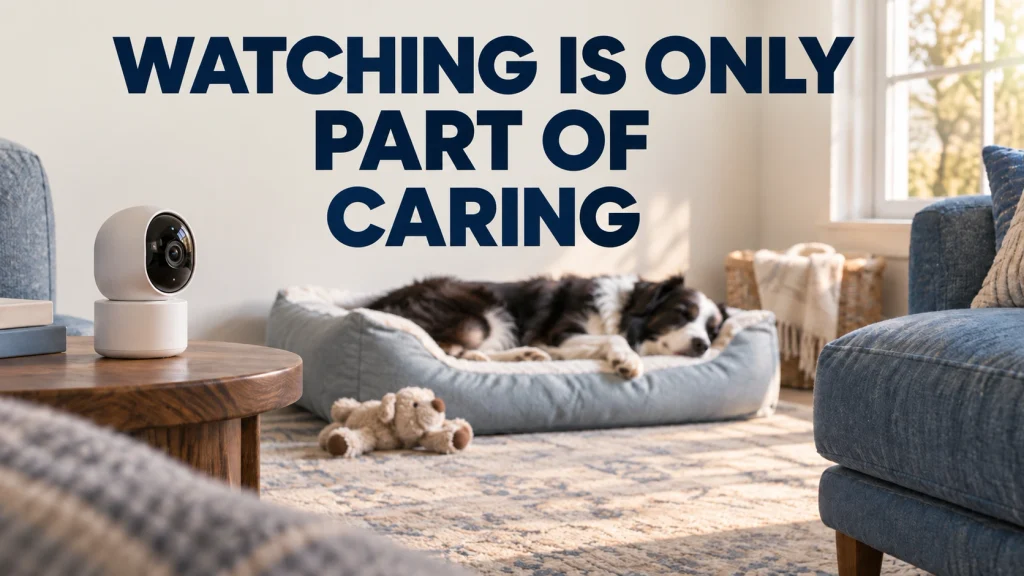
Somewhere, someone is taking a break from a spreadsheet to watch a dog sleep. The dog is having an excellent afternoon. The spreadsheet remains unresolved.
A camera can give an owner a view of what happens during an absence. The useful question is what they do with that information. A recording of repeated pacing, vocalizing, or attempted escape is worth discussing with a veterinarian or qualified behavior professional; a clip alone cannot diagnose the cause.
The ASPCA explains that separation-related distress can overlap with other behavioral or medical problems, and more involved cases need professional guidance. Watching remotely also leaves the physical care tasks in place. Someone still has to provide the toilet break, check an apparent problem, or come home when the plan is not working.
10. The grooming appointment moves into the house
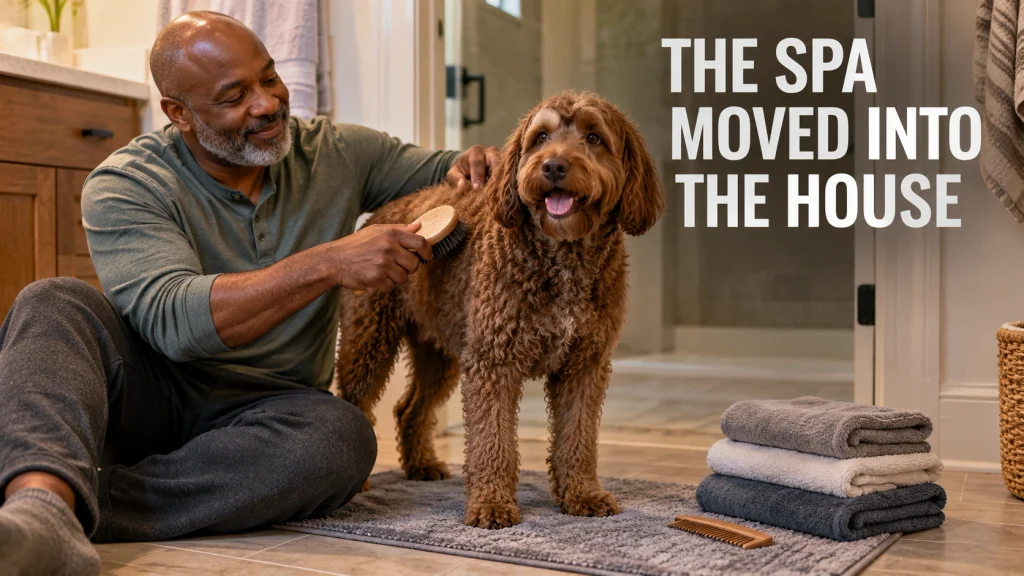
The home version usually has fewer spa robes and more towels that used to be the good towels.
According to the American Pet Products Association’s Dog Report, 51% of dog owners groom their dogs at home. That makes everyday coat care a substantial part of the relationship between owner and animal, alongside whatever professional help a particular dog needs.
Doing more at home also means learning where your skills end. The ASPCA notes that brushing technique and frequency depend on coat type. Ask a groomer or veterinarian to demonstrate suitable techniques and tools for your dog. If a task causes distress, or you find painful tangles or irritated skin, get appropriate help. Saving money is useful; turning every brush into a wrestling match is a sign to rethink the routine.
Part III · The rituals
Family traditions acquire a few more paws
Celebrations make the attachment public. They also reveal who the occasion is really for.
11. The birthday party is really a family ritual
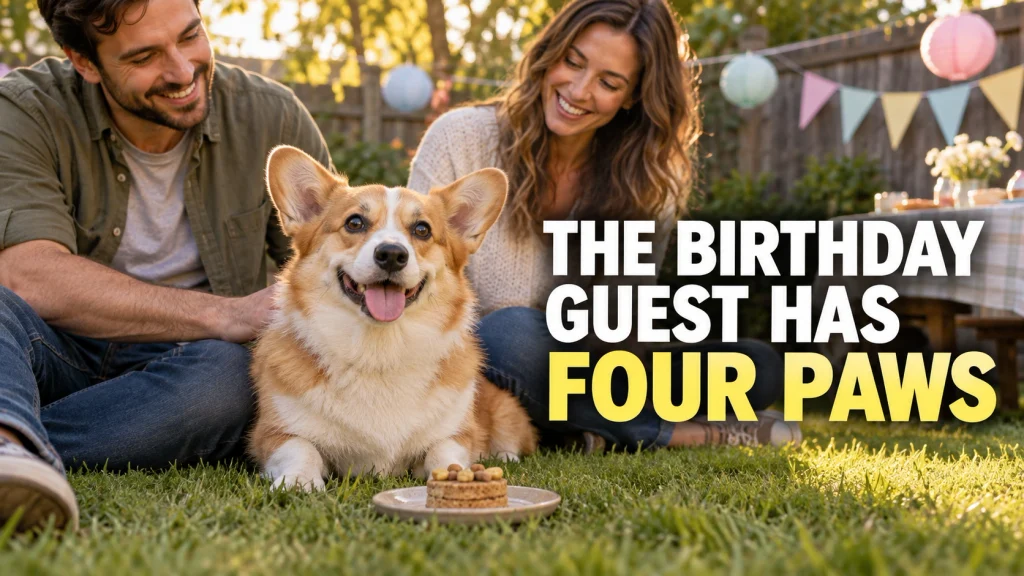
The dog does not need to understand the calendar for its people to enjoy marking another year together. An adoption anniversary can serve the same purpose when the actual birthday is a mystery.
Harris found that 41% of Gen Z and Millennial pet owners had thrown their pet a birthday celebration. The finding is about that group, and celebration can mean many things. It does not automatically imply a caterer, a guest list, or an alarming cake budget.
A good version might be a familiar walk, a suitable small treat, and time with favorite people. Plan around what the animal enjoys: a dog that dislikes crowds has no obligation to become sociable for its big day. The humans can take one picture and then get on with making the afternoon pleasant.The guest of honor test
Choose an activity your pet already likes. Keep any food appropriate to its usual diet and needs, and skip props it finds uncomfortable.
12. There is another name on the holiday gift list
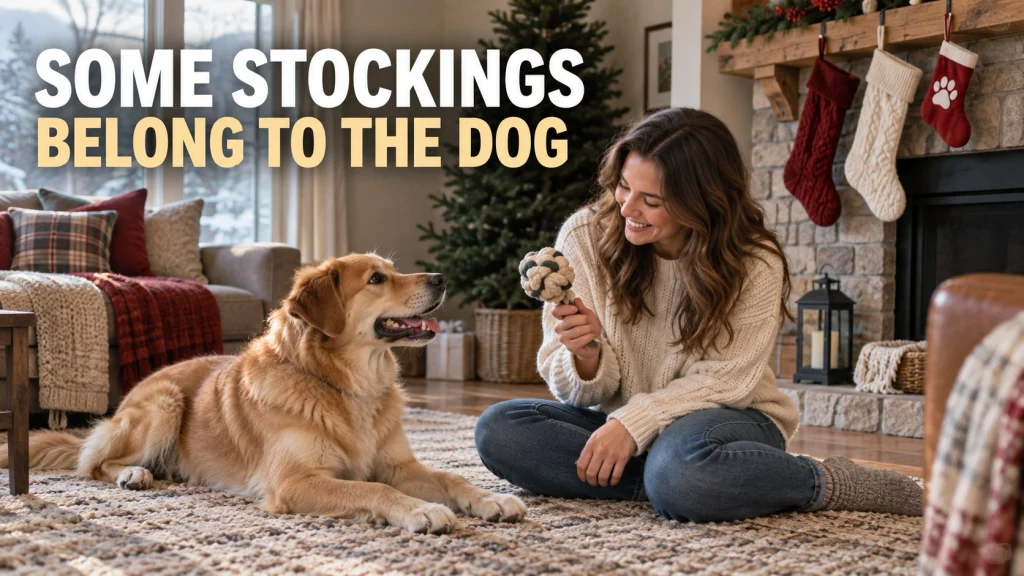
The small stocking on the mantel says something before anyone fills it. This household includes an animal, and the family ritual has made space for it.
Gifts can be ordinary: replacing a worn-out toy, refreshing bedding, or setting aside time for a favorite game. A pet has no opinion about whether the package looked expensive. It will, however, have an opinion about what happens after the wrapping comes off.
Celebrations also bring unfamiliar hazards into familiar rooms. The ASPCA’s holiday guidance recommends keeping wrapped food out of reach, avoiding tinsel, and giving pets somewhere quiet to retreat from noise. Think through the cleanup as well as the unwrapping. The nicest holiday tradition is one that still makes sense after the living room fills with guests.
13. The family portrait has stopped waiting for perfect cooperation
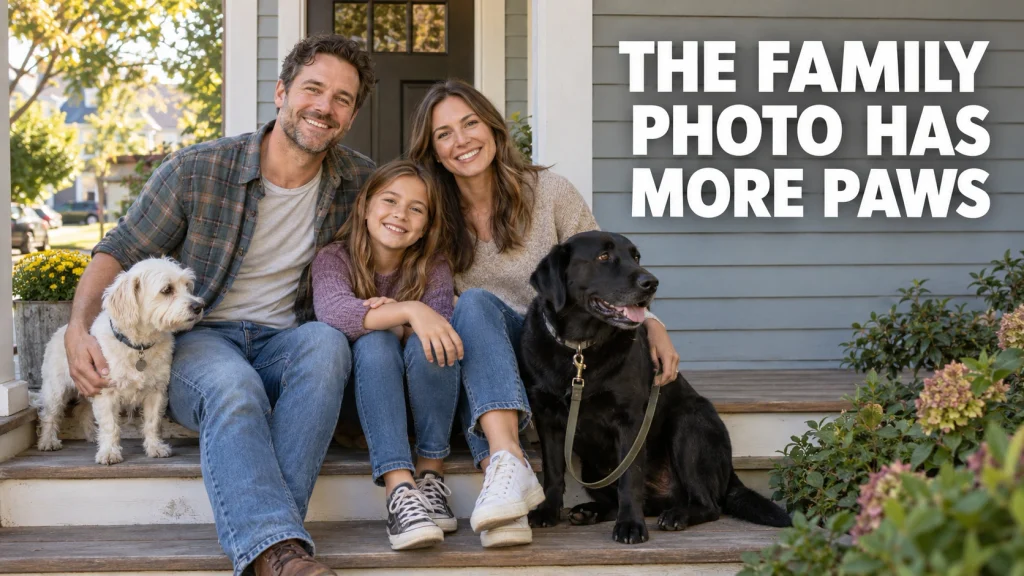
One child is blinking. One adult is looking at the dog. The dog is looking at a delivery truck. This may be the most accurate family portrait available.
Including a pet changes what the photograph records. It can show a household as it actually feels: the animal that follows everyone from room to room belongs in the visual memory of those rooms, too. There is no need to pretend this is a brand-new invention for it to carry emotional weight.
If you want a portrait with your pet, tell the photographer about its temperament and allow time for breaks. A familiar location and a short session may be easier to manage than a complicated set. Let the animal occupy a comfortable position. The image you keep may be the one taken just after everyone gave up on perfect eye contact.
14. A wedding appearance creates a whole extra job
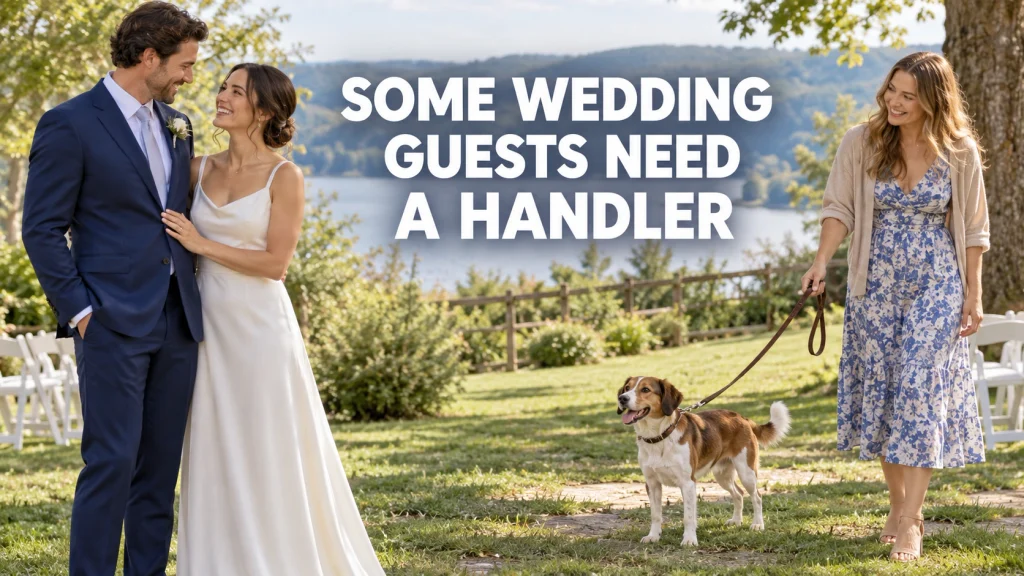
A dog in a wedding photo is a simple idea. Getting it there, keeping it comfortable, and taking it home can become an entire assignment.
That distinction matters when the people who know the animal best are also being photographed, greeting relatives, and trying to remember where they left the rings. A designated caregiver gives somebody permission to pay attention to the dog while the couple pays attention to the wedding.
Before including a pet, confirm the venue’s rules and arrange transport, water, breaks, a quiet place, and an exit plan. Participation can be brief: a few calm photographs may suit the animal better than a full ceremony and reception. If the setting would be difficult for your pet, a photo at home beforehand can still make it part of the memory.Assign the whole job
Name one responsible person for the pet’s arrival, comfort, and departure. Make sure they have explicitly agreed to all three.
15. A café visit can become a shared outing

Coffee for one can still involve packing a water bowl. For owners whose dogs enjoy a quiet outing, a suitable patio can fit social time and pet time into the same hour.
The appeal is practical as well as social. Meeting a friend somewhere the dog can comfortably join may avoid an extra journey home between a walk and a catch-up. The details decide whether that works: a shaded space with room to settle is a different experience from a crowded, noisy patio.
Check the venue’s pet policy before leaving home. Keep walkways clear, give other people and dogs space, and be ready to leave if your pet cannot settle. Service animals have a different legal status: the Department of Justice’s ADA guidance explains the disability-related training requirement. A pet-friendly invitation and a service animal’s access rights are separate matters.
Part IV · The decisions
The big plans need a pet-shaped adjustment
Travel, relationships, work: the animal at home has a way of making an appearance in decisions made miles away.
16. The vacation gets a second itinerary

The hotel looks perfect. Then comes the question that can undo the booking: what happens to the dog while you are out for dinner?
A pet-friendly label leaves plenty to confirm, including animal limits, fees, unattended-pet rules, and whether the activities you planned will actually welcome your companion. The alternative needs planning too: staying home with suitable care may be the better trip for the animal.
The FDA recommends discussing travel needs with a veterinarian and checking the relevant transport and destination rules. Its road-trip advice includes securing pets appropriately in the back seat and never leaving them unattended in a hot car. Before paying, map one complete day of the proposed trip. The small gaps between attractions are often where pet care becomes complicated.Ask before booking
Where can my pet go, where can it stay during my activities, and who will care for it if those plans change? Get property-specific answers.
17. The neighbor with a spare key becomes part of the care team
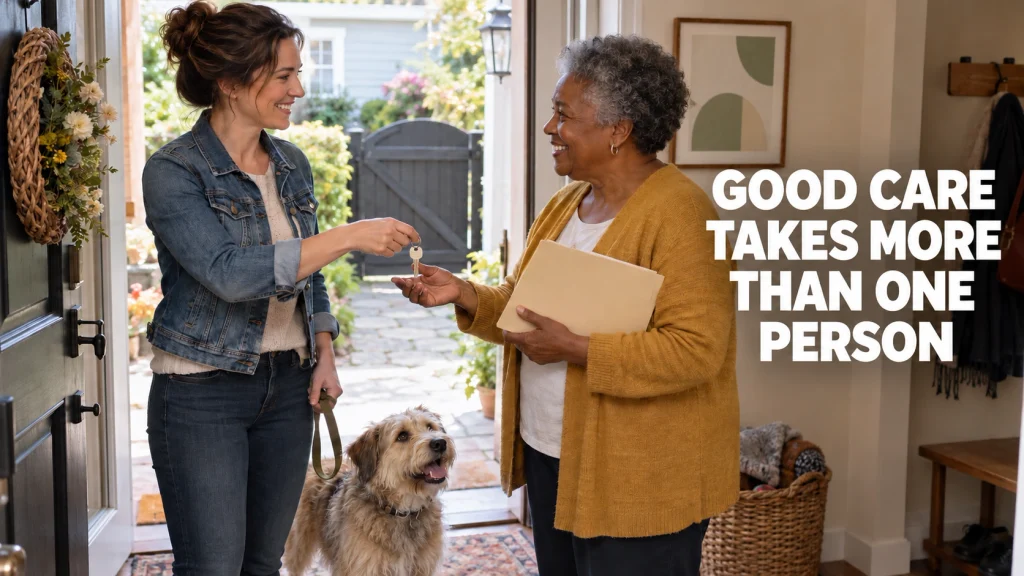
Trust can look like somebody knowing which cupboard holds the food and which perfectly normal noise makes your dog bark.
APPA reports that four in ten dog owners rely on someone they know coming to their home for pet care when they travel. The arrangement can draw family, friends, and neighbors into the daily machinery of a household.
Affection for the animal is a good beginning, but the practical agreement needs detail. Write down feeding, routines, medication instructions supplied by the veterinarian, contacts, and what to do if something goes wrong. Walk through access to the home in advance. Also agree on the time involved, compensation or reciprocity, and a backup. A friend should be able to say that a particular care task is beyond what they can safely manage.
18. Dating compatibility includes the household rules
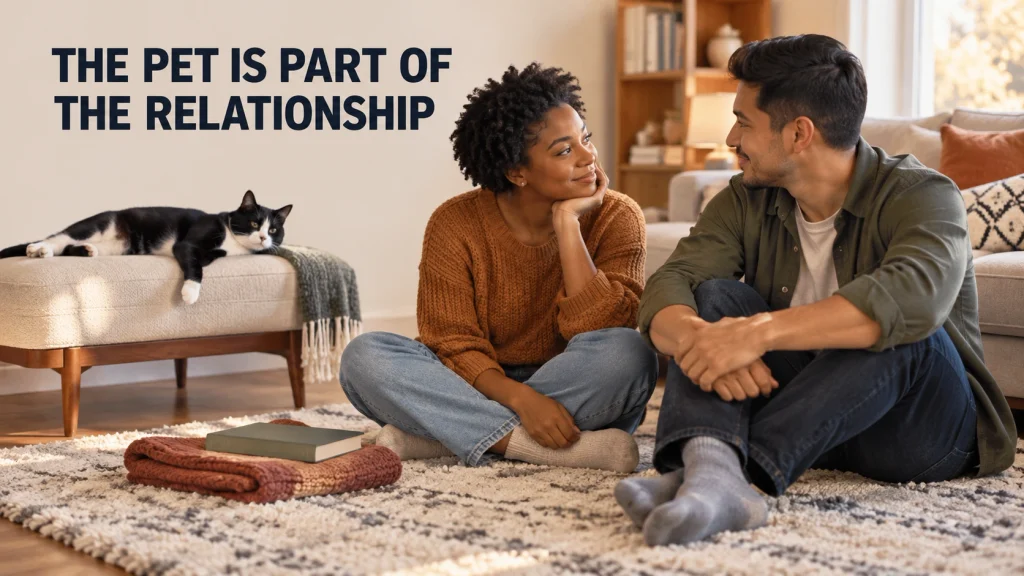
The interesting relationship question arrives after both people say they love dogs. Does that include a dog in the bed? What about the early walk, the vacation budget, or a pet that needs a slower introduction?
An existing animal brings routines and responsibilities into a relationship. Talking about those specifics can reveal more than a cute profile picture. The goal is to understand what living together would require, including allergies, fears, boundaries, and how care would be shared.
Give the animal time and space, and pay attention to how the person respects its needs. Resist treating one awkward introduction as a verdict on someone’s character. Someone who declines a face lick may still be wonderfully considerate. The more useful signal is whether the humans can discuss care without turning every difference into a loyalty contest.Have the practical conversation
Discuss sleeping arrangements, costs, travel, and daily duties before assuming you both mean the same thing by loving animals.
19. The work calendar has another care routine to fit in
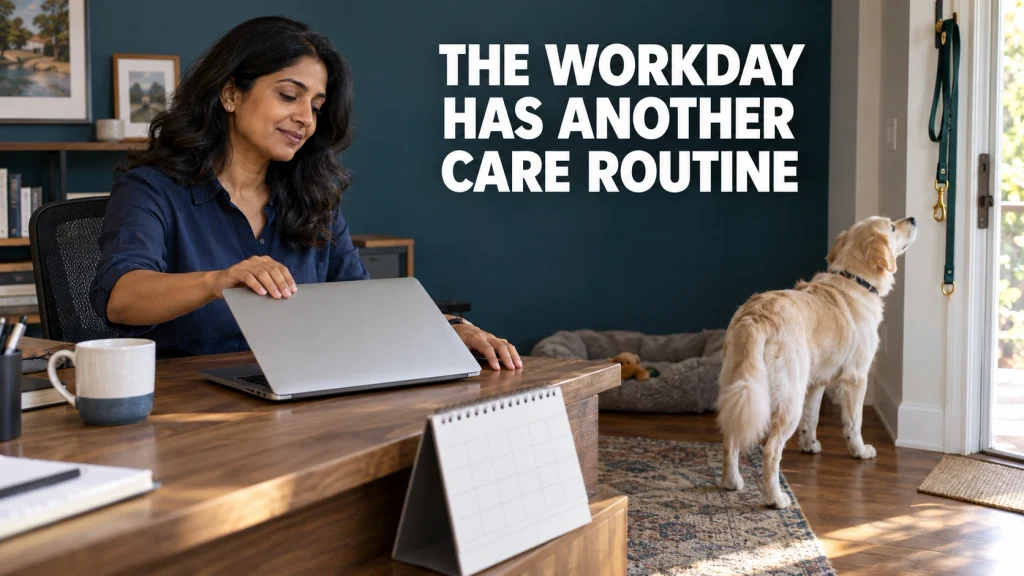
A flexible lunch break can mean the difference between handling a walk yourself and arranging someone else to do it. A veterinary appointment may require the same calendar negotiation as many other personal responsibilities.
Harris found that 36% of pet owners wanted paid time off specifically for veterinary visits and pet emergencies. That is evidence of demand for a benefit, rather than a measure of how many employers offer it.
The practical version is usually less dramatic than a pet-friendly office announcement: clear scheduling, reliable coverage, and a plan for days when the usual caregiver is unavailable. Working at home also leaves actual work to do. A dog appearing on a video call is charming; the more meaningful arrangement is the one that lets both the job and the animal receive appropriate attention.
20. “Cat dad” becomes an ordinary way to describe a life
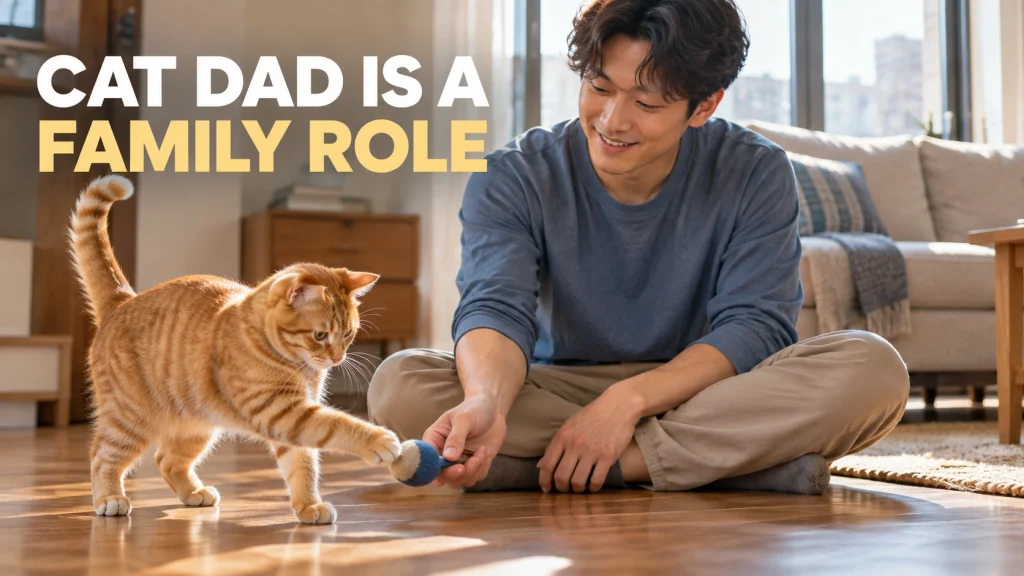
A man discussing his cat’s favorite window does not require a punch line. The label cat dad offers a straightforward way to describe a relationship that can be affectionate, domestic, and central to someone’s day.
APPA’s Cat Report, reported by Pet Age, puts men at 43% of U.S. cat owners. That is a substantial share, and a useful corrective to the idea that caring for cats belongs to one narrow type of person.
There is no need to turn the label into another performance. Knowing when the food is running low, recognizing a change in behavior, and respecting a cat’s preferred amount of contact are plenty expressive. The broader cultural point is simple: tenderness toward an animal can be visible without needing an excuse. The cat will probably still want the chair you were using.
Part V · The commitment
Love gets tested by ordinary reality
Eventually, the story reaches the less photogenic parts: bills, aging, backup plans, and knowing when to put the camera down.
21. Pet expenses can quietly redraw the rest of the budget
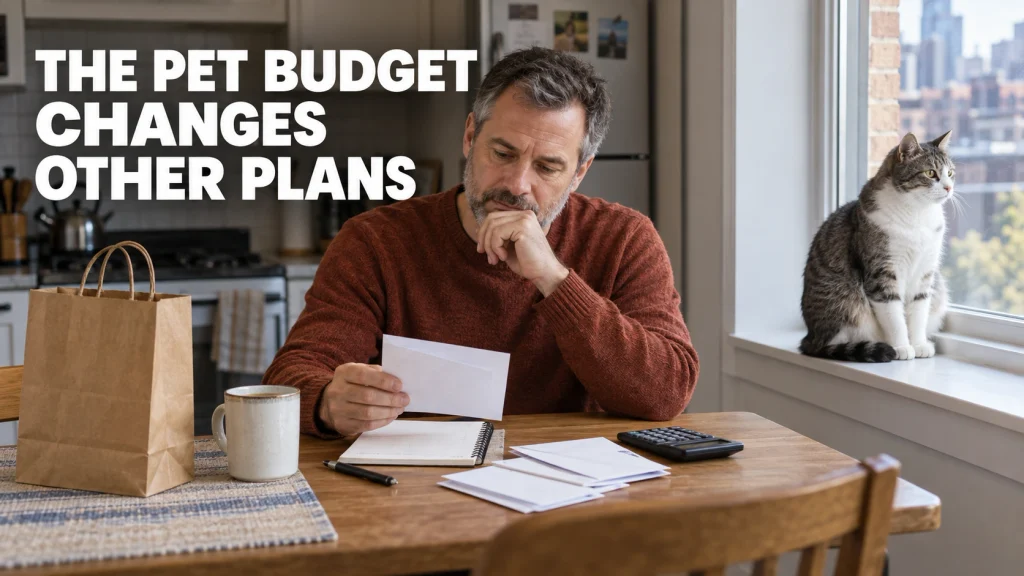
The easy version is skipping one takeout order. The harder version is discovering that ordinary pet care competes with bills the household was already struggling to cover.
In the Harris survey, 29% of Gen Z and Millennial pet owners reported debt from pet-related expenses. The number deserves care: financial strain should never become a competition over who loves their animal most.
A useful response is to make the pressure visible early. List the essentials, pause optional purchases, and speak candidly with the veterinary team about affordability and available options. Ask local animal welfare organizations whether they offer relevant assistance; availability and eligibility vary. Keeping your own health needs in the plan matters too. A sustainable care arrangement has to support the person doing the caring.Keep perspective
A modest routine you can maintain is a sounder goal than a level of spending that leaves you unable to meet essential needs.
22. The least exciting purchases can matter the most
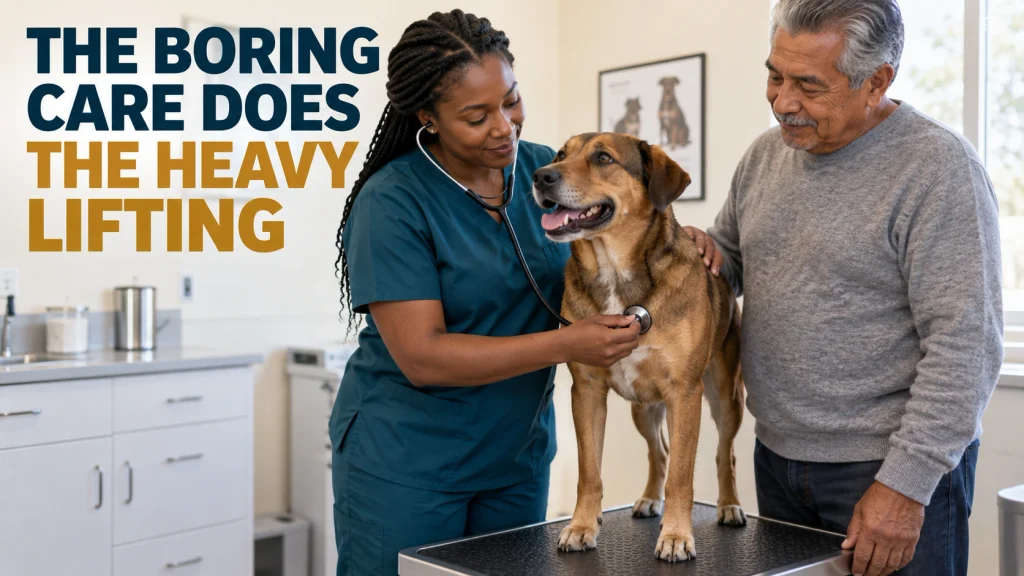
A photo of a refill reminder will never compete with a tiny birthday cake. Yet remembering the refill may be the more consequential act of care that week.
APPA’s Dog Report identifies veterinary care and food as the largest categories in owners’ dog-related spending. That gives some perspective to a feed full of novelty accessories: the everyday foundation still takes a substantial share of the money.
For an individual animal, priorities belong in a care plan discussed with the veterinarian. Ask what is needed now, what can be scheduled, which changes to watch for, and what the proposed costs cover. Then put the resulting tasks somewhere the household will actually see them. Good care includes an unremarkable amount of remembering, arranging, cleaning, and following through.One useful question
Ask the veterinary team to explain the next priorities for your particular pet and write them down, including the follow-up plan.
23. The wish for more years meets the need for better evidence
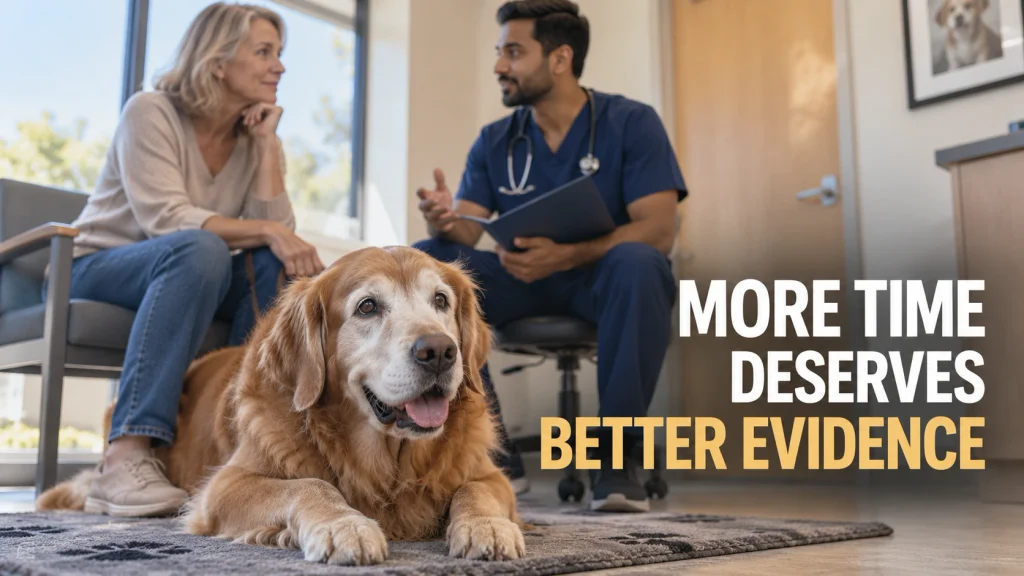
The wish is painfully easy to understand: more walks, more greetings at the door, more ordinary mornings together. That makes a promise of extra time especially powerful.
There is serious research into canine aging. The published TRIAD study protocol describes a randomized, placebo-controlled trial designed to test rapamycin’s effects on lifespan and measures of healthy aging in dogs. A protocol explains the question and how researchers intend to test it; it does not establish that the treatment delivers the hoped-for benefit.
When you encounter a longevity claim, ask what was actually measured, in which animals, and whether the evidence reports results or only plans. Any medication decision belongs with a veterinarian. Hope can coexist with careful questions, especially when a product’s most persuasive ingredient is the future you want with your pet.
24. The emergency plan includes someone who cannot read it
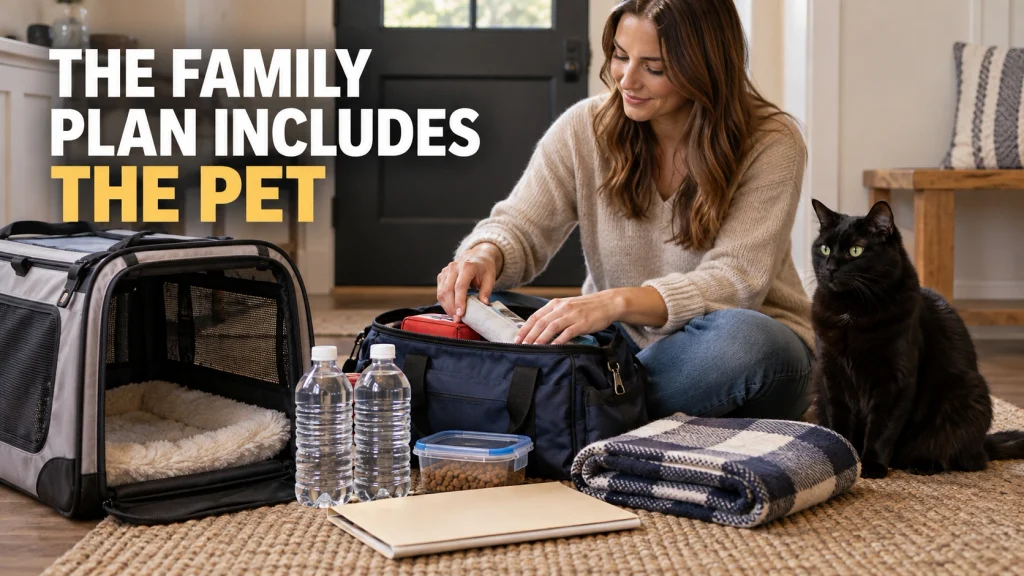
If you had to leave home quickly, could you find the carrier, the food, and the veterinary records without opening six cupboards? A plan to bring the cat becomes much more useful when the equipment is ready, too.
The ASPCA recommends arranging a safe place for pets, a designated caregiver, and supplies and records. Prepare food, water, necessary medication with veterinary instructions, identification information, and suitable transport equipment. Confirm where the animal could stay if your usual destination cannot accommodate it.
The plan should still work if you are unavailable to explain it. Make sure the person who has agreed to help can find the contacts and supplies and safely reach the animal. A quick practice run through the arrangements can reveal a missing carrier latch or an outdated phone number while there is still time to fix it.Make it usable
Keep the transport equipment and emergency supplies accessible. Check contact details, identification records, and any time-sensitive supplies regularly.
25. The best upgrade may be letting the pet choose
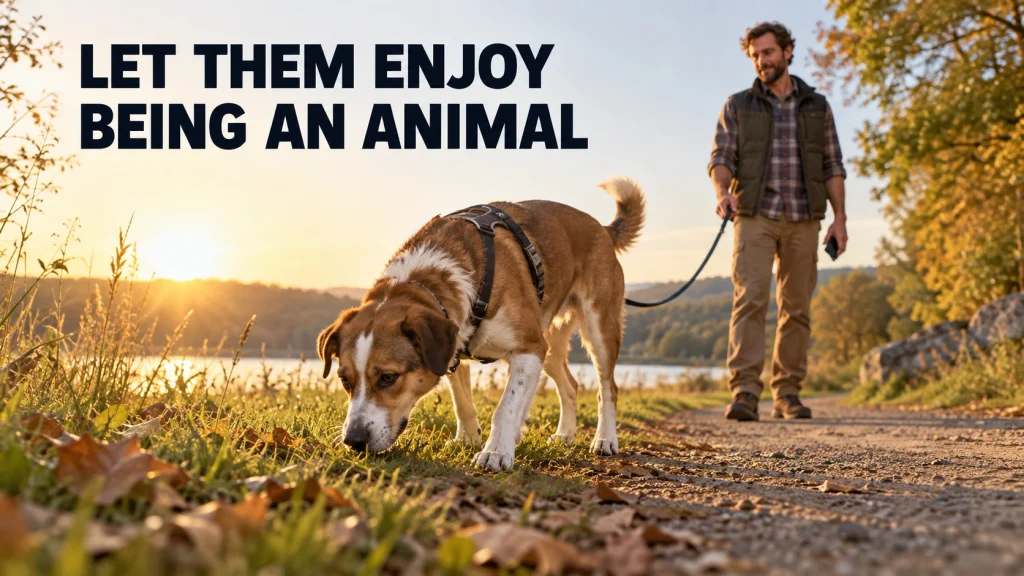
After the shelves, subscriptions, parties, and portraits, the question gets refreshingly small: what does this animal enjoy doing?
The Feline Veterinary Medical Association emphasizes that cats differ in their sociability and need to feel safe in their surroundings. It is a useful reminder to notice the individual in front of you. A cat seeking distance, or a dog struggling with a busy outing, is giving you information that matters more than the plan you made.
Leave room for ordinary animal preferences: a comfortable retreat, an unhurried sniff, a familiar game, a rest without being repositioned for a photo. Pay attention when those preferences change and seek veterinary advice for concerning changes. The dog’s birthday can stay on the calendar. Its everyday experience should have a say in how the rest of that calendar gets filled.
The party ends. The everyday care continues.
The birthday cake makes a good photograph. The more revealing details are scattered through the rest of the house: the washable throw, the runner on a slippery floor, the food instructions left for a neighbor, the calendar reminder nobody else will ever see.
Together, these choices show what treating a pet as family can mean in practice. There is room for affection, play, and the occasional gloriously unnecessary celebration. There also needs to be room for the animal’s comfort and the household’s actual resources.
A pet can change a life through a thousand small adjustments. Most of them happen long before anyone thinks to take a picture.
What’s one thing you swore you’d never do for a pet—and now do without thinking?
Sources & Further Reading
Survey figures describe the groups named in the text. Industry reports reflect their own samples and definitions; separate surveys should not be treated as a single measure of change over time.
- Pew Research Center — How U.S. pet owners see pets as members of the familyJuly 7, 2023. Survey of 5,073 U.S. adults, including 2,963 pet owners; fielded April 10–16, 2023.
- The Harris Poll — State of Pets findings on American spending and family lifeJuly 21, 2026. Online U.S. survey, April 24–26, 2026: 2,070 adults, including 1,625 pet owners. Generational figures in this article refer to Gen Z and Millennial pet owners.
- American Pet Products Association — Dog Report findings on spending, home grooming, and care during travelJuly 22, 2026. Industry report drawing on the 2025 National Pet Owners Survey.
- APPA, reported by Pet Age — Cat Report findings on male cat ownersSeptember 14, 2026. Coverage of APPA’s Cat Report using the 2025 National Pet Owners Survey.
- AAFP / ISFM — Feline Environmental Needs Guidelines2013. Guidance on the essential features of a healthy feline environment.
- American Animal Hospital Association — Senior Care Guidelines for Dogs and Cats2023. Home adaptations, mobility, and individualized senior care; PDF.
- U.S. Food and Drug Administration — Complete and Balanced Pet FoodHow nutritional adequacy statements and intended life stages work.
- National Association of Insurance Commissioners — Pet InsuranceCoverage terms, exclusions, and questions for consumers.
- ASPCA — Separation AnxietySigns, alternative explanations, and professional behavior support.
- ASPCA — Dog Grooming TipsCoat-specific grooming and when to seek veterinary help.
- ASPCA — Holiday Safety TipsFood, decorations, and quiet retreat spaces during celebrations.
- U.S. Department of Justice — Frequently Asked Questions About Service Animals and the ADAThe distinction between pets and service animals under the ADA.
- U.S. Food and Drug Administration — Travel Training for You and Your PetsTravel planning, transport precautions, and checking destination requirements.
- Coleman and colleagues · GeroScience — Test of Rapamycin in Aging Dogs (TRIAD): Study Design and Rationale2025. Peer-reviewed clinical trial protocol; cited for study design, not proof of an effect on lifespan.
- ASPCA — Disaster PreparednessCaregiver arrangements, safe places, supplies, and identification.
- Feline Veterinary Medical Association — General Principles of Feline Well-being2021 position statement on individual needs, safety, and feline well-being.