Beauty trends show up on social media constantly, but some of the trends that look the newest have actually been around for years. Face taping is the latest one to land on everyone’s feed: tape stuck on your face, worn overnight or for a short stretch under makeup, to smooth out wrinkles. Some of Hollywood’s most iconic actors and makeup artists have talked about wearing face tape for events or during filming to get a lifted, smoother look, and it is a technique the drag community has used for a long time. So can face taping actually improve how wrinkles look, or is it just another ill-advised social media trend? Dani Hardman put that question to three board-certified dermatologists — Dr. Anthony Rossi, Dr. Ivy DeRosa, and Dr. Morayo Adisam — and here is everything they said, in the same order. I have not tried face taping myself, and nothing here is my own experience; I am reporting what Hardman and the dermatologists said.
In this article: what face taping is; how it works; its benefits; its potential side effects; whether it actually works for wrinkles; and what to try instead.
Key takeaways: face taping gives the skin a temporary lift, but it does not treat or prevent wrinkles in the long term; using it again and again can irritate the skin, dry it out, and make it look worse over time; and dermatologists say sunscreen and retinoids are the far more effective way to keep skin looking healthy and youthful.
Meet the experts: Dr. Anthony Rossi is a board-certified dermatologist at Memorial Sloan Kettering Cancer Center; Dr. Ivy DeRosa is a board-certified medical and cosmetic dermatologist with a small private practice outside of Philadelphia; and Dr. Morayo Adisam is a double board-certified dermatologist and the Medical Director of Dermatology Physicians Chicago / Kenilworth. Everything that follows comes from them, as reported by Hardman. The article was medically reviewed by Dr. Julia A. Siegel, a board-certified dermatologist.
What Is Face Taping?
Face taping — also called wrinkle taping — means taping your skin into a taut position, supposedly to make wrinkles look better and stop new ones from forming. As Dr. DeRosa puts it, “The concept of face taping is exactly what the name implies.” She explains that “a tape/adhesive product is placed on areas where we tend to notice lines such as forehead, under the eye, cheeks, and décolleté.” People use anything from classic Scotch tape to more advanced, reusable patches like Frownies, Skin Gym, and Sio Beauty patches.
It might look like a brand-new trend, but it is actually steeped in history. “Face taping may not be mainstream but it’s not new,” says Dr. Rossi. “From drag performers to movie stars, face taping has been used to help instantly lift the skin and disguise wrinkles in strategic places. By taping the face up in certain vectors, you can give an instant facelift effect.”
How Does It Work?
Most popularly, people sleep in the tape overnight, hoping to stop new wrinkles from forming and to wake up with existing wrinkles looking temporarily more lifted and smoother. The thinking behind it, as Dr. DeRosa describes it, is simple: during sleep we roll around, squish our faces into the pillow and use our muscles, so if the tape holds everything in place, wrinkles should not form. Some people swear by the overnight results, while others wear face tape for a more immediate effect instead.
Worn overnight, the tape should ideally constrict the muscles and limit how much they move, keeping you from frowning or making other expressions that create lines while you sleep. It is also said to cut down on the lines that come from sleeping on your side or stomach. Face tape can also be used for an immediate lifting and smoothing effect — like Spanx for your face.
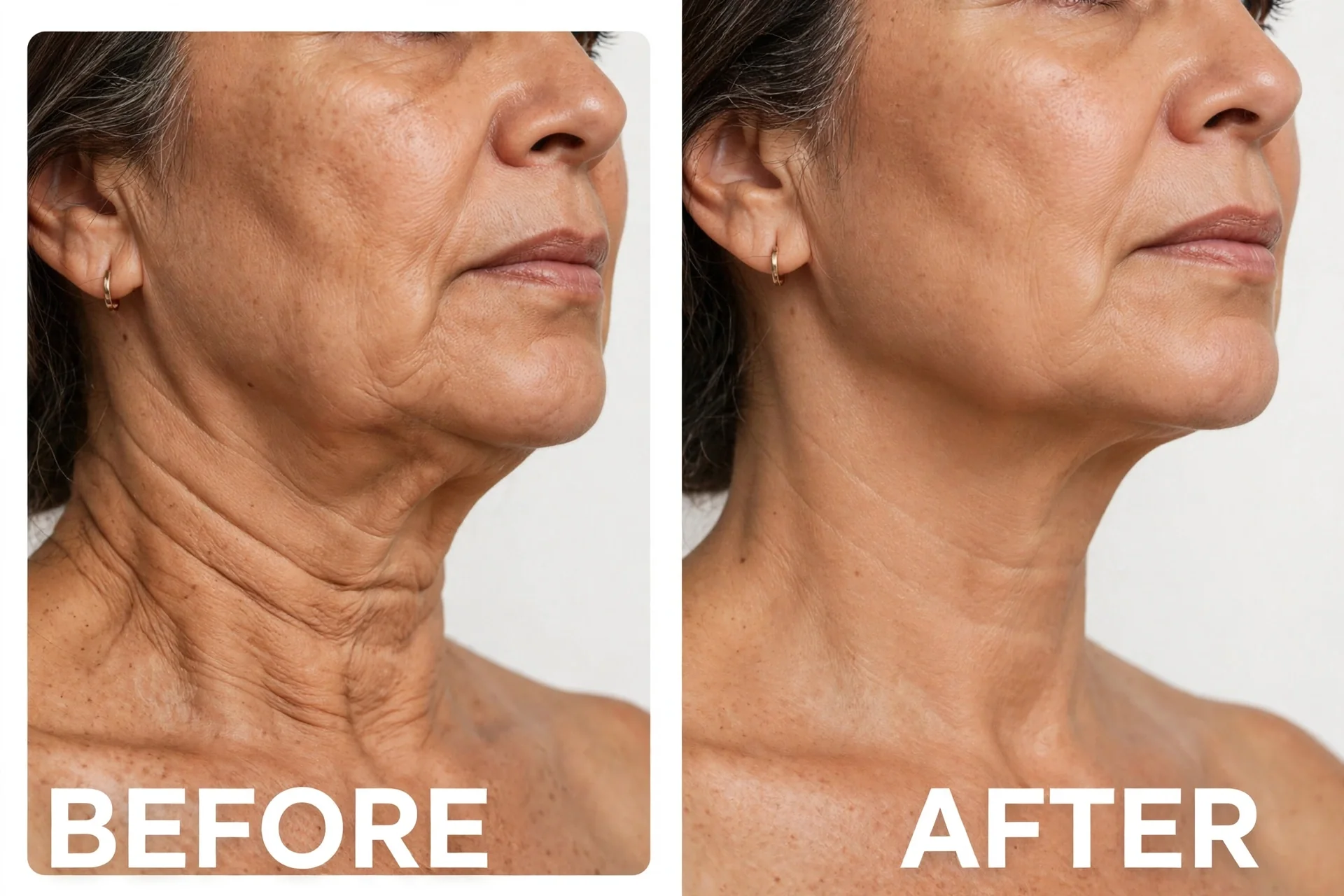
Benefits of Face Taping
Here is the thing: the experts agree that wrinkles and fine lines certainly look better while the tape is on. So wearing it overnight seems to be a moot point — the tape is not going to reduce your wrinkles. Worn for an event, though, it can hide signs of aging and give the face an immediate lift.
But using face tape is similar to using makeup to cover blemishes — it is an instant, surface-level effect, not a long-term solution or fix. “These can provide a temporary improvement in the appearance of fine lines, but again it’s temporary,” says Dr. DeRosa. If you are looking to actually treat wrinkles, the experts point to Botox, laser therapy, chemical peels, and other in-office procedures instead.
Potential Side Effects of Face Taping
Even as a short-term, momentary solution, face tape can be fairly cumbersome. According to Dr. Rossi, it is hard to camouflage, even with heavy makeup or a wig. Beyond that, all three doctors mentioned the risk of irritation from the glue on the tape. Certain materials are often used for face tape to lessen that risk, but irritation is still a possibility.
And, Dr. DeRosa says, repeated use can and will irritate most people — no matter what the tape is made of. “The areas where people are applying the tape are often where the skin can be the most sensitive, particularly under the eyes and on the chest,” she says. “The physical adhesive when putting on and off can cause damage to your skin barrier, leading to irritation, dryness and can actually worsen the appearance of the skin over time.” Dr. Rossi also points out that if the tape is left on too long, its occlusive nature could clog pores and cause acne from sweat and sebum building up underneath.
Does Face Taping Work for Wrinkles?
It is clear that overnight face taping is fairly pointless — it does not give any sort of permanent benefit, and it can really only cause irritation. The same goes for using it every day. Face tape is hard to camouflage, and using it again and again only raises the chances of irritation.
If someone can see it for what it is — essentially a “facial Spanx” meant to temporarily improve how you look for a big night out or for filming — then it can be okay occasionally. Just remember that it is by no means whatsoever a way to treat or prevent wrinkles, and that it can lead to dryness and irritation.
As Dr. DeRosa says, “The juice is not worth the squeeze for this one. Trends will come and go, but scientifically the things your skin benefits from the most have not changed.”
What to Try Instead of Face Taping
Fortunately, there are non-invasive wrinkle-reduction options that are not only evidence-based but also backed by the pros. “The most effective way to keep your skin healthy and aging gracefully is a daily broad-spectrum sunscreen of SPF 30+ in the AM and a retinoid nightly,” says Dr. DeRosa.
Dr. Adisam adds that topical skincare products such as retinoids and a potent vitamin C serum, like Andalou Turmeric + Vitamin C Enlighten Serum, are a great option to add to your skincare routine. She also suggests face yoga and red light therapy to reduce the appearance of wrinkles.
And if you would rather put the least amount of energy into it, there are small lifestyle changes worth considering — like switching to a silk pillowcase. That simple swap can help keep the skin from creasing and forming wrinkles while you sleep.