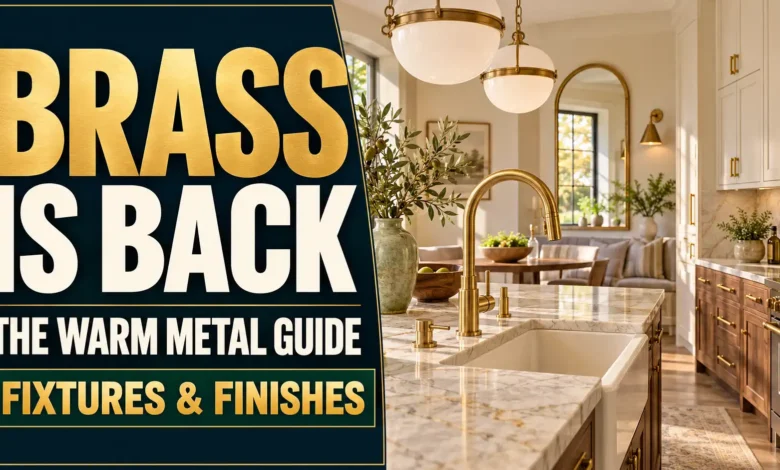
The best brass finish is the one that suits both your room and your tolerance for change. For a soft, consistent look, start with brushed brass in a protective finish. For character that develops with use, consider unlacquered brass. For a bright accent, polished brass brings more reflection. Before ordering, check the actual coating, the installation requirements, and a physical sample—not just the color name.
Brass can warm up a white bathroom, sharpen sage cabinetry, or add a little glow beside walnut furniture. You don’t need to replace every metal in the house. This guide walks you through choosing a finish, using it where it makes sense, mixing it with existing hardware, and caring for it without damaging the surface.
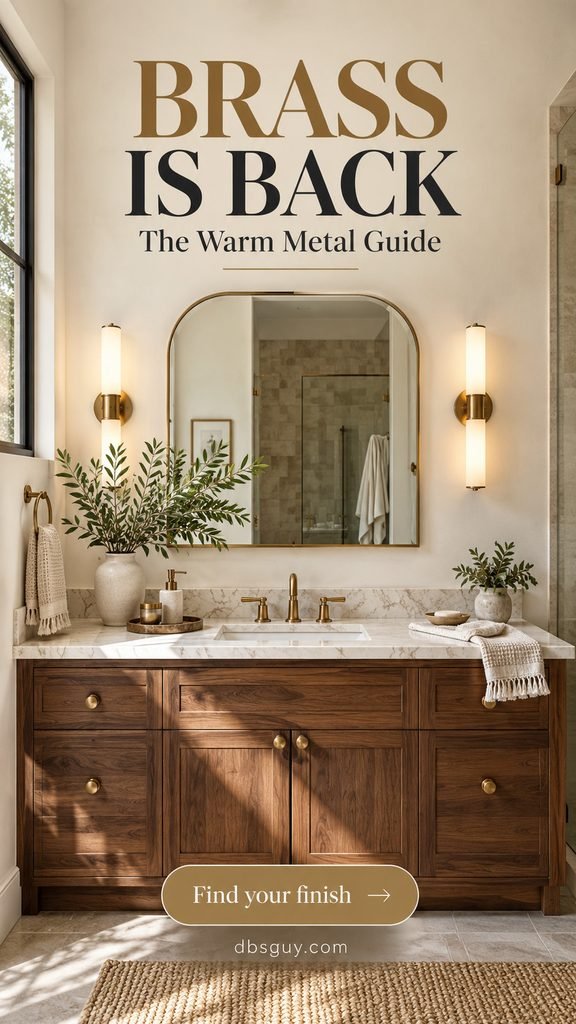
The visuals in this guide are AI-generated design concepts, not photographs of completed installations or verified product samples. Use real finish samples and product specifications for purchasing decisions.
Why the renewed attention? Pinterest’s 2026 trend report places brass within its Neo Deco direction. That is useful inspiration, but your finish choice should still come down to your home and how you use it.
1. Decode the finish before choosing the color
“Brass” on a shopping page can describe a material, a surface treatment, or simply a golden color. Those are different things. A solid-brass cabinet knob has a brass body; a brass-finished knob may have another material underneath. A faucet can have a brass body while its visible surface is a separate decorative finish.
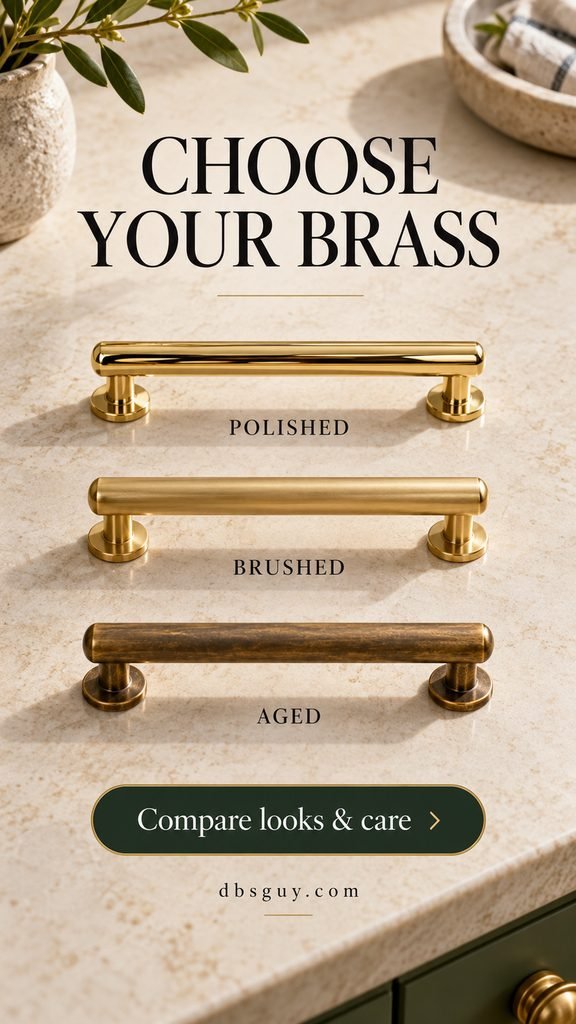
Polished, brushed, and aged describe the look
- Polished brass: bright and reflective. It suits a crisp traditional faucet, a sculptural lamp, or a small accent against dark wood. Reflections and fingerprints may be more noticeable on a smooth, shiny surface.
- Brushed or satin brass: a softer sheen, often with a fine directional texture. It is an easy visual starting point for modern kitchens and relaxed bathrooms. The terms are not standardized across brands.
- Antique or aged brass: a darker, toned appearance. It can bring depth to cream cabinets and walnut. A factory-aged finish is not automatically a living finish; it may be sealed to preserve its appearance.
Lacquered, unlacquered, and PVD describe protection or treatment
Lacquered brass has a protective clear coating. Choose it when you want the initial appearance to remain more consistent, while remembering that scratches or damage to that coating can expose the surface beneath. Unlacquered brass is unsealed and develops patina through exposure and handling. It can darken unevenly, especially near frequently touched or wet areas.
PVD, or physical vapor deposition, is a coating process used on some decorative fixture finishes. Newport Brass describes its PVD finishes as stain- and tarnish-resistant, but still specifies restrictions on cleaners. It is a useful option to investigate for an everyday faucet; it is not a promise that every brand’s finish performs identically. See the manufacturer’s finish-specific care guidance.
A key distinction: polished brass can also be unlacquered. Shine does not tell you whether a surface is sealed. Ask for the material, finish code, coating, and care sheet before deciding.
Choose by lifestyle: if uneven darkening would bother you, look for a protected finish and confirm its warranty. If a changing surface is part of the appeal, choose an explicitly identified living finish. If you love an aged look but want less visual change, ask whether an antique finish is sealed.
2. Start a kitchen refresh with hardware and one sample
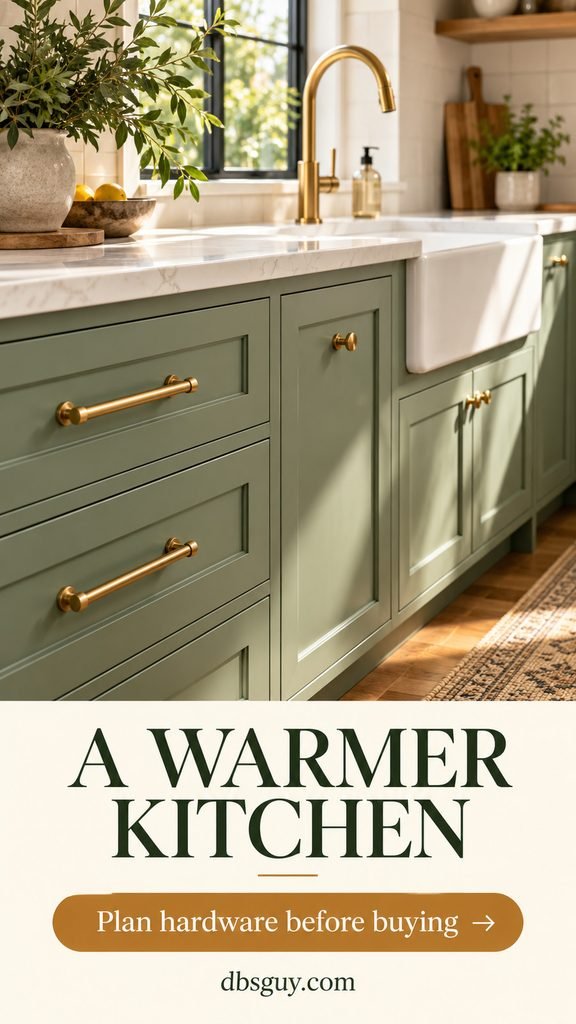
Sage cabinetry, a warm white countertop, and brushed brass make a gentle, grounded combination. The metal gives the green an edge without making the kitchen feel glittery. If this palette appeals to you, explore our sage green kitchen design ideas before settling on a cabinet color.
For an existing kitchen, cabinet hardware is often the most manageable place to begin. Buy one knob or pull first. Hold it against the cabinet in daylight and under your evening lights, then handle it with wet and dry hands to judge its grip. A beautiful knurled pull may feel too textured for your preference; a slim smooth pull may be difficult to grasp.
Measure the screw-hole spacing center to center. Overall pull length is a different measurement. Match existing holes if you want to avoid filling and refinishing the doors. Check screw length against door or drawer thickness, and open adjacent doors to make sure the new hardware won’t collide.
Choose the faucet for function as well as finish
If you are also changing the faucet, confirm the mounting holes, deck thickness, spout reach, handle clearance, and space for a pull-down hose beneath the sink. Keep the water outlet over the basin rather than selecting a dramatic shape that crowds the sink edge. Ask an installer to check compatibility before buying.
A stainless-steel sink or appliance does not require a silver faucet. You can keep those large practical surfaces and repeat brass through the pulls and faucet. Compare those two finishes in person: one brand’s “brushed brass” may be yellow, another brownish, and a “champagne” finish may look pinker beside both.
For a smaller budget, finish the cabinet hardware first and leave functioning plumbing in place. Count every door and drawer before pricing the project, and include screws, any patching, and installation—not just the per-piece price.
3. Plan bathroom brass as a coordinated set
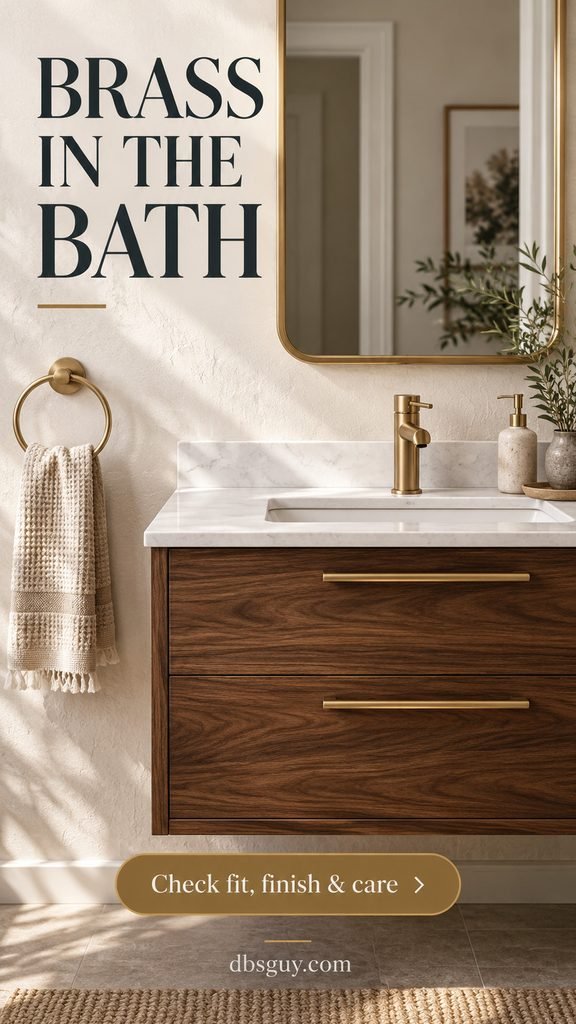
A walnut vanity and white basin give warm brass a quiet backdrop. In this concept, the faucet, mirror frame, and towel ring repeat the metal without covering every surface in gold. The wood supplies depth; the pale wall leaves the details visible.
Choose the faucet or shower collection first when those pieces are part of the project. Plumbing compatibility is harder to solve than finding a complementary mirror. Then compare the towel hardware, drain finish, lighting, and visible shower components. A drain is easy to overlook until a silver ring appears beside your carefully chosen brass faucet.
For a sink faucet, check the existing hole arrangement and whether a deck plate is needed. Consider spout height and reach together with basin depth. A tall faucet over a shallow basin may be an awkward pairing; appearance alone cannot predict splash behavior.
Ask your plumber about the valve before buying shower trim. A handle or shower plate that looks right may not fit the valve behind the wall. Confirm the exact compatible system and all required parts rather than buying by finish name.
In a bathroom without windows, compare brass samples under the lights you actually use. The finish can look much yellower in one setting than another. Our windowless bathroom guide can help you think through the surrounding lighting and palette.
For lighting near moisture, have the installer confirm the appropriate location rating and local installation requirements. A brass-colored sconce is not automatically suitable for a bathroom simply because it matches the faucet.
4. Mix metals with a clear visual job for each
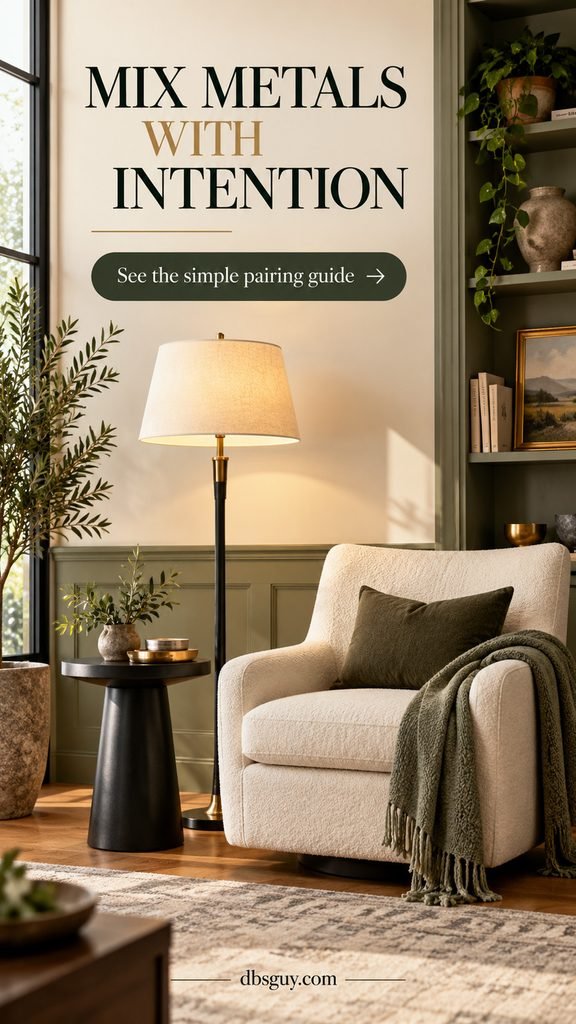
You can introduce brass while keeping black, nickel, chrome, or stainless steel. Our editorial starting point is simple: give one finish the main role, then repeat a second finish in a smaller set of visible details. Treat this as a design aid, not a building rule or a required ratio.
In the reading corner shown here, black grounds the side table, while brass connects the floor lamp with a small tabletop accent. The sage wall, ivory upholstery, and oak floor keep the contrast soft. For layout inspiration, see our small-space reading nook ideas.
Three pairings worth sampling
- Brass and matte black: clear contrast that works with restrained shapes. Try brass cabinet pulls with an existing black faucet, then repeat black in lighting or a mirror.
- Brass and polished nickel: a softer traditional combination. Let one take the repeated hardware role and use the other for a distinct focal piece.
- Brass and stainless steel: practical for kitchens. Keep appliances and the sink as the cool backdrop, then bring warmth through hardware or lighting.
Matching by category can simplify the room: all cabinet pulls in one finish, for example, with lighting in another. Exact matching matters most where pieces sit close together. At a distance, coordinated undertones and a repeated shape can be more useful than chasing identical names across manufacturers.
Brass also works beautifully with sage and warm textiles in a bedroom. Our sage green bedroom ideas offer palettes you can use around a brass lamp or mirror.
Test the look with a portable lamp or framed mirror before replacing hardwired fixtures. For a fall or winter refresh, brass can sit comfortably beside deeper textiles, but choose permanent fixtures for your year-round palette rather than a single holiday setup.
5. Clean according to the finish, not a generic brass hack
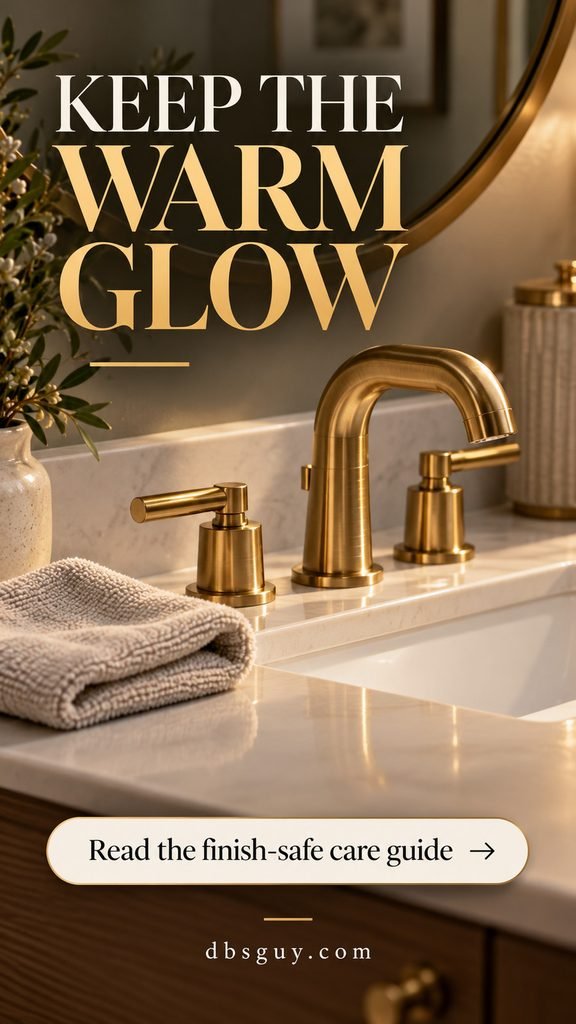
The first cleaning tool is the product’s care sheet. Brass polish, vinegar, abrasive pads, and strong bathroom cleaners are not interchangeable, and a method for an uncoated decorative object may damage a coated faucet.
- Identify the finish. Find the model and finish code on your order or ask the manufacturer. Do not infer a coating from shine.
- Start gently. Follow the maker’s instructions for a soft damp cloth or approved cleanser. Remove residue and dry with a clean, soft cloth as directed.
- Keep sink cleaners off the fixture. Wipe away accidental splashes promptly. Do not let soap or toothpaste residue accumulate around the base.
- Treat patina deliberately. If you chose unlacquered brass for its changing appearance, polishing removes some of that character. Use polish only when permitted for that exact product and when you want to restore shine.
Newport Brass’s care instructions warn against abrasive cleaning and several aggressive chemicals; its PVD guidance also excludes tarnish-removing products. Kohler’s care guide explains that unlacquered brass naturally ages and that approved brass polishing can restore its shine. Neither instruction is permission to polish a different coated product.
If a protected finish chips or starts peeling, stop experimenting with stronger cleaners and contact the manufacturer. A coating problem needs different advice from ordinary water spotting.
Your brass buying checklist
Before placing the full order, confirm these details:
- The actual material, finish code, coating, and whether aging is expected.
- A physical sample beside your paint, wood, stone, and existing metal.
- Dimensions, mounting holes, screw spacing, and clearances.
- Faucet, drain, and shower-valve compatibility where relevant.
- The care instructions, finish warranty, return policy, and availability of coordinating parts.
- The complete quantity and installed cost.
If you want a simple first move, choose one brass hardware sample and try it on the cabinetry you already have. Let the room and your daily routine decide whether you want a steady satin glow or a living finish that changes with time.
Frequently asked questions
Will all brass fixtures tarnish?
No. Unlacquered brass is intended to change with exposure, while protective finishes are designed to resist or limit that change. Results depend on the specific product, coating, environment, and care. Check the manufacturer’s description rather than relying on the word “brass.”
Is brushed brass easier to maintain than polished brass?
Brushing can make reflections and small marks less visually prominent, but it does not tell you how the surface should be cleaned or whether it will age. Compare the coating and care requirements first, then choose the sheen you prefer.
Does every brass item in a room have to match?
No. Compare close neighbors carefully, especially a faucet and drain. Elsewhere, repeating similar undertones and keeping a clear role for each metal can create a cohesive room without buying everything from one collection.
Is brass only for traditional interiors?
No. Shape changes the effect: a slender brushed pull looks modern, while a polished bridge faucet reads more traditional. Choose the silhouette as carefully as the color.
Can I use vinegar to remove water spots?
Only if the manufacturer explicitly permits it for that finish. Acidic cleaners can be unsuitable for protected surfaces. Start with the approved cleaning method and ask the maker about stubborn deposits.