
Your first cruise can feel surprisingly easy once you understand a few ship-specific habits. The surprises usually involve what costs extra, when you need to be somewhere, and which essentials should stay in your own bag.
Start with these four priorities: confirm your travel documents, build a buffer before embarkation, budget beyond the fare, and follow the ship’s posted boarding deadlines. The 29 first-cruise tips below explain what to do with those details, from booking to the last morning.
This guide focuses on mainstream ocean cruises departing from the United States. Inclusions and procedures vary by cruise line, ship, fare, booking country, and itinerary. Your sailing documents control the specifics; travelers of other nationalities must check their own entry requirements.

The visuals are AI-generated concepts created to illustrate these tips. They do not document a particular ship, cabin, cruise line, or completed trip.
1. The cruise fare is the starting point for your budget
A cabin, meals in designated venues, and much of the entertainment are typically included on mainstream cruises. That does not make every purchase on board part of your fare. Wi-Fi, some drinks, specialty restaurants, excursions, and spa treatments may be separate.
Build your cost checklist in four parts: the booking total, getting to the port, onboard extras, and spending ashore. Use the final checkout amount, including any displayed taxes and fees. Check whether an advertised per-person rate assumes two people sharing a cabin; solo pricing can work differently. Then set an extras budget you can comfortably stick to.

2. Daily gratuities and purchase-specific service charges are different
Some lines add daily crew gratuities to each guest’s account unless they are prepaid or included in the fare. Separately, a drink, dining package, or spa purchase may carry its own service charge. Prepaying the daily amount does not necessarily cover those other charges.
Read your booking’s current policy and look at the receipt before adding an additional tip. Multiply any daily charge by the guests it applies to and the chargeable days. Keep a little cash for optional extra thanks or services ashore, without assuming the same tipping rules apply everywhere.
3. A passport book can matter even when alternative documents are accepted
Document requirements depend on citizenship, ports, and the exact itinerary. Do not assume “leaving from a U.S. port” means a driver’s license alone is enough. Confirm accepted originals, passport validity, visas, and any requirements for children directly with your cruise line.
The U.S. Department of State recommends carrying a passport book even when the cruise line does not require one. A passport card cannot replace a passport book for an international flight home. That distinction matters if illness or a missed ship leaves you needing to fly. Review the official cruise-passenger document guidance, then keep your originals in your carry-on.

4. Flying in the day before buys you a useful buffer
A flight delay becomes a much bigger problem when your hotel is a ship scheduled to leave. Arriving at least a day before embarkation is a practical planning choice, especially if your trip involves connections or an international flight. More buffer may suit a difficult route.
Include the hotel and port transfer in your budget before comparing cruise deals. Check the actual terminal address, travel time, and shuttle schedule; “near the airport” does not mean “near the cruise port.” If your travel is disrupted, contact the airline and cruise line promptly rather than assuming the ship can wait.
Also read: Airport Outfit Ideas: What To Wear When Traveling.
5. Cabin location can matter more than the room category
A balcony does not tell you what is above, below, or beside the room. Before choosing a cabin, examine the deck plans for a pool deck, theater, nightclub, busy service area, or other possible sources of noise. Consider walking distance to elevators and the places you expect to use.
If you want a quieter starting point, look for cabins surrounded by other cabins, while recognizing that no location guarantees silence. A guarantee booking generally lets the line assign your room within the booked category; ask how much choice you are giving up. Travelers with accessibility needs should confirm the specific room features before paying.

6. Your arrival slot and the final boarding cutoff are separate
The ship’s departure time is not your check-in deadline. Cruise lines may assign terminal arrival windows and close boarding well before sailing. Treat the times on your boarding documents as appointments, and leave room for traffic, screening, and document checks.
Complete online check-in when available, save your boarding pass offline, and attach the required luggage tags before reaching the port. Check the terminal and any port-specific instructions again close to departure. Arriving early does not always let you board early; arriving after the cutoff can mean missing the cruise.
7. Some of the fun needs a reservation before you sail
On ships that use reservations, popular shows, activities, dining times, or excursions can fill before embarkation. Even a complimentary performance may have a booking step. Other ships operate those activities on a walk-in basis, so check your own ship rather than following a generic schedule.
Choose a few priorities and check when their booking windows open. Leave gaps between dinner and a show, and read cancellation terms before buying an activity. If something is unavailable, ask about onboard availability or standby procedures; a waitlist is a possibility, not a promise.

8. A port on the itinerary is a plan, not a guarantee
Weather, sea conditions, and operational issues can change a route or prevent a port call. If one island is the whole reason you are traveling, consider how you would feel if the ship could not stop there. A cruise that appeals to you as a complete trip is a more flexible choice.
Check independent tour cancellation terms before paying, including what happens if the ship skips the port. For Caribbean sailings, include hurricane-season planning in your research: the Atlantic season runs June 1 through November 30. That is a reason to understand flexibility and coverage, not a forecast for your sailing.

9. Your checked suitcase may arrive after you do
Luggage handed to porters is screened and delivered separately. You may have time to explore or eat before it reaches your room, and your cabin may not be available immediately either.
Pack a first-day bag with original travel documents, necessary medications, valuables, your phone and charger, and anything you want to use right away. A swimsuit, sunscreen, sunglasses, and a change of clothes can be helpful. Keep the bag comfortable to carry for several hours; a smaller tote often works better than a second suitcase.

10. The buffet may not be your only boarding-day lunch option
Many passengers head straight to the buffet after boarding, so it is worth checking what else is open. Depending on the ship, an included café, grab-and-go venue, or dining room may offer a calmer start.
Look at the day’s opening hours in the app or ask a crew member which venues are serving lunch and which are included. Choose somewhere convenient while you are still carrying your first-day bag. Avoid building your plans around an online menu from a different ship or sailing.

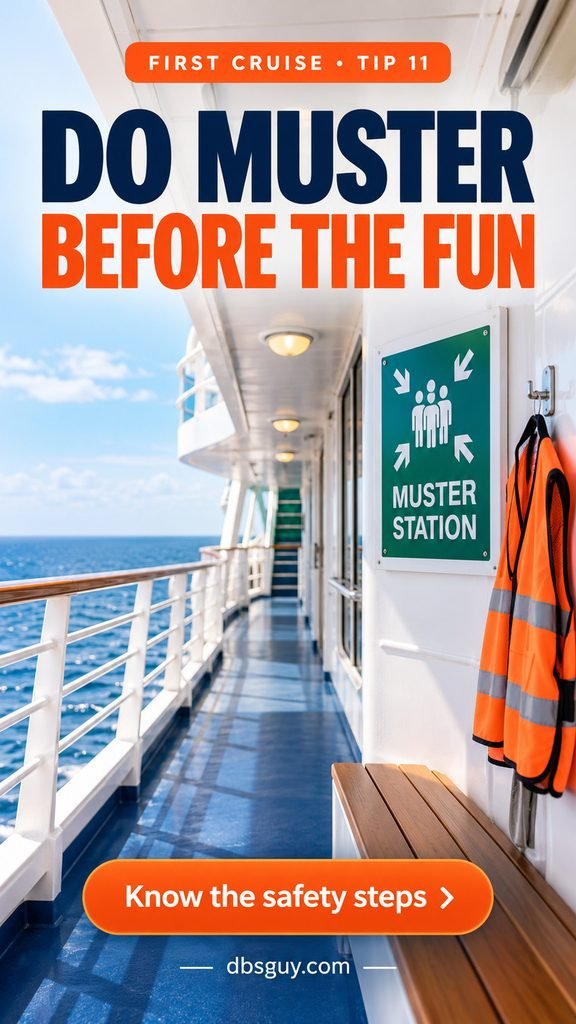
11. The muster drill belongs on your first-day to-do list
Muster is the mandatory safety briefing that explains your assigned assembly point and emergency procedures. Some lines use an app or cabin-TV lesson plus an in-person check at the station; others use a different format.
Follow your ship’s instructions and finish the required steps within the announced window. Know the route from your cabin to the station, and ask for help if you need assistance understanding or completing the process. Once it is done, you can enjoy sail-away without an unfinished safety task hanging over the afternoon.
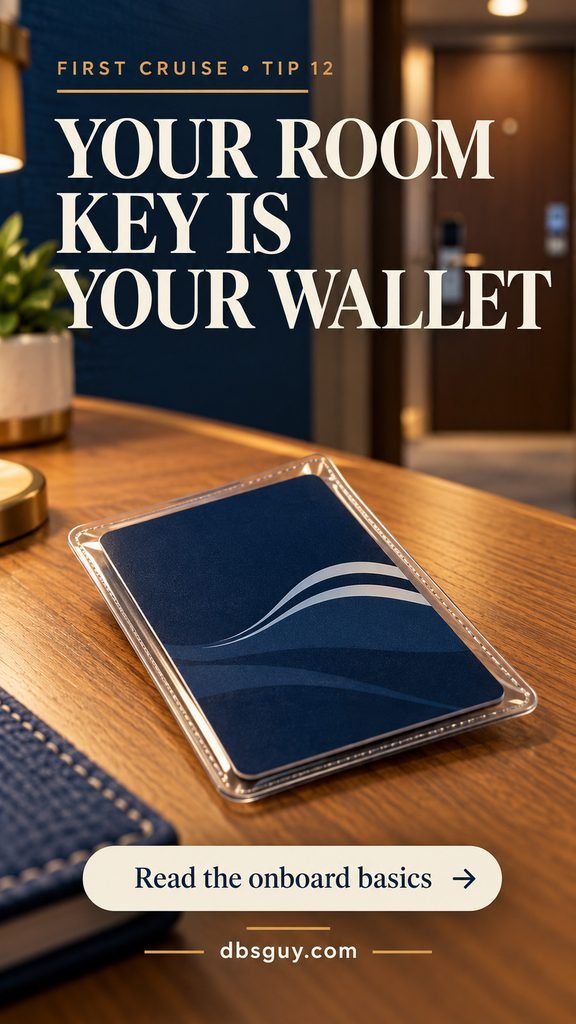
12. Your room key often doubles as your onboard wallet
On many ships, a key card, wearable, or app-linked account is used for onboard purchases. That convenience can make small purchases easy to overlook, especially when no cash changes hands.
Confirm how your line handles deposits or card authorizations, and keep your access card secure. If traveling with children, ask what purchase restrictions you can set. You may still need cash or a bank card ashore, so do not treat your cruise card as a payment method outside the ship.
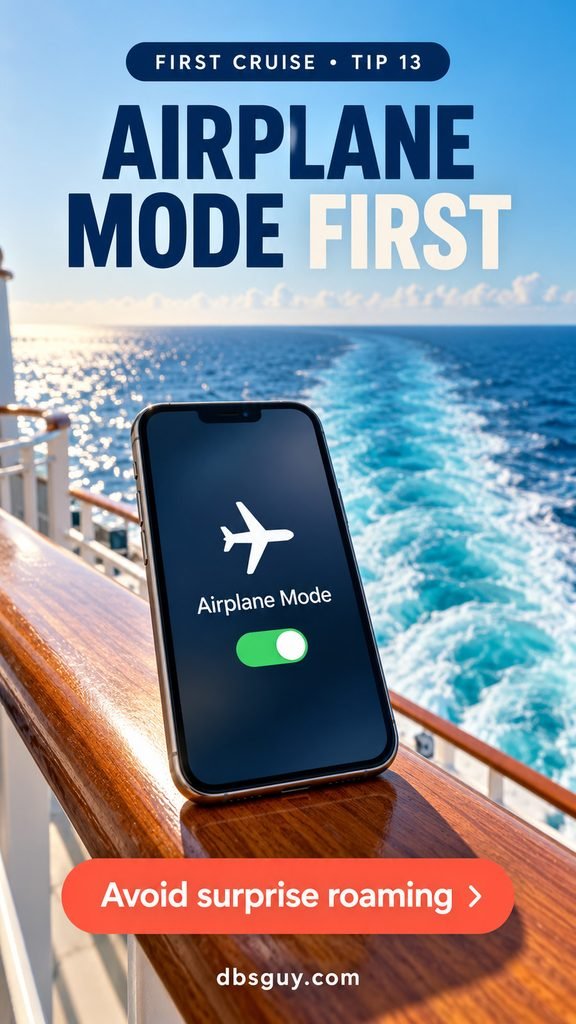
13. Set your phone up before it connects at sea
Shipboard cellular service and ship Wi-Fi are different connections. Your phone can connect to a maritime cellular network, and the charges depend on your carrier and plan. Do not assume a domestic unlimited plan or a land-based travel add-on covers the ship.
If you are using Wi-Fi instead of cellular service, put your phone in airplane mode, then switch Wi-Fi back on. Check your carrier’s guidance about Wi-Fi Calling too, because it can still affect billing. Download maps and entertainment beforehand, and confirm your plan before turning cellular service on in port.
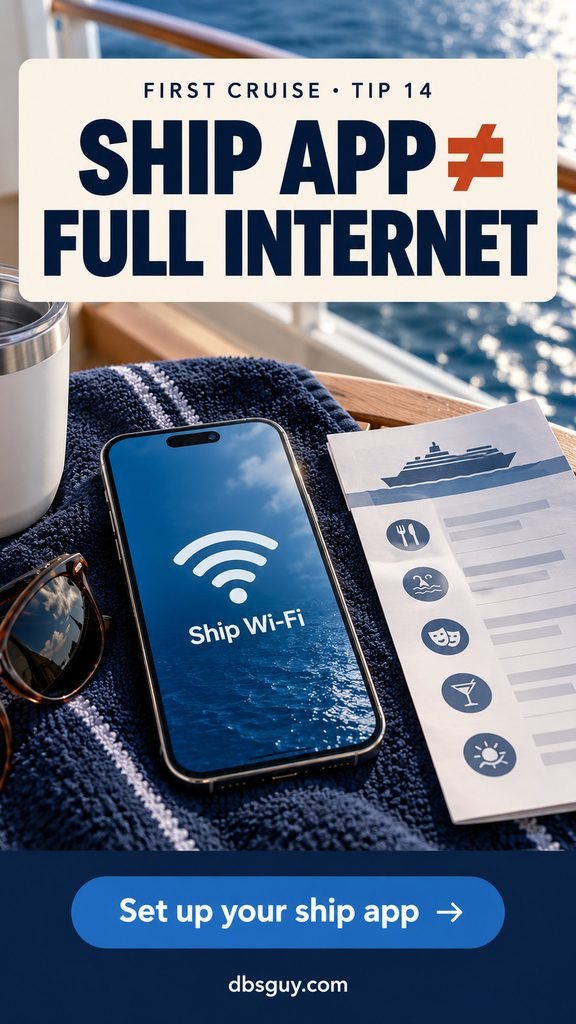
14. The ship’s app may work without a paid internet package
A connection to the ship’s Wi-Fi network does not automatically give you full internet access. For example, Royal Caribbean says its onboard app can be used on guest Wi-Fi without buying an internet package. Browsing websites or using other online apps is a separate question.
Install your line’s app, sign in, and connect your booking before traveling. On board, check which features and chat functions are included. Agree on a meeting place with your travel companions in case a phone dies or messages fail. Choose an internet package based on actual needs, including device limits and permitted services.
15. A drink package only makes sense if the numbers fit
Compare the full package cost, including its service charges, with the drinks you expect to buy. Account for port days, included beverages, drinks excluded from the package, and any rule requiring other eligible adults in the cabin to purchase it too.
As a purely hypothetical example, a $70-per-day package and $10 eligible drinks would break even at seven drinks a day, assuming both figures already include all charges. Your real prices and inclusions may be very different. Do the calculation with your booking’s figures; there is no reason to buy a package that would push you to drink more than you want.

16. You can enjoy dinner without buying specialty dining
On mainstream cruises with included dining, the main dining room and buffet usually provide enough choices to eat without purchasing a specialty package. A restaurant’s polished appearance alone does not tell you whether it costs extra.
Check the venue list, opening hours, and menu labels. Some included restaurants have optional premium dishes, and room service may carry a delivery or service fee. Confirm your dinner arrangement and request dietary assistance in advance when needed. Specialty dining can be an enjoyable planned extra, but it does not need to be the default for every night.

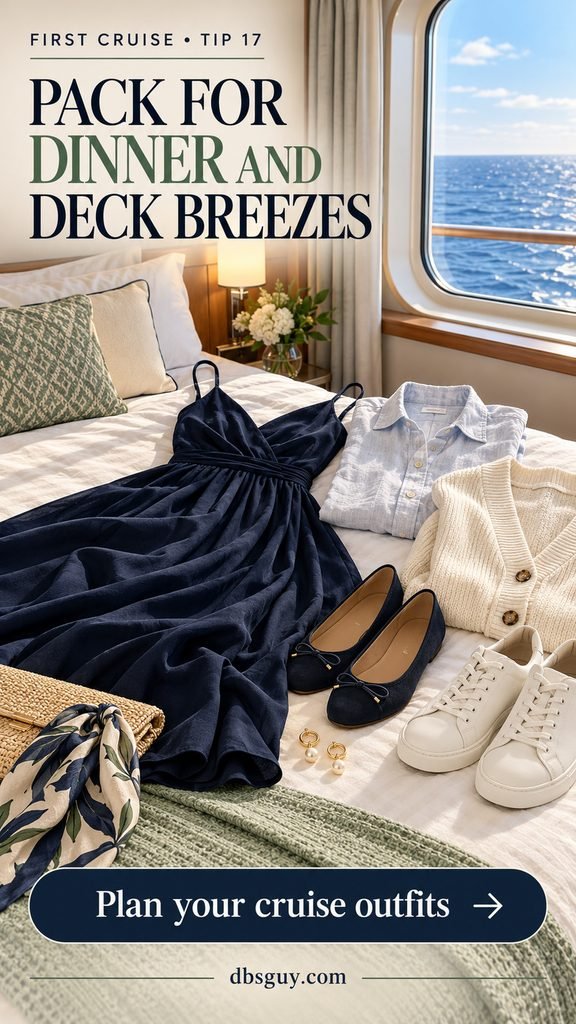
17. Pack for dinner rules and breezy decks
Your swimsuit will not cover every setting on board. Evening dress expectations vary by line and restaurant, while wind on deck and air-conditioned interiors can make a light layer useful even on a warm-weather cruise.
Build a small mix-and-match wardrobe around your actual itinerary: comfortable walking shoes, daytime clothes, a layer, and dinner outfits that meet the venue’s rules. Check themed evenings before adding extra clothes. A navy dress, linen shirt, cardigan, flats, and sneakers illustrate the idea in the image; adapt the pieces to your style and destination.
Also read: 30 Stunning Cruise Ship Outfit Ideas You’ll Love.
18. “Cruise-friendly” on a product listing is not permission
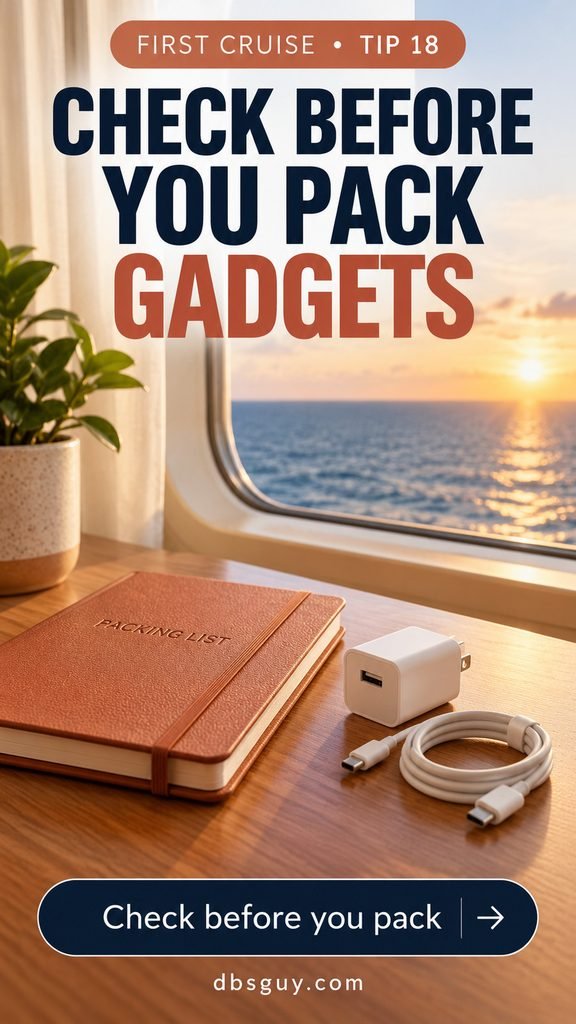
An online packing recommendation can be out of date or wrong for your line. Irons, garment steamers, extension cords, power strips, and outlet adapters may be restricted or prohibited. Electrical rules can be more specific than simply avoiding surge protection.
Read the current prohibited-items policy before buying gadgets. Pack only chargers and accessories that meet your line’s requirements, and check the outlet types on your ship. If you use a medical device that needs electricity or special supplies, contact the cruise line’s accessibility team in advance rather than improvising with an extension cord.
19. Laundry access is not the same on every ship
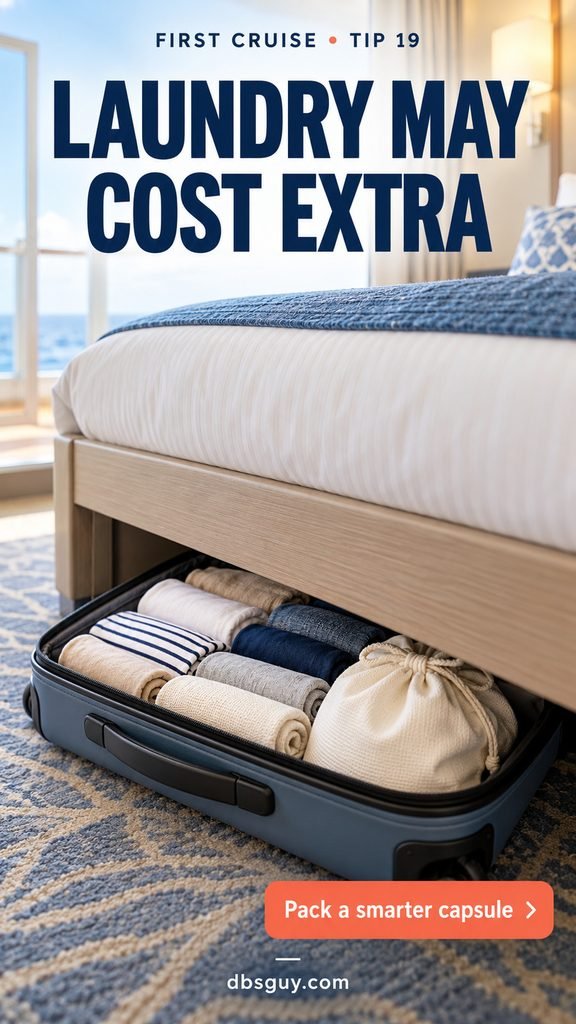
Do not pack on the assumption that you will find a self-service laundry room. Some ships have one; others offer paid wash-and-fold, pressing, or cleaning services instead. Royal Caribbean, for example, says it does not provide self-service laundry facilities.
Check availability, prices, and turnaround time if you plan to rely on laundry. For a shorter trip, a capsule wardrobe and a separate dirty-clothes bag may be simpler. Choose pieces you can wear more than once when appropriate, while bringing enough underwear, socks, and activity-specific clothes for the itinerary.
20. Make a motion-sickness plan before you feel sick
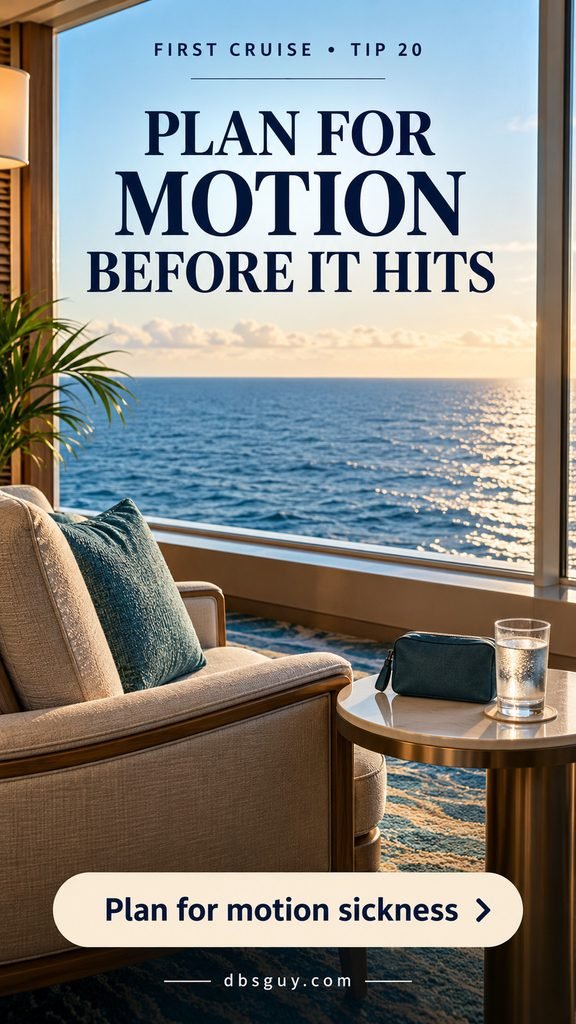
A large ship can still move, and your response may differ from someone else’s. If you have a history of motion sickness, ask your healthcare provider or pharmacist before sailing about suitable options and when to use them. Consider side effects, interactions, and any existing conditions.
The CDC notes that a view of the horizon and avoiding reading or other close visual tasks can help reduce motion sickness for some travelers. They are not guarantees. If symptoms are severe, unusual, or persistent, contact the ship’s medical team rather than assuming every illness is seasickness.
21. Hand sanitizer is an extra, not a replacement for handwashing
Shared spaces make simple hygiene habits worth keeping. The CDC recommends washing with soap and water for at least 20 seconds, especially after using the restroom and before eating. Hand sanitizer does not work well against norovirus.
Use the sinks available near dining areas and take time to wash before a meal. If you develop vomiting, diarrhea, or other concerning symptoms, contact the ship’s medical center and follow its instructions. Reporting illness helps staff respond; trying to push through a buffet visit or shore tour can affect other passengers too.

22. The ship’s medical center is not automatically covered by your insurance
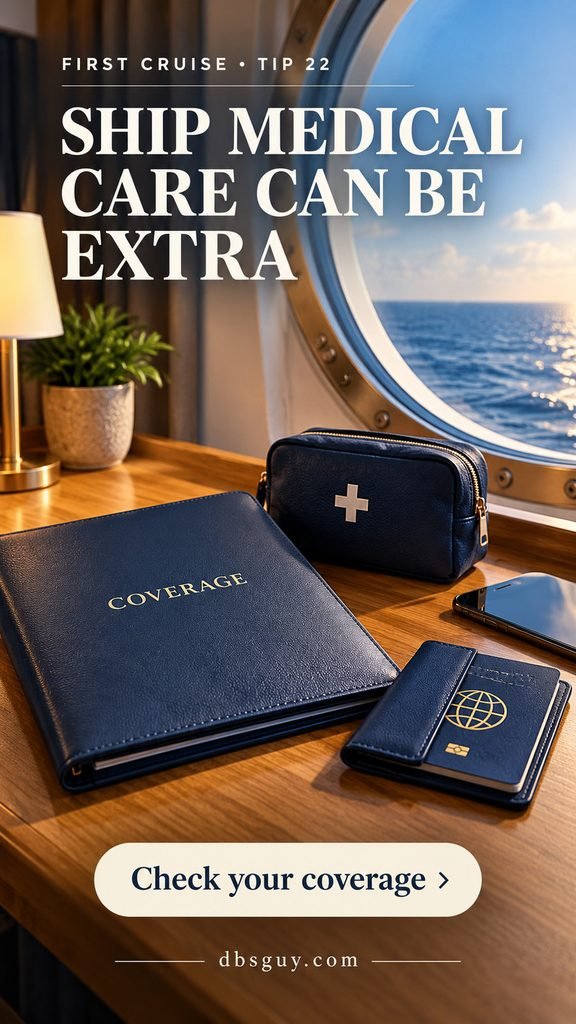
Onboard treatment can generate a separate bill, and your regular health plan may not cover care on a ship or abroad. Medical evacuation coverage is also different from ordinary trip cancellation coverage.
Before departure, ask your insurer what is covered, where it applies, and whether payment or reimbursement is required. Review any travel policy’s medical and evacuation limits, exclusions, and preexisting-condition terms. Travelers with ongoing care needs should also ask the cruise line what facilities and support the specific ship can provide. Carry the insurer’s assistance number with your documents.
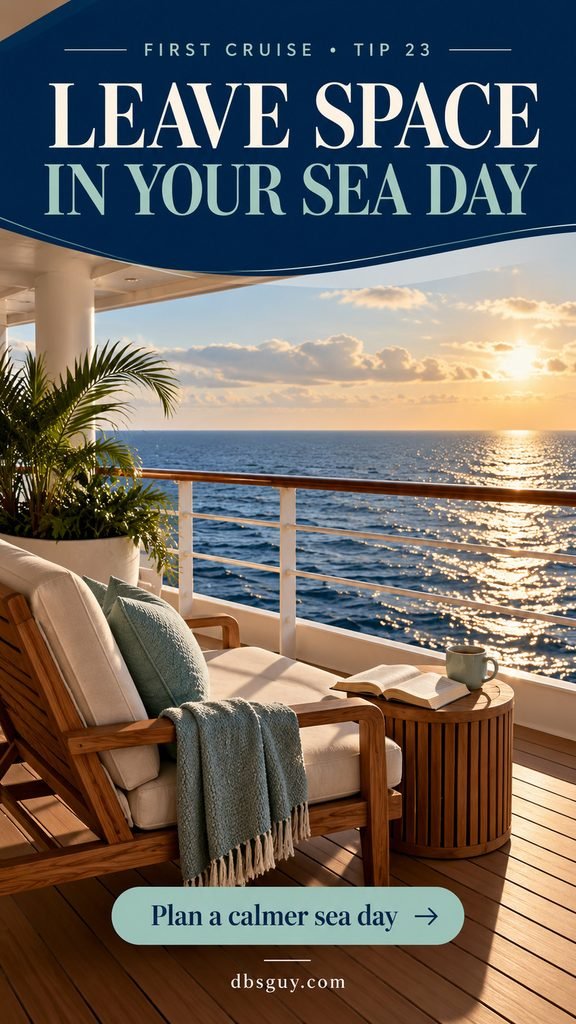
23. A sea day does not need to become a packed schedule
The daily program can make everything look like something you should do. Choose a couple of activities you care about, then leave room for reading, a meal, a walk, or a quiet seat with an ocean view.
Explore beyond the busiest pool area and check which lounges or promenade spaces are open. Respect posted seating rules and avoid reserving loungers you are not using. If your group has different interests, split up for part of the day and agree on a time to meet. A little unscheduled space can make the trip feel more like a vacation.
Also read: How To Organize Your Time On Vacation.
24. Ship time and your phone’s clock may disagree
Time-zone changes and automatic phone settings can create confusion in port. Follow the ship’s announced time and the posted all-aboard deadline, which is different from the scheduled sailing time. Check both before leaving the ship.
Write down the deadline, confirm your watch matches ship time, and allow a sensible return buffer for traffic and queues. A watch only helps if it is set correctly. Save the port agent’s contact details and instructions supplied by the ship. Do not plan your return around a phone clock you have not checked.

25. A tender port adds a boat ride and possible waiting time
At a tender port, the ship anchors offshore and smaller passenger boats carry people to land. Getting ashore may involve tickets, assigned groups, queues, and weather-dependent operations. The last tender back can be earlier than the ship’s departure.
Check the tender process before choosing an early independent tour, and leave extra time to return. If you use a wheelchair, scooter, or other mobility aid, ask about that port’s transfer arrangements before booking. Accessibility varies by equipment and conditions; a general ship accessibility statement does not settle every tender transfer.

26. Compare excursions by their delay policy as well as their price
A cruise-line tour and an independently booked tour may look similar but offer different support if something goes wrong. Royal Caribbean, for example, says it will wait for a delayed line-booked excursion or arrange a return to the ship at no expense if it cannot wait. Read your own line’s terms.
For any tour, check meeting location, return time, activity level, accessibility, cancellation rules, and emergency contact details. Independent tours can be a reasonable choice, but do not assume the ship will wait for them. A port with a short call or a long drive inland deserves a particularly careful return plan.

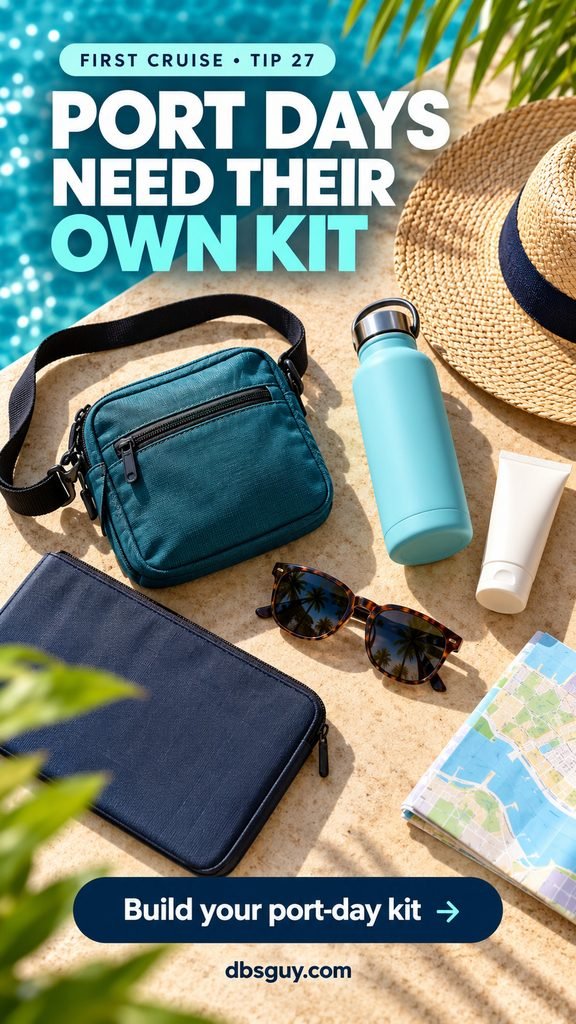
27. A port day needs a small plan and a separate bag
The cruise terminal may be close to town, or it may be far from the beach or attraction you have in mind. Check walking distances, transport costs, opening hours, and the route back before leaving. You can often explore independently without buying a tour, subject to the destination’s rules.
Carry the ship-required card and identification, a secure payment method, water, sun protection, and offline directions. Follow the crew’s instructions about which original documents to take ashore. Keep valuables secure and leave unnecessary items in the cabin. A crossbody bag or compact daypack is easier to manage than your boarding-day luggage.
Also read: Cruise Outfit Ideas For Your Caribbean Vacation.
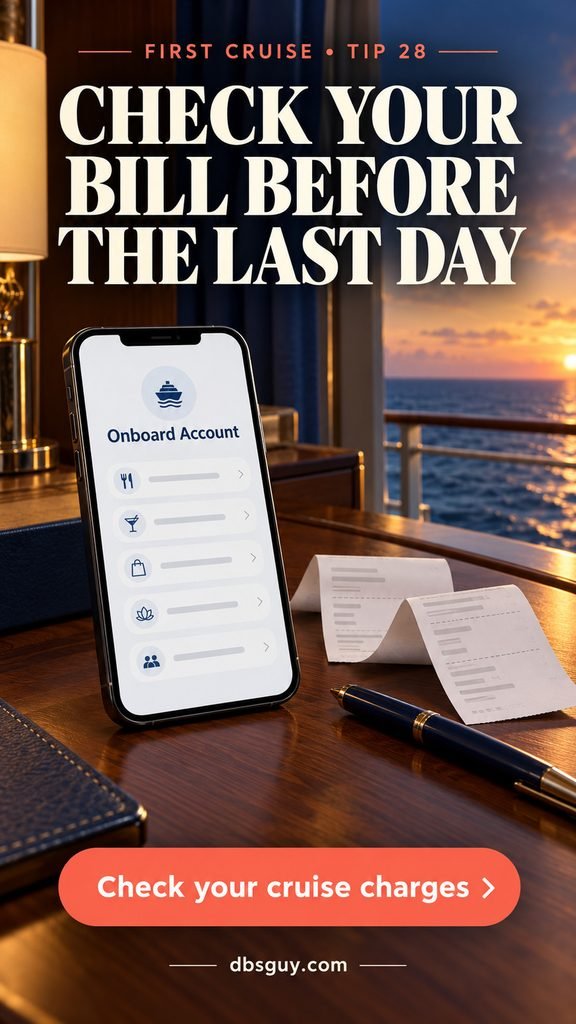
28. Check your onboard account while mistakes are easier to fix
Review your account during the cruise instead of leaving every question for the final morning. Look for unfamiliar purchases, missing credits, or a charge you thought was included in a package.
Keep useful receipts and reservation confirmations until the bill is settled. If something looks wrong, ask the relevant venue or guest-services team to explain it while the details are fresh. A temporary card authorization is not always a final charge; your cruise line and bank can explain how those holds are handled. Early questions are usually easier to manage than a departure-day queue.
29. The last-night packing instructions can catch you off guard
If you use the line’s luggage collection service, you may need to place tagged bags outside your cabin the evening before departure. Keep next-day clothes, shoes, toiletries, medications, documents, valuables, and chargers in a separate bag.
Self-assist departure generally means carrying all your own luggage, so choose it only if you can manage the bags and route safely. Follow your assigned procedure and wait for clearance to disembark. When booking the flight home, allow time for the ship’s arrival, port formalities, transfers, and airport check-in; the published docking time is not the time you will reach the airport.

Your first-cruise checklist before you leave home
- Confirm every traveler’s original documents and the itinerary’s entry requirements.
- Save boarding passes, arrival instructions, hotel details, and the correct terminal address offline.
- Review included meals, gratuities, packages, and your total extras budget.
- Install the cruise app, check reservation windows, and review your phone plan.
- Pack a first-day bag, approved chargers, needed medications, and clothing for the actual itinerary.
- Check health coverage, port-day return plans, and the line’s departure instructions.
First-cruise questions beginners often ask
Do I need a drink package or an internet package?
Neither is automatically necessary. Check which beverages are included and whether the ship’s app works on guest Wi-Fi without paid internet. Buy a package only when its inclusions, restrictions, and total price suit how you plan to travel.
Can I get off the ship without booking an excursion?
Often, yes, when local entry rules and the ship’s procedures allow it. Research transport and the route back, carry the required identification, and follow the ship’s time and all-aboard deadline. Tender ports need extra planning.
Do I still need cash?
A modest amount can be useful for optional tips and places ashore that do not take cards. Check local payment practices before the trip. Onboard purchases commonly go through your ship account, but the payment setup varies by line.
What is the most useful thing to keep in my carry-on?
Your original travel documents and necessary medications come first. Add valuables and the things you need before checked luggage reaches the cabin. Keep the bag manageable enough to carry while you explore.
How can I keep my first cruise from feeling overwhelming?
Handle the time-sensitive details first: documents, arrival, safety briefing, essential reservations, and port deadlines. Choose a few activities you care about and leave some time open. You do not need to use every venue to enjoy the trip.