Whatever the rest of your body care routine looks like, the first and most important step is a proper cleanse — for every bit of skin from head to toe. Whether you soak in a bath or step into a shower, the tools on offer are the same four: a washcloth, a loofah, a net sponge, or just your hands, all promising refreshed, rejuvenated skin. Janiah McKelton asked three board-certified dermatologists to weigh the pros and cons of each one, to settle once and for all whether a loofah really cleans better than a washcloth — and which method is actually best for your skin. Here is what they said, in the same order, with the same advice. I have not tested these tools myself, and nothing here is my own experience; I am reporting what McKelton and the dermatologists said.
In this article: the science behind washing your body; the pros and cons of a washcloth, a loofah, a net sponge, and your hands; washing with multiple methods; and the final takeaway.
Key takeaways: washcloths give mild exfoliation and cost very little, but they need frequent washing and drying to stay hygienic; loofahs and net sponges exfoliate effectively, but they can harbour bacteria if they are not cleaned and dried properly; and washing with your hands is ideal for sensitive skin and prevents over-exfoliation — and it needs no extra tools at all.
Meet the experts: Dr. Adam Mamelak is a board-certified dermatologist at Westlake Dermatology; Dr. Courtney Rubin is a board-certified dermatologist and the co-founder and CMO of Fig. 1; and Dr. Morayo Adisa is a dermatologist and Medical Director at Dermatology Physicians SC in Chicago. Everything that follows comes from them, as reported by McKelton.
The Science Behind Washing Your Body
Before getting into each tool, it helps to understand what washing itself does for your skin. Dr. Mamelak puts it plainly: “Regular washing removes dirt, oils, and microorganisms like bacteria and fungi from your skin.” Cleansing is also the best way to keep pores from getting clogged — and according to Dr. Rubin, when dirt and debris do clog pores, it can lead to unwanted breakouts on the body.
There is another benefit too, depending on the tool you use: gentle exfoliation. Dr. Rubin explains that “washing that includes gentle exfoliation can remove dead skin cells from the surface of the skin, leading to smoother, softer skin.”
Washcloth
Washcloths are among the most common and popular cleansing tools out there, and they work by putting a mildly abrasive barrier between your hand and your skin. According to Dr. Mamelak, they are a good option if you want a cost-effective approach, since washcloths are available at every price point.
Not all washcloths are made equally, though. Depending on where you shop, one could be made from cotton, microfiber, bamboo, or linen. Choosing the softest fabric you can is the best way to avoid damaging your skin barrier — and if you prefer a bit more texture, hold back from scrubbing too aggressively so you do not irritate your skin.
Hygiene is where washcloths demand the most attention. The experts say it is best to use a new washcloth each time you shower. After each use, wring the water out and hang it somewhere dry so bacteria cannot grow, and wash your washcloths regularly.
Loofah
A loofah is easy to recognise by its rough, spongy, fibrous texture. It has become a staple bathing tool because of what it does for the skin: it helps cleanse and stimulate circulation. Dr. Rubin adds that “loofahs are also popular because their abrasive texture can help physically exfoliate dead skin cells.”
A high-quality loofah can leave skin smoother — but there is a limit. Using one more than twice a week can potentially damage the skin barrier or cause redness, and people with sensitive skin or chronic skin conditions like eczema or psoriasis should skip loofahs altogether.
Keeping a loofah clean is crucial if you want to avoid irritation or infection. Dr. Rubin warns that “loofahs can be a breeding ground for bacteria when they sit in a moist shower environment and never really dry.” A good rule of thumb is to store yours in a dry spot with enough ventilation. Dr. Mamelak recommends cleaning loofahs in the washing machine on high heat; alternatively, you can soak them in baking soda, white vinegar, or diluted bleach and let them air dry. As he puts it, “loofahs should be cleansed weekly to prevent bacteria from growing in them.” The experts also recommend swapping a loofah for a new one every few weeks.
Net Sponges
A net sponge is an open-weave washcloth that has been used in Africa for centuries, and it feels a lot like a loofah. Dr. Mamelak notes that “net sponges are typically made of nylon,” and the two tools mimic each other in function as well. Dr. Rubin explains that “nets have become more popular because they have many of the same physical exfoliation benefits of the loofah but [because of their porous fabric] are more likely to dry more quickly between uses, making them more sanitary.”
Net sponges have their downsides too. Dr. Rubin says that, just like any exfoliating tool, if the net is used too harshly it can disrupt the skin barrier — especially for people who deal with eczema flares, redness, irritation, and post-inflammatory pigmentation.
On the upside, net sponges do not need to be replaced or washed as often as loofahs. With gentle machine or hand washing, most can last one to two years. Dr. Rubin still advises checking with the source: “I recommend following up with the manufacturer of your net for specific [storage and maintenance] recommendations.”
Hands
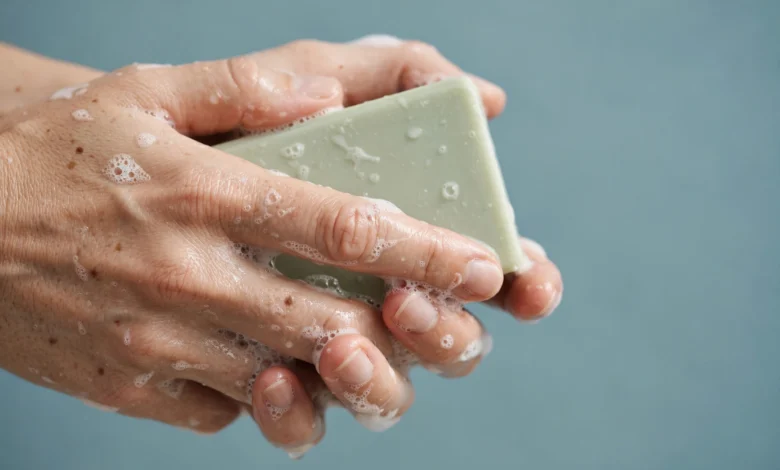
Some people skip the extra tools entirely and just use their hands — and dermatologists rate this as a genuinely effective way to cleanse, especially for patients with sensitive skin. Dr. Rubin says, “This is how I generally recommend my patients to wash.” She adds that “washing with your hands is gentle on the skin and prevents over-exfoliating and skin barrier disruption.”
There is a practical upside too: according to Dr. Mamelak, using your hands is more convenient and cost-effective than any other method. The trade-off is that hands alone do not give you much exfoliation.
If you wash with your hands, there are a couple of safety steps to take. Dr. Rubin says, “I always recommend washing with clean hands, and rinsing all soap residue from the skin completely as soap suds left on the skin can cause irritation and contact dermatitis.”
A Combination
In certain cases, a double cleanse can be worth it. The warning is the same as with any method: do not overwash or overexfoliate and strip your skin of its natural oils, so stay mindful of irritation — and always follow a cleanse with a body lotion or moisturizer.
For a deeper cleanse — say, after an extra sweaty workout, a day at the beach covered in SPF and sand, or to remove a spray tan — the approach is similar to shampooing your hair twice sometimes: smooth body cleanser on with your hands first, then follow it up with a washcloth or a mitt for deeper exfoliation.
For spray tan removal in particular, there are exfoliating mitts made for exactly that job. The article likes the Dolce Glow Exfoliation Mitt for this purpose. It would not be something you use every day, since its job is to remove the top layer of skin along with the leftover tan.
The key, no matter how you cleanse, is to use a gentle cleanser, says dermatologist Dr. Morayo Adisa. “Use a gentle hydrating cleanser that is formulated for your skin type,” she advises. Her own preference for the tool to go with it is “a washcloth or gentle loofah that wouldn’t irritate the skin with use.”
The Final Takeaway
Each way of washing — washcloths, loofahs, net sponges, hands, and exfoliation mitts — comes with its own set of pros and cons. Which one is best for you depends on your individual needs, the skincare results you want to see, and how often you are willing to wash your tool.
Dr. Mamelak is honest about the fact that there is no single winner: “The truth is, it’s hard to choose just one method.” As he puts it, the choice should “depend on the individual’s skin and skin type.”