Is It Safe To Cook With A Gas Stove? Yes, But Only If You Take 1 Very Important Step

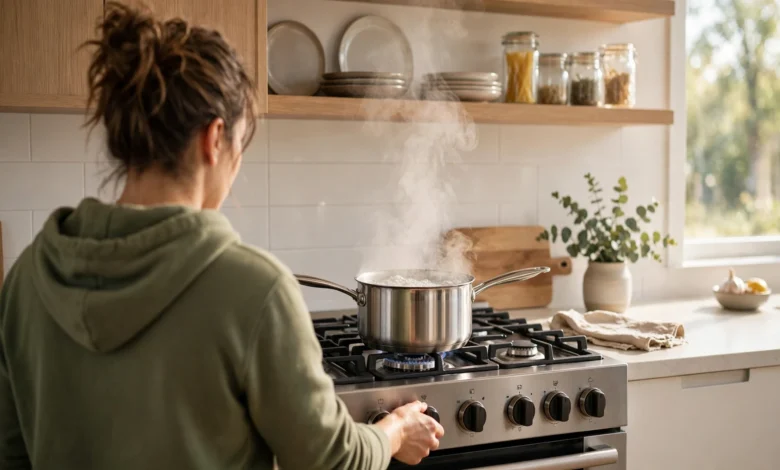
If you cook with a gas stove, you probably love the instant flame, the precise control, and the way a pan heats up the second you turn the knob. What you may not think about is what that flame is putting into the air around you. A group of food safety specialists, indoor air quality experts, and lung doctors all agree on one thing: cooking on gas is perfectly fine — as long as you take one simple step every single time you light a burner.
That step is opening a window. It sounds almost too easy, but the science behind it is solid, and the experts we are about to walk through explain exactly why it matters, what happens inside your kitchen when you skip it, and the handful of other small habits that make gas cooking even safer. Here is everything you need to know, in plain language.
1. The One Step Every Expert Agrees On: Open A Window Every Time You Cook

Ask a food safety expert, an air quality specialist, or a pulmonologist the same question — is it safe to cook with a gas stove? — and you will get the same answer from all of them. Yes, it is safe, but only if you ventilate your kitchen while you cook. The simplest way to do that is to open a window every time you turn on a burner, without exception.
It does not matter whether you are searing a steak or just warming up soup. The flame itself is the source of the issue, not the recipe. Fresh air from an open window dilutes the pollutants that build up during cooking and carries them out of the room before they can accumulate. It is a small habit, it costs nothing, and according to every expert consulted on this topic, it is the single most important thing you can do.
2. How A Gas Stove Changes The Air In Your Kitchen
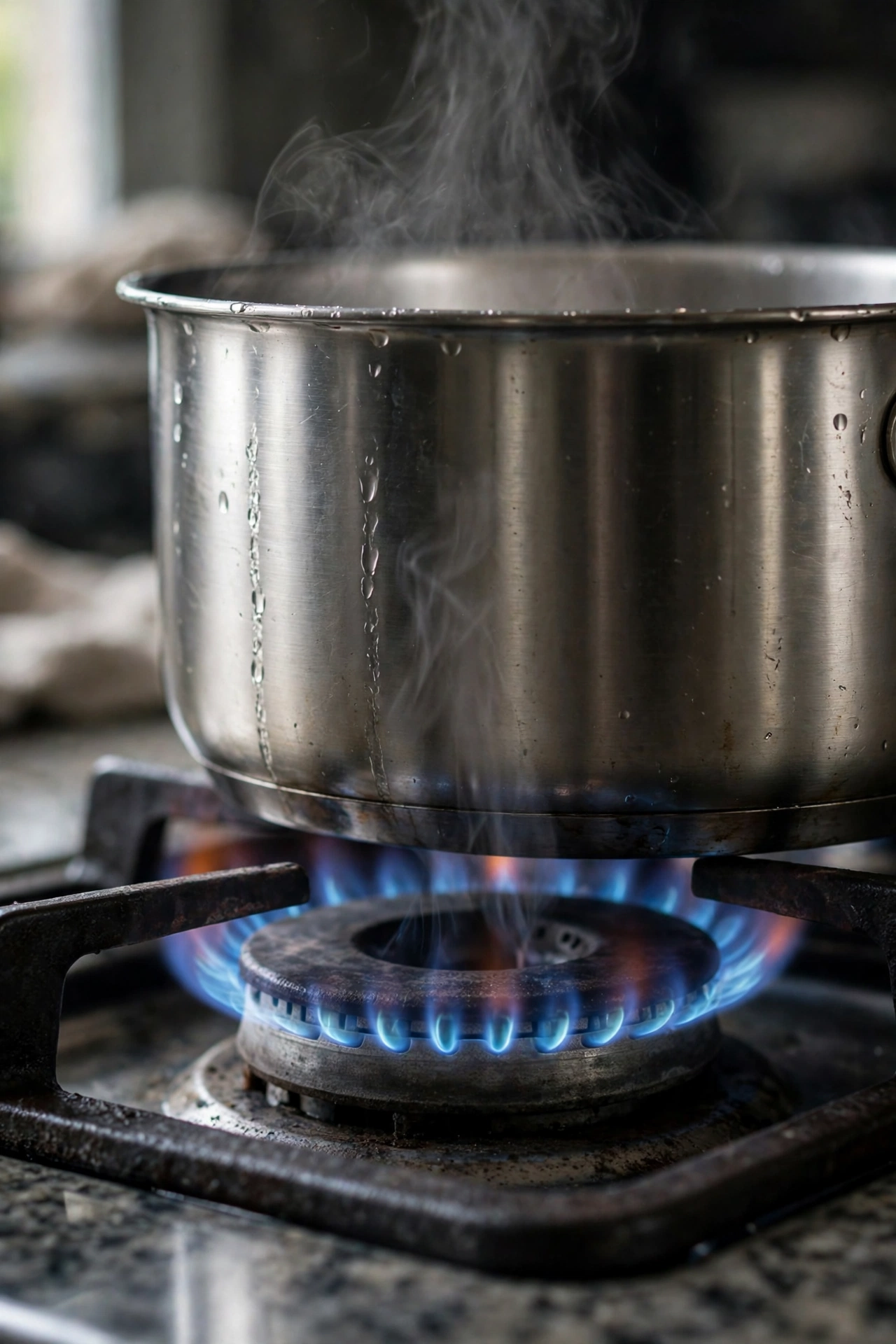
A gas flame affects indoor air in two ways. First, the intense heat triggers reactions in the air itself that create nitrogen oxides, a family of gases known to irritate the lungs. Second, natural gas does not always burn completely. When combustion is incomplete, the flame releases extra pollutants into the room, including carbon monoxide, tiny airborne particles, and formaldehyde.
Andy Fox, a filtration and indoor air quality specialist at Filtrete, explains that both of these processes happen at the same time, every time a burner is lit. You cannot see most of these pollutants, and you usually cannot smell them either, which is exactly why they are easy to overlook. Your kitchen can look and feel perfectly normal while the air in it is quietly carrying more irritants than it should.
3. What The Research Actually Found

This is not just expert opinion — it is backed by published research. A 2023 study in the American Journal of Respiratory and Critical Care Medicine, shared by Dr. Alexander Rabin, a pulmonary care doctor and professor at the University of Michigan Medical School, found that cooking with a gas stove releases air pollutants into the home, most notably nitrogen dioxide.
The same research showed something encouraging: proper ventilation makes a major difference. Opening a window or running an exhaust fan while cooking cut exposure dramatically. In other words, the risk is real, but so is the fix — and the fix is entirely within your control.
4. Why Nitrogen Dioxide Is Especially Tough On Asthma, COPD And Kids

Nitrogen dioxide irritates the airways, and for some people that irritation quickly turns into real symptoms. Dr. Rabin notes that breathing it in can contribute to wheezing, coughing, and shortness of breath in people with asthma. People living with COPD and other chronic lung conditions can feel the effects too.
Children deserve special attention here. Their lungs are still developing, which makes them more sensitive to the gases a gas stove produces. If anyone in your household has asthma, COPD, or young lungs still growing, ventilation is not just a nice habit — it is the main thing standing between a normal family dinner and an avoidable breathing flare-up.
5. Carbon Monoxide: The Pollutant You Cannot See Or Smell
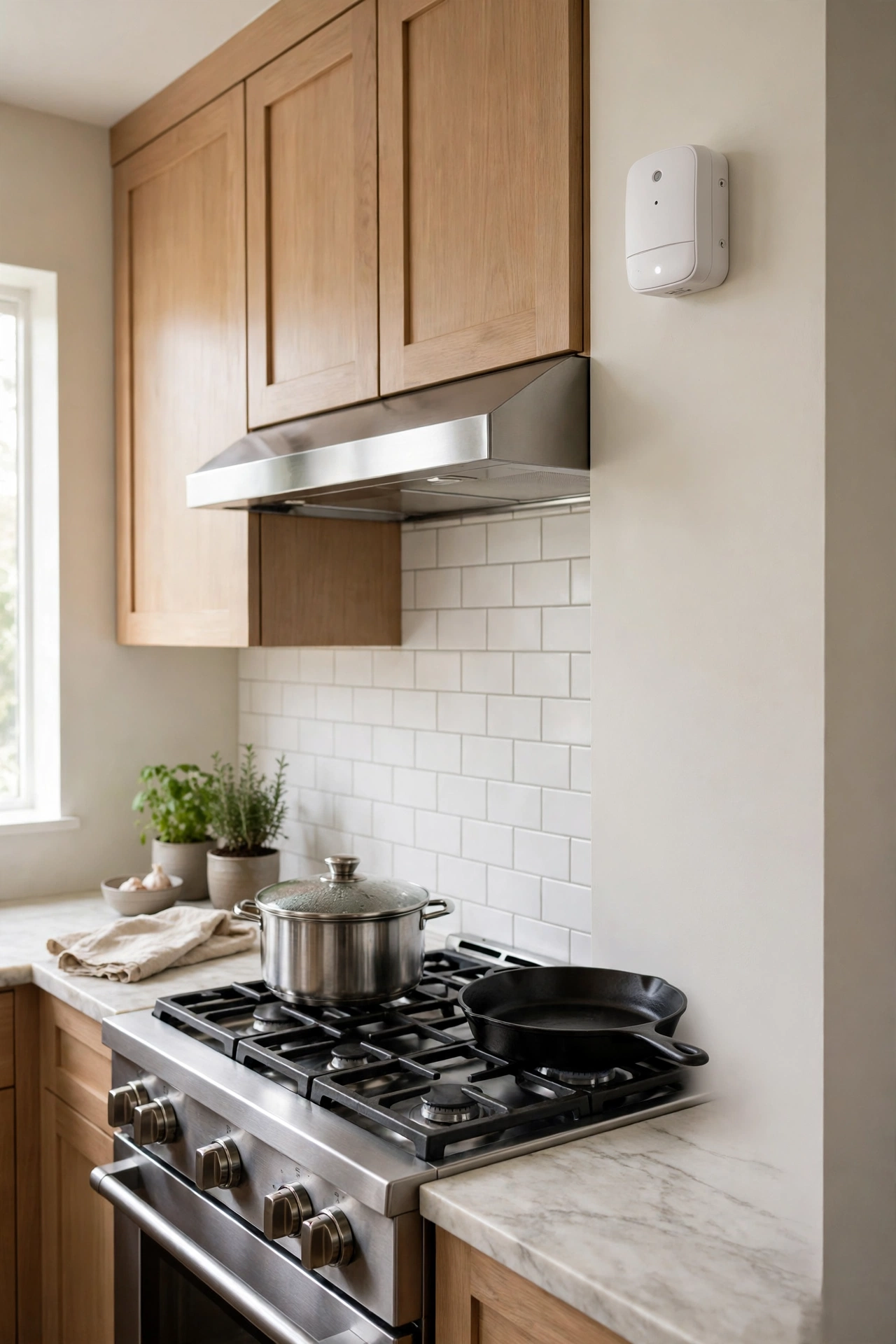
Nitrogen dioxide is not the only concern. Pulmonologist Dr. Gustavo Ferrer points out that gas stoves can also release carbon monoxide, a gas that is especially dangerous because it interferes with the blood’s ability to carry oxygen around the body.
Significant exposure can cause headaches, dizziness, nausea, and confusion — and in severe cases, it can lead to life-threatening poisoning. This is the same reason every home with gas appliances should have a working carbon monoxide detector, a point we will come back to later. The gas is invisible and odourless, so you cannot rely on your senses to warn you.
6. Opening A Window Works — With One Exception
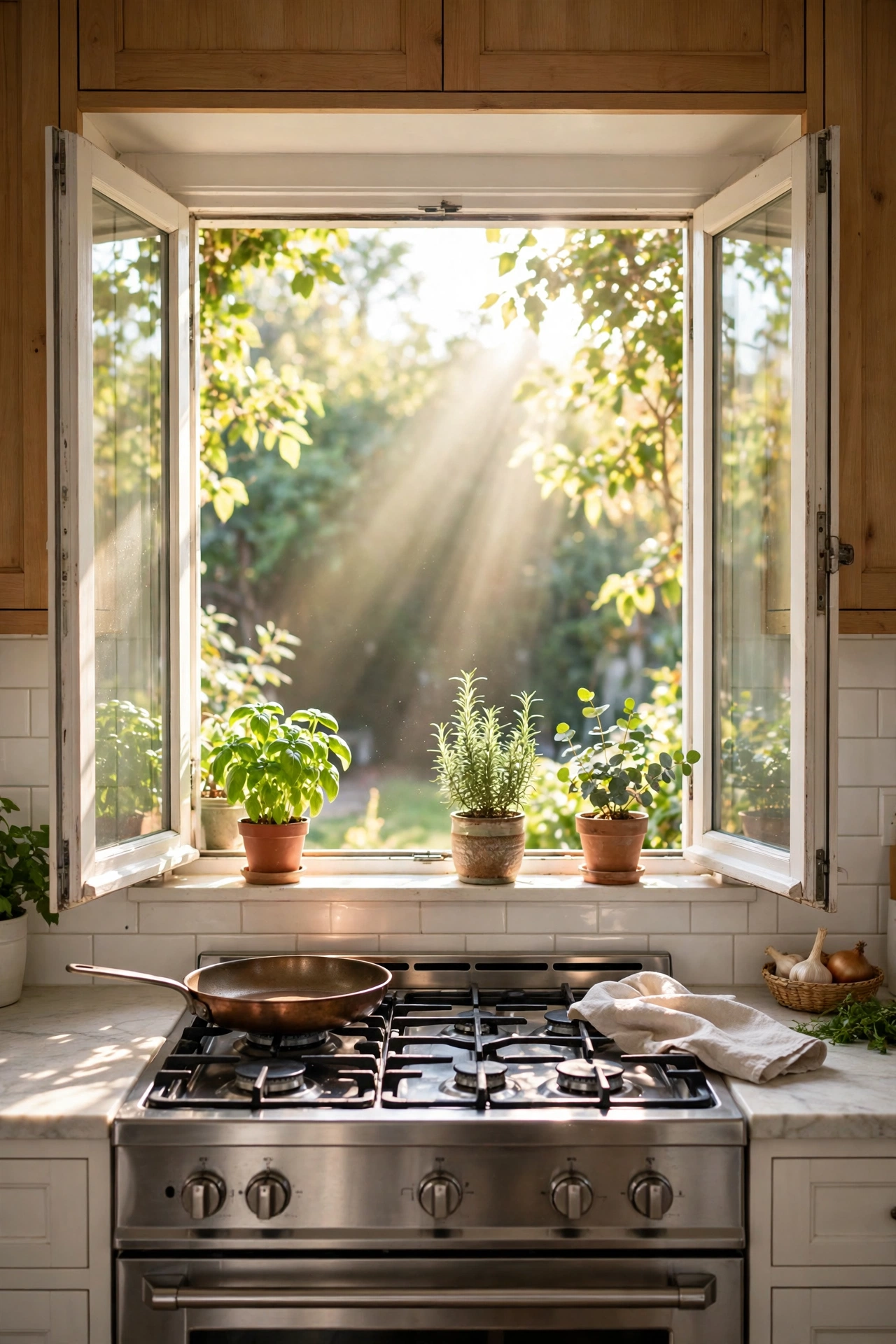
Opening a window brings a stream of fresh outdoor air into the kitchen, and that fresh air dilutes the pollutants that accumulate while you cook. In most situations, that is all you need. Food safety expert Detwiler describes it simply: more oxygen flowing in, and pollutants flowing out.
There is one exception worth knowing. If the air outside is heavily polluted — during wildfire smoke, a bad smog day, or a dust storm — opening the windows may not be the best move. In that case, your overhead vent becomes the more important tool. The goal stays the same either way: get the cooking pollutants out of the room, using whichever route gives you cleaner air that day.
7. The Best Fix: A Range Hood That Vents Outside
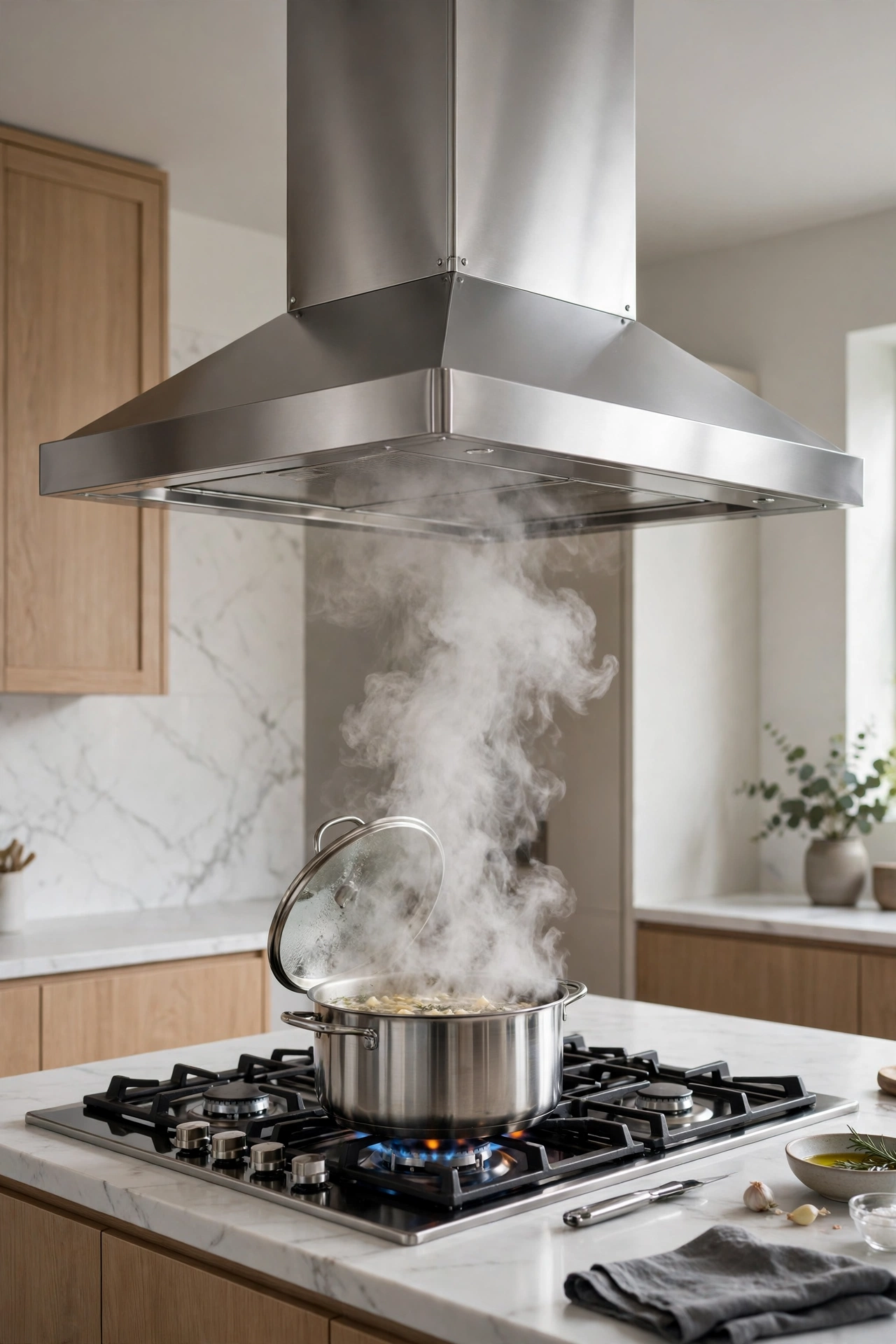
If you want the most effective option of all, Dr. Ferrer says it is a range hood that vents directly outdoors, rather than one that simply recirculates air through a filter and back into the room. A ducted hood captures pollutants close to their source, before they have a chance to spread through the house.
Timing matters as much as the equipment. Turn the exhaust fan on before you light the burner, keep it running for the whole time you cook, and let it continue for several minutes after you finish. That way the hood catches the plume from the very first second. Good ventilation matters most in smaller kitchens and homes with limited airflow, where pollutants have nowhere else to go.
8. Yes, Even Boiling Water Needs The Vent
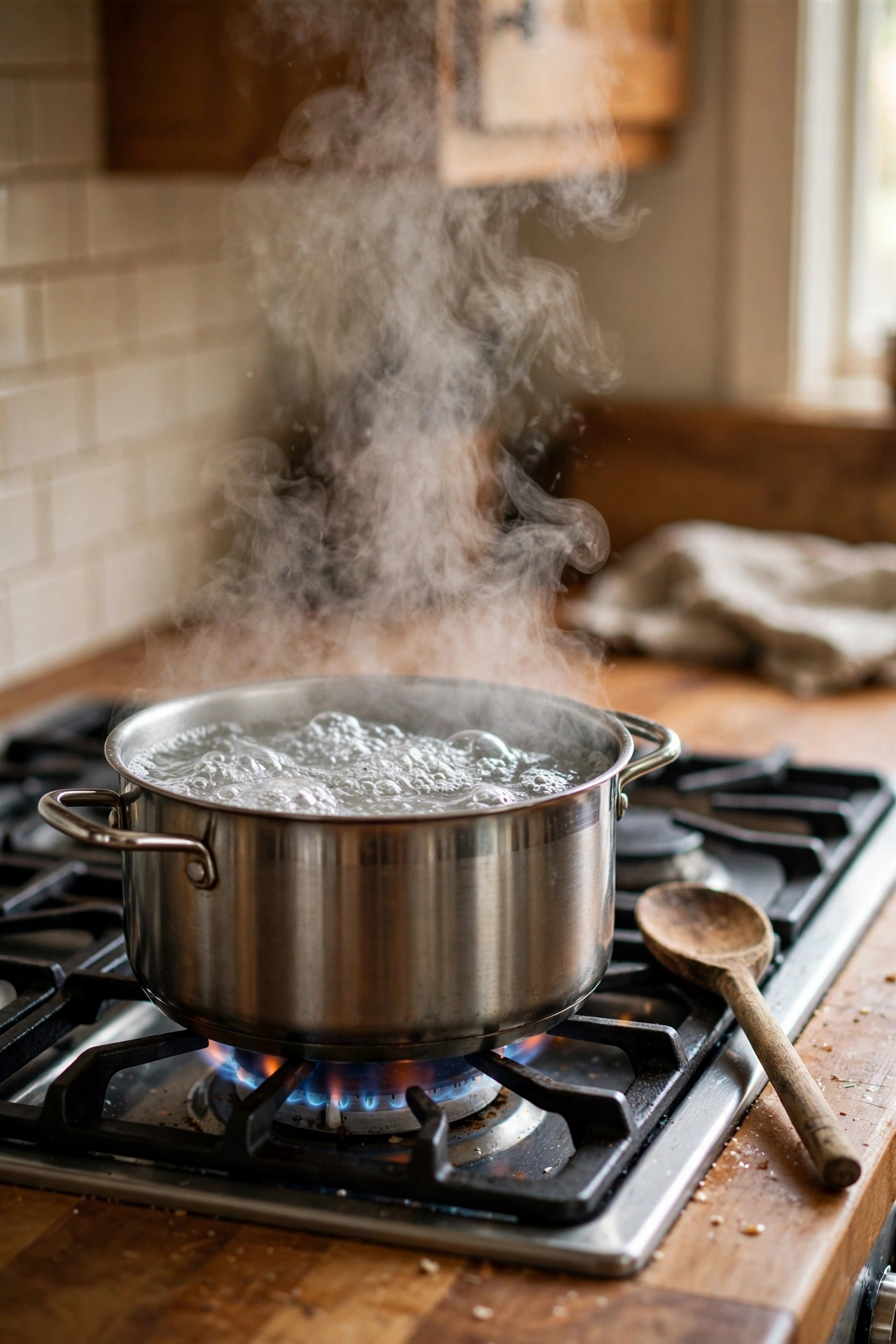
Many people only reach for the exhaust fan when they see smoke or smell food cooking. Dr. Ferrer says that is a misconception worth unlearning. Even if you are only boiling water, the burner is still producing nitrogen dioxide and carbon monoxide — and neither of those gases is visible or necessarily smelly.
Waiting for smoke or a smell means waiting until the exposure has already happened. The better rule is automatic: fan on before cooking begins, set to a level that effectively captures the cooking plume, and left running briefly after the burners go off. Treat it like buckling a seatbelt — not something you decide based on how the drive looks, but something you do every time.
9. Cook On The Back Burners When You Can
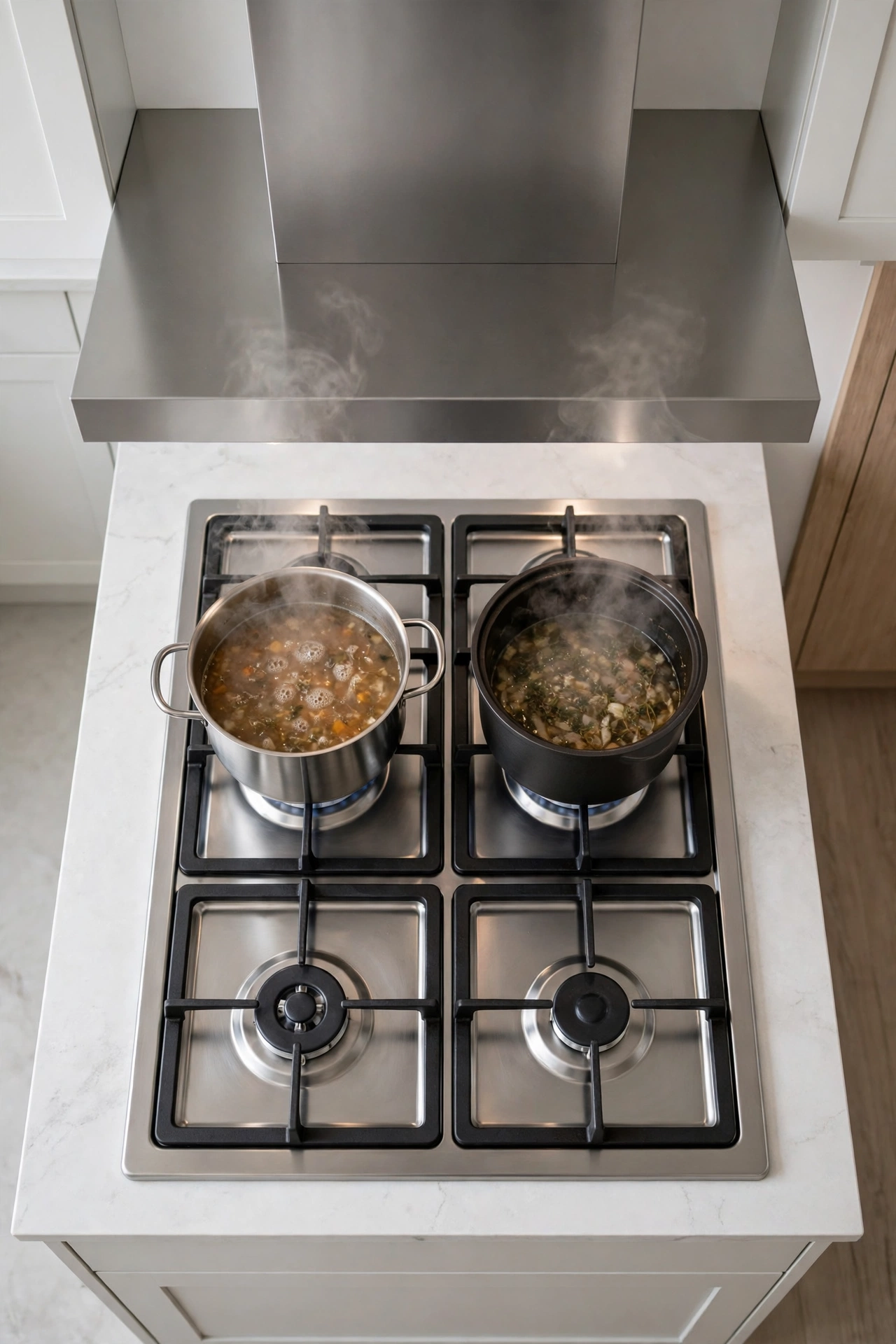
Here is a small trick most people have never heard of: use the back burners more than the front ones. Overhead vents cover the back burners more fully, so they capture more of the pollutants rising from pots placed there. Both Dr. Rabin and Andy Fox support this idea, pointing to a lab study that backs it up.
The same study found that using the highest exhaust airflow setting gave the best pollutant removal. So when you have a choice, slide the pot to the back, turn the fan up, and let the hood do the work it was designed to do.
10. Check For Leaks And Keep A Carbon Monoxide Detector
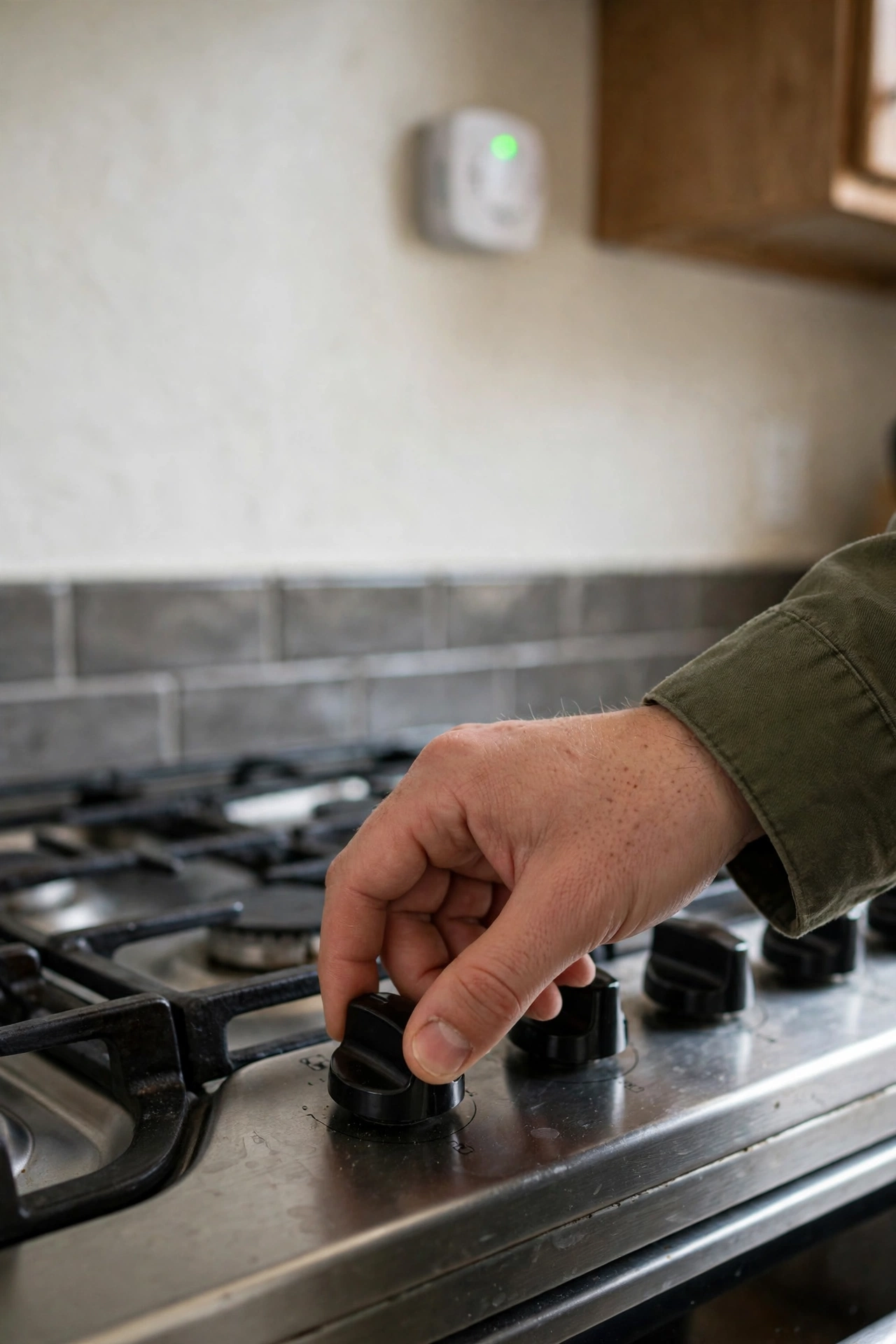
Ventilation handles the pollutants created while you cook, but there is a second safety check for when the stove is off. Dr. Rabin stresses the importance of making sure your stove is not leaking gas when the burners are turned off, and this is exactly why a carbon monoxide detector belongs in every home with gas appliances.
If you ever smell gas while the burners are off, do not wait and do not try to find the leak yourself — contact your gas utility immediately. A detector gives you an early warning your nose might miss, and a quick call to the utility can stop a small problem before it becomes a dangerous one.
11. Never Use Your Stove To Heat The House
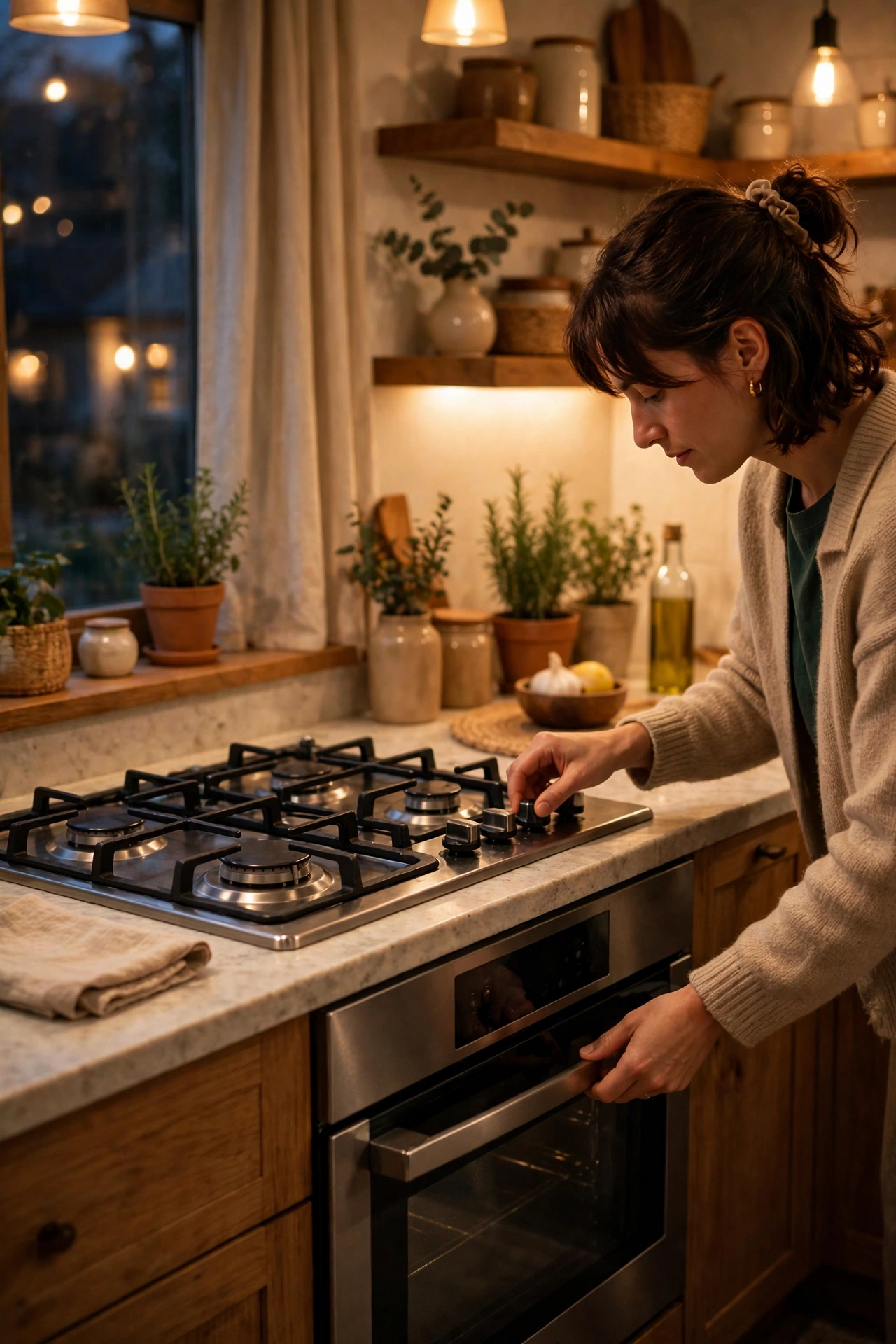
On a cold day, it can be tempting to leave the oven door open or a burner running to warm up the kitchen. Both Detwiler and Dr. Ferrer are clear on this one: never use a gas stove to heat your home. Running burners for heat means a long, continuous release of carbon monoxide into a room where people are sitting, sleeping, or working — and that exposure can quickly become dangerous.
Your stove is designed to cook food, not to warm a house. If the heating is not keeping up, that is a job for your heating system or a proper space heater, never for an open flame in the kitchen.
The Bottom Line
None of this means you should be scared of your gas stove. The experts’ message is reassuring, not alarming: gas cooking is perfectly safe as long as your kitchen is well ventilated. As Dr. Ferrer puts it, indoor air quality is an important part of respiratory health, yet it is often overlooked — we spend much of our lives indoors, and our homes should be places where we reduce exposure to harmful pollutants, not unknowingly increase it.
Open a window. Run the vent before you light the burner and for a few minutes after. Favour the back burners, keep a carbon monoxide detector on the wall, and never cook your way to a warm house. A safe kitchen is not just about how you handle food, Detwiler adds — it is also about the equipment you use and the environment you cook in. One open window is where it all starts.
Disclaimer: This article shares general information from published research and expert guidance, and it is not a substitute for professional medical or safety advice. If you have asthma, COPD, or another respiratory condition, or if you suspect a gas leak or carbon monoxide exposure, speak to a qualified professional or contact your gas utility or emergency services right away.
You May Also Like
- Drooling In Your Sleep Could Actually Be A Big Tell About Your Health
- Dentists Are Begging You Not To Do Any Of These 9 Habits
- 8 Habits To Help Older People Stay Healthy
- Neurologists Reveal The Overlooked Signs Of Alzheimer’s They Wish Everyone Knew
- Your Handwriting Could Reveal Signs Of Cognitive Decline, And This New Study Explains Why