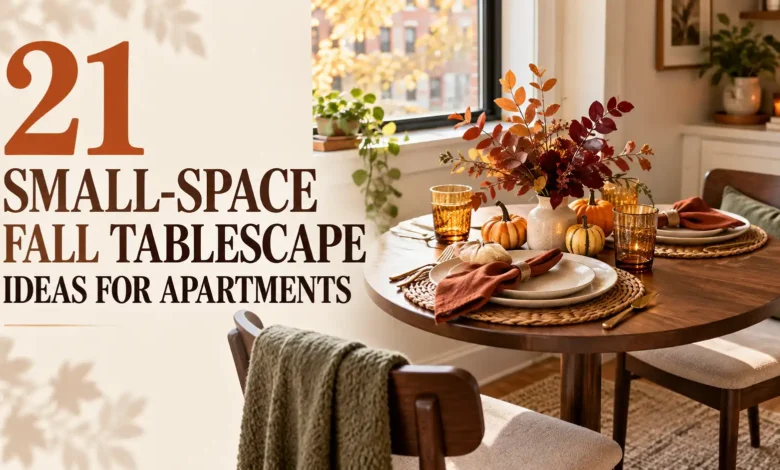
If your apartment dining table becomes a desk after breakfast, fall decorating needs an exit plan. Start with the way you use the furniture: a cup of flowers for a bistro table, a little color along the back of a drop-leaf, or autumn napkins that fold into a drawer when dinner ends.
These 21 fall tablescape ideas cover everyday meals, dinner for one, and a small Friendsgiving. Choose one setup that fits your apartment, then borrow its main detail. You do not need every accessory in the image to make it work.
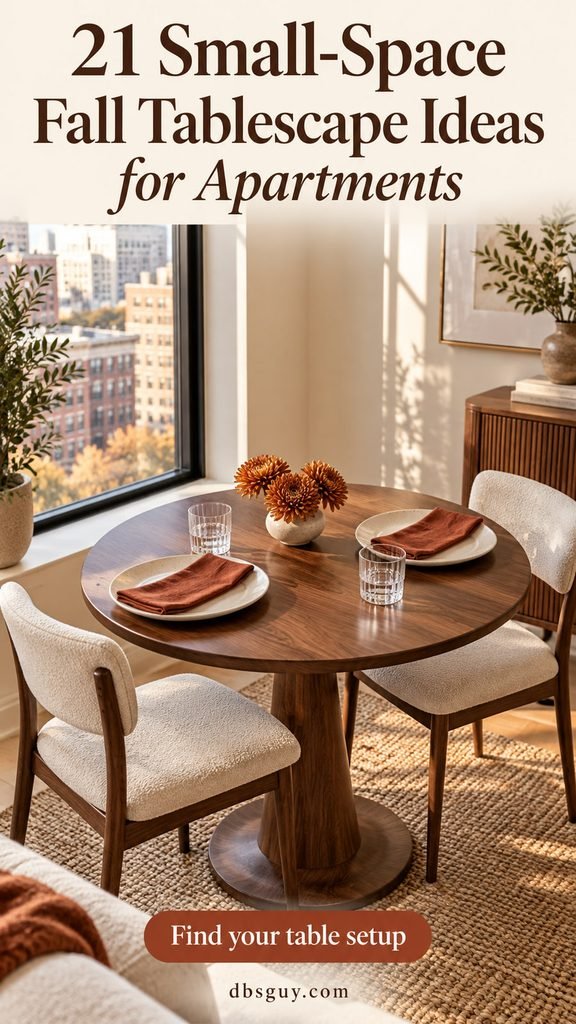
The visuals are AI-generated styling concepts, not photographs of completed or tested apartment makeovers.
Find the Setup That Fits Your Table
Set out the dishes and glasses your meal needs before choosing decorations. Sit down, pull the chair in, and check whether you can reach your glass without brushing a vase. A beautiful table stops being useful when someone has to balance a plate on its edge.
For example, two 10-inch plates directly opposite each other on a 30-inch-wide table leave only 10 inches between their inner edges even before allowing space at the outer edges. That is an illustration of the space problem, not a recommended seating layout. Measure your own dishes and the actual gap.
- A round table for two: start with the teacup flowers in idea 1 or the clear glass-table center in idea 7.
- A folding or extendable table: look at ideas 2, 3, and 10 before adding fabric or decorations near moving parts.
- A work-and-dining table: use the flat, easy-to-store details in idea 6 or 17.
- No dedicated dining table: try the coffee-table trays in idea 12 or the separate dessert tables in idea 13.
- Four guests and limited serving space: choose idea 9 or the course-by-course Friendsgiving in idea 18.
1. Put Teacup Flowers on a Round Bistro Table
A handled teacup gives a tiny table a flower arrangement without requiring another vase. Choose three small bronze or rust-colored chrysanthemum blooms and cut the stems so the flower heads sit just above the rim. Keep leaves out of the water and use a cup that sits flat.
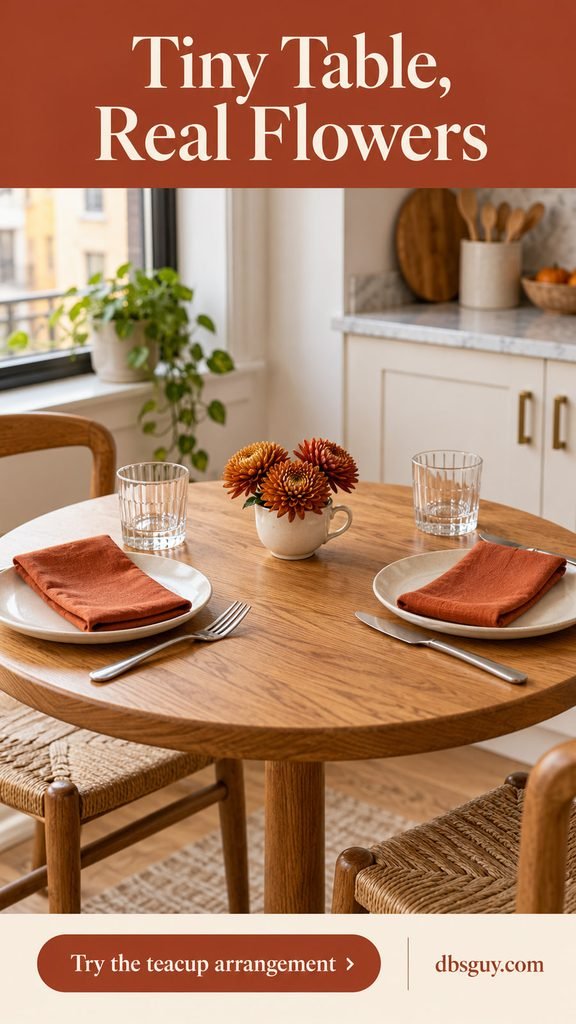
With two ivory plates and terracotta napkins, the flowers already have company. Skip the runner so the circular tabletop remains visible. Check the arrangement from both chairs; if the blooms spread into the glasses, use fewer stems. A coaster underneath protects the surface from moisture, and the cup can move to the kitchen when a shared dish arrives.
2. Give a Wall-Mounted Drop-Leaf a Low Back Row
When two people sit side by side at a wall-mounted table, the back edge can carry a small seasonal detail. Try two squat terracotta bud vases with short russet faux sprigs. Put them behind the dining places, leaving each glass easy to pick up.
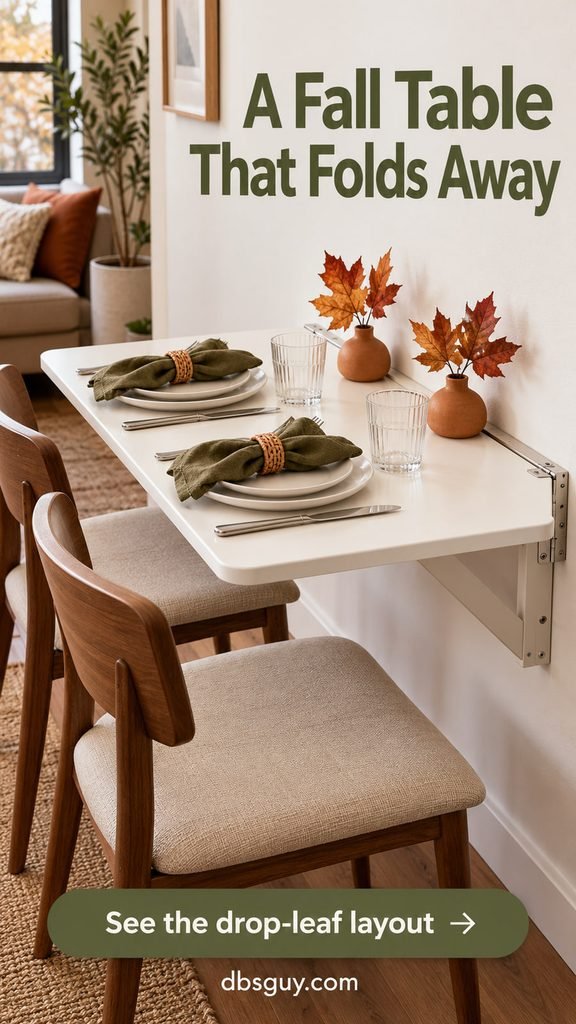
Olive napkins connect the arrangement to the plates without covering the folding surface. This works only if the raised table is deep and wide enough for both settings. If it feels tight, use one vase or move both to a shelf. Remove everything before lowering the leaf, and operate the supports according to the table’s instructions.
3. Keep a Half-Open Gateleg Table’s Hinges Visible
A gateleg table with one leaf raised has an irregular usable surface. Decorate the fixed center section instead of stretching a cloth across the whole top. A little ocher linen square and a shallow dish with one decorative gourd make a contained fall accent.
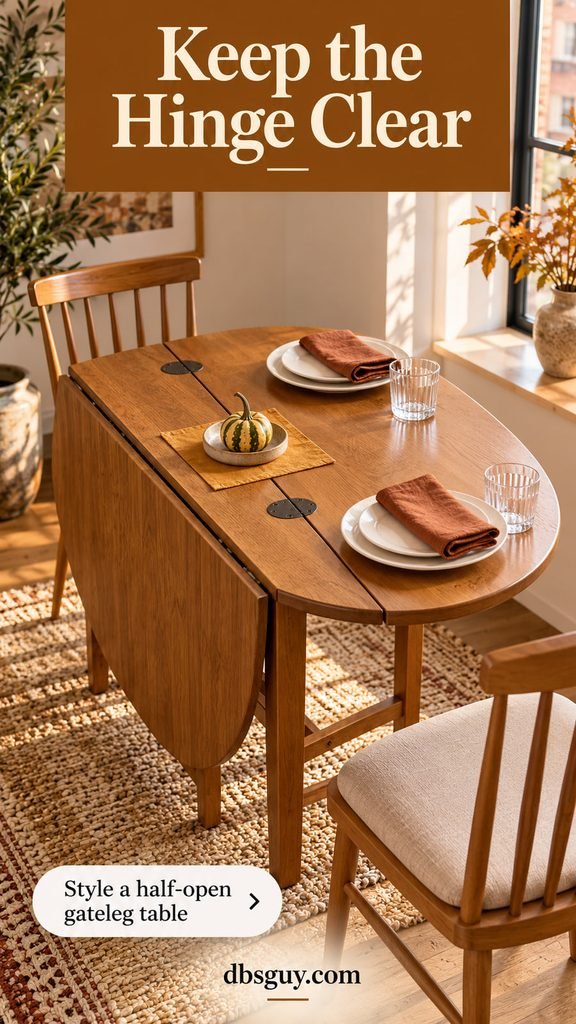
Leave the hinges visible and position the two places on the supported dining area. Before setting anything down, make sure the supporting gate leg is in its proper position. Remove the dish, fabric, and dinnerware before changing the table’s configuration. If the fixed section is too narrow for the dish, keep the cinnamon napkins and leave that section bare.
4. Style a Breakfast Bar with an Amber Carafe
On a narrow breakfast bar, a water carafe can supply the autumn color. Set one amber carafe at a genuinely unused end, on a coaster and well back from the edge. Repeat the warm tone in rust napkins at the two seats.
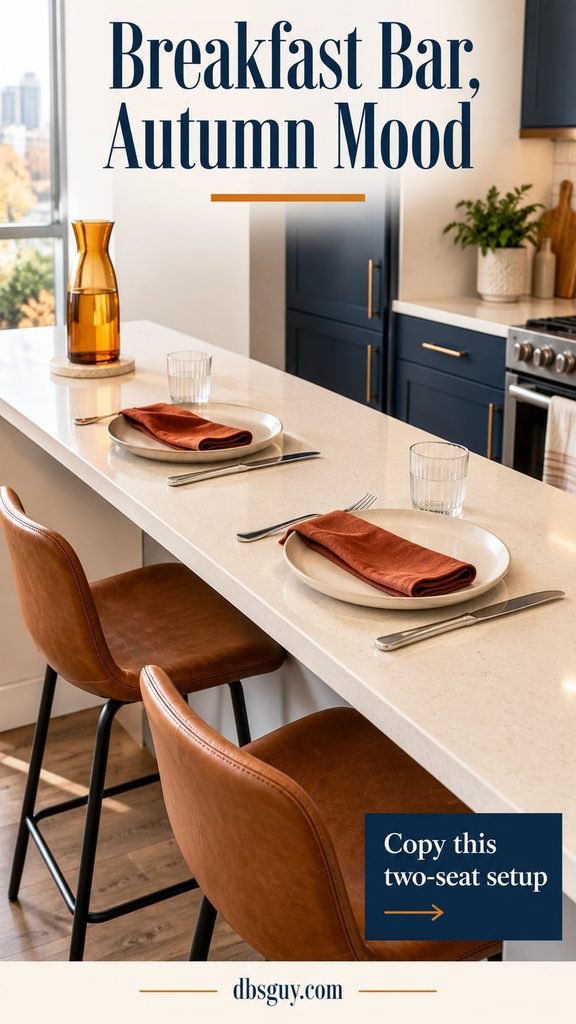
Keep the countertop between the places clear. A runner adds little here if it ends up beneath every plate and glass, and a pumpkin takes space that may be needed for a bowl. If neither diner can reach the carafe comfortably, keep it on the kitchen counter and refill glasses there. Check knee room before adding another stool for a guest.
5. Tuck a Low Flower Jug into a Banquette Corner
In an L-shaped breakfast nook, the corner nearest the wall can be hard to reach during a meal. Use that spot for a short plum jug filled with a compact bunch of amber flowers. Keep the arrangement within the corner instead of letting stems trail toward either plate.
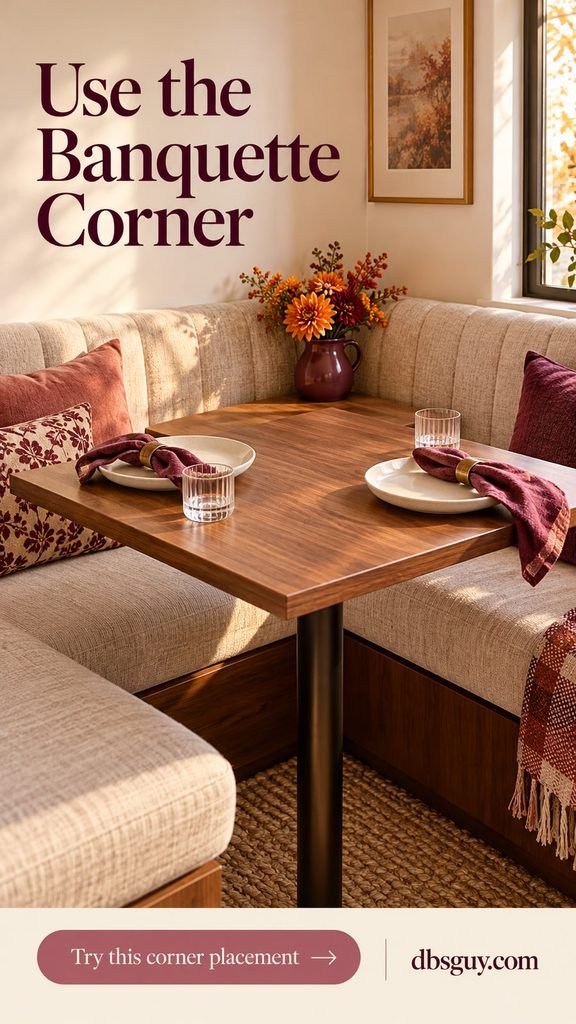
Berry napkins bring the color forward to the seats. Sit in both positions and check that the jug does not obstruct your view or your route onto the bench. This placement depends on the nook: if someone occupies the corner seat, the flowers need another home. A nearby shelf is preferable to making that guest eat around a vase.
6. Make a Fold-Flat Desk-to-Dinner Kit
For a table that does double duty, choose decorations that store like stationery. Pair sage napkins with flat rust cardstock leaves. Fold each napkin into a rectangle, turn its lower edge upward to form a pocket, and tuck the sides underneath. Slip in the cutlery and lay a leaf or two on the front.
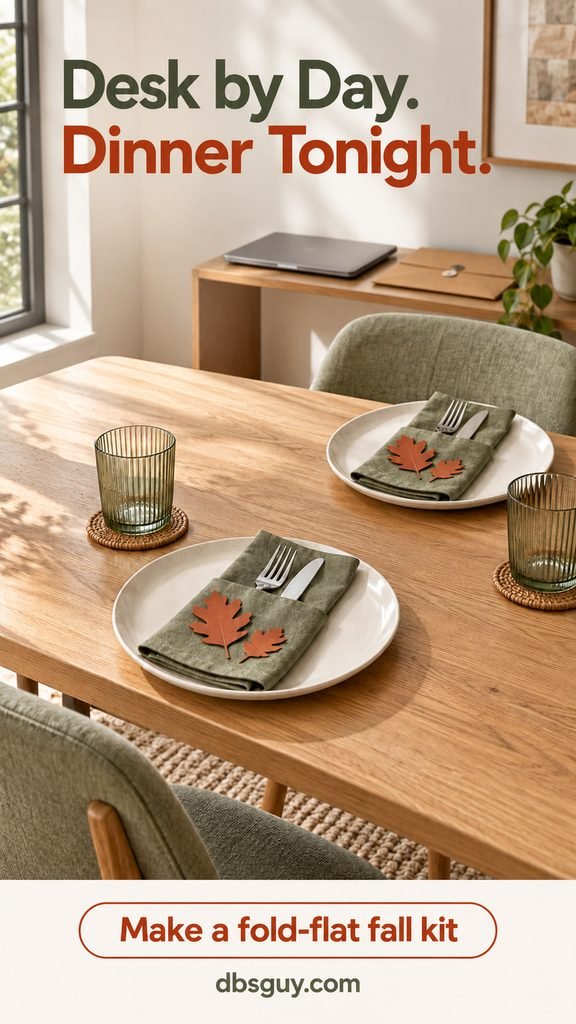
Guests unpack the pockets before eating. Afterward, the leaves fit in a document envelope while the napkins go to the laundry; there is no bulky centerpiece to find a home for. Move the laptop, paperwork, and any optional flowers to a separate surface before the meal. The useful detail here is the pocket, so it can carry the whole table on its own.
7. Let a Glass Table Stay Visually Open
If you chose a glass table because you like seeing through it, keep that quality visible. Use chocolate-brown napkins on plain ivory plates and leave the center uncovered. The linen supplies the fall texture while the glass and slender base remain part of the room.
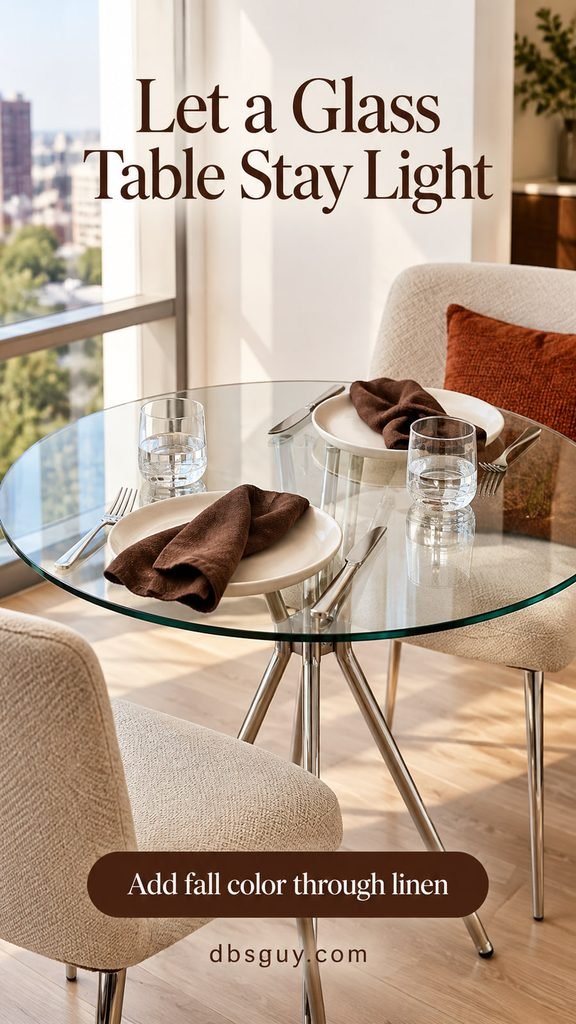
A centerpiece is optional, and this version works well without one. Fold the napkins within the plates rather than spreading them across the glass. Add coasters if your table needs them, and follow its care instructions instead of assuming glass tolerates hot cookware. For a similarly restrained direction on a wood table, browse 21 Sleek Modern Fall Tablescape Ideas.
8. Build the Setting Around One Oven-to-Table Dish
If roasted squash is part of dinner, its color can do the decorating. Put the serving dish in the center and use slate-blue napkins to contrast with the orange food and warm terracotta. There is little reason to fit flowers beside a dish that already fills the available gap.
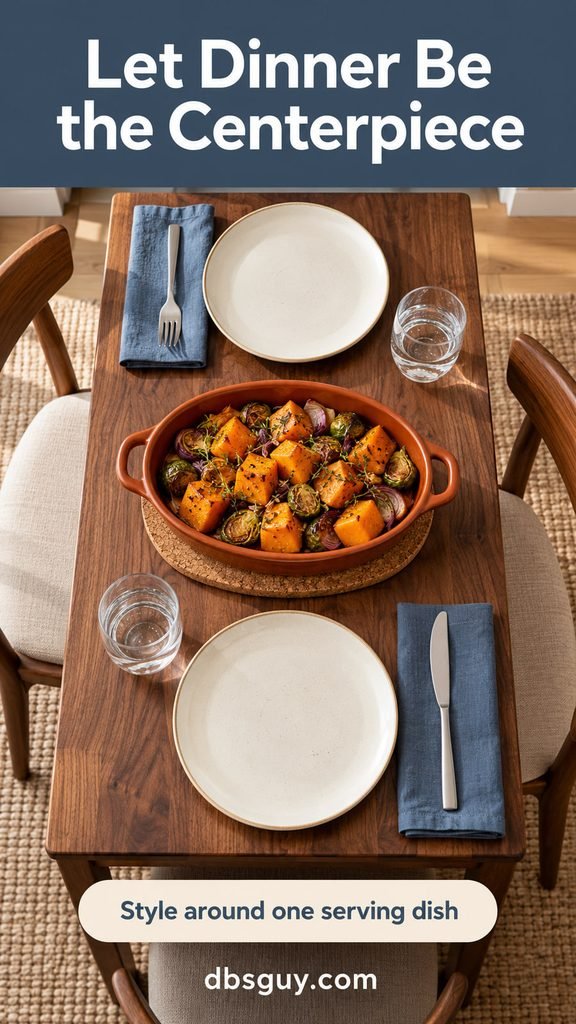
Use a trivet rated for the dish’s temperature and large enough to support its base; a decorative placemat is not automatically heat protection. Leave space beside the handles for lifting and serving. When the dish crowds the plates, serve in the kitchen instead. The blue napkins and autumn-colored meal still make a complete setting.
9. Give Four Places Pumpkin-Shaped Napkins
On a square table with every side occupied, put the fall detail on the plates. Rust napkins gathered into little pumpkin shapes leave the middle free. Use a paper leaf at the neck rather than a separate ornament beside each glass.
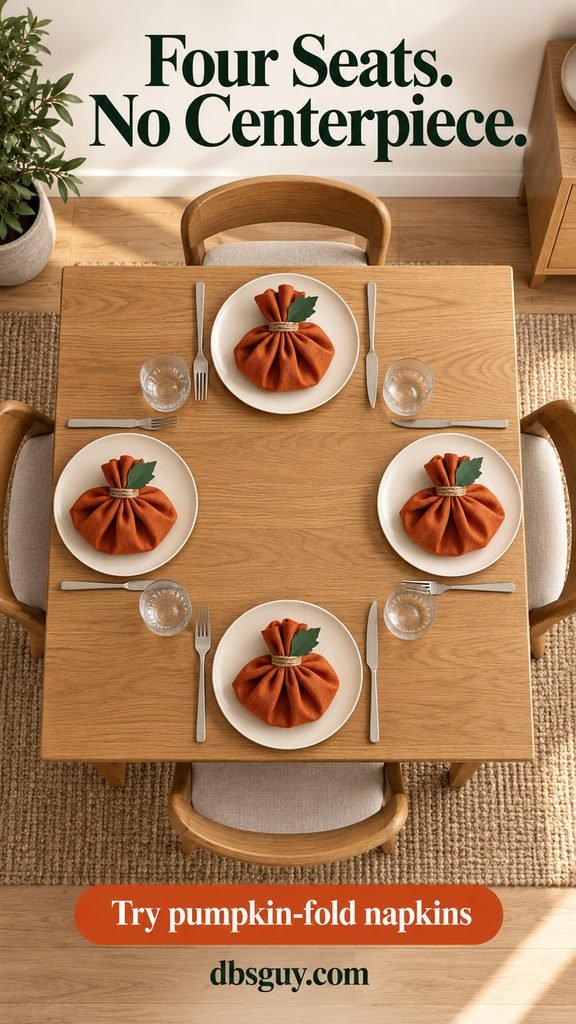
To make the soft pouch shown, lay a napkin flat, bring its corners together, and loosely tie the gathered neck with cotton string. Gently round the fabric below the tie and tuck a folded green paper leaf into it. No stuffing is necessary. Leave the knot easy to undo, and remove the string and leaf before using the napkin. Skip chargers if their extra width makes adjacent settings overlap.
10. Use Separate Mini Accents on an Extendable Table
An extendable table benefits from decorations you can move individually. Try two tiny green dishes, each holding one mini orange pumpkin, rather than a continuous garland. Ocher napkins carry the same warm color to all four seats.
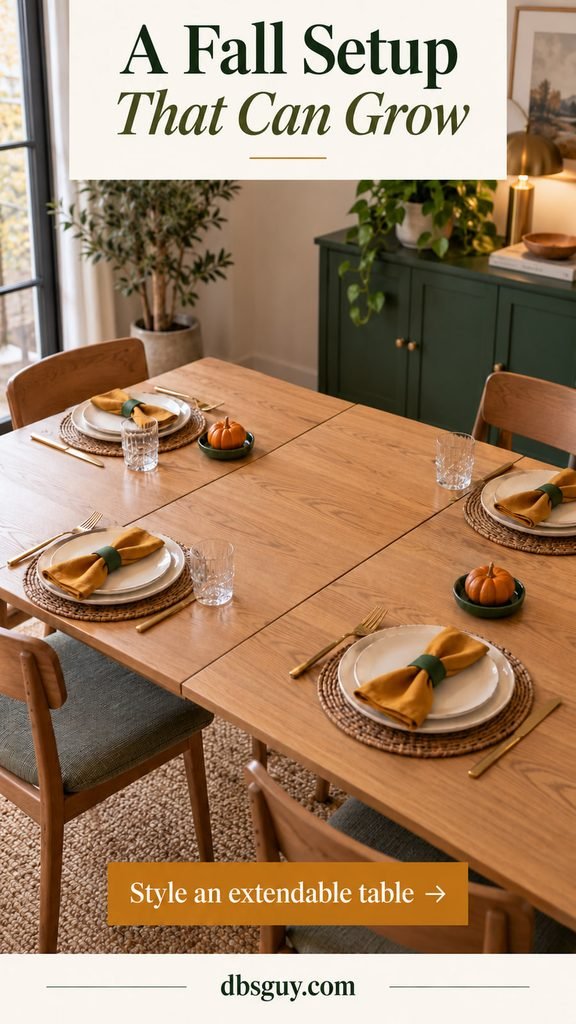
Extend and secure the table first, then set the places and position the dishes where they fit. Leave a gap for the serving piece you actually need. Before removing an extension leaf, clear the tabletop completely; small decorations can still roll or catch as sections move. For an ordinary two-person dinner, one pumpkin dish may be enough. The second can stay in the cabinet until the extra seats are needed.
11. Borrow a Deep Windowsill as the Backdrop
A table beside a window may not need to hold the seasonal display at all. A squat auburn vase and russet faux branches on a deep windowsill frame the dining area from behind. Caramel napkins make the tabletop feel connected to the arrangement.
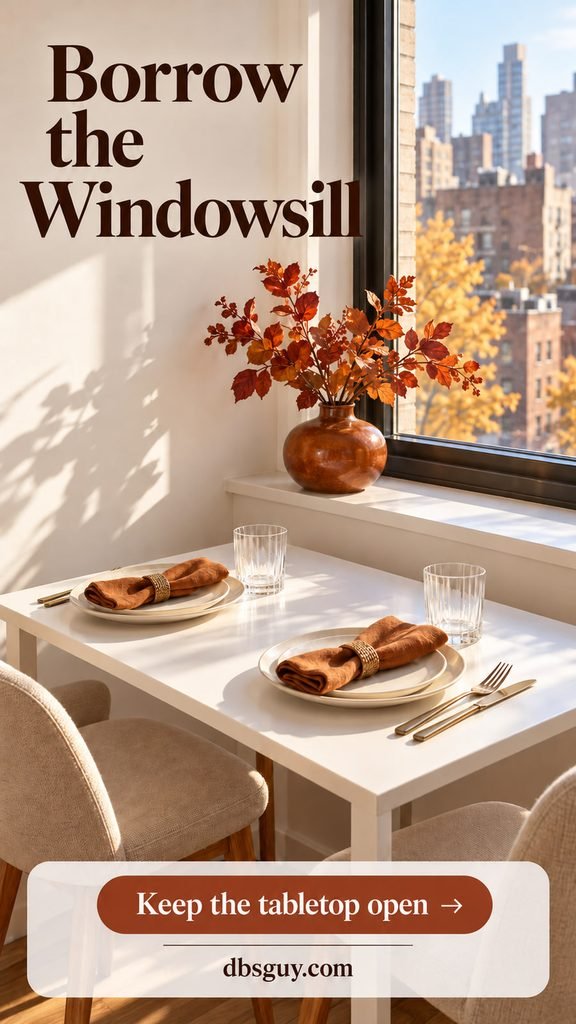
Keep the entire vase base supported and the branches clear of curtains and the window’s operation. This is a styling option for a usable sill, not a reason to balance decor on a narrow ledge. If opening the window means dismantling the display every time, move it to a nearby cabinet. Leave the small table available for dinner and the glasses comfortably away from its edge.
12. Set a Coffee-Table Dinner on Two Rimmed Trays
If dinner happens on the sofa, style two manageable trays instead of treating the coffee table like a formal dining table. Each tray needs only the dish for the meal, a mustard napkin, and the right utensil. A shallow bowl is a practical choice for a meal such as pasta.
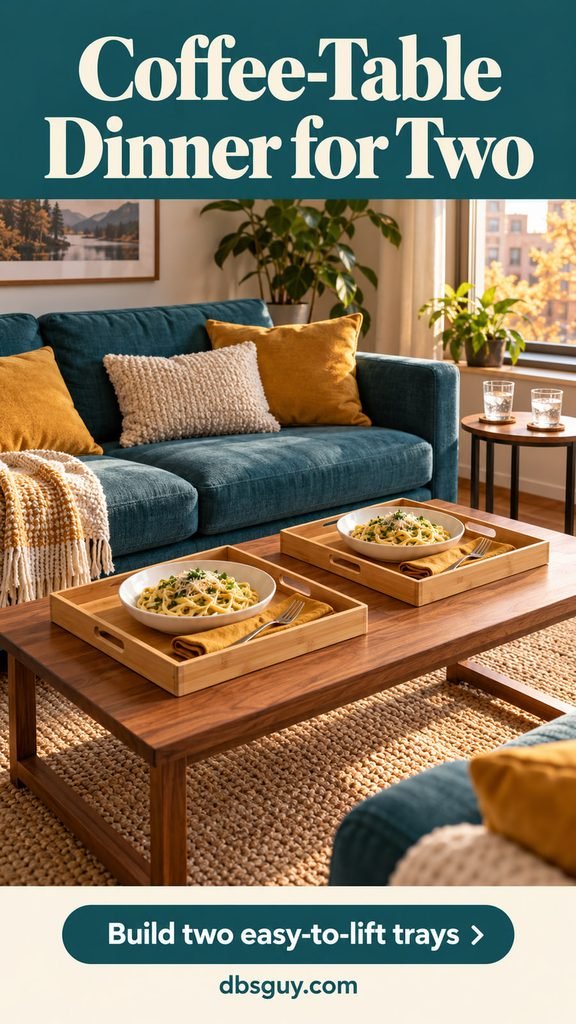
Keep drinks on a stable side table within reach, rather than loading them onto trays you will lift. Test the tray’s weight and make sure it sits flat before adding food. This arrangement suits a relaxed meal when the seating and table height feel comfortable; use a regular dining surface for anyone who finds the low setup awkward. Clear blankets away from the eating area.
13. Pull Nesting Tables Apart for Apple-Tart Dessert
Nesting tables can become two small dessert stations after dinner. Pull them completely apart and place one by each chair. Give each person a tart plate, a fork, and a plum napkin. A tiny flower bottle is optional on the larger table if the plate still has plenty of room.
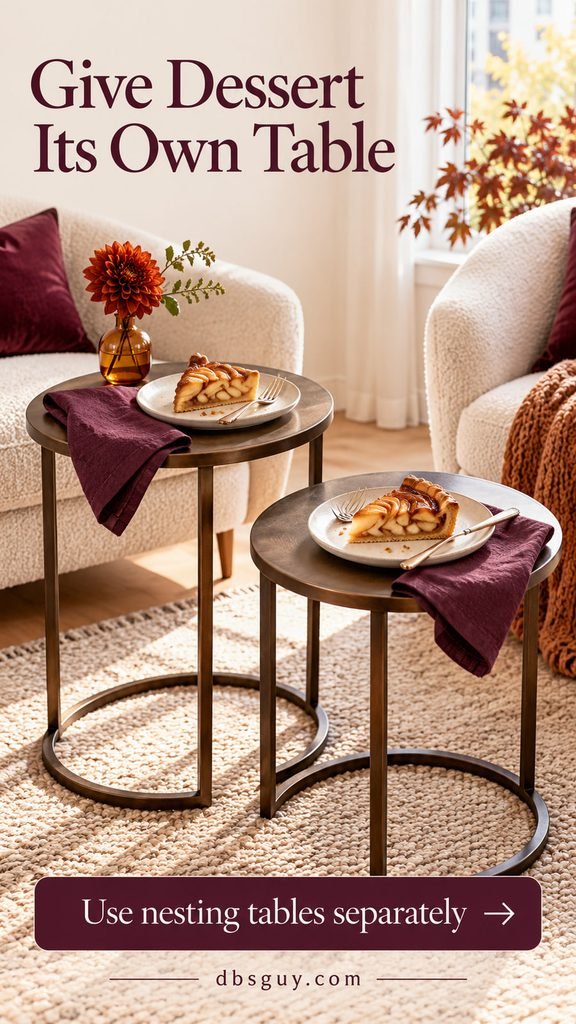
Treat the tables as separate surfaces, especially when their heights differ. A shared tray bridging both can rock instead of resting flat. Keep the walking route clear, and test whether the tabletop is at a comfortable reach from the chair. Once dessert is finished, clear the dishes before sliding the tables together again.
14. Finish a Folding Card Table with a Short Checked Cloth
A chestnut-and-cream checked cloth gives a plain folding table a deliberate fall look. Choose a washable fabric with a short drop, then pair it with olive napkins and everyday plates. A little bowl of pears can sit in the middle if the meal leaves room.
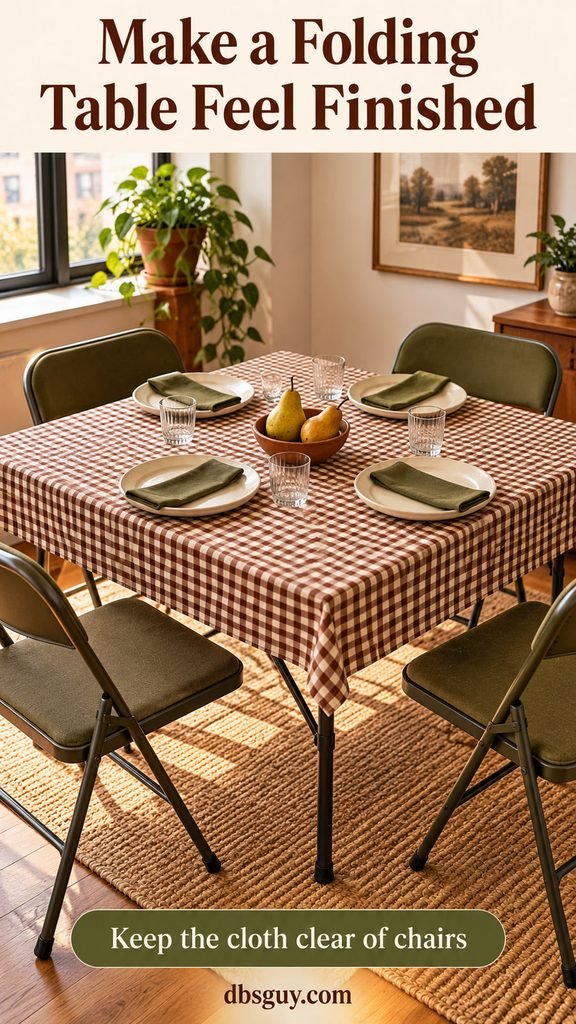
The cloth should lie flat and stay clear of chair seats and knees. Tablecloth clips suitable for the tabletop can help secure it underneath; avoid bunching fabric where someone needs to sit. Lock the folding legs as directed before setting the table, and check that the surface is stable. For a crowded meal, remove the pear bowl and let the checks supply all the decoration.
15. Make an Apple Breakfast the Fall Color Story
For a small breakfast table, use the food you are already serving as the seasonal detail. Bowls of oatmeal topped with apple slices and cinnamon look at home beside amber mugs and moss-green napkins. No dinner plate needs to sit beneath a bowl unless you have a reason to use one.
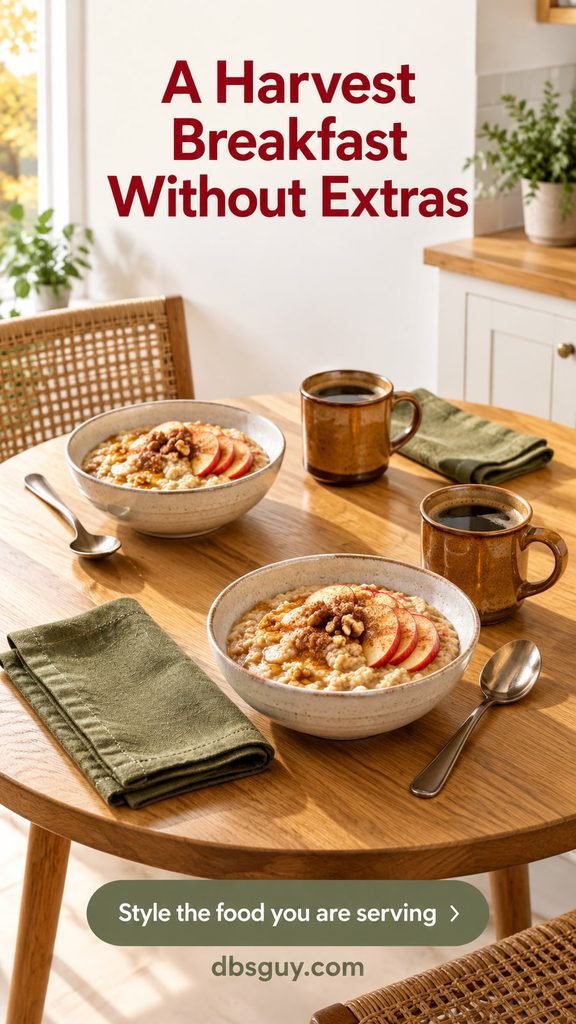
Set the mugs where their handles are easy to grasp and keep the spoons beside the bowls. Put shared toppings on the kitchen counter if they would crowd the table. This is an everyday version of simple fall tablescapes: warm colors, useful dishes, and nothing to dismantle before eating. Use your own breakfast and dietary preferences; the image is styling inspiration, not a recipe.
16. Unify Roommates’ Mismatched Dishes with One Fabric
A shared apartment may have four usable dinner plates that look nothing alike. Keep them. Repeat the same mustard plaid napkin at every seat, folding it within the rim so each plate’s color still shows. The repeated fabric gives the table a connection without buying a new dinnerware set.
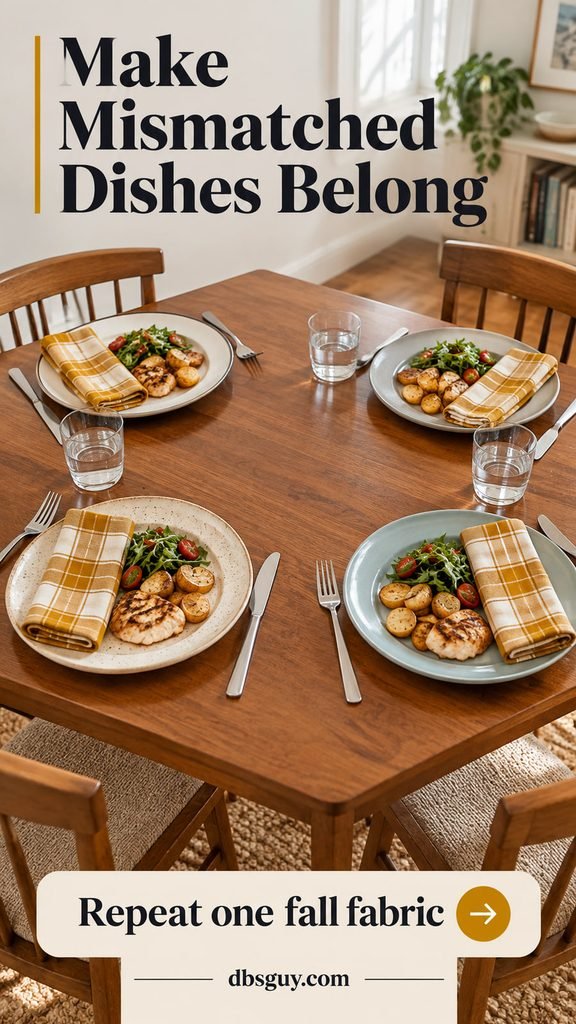
Use matching glasses or flatware where convenient, but do not let that become another shopping requirement. The plates need enough space even if one is larger than the others. Keep the center simple so the mix remains easy to read. For more reuse-focused options, see 19 Budget-Friendly Fall Tablescapes Under $30; check current prices before planning purchases.
17. Draw Leaf Outlines on Flat Paper Placemats
A drawn leaf gives you a botanical detail without loose foliage around the food. Cut kraft paper into individual rectangles that fit the dining places. Draw one simple maple-leaf outline near an outer corner, away from the plate, and let the ink dry fully before setting the table.
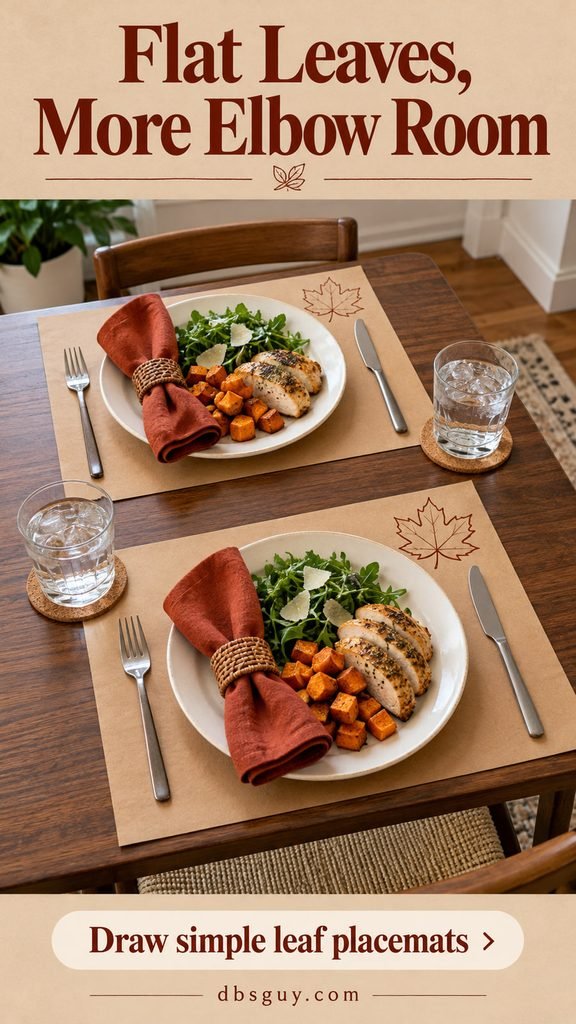
Position the paper so it sits flat and does not overlap a neighboring place. Keep drinking glasses on suitable coasters on the bare tabletop; paper is not reliable protection from condensation. These placemats also suit a work-and-dining table because they store flat. Replace a sheet when it becomes damp, torn, or stained instead of trying to hide the damage beneath another layer.
18. Style Friendsgiving One Course at a Time
For a full holiday meal on a four-person table, plan what can leave the kitchen rather than trying to display everything at once. Burgundy napkins and ivory plates create a festive setting without a centerpiece. Plate the main course at the counter, then bring the food to the seats.

Keep dessert plates and the pie on a separate stable surface until dinner is cleared. If you use a cart, park it where it does not obstruct chairs or the route through the room. Hot and cold foods should remain in appropriate kitchen storage until needed. Among Thanksgiving tablescape ideas, this approach is especially useful when the meal needs more space than the table can provide.
19. Make One Place Setting Feel Complete
Dinner for one does not need a second empty place setting to look considered. Use a slate-blue plate, an ocher napkin, and the glass and utensils you need. A single bronze flower in a small terracotta cup can sit at the far unused corner.
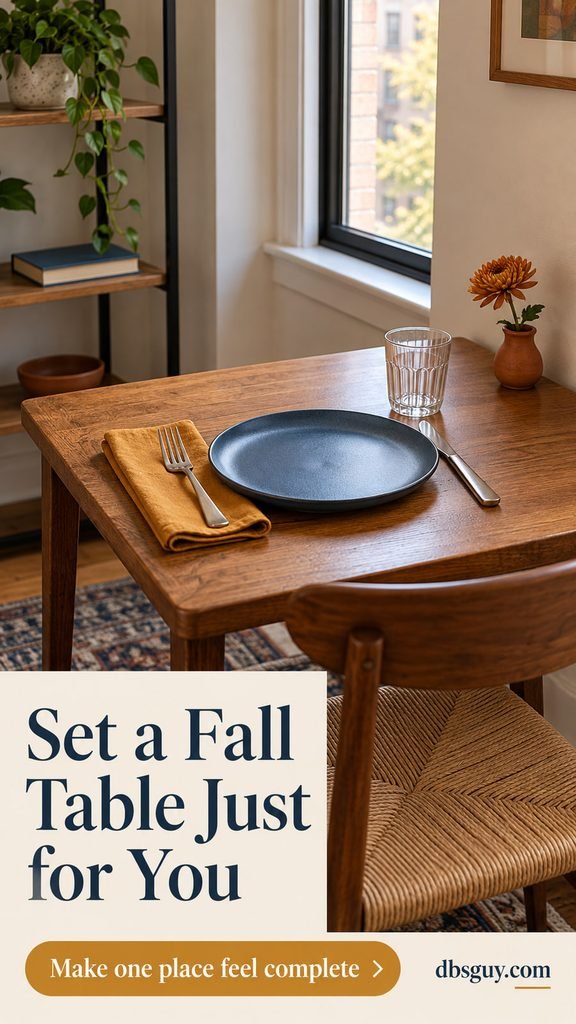
Position the chair where you enjoy the window or room view, then bring the plate toward that seat instead of centering it on the whole table. Keep the remaining surface clear. If this is also your desk, put the closed laptop elsewhere before dinner. The distinction from a larger tablescape is useful: one comfortable place is the whole arrangement, and every other object is optional.
20. Tie a Place-Card Tag to a Pear Stem
A whole Bosc pear makes a warm brown accent for a small dinner party. Set it on a folded olive napkin and loosely tie a name tag around the stem with cotton string. Attach the paper to the string rather than gluing it to the fruit or pushing anything into the skin.
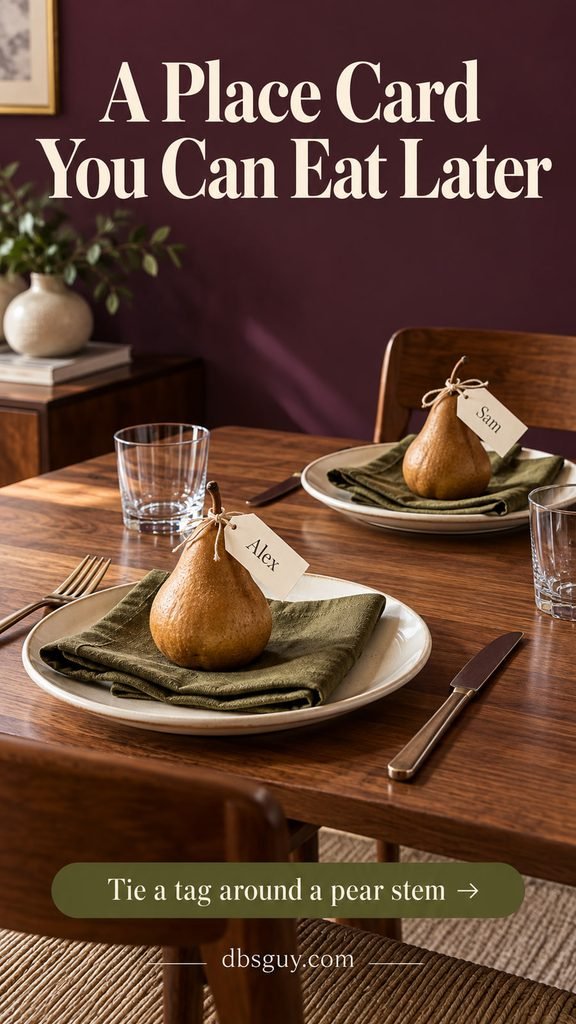
Use sound fruit and keep the tag easy to lift away. Before serving, move the pears to a clean bowl on the counter so the dinner plates become usable. Remove all paper and string, and wash the fruit before eating it. This gives a two-person dinner a personal detail without creating another set of seasonal ornaments to store.
21. Choose One Small Flameless Light for Evening
For a quiet dinner for two, an amber holder with a battery-operated tealight can be the entire centerpiece. Pair it with cream plates and terracotta napkins. Keep the holder small enough that both people can reach their glasses without moving it.
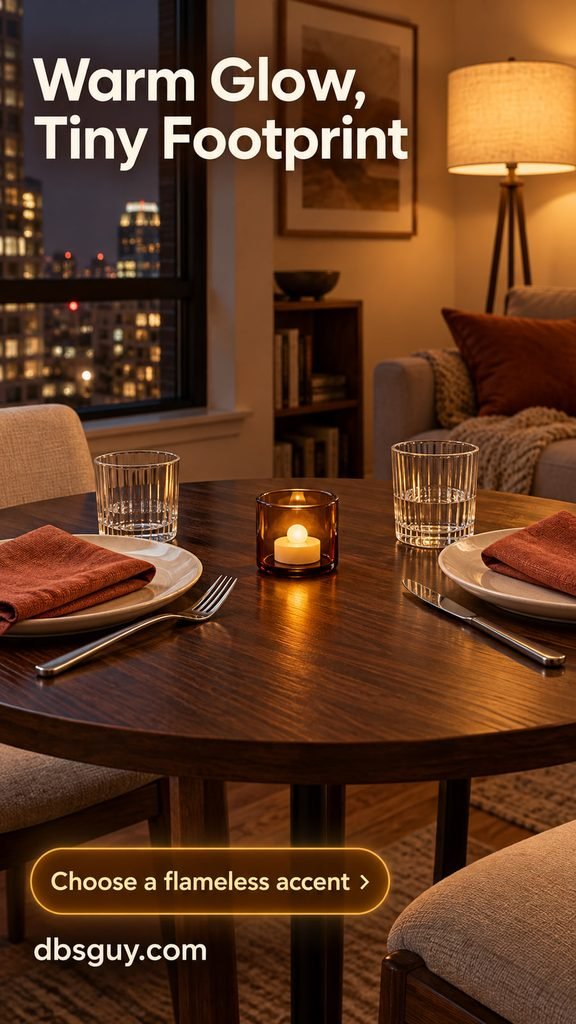
Choose a light and holder designed to work together, and follow the light’s instructions. The National Fire Protection Association recommends battery-operated flameless candles. Its guidance also calls for at least 12 inches between real candles and anything that can burn, a clearance that may be difficult around napkins on a compact table. Keep the room’s ordinary lighting bright enough to eat comfortably.
Give the Finished Table a Sit-Down Check
Choose the image closest to your actual furniture, set out the dishes, and try only its main styling move. Then sit down. If a glass is awkward to lift, a leaf catches on a hinge, or there is nowhere to put dinner, remove the decoration causing the problem. The final version should be easy to eat at and easy to clear.
Small-Space Fall Tablescape FAQs
How do I decorate a very small table for fall?
Choose an item that already has a job: a warm-colored napkin, an amber water carafe, or the serving dish. For a separate decoration, start with one small cup of flowers and check it after the plates are in place. A table with no centerpiece can still feel seasonal.
Can I make a fall tablescape without buying seasonal dishes?
Yes. Keep your everyday plates and change one textile or paper detail. The mustard plaid napkins in idea 16 connect mismatched dishes, while the drawn placemats in idea 17 add a leaf motif without requiring another dinnerware set.
Should a runner hang over a folding apartment table?
It does not need to. Keep fabric clear of hinges, supports, chair seats, and knees. On a gateleg or drop-leaf table, individual napkins or a small textile on the fixed section may be easier to manage. Clear all table contents before folding or extending it.
How do I fit Thanksgiving food on a small dining table?
Decide which dishes truly need to sit with the guests. You can plate the main course in the kitchen, refill a small shared dish when needed, and bring out dessert only after clearing dinner. Keep the route between the kitchen and seats open rather than adding a serving cart wherever there happens to be a gap.