For a five-minute meditation between classes, pick one thing to notice—your natural breath, nearby sounds, body contact, or walking steps—and gently return to it when your mind wanders. Use the final minute to notice your surroundings and choose the first small action for your next class. You can keep your eyes open, sit in a regular chair, and leave your headphones in your bag.
Start with the breathing practice below if you want a simple default. Choose listening if focusing inward feels uncomfortable, a body scan if you want to check in after sitting, or walking if your next building is a comfortable stroll away. These are four alternatives, not a 20-minute sequence.
The visuals are AI-generated concepts illustrating campus settings and practice positions, not photographs of real students or evidence of results.
Make Room for Five Minutes Without Making Yourself Late
Check the next class location before you begin. A ten-minute gap is not ten free minutes if the walk takes eight. The seated practices need five minutes plus time to put your things away and get to class. If that time is not available, take a shorter pause and keep moving through your day.
For a seated practice, choose a safe, comfortable spot out of the walkway: a library chair, an open lounge seat, or a bench near your classroom. Set your bag down securely. You do not need a cushion, a special posture, or a perfectly quiet room.
Read your chosen sequence once, then use a five-minute timer with a gentle alert you can notice. The time windows are approximate cues, not reasons to watch your screen every few seconds. It is fine to stay with one cue longer and move on when you remember.
If you are following a voice recording, check its length before starting. Skip the search for a perfect track when you already have the written practice here.
1. Follow Your Natural Breath Before the Next Lecture
This is the simplest option when your attention is still on the class you just left. Give it one ordinary sensation to return to. You do not need to breathe deeply, hold your breath, or match a counting pattern.

- 0:00–1:00 — Get comfortable. Sit with your back supported if you like, feet resting on the floor, and hands on your thighs. Let your gaze rest softly ahead or downward; close your eyes only if that feels comfortable in this setting.
- 1:00–3:00 — Follow one sensation. Notice air at your nostrils or the small movement of your chest or belly. Pick the place that is easiest to feel and let breathing continue naturally.
- 3:00–4:00 — Practice coming back. A deadline or conversation will probably interrupt. Notice that you are thinking, then return to the next breath without finishing the thought first.
- 4:00–5:00 — Rejoin the room. Broaden your attention to your seat and surroundings. In the last few moments, choose one opening action for class, such as taking out your notebook.
If your breathing starts to feel like a task you must perform correctly, stop monitoring it. Use the listening practice instead. Noticing a sound is another way to practice attention.
2. Listen to the Room When Campus Is Noisy
A student union is unlikely to become silent on request. For this practice, ordinary background sound gives you something to notice. Choose a place where you feel comfortable staying; you do not have to endure an unpleasantly loud room to complete it.

- 0:00–1:00 — Settle with your eyes open. Sit safely out of the traffic flow. Rest your gaze on an ordinary part of the room and let your hands be still.
- 1:00–2:00 — Notice a nearby sound. Attend to its volume, rhythm, or changes. A ventilation hum or footsteps will do; there is no need to hunt for a soothing sound.
- 2:00–3:00 — Notice another layer. Let a more distant sound enter your awareness. You can hear a conversation without following its story or trying to make out private words.
- 3:00–4:00 — Let sounds come and go. When you start judging the noise or rehearsing your next assignment, return to what you can hear now.
- 4:00–5:00 — Widen your attention. Notice the room visually again, check where your belongings are, and decide what you will do first when you arrive at class.
You are not trying to block the world out. If someone speaks to you or you need to move, respond normally. The practice can end there.
3. Do a Seated Body Scan After a Long Class
Use this when you want to notice how you are sitting after a lecture or lab. The task is to move your attention through a few areas, without forcing your body to relax. You can adjust your position whenever you need to.
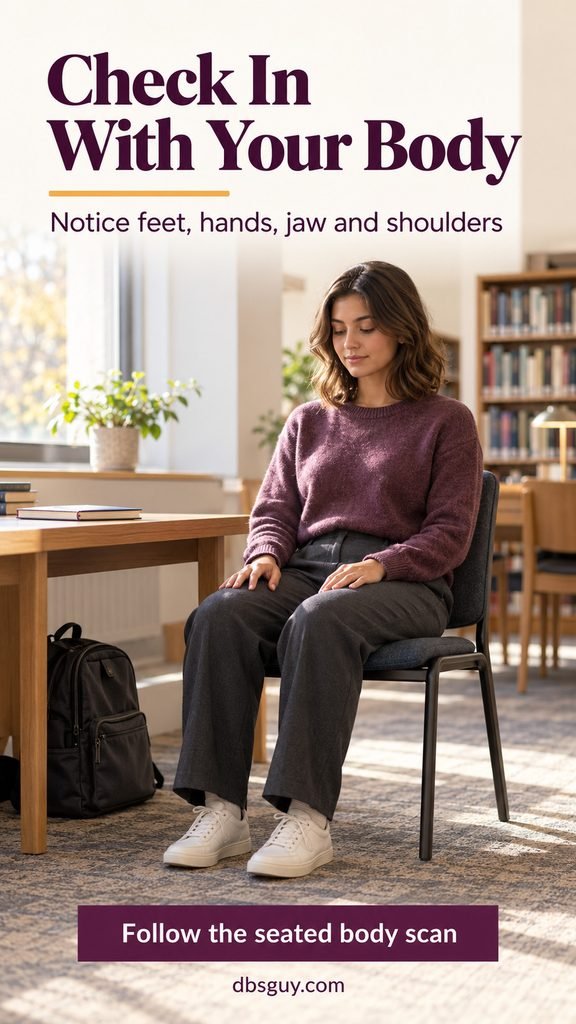
- 0:00–1:00 — Notice support. Feel your feet against the floor and the seat beneath you. Keep your breathing easy and your head in a comfortable position.
- 1:00–2:00 — Check your legs and back. Notice pressure, warmth, or contact with the chair. A clear sensation is not required; move on if an area feels neutral.
- 2:00–3:00 — Notice hands and shoulders. Rest your hands rather than gripping your bag or phone. Let your shoulders settle if that feels easy.
- 3:00–4:00 — Check your jaw and face. Notice whether you are clenching. Allow a little ease if available, without stretching your jaw or holding a new facial expression.
- 4:00–5:00 — Notice the whole seated position. Look around, make any comfortable adjustment, and get ready to leave without jumping up to beat the timer.
Skip an area that feels distressing and return to the room around you. Pain is a reason to adjust or stop, not a sensation you must push through. If you would prefer gentle movement later, the dorm yoga guide includes a separate seated flow for a small space.
4. Turn a Comfortable Campus Walk Into a Mindful Break
Choose this when you already have an easy route and enough time to walk without rushing. It is an informal attention practice during an ordinary walk, rather than a slow walking drill. Keep your eyes open, your gaze ahead, and your phone put away.
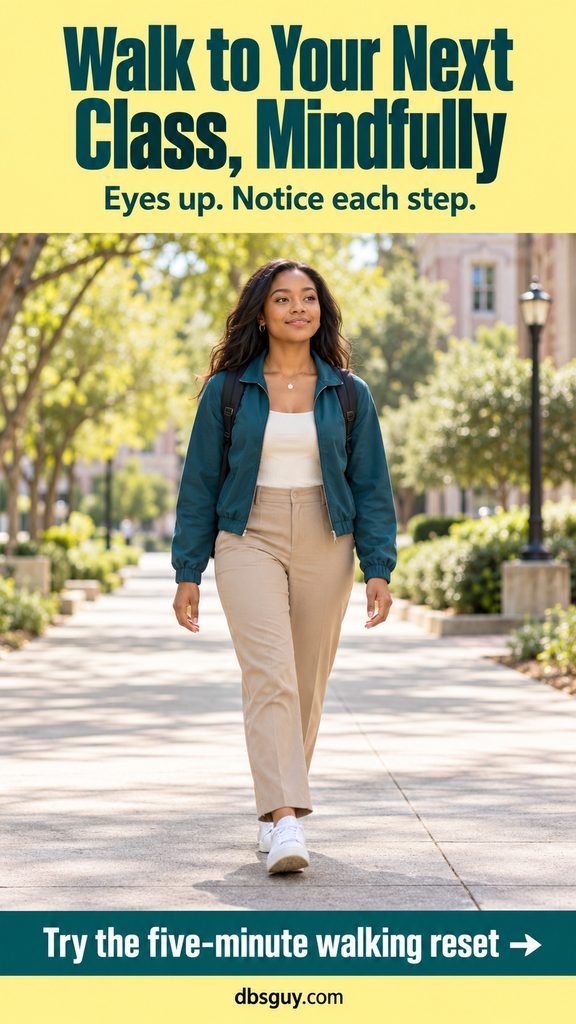
- 0:00–1:00 — Establish your route. Begin at a comfortable pace on a clear, level pedestrian path. Notice what is ahead before shifting attention toward movement.
- 1:00–2:00 — Feel a few steps. Notice the contact of each foot with the ground. Keep looking ahead rather than watching your shoes.
- 2:00–3:00 — Notice the rhythm. Feel your legs moving and arms swinging naturally. There is no need to synchronize your steps with your breath.
- 3:00–4:00 — Return from mental rehearsal. When you catch yourself replaying the last class, return to a few steps while staying aware of people and obstacles.
- 4:00–5:00 — Arrive on purpose. Give the approaching doorway and people your full attention. Once safely stopped, choose the first thing you need for class.
At stairs, crossings, crowded areas, or bike traffic, give navigation your full attention and pause the exercise. End early if you arrive sooner. If walking is not comfortable or accessible for you, use the seated listening practice; this break does not require movement.
What Can Five Minutes Realistically Do?
Five minutes gives you a short period to practice noticing distraction and returning your attention. You may feel more settled afterward, or you may still feel busy and distracted. Neither response tells you everything about whether meditation will suit you.
The National Center for Complementary and Integrative Health’s evidence overview describes possible benefits of mindfulness approaches, including for stress, while noting limits in the research. Findings from longer programs do not establish what one five-minute campus break will do. The schedules here are practical adaptations, not clinically tested protocols or promises of better grades.
Meditation can sometimes bring up uncomfortable feelings. If a practice increases anxiety or distress, stop, look around, and reconnect with your surroundings. If that keeps happening, or stress is interfering with sleep, attendance, or daily life, talk with your campus counseling center or a qualified health professional. A meditation break can accompany support; it does not replace it.
Bring the Reset Into Your Next Class
Give the break a clear ending. Instead of checking whether you feel perfectly calm, ask, “What is the next small thing I need to do?” It might be opening the lecture notes, writing today’s date, or putting your phone in your bag before the professor starts.
For your next attempt, choose a familiar gap rather than adding a new obligation to every break. For example, try the same library seat after your Tuesday lecture. If that gap is usually needed for food, the bathroom, or getting across campus, choose another time.
Keep the practice that fits. A useful note afterward is “The room sounds were easier to follow than my breath,” not a score for how calm you became. If you also want movement before the day starts, try the separate morning stretch routine for students when you have time before leaving for class.
Questions Students Ask About Short Meditations
Do I have to stop thinking?
No. When you notice that your attention has wandered, gently return to the sensation you chose. You can do that many times during one session. You do not need to argue with a thought or make it disappear before continuing.
Can I meditate with my eyes open?
Yes. For a seated practice, use a relaxed gaze at something ordinary, such as a spot on the floor ahead. Keep your eyes open for walking and remain aware of your surroundings. Closing your eyes is optional, not a measure of how well you are practicing.
What if I only have a minute?
Take the shorter pause. In a safe seated spot, notice the support beneath you, follow a few natural breaths or nearby sounds, then choose your next action. That is a shortened version, not the full five-minute practice. Leave on time.
Do I need a meditation app or music?
No. The written sequences and an ordinary timer are enough to begin. If you prefer guided audio, choose a recording in advance so the break does not disappear into browsing. Headphones are optional for seated audio; leave them out for the walking practice so you can attend to your route.
What if I finish and still feel stressed?
You can still take the next practical step: get to class, ask a question, eat lunch, or contact someone who can help with the problem. You do not need to repeat the meditation until you feel different. Save the five-minute breathing sequence for another suitable break if you want to try again.