
The easiest way to bring Adire fabric into your home is to give one piece a clear job: two pillows on a plain sofa, a runner on a wooden table, or an intact cloth displayed as art. You get the color and movement of Nigerian resist-dyed textiles without needing to redesign the room.
Below are nine distinct ways to use it, from small sewing projects to custom pieces. Start with the one that fits your fabric’s size, condition, and intended use—not simply the biggest surface available.

The images are AI-generated decor concepts inspired by Adire textiles. They illustrate styling possibilities, not documented artisan pieces or completed installations.
What makes Adire different?
Adire belongs to the Yoruba textile traditions of southwestern Nigeria. Although the name is often translated as “tie and dye,” the tradition includes several resist techniques. The V&A’s guide to Adire explains tied, stitched, and starch-resist methods, including painted designs. It is more specific than a generic blue tie-dye look.
Indigo and pale blue are the focus here, but Adire is not restricted to that palette. The Horniman Museum’s Adire archive describes the tradition’s expansion into other dye colors and techniques. When buying, ask who made the cloth, where it was dyed, and whether it is hand resist-dyed or a printed interpretation. A print can be useful for decorating; describe it accurately.
Choose the cloth before choosing the project
- For small accents: look for usable offcuts or finished pillow covers. Inspect the pattern placement before cutting.
- For large surfaces: confirm actual fabric width, available matching yardage, and whether the piece contains joined panels. A seam is not necessarily a flaw, but it affects your cutting plan.
- For seating: ask about abrasion performance, color transfer, and suitability for upholstery. Clothing-weight cotton is not automatically a durable seat fabric.
- For treasured cloth: keep it intact. Ask a textile conservator about display rather than turning a fragile or historically important piece into everyday furnishings.
Before washable new yardage is cut, follow the maker’s preparation instructions. Test an offcut for color transfer with a clean white cloth, dry and lightly dampened; stop if dye transfers. This is a practical screening check, not a guarantee of colorfastness. Ask the seller for written care instructions.
1. Start with two removable pillow covers
A pair of Adire pillows gives a plain sofa an immediate focal point. Choose related blues with different pattern scales: one bold circle design and one smaller repeat. A solid rust lumbar pillow brings warmth without adding another competing motif.

For an average sofa, 20-inch square covers are a useful starting point; an 18-inch pair can suit a compact loveseat. These are styling suggestions, so check the seat depth and leave room to sit comfortably. Match the insert to the cover maker’s recommendation.
Request a zipper, finished internal seams, and lining if the cotton is thin. You can use Adire on the front and a plain compatible fabric on the back to stretch a small piece further. Before placing indigo cloth against pale upholstery, check for transfer. For furniture proportions around your accent pillows, explore our Japandi living room ideas with calm layouts and natural materials.
2. Display an intact cloth as a wall hanging
This is the strongest choice when the entire textile is the attraction. A cloth with contrasting compartments, dots, lines, and geometric forms reads like a complete composition above a console. Give it an uncluttered wall so the pattern stays legible.
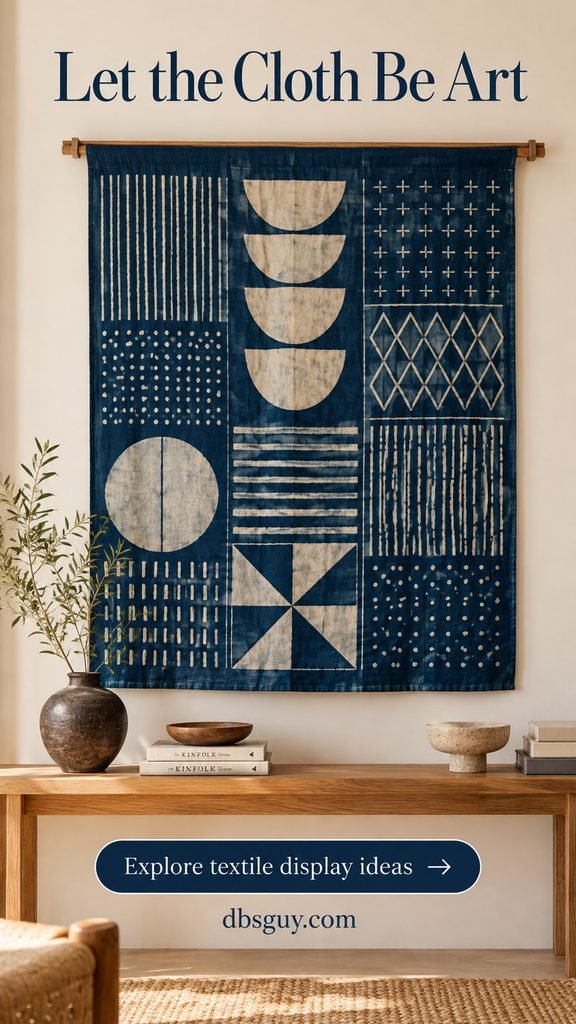
Measure the cloth and wall before selecting hardware. Use a display system that distributes its weight along the top rather than hanging it from two vulnerable corners. For a sturdy contemporary piece, a sewn sleeve and properly mounted rail may be suitable; ask the maker or a textile professional first. Avoid glue, staples through the cloth, and irreversible changes to valuable pieces.
Keep it out of direct sunlight and away from damp walls. The Canadian Conservation Institute’s textile-care guidance explains why light exposure and poor support matter. Leave breathing room around the hanging rather than surrounding it with equally busy art.
3. Run a narrow strip down a dining table
An indigo runner lets the wood remain part of the design. The concept pairs circular resist motifs with ivory plates, woven placemats, and a low ceramic bowl. Keep the centerpiece small enough that the textile is still visible and guests can see each other.

As a starting point, try a runner about one-third of the tabletop’s width. For a 36-inch-wide table, that is roughly 12 inches. Add your preferred overhang at each end, then allow extra fabric for hems. On a small round table, a shorter runner that stays on the top may feel tidier.
Choose contemporary cloth with suitable care instructions for this spill-prone job. Use trivets under hot dishes and protect the fabric from wet vase bases. Indigo with cream works year-round; in fall, add rust napkins or warm wood rather than replacing the runner with a themed print.
4. Add a light bed runner across the foot
A bed runner creates a concentrated band of color while leaving most of the bedding plain. In a sage room, indigo provides a deeper counterpoint to soft green. The concept uses a flat, lightweight layer, not a thick quilt.

Measure the bed from side to side and add only the drop you want. A standard queen mattress is approximately 60 inches wide, but your frame and bedding affect the finished look. A runner around 18–24 inches deep is a reasonable styling starting point; tape out the footprint before commissioning it.
Ask a sewer to add a compatible backing if the cloth needs more body, and agree on laundering before combining fabrics. A lined runner is decorative and does not replace warm bedding. If you want to build the surrounding palette, see our sage green bedroom ideas for a calming retreat. Keep the duvet solid so the two colors have room to work.
5. Frame a window with lined curtain panels
Curtains turn Adire into architecture: two tall panels make the color part of the room’s outline. A subtle vertical resist pattern feels quieter at this scale than a large high-contrast circle repeat. Keep nearby furniture and bedding simple.

Ask a curtain maker to check the cloth width, repeat, seams, and drape before calculating yardage. For softly gathered panels, a combined finished width about 1.5–2 times the rod width is a useful starting range, depending on the heading style. Include hem and header allowances separately.
Compatible lining can add body and help limit exposure, but it does not make a textile immune to fading. If blackout is essential, specify a separate suitable lining rather than assuming dark blue fabric will block light. Choose newly made cloth intended for use; a fragile collectible is better displayed away from a bright window.
6. Cover a removable entryway bench cushion
A cushion makes a small bench feel considered without hiding its wooden frame. Small, pale motifs work well on a narrow seat because the pattern remains visible even when someone sits down. The removable cover is the useful feature here.

Measure the cushion’s actual width, depth, and thickness. Ask for a boxed cover, a concealed zipper, and a secure fit that does not slide. Allow the sewer to plan seam allowances and pattern placement; the finished cushion dimensions are not the cutting dimensions.
This is a higher-wear application than pillows or wall art. Let an upholsterer assess the fabric and any backing needed. Lining alone does not turn light cotton into performance upholstery. For a busy family entryway, a small decorative Adire pillow on a durable plain seat may be the more practical choice.
7. Make a padded headboard the main feature
A broad headboard gives a large repeat room to unfold. Use one strong pattern and solid bedding beneath it. The concept’s indigo diamonds create a clean focal point against ivory linens and pale wood.

Before ordering fabric, give the upholsterer the headboard’s full dimensions, including its depth, wrapped edges, and any seams. Ask to see the pattern placement laid out first: a beautiful motif can look awkward if the center is cut off at the top edge.
Discuss backing, dye transfer, cleaning, and suitable padding as a complete upholstery project. A removable fitted cover may be preferable if you want to change it later. Keep a valuable original cloth intact and commission a new textile for this use.
8. Frame an offcut with a generous mat
A small textile fragment can be enough. Choose an existing offcut with an interesting repeat, place it within a broad cream mat, and use a light wooden frame. Terracotta walls bring out the warmth around the cool indigo.

Unlike the full wall hanging, this approach suits a narrow wall, shelf, or compact work area. Try a paper mockup first: an 8-by-10-inch textile opening inside a larger frame can feel substantial without requiring a large cloth. Preserve any maker information with the piece.
Ask a framer experienced with textiles for an appropriate support and spacer so the fabric does not press against the glazing. Avoid adhesive directly on the textile. UV-filtering glazing can reduce UV exposure, but it cannot stop all light-related fading. Do not cut a complete historic textile simply to fill a frame.
9. Inset fabric into a folding room divider
A wooden folding screen introduces Adire at room scale while preserving an open, movable layout. Flat fabric panels show the repeat more clearly than gathered curtains. Use the divider to suggest a reading area rather than enclosing every side of it.
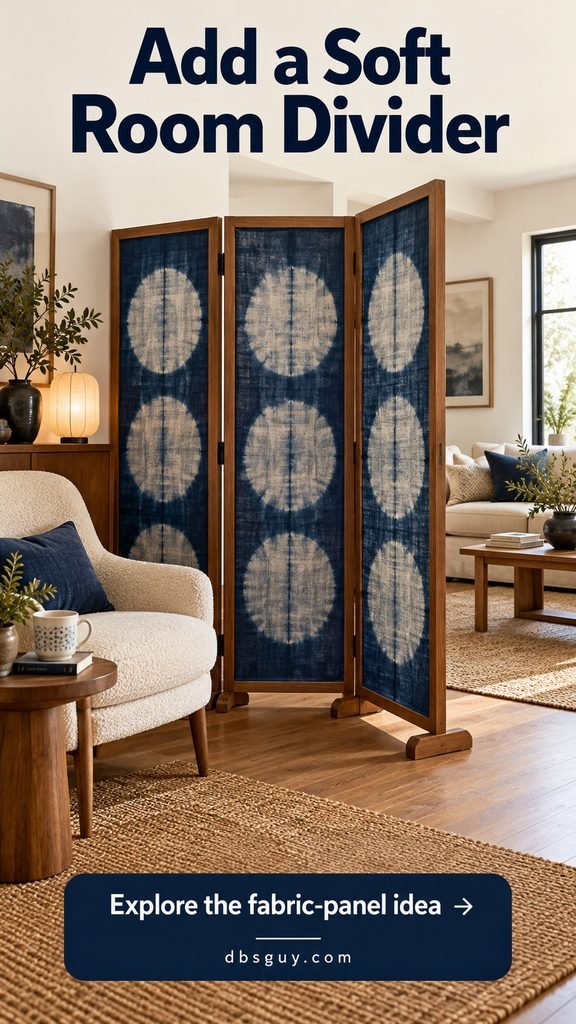
Start with a sound, stable screen frame and have a maker fit fabric panels that can be removed or replaced. Measure each opening separately; allow for the attachment system and keep patterns at a consistent height. A plain backing can make the reverse side look finished.
Leave walkways clear and follow the screen manufacturer’s setup guidance. A fabric screen gives a visual boundary, not soundproofing. For the chair, side table, and lighting beyond it, our small-space reading nook ideas offer useful layout inspiration.
How to keep the room cohesive
Pick one main Adire feature per sightline, then repeat its blue once in a smaller accent. You do not need all nine ideas in one room. Cream, flax, oak, and warm brown leave the pattern visible; sage makes the palette softer, while rust or terracotta adds warmth.
Mix pattern scales rather than matching everything exactly. A broad geometric wall textile and a small dotted pillow can coexist; curtains, a sofa full of pillows, and a matching divider in the same bold repeat may overwhelm a compact room. This is an editorial styling preference, not a rule about how Adire must be used.
Frequently asked questions
Is Adire the same as Ankara or shibori?
No. Adire is a Yoruba Nigerian resist-dye tradition. Ankara commonly refers to African wax-print fabrics, while shibori refers to Japanese resist-dye traditions. Similar colors or circles do not establish a textile’s origin. Ask the maker or seller how and where it was produced.
Can I wash Adire decor in a washing machine?
Only if the maker’s instructions allow it. Dye, fiber, finish, lining, and construction can differ between pieces. Follow the care guidance for the finished item; do not assume every indigo cotton has the same washing requirements. For an antique or valuable cloth, consult a textile conservator before cleaning.
How much fabric should I buy?
There is no reliable one-size yardage answer. Finished dimensions, cloth width, seams, hems, backing, and pattern alignment all matter. Have your sewer or upholsterer produce a cutting plan before ordering, especially for curtains and headboards. Buy a small sample first when possible.
What is the best first project for a renter?
A finished removable pillow cover or table runner is the easiest place to start. Both can move with you and need no installed hardware. A freestanding screen is another option if you have enough floor space and can set it up securely.
How can I buy thoughtfully?
Look for a maker or seller who identifies the Nigerian origin, technique, fiber, and care needs, and who can explain the design rather than relying only on “African-inspired” labeling. Keep the artisan’s name and any motif information with your purchase. Do not assign a cultural meaning to an unfamiliar pattern based on its appearance alone.
Choose one piece you want to see every day. If the fabric is soft and washable, make it useful. If the complete design is what you love, let it remain whole. The right project respects both your room and the cloth.