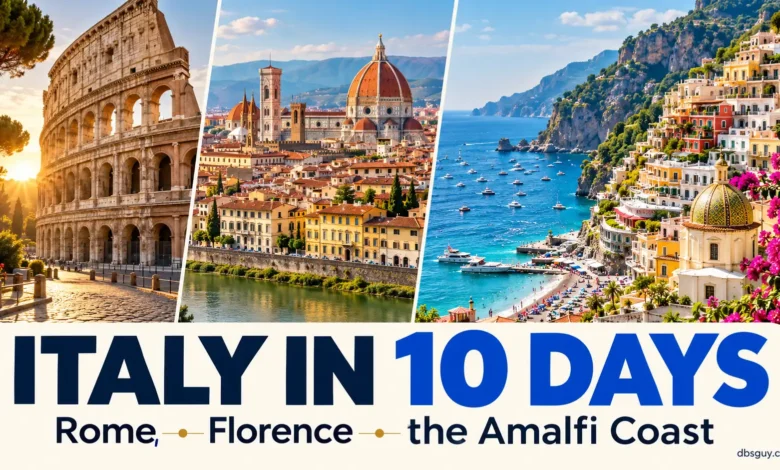
For Italy in 10 days, spend three nights in Rome, two in Florence, three in Amalfi, and your final night in Naples. Fly into Rome and home from Naples if the flights work for you. Take high-speed trains between the cities, then use a ferry or a prearranged road transfer to reach the coast.
That gives you ancient Rome, a focused dose of Florence, and two full coastal days without pretending a long transfer is a beach day. It is an active first-time itinerary, with time for a slow lunch and an evening walk. It also leaves Venice, a Tuscany day trip, and Capri for another trip.

The images in this guide are AI-generated travel concepts for inspiration, rather than documentary photographs or exact views from a particular hotel.
Your 10-day Italy itinerary at a glance
This plan counts 10 calendar days in Italy and nine hotel nights. Day 1 is your arrival in Rome; Day 10 is your flight home. An overnight flight from the United States usually starts before Day 1, so include that extra travel time when requesting time off.
- Day 1: Arrive in Rome; take an easy walk in the historic center. Sleep in Rome.
- Day 2: Colosseum, Roman Forum, and a relaxed evening in Monti. Sleep in Rome.
- Day 3: Vatican Museums and St. Peter’s Basilica. Sleep in Rome.
- Day 4: Train to Florence; explore the Duomo area and Ponte Vecchio. Sleep in Florence.
- Day 5: One major art museum, Oltrarno, and a sunset viewpoint. Sleep in Florence.
- Day 6: Train to Salerno; continue to Amalfi and settle in. Sleep in Amalfi.
- Day 7: A full day in Positano. Sleep in Amalfi.
- Day 8: Amalfi town and Ravello’s gardens. Sleep in Amalfi.
- Day 9: Transfer to Naples; enjoy pizza and a final city walk. Sleep in Naples.
- Day 10: Fly home from Naples.
One geography note: Florence is north of Rome, so this title-order route involves some backtracking before you head south. If flights and your preferred order are flexible, starting in Florence, then visiting Rome and the coast, is more linear. The plan below keeps Rome first and makes that longer southbound journey explicit.
Choose your bases before you book the sights
In Rome, look around the Pantheon and Piazza Navona for easy historic-center evenings, or Monti for convenient access to ancient Rome. Check the actual walk to your hotel, air-conditioning, and elevator access. A central address can still involve several flights of stairs.
In Florence, the area between Santa Maria Novella station and the Duomo is practical for a short stay with luggage. Oltrarno suits travelers who favor neighborhood dinners, but check the distance to the station before booking an early departure.
On the coast, this itinerary uses Amalfi town. It makes the Positano ferry day and Ravello excursion straightforward while keeping you on the coast itself. Ask the hotel how many steps separate its entrance from the pier or a vehicle drop-off. “Sea view” can mean a substantial uphill climb.
Positano is a beautiful alternative if your accommodation is a central part of the trip and your budget allows it. Salerno works well for travelers prioritizing rail access and often a wider choice of affordable rooms, but you will commute to the coastal towns. Sorrento is on the Sorrentine Peninsula, rather than on the Amalfi Coast; it is useful for some Naples and Capri plans, but it changes the transfer choices in this guide.
For the last night, choose Naples around your flight time. A city-center hotel suits a final afternoon out; an airport-area stay can make more sense before a very early departure.
Day 1: Arrive in Rome and keep the first evening easy
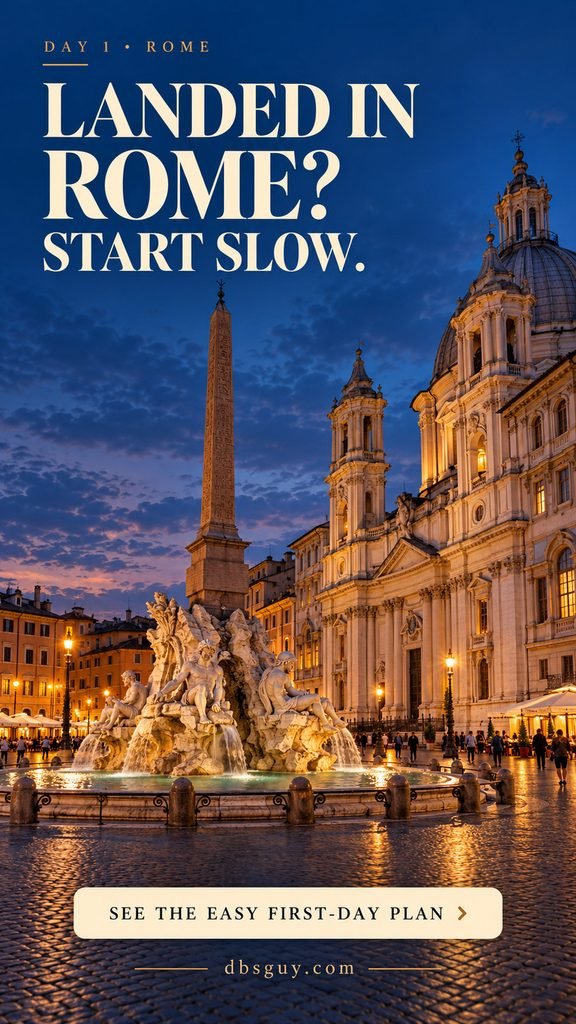
Today’s priority: get to your hotel, eat something good, and stay awake long enough for a gentle introduction to Rome.
If you arrive at Fiumicino Airport, the Leonardo Express takes about 32 minutes to Roma Termini once aboard. That is the train journey, not your total airport-to-hotel time: allow separately for immigration, baggage, waiting, and your final connection. Ciampino uses different airport transfers.
After dropping your bags, choose a compact walk near your hotel. Around the historic center, Piazza Navona and the Pantheon’s exterior make an easy pairing. Sit down for a late lunch or early dinner, then decide whether you have the energy to continue toward the Trevi Fountain.
Keep any Pantheon interior visit optional and check its current admission arrangements. A delayed flight should cost you an evening stroll, rather than a hard-to-replace timed ticket.
If you land late: have dinner near the hotel and stop there. You do not need to cross Rome to make the arrival day count.
Day 2: Give the Colosseum and Forum their own day
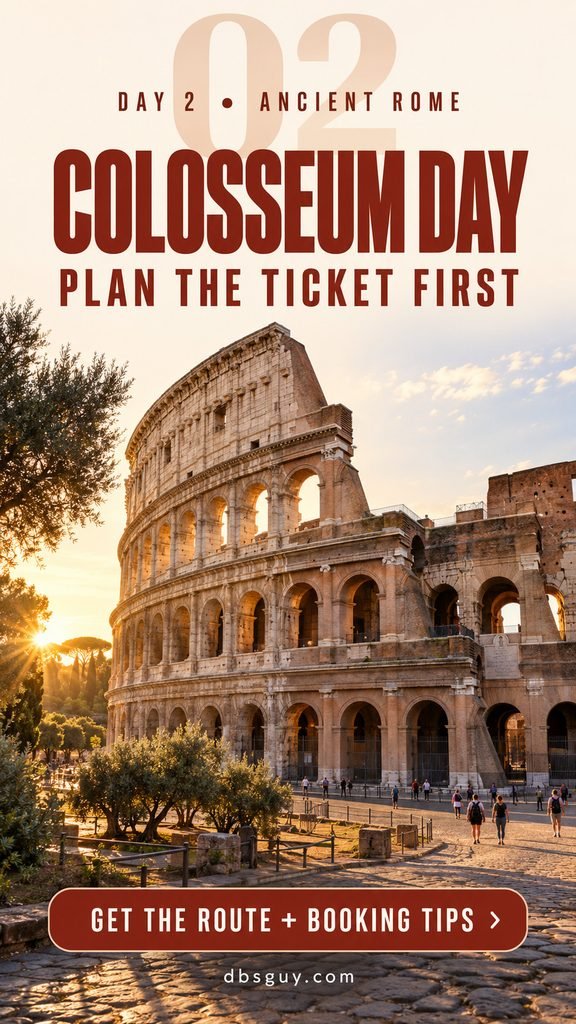
Morning: book a timed Colosseum entry and build the day around it. The archaeological park’s official guidance currently says ticket sales open 30 days before the visit date. Check the rules for your chosen ticket, enter names carefully, and bring the identification it requires.
Read the access description before buying. A standard Colosseum visit, an arena-only product, and an underground experience are different purchases. A ticket for the Forum alone does not automatically admit you to the Colosseum.
Late morning and afternoon: continue through the Roman Forum and Palatine area within your ticket’s permitted access and validity. Allow roughly four to five hours for the combined ancient-Rome outing, including breaks; history enthusiasts may want longer. In hot weather, take a proper lunch break rather than rushing through exposed ruins.
For the evening, walk into Monti for dinner. If you missed Trevi yesterday and still feel fresh, make that your one extra stop. You already have a full day without adding another major attraction.
Useful packing: broken-in shoes, sun protection, water, and a small day bag that meets the attraction’s current rules. Uneven archaeological surfaces can be tiring even when the distance looks short on a map.
Day 3: Visit the Vatican with room between the two entrances

Reserve the Vatican Museums for the morning and allow about three to four hours for a focused visit that includes the Sistine Chapel. You will still be choosing what to linger over; this is a large collection.
The Vatican Museums and St. Peter’s Basilica have separate public entrances. For a normal independent visit, plan to exit the museums, walk around to St. Peter’s Square, and go through the basilica’s access process. Do not build your schedule around an assumed shortcut from the Sistine Chapel.
Have lunch between the two visits. Basic basilica entry is free, while optional timed reservation services, guided visits, and dome access can involve fees. Security lines still need time, and religious events can change access. A ticket advertised as “Vatican access” deserves a close read of exactly what it includes.
Wear covered shoulders and clothing below the knee; lightweight long pants are an uncomplicated choice. Keep your bag small. After the basilica, a walk toward Castel Sant’Angelo and the river is enough for the afternoon; save a dome climb for travelers who actively want another climb.
Calendar adjustment: the Vatican Museums normally close on Sundays, with limited exceptions such as qualifying last-Sunday openings. Swap Days 2 and 3 if needed, and check the official holiday calendar before purchasing either ticket.
Also read: 30 Classy Italy Vacation Outfit Ideas to You’ll Love for packing inspiration; adapt outfits to the church-entry guidance above.
Day 4: Take the train to Florence, then explore on foot
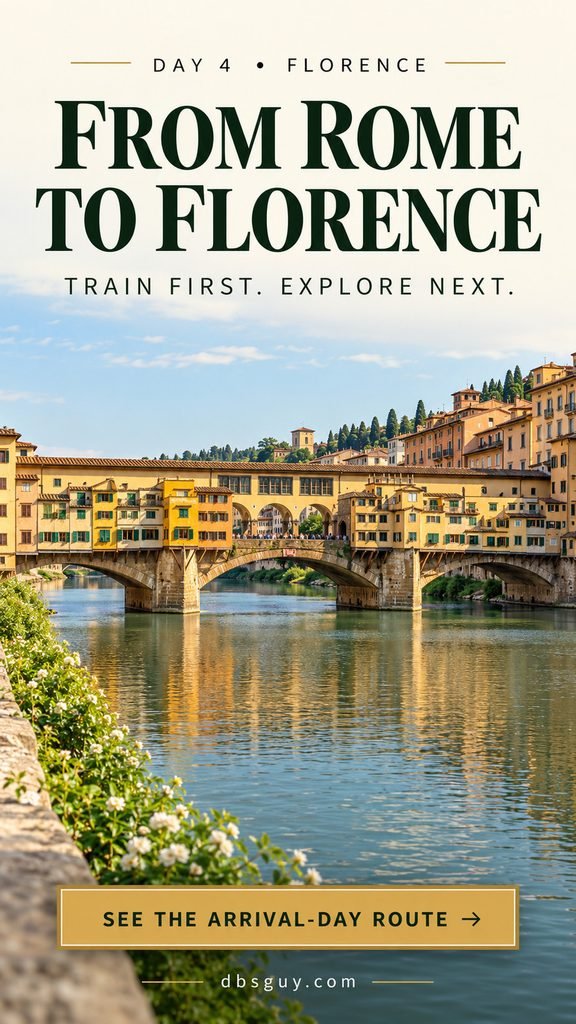
Book a high-speed service from Roma Termini to Firenze Santa Maria Novella, often shown as Firenze S. M. Novella or Firenze SMN. Many direct journeys take around 1½ hours; check your exact train rather than assuming every service is equally fast.
A morning departure leaves a useful afternoon in Florence. Allow time for hotel checkout, reaching the platform, and dropping bags on arrival. Keep your first paid reservation well clear of the train’s scheduled arrival.
After lunch, walk through the Duomo area, then continue to Piazza della Signoria and the river. Cross Ponte Vecchio and explore a little of Oltrarno before dinner. The historic center rewards wandering, and you do not need a major museum on a transfer day.
If climbing Brunelleschi’s Dome is a priority, book a suitably timed slot through Opera di Santa Maria del Fiore and adjust this afternoon around it. The dome climb has 463 steps and no elevator; cathedral entry and dome access are separate arrangements. Otherwise, appreciate the exterior and keep the afternoon flexible.
Sleep: Florence, night one of two. Leave tomorrow’s clothes and museum essentials easy to reach so you do not spend your short stay unpacking everything.
Day 5: Pick one big museum and leave space for Florence

Choose your morning’s main event before buying tickets: the Uffizi for a substantial Renaissance painting collection, or the Accademia if seeing Michelangelo’s David is your strongest priority. Art lovers can plan both, but that is a more demanding version of this day.
For the Uffizi, set aside about three hours for a focused visit and accept that you will not study every room. For the Accademia, a shorter visit leaves more room for a cathedral-area stop or a leisurely lunch. Check each museum’s current opening calendar rather than treating a reservation as an afterthought.
The Uffizi normally closes on Mondays. If Day 5 falls on a closure, look for a sensible Day 4 afternoon visit with plenty of train-delay buffer, move the Florence dates, or choose another open attraction. A timed ticket that only works if every connection goes perfectly is a weak plan.
Spend the afternoon around Santo Spirito and Oltrarno, with time for artisan streets, coffee, and an unhurried meal. Later, head to Piazzale Michelangelo for a broad view of the city. The approach is uphill; take a taxi or suitable local transport if you would rather save your legs.
Keep a Tuscany excursion for a longer stay. With just two Florence nights, a countryside day trip would replace most of your only full day in the city.
Also read: How To Organize Your Time On Vacation if you need help choosing between a full sightseeing schedule and more open time.
Day 6: Travel from Florence to Amalfi through Salerno
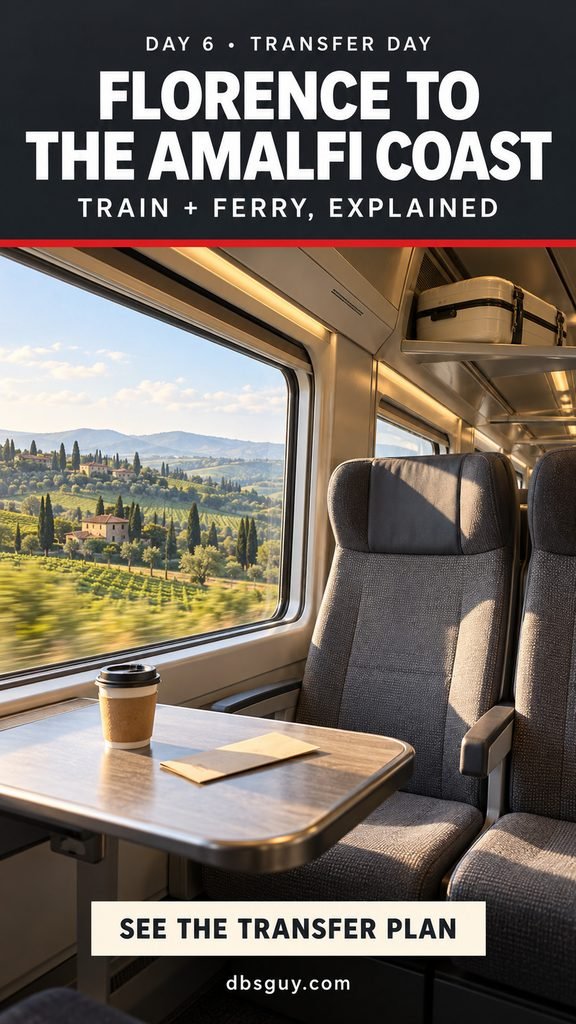
This is the longest transfer of the trip. Reserve most of the day for it and make dinner your only firm plan after arrival. Amalfi and Positano do not have railway stations.
- Take a high-speed train from Firenze SMN to Salerno. Direct services exist, but availability and duration depend on the date. Allow roughly 3½–4½ hours aboard for planning, then use the duration shown on the ticket you actually buy.
- Check your ferry’s exact departure pier. Travelmar serves Salerno’s Concordia waterfront, but other services may use different piers. Allow a generous gap for getting off the train, moving luggage, finding the boarding point, and checking in. Around 60–90 minutes is a sensible starting buffer for a separately booked connection, with more room if alternatives are limited.
- Take a scheduled ferry to Amalfi if it is operating. Sailing time varies by departure and stops; treat the train-to-ferry connection as two separate bookings.
- Reach your hotel and settle in. Confirm luggage help or steps in advance, then keep the evening to a harbor walk and dinner.
Budget approximately six to eight hours door to door for the day as a planning allowance, rather than a guaranteed connection time. Longer waits, delays, and a hotel high above town can add more.
Use the official Travelmar timetable and fares to check your travel date, pier, and return options. Coastal ferries are seasonal and weather-dependent; a service shown for one month is not a promise for another. Check luggage allowances too, because a normal airline cabin suitcase may exceed the included small-bag limit.
If ferries are unavailable: arrange a road transfer from Salerno, or choose a Florence–Naples train and a prebooked driver to your hotel. Ask for the full price, luggage capacity, and realistic traffic allowance. Local buses are another option where operating, but crowded services and large bags make them less comfortable on a long arrival day.
Have the road alternative worked out before you board the train. You should know what you will do if the sea is rough without having to improvise at the pier.
Day 7: Spend a whole day in Positano
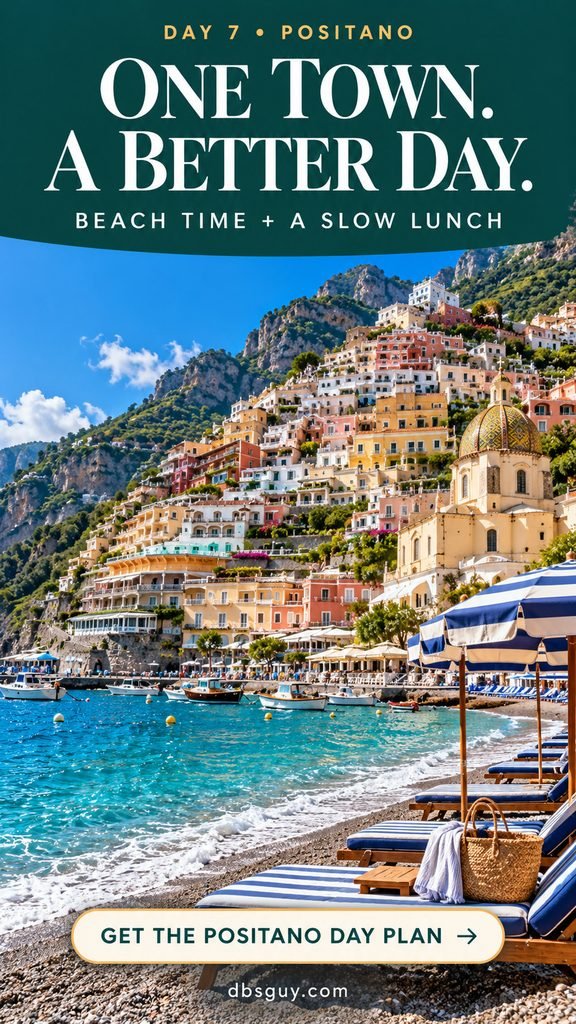
Take a morning ferry from Amalfi to Positano when conditions allow. Choose your return at the same time and leave room before the final sailing. Buy the tickets for the legs you intend to travel; a point-to-point ferry ticket is not an unlimited hop-on pass.
Start around the waterfront and Spiaggia Grande, then follow the lanes upward at your own pace. The steep setting is part of the appeal and part of the effort. Stop for views and browse shops rather than turning every staircase into a challenge.
For lunch, pick the experience that matters to you: a sea-view table, a quieter meal farther uphill, or something simple before the beach. Check menus and prices before sitting down in the busiest waterfront area.
Choose either a paid beach setup or an available public beach area, following local signs and access rules. Beach clubs, umbrellas, and loungers are separate spending decisions. In cool weather, replace swimming with a longer lunch and more time in the lanes.
Return to Amalfi with enough time for dinner without rushing. A full Positano day is also the easiest day to move if another day has a better sailing forecast.
Weather backup: swap this day with Amalfi and Ravello when sensible. If the sea stays rough, use a confirmed road option or enjoy your base; do not assume every ferry cancellation has an equally quick substitute.
Also read: Italy Honeymoon Ideas: Crafting Your Perfect Romantic Escape if you are shaping the trip around a romantic occasion.
Day 8: Pair Amalfi’s streets with Ravello’s gardens
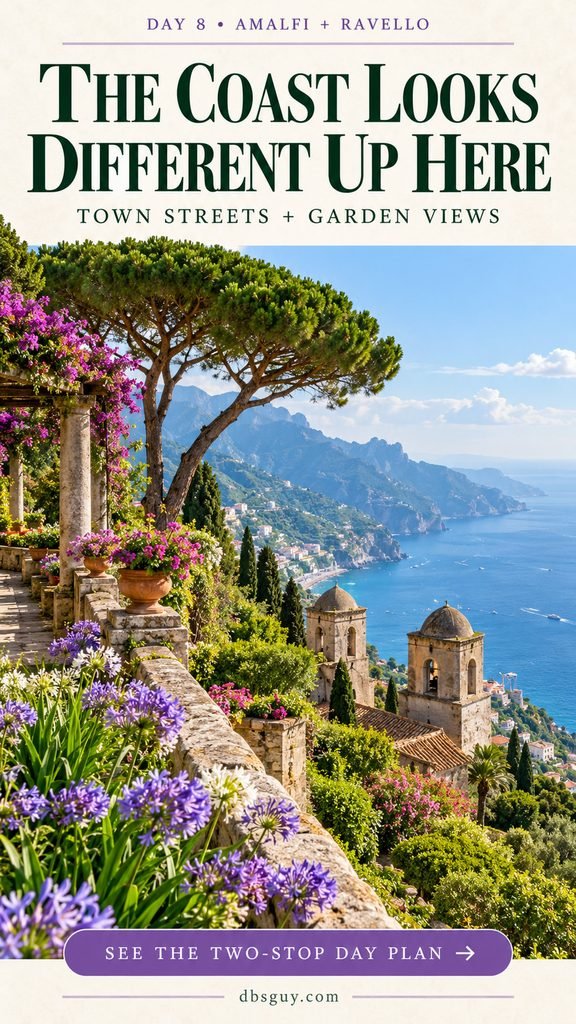
Begin in Amalfi town, around the cathedral square and the lanes behind it. Enjoy breakfast before the day becomes busy. If you want to visit the cathedral complex, check the current visitor access and ticket arrangements; the exterior steps and square already make a worthwhile stop.
Later, take a bus or taxi uphill to Ravello. Ravello is inland above the coast: you cannot take a ferry directly into the town. Check the day’s road-service timetable and allow room for queues and traffic rather than planning the connection to the minute.
Choose Villa Rufolo as your main garden visit. Its terraces pair greenery and historic architecture with broad sea views. Check for event installations, maintenance, and opening notices, since the exact view and accessible areas can change.
Have lunch in Ravello, explore around the main square, and return to Amalfi in the afternoon. You can add another garden if that is your favorite kind of sightseeing, but it is equally reasonable to sit down with a coffee and enjoy the setting.
For an easier day: take a taxi both ways and keep the visit short. Fewer transport changes help, although historic streets and garden paths may still involve steps or uneven surfaces. Ask about the exact access you need before paying for a ticket.
Tonight is your final coastal night. Confirm tomorrow’s transfer, organize your bags, and have the leisurely dinner you would otherwise be trying to squeeze in before an airport run.
Day 9: Move to Naples before your flight day
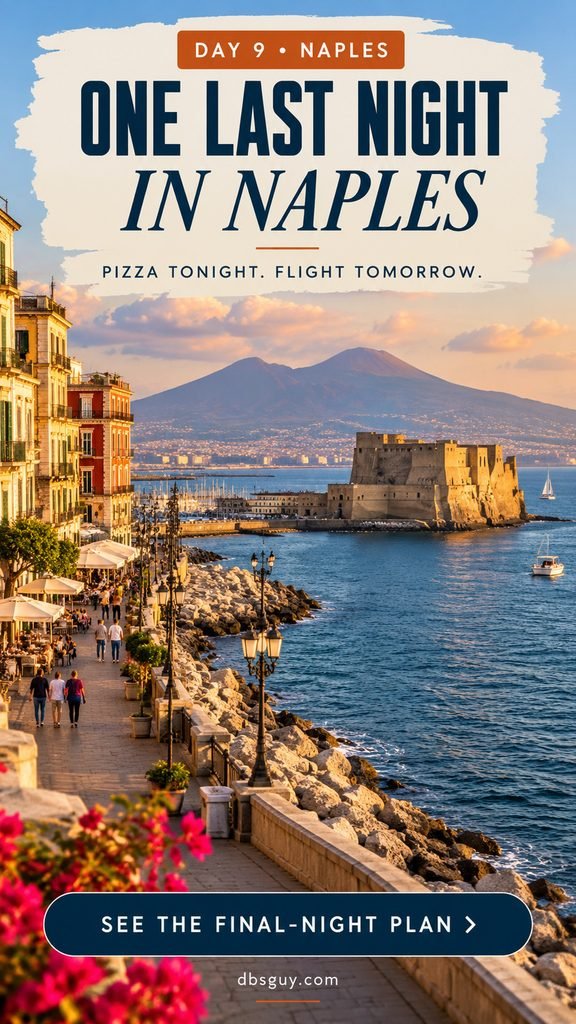
Check out of your Amalfi hotel after breakfast and move to Naples. In ferry season, one workable route is Amalfi to Salerno by boat, then a train to Napoli Centrale. Allow a proper gap between those separately booked services. A prearranged road transfer is an alternative when ferry conditions or luggage make the boat route less appealing.
Keep this day’s sightseeing flexible. After dropping your bags, choose one area: the historic center for narrow streets and pizza, or the Lungomare waterfront for a longer open-air walk and views around Castel dell’Ovo. You do not need to cover both after a transfer.
Book a final dinner if you have a particular place in mind, then arrange tomorrow’s airport transport through a reliable provider or your hotel. Naples is worth a longer trip, but here it also provides a useful buffer between the coast and your flight.
Flying home from Rome instead? Use Day 9 to travel back to Rome and sleep there. Sacrifice the Naples afternoon rather than relying on a coast-to-Rome connection on departure morning. For an early Fiumicino flight, consider whether an airport-area hotel is the most practical final base.
Day 10: Fly home with a clear departure plan

Keep the morning free of reservations. If the flight is late enough, breakfast and a short walk near the hotel are fine; a last-minute excursion is harder to recover from.
Work backward from your airline’s recommended airport arrival time and check-in deadline, then add your transfer and a traffic buffer. For a long-haul international departure, planning to reach the terminal around three hours ahead is a useful starting point, but your airline’s instructions and connection details take priority.
- Confirm the departure airport, terminal information, and first flight on your booking.
- Keep passports, medication, valuables, and essential chargers in your personal bag.
- Check the room safe, charging outlets, bathroom shelves, and luggage-storage receipt.
- Verify the pickup time and address with your driver or hotel.
- Pack liquids and souvenirs to meet your airline and airport-security requirements.
The final-night move means this morning can stay simple. You have already done the longer coast transfer.
Also read: Airport Outfit Ideas: What To Wear When Traveling for comfortable travel-day outfit inspiration.
When to take this Rome, Florence, and Amalfi Coast trip
My editorial pick is May, early June, or September, subject to your dates and the operating ferry schedule. Those periods can balance sightseeing with coastal time, although they are popular and do not guarantee low prices, empty streets, or calm seas.
July and August suit travelers who prioritize summer beach time and can handle heat, busy towns, and higher accommodation demand. Start outdoor sightseeing early and preserve an indoor or shaded break during the hottest part of the day.
April and October can work well for city sightseeing, but coastal weather and reduced seasonal services need closer attention. Plan the coast around towns and gardens rather than assuming swimming weather.
For a winter trip, rethink the coastal section. Rome and Florence remain strong city destinations, while ferry availability, hotel openings, and the beach-town atmosphere can be very different. A Naples base with a weather-dependent coastal outing may suit you better than the exact three-night Amalfi plan.
What to budget for 10 days in Italy
For this route, a useful illustrative midrange budget is about €1,750–€3,100 per person, excluding international flights. This is an editorial planning model, not a live package quote. It assumes two adults sharing one room, nine nights, mostly independent sightseeing, and scheduled public transport rather than repeated private drivers.
- Rooms: €810–€1,440 per person. This assumes an average room budget of €180–€320 per night across all nine nights, split between two people. Price the Amalfi nights first; they may cost much more than the other stops.
- Food: €400–€650. Allow roughly €40–€65 per day for a mix of simple meals, coffee, and sit-down dinners.
- Trains, ferries, airport links, and local travel: €180–€300. This allowance needs revisiting once you choose actual services and fares.
- Admissions: €120–€200. The total depends on your museum choices, climbs, and any added guided visit.
- Local accommodation taxes and small extras: €60–€110. Confirm what each hotel includes and what is payable separately.
Those categories total roughly €1,570–€2,700; the headline range rounds upward to include a modest contingency. Add insurance, shopping, premium tours, beach-club spending, and private transfers as separate items. Solo travelers should expect a higher per-person room cost.
For a lower total, compare Salerno accommodation, book suitable advance train fares, and choose one main Florence museum. For a honeymoon with a balcony room in Positano, start with that room quote and rebuild the budget around it. Americans should convert the euro total using the exchange rate and card fees that apply when paying.
Book in this order
- Flights: compare Rome-in/Naples-out against a Rome round trip, including the cost and time of returning to Rome.
- Hotels: secure the coastal base and final airport-side city first, then Rome and Florence.
- Opening calendars: check the Vatican and Florence museum dates before fixing each sightseeing day.
- Timed attractions: reserve the Vatican Museums, your chosen Florence museum, any dome climb, and the Colosseum when the relevant booking window opens. Use each attraction’s own official ticketing route and read the access included.
- Intercity trains: choose the actual stations, departure times, and fare flexibility that work with hotel checkout and onward travel.
- Coastal transport: check ferries for your dates, luggage charges, boarding points, and a road alternative.
Save confirmations offline, with the passenger names and cancellation rules easy to find. Before departure, recheck the operators’ current notices; the schedules and access rules researched for this guide can change.
Pack for cobblestones, churches, and ferry days
A manageable suitcase and a small personal bag make this route much easier. You will encounter station platforms, uneven paving, and coastal steps, sometimes within the same afternoon.
- Pack broken-in walking shoes, breathable layers, sun protection, and a light rain layer.
- Bring clothing that covers shoulders and extends below the knee for church visits.
- Add swimwear and suitable beach footwear if the season supports swimming.
- Check your devices’ voltage compatibility and bring the correct Italian plug adapters.
- Keep a compact day bag for museum visits and check each venue’s current bag rules.
- Leave room for dirty laundry rather than adding a full new outfit for every day.
If stairs or long walks are difficult, choose hotels by access first and views second. Ask concrete questions: Is there step-free access from the street? Does the elevator reach the room floor? Where can a taxi actually stop?
Questions worth settling before you go
Is 10 days enough for Rome, Florence, and the Amalfi Coast?
Yes, for a selective first visit. This version gives Rome two full sightseeing days plus arrival time, Florence one full day plus an arrival afternoon, and the coast two full days plus transfer evenings. If you want extensive museum visits and several beach days, choose two regions or add nights.
Do I need a rental car?
For this itinerary, trains plus ferries and occasional road transfers are my recommended approach. A car introduces parking and restricted-traffic-zone considerations in the cities and on the coast. It becomes more useful if you replace part of this plan with a rural Tuscany stay.
Can I add Capri, Pompeii, or a Tuscany day trip?
You can substitute rather than simply add. Capri would take the place of a coastal day and introduce another weather-dependent boat plan. Pompeii needs a deliberately planned visit and luggage arrangements; it is not a casual extra on an already long transfer. A Tuscany excursion would use most of your only full Florence day.
Can I stay in Positano instead of Amalfi?
Yes. Rework Day 6’s final connection for Positano, enjoy Day 7 locally, and check the boat and road combinations for the Amalfi–Ravello day. Confirm the final-night transfer separately. The accommodation choice changes the practical details, even when the destinations stay the same.
What if I have 10 nights rather than 10 days?
Add the extra night where your interests need it most: Florence for another museum or a more relaxed arrival, or the coast for a flexible weather day. Keep the final night aligned with your departure airport instead of spending that buffer twice.
Which part should I simplify if this feels too busy?
Keep the nights and transfers intact, then remove optional activities: skip the dome climb, choose one Florence museum, and spend a full coastal day close to your base. The route works best when you have enough room to enjoy the places between the reservations.