If flight anxiety is rising right now, start small: stay seated with your belt fastened, let your breathing become gentle and regular, and notice the seat supporting you. You do not have to solve the whole flight in this moment.
These 17 tips give nervous flyers specific things to try before boarding, during takeoff, and when a bump or a thought sets off the alarm. Some are coping skills; others make the travel day less demanding. None promises a fear-free flight, and persistent fear deserves more support than a packing trick.
A simple plan for the next few minutes
- Settle: place both feet comfortably on the floor and loosen your grip on the armrests.
- Breathe: take a comfortable breath in, then let it out gently. Avoid forcing a huge breath.
- Notice: name a few colors, textures, and sounds around you.
- Connect: tell your companion or, when available, a flight attendant that you are anxious.
These steps are for familiar anxiety, not for diagnosing physical symptoms. New or severe chest pain, fainting, or serious breathing difficulty needs medical attention. On board, alert the crew; on the ground in the U.S., call 911 for an emergency.
The visuals in this guide are AI-generated editorial concepts, not photographs documenting real travelers or treatment results.
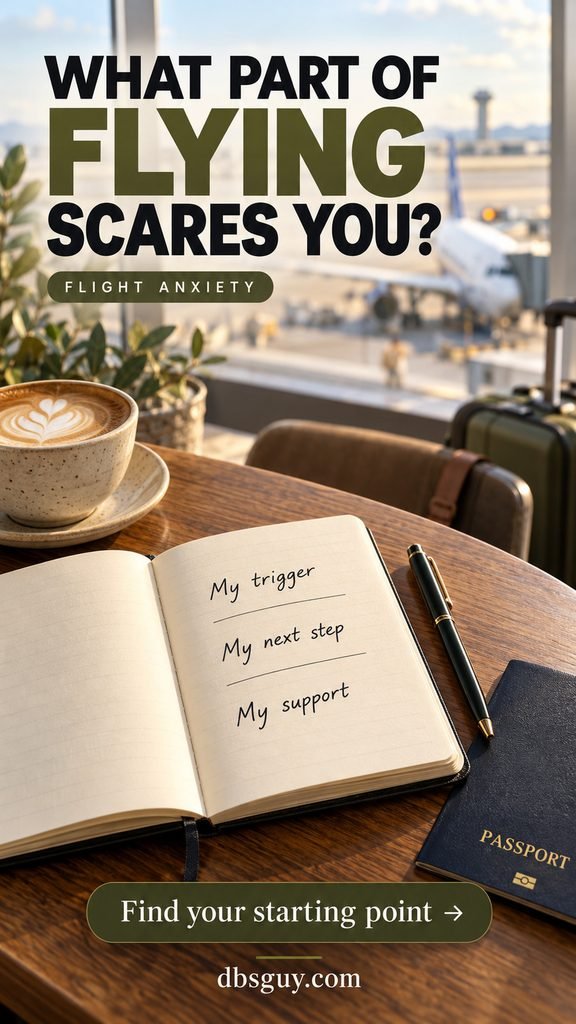
1. Name the part of flying that actually scares you
“I hate flying” is a difficult problem to plan for. “I worry about feeling trapped after the door closes” gives you a starting point. Take a minute to identify the moment you dread most: boarding, takeoff, turbulence, unfamiliar sounds, or having a panic attack around other people.
Write three short lines: my trigger, my next step, my support. For example: “Door closing; notice my feet and read one page; ask my friend to keep talking.” If your main fear is being unable to leave, another page of aircraft statistics may not address it. Bring that specific concern to a therapist if it keeps limiting you.
2. Practice gentle breathing before you need it
The NHS recommends comfortable, unforced breathing for stress. While seated, breathe in gently through your nose and out through your mouth. If counting helps, count slowly toward five on each part, using a shorter count if that feels easier. There is no need to hold your breath.
Practice for about five minutes at home so the routine feels familiar on flight day. Keep the breath easy rather than trying to fill your lungs as much as possible. If counting makes you monitor your breathing too intensely, drop the numbers. If you feel lightheaded, stop the exercise and return to your usual breathing.

3. Use the cabin for a five-senses grounding exercise
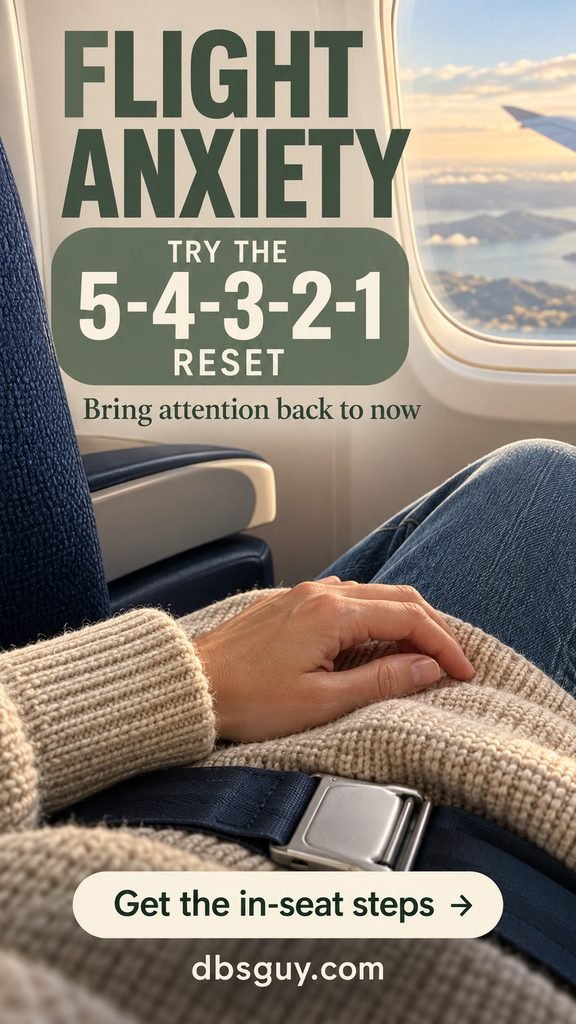
When your attention keeps jumping ahead to “what if,” give it something specific in the present. Try the 5-4-3-2-1 grounding method without leaving your seat:
- Notice five things you can see, such as the stitching on a seat.
- Notice four things you can feel, such as your sleeve or the floor beneath your shoes.
- Notice three things you can hear.
- Notice two things you can smell.
- Notice one thing you can taste.
Do not turn it into a test. If you cannot find two smells, spend another moment noticing textures instead. The point is to describe your surroundings, not complete a perfect checklist.
4. Release your jaw, shoulders, and hands
Check whether you are pressing your teeth together, lifting your shoulders, or gripping an armrest. Let your teeth separate slightly, lower your shoulders, and rest your hands open on your thighs. Keep the movement small and comfortable.
For a simple muscle-relaxation practice, gently tighten your hands for a few seconds, then let them soften and notice the difference. Skip any movement that hurts. You can also use release alone, especially if tightening feels unpleasant. Try a quiet check at boarding and again before landing; you do not need a conspicuous stretching routine or space in the aisle.

5. Give an anxious thought a label instead of an argument
Try changing “Something bad is about to happen” to “I am noticing a prediction that something bad will happen.” That wording gives you a little distance from the thought without demanding that you feel certain.
You might follow it with: “This is my familiar flight worry. My next action is to sit here, follow instructions, and read this paragraph.” You do not have to win an internal debate before continuing with the trip. If one thought returns, use the same brief response rather than building a longer reassurance speech every time.

6. Learn a little about normal flight sounds ahead of time
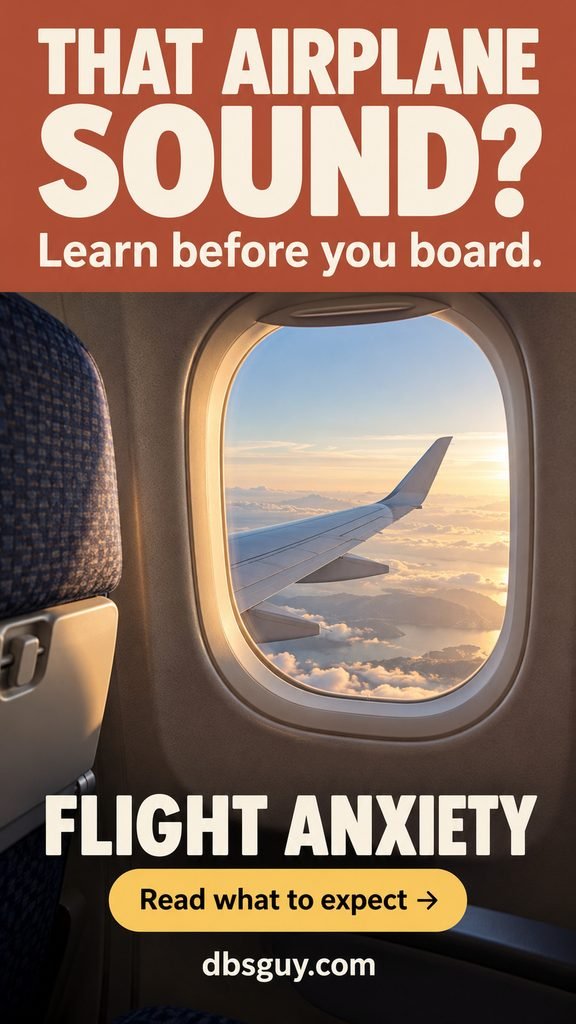
Education about flight sounds and sensations can be part of fear-of-flying treatment. Before departure, choose a short explanation from your airline, an aviation professional, or a reputable flying-confidence program. Look for an overview of boarding, takeoff, cruise, and landing.
For a basic starting point, Virgin Atlantic’s passenger guidance describes a few things you may notice:
- At the gate: air-conditioning noise and sounds from bags or cargo being loaded below.
- During takeoff: louder engine noise as the pilots apply more thrust.
- During descent: engine noise may reduce as the aircraft comes down toward its destination.
The useful question is “What kinds of changes might I notice?” You do not need to identify every hum, click, or change in engine sound yourself. Aircraft differ, and a noise alone is not something you can diagnose from your seat. Listen to announcements and ask the crew about a concern when they are available. Save the learning for before the flight rather than searching frantically during it.
7. Have a turbulence response you can repeat
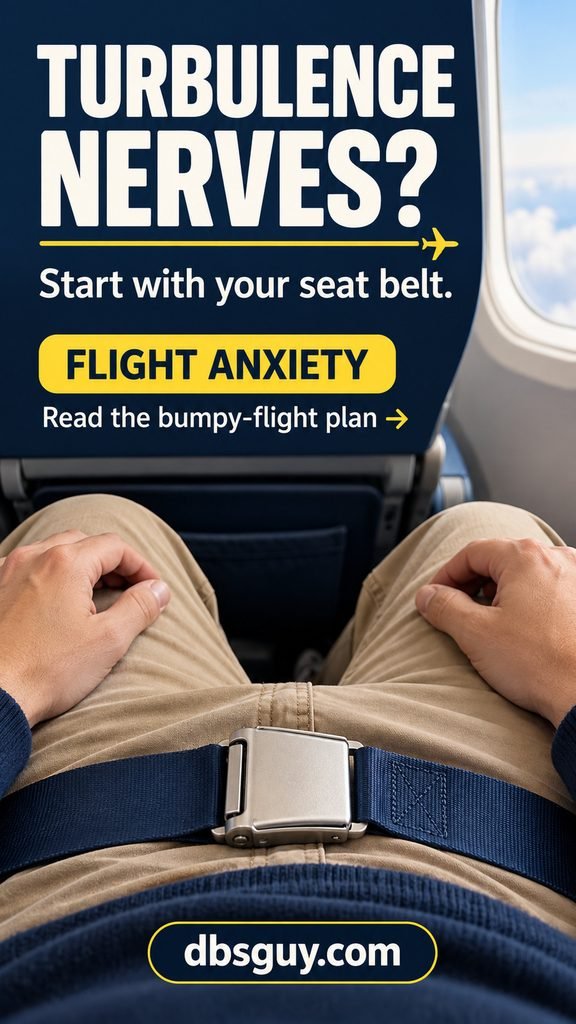
Turbulence is moving air, and it can happen even when the sky looks clear. It is a common part of flying, but it can cause injuries. The FAA recommends keeping your seat belt fastened while seated and following the crew’s instructions.
Make your response practical: check that your belt is snug and low across your hips, stay seated, soften your hands, and return to one grounding task. Follow any instructions about stowing items. Wait to visit the restroom until the seat belt sign is off and the crew permits movement.
You do not need to interpret every bump. During a rough patch, let the crew handle the flight while you handle the next breath or the next sentence in your book.
8. Choose a seat around your particular trigger
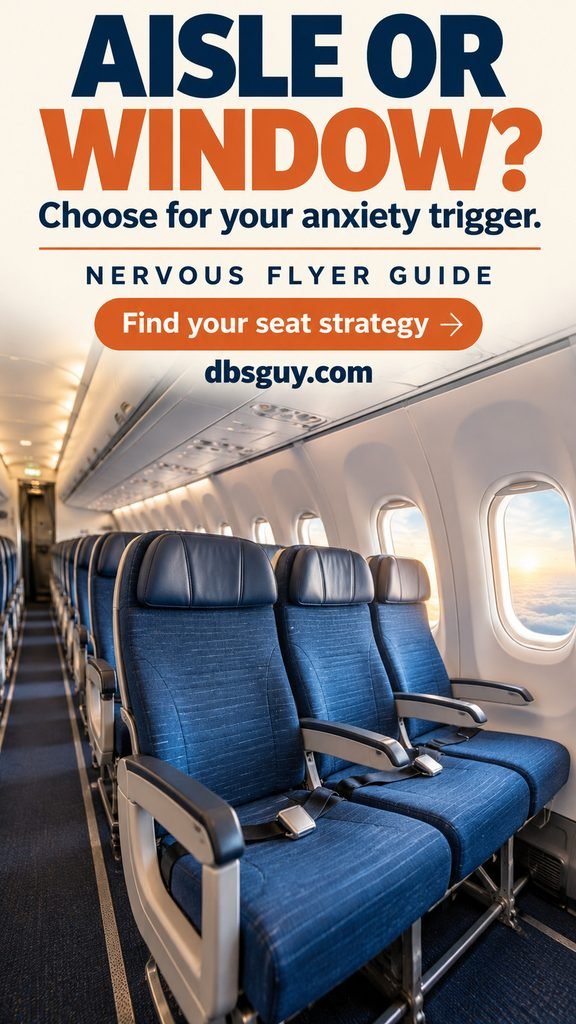
Think about what makes a seat feel manageable. An aisle seat may suit you if being boxed in is the main issue. A window seat may suit you if seeing outside feels orienting. If looking down increases your fear, a window view may be the wrong comfort choice for you.
This is a preference decision, not a guarantee about safety, turbulence, or how anxious you will feel. Check the actual seat map and selection rules before paying extra. Do not choose an exit row simply for space if you are unable or unwilling to perform its required duties. Build a coping plan that still works if an aircraft change moves your seat.
9. Remove the avoidable rush from airport day
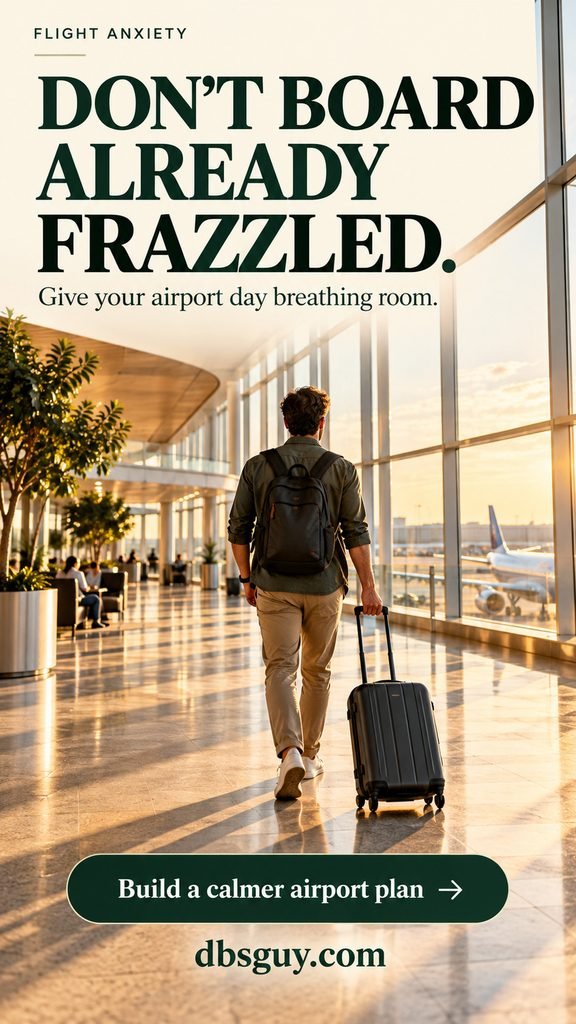
Work backward from your airline’s recommended airport arrival time. Add the time you need for transportation, parking, bag drop, security, and getting to the gate. Check your airline’s actual check-in and boarding deadlines; they are different from the departure time.
Put your ID, boarding pass, and essentials in predictable places. Once you reach the gate, confirm the flight information, find a restroom, and choose somewhere to sit. Keep checking for operational updates, but give yourself something other than the departure board to focus on between announcements. Holiday crowds, an unfamiliar airport, or checked luggage may mean allowing more time.
10. Rethink the extra coffee and the calming cocktail
Caffeine and alcohol can make anxiety harder to manage for some people. If you know coffee makes you shaky, flight day is a good time to skip the extra-large cup or energy drink. Choose water or a familiar caffeine-free drink, and eat a normal meal or a snack you tolerate well.
Do not make alcohol your anxiety plan, particularly if you are taking medication. Changing your entire routine at the gate can also be uncomfortable, so make any planned caffeine reduction ahead of the trip. Food and drinks are basic comfort choices here; they are not treatments for a phobia.

11. Pack a small comfort kit within easy reach
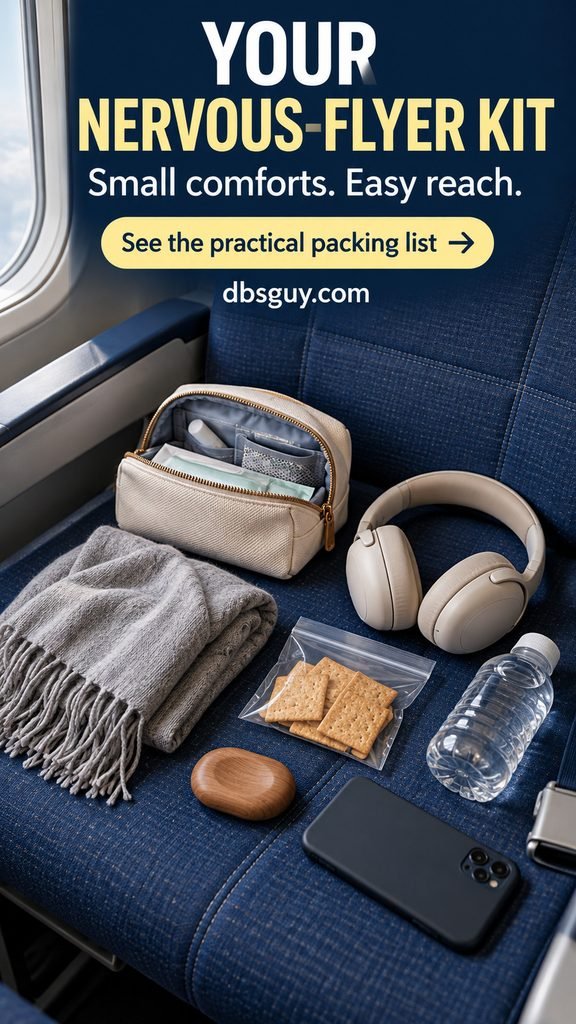
Choose a few things you already find useful: headphones, a light layer, water purchased or filled after security, a familiar snack, and a small quiet object to hold. Keep them in your permitted personal item so you can reach them without opening an overhead bin during the flight.
Use headphones at a volume that lets you hear announcements, and pause them for the safety briefing. Avoid strong fragrances or noisy fidgets that affect the people beside you. A comfortable outfit helps with the same goal: fewer distracting discomforts to manage. You do not need to buy a collection of “anti-anxiety” travel products.
Also read: Airport Outfit Ideas: What To Wear When Traveling for comfortable options to plan before travel day.
12. Download an activity that holds your attention
Pick an activity with a small job for your brain: a familiar puzzle, an engaging audiobook, a light show, or a book with a plot you already want to follow. Download it, check that it opens offline, and charge the device before leaving.
Make a modest plan, such as one chapter after takeoff and a puzzle later. A paper option is useful when a device must be put away. Follow the airline’s device instructions and listen during announcements. If you drift back to worrying, return to the activity without judging the interruption. It is something to do while anxiety is present, not a test of whether you can make anxiety disappear.

13. Tell a flight attendant before anxiety escalates
During boarding, when a crew member has a moment, try: “I’m a nervous flyer, especially during takeoff. I have a coping plan, but I wanted to let you know.” If a short explanation would help, ask whether they can tell you what to expect when they are free.
The crew has safety duties and may need to stay seated or help other passengers. They cannot promise a smooth flight or constant reassurance. A brief heads-up still gives them useful information. If you feel physically unwell, describe the symptoms clearly instead of assuming they are only anxiety.

14. Give your travel companion a specific support request
Before boarding, agree on what helps. You could say, “If I go quiet, ask whether I want conversation or a minute to myself.” Or: “During takeoff, please talk me through the first thing we’ll do when we arrive.”
For the companion, ask rather than guess: “Would you like me to talk, sit quietly, or help you find the crew?” Skip teasing and pressure to relax. Repeating safety assurances every few seconds may turn the journey into one long fear discussion. Choose an ordinary shared activity instead. If you are flying alone, save a supportive message to read offline and let someone know your travel plan before departure.

15. Set a boundary around reassurance searching
Notice the difference between checking your gate and spending an hour searching for proof that your exact flight will be fine. If each search leads to another question, decide when you will stop.
A practical boundary might be: check official flight updates when needed, read one reliable explanation before departure, then put away safety forums, dramatic videos, and prediction tools for the travel period. Keep airline alerts available. The aim is not to ignore real instructions; it is to stop assigning yourself a monitoring job you cannot complete. When the urge to search returns, move to the next action in your plan.
16. Practice approaching flight reminders in small steps
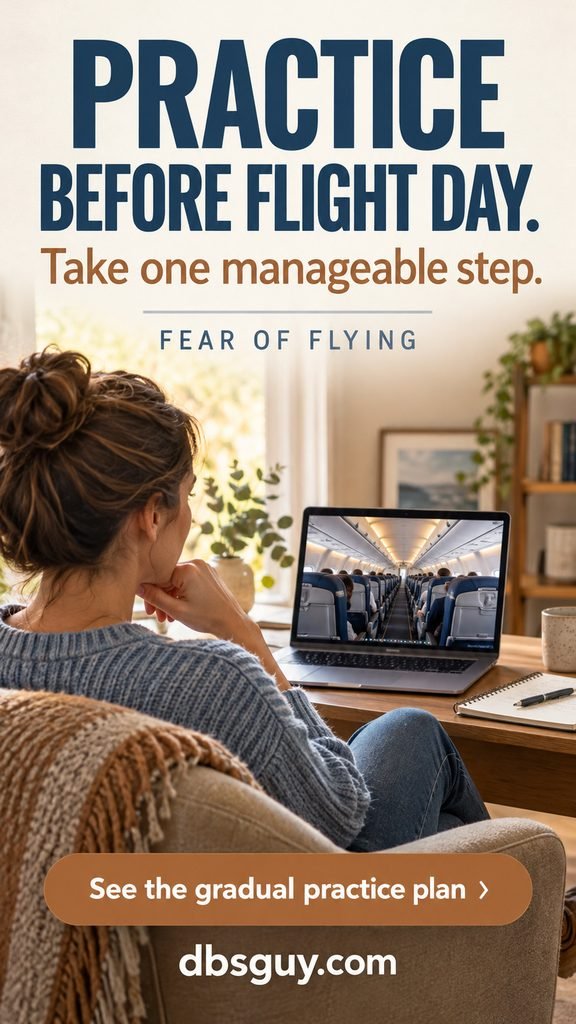
For mild fear, a manageable practice step might be looking at a cabin photo, listening briefly to ordinary cabin audio, or visiting a public airport area. Choose something you can approach deliberately rather than surprising yourself with an intense video.
Repeat a manageable step and notice what you learn about tolerating uncertainty. You do not need to wait until you feel completely calm before counting the practice as useful. If reminders bring overwhelming panic or trauma symptoms, plan exposure with a qualified therapist. Professional exposure therapy uses a tailored progression; forcing yourself into the hardest situation alone is not the goal.
17. Ask for treatment when fear starts making your decisions
If you cancel trips, lose sleep for weeks, or endure flights in extreme distress, make an appointment with a mental health professional. Ask about cognitive behavioral therapy (CBT) with exposure for a specific phobia. Treatment can address both the days of dread before flying and the experience on board.
At the appointment, explain your main trigger, what you avoid, and what you have already tried. Ask how practice will be paced and how progress will be assessed. A flying-confidence course may offer useful education, but check who provides the psychological support and whether the approach fits your needs.
The Anxiety and Depression Association of America’s guide to overcoming a fear of flying explains the role of triggers, education, and exposure-based treatment.

Put your flight plan in one phone note
Choose two coping tools from this guide and one support step. A short note is easier to use in a busy terminal than a long list of techniques:
- My hardest moment: takeoff.
- My first action: belt fastened, feet supported, hands relaxed.
- My attention task: gentle breathing, then one downloaded chapter.
- My support: tell the crew and ask my companion for quiet conversation.
After landing, write down what you managed and what helped, even if you still felt anxious. That gives you a concrete starting point for the next journey or a useful note to bring to therapy.
Flight anxiety questions nervous flyers often ask
What can I do if I panic on a plane?
Stay seated with your belt fastened, try gentle breathing, and focus on a few things you can see or feel. Tell the crew how you feel when you can. If symptoms are new, severe, or different from your usual anxiety, ask for medical help rather than assuming they are a panic attack.
Can I develop a fear of flying after years of comfortable flights?
Yes. Fear can appear after previously uneventful flying, and it does not always follow a frightening flight. Changes in your life or fear of having anxiety itself may be involved. Tell a clinician what changed if the worry persists or interferes with travel.
Should I take medication for flight anxiety?
Discuss that with your own clinician before travel. Medication may be appropriate in some situations, but it is not a replacement for a longer-term treatment plan. Do not borrow someone else’s prescription or combine sedating medicines on your own. Benzodiazepines must not be mixed with alcohol because the combination can cause serious harm.
Is there one best seat for a nervous flyer?
No seat works best for every trigger. Choose around your comfort needs and the airline’s rules, then keep your coping tools usable wherever you sit. Paying more for a seat does not guarantee that you will feel calm.
Do breathing and grounding exercises cure a flying phobia?
They are coping tools that may make distress more manageable. If fear keeps restricting your life, ask about treatment rather than judging yourself for needing more than a breathing exercise.
For your next flight, choose a starting point you can actually use: one skill to practice, one thing to prepare, and one person you can ask for support.
Also read: How To Organize Your Time On Vacation to give the rest of your trip a little more breathing room.